
 0086-138 3838 9622
Straw Feed Mill


A straw feed mill is especially relevant to feed producers, agricultural groups, cooperatives, large livestock operations and straw-processing businesses that already control a stable crop-residue supply but need a more efficient way to turn that resource into a standardized commercial product. RICHI can supply the complete straw feed plant, from process planning and equipment configuration to manufacturing, installation support, commissioning and later capacity expansion.
From ground roughage feed to straw pellets and straw-grain compound pellets, your straw feed production line is built around the real material condition instead of a fixed equipment package.
For customers looking beyond feed, we can also develop separate straw-processing solutions for fuel pellets, animal bedding, organic fertilizer and biochar-based products. This gives businesses with reliable straw resources more options to build additional revenue streams instead of depending on a single end market.
Discuss My Straw Business Plan
Five Straw Feed Formula Types
A straw feed mill can be configured around different ingredient structures, from high-straw roughage formulas to more complex compound feed. The straw ratio and ingredient combination determine how the material should be prepared, mixed and finished as meal or pellets.

Single-Straw Feed
This type uses one feed-suitable straw as the main ingredient, such as wheat straw, rice straw, barley straw or corn stover, commonly at a high inclusion rate of about 80–100%. It can be produced as ground roughage feed or 4–12 mm pellets, with the process focused on stable chopping, grinding and fiber feeding.
4–12mm Pellet Size

Mixed-Straw Feed
Mixed-straw formulas combine two or more suitable straw or crop-residue materials, such as wheat straw with corn stalk or barley straw with oat straw. Because each material differs in fiber length, hardness and density, the line may use different preparation settings before mixing and producing roughage meal or 6–12 mm pellets.
4–12mm Pellet Size
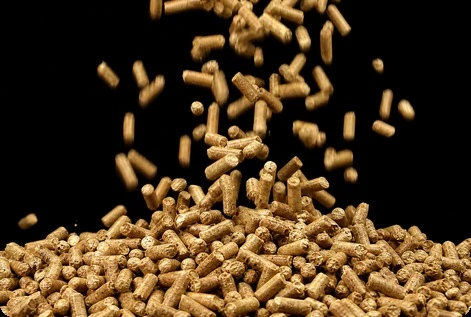
Straw + Grain Feed
This formula combines straw with corn, barley, wheat, bran or other cereal ingredients, with the straw proportion adjusted according to the intended feed. In a straw and grain feed production line, straw and grain are normally prepared separately before batching and mixing, with finished products supplied as mash or typically 4–10 mm pellets.
4–10mm Pellet Size

Straw Compound Feed
This route adds protein ingredients, minerals, premix or other approved feed materials to a straw-and-grain base, creating a more complex compound formula. The greater number of ingredients requires more accurate dosing and mixing, while the finished feed can be produced as compound mash or pellets according to livestock requirements.
3–12mm Pellet Size

Treated or Fortified Straw Feed
This category uses separately treated straw or combines straw with molasses, protein sources, minerals or other fortifying ingredients to improve the final feed formulation. Where fermentation, ammoniation or alkali treatment is involved, that stage must be controlled separately before the material enters the downstream mixing or pelleting process.
3–10mm Pellet Size
One straw feed mill can also be designed with shared sections and bypass routes to produce several of these formula types, allowing the same factory to switch between meal and pellet products as market demand changes.
Configure My Straw Feed Formula Line

Different Straw Markets, Different Mill Decisions
RICHI has supplied straw feed mill solutions for different production scales, raw-material conditions and feed product combinations. These six projects show how local crop residues, formula structure, plant capacity and multi-product requirements lead to different process designs rather than one standard line being repeated from project to project.
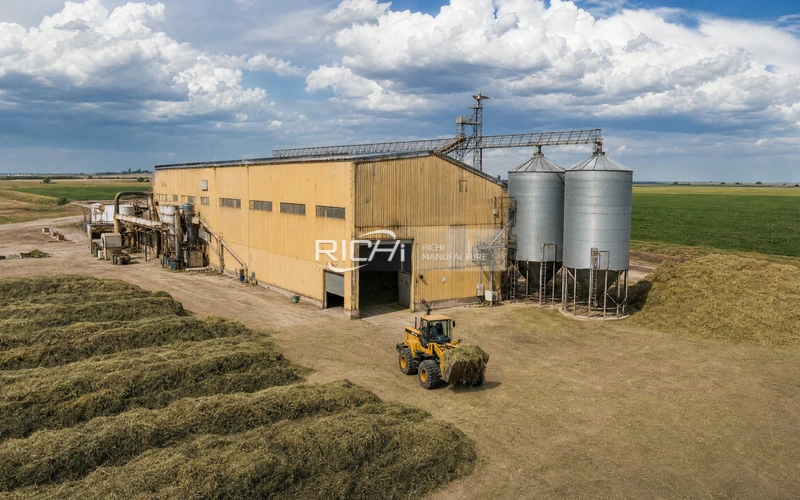

【5 T/H Straw Feed Mill in Brazil】This 5 T/H project represents a medium-scale feed operation in a major grain and livestock market, where corn stalk, corn stover and other feed-suitable crop residues may be incorporated into cattle-feed production. The straw base cattle feed production line emphasizes reliable fiber preparation before batching and mixing, allowing the plant to handle straw-rich formulas without designing the entire system like a conventional grain feed mill.
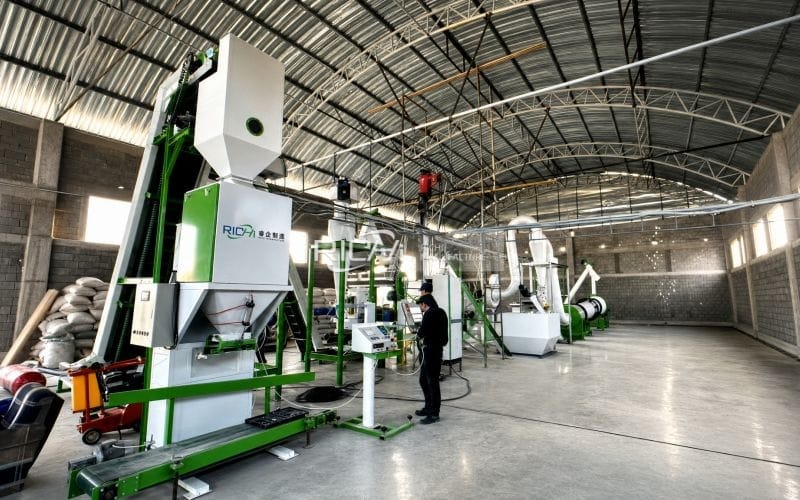
【2 T/H Straw Feed Mill in Kazakhstan】At 2 T/H, this straw feed plant is suited to a smaller operation working with cereal straw resources such as wheat or barley straw. Seasonal bale supply, low bulk density and long fiber make controlled feeding and size reduction especially important, while the moderate production scale allows the project to remain practical without unnecessary automation or oversized storage.

【5–6 T/H Straw Feed Mill in Zimbabwe】This 5–6 T/H project reflects the needs of a regional livestock-feed operation where maize residues and cereal straw can form part of the roughage supply. The engineering focus is on preparing variable fibrous materials consistently before they enter the formulation system, so changes in stalk condition or straw ratio do not create unstable loading at the grinding and pelleting sections.

【2–3 T/H Straw Feed Mill in Pakistan】This 2–3 T/H straw feed processing plant is well matched to a market where wheat straw and rice straw are important livestock-feed resources, particularly for cattle and buffalo. Because these materials differ in fiber structure and ash characteristics, the front-end processing route must accommodate material changes while keeping batching, mixing and downstream production stable.
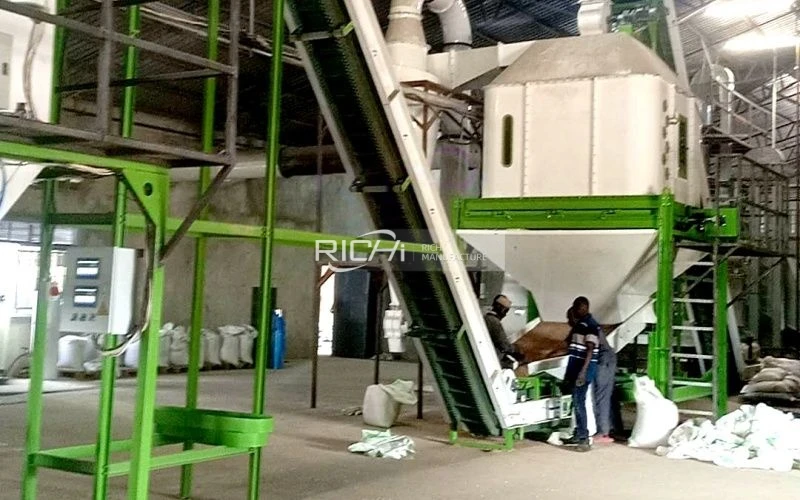
【15 T/H Straw Feed Mill in South Africa】At 15 T/H, the project moves beyond a small single-machine arrangement and requires stronger coordination between residue preparation, buffering, mixing and pelletizing. Maize stover, wheat straw and other locally available roughage materials can create very different processing loads, so this scale requires the main sections to be balanced around actual fiber throughput rather than only nominal plant capacity.
【10 T/H Combined Cattle Straw Feed & Poultry Feed Production Line in Uzbekistan】This 10 T/H project combines cattle straw feed and poultry feed production in one factory. The cattle-feed side uses wheat straw and other suitable crop residues, while poultry feed requires finer grinding and more precise batching, so the two product routes share only compatible sections rather than using one identical process.
Process Design Starts Before the Pellet Mill
A straw feed mill is not a fixed chain of machines. The process is selected from the condition of the material and the finished feed route. Depending on the project, the system may include receiving, cleaning, bale opening, chopping, secondary grinding, batching, mixing, liquid addition, conditioning, pelleting, cooling, screening, storage, packing and dust collection.
A straw chopping machine, straw bale processing equipment or other front-end module is added only when the incoming material actually requires it.
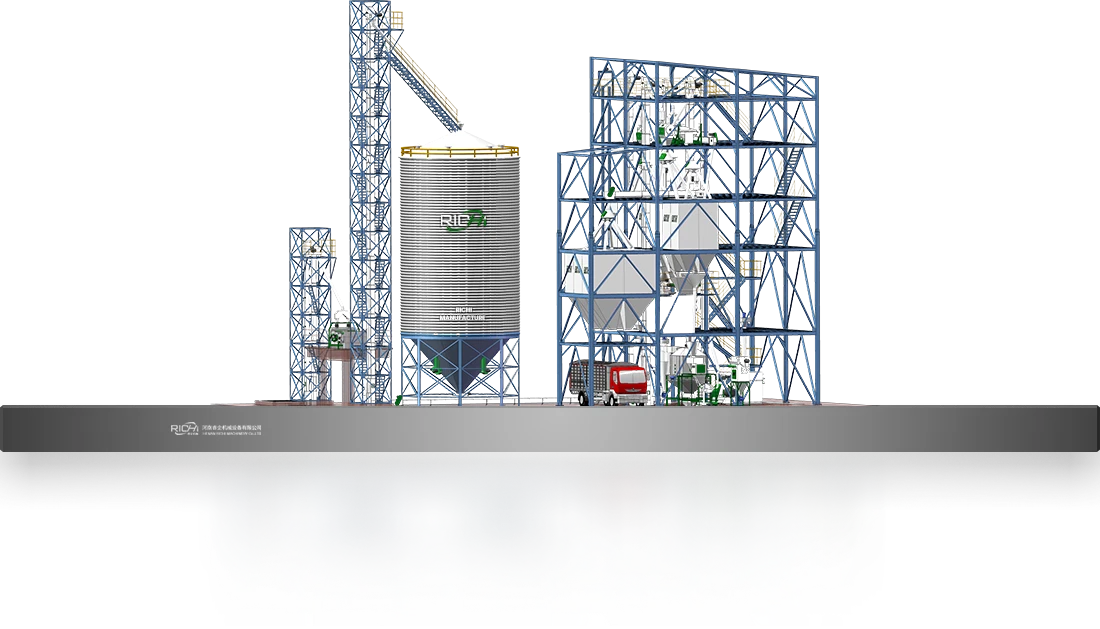
The combination of straw feed processing equipment is then adjusted to formula, moisture, grinding target, workshop height, available floor space, automation level and investment plan. Drying is not a standard requirement for properly stored dry straw, and mash-feed projects do not need pellet cooling or screening sections. RICHI develops the process route, equipment layout and control logic together, then supports manufacturing, installation, commissioning, training and later expansion.
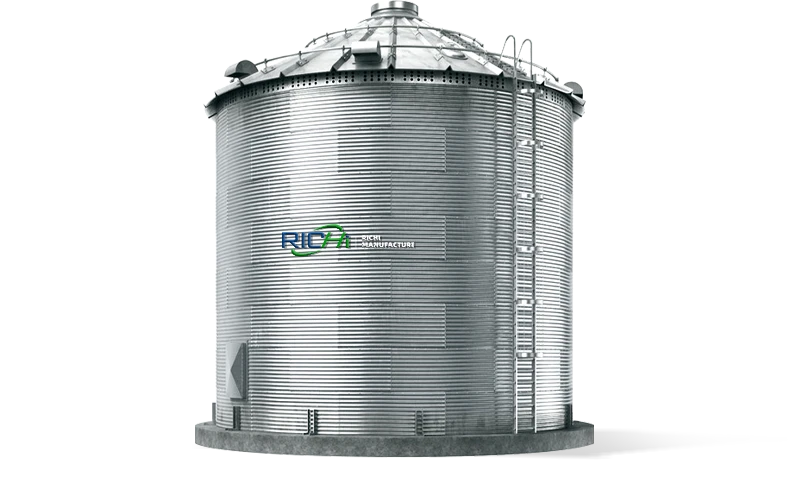
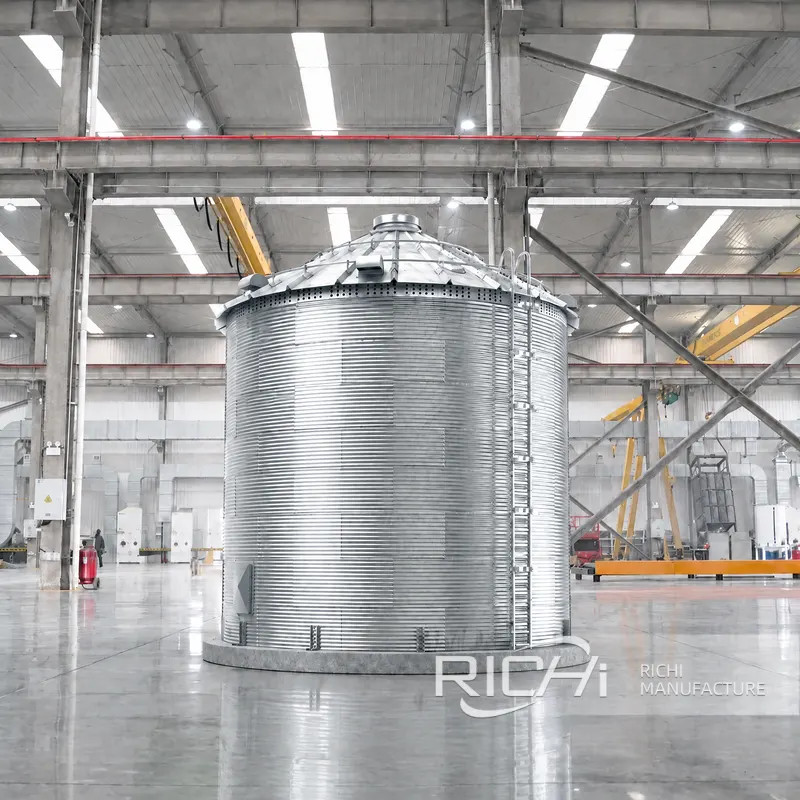
Silo system
01
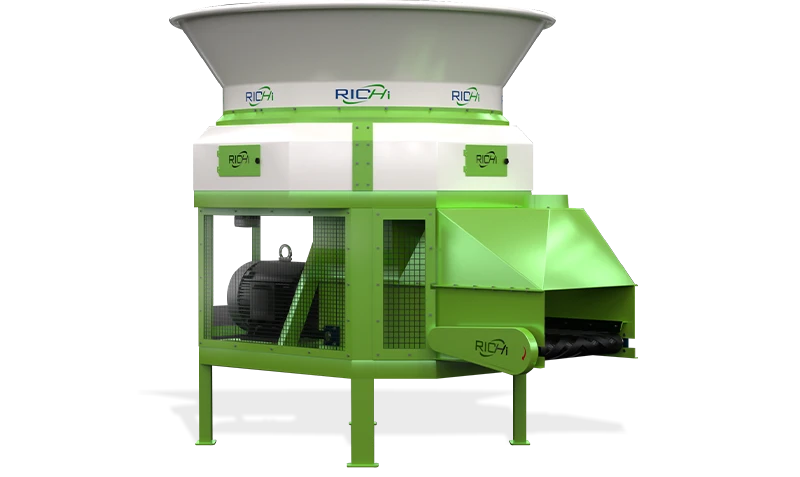
bale chopping
02
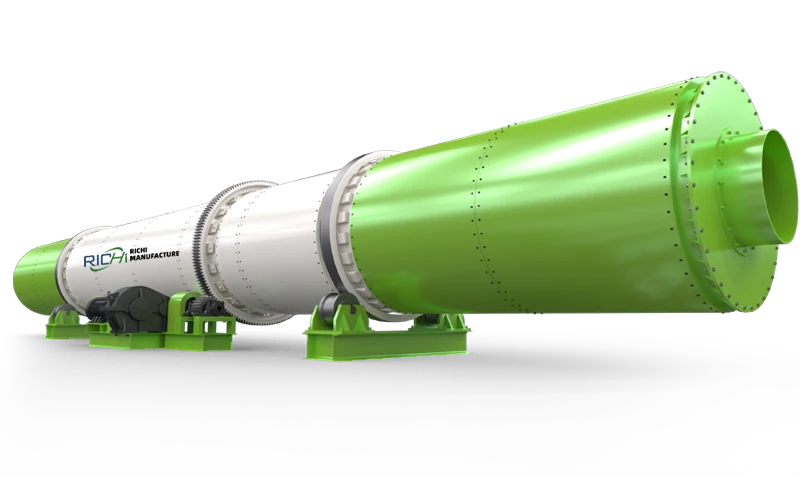
Drying system
03
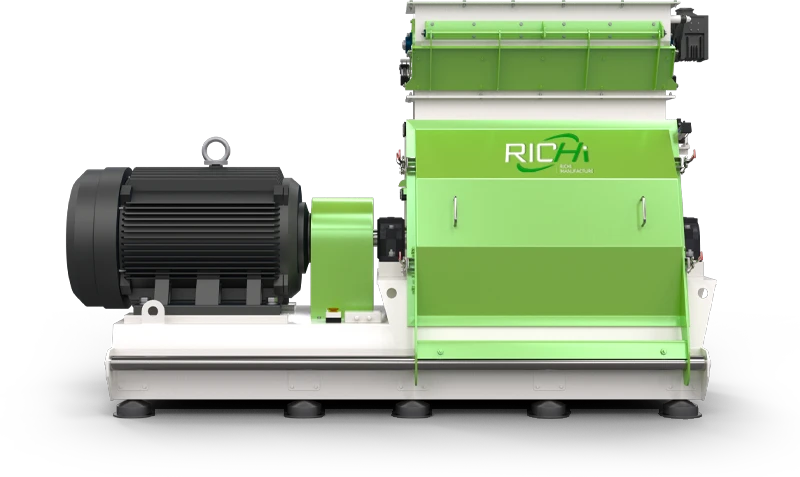
Grinding system
04
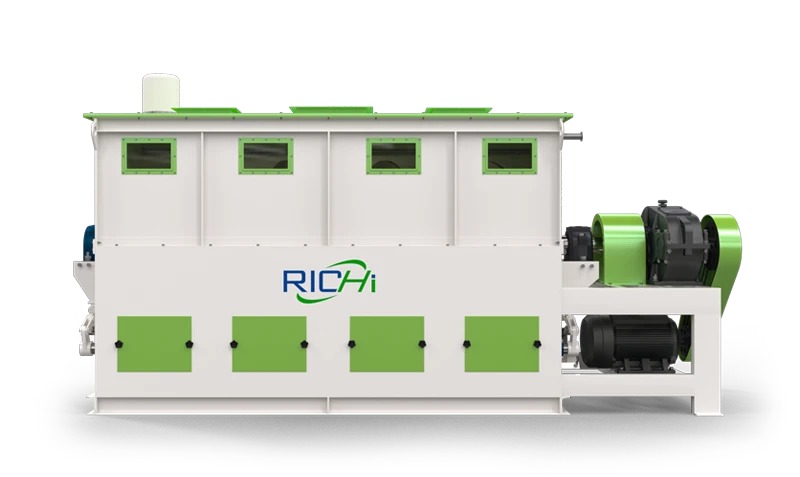
Mixing system
05
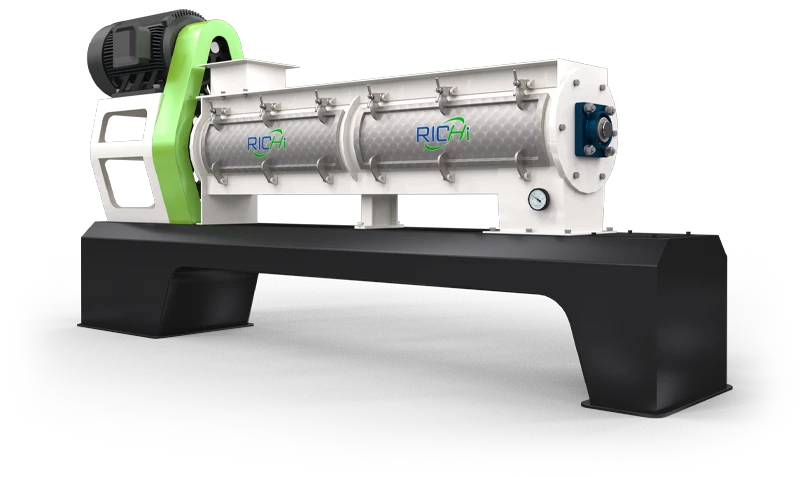
Molasses mixer
06
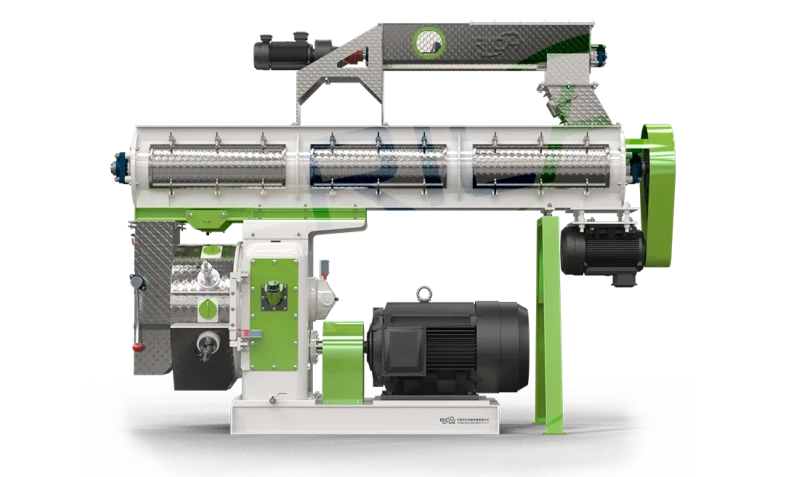
Pelleting system
07
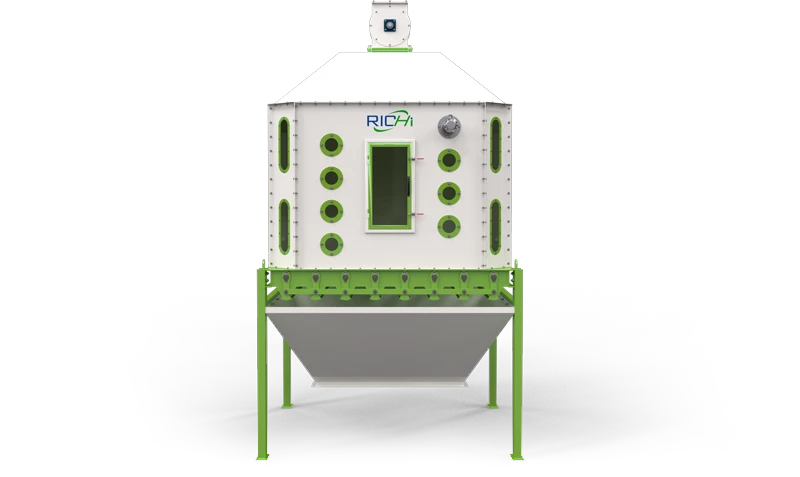
Cooling system
08
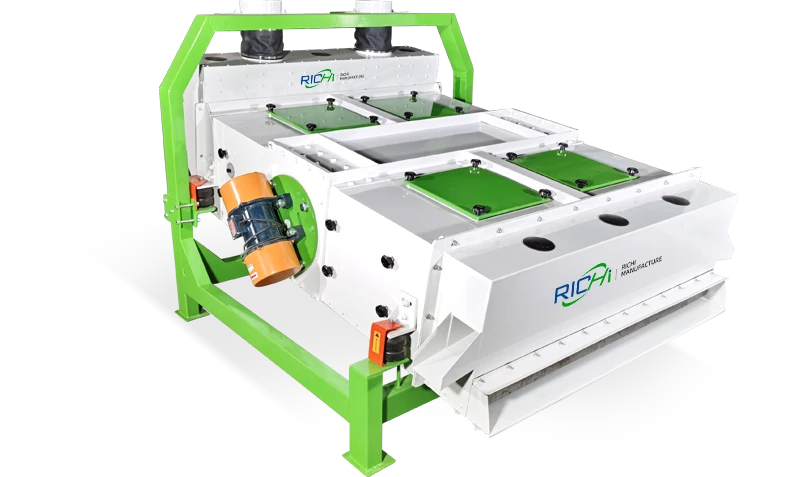
Screening system
09
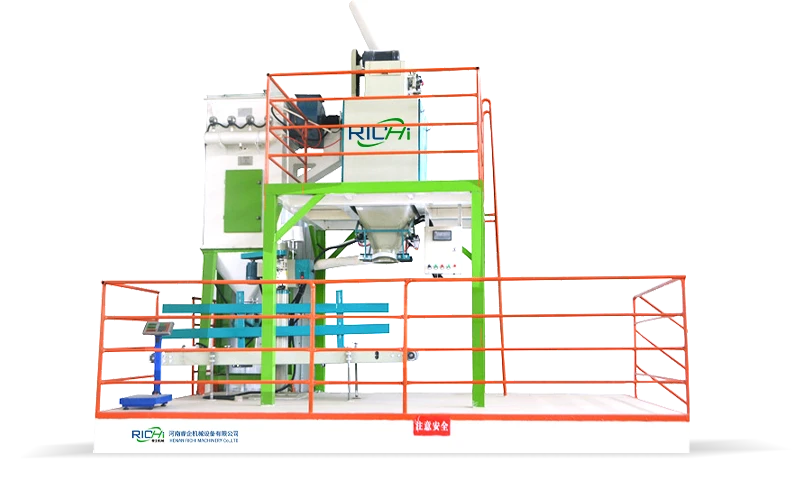
Packaging system
10
Why Eight Straw Projects Need Eight Different Flowcharts
Capacity alone does not decide how a straw feed mill should be built. Bale form, straw species, moisture, existing equipment, formula range and the customer’s own workshop can completely change the process. The eight layouts below keep the same basic production goal—turning crop straw into marketable ruminant feed—but use very different engineering routes.

3–4 T/H Complete Straw Feed Mill Design — Romania project
Process: Round Straw Bale Breaking → Fine Grinding → 2.5 m³ Buffer Bin → Pelleting → Cooling → Screening → Automatic Packing
This Romanian straw based livestock feed production line uses 100% dry round cereal-straw bales, mainly wheat and barley straw. The bales first pass through breaking for coarse size reduction, then enter a straw grinder for finer preparation before temporary storage in a 2.5 m³ bin. The prepared material is pelletized, cooled, screened and packed automatically.
It is a relatively straightforward straw-based ruminant feed route where the key is keeping long bale fiber from entering the fine-grinding section unevenly. Wheat and barley straw are both realistic feed resources in Romania.

0.5–0.6 T/H Small Straw Feed Mill Design — Vietnam project
Process: Pre-Opened Rice Straw → Fine Grinding → Drying → Temporary Ground Storage → Grain/Additive Weighing → Mixing → Pelleting → Cooling → Screening → Packing
This is a small commercial ruminant-feed line using rice straw together with grain and additives. The Vietnamese customer receives rice straw that has already been opened, so another bale-breaking stage is unnecessary; the material goes directly to secondary grinding.
Because this particular straw enters the project with excessive moisture, it is dried after grinding, temporarily stored, and then mixed with weighed grain and additives before pelleting. Although capacity is only 0.5–0.6 T/H, the pellets are produced for commercial sale rather than only farm use. Rice straw is a major ruminant-feed resource in Vietnam.

4–4.5 T/H Crop Straw Feed Pellet Production Line Design — Kazakhstan project
Process: Prepared Wheat Straw Feeding → Conveying → Pelleting → Z-Type Bucket Elevating → Cooling → Screening → Farm Use
This Kazakhstan cattle-farm project uses 100% dry wheat straw. The customer already owns the straw bale breaker and straw grinding equipment, so the new system starts from prepared material: a forklift feeds the ground straw onto the conveyor and sends it directly to the pelleting section. Two CZLH420 pellet mills are installed to reach the required output.
After pelleting, the straw pellets are conveyed by a Z-type bucket elevator to the cooler, screened, and then used directly on the customer’s cattle farm. The value of this design is that usable existing equipment is retained instead of being replaced unnecessarily. Wheat production and straw availability are highly relevant to Kazakhstan’s livestock sector.

3–4 T/H Straw Feed Manufacturing Plant Design — Thailand project
Process: Baled Rice Straw Breaking / Loose Rice Straw Chopping → Drying → Secondary Grinding → Mixing → Pelleting → Cooling → Screening → Finished Bin → Automatic Packing or Bulk Loading
This Thailand cattle feed plant project handles rice straw in two physical forms: compacted straw delivered for immediate processing and loose freshly collected straw. Both streams can reach about 50–60% moisture under the stated project condition, so they are processed promptly rather than stored as conventional dry straw.
Baled material enters the breaker before drying, while loose straw first passes through a chopping machine and then joins the drying section. After drying, the material is ground again, mixed and pelletized. Finished pellets can either be packed automatically or discharged from the finished-product bin directly into bulk trucks. Rice straw is Thailand’s most important crop residue and is widely used for cattle.

10 T/H Complete Straw Feed Factory Design — Tunisia project
Process: Dry Straw Bale Breaking → Grain/Straw Feeding → Batching → Hammer Milling → Bucket Elevating → Intermediate Storage → Batch Pelleting → Cooling → Screening → Packing
This design comes from a 10 T/H ruminant feed mill project exported to Tunisia in October 2025. The main roughage is dry cereal straw bales, with wheat and barley straw being appropriate local feed resources. After bale breaking, the prepared straw is fed together with weighed grain ingredients into the batching section. The mixture is then ground in a hammer mill, elevated to a designated temporary storage point, and pelletized in batches before cooling, screening and packing.
Part of the finished feed is used on the customer’s own cattle farm and part is sold. The project also includes a separate wood-chipping system; those chips enter the customer’s existing wood-chip hammer mill to produce sawdust for cattle bedding. Tunisia has established use of cereal straw in ruminant feeding.

6–8 T/H Crop Straw Feed Pellet Production Line Design — Iraq project
Process: Dry Straw Bale Breaking ×2 → Straw Hammer Milling ×2 → Cyclone Pneumatic Conveying → Bucket Elevating → Pelleting ×2 → Cooling → Screening → Packing
This Iraqi livestock feed plant project processes dry wheat and barley straw bales. Two bale breakers divide the incoming material into parallel preparation routes, followed by two straw hammer mills that reduce the material to about 3–5 mm. A cyclone pneumatic system transfers the ground straw to the bucket elevator and onward to the pelleting section, where two straw feed pellet mills are installed.
The pellets then pass through cooling, screening and packing before being sold to surrounding livestock farms. Using parallel breaking and grinding equipment is important here because the 6–8 T/H output cannot be achieved reliably by treating long fibrous straw like conventional grain. Wheat and barley residues are established livestock-feed resources in Iraq.
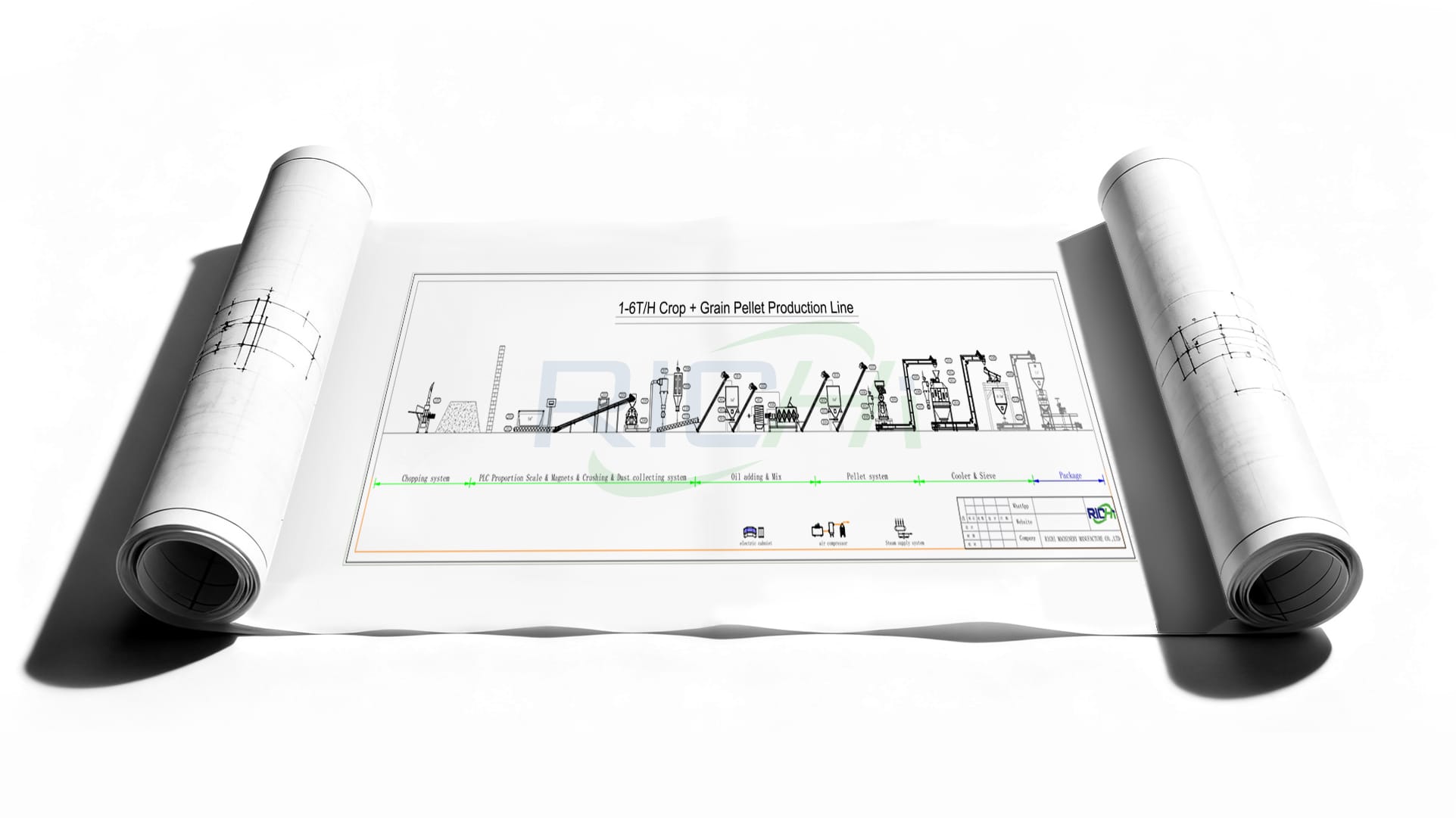
1–6 T/H Commercial Ruminant Feed Plant Design — Mexico project
Process: Long Corn Stalk Chopping → Batch Weighing → Grinding → Prepared Grain Addition → Mixing → Pelleting → Cooling → Screening → Automatic Packing
This Mexican commercial feed plant uses long corn stalk and corn stover rather than straw bales, together with grain ingredients. The long crop residue first enters a straw chopping machine, then moves through batch weighing and secondary grinding. Ground straw is mixed with grain that has already been prepared before the combined formula enters pelleting, cooling, screening and automatic packing.
The 1–6 T/H range reflects real formula changes: the plant may produce grain-dominant ruminant feed, high-straw formulas, or mixed straw-and-grain products, so actual throughput changes with the fiber ratio rather than staying fixed. Maize stover is widely used as cattle feed in Mexican crop-livestock systems.
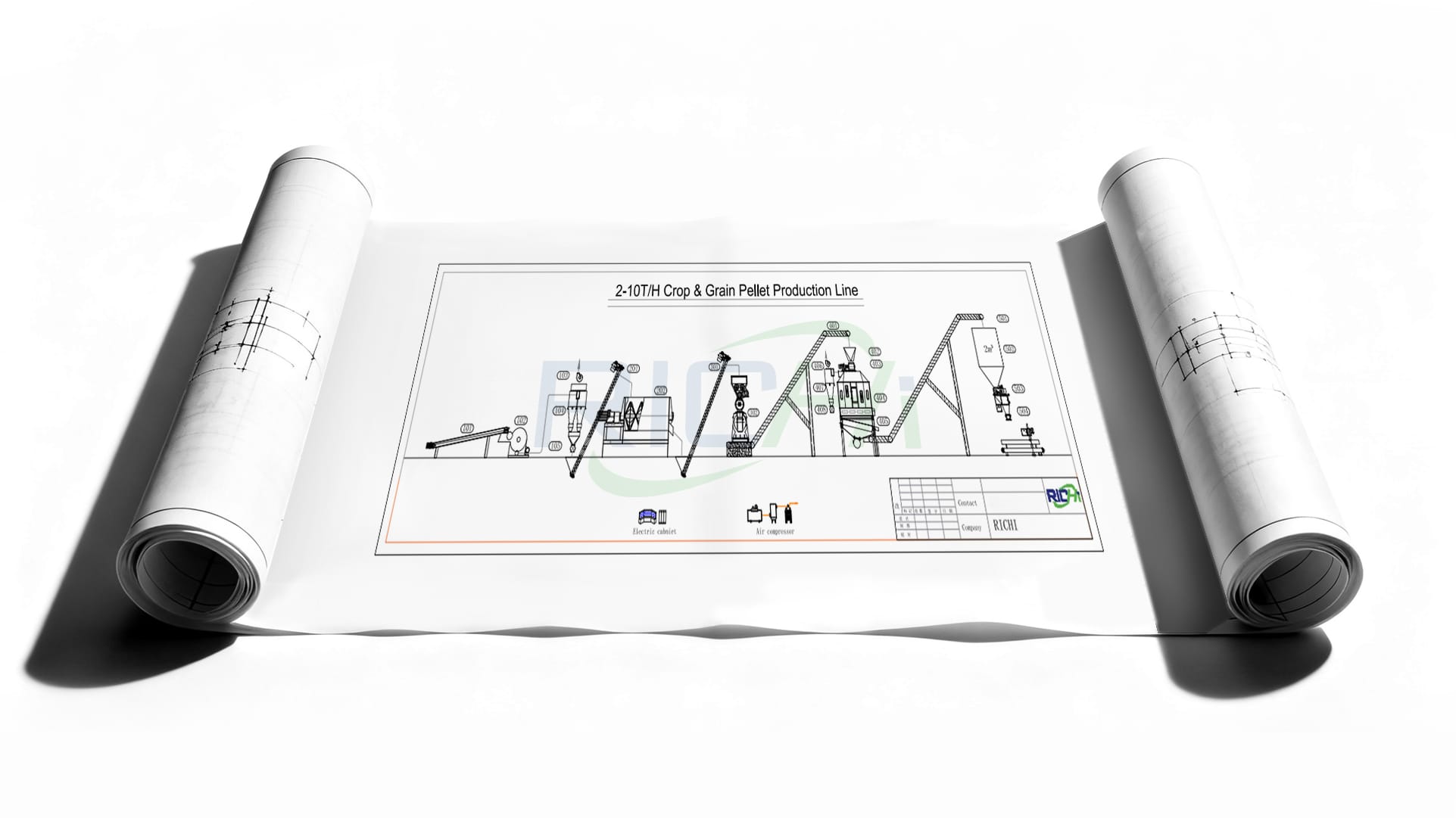
2–10 T/H Complete Ruminant straw Feed Line Design — Australia
Process: Low-Moisture Cereal Straw Grinding → Existing Ground-Grain Feeding → Mixing → Pelleting → Cooling → Screening → Packing
This Australian straw pellet plant project combines dry wheat, barley or oat straw with grain ingredients. The straw enters at below 20% moisture, so no dryer is required, and the customer already owns a grain-grinding system; prepared grain therefore enters the new line directly. Ground straw and grain are mixed before pelleting, cooling, screening and packing.
The wide 2–10 T/H operating range comes from the formula mix: some production runs are grain-dominant, others have a high straw ratio, and others sit between the two. The design therefore reuses the customer’s existing grain section while sizing the new straw and pelletizing sections around the most demanding fiber load. Cereal straw and stubble are established feed resources in Australian cattle and sheep systems.
Global straw Feed Mill Projects
One Straw Mill Does Not Fit Every Market.A straw feed mill has to follow the crop-residue supply and livestock market around it. For buyers comparing a straw feed mill for sale, capacity is only one part of the decision: straw type, collection method, formula structure, labor cost and intended feed form can completely change the plant. Our project engineering can cover small local processors through regional multi-line feed operations, including pellet, mash and combined production.
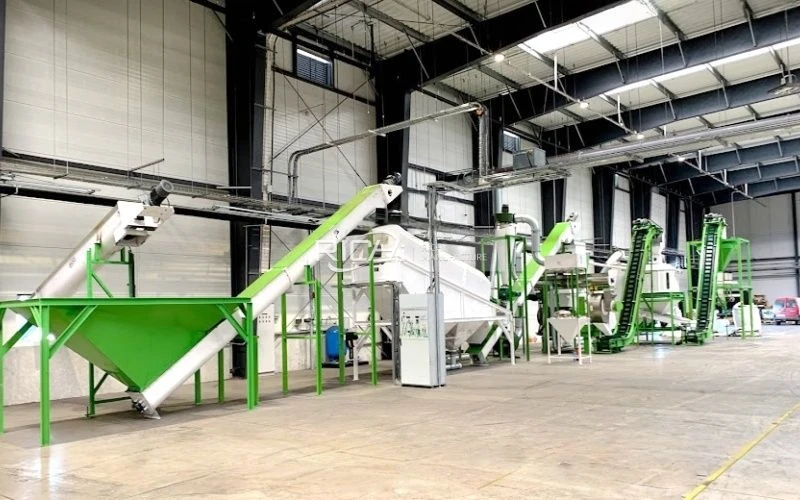
2 T/H Rice Straw Valorization Project
Indonesia
For a local straw processor serving cattle farms, a compact rice straw feed processing route can convert collected dry residue into ground roughage or formulated pellets. The project emphasis is controlled size reduction, dust handling and practical automation rather than unnecessary process complexity, leaving room to add grain dosing as the business develops.
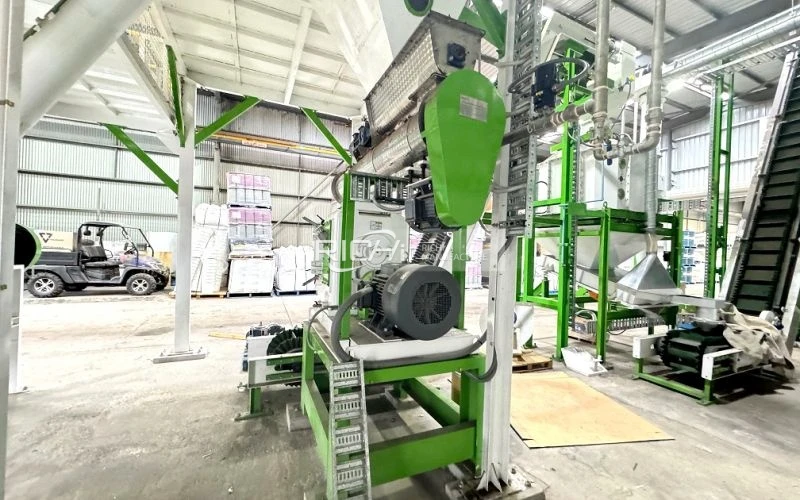
5 T/H Wheat Straw Compound Project
Pakistan
Wheat straw is widely relevant to cattle and buffalo feeding systems, but a commercial plant needs more than simple chopping. A regional processor can combine prepared straw with grain by-products and other formula ingredients, using a straw feed pellet production line with separate fiber handling before batching to improve production stability across changing recipes.

25 T/H Multi-Line Residue Plant Project
Brazil
At this scale, a regional agricultural group should not treat the project as one oversized machine chain. Corn residues and other approved roughage materials can be distributed through parallel preparation and pelletizing sections, with the number of lines determined by mass balance. A turnkey straw feed plant must therefore be engineered around formula-specific throughput.
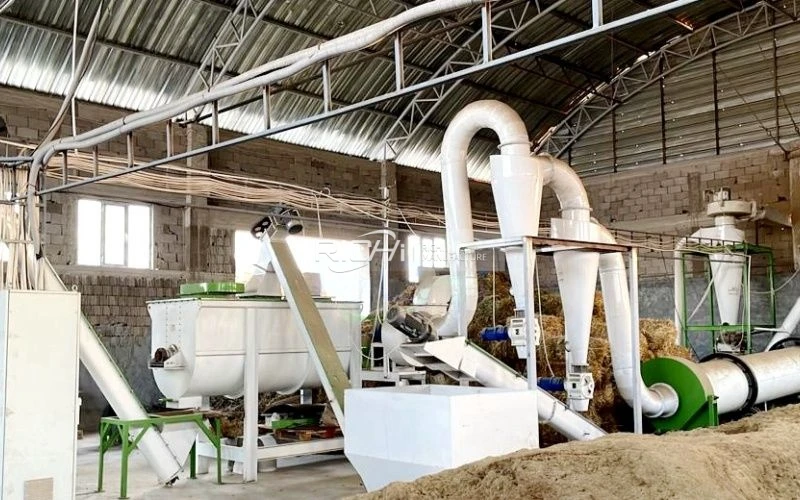
0.5 T/H Dry-Season Feed Supply Project
Ethiopia
Crop residues play an important role in Ethiopian livestock feeding, including teff, wheat, barley, maize and sorghum residues. A smaller processor or cooperative can focus on chopping, controlled grinding and blending to improve handling and supply consistency, while any treatment or fortification step is designed separately according to the intended feeding program.

8 T/H Pampas Residue Processing Project
Argentina
A regional feed producer can combine corn residues with cereal ingredients for beef-cattle feed instead of building a single-material plant. This crop residue feed production line separates fibrous preparation from grain handling before batching, allowing different straw ratios to run without making the entire factory dependent on one formulation.
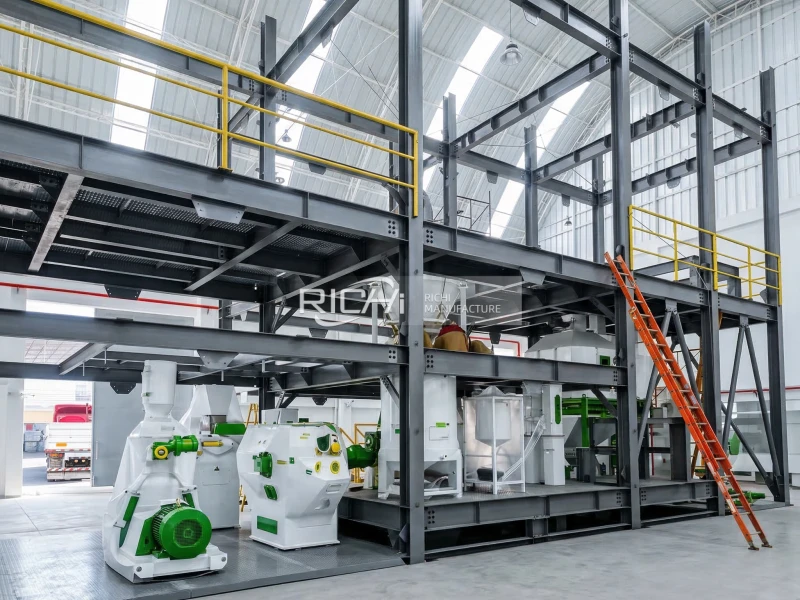
3 T/H Rice Roughage Route Project
Thailand
A small commercial processor can develop rice-straw roughage products for local cattle markets without building an oversized factory. The process can support meal and pellet products from one site, while attention to ash, wear and dust makes the straw pellet processing line more suitable for repeated rice-straw operation than a generic grain-feed layout.

3 T/H Farm Feed Conversion Project
Colombia
An integrated crop-livestock business can process locally available maize residues together with purchased feed ingredients for its own cattle operation or nearby farms. Instead of maximizing automation, the design can prioritize reliable residue preparation, simple recipe changes and manageable operating cost, with later expansion interfaces reserved as feed demand grows.
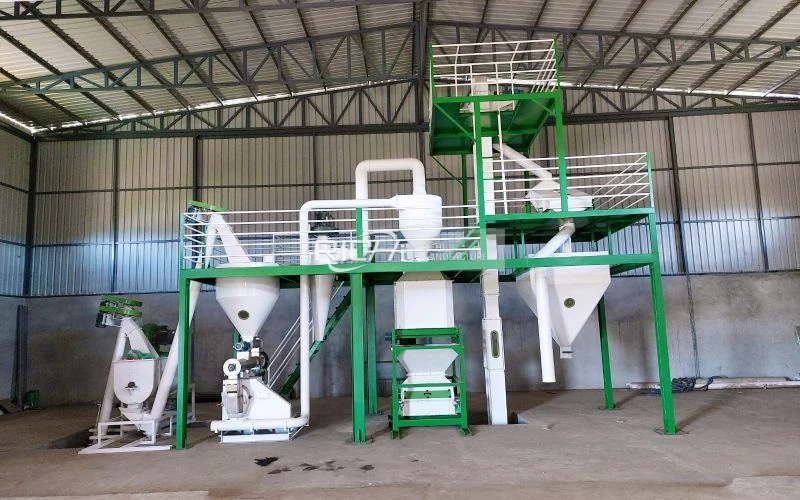
1 T/H Island Residue Processing Project
Philippines
Rice straw and maize residues can support a compact roughage-feed operation where collection volumes do not justify a large industrial plant. A phased configuration lets the customer begin with essential preparation and pelleting equipment, then add automatic dosing, packing or expanded storage after raw-material supply and downstream demand become more predictable.

15 T/H Dairy Roughage Integration Project
India
Large dairy-oriented operations may need to process wheat straw, rice straw and purchased feed ingredients across several formulas. A straw based livestock feed production line at this scale benefits from separate fiber preparation, accurate batching and multiple downstream routes so roughage meal and compound pellets can be produced without forcing every product through pelleting.

10 T/H Stover Feed Expansion Project
Mexico
Where maize residues and livestock production overlap, a feed company can use corn stalk or stover as one roughage component rather than relying on a single crop residue. Corn stover feed processing requires controlled primary reduction before fine grinding, with the downstream system sized for both high-fiber and lower-fiber compound formulations.

0.3–2 T/H Rice Straw Utilization Project
Bangladesh
For a cooperative or first-stage processor, rice straw can be converted from a bulky seasonal residue into easier-to-store roughage products. The plant can start with a compact straw pellet plant and limited automation, while maintaining enough flexibility to introduce bran, grain or other approved ingredients if the customer later moves toward compound feed.
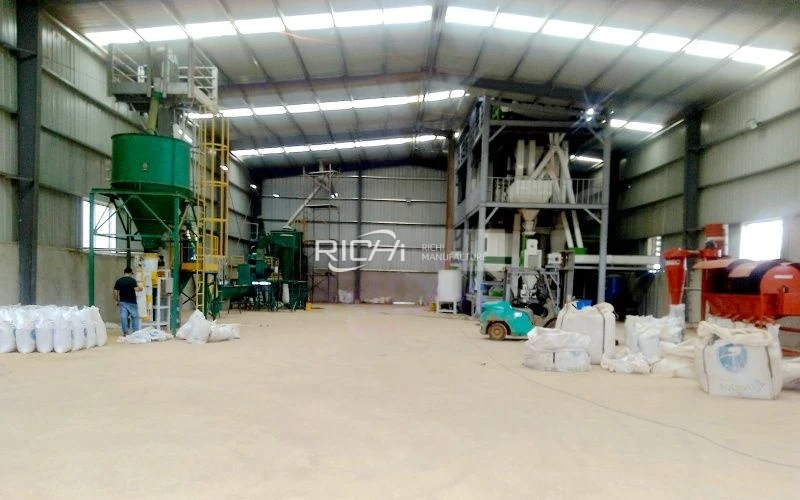
4 T/H Dairy Stover Supply Project
Kenya
Kenyan feed chains already use maize stover and wheat straw, including chopped or pulverized material for livestock feeding. A regional crop residue feed production line can therefore focus on reliable bale or stover preparation, controlled particle size and flexible mixing for dairy-oriented roughage products rather than reproducing a conventional grain mill layout.
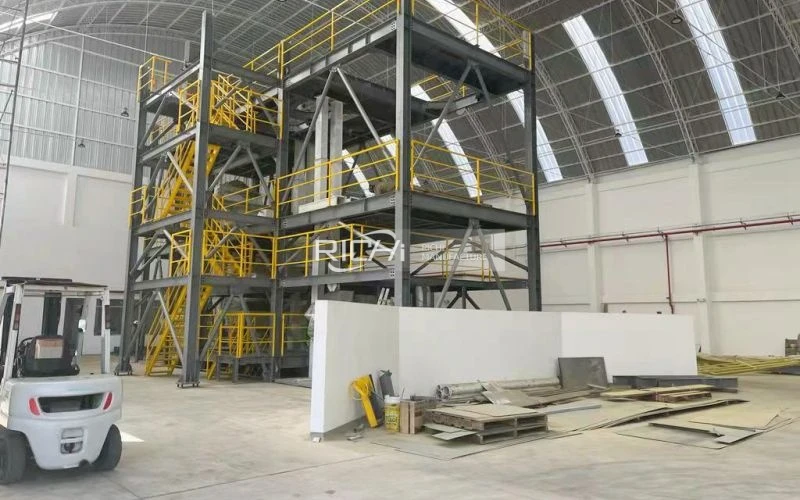
5 T/H Cereal Straw Upgrade Project
Poland
For a feed business handling cereal straw alongside conventional ingredients, the engineering priority is consistent feeding and controlled dust rather than aggressive preprocessing. Wheat and barley straw can be prepared for roughage pellets or inclusion in compound feed, while the straw pellet feed production line is sized around actual fiber load instead of nominal grain-mill throughput.

12 T/H Broadacre Straw Processing Project
Australia
A larger agricultural or feed business may handle wheat and barley straw collected across a wide seasonal supply area. Higher labor costs favor mechanized bale receiving, controlled conveying and bulk finished-product handling. The resulting straw bale processing line can support sheep or cattle feed operations while reducing repeated manual bale handling inside the plant.
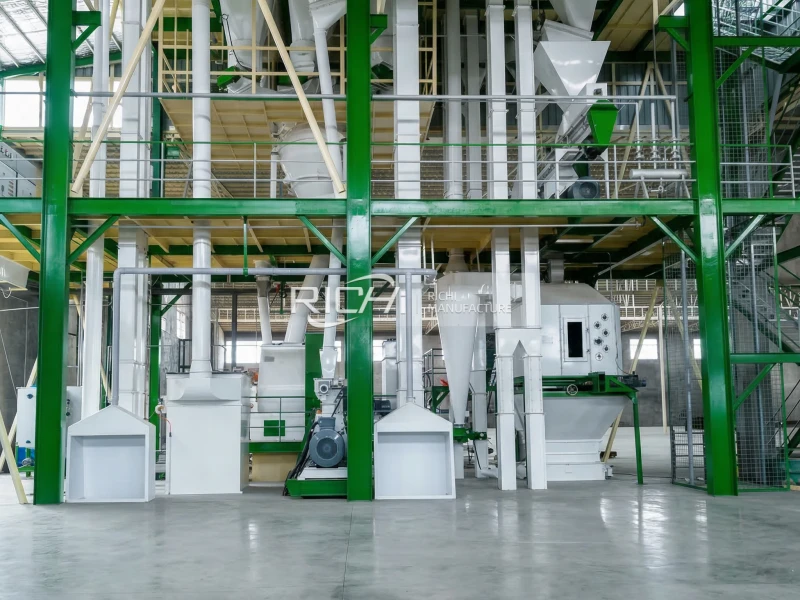
4 T/H Flexible Paddy Residue Project
Vietnam
A processor working around rice-growing areas may want both ground straw and pellets rather than a pellet-only factory. Diverting prepared material before pelleting gives the plant two finished-product routes without duplicating the entire front end, helping the customer respond to different cattle-feed and roughage-supply requirements from the same processing site.
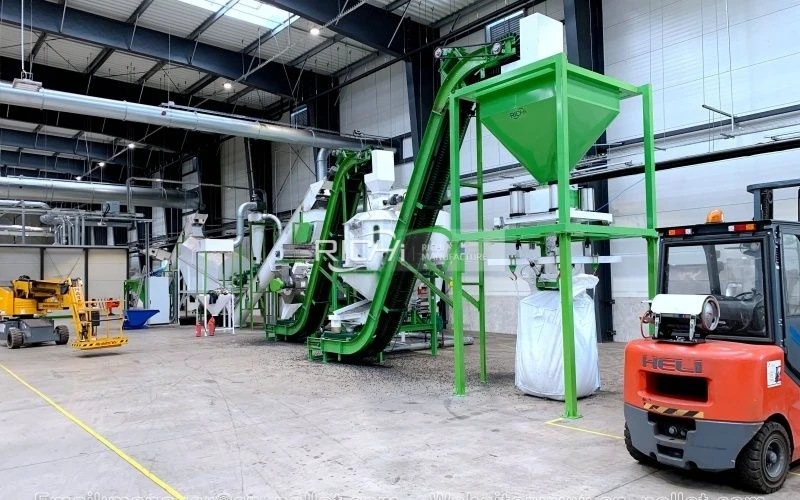
10 T/H Mediterranean Straw Feed Project
Spain
A commercial feed business serving cattle or sheep markets can integrate cereal straw into a broader compound-feed operation. Mechanized receiving and separate fiber preparation help keep long straw away from grain-handling bottlenecks, while pelleting and bulk or bagged discharge can be selected according to how finished feed moves to farms and distributors.
For a straw feed mill project, the real test begins after commissioning. Customers care about stable feeding, practical layout, formula flexibility, operator convenience and whether technical support remains available when production changes. The following feedback reflects the kinds of results buyers value most after working with RICHI.


Straw Feed Project in Russia
- Customer Type: Regional Feed Processor
“We process wheat and barley straw, so stable feeding was more important to us than simply buying a larger machine. RICHI helped us match bale opening, controlled feeding and grinding so the fiber moves much more consistently through the line. The system is easier for our operators to manage, especially when straw density changes between batches.”

Straw Feed Project in Iraq
- Customer Type: Livestock Feed Producer
“Our workshop height was limited, and we did not want to rebuild the whole building around the feed line. RICHI adjusted the conveying route and equipment layout to keep the system compact while still leaving enough space for maintenance. That practical design work made the installation much easier than we expected.”

Straw Feed Project in France
- Customer Type: Compound Feed Manufacturer
“We run more than one straw-based formula, so we needed a line that could change recipes without creating too much downtime. RICHI separated the fiber preparation from the main batching system and gave us a more flexible production route. It is now easier to switch between higher-straw and grain-dominant products.”

Straw Feed Project in USA
- Customer Type: Existing Feed Mill
“We already had usable mixing, storage and packing equipment, and we did not want to replace machines that were still working well. RICHI checked our existing system first, then added the straw receiving, chopping and grinding sections we actually needed. That approach helped us expand into straw-based feed without rebuilding the entire mill.”

Straw Feed Project in Indonesia
- Customer Type: Crop-Residue Processor
“Rice straw is light, dusty and not easy to feed consistently, so we were concerned about daily operation before the project started. RICHI matched the feeding, grinding and dust-control sections to the actual material instead of using a standard grain-feed configuration. The line is easier to operate and more stable during continuous production.”

Straw Feed Project in New Zealand
- Customer Type: Integrated Livestock Business
“We wanted to start at a moderate capacity but leave room for future expansion. RICHI reserved the conveyor capacity, control interfaces and equipment space we would need for the next stage instead of forcing us to invest in everything at once. That gives us a clearer path to increase production later without redesigning the whole plant.”

Choose Capacity by Straw Ratio and Processing Load
A straw feed mill cannot be sized by hourly tonnage alone. Actual throughput changes with straw ratio, fiber length, bulk density, bale or loose form, grinding fineness, pellet diameter, ash or silica content, grain ratio, equipment model and the number of parallel processing units. The ranges below therefore represent practical production windows rather than one fixed output under every formula.
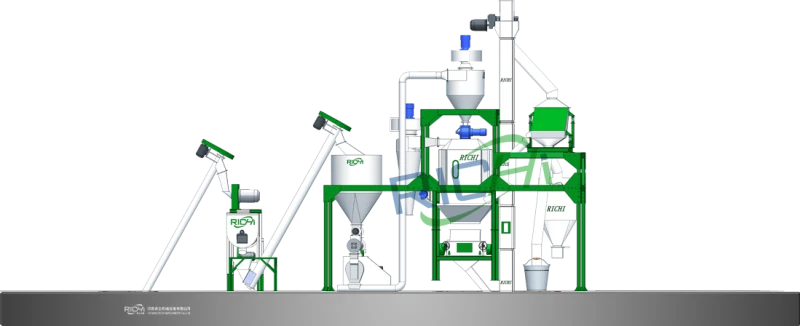
0.3–2 T/H straw feed mill
Suitable for farms, ranches, small straw processors and first-stage investors. This compact range works well where raw-material supply is limited or the customer wants to establish the market before adding more automation or capacity.
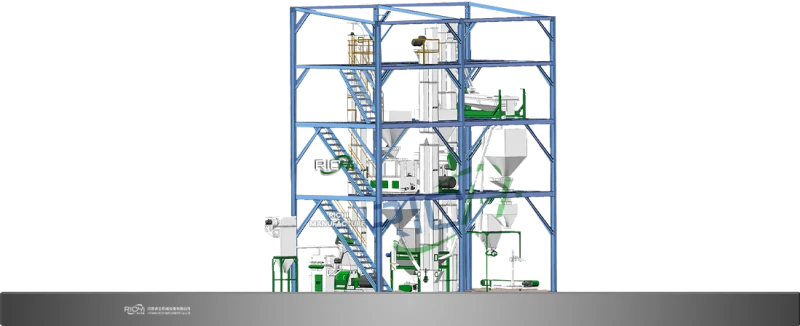
0.5–4 T/H straw feed mill
A flexible entry for cooperatives, local roughage suppliers and crop-livestock businesses handling several feed formulas. The wider range allows the line to move between high-straw and straw-grain production without being locked into one product.
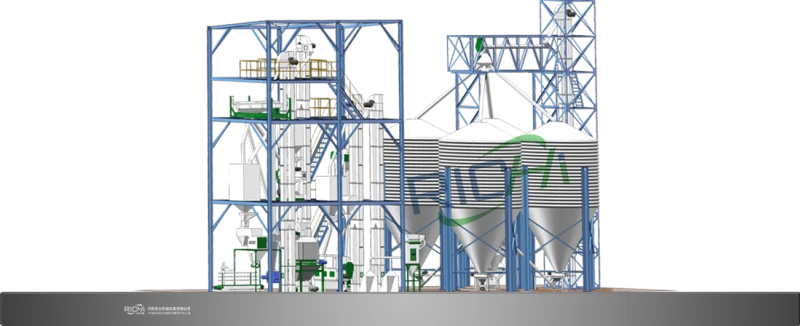
1–6 T/H straw feed mill
This scale suits growing feed businesses that need regular commercial output but still want a relatively compact plant. More stable batching, material buffering and continuous fiber feeding normally become important at this level.
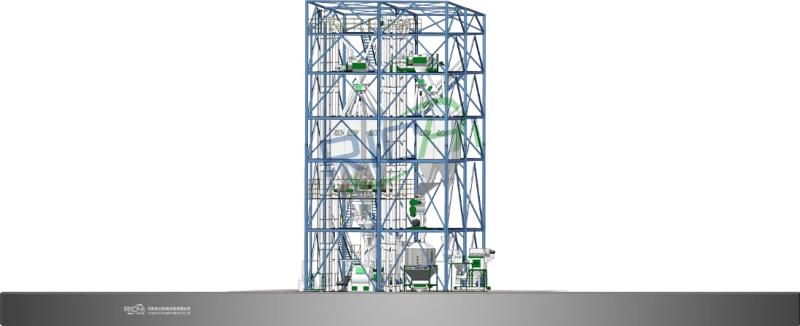
2–10 T/H straw feed mill
Designed for regional feed mills, straw processors and integrated agricultural businesses. A straw feed production line in this range can support several straw ratios and finished-feed routes, provided the fiber preparation and downstream equipment are sized together.
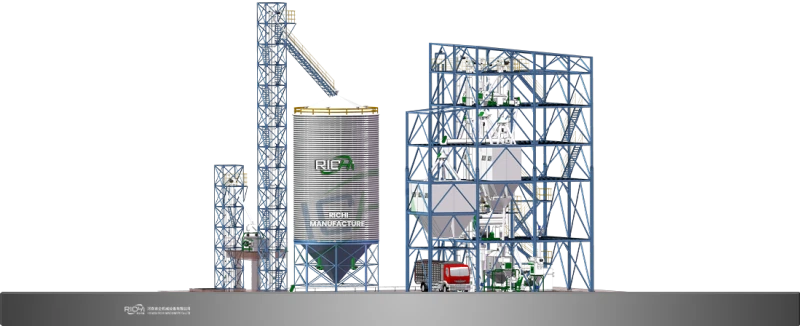
3–12 T/H straw feed mill
A practical range for commercial roughage suppliers and regional feed producers with dependable crop-residue collection. Multiple formulas, higher automation and larger intermediate storage are common requirements as daily operating hours increase.
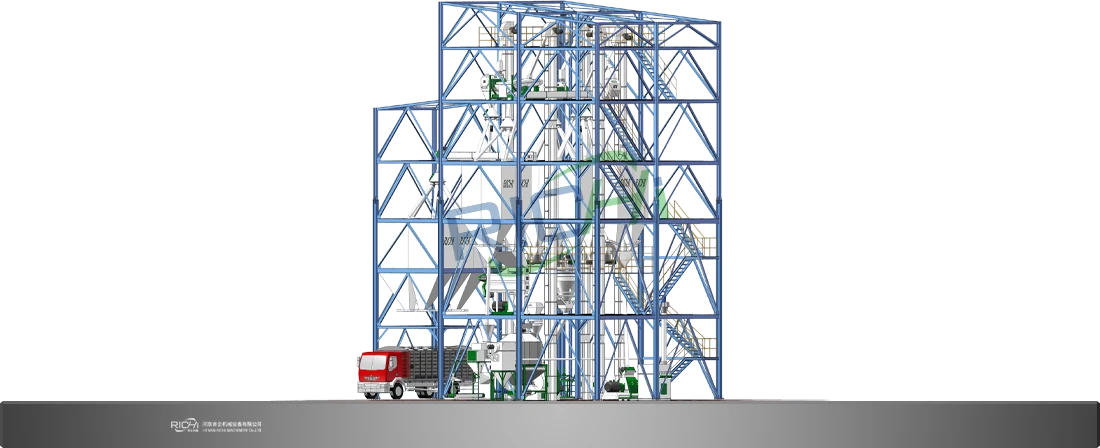
4–20 T/H straw feed mill
This range serves established feed companies, agricultural groups and larger residue-utilization businesses. High-straw formulas may already require more than one chopping, grinding or pelletizing unit to prevent the fiber section from limiting the entire plant.
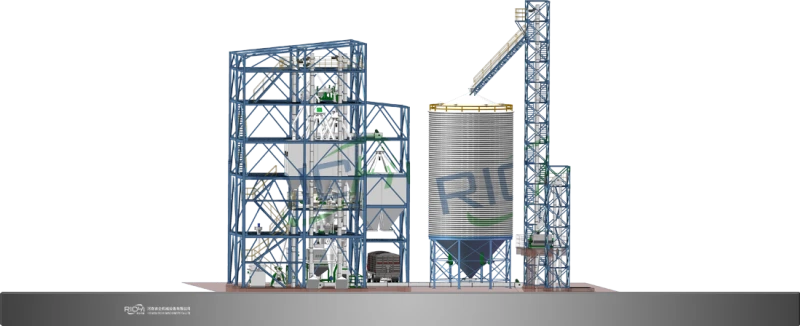
6–25 T/H straw feed mill
Suitable for larger commercial plants that need both capacity and formula flexibility. A complete straw feed mill in this range may use parallel front-end preparation or multiple pelletizing units, especially when straw content is high or several products are scheduled on the same day.

10–30 T/H straw feed mill
This capacity is aimed at large feed companies, agricultural groups and regional crop-residue processing operations. High-straw production is normally engineered as a multi-machine or parallel-line system, with chopping, grinding, pelleting, storage and conveying quantities determined from the actual mass balance rather than nominal machine capacity.
Where the Budget Actually Goes
A straw feed mill price is shaped less by one machine than by the amount of fiber preparation, automation and parallel equipment the project needs. Bale handling, two-stage size reduction, straw ratio, formula range, packing method and workshop conditions can move the budget significantly. For planning purposes, the investment should be separated into line equipment and non-equipment project costs.
Whole Manual/Automatic straw feed plant set up investment : $37,000 – $40,000,000
Equipment Costs :
Receiving & Bale Handling :
USD 5,000–120,000
Cleaning & Separation :
USD 3,000–80,000
Chopping / Primary Size Reduction :
USD 4,000–100,000
Secondary Grinding :
USD 5,000–150,000
Batching & Mixing :
USD 8,000–180,000
Pelleting System :
USD 10,000–500,000+
Cooling & Screening :
USD 6,000–180,000
Liquid Addition :
USD 3,000–80,000
Storage / Silos :
USD 5,000–300,000
Conveying System :
USD 5,000–250,000
Dust Collection :
USD 4,000–120,000
Packing / Bulk Loading :
USD 5,000–200,000
Electrical & Control :
USD 8,000–250,000
The most useful budget is one built around your real straw form, formula, working hours, workshop and expansion plan. RICHI can calculate the required process, equipment list and budget together so you can compare not only the purchase price, but the full investment needed to put the plant into operation.

What Happens Between Your Inquiry and Stable Production
A straw feed mill project involves much more than supplying machines. As a straw feed production line manufacturer, RICHI can support the project from process definition and layout through manufacturing, installation guidance, commissioning and later capacity expansion, with the scope matched to the actual plant.
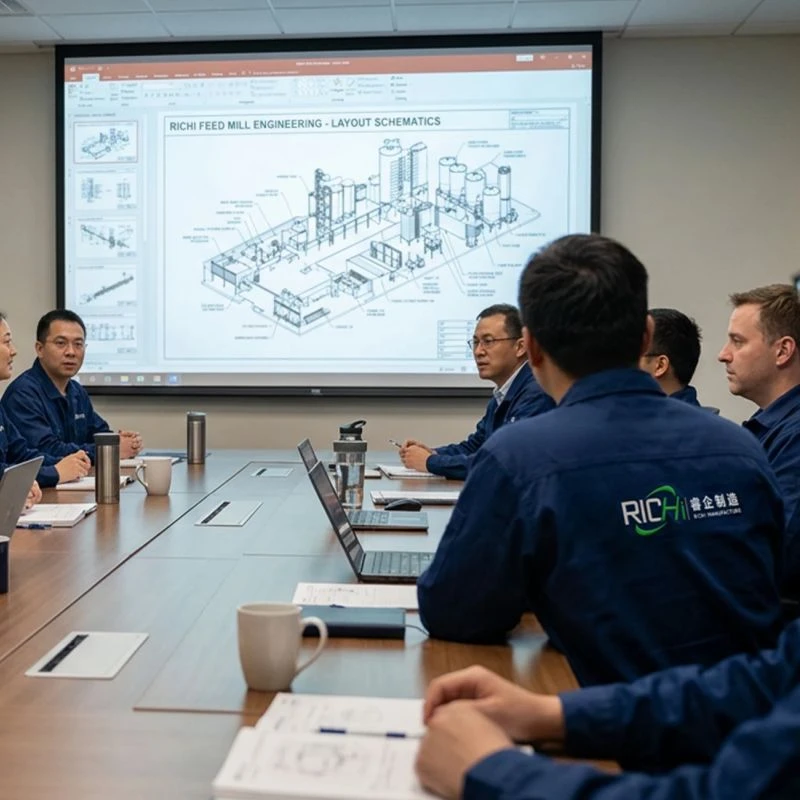
Engineering Before Equipment
We start with straw form, formula, target capacity, workshop dimensions, utility conditions and future expansion. The work may include process flow, equipment sizing, civil-interface data, layout, conveying route, dust collection, control logic and reserved connections for later upgrades.
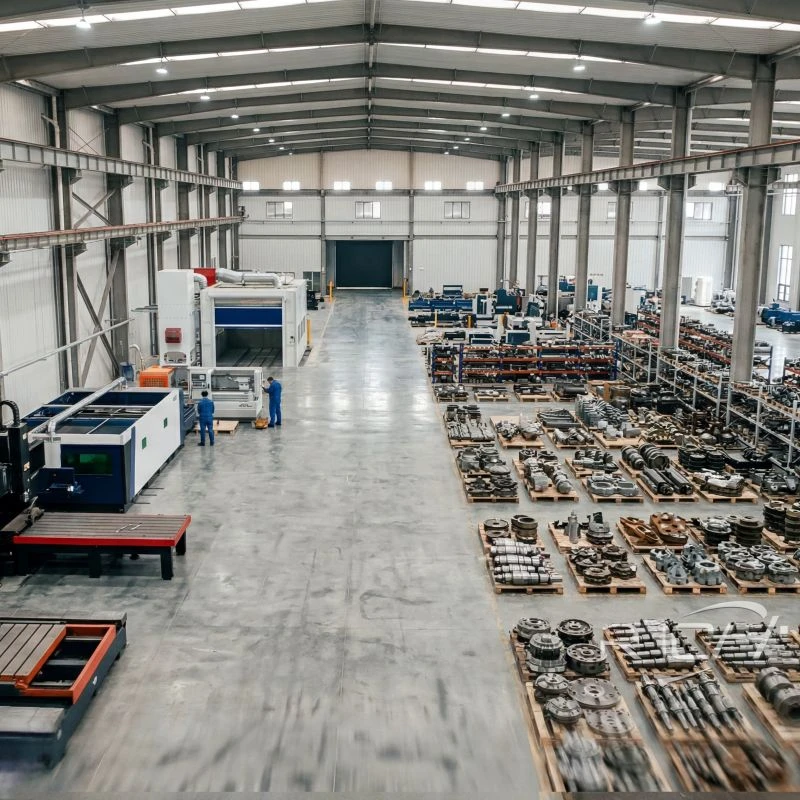
Manufacturing Around the Process
As a straw feed equipment manufacturer, we coordinate the main machines, conveying, storage, dust collection, electrical control and auxiliary systems as one line. Equipment selection is checked against fiber load, feeding stability, wear conditions and required throughput before shipment.
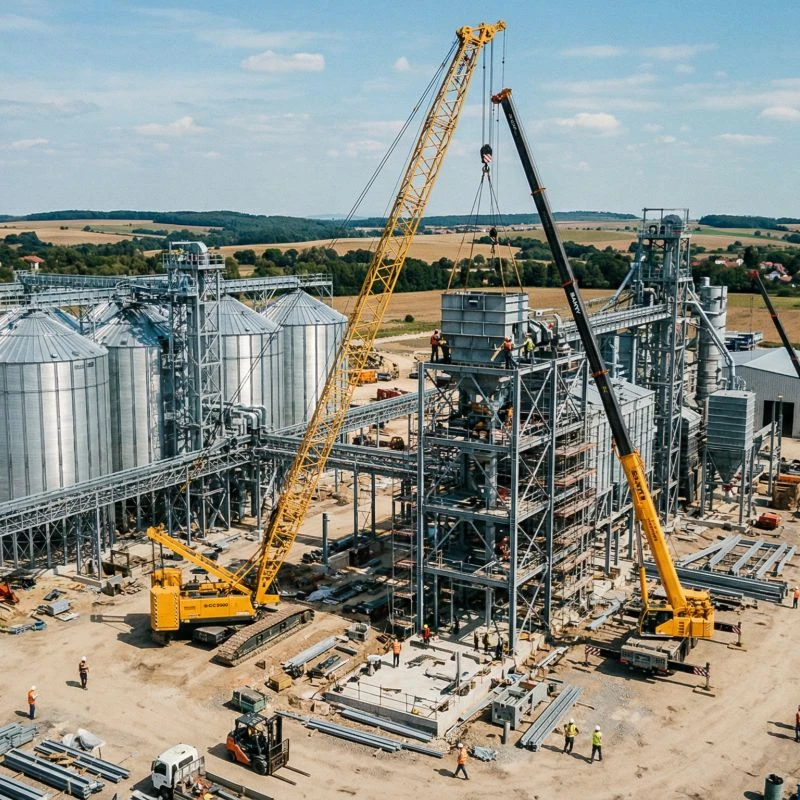
Installation and Start-Up Support
RICHI can provide installation guidance, commissioning support and operator training according to project scope. During start-up, the focus is on feeding stability, grinding load, batching accuracy, pellet quality, temperature, dust control and safe operating procedures rather than simply starting each machine individually.

Support Beyond Commissioning
After the line enters production, technical support can continue through spare-parts supply, operating guidance, troubleshooting and expansion planning. For a turnkey straw feed plant, this lifecycle approach helps keep later modifications compatible with the original process and control system.
What You Can Confirm Before Ordering
Before a straw feed mill project moves into manufacturing, buyers usually need to verify process feasibility, budget, layout and civil conditions first. As a straw feed plant manufacturer, RICHI can provide the following project-planning support according to the confirmed scope, helping customers make decisions with drawings and technical data rather than assumptions.

Project Cost Estimate
Process Flow Design
Plant Layout Package
Civil and Steel Interface Drawings
Electrical Planning
Project Reference Package
Operation and Training Support
Production Test Support
Equipment Chosen for Fiber, Not Just Capacity
A straw feed mill needs equipment that can handle long fiber, low bulk density, bridging and uneven feeding without creating bottlenecks. RICHI can configure the complete line with bale receiving, a straw bale breaker, cleaning, a straw chopping machine, secondary grinding, batching, mixing, conditioning, pelleting, cooling, screening, conveying, dust collection, storage, packing and electrical control.
The exact equipment combination depends on the incoming straw form, required particle size, straw-to-grain ratio, pellet specification and target output. For example, a line handling large bales may need stronger front-end breaking and feeding, while a project receiving pre-chopped straw can simplify that section and put more capacity into grinding, mixing or pelletizing.

Straw Bale Breaker

Straw Hammer Mill

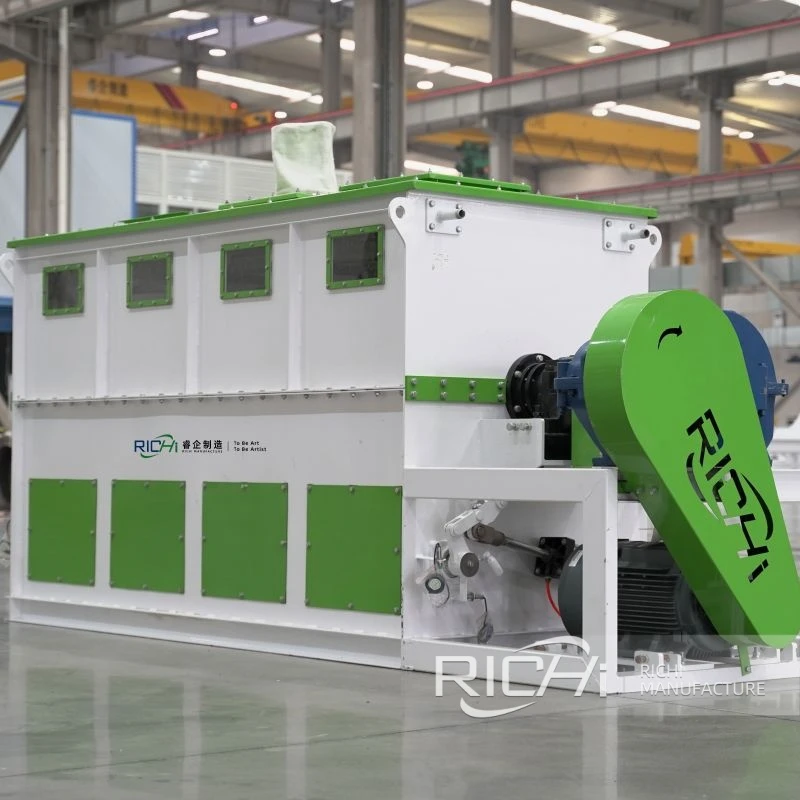


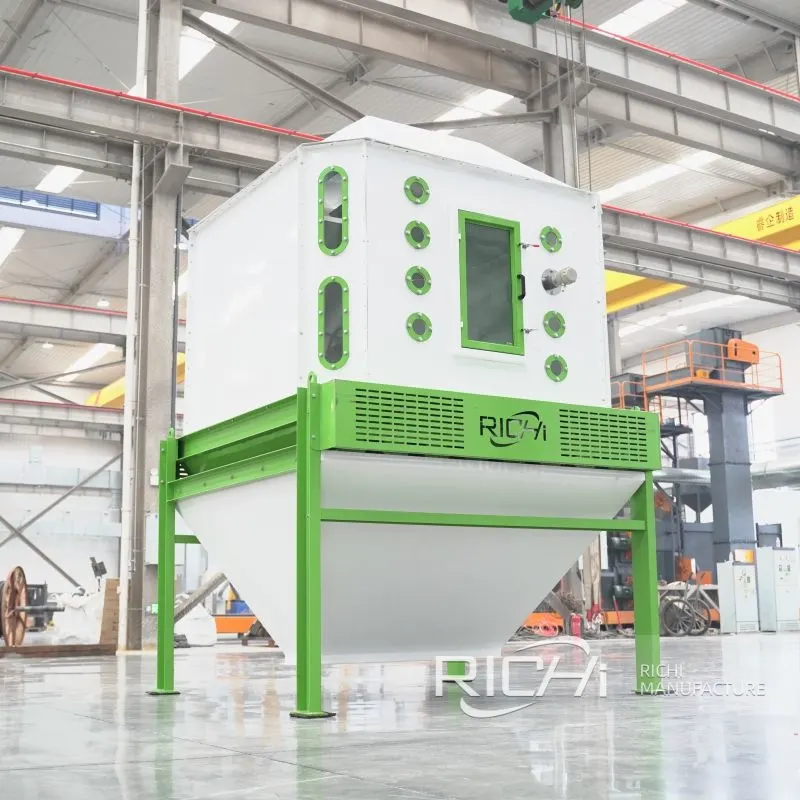
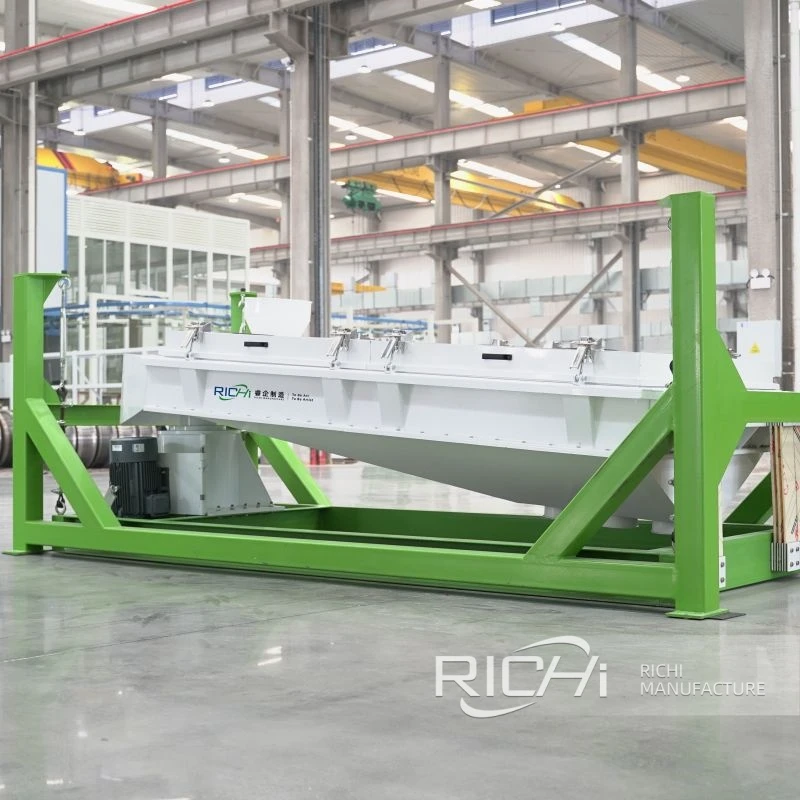
straw Feed Screener Machine
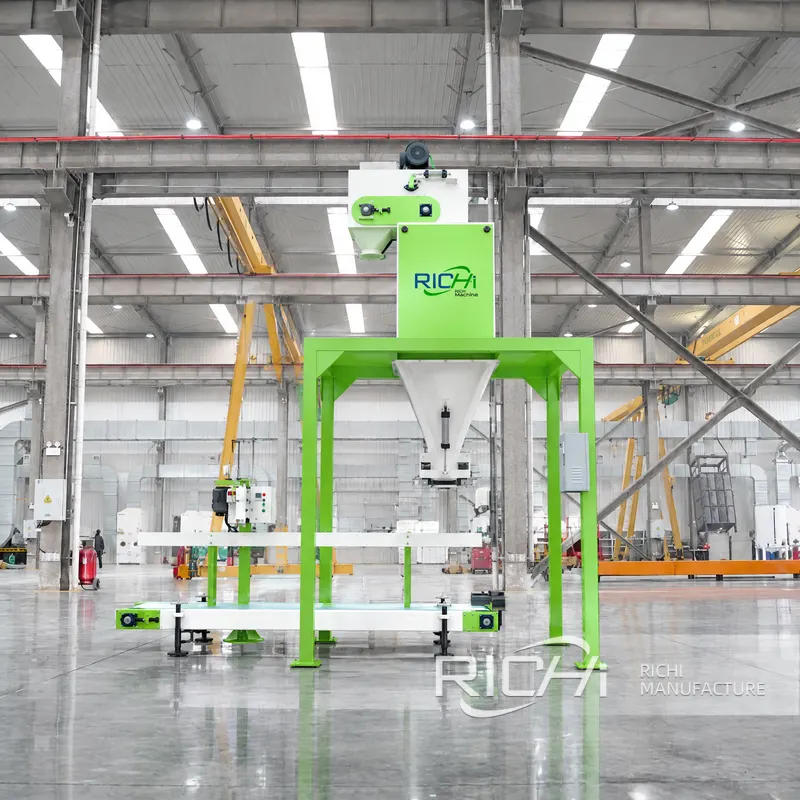
straw Feed Bagging Machine
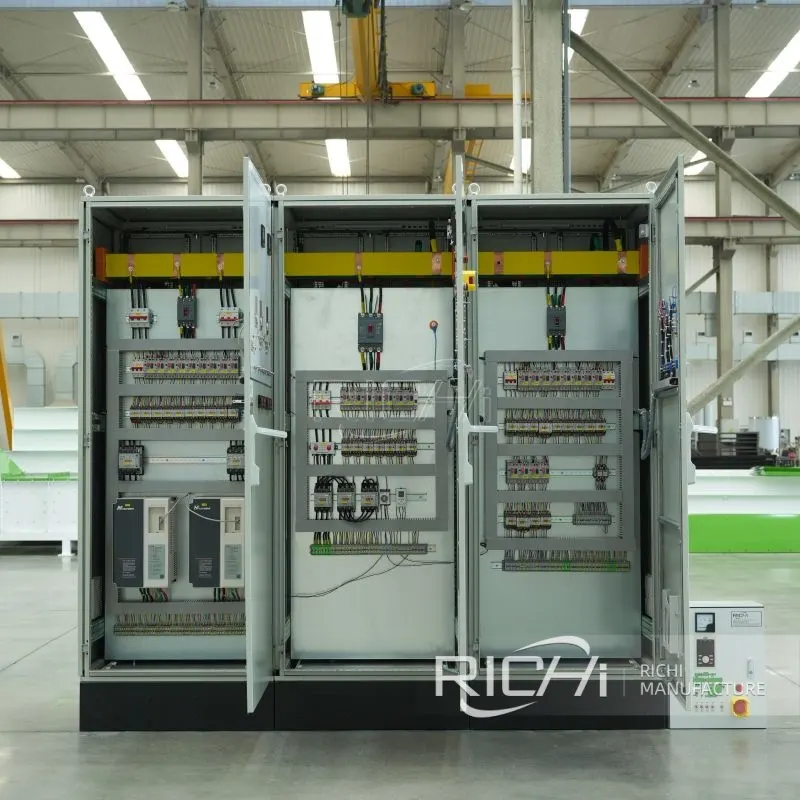
Electronic control system
After reviewing the machines shown here, you can explore the full equipment range and select only the sections your project actually needs.
Where a Straw Feed Business Can Actually Make Sense
A straw feed mill has the strongest commercial logic where three conditions overlap: stable access to feed-suitable crop residues, a nearby livestock market, and enough annual volume to justify mechanized processing. The opportunity is not simply “turning waste into feed”; it comes from reducing the handling problem of bulky straw, improving product consistency, and supplying roughage or compound feed in a form that is easier to store, transport and use.
For investors seeking better margins, the most practical route is usually to build flexibility into the plant from the start. One line can be designed to switch between mash and pellets, handle different straw ratios, or produce both simple roughage products and higher-value straw-grain compound feed. This helps the business respond to seasonal raw-material supply and changing customer demand instead of depending on one product all year.
Assess My Straw Feed Opportunity
straw Feed Types & Raw Materials
A straw feed mill has to be designed around more than the straw itself. Cereal straw, coarse stalk residues, grain and bran, protein meals, molasses, minerals and other approved ingredients behave differently during grinding, dosing and pelleting. Our job is to translate the customer’s confirmed feed formula into the right preparation, batching and finishing route—not to force every formulation through the same equipment.
Different livestock use straw-based feed in different ways. A straw feed mill therefore has to adjust straw inclusion, grinding degree, ingredient structure and pellet specification according to the target animal rather than treating all roughage feed as one product.

corn stover

oat straw

rice straw

wheat straw

grain

bran

premix

Dairy Cattle Straw Feed
Dairy cattle feed may use wheat straw, rice straw, barley straw or corn stover as part of the roughage component, normally together with grain, bran, protein ingredients and minerals. The process should avoid excessive fiber pulverization and maintain consistent mixing; pelletized products commonly use about 6–10 mm pellets where pelleting is required.
Design a Dairy Straw Feed Line

Beef Cattle Straw Feed
Beef cattle formulas can accommodate relatively high levels of suitable crop residues when the complete ration is properly balanced. These projects often emphasize high-throughput chopping, stable grinding and economical straw-grain blending, with mash or approximately 6–12 mm pellets selected according to the feeding system.
Configure a Beef Cattle Feed Line

Buffalo Straw Feed
Buffalo feeding systems in South and Southeast Asia frequently make practical use of rice straw, wheat straw and other locally available roughage resources. A buffalo straw feed line commonly needs flexible straw preparation and accurate addition of energy and protein ingredients, especially when seasonal raw materials change.
Plan a Buffalo Straw Feed Line

Sheep Straw Pellets
Sheep feed generally requires more controlled particle size and smaller finished pellets than large-cattle roughage products. Suitable cereal straw can be combined with grain, bran and protein ingredients, with approximately 4–8 mm pellets commonly considered where pelleted feed is required.

Goat Straw Feed Pellets
Goat feed can use suitable wheat straw, barley straw, sorghum residue or other approved roughage ingredients as part of a balanced formulation. Consistent grinding and mixing are especially important when straw is combined with concentrated ingredients; common pellet projects typically fall around 4–8 mm depending on the feeding program.

Camel Straw-Based Feed
Camel feed projects in arid regions may combine cereal straw or other suitable crop residues with barley, bran, oilseed meals and mineral ingredients. Because formulas can range from roughage-rich maintenance feed to more concentrated compound feed, the line should allow flexible dosing and usually produces mash or roughly 6–10 mm pellets.
Discuss a Camel Feed Project

Yak Straw Feed
Yak feeding in plateau regions can use highland barley straw and oat-based roughage as supplementary fiber, especially when pasture quality falls in winter. A yak straw feed line should retain effective fiber while allowing grain, protein and mineral ingredients to be added where the feeding program requires them; the straw must be dry, clean and free from mold before processing.
Design a Yak Straw Feed Line

Rabbit Straw Fiber Feed
Cereal straw—particularly oat straw, but also other suitable cereal or crop residues—can be used as a fiber ingredient in properly balanced rabbit feed rather than as the main nutritional component. Because rabbits are sensitive to excessive dust and feed structure, straw should be finely and uniformly prepared before mixing; commercial rabbit pellets are commonly around 3–4 mm in diameter.

Other Straw-Feed Applications
Horse, donkey and deer feed can also include straw, but usually at more controlled inclusion levels than mainstream ruminant feed. Clean wheat, barley or oat straw may be used for horses, while barley straw is especially common for donkeys; deer applications are more limited and should be professionally formulated. In all cases, the straw must be clean, dry and free from mold, excessive dust and foreign material.
Explore Other Straw Feed Applications
Typical Process-Design Formula
High-Straw Roughage Pellet Example
This formula places most of the production load on chopping, grinding and fiber feeding rather than on grain preparation.
Feed-suitable straw
70%
Wheat Bran
12%
Grain ingredient
8%
Protein meal
7%
Molasses / mineral premix
3%
…
Alternative ingredients by formula
Cattle Straw-Grain Pellet Example
Here, the straw and grain streams are normally prepared separately before accurate batching and mixing.
Prepared straw
40%
Corn / barley
30%
Bran or milling by-product
15%
Protein meal
12%
Mineral / premix component
3%
…
Adjusted by nutritionist
Sheep and Goat Straw Feed Example
This structure puts more emphasis on uniform grinding, dosing and mixing than a simple roughage-pellet route.
Prepared straw
35%
Barley / corn
25%
Bran
20%
Oilseed meal
15%
Molasses / mineral premix
5%
…
Formula varies by feeding program
Mixed Crop-Residue Feed Example
With two fibrous materials in the same formula, the front end may need separate size-reduction settings before the materials meet in the mixer.
Cereal straw
40%
Corn stalk / stover
25%
Bran
15%
Grain ingredient
10%
Protein meal / premix
10%
…
Other approved ingredients
The examples above are process-design references only, not feeding recommendations. Actual formulas must be confirmed by the customer or a qualified animal nutritionist according to animal type, production stage, straw analysis, treatment method and local regulations. RICHI uses these structures mainly to determine grinding load, batching accuracy, mixing, liquid addition and pelletizing requirements.
Straw Feed Mill Faqs
Can One Straw Feed Mill Handle Different Crop Residues?
+
Yes, but the line should not treat every straw as the same material. A straw feed mill can be designed for several feed-suitable crop residues and multiple formulas, provided the receiving, size reduction, feeding and pelletizing sections are matched to the physical properties of each material.
| Material Scenario | Main Engineering Concern | Typical Design Response |
|---|---|---|
| Rice straw feed processing | Higher ash/silica, light density, dust and wear | Stable feeding, wear-resistant parts, suitable screen/die selection and stronger dust control |
| Corn stalk feed processing | Coarse stalks and harder nodes | Primary chopping before finer grinding; two-stage reduction is often more stable |
| Corn stover feed processing | Mixed stalk, leaf and husk fractions with uneven density | Controlled receiving, size reduction and buffering before batching |
| Barley straw feed processing | Light fibrous material with variable length | Anti-bridging feeding and controlled grinding rather than excessive fine milling |
| Sorghum straw feed processing | Coarser, tougher stalk structure in some supplies | Heavier chopping duty and equipment sizing based on actual stalk condition |
| Chopped straw feed processing | Material is already partly reduced | Bale breaking or first-stage chopping may be removed if feed size is already suitable |
The same principle applies to formula changes. A 100% straw product, a 60% straw compound feed and a grain-dominant livestock formula may use the same factory, but they do not impose the same load on the equipment. Fiber content changes feeder stability, hammer-mill demand, mixer loading, pellet-mill throughput and energy use.
For this reason, RICHI normally works through the project in this order:
- Confirm feed suitability, straw type, moisture, contamination risk and incoming form.
- Check the target feed, formula range, pellet or meal specification and required output.
- Calculate material flow and determine which sections need separate or shared processing.
- Size storage, grinding, batching, pelleting and conveying from the highest real process load.
- Reserve bypasses or expansion interfaces where the customer expects new formulas or higher capacity later.
A good straw feed processing plant is therefore not the one with the most equipment. It is the one that removes unnecessary machines where possible, adds protection where the straw actually creates a problem, and keeps the line flexible enough for the customer’s real production plan.
What is the straw feed mill price?
+
A high-fiber straw feed mill price can start around USD 37,000–62,000 for a 0.3–2 T/H system, while a 4–20 T/H line may be around USD 300,000–620,000 based on the configurations you provided. Bale handling, grinding stages, straw ratio, automation, packing and the number of pelletizing units are the main factors that move the quotation.
Can large square bales go directly into a hammer mill?
+
No. Large bales normally need controlled opening and primary size reduction before a straw hammer mill. Feeding whole bales directly into conventional fine-grinding equipment can cause unstable loading, blockage and excessive power demand.
Do round and square bales use the same feeding system?
+
Not always. Bale dimensions, density and tying method determine whether the line needs a straw bale breaker, hydraulic feeding table or another controlled-opening arrangement. Compressed bales may require a different feeding force from loose round bales.
How do we deal with bale twine and net wrap?
+
They should be removed before the material enters high-speed processing equipment. A straw bale shredder should not be expected to safely process plastic twine, wire or net wrap; foreign-material control must be included at receiving.
Can baled and loose straw use one line?
+
Yes, but they often need two front-end feeding routes that merge after primary size reduction. The baled stream requires opening, while long loose straw normally enters a chopping section before both materials reach common downstream equipment.
Can I remove the first-stage chopper if my straw is already chopped?
+
Yes, if the incoming particle size is stable, uniform and suitable for secondary grinding. In that case, the line can bypass the first chopping stage and feed material directly to a straw crusher for animal feed or secondary grinder, reducing equipment count, power consumption and investment. Before removing the chopper, however, we still need to check fiber length, bulk density, moisture and whether oversized pieces remain in the incoming material.
We already receive straw meal. How much equipment do we still need?
+
Much less front-end equipment may be required. If particle size and moisture are already suitable, the line can begin from storage, dosing and mixing; if pellets are required, the downstream straw feed making machine section can then include conditioning, pelleting, cooling and screening.
Can wheat, rice and corn residues run through the same machines?
+
Sometimes, but they should not automatically use identical settings. Fiber length, stalk hardness, bulk density, ash and abrasiveness differ significantly, so screen size, feeder speed, hammer configuration and pelletizing parameters may need to change between materials.
Will rice straw wear the line faster?
+
It can cause higher wear than some cereal straws because rice straw commonly contains relatively high ash and silica. Hammer, screen, die, roller and dust-system selection should therefore be reviewed for long-term rice straw feed processing, especially at commercial operating hours.
Our corn stalks are very coarse. Is one grinder enough?
+
Often not. Coarse stalks and hard nodes are usually more stable with primary chopping followed by secondary grinding, so a properly sized straw chopping and grinding line is preferable to forcing long stalks directly into a fine grinder.
My straw is already dry. Do I still need a dryer?
+
Usually no. A dryer is not standard equipment in a dry-straw feed line; it should only be added when measured incoming moisture, storage condition or downstream processing actually requires moisture reduction.
What if the straw was rained on during storage?
+
Do not feed wet or deteriorated straw directly into production without checking it first. Moisture, mold, heating, contamination and storage damage should be assessed; material that is unsuitable for feed must be rejected rather than “fixed” by the processing line.
Why does output change when the straw ratio changes?
+
Higher fiber loading usually reduces effective throughput compared with a grain-dominant formula. The actual output of a straw feed pelletizing machine is affected by fiber length, bulk density, grinding fineness, conditioning, pellet diameter and formulation, so 100%, 80%, 50% and 20–30% straw formulas should not be quoted at one identical capacity.
Should straw and grain be ground together?
+
Usually they are better prepared separately before batching. Straw may need chopping and fibrous grinding, while corn, barley, bran, soybean meal or oilseed meal require different handling; both streams can then meet at weighing and mixing according to the confirmed formula.
We only want ground straw feed. Which machines can we remove?
+
Pelleting, pellet cooling and pellet screening can normally be removed from a mash-only project. The required straw feed production equipment may therefore stop after receiving, size reduction, dosing, mixing and finished-meal handling, depending on the product specification.
Can one line produce both mash and pellets?
+
Yes. A diversion or bypass can send mixed feed either to mash discharge or onward to pelleting, cooling and screening. The layout should also provide suitable cleanout and production sequencing when several formulas share the same equipment, helping limit carryover between batches.
Can we make several pellet diameters on the same line?
+
Yes, within the operating range of the selected straw feed pellet machine and suitable dies. Changing pellet diameter affects die specification, conditioning, throughput and sometimes cooling demand, so buyers comparing a straw feed pellet plant for sale should define all required pellet sizes before equipment selection.
We already have a grain feed mill. Can you add only the straw section?
+
Yes. An existing grain mill can often be retrofitted with straw receiving, bale opening, chopping, grinding and suitable conveying before the prepared fiber joins the existing batching or mixing system. Motor loads, mixer capacity, controls and downstream pelletizing equipment must still be checked against the new high-fiber formulas.
Can our old mixer and packing machine be reused?
+
They can be reused if capacity, condition and process compatibility are confirmed. A responsible straw feed machinery manufacturer should check existing straw feed machinery and other usable plant equipment before recommending replacement simply to increase the equipment package.
Our workshop is low. Do we need a new building?
+
Not necessarily. A low building can sometimes use more horizontal transfer, screw or drag conveying, lower intermediate bins and a revised equipment arrangement instead of a tall gravity-flow tower, although additional floor area may be required.
Can the plant be built without a receiving pit?
+
Yes. Where groundwater is high, excavation is expensive or the customer wants simpler civil works, above-ground bale or loose-straw feeding can be designed. The trade-off is usually additional conveying and potentially more floor space.
Can you retrofit a line around our existing columns and warehouse?
+
Yes, provided the building survey confirms enough structural capacity and access. Column spacing, door width, roof height, foundation condition, maintenance clearance and existing silo locations should be included in the layout before equipment is finalized.
How do you prevent long straw from bridging in bins?
+
The solution starts with controlling fiber length before storage and using bins, outlets and feeders designed for fibrous material. Anti-bridging devices, suitable wall angles and controlled extraction can be added where the material tends to interlock or form stable arches.
We need 1–2 T/H now but 4–5 T/H later. How should Phase 1 be built?
+
Reserve expansion interfaces from the beginning. Conveyor width, electrical capacity, control I/O, structural space, storage and connection points can be sized so a second grinder or straw feed pellet making machine can be added later without rebuilding the complete factory.
If we may reach 10 T/H later, should the front end be oversized now?
+
Sometimes that is the better investment. If future straw supply is credible, receiving, bale handling and primary size reduction can be sized for the later stage while downstream equipment is installed in phases; the decision should be based on mass balance and capital availability rather than automatically oversizing everything.
Why do high-straw plants above 20 T/H need parallel lines?
+
Because one machine train can become a bottleneck when large volumes of low-density fiber must be chopped, ground and pelletized continuously. A qualified straw feed pellet plant manufacturer should determine the number of parallel preparation and pelletizing trains from the formula-specific mass balance instead of claiming that one oversized machine will always reach the nominal plant capacity.
Does the country change the process design?
+
Yes, because locally available residues and operating conditions differ. India and Pakistan may place more emphasis on wheat and rice straw, Bangladesh and Vietnam commonly require rice-residue solutions, while Indonesia may involve rice straw and other locally available residues; the route should follow verified feed-suitable resources rather than assigning the same raw material to every country.
Should we choose manual feeding or full automation?
+
Choose automation where production volume, labor cost and operating consistency justify it. When comparing a straw feed plant for sale, customers in higher-labor-cost markets may prioritize automatic bale feeding, central control and automatic packing, while a smaller first-stage plant may deliberately retain manual ingredient feeding to control investment.
Should finished pellets be bagged or loaded in bulk?
+
Either route is possible, and many commercial plants use both. Bagging suits retail or distributed sales, while bulk loading can reduce packaging labor for farms or large regular buyers; a straw feed production line for sale should therefore be evaluated against the customer’s actual dispatch model rather than automatically including a bagging machine.
What information do you need before designing our plant?
+
Send the straw type and form, bale size if applicable, moisture, expected contaminants, formula range, required capacity, finished product, pellet size, working hours and workshop or site drawing. From there, RICHI can develop the process, equipment selection, quotation and layout, then move through manufacturing, installation support and commissioning according to project scope; this is also the information a serious straw feed production line manufacturer needs before giving a defensible quotation.
Before comparing quotations, also check whether the supplier has addressed dust collection, fiber leakage, housekeeping, fire-risk control, access for cleaning and residue control between formulas. These details often distinguish a workable production line from a machine list that only looks complete on paper.
We process wheat, barley and oat straw in Canada. Can one grinding section handle all three?
+
Yes, but do not lock the line to one setting. For a 3–12 T/H beef-feed or roughage plant, screen size, feeder speed and grinding load should be adjusted between wheat, barley and oat straw because their fiber structure and feeding characteristics are not identical.
Can teff straw run with wheat and barley straw in Ethiopia?
+
Yes, if each material is confirmed suitable for the intended ration. A 1–6 T/H cooperative or mixed-farm line can share downstream mixing and pelleting equipment, while teff, wheat and barley straw are checked separately for particle size, density and grinding behavior before they reach the common section.
Our Indian plant changes from rice straw to wheat straw after harvest. Do we need two complete lines?
+
Usually no. A 6–25 T/H dairy or buffalo-feed plant can share much of the downstream system, but rice and wheat straw should not automatically use identical front-end settings. Storage segregation, cleaning, wear control and grinding parameters should be planned for seasonal changeover.
A Kenyan customer has maize stover and sorghum stover. Which should be chopped first?
+
Both usually require primary size reduction when supplied as long stalk material. For a 2–10 T/H dairy-roughage business, the actual stalk diameter, node hardness and incoming length determine chopper duty before secondary grinding rather than the crop name alone.
Can Turkish sheep-feed producers use wheat and barley straw in the same formula?
+
Yes, provided the formula is nutritionally confirmed. A 3–12 T/H plant serving sheep or goat farms can prepare wheat and barley straw through the same factory, but ingredient ratios, grinding target and supplementation should follow the finished ration rather than assuming the two straws are interchangeable.
Our Moroccan straw supply changes after dry years. Should we oversize storage?
+
Often, storage flexibility is more useful than simply oversizing processing machines. For a 1–6 T/H sheep-feed business using wheat or barley straw, seasonal collection, bale density and supply interruptions should determine raw-material warehouse and buffer capacity.
Does a 10–30 T/H Australian straw plant need automatic bale feeding?
+
For large commercial plants, it is usually worth considering. When wheat, barley or oat straw is handled continuously, automatic bale feeding and centralized conveying can reduce repetitive manual handling and help keep several downstream machines supplied more evenly.
We receive dense large-square wheat bales in Kazakhstan. Is bale opening enough before grinding?
+
Not necessarily. Dense bales need controlled opening first, but long fibers released from the bale may still require primary chopping before fine grinding. A 4–20 T/H line should be sized from the material condition after bale opening, not from bale weight alone.
Can a Spanish cereal-straw plant make both cattle and sheep pellets?
+
Yes, if the line is designed for recipe and pellet-size changes. A 4–20 T/H plant using wheat or barley straw can share major equipment, while formulation, die specification, conditioning and production scheduling are changed for the intended product.
How should a Bangladesh rice-straw plant deal with monsoon-season material?
+
Keep wet or poorly stored straw out of normal dry processing until moisture and feed quality are checked. For a 0.5–4 T/H cooperative, covered storage, lot segregation and moisture control can be more important than installing a dryer for every batch.
Is a dryer necessary for rice straw collected in Indonesia?
+
Only when actual moisture requires it. A 0.3–2 T/H local feed business should measure incoming material first; properly dried rice straw can bypass drying, while rain-affected material requires separate assessment before processing.
Can corn stover and wheat straw share one line in Argentina?
+
Yes, but the front end should allow different size-reduction settings. For a 6–25 T/H beef-feed operation, coarse corn stalk fractions may place a heavier load on chopping than wheat straw, while common batching, mixing and pelletizing sections can be shared afterward.
We have soybean straw in Brazil. Can it replace cereal straw in a cattle-feed project?
+
Do not assume so. Soybean straw is much less attractive as a principal roughage source than many cereal or pulse straws, so its nutritive value and practical inclusion should be confirmed before it is incorporated into a commercial feed process.
Pakistan gives us both loose wheat straw and baled rice straw. Can we merge them before grinding?
+
Yes, but only after separate receiving steps have prepared them to a compatible condition. A 3–12 T/H dairy or buffalo-feed plant can use a bale-opening route for rice straw and a loose-straw chopping route for wheat straw before both streams enter common downstream processing.
Can an Egyptian rice-straw line also make fortified cattle feed?
+
Yes. A 2–10 T/H line can prepare rice straw first, then add grain, bran, protein ingredients, minerals or molasses according to a qualified formula. The plant should treat fortification as controlled batching and mixing, not as a reason to bypass straw-quality checks.
We process maize stover for cattle in South Africa. How fine should it be ground?
+
Only as fine as the finished feed and pelletizing process require. Excessive fine grinding of fibrous material increases energy use and can reduce throughput, so a 5–10 T/H maize-stover line should establish the target particle range from the formula and pellet specification.
Can pea straw be mixed with cereal straw in a Canadian roughage line?
+
Potentially yes. Pea straw has different nutritional and physical characteristics from wheat, barley or oat straw, so a 3–12 T/H mixed-roughage project should treat it as a separate ingredient in formulation and batching rather than simply substituting it tonne-for-tonne.
We have rye, triticale and wheat straw in Poland. Do we need separate pellet mills?
+
Usually not solely because the cereal species change. A regional 4–20 T/H plant can often share pelletizing equipment, while front-end settings, formula proportions and operating parameters are adjusted to each straw lot.
Can sorghum and millet stover be processed together in Ethiopia?
+
Yes, where both are confirmed as suitable livestock-feed resources. In a 1–6 T/H crop-livestock project, their stalk condition and particle size should determine chopping and grinding settings, while downstream mixing can combine them with other approved ingredients.
Are chickpea and lentil straw processed exactly like wheat straw?
+
No. Pulse straws can have different nutritive value, stem structure and bulk behavior from cereal straw. Where chickpea or lentil residues are available—for example in South Asian or Mediterranean crop-livestock systems—they should be tested and treated as distinct ingredients before equipment settings and formulation are finalized.
Can a Saudi livestock company import compressed barley straw and pelletize it locally?
+
Yes, provided the imported material meets feed-quality and regulatory requirements. For a 2–10 T/H plant, compressed-bale density, container unloading, bale opening and warehouse turnover should be considered before the grinding and pelletizing sections are selected.
Our Romanian customer wants to use wheat straw now and sunflower stalks later. Can we reserve for both?
+
Reserve the mechanical interface, but do not assume sunflower stalks are automatically suitable feed. The initial 3–12 T/H system can allow future receiving and size-reduction capacity, while nutritional suitability and local feed rules must be checked before any new crop residue is introduced.
Can flax straw be added to a Canadian beef-cattle roughage product?
+
Possibly, but only after feed analysis and formulation review. Flax straw should not be treated as an automatic equivalent to oat or barley straw simply because the same farm produces it; its inclusion and processing settings need separate confirmation.
Does a 0.3–2 T/H Nepal project need the same automation as a 20 T/H factory?
+
No. A small cattle or buffalo-feed project using rice or wheat straw may deliberately use manual ingredient feeding and simpler finished-product handling, while retaining the core controls needed for safe, repeatable processing.
We collect sorghum straw from several farms in Sudan. How do we manage inconsistent material?
+
Separate incoming lots and control them before they reach the main process. A regional straw processor should check moisture, stalk length, contamination and storage condition because mixed suppliers can create much larger feeding and grinding variation than one controlled source.
Can barley straw from different harvest years be mixed in one batch?
+
Only after quality checks show both lots are suitable. Older straw can differ in moisture, contamination, brittleness and storage damage, so blending should follow inspection and feed-formulation requirements rather than being used to dispose of aged inventory.
Our US feed mill has corn stover but no space for a new tall building. Can we retrofit horizontally?
+
Often yes. A 5–10 T/H retrofit can use more horizontal conveying and compact intermediate storage, although floor-space demand may increase. The existing building dimensions and structural loads should be checked before equipment positions are fixed.
Can a New Zealand cattle-feed plant use cereal straw only seasonally?
+
Yes. If straw is a seasonal ingredient rather than the plant’s year-round base material, the receiving and grinding section can be designed as a flexible module feeding an existing batching system instead of duplicating an entire feed mill.
How should a 6–25 T/H mixed-straw factory control formula changeover?
+
Use segregated storage, accurate batching, planned production sequencing and accessible cleanout points. Where wheat, barley, rice or other approved straw formulas alternate frequently, residue control must be considered in the conveyor, mixer and finished-product sections—not only in the main machines.
We plan several straw types but do not know the final mix yet. Can RICHI still design the plant?
+
Yes, if the likely raw-material envelope is defined first. Provide the expected straw types, bale or loose form, moisture range, approximate formula range, target products and capacity; the line can then be designed around the most demanding realistic case while retaining adjustment for less difficult materials.