

 0086-138 3838 9622
Rabbit Manure Pellet Machine
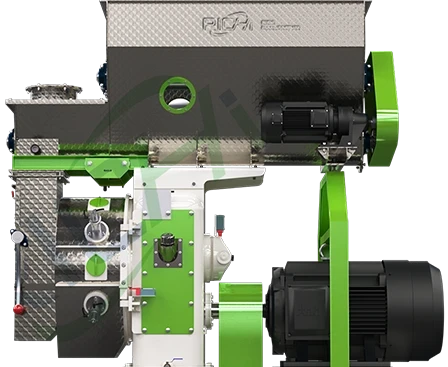
Rabbit manure pellet machine turns prepared rabbit manure into consistent fertilizer pellets for commercial production. Built for rabbit farms, manure processors and fertilizer producers, RICHI FZLH machines cover different production scales and can be matched to pure rabbit manure or formulated organic fertilizer products.
Built for Real Rabbit Manure Conditions
Rabbit manure does not reach every plant in the same form. Some customers collect relatively dry droppings, while others handle fresh manure, composted material, or manure mixed with hay, feed residues and plant-based bedding. RICHI configures the rabbit manure pellet machine around the prepared feedstock and required fertilizer product, allowing commercial processors to turn these different material streams into easier-to-handle, package and market pellets.
With capacity starting at 1 T/H, this equipment is intended for customers with a reliable commercial-scale material supply rather than very small rabbit farms. Large farms, multi-farm operators and fertilizer manufacturers can size production around recoverable rabbit manure, added organic materials and actual operating hours.
RICHI supplies more than a rabbit manure fertilizer pellet machine. Depending on the project, we can provide a complete pellet or powder fertilizer line, a combined system producing both products, or individual crushing, mixing, drying and other processing modules. Existing customer equipment can also be incorporated where it genuinely fits the new process.
Where Rabbit Manure Pelletizing Makes Business Sense

Commercial Rabbit Farms
Large rabbit farms are the most direct raw-material owners because manure is generated every day from their own houses. Depending on the housing system, the collected material may include relatively dry droppings, wetter manure, hay, feed fines or plant-based bedding. Pelletizing helps farms with enough volume turn this material into a more standardized fertilizer product for internal use or sale.

Rabbit Farming Companies
Companies operating several rabbit farms can collect manure from multiple sites and process it centrally. This makes it easier to reach commercial production volumes than relying on one farm alone. A centralized rabbit manure pelletizer can handle manure with different bedding conditions after controlled preparation, helping the company reduce duplicated treatment at each farm.

Organic Fertilizer Manufacturers
These customers can purchase rabbit manure from farms and combine it with other livestock manure, mature compost or suitable agricultural residues. Their advantage is feedstock flexibility: rabbit manure becomes one ingredient in a wider fertilizer portfolio. RICHI can match the rabbit manure fertilizer pellet machine to the formulas and production scales the factory actually plans to run.

Manure & Agricultural Waste Recyclers
Recycling companies often collect several manure and crop-waste streams instead of relying on rabbit manure alone. Their rabbit manure may arrive with different moisture, bedding content and levels of pretreatment. A flexible rabbit manure processing system allows this material to be integrated into mixed-organic fertilizer production after the required sorting, crushing, composting or blending.

Integrated Crop-Livestock Farms
These operations combine rabbit production with orchards, greenhouses, vegetables or field crops, so they have both a manure source and a direct fertilizer outlet. Rabbit manure can be processed together with suitable plant residues from the same farm, allowing nutrients to be returned to crop production while surplus pellets can be sold as an additional farm product.

Rabbit Manure Drying/Processing Plants
These customers already dry, compost, crush or pack rabbit manure and want to move further into pellet fertilizer. Because part of the pretreatment system is already in place, the project often focuses on adding dosing, mixing, pelletizing and downstream handling rather than rebuilding the full plant. This makes pellet production a practical product upgrade.

Fertilizer & Compost Companies
These businesses may not own rabbit farms, but they can secure rabbit manure through long-term purchasing or local collection. By combining stabilized rabbit manure with mature compost and other compatible fertilizer materials, they can produce several formulations on the same line and expand an existing compost business into pellet fertilizer.
These seven groups cover the largest share of potential buyers, but they are not the only ones. Rabbit breeder cooperatives, manure collection centers, agricultural service companies, plantation operators and other businesses with reliable rabbit-manure supply can also be suitable. If your operation has enough recoverable material to support commercial production, RICHI can design a rabbit manure pelletizing solution around your actual feedstock, existing equipment and target fertilizer product.
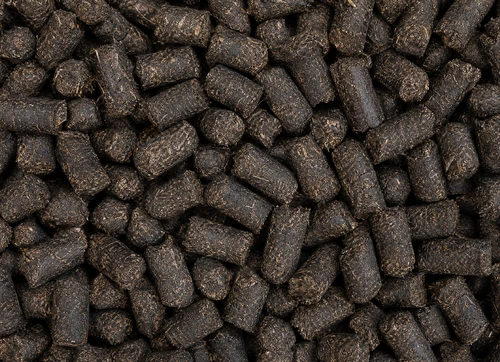
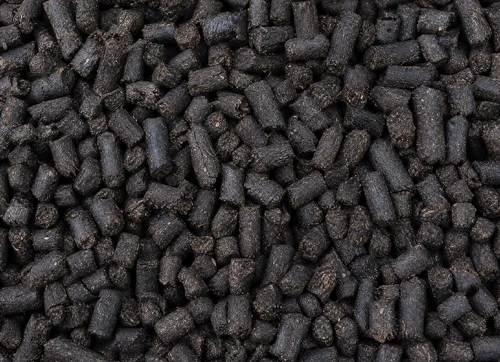
What Can Go into a Rabbit Manure Fertilizer Formula?
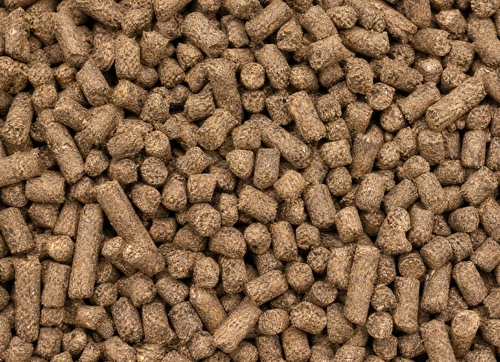
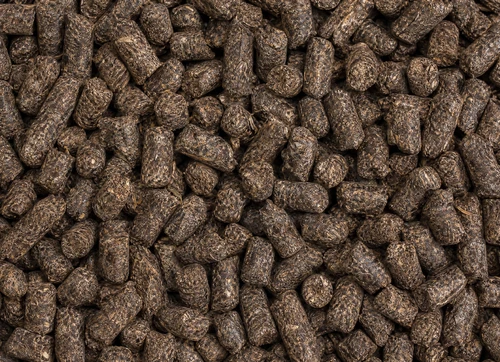
Rabbit manure may be collected as relatively dry droppings, wetter manure, mature compost, or a mixture containing bedding and feed residues. A rabbit manure pellet machine processes the material after suitable preparation, while commercial fertilizer producers can also blend rabbit manure with other compatible organic feedstocks. The practical route depends on moisture, fiber content, contamination, composting status and the intended fertilizer formula.

Animal Manure

Rabbit Bedding Waste

Straw & Hay Residues

Crop Residues

Rice Husk

Green Plant Waste

Sawdust & Wood Shavings

Spent Mushroom Substrate

Stabilized Compost Materials
Rabbit Manure
Pure rabbit droppings, collected manure, composted rabbit manure and bedding-mixed material are all relevant feedstocks. Fresh or wetter manure requires appropriate stabilization and moisture control, while dried or mature material may need much less pretreatment before fertilizer production.

Engineered for Stable Rabbit Manure Pelletizing
Prepared rabbit manure can still vary in bulk density, fiber level and flowability, especially when bedding or compost is part of the formula. RICHI builds the rabbit manure pellet machine around controlled feeding, strong ring-die compression and a durable gear drive so the machine can maintain stable production under changing fertilizer loads.
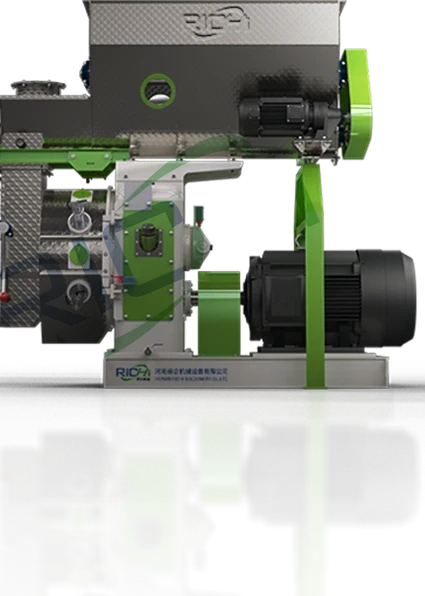
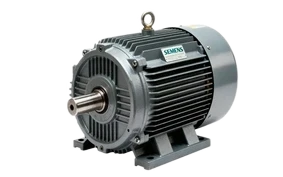
The Siemens motor provides steady power for continuous fertilizer pelleting. Motor output is matched to each FZLH model rather than using one drive configuration across different capacities.
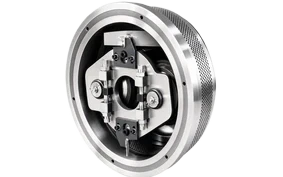
The heavy-duty ring die provides the main forming pressure. Hole diameter and compression ratio can be selected around rabbit manure condition, formulation and required fertilizer product.
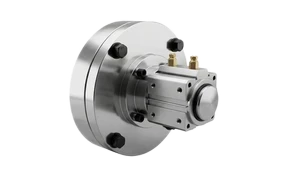
Unexpected overloads can occur when feed conditions fluctuate or foreign material enters the system. The protection arrangement helps limit damage to key transmission components during abnormal operating conditions.
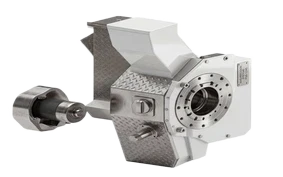
Prepared compost and bedding-containing formulas do not always flow evenly by gravity. The forced feeder actively moves material into the pelleting chamber to support a steadier feed rate.
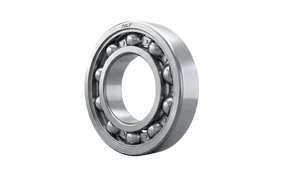
SKF bearings support critical transmission points under sustained working loads. Reliable sealing and lubrication are used to protect transmission performance in dusty organic fertilizer production environments.
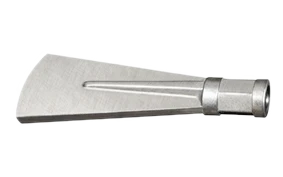
Pellets are cut immediately after extrusion through the ring die. Cutter position can be adjusted to change pellet length without changing the die-hole diameter selected for the fertilizer product.
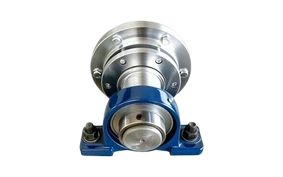
High-precision gear transmission transfers power efficiently to the pelleting section, while the compensating serpentine spring coupling helps accommodate transmission shock and alignment variation during operation.
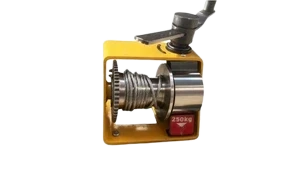
Large ring dies are heavy maintenance parts. The integrated lifting arrangement makes die removal and installation more practical, reducing unnecessary manual handling during replacement and routine servicing.
More Than a Pellet Mill Built to a Standard Specification
Choosing a rabbit manure pellet machine is not only about motor power or rated output. Manure collection method, bedding content, compost condition and the products you plan to sell all affect how the machine should be configured. RICHI combines pellet-mill manufacturing with fertilizer engineering, so equipment selection starts with the customer’s material and production plan.

Output Matched to Available Material
A larger machine is not automatically a better investment. We size the rabbit manure pellet mill against recoverable feedstock and planned operating hours, helping customers avoid paying for capacity their manure supply cannot keep busy.

Handles Changing Rabbit Manure Feed
Dry manure, mature compost and bedding-containing formulas do not feed exactly alike. RICHI matches the feeding arrangement and die specification to the prepared material, giving processors more room to handle real feedstock variation.

Flexible Fertilizer Product Setup
The machine supports 4–12 mm die options, while common commercial fertilizer products often concentrate around 4–6 mm. Pellet specification can therefore be selected around the customer’s fertilizer market instead of one factory-set size.

Spend Where the Process Needs It
Customers with usable composting, crushing or drying equipment do not need to purchase it again. RICHI can supply a standalone rabbit manure pellet making machine or integrate the pelleting section into an existing fertilizer operation.

Machine and Line Customized Together
As a rabbit manure pellet machine manufacturer, RICHI can engineer the pelletizer and surrounding process as one system. Capacity, pretreatment, automation, layout and future expansion can be coordinated before equipment enters production.

What Happens Inside the Pelletizing Chamber?
Once the rabbit manure fertilizer mix has been properly prepared, the forced feeder delivers it evenly into the pelleting chamber. The rollers press the material against the rotating ring die, where compression and friction consolidate the loose organic mixture and force it through the selected die holes. Continuous strands emerge from the outer surface of the ring die and are cut to the required length by adjustable cutters. The newly formed pellets then leave the rabbit manure pelletizer for downstream cooling, screening and handling. Stable feeding is especially important when the formula contains compost, fine rabbit manure and fibrous bedding in different proportions.
Models & Specifications
| Model | Capacity (t/h) | Main Motor Power (kW) | Anti-Bridging Feeder Power (kW) | Forced Feeder Power (kW) | Ring Die Inner Diameter (mm) | Finished Pellet Diameter (mm) |
|---|---|---|---|---|---|---|
| FZLH250 | 1–1.5 | 22 | 2.2 | 0.75 | 250 | 4–12 |
| FZLH320 | 2–3 | 22 | 2.2 | 0.75 | 320 | 4–12 |
| FZLH350 | 3–5 | 37 | 2.2 | 0.75 | 350 | 4–12 |
| FZLH420 | 6–8 | 90 | 3 | 1.5 | 420 | 4–12 |
| FZLH520 | 9–12 | 132 | 3 | 1.5 | 520 | 4–12 |
| FZLH678 | 18–22 | 200 | 3 | 1.5 | 673 | 4–12 |
| FZLH768 | 22–26 | 250 | 4 | 1.5 | 762 | 4–12 |
RICHI FZLH rabbit manure pellet machine models cover 1–26 T/H, giving commercial farms, manure processors and fertilizer manufacturers room to match equipment to real prepared-material throughput. Rated capacity is a selection reference; actual output changes with formula, bulk density, fiber content, moisture condition and die configuration.Do not select an industrial rabbit manure pellet machine from peak manure collection alone. RICHI checks annual material availability, operating schedule and the throughput reaching the pelletizer before confirming the model.
Get the Material Ready Before It Reaches the Die
Stable rabbit manure pelletizing depends heavily on what reaches the machine. The figures below are practical operating references for prepared rabbit-manure fertilizer mixtures, not specifications for freshly collected manure. Bedding content, compost maturity and formulation can shift the best operating point, so final settings are confirmed against the customer’s material.
Feed Particle Size
2–5 mm
Feed Moisture Content
12–25%
Pelletizing Temperature
60–85℃
Compression Ratio
1:4–1:8
Pellet Length
5–30 mm
Pellet Formation Rate
90–95%
Finished Pellet Moisture
≤12–15%
Cooling Temperature
≤40℃
Screening Efficiency
90–98%
Fines Content
≤5–10%
Broken Pellet Rate
≤3–5%
Operating Mode
Continuous Operation
These ranges provide a starting window for rabbit manure fertilizer production. A fine, mature rabbit-manure compost will not behave exactly like a formula containing hay bedding or other livestock manure, so RICHI adjusts die compression, feeding and operating conditions during material testing and commissioning rather than forcing every recipe to run at one setting.
Rabbit Manure Pellet Projects Built Around Different Supply Models
A rabbit manure pellet production line can serve a farm processing its own manure or a fertilizer company collecting material from several suppliers. The projects below reflect different feedstock structures, business models and production scales rather than one standard rabbit-manure recipe.
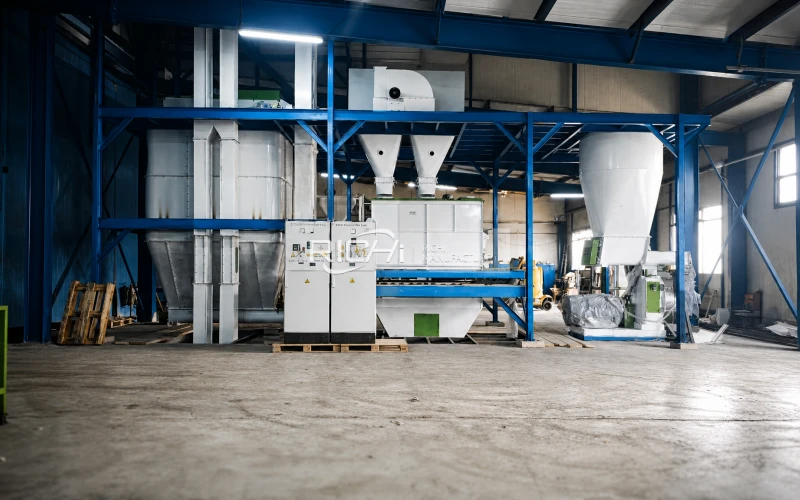

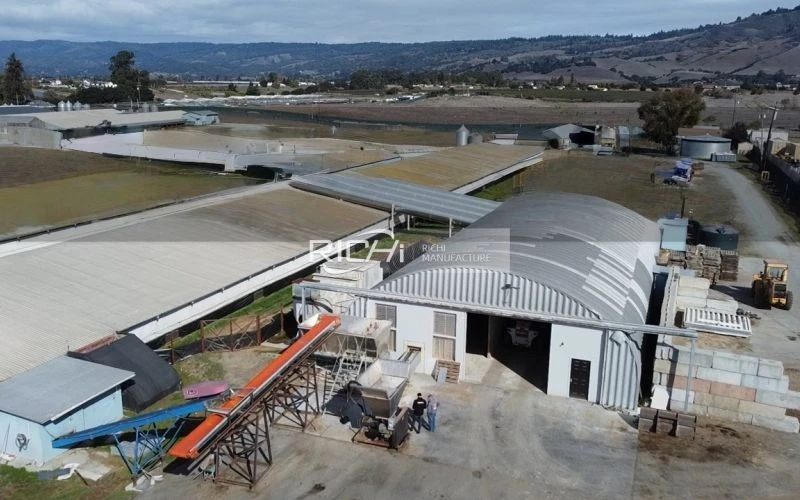
4 T/H
Rabbit Farm Fertilizer Project in the USA
Manure is collected directly from the customer’s rabbit houses, giving the plant a relatively predictable supply. Hay bedding and feed residues are recovered with the manure and incorporated into the fertilizer stream after the required preparation. The project creates a commercial outlet for material previously handled mainly as farm waste.
Equipment Used :FZLH350
Pellet Size :4-6 mm
Raw Materials :Manure, Hay Bedding, Feed Residues
Client :Commercial Rabbit Farm

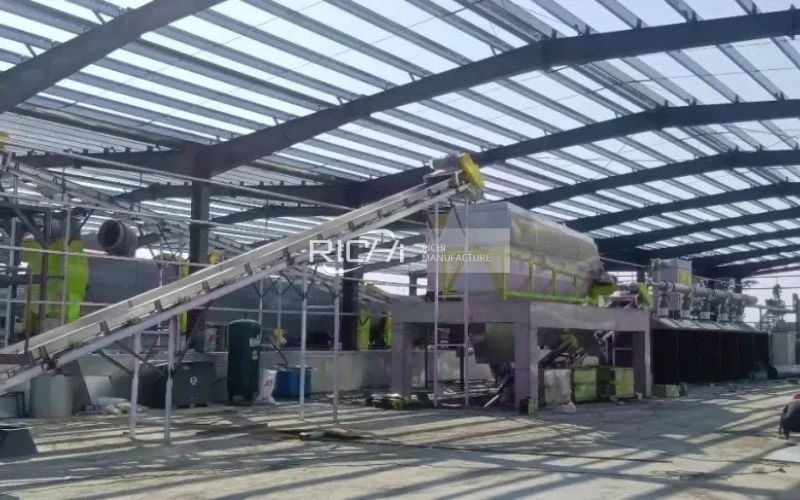
2 T/H
Multi-Farm Rabbit Manure Project in France
Rather than relying on one farm, this processor consolidates rabbit manure from several local suppliers. Differences between incoming batches are managed before production, while mature compost provides another controllable component for the company’s formulated fertilizer products.
Equipment Used :FZLH320
Pellet Size : 4-5 mm
Raw Materials : Rabbit Manure, Mature Compost
Client : Manure Processing Company

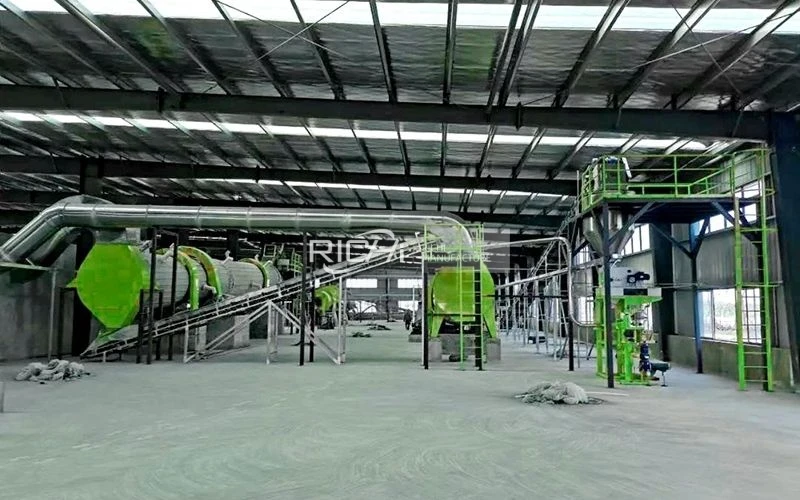
6 T/H
Mixed Manure Fertilizer Project in Russia
The customer has access to several livestock and agricultural waste streams, so a rabbit-only plant would unnecessarily restrict production. Separate material preparation allows the business to use rabbit manure within different mixed-manure fertilizer formulas as supply changes.
Equipment Used :FZLH420
Pellet Size : 4 mm
Raw Materials : Rabbit Manure, Cattle Manure, Cereal Straw
Client : Organic Fertilizer Producer

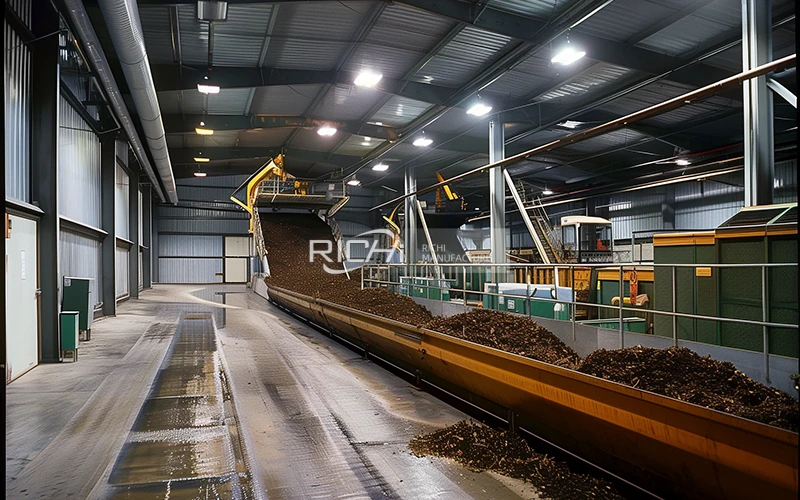
10 T/H
Agricultural Recycling Project in Brazil
This higher-capacity project is based on an established regional feedstock network rather than manure from a single rabbit operation. Multiple receiving and preparation routes allow materials with different physical conditions to be brought together later in controlled fertilizer formulations.
Equipment Used :FZLH520
Pellet Size : 6 mm
Raw Materials : Rabbit Manure, Cattle Manure, Crop Residues, Compost
Client : Fertilizer & Agricultural Waste Processor

8 T/H
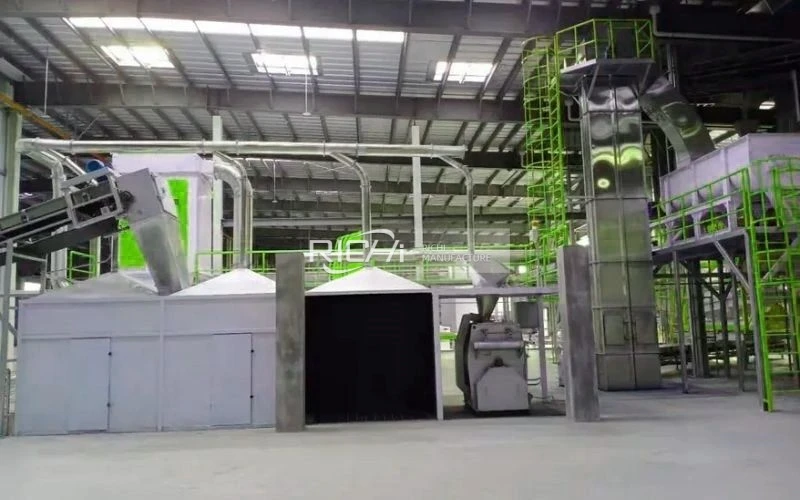
Bedding-Rich Rabbit Manure Project in Spain
A significant part of the collected material arrives together with plant-based bedding. Instead of treating all bedding as contamination, the process retains suitable organic material while providing the size reduction and blending needed before fertilizer production.
Equipment Used :FZLH420
Pellet Size : 4-6 mm
Raw Materials : Rabbit Manure, Straw Bedding, Stabilized Compost
Client : Agricultural Recycling Company

3 T/H
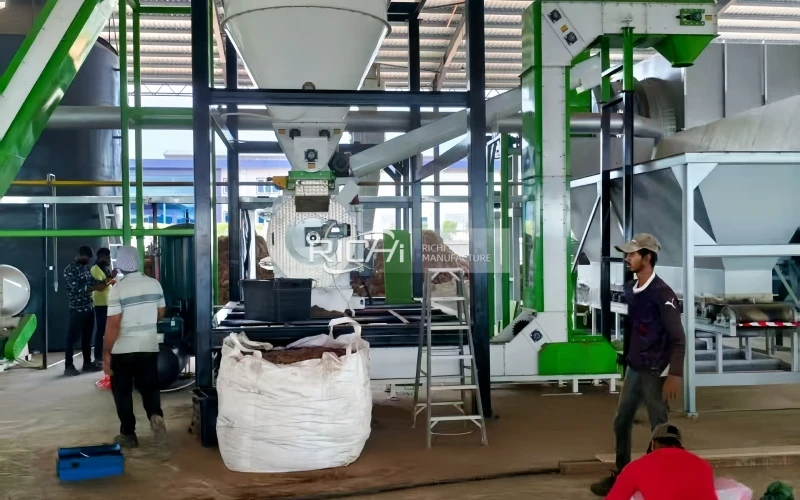
Integrated Farm Fertilizer Project in Australia
The customer combines rabbit production with crop operations, creating both a manure source and an internal fertilizer market. The plant can serve farm demand first while giving the business an additional route for packaged fertilizer when production exceeds internal use.
Equipment Used :FZLH320
Pellet Size : 5 mm
Raw Materials : Rabbit Manure, Hay Residues, Plant-Based Compost
Client : Integrated Agricultural Business

5T/H
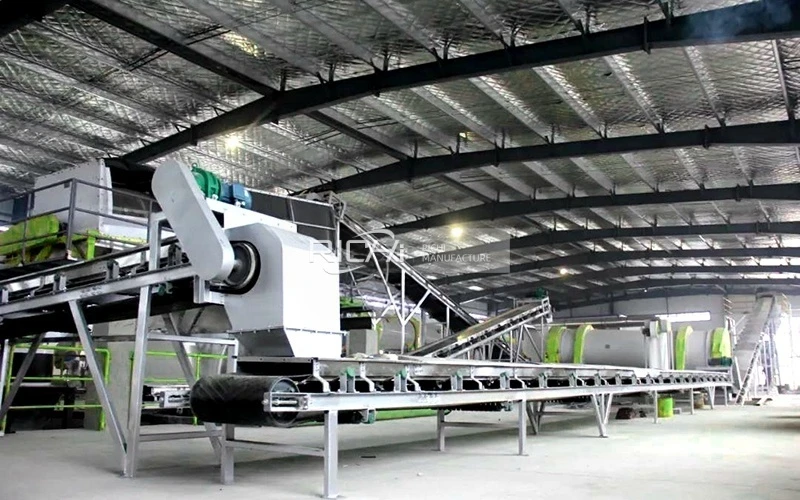
Multi-Formula Fertilizer Project in Thailand
Local agricultural materials supplement purchased rabbit manure, allowing the factory to work with more than one fertilizer formulation. The equipment arrangement therefore prioritizes controlled preparation and recipe flexibility instead of being optimized around a single manure source.
Equipment Used :FZLH350
Pellet Size : 4 mm
Raw Materials : Rabbit Manure, Rice Husk, Crop Residues
Client : Organic Fertilizer Manufacturer

2-3 T/H
Rabbit Manure Product Upgrade in South Africa
The customer already handles composted material and does not need to rebuild the entire front end. Pellet production is added as a downstream product upgrade, allowing existing processing assets to remain in service while expanding the company’s fertilizer range.
Equipment Used :FZLH320
Pellet Size : 6 mm
Raw Materials : Composted Rabbit Manure, Selected Organic Ingredients
Client : Compost & Fertilizer Business
These projects show why capacity alone cannot define a rabbit manure fertilizer production line. A single-farm project, a multi-farm collection business and a multi-material fertilizer factory may require very different preparation and storage arrangements even when their hourly pellet output is similar.

Commercial Rabbit Farm · Italy
“We collect manure every day, but there is always some hay and feed residue mixed in from the rabbit houses. They did not ask us to separate everything by hand. The process was arranged around the material we actually collect, which made much more sense for our farm.”
Rabbit Farming Company · Germany
“We operate several rabbit farms and wanted one place to process the manure instead of installing equipment at every site. They calculated the line from the amount we could realistically collect and process each day. That helped us settle on a capacity we can keep running.”
Organic Fertilizer Manufacturer · Netherlands
“We buy rabbit manure from several farms, so moisture and bedding content are not identical in every delivery. Our concern was whether the line could still support the different fertilizer formulas we produce. The engineers considered those variations before the equipment was finalized.”
Manure & Agricultural Waste Recycler · Poland
“Rabbit manure is only one of the materials we collect. We also handle other livestock manure and agricultural residues, so we needed more than a machine designed around one perfect raw material. The final arrangement gives us much more flexibility in how we prepare different batches.”
Integrated Crop-Livestock Farm · New Zealand
“We raise rabbits and also grow crops, so part of the fertilizer goes back to our own land. We wanted a practical system, not an oversized fertilizer factory. The equipment was selected around our manure supply, operating hours and the amount of fertilizer we actually need.”
Rabbit Manure Processing Plant · Turkey
“We were already drying and processing rabbit manure before we considered pellets. RICHI checked the equipment we had first, and several parts could stay in use. We only added the sections that were missing instead of purchasing another complete rabbit manure processing line.”
Fertilizer & Compost Company · Belgium
“We do not raise rabbits ourselves. We purchase stabilized rabbit manure and combine it with compost and other organic materials. The important point for us was formula control because we sell more than one fertilizer product. The line was configured with that in mind.”
Rabbit Breeder Cooperative · Czech Republic
“Our members are not individually large enough to operate industrial pellet equipment, but together we have a steady manure supply. Centralized processing gives us a much more practical option. We can collect material from several farms and run one rabbit manure fertilizer operation.”
What Will You Pay for a Rabbit Manure Pellet Machine?
A standalone rabbit manure pellet machine typically costs USD 10,000–100,000, depending on capacity, drive power, die configuration and project-specific requirements. The figures below are practical equipment-budget references. If your material still requires composting, drying, crushing or other preparation, those systems belong to the line quotation rather than the pelletizer price.
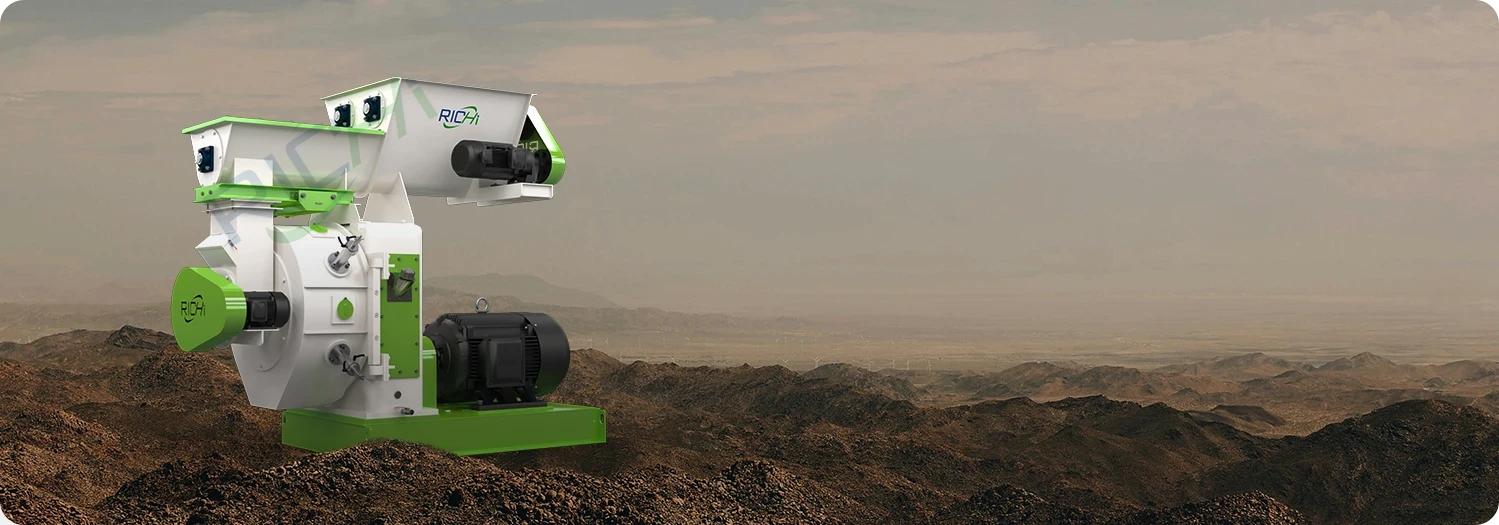
If you already compost, crush and prepare rabbit manure, a standalone rabbit manure pelletizer for sale may be all you need.
Price Range for
Rabbit Manure Pellet Machine cost:
FZLH250 (22KW)
$10,000–$13,000
FZLH320 (22KW)
$15,000–$18,000
FZLH350 (37KW)
$18,000–$25,000
FZLH420 (90KW)
$26,000–$32,000
FZLH520 (132KW)
$43,000–$50,000
FZLH678 (200KW)
$64,000–$70,000
FZLH768 (315KW)
$75,000–$85,000
Need the Machine Only or a Complete Line?
If you are starting with collected farm waste, the investment must be calculated from the complete process. RICHI separates machine and supporting-equipment costs so you can see what is actually included instead of comparing quotations with different supply boundaries.
From Collected Rabbit Manure to Finished Fertilizer
A complete rabbit manure fertilizer process has to deal with more than pellet formation. Fresh manure may need stabilization and substantial moisture control; rabbit-house waste can carry hay or bedding; commercial formulas may introduce other organic materials or functional ingredients. RICHI therefore builds the process around the incoming manure and the fertilizer the customer intends to sell.
The exact rabbit manure processing line can be shorter than this full route. Mature, sufficiently prepared rabbit-manure compost may bypass several front-end operations, while fresh manure with substantial bedding may require more intensive preparation. RICHI removes unnecessary stages and adds required ones after checking the customer’s actual feedstock, formula and finished-product specification.
Supporting Equipment for Rabbit Manure Fertilizer Production
The equipment around a rabbit manure pellet machine depends on how the manure reaches the plant. Fresh manure may require fermentation and moisture reduction, bedding-rich material needs suitable size reduction, while fertilizer manufacturers working with several ingredients need more accurate dosing and mixing. RICHI selects from the following equipment according to the actual rabbit manure condition and product formula rather than automatically including all nine machines.
Manure Compost Turner
For fresh rabbit manure that requires aerobic fermentation, the compost turner regularly turns and aerates the manure mixture. It is particularly useful when rabbit manure is composted with hay, straw, plant-based bedding or other suitable organic materials and consistent fermentation needs to be maintained.
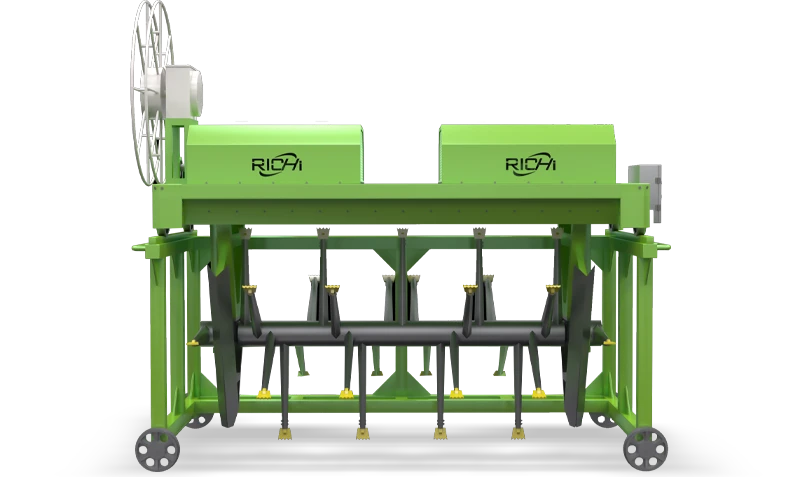
Turning Width
2–8 m
Turning Height
0.5–2.5 m
Rabbit Manure Crusher
Fermented rabbit manure can contain compacted compost blocks, while manure collected with bedding may contain uneven fibrous material. The crusher reduces these materials to a more consistent particle condition before formulation, mixing and subsequent pelletizing.
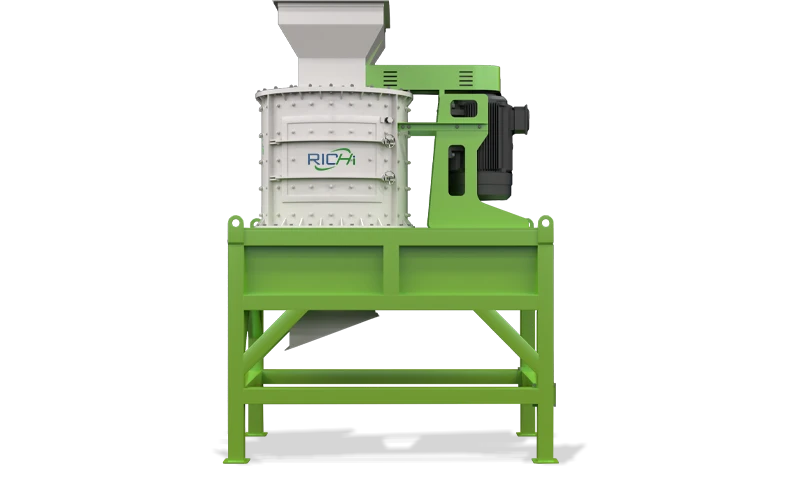
Capacity
3–30 T/H
Main Power
22–160 kW
Rabbit Manure Mixer
The mixer combines prepared rabbit manure with compost, bedding-derived material, other suitable livestock manure, agricultural organic materials or specified fertilizer ingredients. Uniform mixing is especially important when a plant produces several rabbit-manure-based fertilizer formulas.
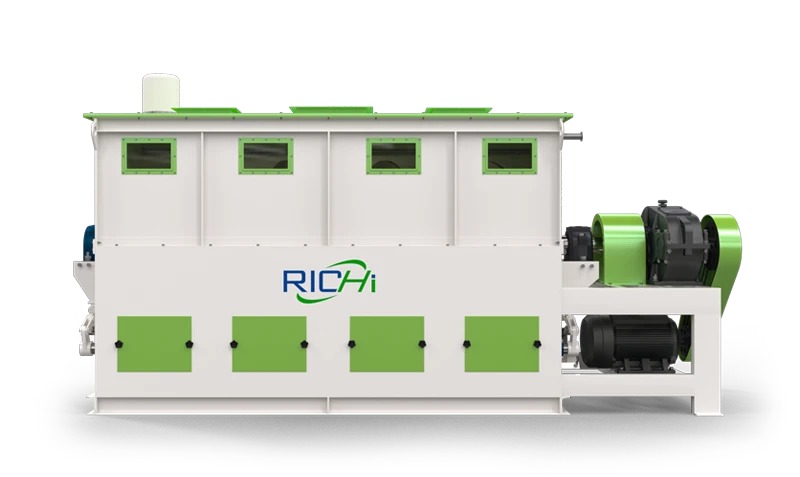
Capacity
250–2,000 kg/batch
Main Power
4-160KW
Rabbit Manure Dryer
Drying is used when fresh or fermented rabbit manure still carries more moisture than the downstream process can accept. Required dryer duty is determined from the actual inlet moisture and water-removal load, so relatively dry collected manure does not receive the same drying configuration as wetter material.
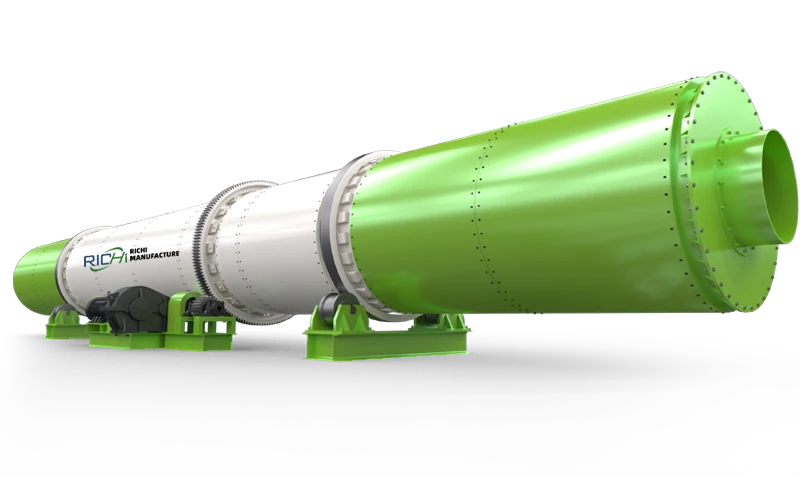
Capacity
1–30 T/H
Drying Temperature
60–250℃
Rabbit Manure Screener
Screening removes oversize and undersize fractions so the required fertilizer product can proceed to storage or packing. Its position and screen specification are selected according to whether the customer needs material classification before pelletizing, finished-pellet screening, or both.
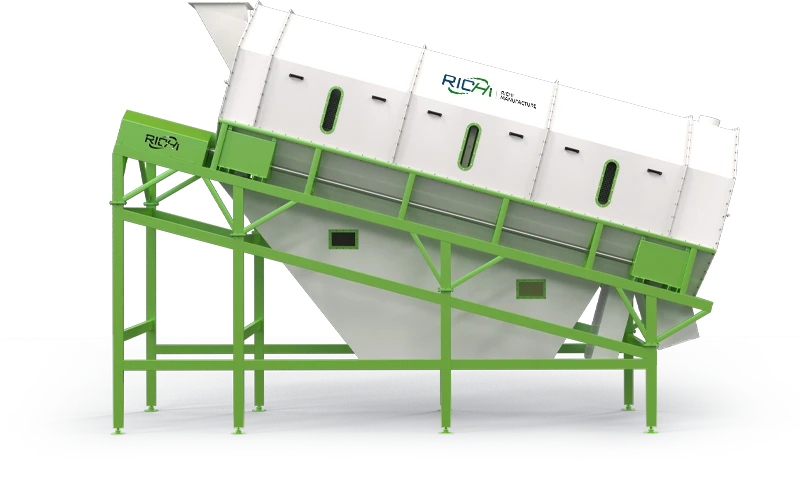
Capacity
3-50T/H
Screen Layers
1–3 Layers
Rabbit Manure Bagging Scale
The bagging system weighs finished rabbit manure fertilizer for commercial distribution or bulk agricultural use. Packing range and automation can be selected according to whether the customer sells standard fertilizer bags, larger sacks or bulk-format products.
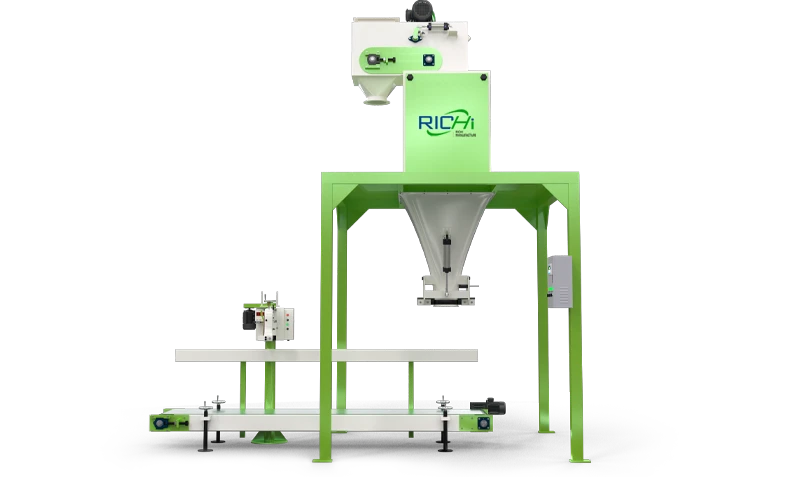
Packing Range
10–1000 kg/bag
Packing Speed
6–20 Bags/min
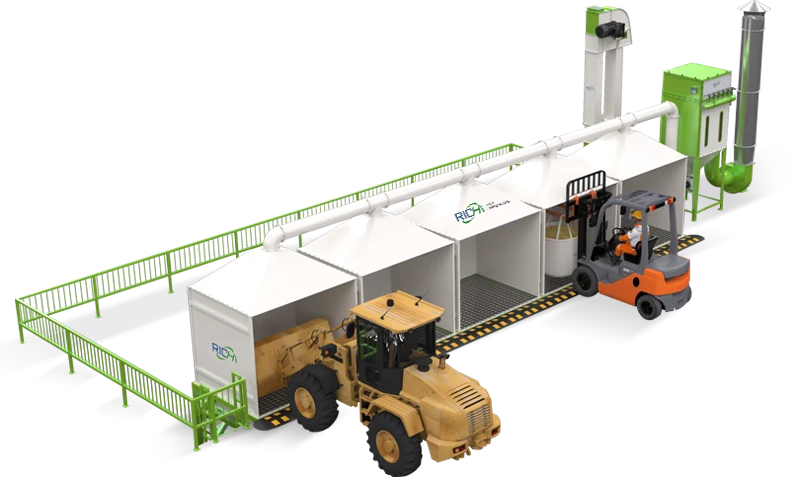
Feeding & Weighing System
For rabbit manure fertilizer plants using several bulk ingredients, the feeding and weighing system controls how much of each material enters the formula. This is particularly useful when rabbit manure is combined with compost, other manure or agricultural residues instead of being processed as a single-material product.
Weighing Capacity
1–50 T/H
Weighing Accuracy
±0.5–1%
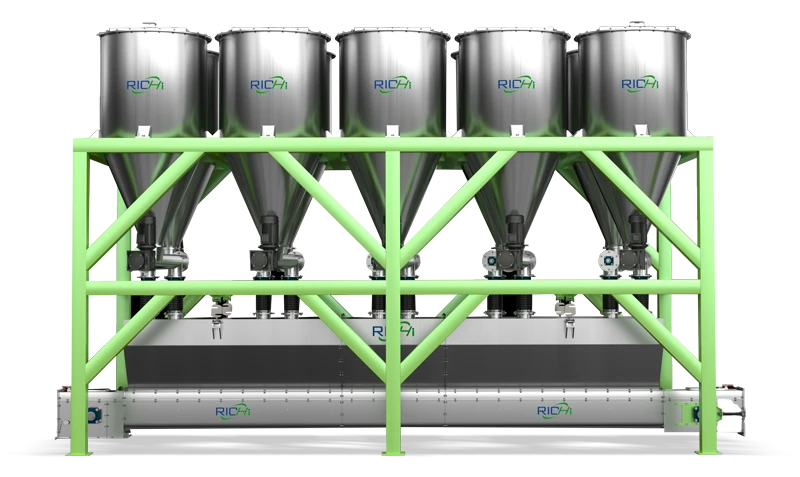
Trace Element Dosing System
Commercial fertilizer producers may need much smaller additions than the main rabbit manure and organic ingredients. The trace-element dosing system handles these low-dose components separately, helping maintain formula consistency where the finished fertilizer specification requires controlled nutrient additions.
Dosing Accuracy
±0.1–0.5%
Hopper Volume
50–1000 kg
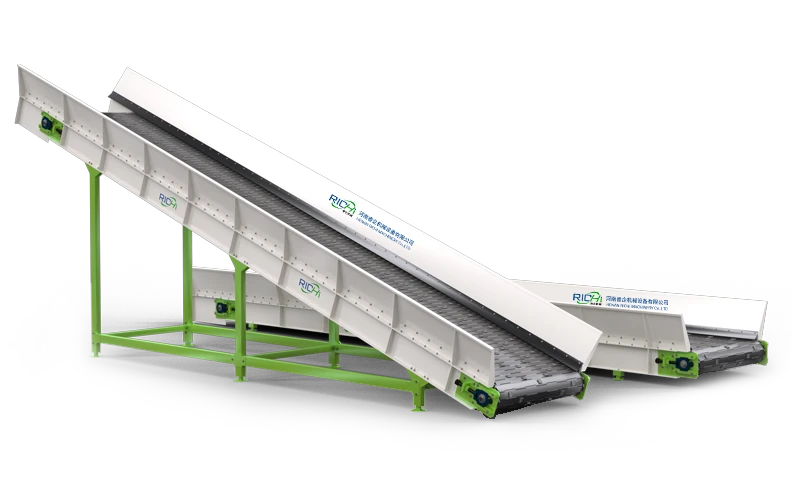
Rabbit Manure Conveyor
Rabbit manure changes physically as it moves from compost and crushed material to mixed feed and finished fertilizer. RICHI selects belt conveyors, screw conveyors or bucket elevators according to the material at each transfer point, required elevation and workshop layout.
Capacity
3-40T/H
Conveying Length
3–40 m
These nine equipment groups can support different stages around a rabbit manure pellet machine, but they are not a mandatory package. A processor starting with mature, suitably prepared rabbit-manure compost may need only part of this equipment, while a plant receiving fresh manure from rabbit farms can require more front-end treatment. RICHI determines the final configuration from the actual feedstock, existing equipment, production capacity and fertilizer formula.
One Rabbit Manure Line Does Not Fit Every Plant
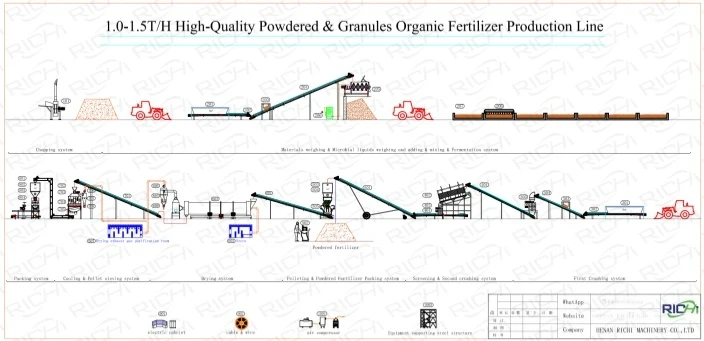
【Example Design】1–1.5 T/H Rabbit Manure Powder & Pellet Fertilizer Line
RICHI designs rabbit manure fertilizer production lines from 1–60 T/H around the material that actually arrives at the plant. Fresh manure, mature compost and manure collected with hay or bedding require different preparation, while fertilizer manufacturers may also need several formulas, powder and pellet products, or interfaces with equipment already on site.
preparation
fermentation
crushing
screening
pelletizing
drying
cooling
packaging
This 1–1.5 T/H design handles rabbit manure together with straw and other suitable fertilizer ingredients. Straw is reduced to about 20–30 mm before mixing, while bulk materials are received separately and protected by impurity-removal measures. Fresh biodegradable material can then be mixed and aerobically composted before it moves into fertilizer finishing.
After stabilization, crushing and screening create a more uniform material. Part of the qualified stream can go directly to powder fertilizer packing, while the remainder is dosed and conditioned for the rabbit manure pellet production line. This split allows a processor to respond to powder and pellet demand without building two independent plants.
The pellet stream passes through ring-die pelletizing, required post-treatment, cooling and screening before storage and 10–50 kg packing; coating can also be incorporated when the finished fertilizer specification calls for it. For another customer, this route may be much shorter: if mature rabbit-manure compost already arrives in suitable condition, RICHI can remove unnecessary front-end equipment instead of selling a full fresh-manure treatment system.
When Rabbit Manure Becomes a Scalable Fertilizer Business
A rabbit manure recycling plant is most commercially attractive when manure collection and fertilizer sales can both be sustained. Large rabbit producers may control enough feedstock internally, while manure collectors and fertilizer companies can build supply across several farms. For these buyers, the investment is not simply a solution for manure disposal—it becomes part of an existing fertilizer or agricultural business.
A viable project starts with annual recoverable material, operating days, product plan and available sales channels. RICHI uses these factors to determine whether the customer needs a standalone rabbit manure pellet machine, an expansion section, or a complete rabbit manure organic fertilizer plant.
Secure Feedstock Beyond One Farm
A centralized rabbit manure processing plant can receive material from several rabbit farms, reducing dependence on the production cycle of one operation. Fertilizer manufacturers can also incorporate suitable compost, livestock manure and agricultural residues into other formulas when rabbit manure supply fluctuates.
Avoid Depending on One Finished Product
The same project can be designed for rabbit-manure-based powder fertilizer, pellets or both. Producers with formulation capability can also develop different fertilizer recipes for their target agricultural markets instead of relying on one standard product throughout the year.
Add Pelletizing to an Existing Fertilizer Business
For companies already composting, crushing or selling organic fertilizer, pelletizing can be added as a downstream upgrade. Existing assets can remain in use where suitable, making expansion into rabbit manure fertilizer pellets very different from financing a completely new plant.
Leave a Practical Route for Expansion
Feedstock collection may grow after contracts with additional rabbit farms are secured. RICHI can reserve space, electrical load and equipment interfaces for later expansion, allowing the rabbit manure treatment plant to increase capacity without unnecessarily oversizing the first-stage investment.
Questions Worth Answering First
We collect 12 tonnes of rabbit manure per day. What production capacity should we choose?
Do not select a 12 T/H machine from that figure. If 12 tonnes is the daily collected weight, first calculate moisture reduction, composting losses, added ingredients and daily operating hours. For example, 8 tonnes/day of prepared fertilizer mix processed over an 8-hour shift requires about 1 T/H of actual pelleting capacity. RICHI uses the prepared-material balance to size the line.
How much material do I need to keep a 2–3 T/H rabbit manure pelletizer busy?
At full rated operation for 8 hours, a 2 T/H section requires about 16 tonnes/day of prepared feed, while 3 T/H requires about 24 tonnes/day. If your available rabbit manure cannot support that volume after pretreatment, other suitable fertilizer materials or fewer operating hours should be considered before purchasing a larger machine.
Our rabbit manure is collected very wet. What moisture should it reach before pelletizing?
For many prepared rabbit-manure fertilizer formulas using the FZLH ring-die process, approximately 12–18% moisture is a practical reference range before pelletizing. Fresh manure substantially above this condition should first pass through the required stabilization and moisture-management stages rather than being fed directly into the rabbit manure granulator.
Do we need to ferment rabbit manure before making commercial fertilizer pellets?
Fresh rabbit manure intended for commercial organic fertilizer should normally undergo appropriate stabilization, with the exact treatment also governed by the fertilizer product and local regulations. If you already have mature, stabilized rabbit-manure compost, the new rabbit dung fertilizer production line may start from later preparation stages instead of duplicating fermentation equipment.
How do you decide whether our project really needs a rotary dryer?
We calculate how much water must actually be removed per hour. A project receiving very wet manure has a completely different thermal load from one starting with partially dried or mature compost. Composting, natural moisture reduction and blending can also change the requirement, so dryer selection should be based on water evaporation rather than matching a dryer and pelletizer with the same T/H label.
Our fermented rabbit manure still has large hard lumps. What crushing setup do we need?
For the pelletizing stage, prepared material is generally reduced to a relatively fine and uniform condition, commonly around 2–5 mm for this application. Compact compost lumps can be handled by a fertilizer crusher; long straw or hay mixed into the manure may need preliminary chopping because fibrous bedding and compacted compost create different size-reduction problems.
Our manure contains a lot of hay from the rabbit houses. Should we separate it?
Not necessarily. Clean hay and plant-based bedding can often remain in the organic fertilizer stream, provided the formulation permits it. If the bedding proportion is high, send us the approximate percentage and fiber condition; the better solution may be chopping and controlled blending rather than paying labor to separate every piece of hay from the manure.
Can rabbit manure mixed with sawdust or wood shavings be used?
Yes, when the bedding is clean, untreated wood material suitable for the intended fertilizer product. Its percentage matters: excessive woody material changes the carbon contribution and dilutes the manure fraction. RICHI therefore treats sawdust as a real formulation ingredient, not simply as material added to make pelleting easier.
We use rice husk as rabbit bedding. Can the same rabbit manure pellet making machine handle it?
Usually yes after suitable preparation. Rice husk can remain in an appropriate fertilizer formulation, but its physical structure differs from fine composted rabbit manure. The required size reduction and inclusion level should therefore be established before the prepared mixture reaches the rabbit manure pellet making machine.
Can rabbit manure and cattle manure be processed in the same plant?
Yes. Rabbit manure and cow manure fertilizer can share major downstream production equipment once the individual materials have been properly stabilized and prepared. Their incoming moisture and physical structure may differ, so a mixed-manure plant may use separate receiving or pretreatment before the materials meet at dosing and mixing.
What if we want to use rabbit manure together with sheep or goat manure?
That is a practical option for businesses collecting manure from mixed livestock operations. Rabbit manure and sheep manure fertilizer can be produced on a common line, while the formulation is adjusted according to the available manure quantities and required product. This is one application for a broader livestock manure fertilizer machine system rather than a rabbit-only factory.
Can we later add poultry manure without buying another pelletizer?
In many cases, yes. Rabbit manure and poultry manure processing can share the pelletizing and several downstream sections, although poultry manure may create different requirements for moisture management, composting and odor control. If poultry manure is a realistic future feedstock, tell us before the first layout is finalized.
Can one line process rabbit, cattle, sheep and poultry manure at different times?
Yes, if the plant is designed as a mixed animal manure pellet production system and each incoming manure receives suitable preparation. A common animal manure pellet machine can then serve compatible prepared formulations, while receiving, batching and cleaning arrangements help operators control changes between products.
We also have spent mushroom substrate. Is it useful in a rabbit-manure fertilizer project?
It can be. Properly handled spent mushroom substrate provides another organic feedstock for fertilizer manufacturers and agricultural recyclers. Before including it, we check its moisture, decomposition condition, contaminants and existing components so the rabbit manure fertilizer formulation is based on known material rather than an arbitrary mixing percentage.
Can crop straw, leaves or other farm residues be processed on the same line?
Suitable clean agricultural residues can be incorporated after the necessary shredding, composting or other preparation. This makes a rabbit waste processing machine system more useful for integrated farms, but not every plant waste should automatically enter fertilizer. Material origin and the applicable fertilizer requirements should be checked first.
Do you recommend a fixed percentage of rabbit manure in a mixed fertilizer recipe?
No universal percentage is technically appropriate. A commercial formula should be based on the properties of the manure, compost, bedding and other ingredients as well as the required fertilizer specification. If you send the approximate analysis or composition of each material, RICHI can configure dosing and processing around the intended formula rather than inventing a generic ratio.
Can we add minerals or trace elements to make a formulated organic fertilizer?
Yes, where the product formulation and applicable regulations allow them. Bulk ingredients can use the main feeding and weighing system, while low-dose components can use a separate trace-element dosing system. This is particularly useful when the rabbit manure organic fertilizer machine is part of a commercial fertilizer factory producing controlled recipes.
We already sell rabbit manure compost. Can we add pellets without changing the whole factory?
Often yes. If the existing compost is sufficiently stabilized and your crusher, storage and other equipment have adequate capacity, RICHI can add the missing formulation and pelleting sections. A rabbit manure granulating machine project does not automatically require replacing a compost plant that is already working properly.
Can the same plant produce powder fertilizer and pellet fertilizer at the same time?
Yes. The process can provide a product branch after suitable crushing and screening, allowing part of the prepared material to go to powder packing while another portion continues to rabbit manure granulation. This is useful when customers want to retain an existing powder market while developing a higher-value pellet product.
We want different fertilizer products for different crops. Do we need several pellet machines?
Usually not. One rabbit manure pellet mill can process multiple compatible prepared formulas within its operating range. The more important investment may be additional ingredient bins, accurate dosing and mixing, because recipe control occurs before the material reaches the pelletizer.
Our rabbit manure supply drops during part of the year. How should we size the plant?
Use annual, average-month and low-season supply, not the single highest collection month. The line can operate fewer hours when material supply falls, or a fertilizer producer can introduce other suitable feedstocks. This avoids buying an industrial rabbit manure pellet machine that spends much of the year seriously underloaded.
We already own a crusher, mixer and packing scale. Can RICHI connect its equipment to them?
Yes, provided the existing machines meet the required capacity and material condition. Send us their model, throughput, dimensions, inlet/outlet height, motor data and photos. RICHI can then determine whether the new rabbit manure recycling machine section can interface with them or whether one existing bottleneck needs modification.
Our existing dryer says 5 T/H. Does that mean it can support a 5 T/H pellet plant?
No. A dryer should be checked by inlet moisture, target outlet moisture and hourly evaporation requirement, not capacity name alone. A 5 T/H stream with modest moisture reduction may be feasible while the same wet-feed tonnage requiring heavy water removal may exceed the dryer’s thermal capability.
Our workshop is already built. What dimensions do you need before making the layout?
Send the internal length, width, clear height, column grid, door sizes, floor levels and locations of existing equipment. Also identify outdoor space available for receiving or composting. This allows the rabbit manure processing plant to be arranged around real access and maintenance requirements instead of forcing a standard drawing into the building.
How do I know whether our electrical supply is enough for the complete line?
Provide voltage, frequency, phase and available transformer or site power capacity. We calculate the connected load from the whole required plant—not just the rabbit manure pellet machine—including crushing, mixing, drying auxiliaries, conveying, screening, packing and dust-control equipment where installed.
How many workers will a rabbit manure fertilizer line require?
A small automated line still normally requires people for receiving, production supervision, bag handling, inspection and maintenance; there is no responsible single staffing number for every plant. Tell us the capacity, number of shifts, bagging method and automation target, and we can identify the operating positions required instead of giving an unrealistically low labor figure to make the project look cheaper.
We have stones, wire and occasional metal pieces in collected manure. Can the machine tolerate them?
They should be removed before pelleting. Screening and magnetic separation can be installed at suitable points, but collection management is also important. Allowing hard foreign objects to repeatedly reach a rabbit manure pelletizer increases unnecessary wear and creates avoidable risk for crushers, conveyors, ring dies and rollers.
Our current manure pellet machine blocks frequently. Should we simply replace it with a larger one?
Not before identifying the cause. Repeated blockage can come from unstable feeding, unsuitable material condition, excessive long fiber, incorrect die selection or poor upstream preparation—not only insufficient motor power. For a replacement rabbit manure pelletizer for sale, RICHI reviews the existing process so a new machine does not inherit the old problem.
We need 2 T/H now but may need 5 T/H in two years. What should we reserve for expansion?
Reserve more than floor space. Future expansion may require additional electrical capacity, receiving and storage volume, conveyor interfaces, control points and downstream cooling/screening/packing capacity. Depending on the project, adding another pelletizing unit later can be more practical than operating an oversized machine at low utilization from day one.
What information should I send to get a serious proposal for my rabbit manure project?
Send your rabbit manure quantity, current condition, approximate moisture, bedding type and percentage, other available raw materials, whether fermentation is already completed, desired hourly or annual production, operating hours, finished products, existing equipment, workshop dimensions and local electrical supply. Photos and short videos of the actual material are especially useful. With these details, RICHI can determine how to process rabbit manure into pellets and prepare a project-specific equipment proposal rather than sending a generic catalog.
You do not need to decide the complete process before contacting a manufacturer. If you are researching how to make rabbit manure pellets, how to pelletize rabbit manure, or how to make fertilizer from rabbit manure, start with the material you actually have. RICHI can work from your feedstock supply, existing equipment and intended product to determine whether you need a standalone pelletizer, a rabbit manure granulation line, or a complete rabbit manure recycling plant.


