
 0086-138 3838 9622
Mash Feed Mill


For a farm producing its own rations, a mash feed mill must fit daily consumption and available labour. A commercial mash feed plant also needs economical batch sizes, dependable recipe changes and dispatch capacity. RICHI engineers systems for integrated farms, cooperatives, grain processors and independent feed manufacturers—from 1–2 T/H farm systems to 12–20 T/H commercial projects and larger operations.
Our designs cover layer and broiler mash, pig meal and concentrates for cattle, sheep and goats, using whole cereals, bran, protein meals, minerals and premixes. Suitable prepared ingredients can bypass grinding. For fish feed, including tilapia fry mash and dry blends intended for eel paste, finer preparation and grading are assessed separately against the formulation and feeding method.
Get My Mash Feed Proposal
Mash Feed Products With Different Processing Needs
A mash feed mill can be specified for complete diets, ingredients and concentrated blends. The five groups below require different grinding duties, dosing ranges and mixing controls; the selected product determines the equipment package.

Complete Mash Feed
Cereals, protein meals, minerals and premixes are combined into a complete diet for the specified animal and stage. For layer mash, a reference profile places 55–85% of particles within 1–3 mm; controlled weighing and mixing must preserve that structure.
Typically 0.3–3.0mm

Concentrate Meal Feed
Protein-rich meals, minerals and premixes are blended for customers who complete their feed using locally available cereals. The inclusion rate and approved particle profile determine dosing and mixing requirements, with the concentrate supplied for further blending according to its formulation.
Typically 0.2–2.0mm

Powdered Premixes
Vitamins and trace minerals are distributed through a suitable carrier using dedicated small-dose weighing and mixing arrangements. Carrier and nutrient particle sizes are specified together to manage segregation, with cleaning and dust collection assessed for these concentrated products.
Typically 0.15–0.85mm

Ground Feed Meals
Single cereals such as maize or wheat are cleaned and ground for sale as feed ingredients or further formulation. For selected finishing-pig applications, a 500–600 μm mean particle size provides a reference; the grinder is sized against the required fineness.
Typically 0.3–2.0mm

Fine Aquafeed Powders
Suitable protein ingredients, cereals and micronutrients are finely prepared and mixed for species-specific powdered diets. A commercial tilapia fry feed example is below 0.5 mm; fine grinding and grading need separate selection, with output checked against that specification.
Typically 0.01–0.5mm
Your mash feed production line can support multiple recipes when storage, weighing and cleaning arrangements are suitable. If pellets are also planned, we assess a separate finishing branch and the shared upstream capacity.
Discuss My Product Mix
Mash Feed Mill Videos
These seven RICHI project videos cover poultry, livestock and fish-feed production at 1–15 t/h. Each includes mash output, with pellet, crumble or extrusion routes added to suit the product range. Compare the applications and feed forms below, then tell us which combination your business needs.
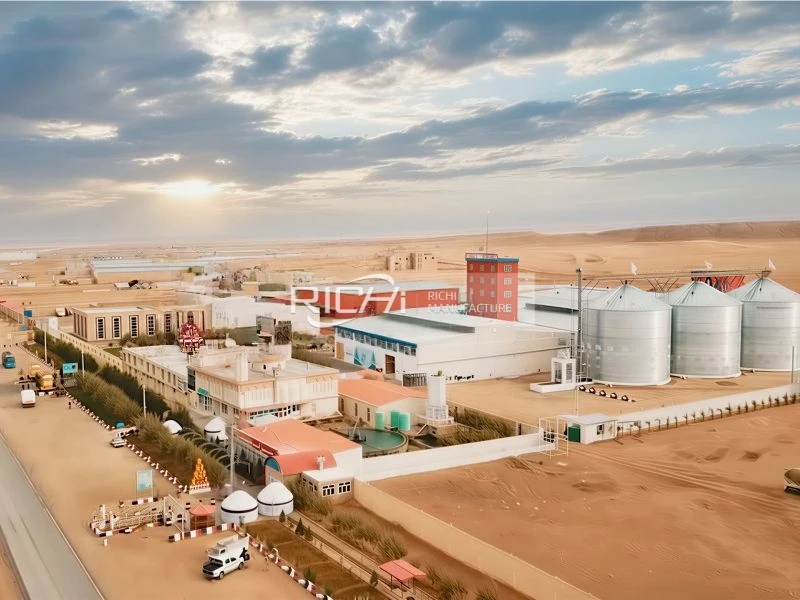

【10 T/H Fully Automatic Poultry Feed Plant Video in Afghanistan】Afghanistan’s 10 t/h project combines a fully automatic mash feed plant with pellet and crumble production. For a poultry-feed business, that means planning several product forms within one installation. RICHI coordinates the production routes around the required feed range and automation scope.
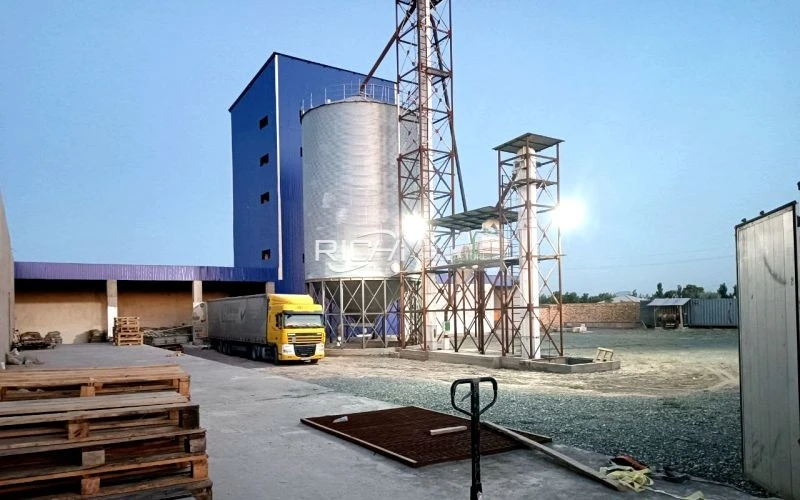
【15 T/H Cattle And Poultry Feed Plant Video in Uzbekistan】The Uzbekistan project produces cattle and poultry feeds as both mash and pellets. At 15 t/h, it represents a larger combined-feed installation where different formulas need coordinated preparation and finishing. RICHI sizes the mash feed production line and pellet section around the required product mix.
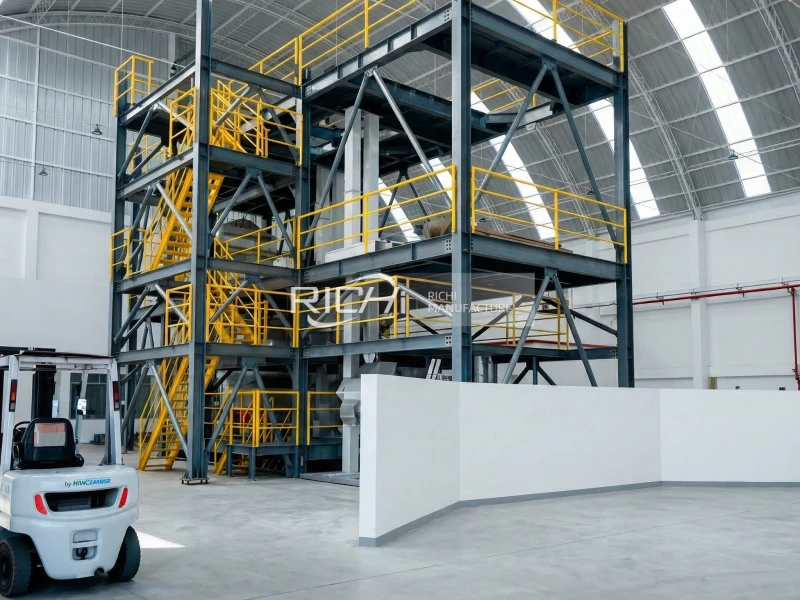
【5 T/H Broiler And Pig Compound Feed Mill Video in Venezuela】Broiler and pig feeds are the focus of this 5 t/h project in Venezuela. Mash, pellets and crumbles extend the product range across the two applications. Grinding and mixing requirements follow each formula, with crumbling reserved for the poultry products that call for it.
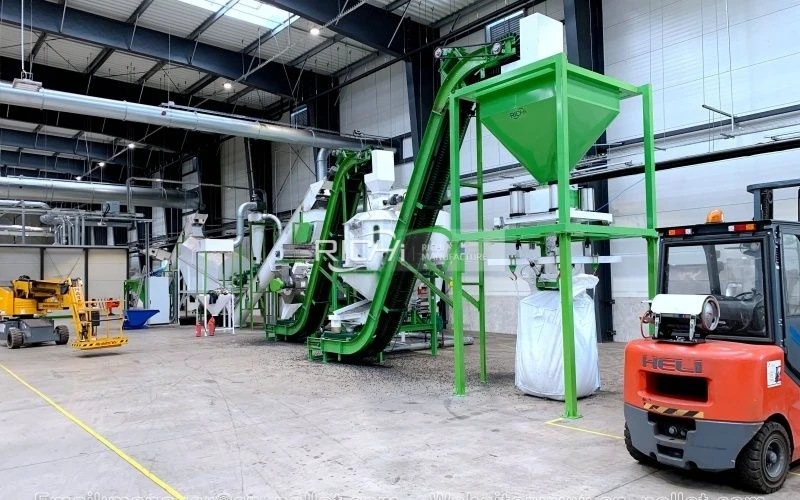
【2–3 T/H Ruminant Feed Plant Video in Russia】Ruminant mash and pellets are the outputs of this 2–3 t/h Russian project. At this scale, recipe selection remains central to equipment sizing: a cereal-rich concentrate and a forage-containing feed place different demands on preparation. RICHI assesses the ingredients before specifying the grinding arrangement.
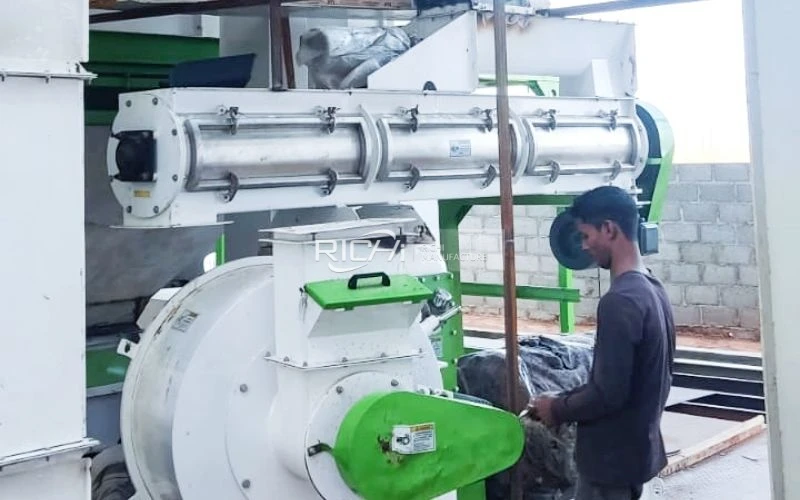
【5 T/H Chicken And Cattle Compound Feed Mill Video in Oman】Three feed forms make the 5–6 t/h Oman project useful for comparing product changeovers. Chicken and cattle formulas can call for different grinding and mixing settings, while mash, pellet and crumble orders use different finishing routes. RICHI defines those requirements before selecting the shared equipment.
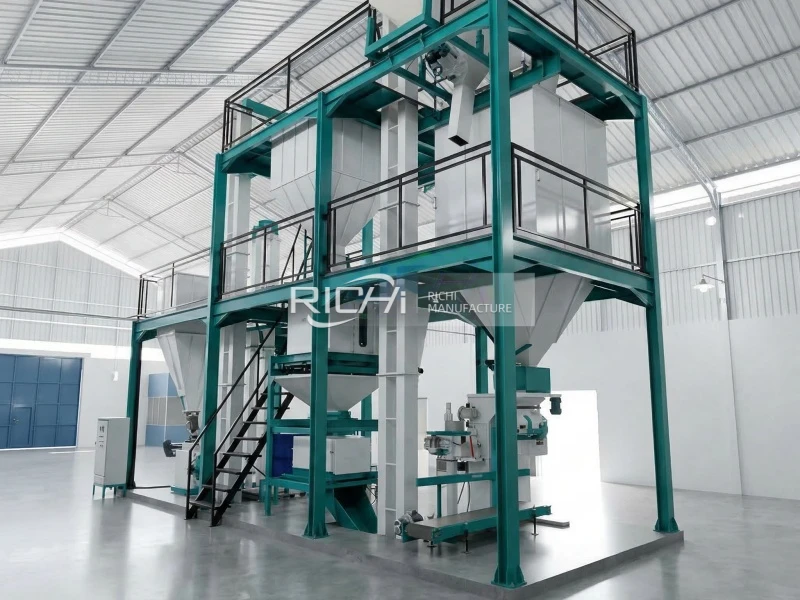
【1–2 T/H Poultry And Fish Feed Line Video in Indonesia】Poultry and fish feed share this Indonesian 1–2 t/h project, which covers mash, pellets and extruded products. Fish-feed extrusion has separate processing requirements from poultry-feed pelleting. For a comparable installation, we confirm the recipe and output of each route individually before selecting equipment.

【5–6 T/H Mash And Pellet Feed Mill Video in Zimbabwe】A 5–6 t/h mash feed mill in Zimbabwe combines meal production with a pellet option. For buyers comparing this dual-purpose setup, the key planning question is how much of each feed form is needed per shift. That production split guides the sizing of mixing, pelleting and finished-feed handling.
Coordinate Every Stage of Mash Production
RICHI develops each mash feed mill around the feed specification, hourly output, batch schedule, automation level, building and budget. The process can combine intake hoppers, storage bins, cleaners, magnets, hammer or roller mills, batching scales, micro-ingredient dosing, liquid addition and mixers, followed by finished-feed storage and bagging or bulk loading; conveyors, dust collection and controls connect the selected modules.
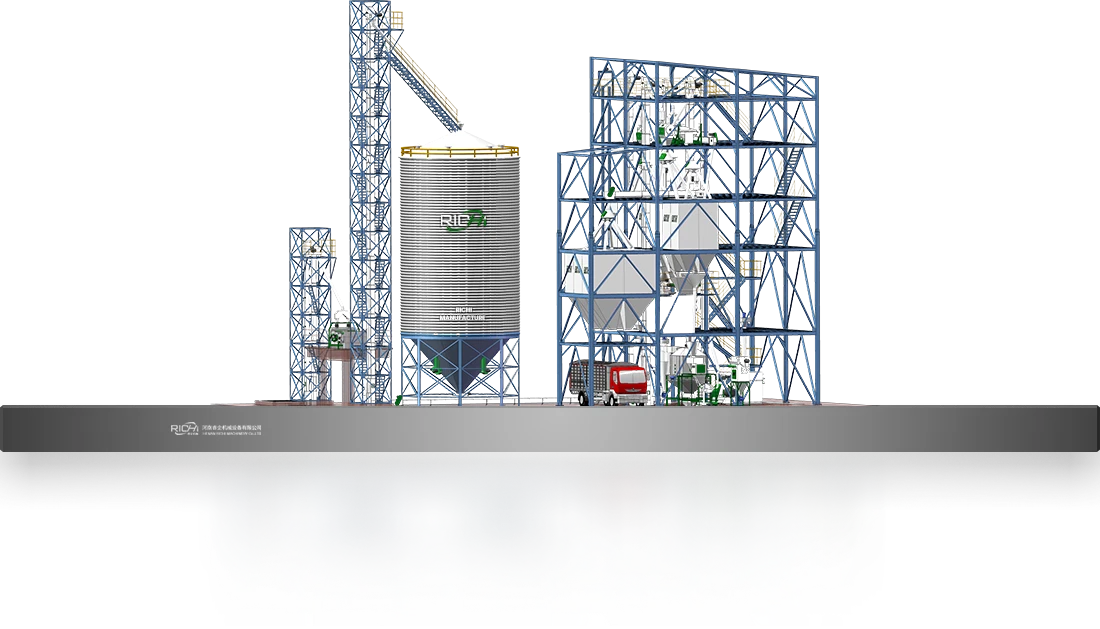
The mash feed production process may place grinding before or after macro-ingredient weighing, with premixes and selected coarse ingredients added through separate routes. RICHI sizes the line using filling, mixing and discharge times alongside transfer and packing capacity; ingredient moisture and hygiene requirements determine any additional treatment. The agreed mash feed plant design then guides manufacturing, installation, commissioning, training and spare-parts support.
For premixes and protein feeds with specified hygiene or corrosion-resistance requirements, we configure all-stainless-steel processing equipment and adapt dosing, mixing and conveying to the formulation.

Cleaning System
01
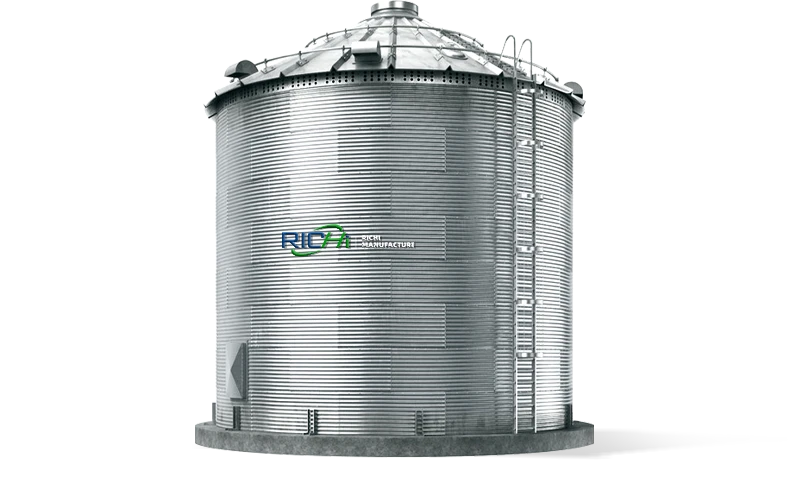
Storage System
02
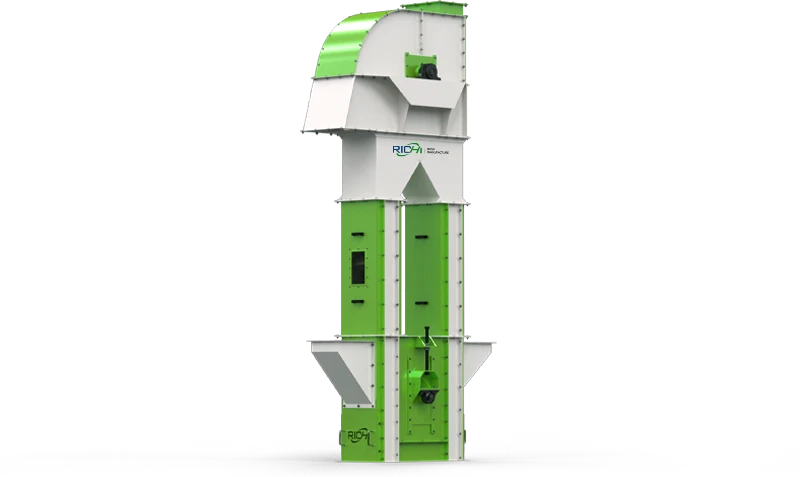
Conveying System
03
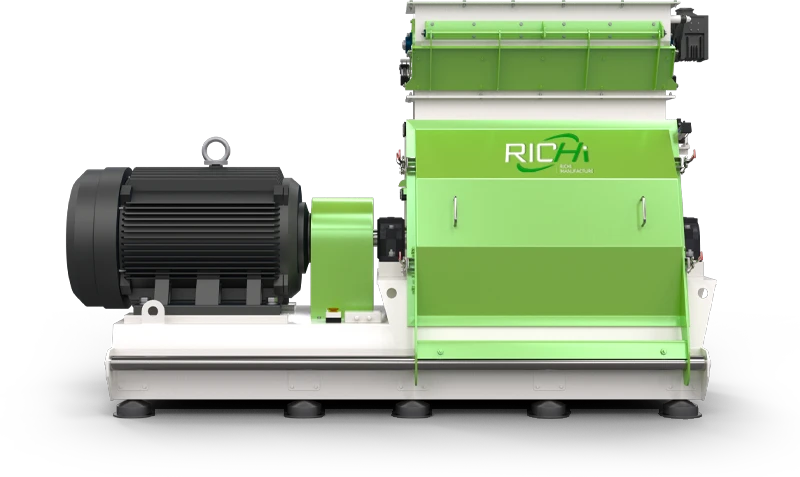
Grinding system
04

Batching system
05
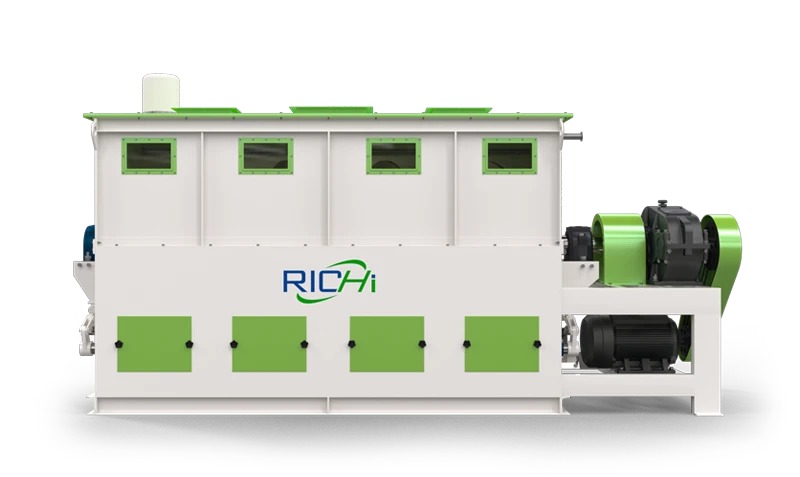
Mixing system
06

Dosing System
07
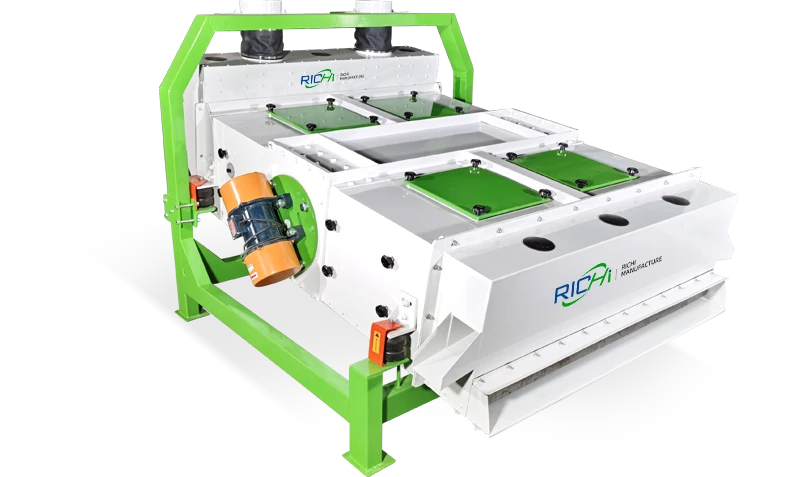
Screening System
08
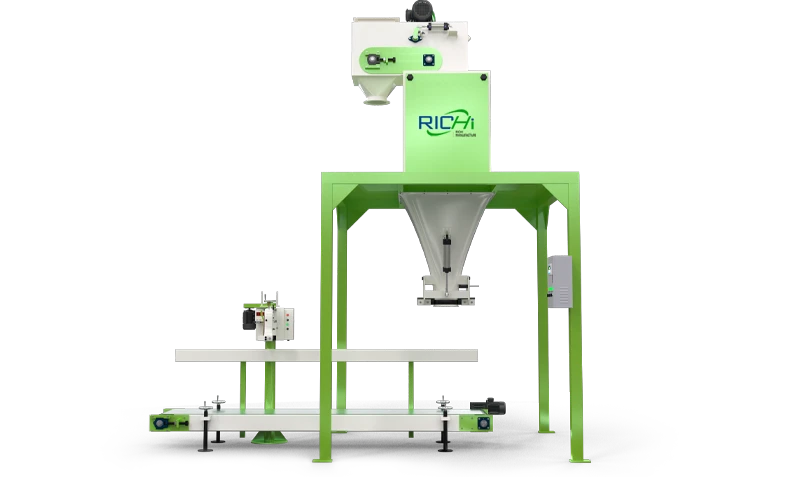
Packing System
09

Automated Control
10
atch Your Mash Feed Mill to the Feed You Produce
Your mash feed mill may need straightforward grain preparation, bale handling, precise micro-ingredient weighing or separate finishing routes. The configurations below show how those choices change equipment scope. Country profiles illustrate suitable applications; wet-forage mixing and pellet production retain their own handling and capacity requirements.

3–5 T/H Chicken Mash Feed Plant Design for Bagged Sales
Regular layer-mash orders suit this merchant-feed layout in Türkiye. Two 27 t silos buffer incoming cereals before batch cleaning, grinding and mixing. The product leaves as 20–50 kg bags for farm and dealer customers. Keeping the route mash-only avoids a pelleting section while retaining organized grain receipt and preparation.

5–6 T/H Cattle Mash Feed Plant Design for Baled Hay
A dairy cooperative in Italy can prepare hay-rich meal without a pellet mill or bagging machine. Bales are opened and chopped, with prepared forage staged for weighing alongside grain. Hammer milling provides the second size-reduction step before mixing. Manual weighing and packing keep the equipment scope simple, with 5–6 t/h checked against the actual hay-to-grain formula.

1–2 T/H Layer Mash Feed Plant Design with Pellet and Crumble Routes
A layer farm in Jordan can use a 0.5 m³ weighing hopper, simple liquid addition, screw conveyors and Z-type bucket elevators in a horizontal arrangement. After grinding and mixing, mash moves to packing; other batches are pelleted, cooled and screened, with crumbling used when required. Manual filling and electric bag sewing finish the bags.

5 T/H Automatic Stainless-Steel Premix Feed Line Design
An El Salvador premix producer can combine maize/soybean-meal carrier silos and a welded calcium-carbonate silo with an automated stainless-steel product-contact route. Precision macro-weighing, two small-ingredient scales and weighed fat dosing supply the mixer. A hopper hood, pulse filter and centrifugal fan provide extraction. Pneumatic discharge feeds a buffer hopper, automatic packing, belt transfer and sewing.

5–6 T/H Pig Mash Feed Plant Design with Below-Floor Batching
Limited building height shapes this Colombian pig-feed layout, with batching scales below floor level. Weighed ingredients pass through impurity removal and magnetic separation before hammer milling, mixing and direct bagging. Pit drainage, ventilation and scale-maintenance access are checked during civil design.

10 T/H Poultry Mash Feed Plant Design with Pellet Finishing
For a broiler integrator in Belgium, most purchased meals enter batching and mixing directly, while the small unground fraction is milled. A mash outlet serves meal orders; a second route conditions and pellets feed, then cools and screens it. Both products use automatic bagging. This mash feed mill retains flexible output without routing every recipe through pelleting.

8 T/H Ruminant Feed Mixing plant Design for Hay and Silage
An 8 t/h farm-feed mixing layout suits a cattle-and-sheep enterprise in Germany reusing its bale breaker. Loose alfalfa hay and cereals use separate weighing, dosing and holding arrangements linked by horizontal conveyors. Silage requires dedicated moist-feed handling into suitable mixing equipment for prompt use. It stays separate from dry-meal storage, with capacity assessed on the actual as-fed blend.

35–40 T/H Mash Feed Mill Design with Pellet and Crumble Routes
A feed supplier in the Czech Republic can serve poultry and livestock farms through direct mash outlets and separate finishing routes. Storage comprises 2 × 2,500 t silos; twin manual intakes and two grinders supply computerized 28-bin batching, micro-additions and mixing. A pelleting section, paired coolers, crumblers and screens, three automatic weighing/sewing stations and bulk loadout complete this commercial mash feed plant.
Mash Feed Mill Project Profiles from 1 to 60 T/H
Match your mash feed mill to the feeds you need to produce. These profiles pair available project briefs with representative market applications, covering farm supply, commercial sales and expansion into pellets, crumbles or premixes. Proposed capacities and particle specifications remain subject to formulation, equipment selection and production trials.

1 t/h layer mash feed plant project
Nepal
For a layer farm preparing its own maize-and-soybean-meal diets, this small mash feed plant would combine grain cleaning, controlled grinding, premix weighing and batch mixing. The layer-mash reference is 55–85% of particles between 1 and 3 mm. A compact arrangement and batch identification support daily farm supply within a dedicated mash-only scope.
3–5 t/h poultry mash feed plant project
Malaysia
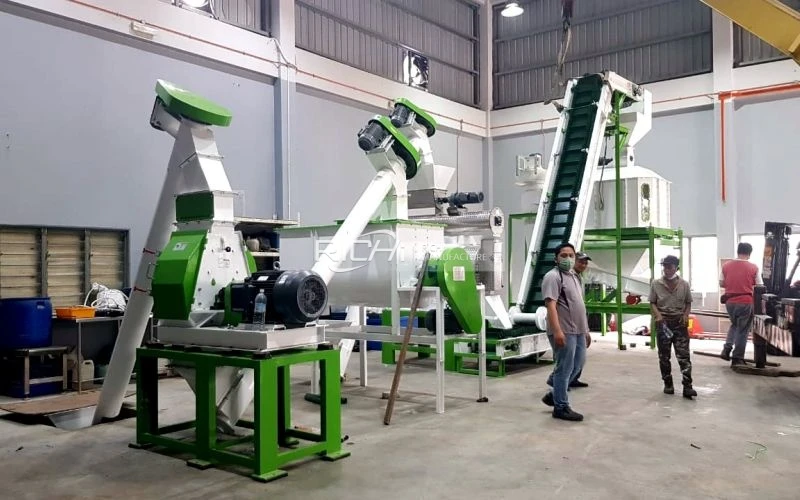
An established poultry business’s project brief specifies layer mash from maize or qualified broken rice, soybean meal and approved additions. Preparation, weighed batching, small-ingredient handling and paddle mixing lead to 25 kg bagging. For product sizing, 55–85% within 1–3 mm is a layer-feed reference; the available brief contains no measured sieve results.
8 t/h broiler mash feed plant project
Pakistan
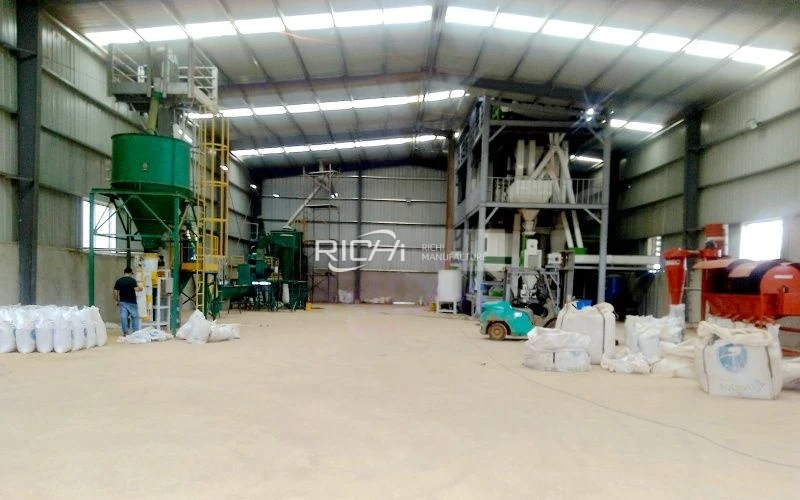
For a regional poultry supplier, shared 8 T/H preparation could serve broiler mash, pellets and starter crumbles. One coarse-mash reference limits particles below 1 mm to less than 25%; selected pellets use 3–4 mm dies, followed by crumbling to 1–3 mm. RICHI would provide a mash bypass and separately rate conditioning, cooling and grading.
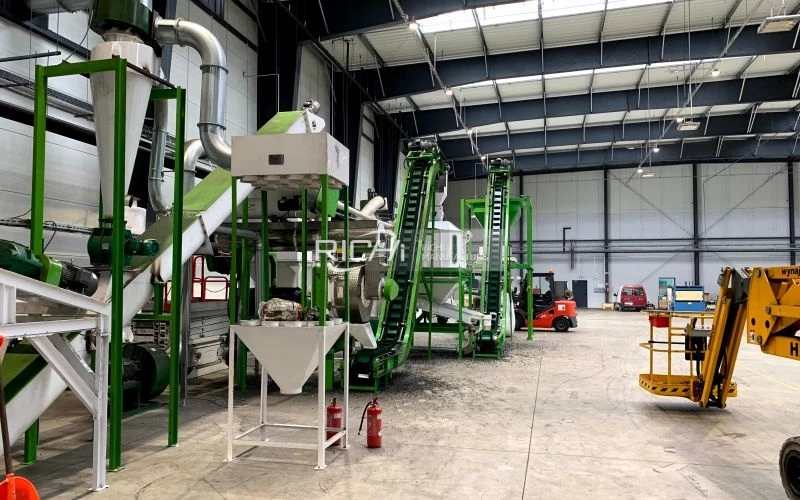
10 t/h cattle mash feed production line project
Netherlands
An independent mill adding dairy concentrate meal could use maize, wheat by-products and protein ingredients. A 750–850 μm average corn-grind reference describes the grain portion; the complete mash needs its own sieve profile. RICHI would assess existing handling equipment, liquid distribution and bulk loading against the 20 T/H expansion target and the required forage-based feeding programme.

1 t/h chicken mash feed plant project
Ghana
A poultry cooperative could use maize, bran and soybean meal to prepare pullet grower mash in short production runs. A starting sieve specification can emphasize the 1–3 mm fraction, with finer and coarser portions set by the bird programme. Weighed additions and bagging would support separate orders for member farms without requiring a pellet section.

4 t/h pig mash feed plant project
Philippines
An integrated pig operation could process maize, soybean meal and selected bran into grower or finishing meal. For selected finishing diets, 500–600 μm mean particle size is a reference. The mash feed mixer, hopper outlets and bagging feeder would be selected for the resulting meal’s flow properties, with premixes weighed separately from bulk ingredients.
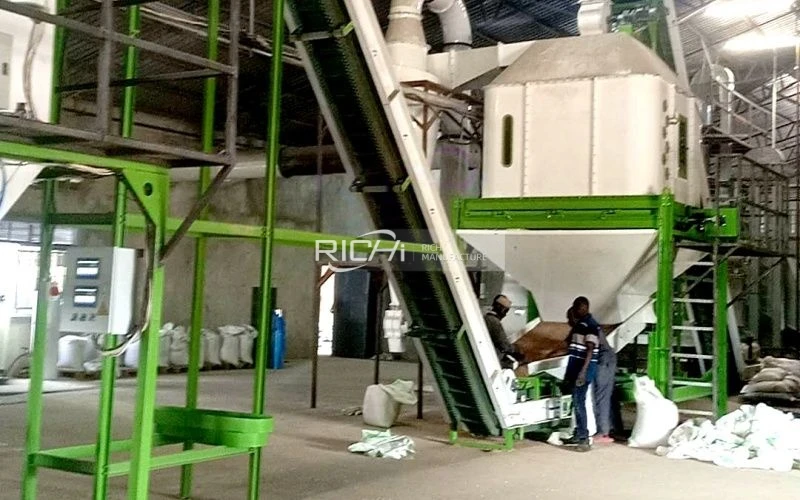
8–10 t/h livestock mash feed plant project
Uganda
A multi-species feed business’s brief specifies shared 8–10 T/H preparation and a separate 4–5 T/H pellet route. Selection references distinguish the 1–3 mm fraction in layer mash, 500–600 μm mean size in selected pig meal, 3–4 mm pellet diameter and 1–3 mm screened broiler crumbles. Product scheduling would determine practical output across these different feed forms.

10 t/h pig mash feed production line project
Poland
A proposed automatic mash feed plant could supply finishing-pig meal from wheat, barley, maize and soybean meal, using a 500–600 μm mean-size reference for selected diets. An independent all-stainless-steel premix section would have its own weighing, mixing and cleaning controls. Premix particle specifications and output would be established separately from the 30 T/H main line.
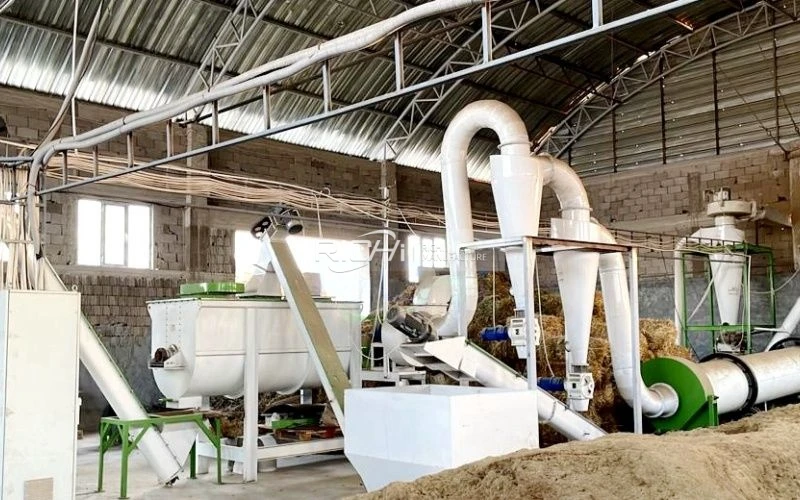
2 t/h cattle mash feed plant project
Kenya
A dairy cooperative could manufacture textured calf-starter meal from prepared maize, oats or barley, protein meals and premix. A published starter reference uses at least 80% of particles above 1,190 μm and a weighted mean around 2 mm or greater. Low-fines handling and gentle mixing would be specified around the approved calf-feeding programme.
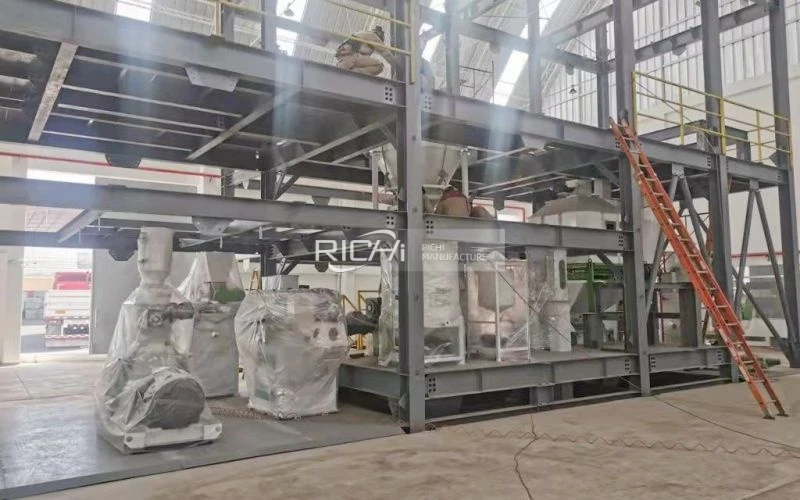
5 t/h poultry mash feed production line project
Peru
The supplied project brief describes an automated poultry plant producing both chicken mash and pellets. Its 5 T/H rating needs to be assessed against the product split. For mash, the 1–3 mm fraction and sub-1 mm fines are relevant sizing checks; a separate finishing route could produce selected poultry pellets of 3–4 mm diameter.

10 t/h mash feed mill project
United States
A 10 T/H chicken mash feed production line was the customer’s initial request before the brief expanded to include pellets. Most incoming ingredients were already meals, reducing the grinding scope. Mash sizing would follow the flock’s particle distribution, using a 1–3 mm fraction as a poultry reference; automatic packing was specified for both product routes.

15 t/h mash feed factory project
Spain
A cereal processor entering feed manufacturing could use wheat, barley and protein meals for pig meal and poultry mash. Selection references distinguish 500–600 μm finishing-pig meal from the 1–3 mm fraction in textured poultry mash and 3–4 mm poultry pellets. RICHI would assess recipe sequencing, separate finishing and finished-feed storage against the 40 T/H production programme.

2 t/h mash feed mill project
Bangladesh
For a hatchery-feed supplier, the target product would be powdered tilapia fry feed below 0.5 mm, blended from qualified protein ingredients, cereal fractions, oils and micronutrients. RICHI would select fine-grinding, grading and mixing equipment at that fineness. The 2 T/H application target requires recipe trials; a conventional livestock grinder rating does not establish this duty.

6 t/h goat mash feed plant project
Namibia
A commercial livestock-feed business could supply sheep and goat concentrate mash based on processed cereals, protein meals and suitable fibrous by-products. A proposed 2–3 mm cereal fraction would be reviewed alongside finer protein and mineral components. Rolling or coarse grinding and controlled liquid addition would prepare a supplement for use alongside the farm’s forage supply.
12 t/h duck mash feed plant project
Indonesia
A commercial feed supplier could prepare laying-duck mash from maize, broken rice, rice bran, protein meals and micronutrients. A proposed 1–3 mm cereal fraction requires review against duck age and feeding method. The mash feed plant layout would include controlled fine-particle handling and separate recipe storage; pellet production can be evaluated as an alternative route.

30 t/h large scale mash feed plant project
India
An integrated feed producer could supply layer and broiler programmes through parallel maize grinding, ingredient dosing and mixing. Layer mash can use the 55–85% within 1–3 mm reference. The 30 T/H bulk-mash target would be assessed independently of optional 3–4 mm poultry pellets and 1–3 mm screened crumbles, allowing each finishing branch to be sized separately.
What matters after installation: clear operating steps, sensible equipment integration, reliable production records and practical maintenance support.


2 t/h mash feed mill in Iraq
- Client Profile: Layer farm owner
- Project Focus: Operator training
“We make layer mash for our own birds. The training covered premix weighing and the order of additions. Our operators still use the batch checklist, which makes shift changes much easier..”

8 t/h mash feed processing plant in Russia
- Client Profile: Pig-feed production manager
- Project Focus: Equipment reuse
“Keeping our grinder mattered to us. RICHI checked its capacity and worked the new mixer and bagging equipment around it. We could upgrade the line without starting again with a completely new system.”

20 t/h mash feed manufacturing plant in France
- Client Profile: Commercial feed mill manager
- Project Focus: Batch traceability
“We switch between several feed formulas each day. I can check which recipe was used and see the ingredient weights for each batch. When a customer asks about an order, we have the records.”

6 t/h mash feed mill in New Zealand
- Client Profile: Regional dairy-feed producer
- Project Focus: Maintenance and parts
“Spare parts were my main concern because we’re far from the supplier. RICHI gave us a clear parts list and maintenance instructions. Our local team now handles the routine servicing without waiting for outside help.”

Match Mash Feed Mill Capacity to Daily Feed Demand
Plan mash feed plant capacity around required tonnes per shift and effective production hours. RICHI sizes your mash feed mill around grind fineness, batch cycles and dispatch requirements, then matches the layout and equipment scope to your budget. Fine aquafeed powders and premixes need separate capacity assessment.
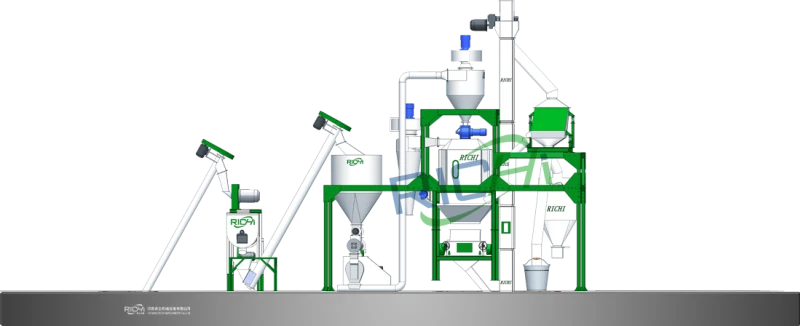
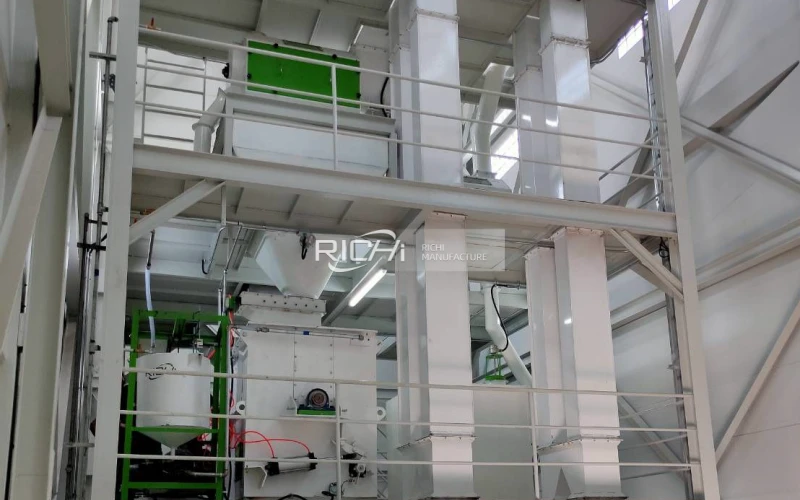
A mini mash feed plant suits farms preparing their own rations and new businesses testing local demand. Compact layouts and flexible weighing arrangements help keep labour and storage requirements manageable.
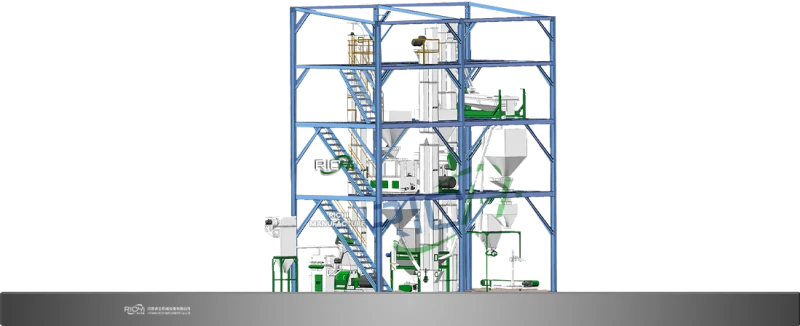
3-4 t/h animal feed production plant
Agricultural cooperatives and growing farms can coordinate several feed recipes at this scale. Planning ingredient storage and bagging around collection days helps organize raw-material purchases and deliveries to nearby customers.
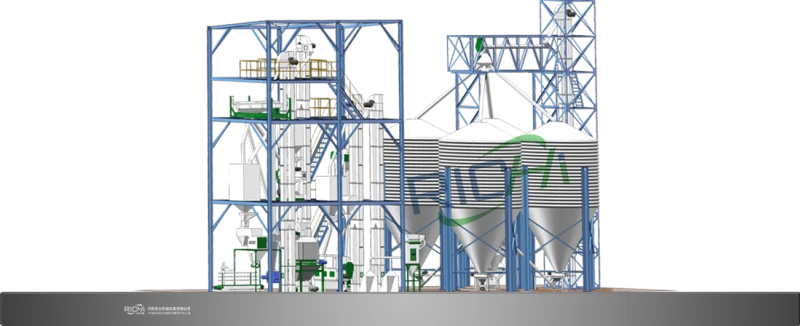
5-7 t/h animal Mash Feed Mill
This range suits independent feed brands, larger cooperatives and integrated farms supplying several animal groups. An automatic mash feed production line is worth evaluating when ingredient counts and repeat batches increase weighing workload.
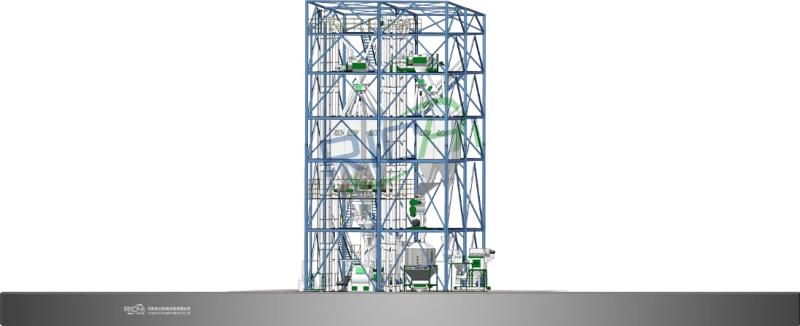
8-10 t/h animal feed processing plant
Established feed mills serving distributors need a steady flow of finished mash through storage and dispatch. At this scale, bagging speed, loading arrangements and stock rotation deserve as much attention as mixer capacity.
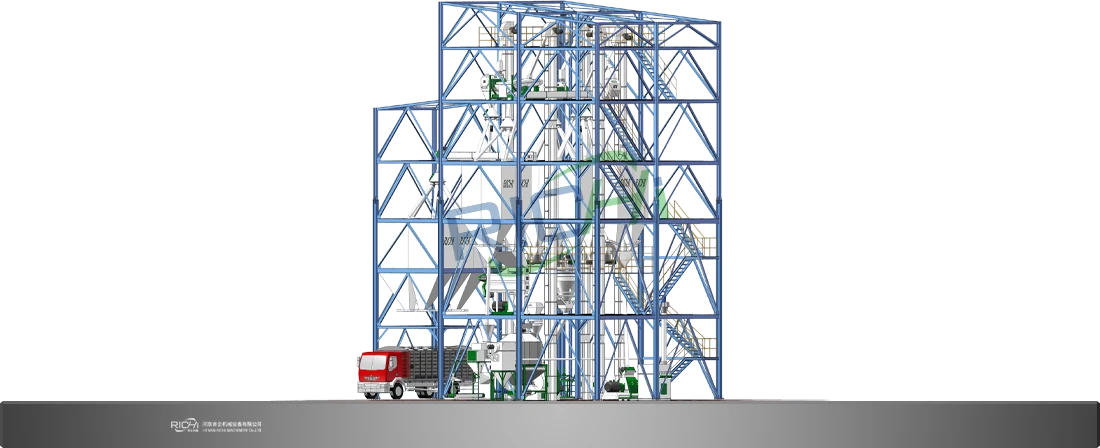
12-20 t/h feed preparation plant
A complete mash feed plant suits commercial mills, contract producers and large farm groups. RICHI coordinates ingredient storage, batch scheduling and finished-feed routes to support regular supply across several recipes and customer orders.
Mash Feed Mill Cost from Machinery to Startup
A mash feed mill requires both a machinery budget and funds to put the site into operation. The USD ranges below are preliminary planning allowances across different plant sizes and sourcing markets. Equipment specifications, existing buildings and local prices determine where your project falls.
Whole mash feed plant set up investment : $5,000 – $20,000,000
Mash Feed Mill Equipment Investment :
Receiving, cleaning and magnets :
$1,000–60,000
Grain grinding :
$2,000–200,000
Batching and micro-dosing :
$1,000–150,000
Mash mixing :
$2,500–150,000
Liquid addition (optional) :
$800–50,000
Conveying and elevators :
$2,000–250,000
Process bins and storage silos :
$3,000–750,000
Equipment support steel and platforms :
$2,000–250,000
Sifting and lump breaking (optional) :
$1,000–40,000
Bagging or bulk loadout :
$3,000–150,000
Dust collection :
$2,000–100,000
Machine controls and automation :
$2,000–200,000
Stainless-steel premix module (optional) :
$5,000–400,000
Fine grinding and grading (optional) :
$6,000–250,000
Pellet and crumble finishing (optional) :
$2,000–150,000
Opening ingredient stocks follow daily ingredient use × stock days × delivered ingredient cost. For example, 20 tonnes/day × 10 days × US$400/tonne gives US$80,000; these are assumed planning inputs. For a useful mash feed production line price, send your formulas, target output, country and building information. RICHI can prepare an equipment list, identify owner-supplied items and develop a project-specific capital budget. Larger stores, premium equipment and complex local works can exceed these preliminary allowances.

Engineering Services Behind Your Mash Feed Mill
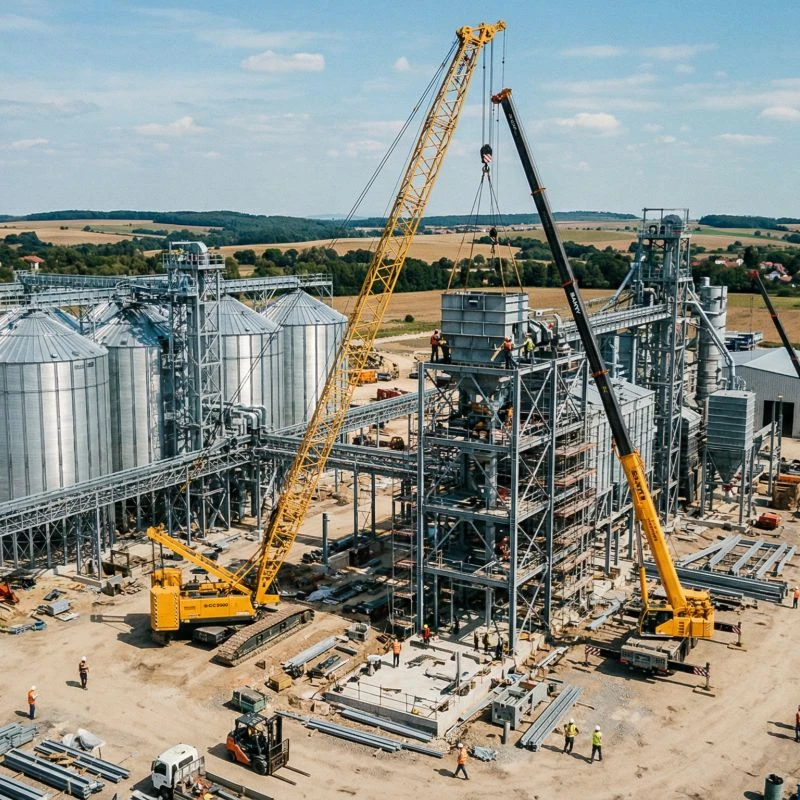
Clear drawings, inspection records and agreed acceptance checks give your mash feed mill project a practical route to handover. RICHI coordinates the supplied equipment with your building contractor and operating team, with responsibilities defined before installation begins.
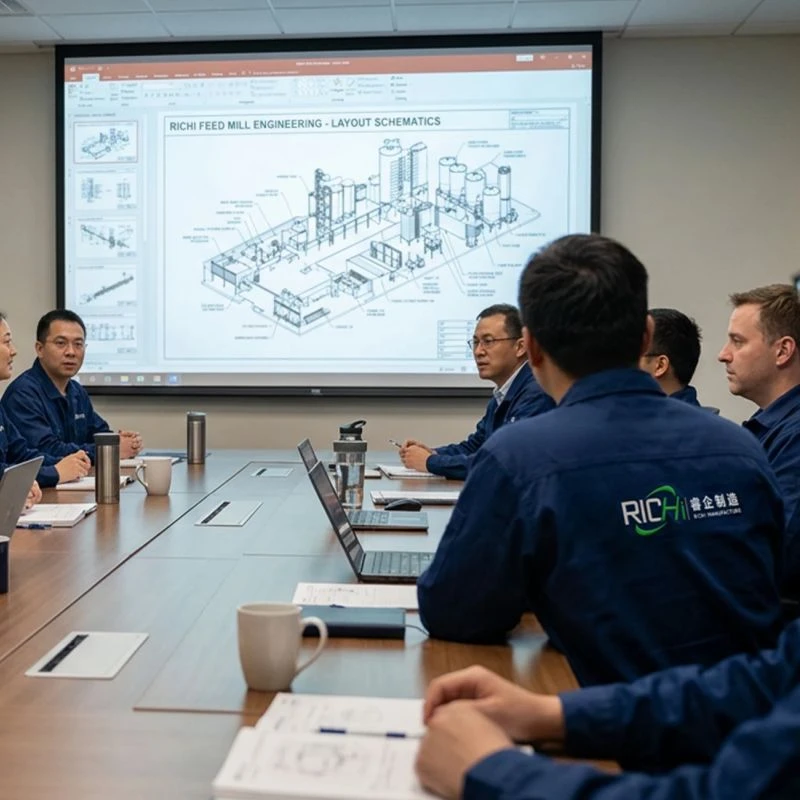
Process and Site Engineering
Ingredient bulk density and recipe schedules shape the mash feed processing line. We prepare material balances, layouts, foundation interfaces and control requirements, coordinating maintenance access and expansion space with your local civil team. Suitable existing machines and separate premix or pellet routes are assessed during design.
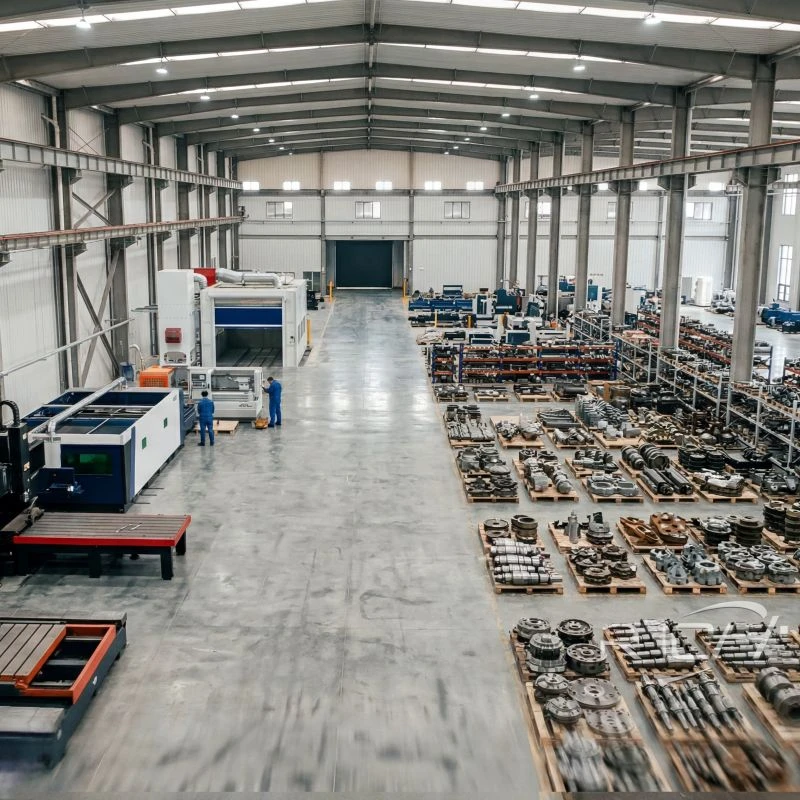
Equipment Manufacture and Inspection
RICHI manufactures core mash feed manufacturing equipment against agreed drawings, with machining, welding and assembly checks. Inspection covers bearing fits, mixer clearances, seals and discharge operation. Material grades, including stainless steel where specified, and pre-shipment test requirements are recorded in the equipment specification.
Commissioning and Operator Training
Commissioning starts with equipment alignment, drive rotation, interlocks and scale checks, followed by material trials. We review feed particle size distribution and mixer uniformity against agreed sampling methods. Training covers ingredient additions, recipe changes, safe cleaning and routine maintenance, with remote or on-site support arranged to suit the project.

Lifecycle Support and Upgrades
We support the supplied equipment throughout its service life, using serial numbers and wear-part references to identify compatible spares. Follow-up services cover troubleshooting, maintenance reviews and agreed site visits. Control upgrades and capacity additions are assessed against the machinery already installed.
Free Design and Startup Support
Evaluate your mash feed mill with cost estimates, coordinated drawings and a clear equipment list. RICHI provides the support below free within the agreed project scope, with documents, training and trials scheduled for the relevant stage.

Free Budget Estimates and Equipment Lists
Free Flowcharts and Factory Layouts
Free 3D Renderings and Three-View Drawings
Free Civil and Steel Structure Drawings
Free Electrical Circuit Drawings
Free Remote Installation Guidance
Free Manuals and Operator Training
Free Feed Production Trials
Machinery Options for Your Mash Feed Mill
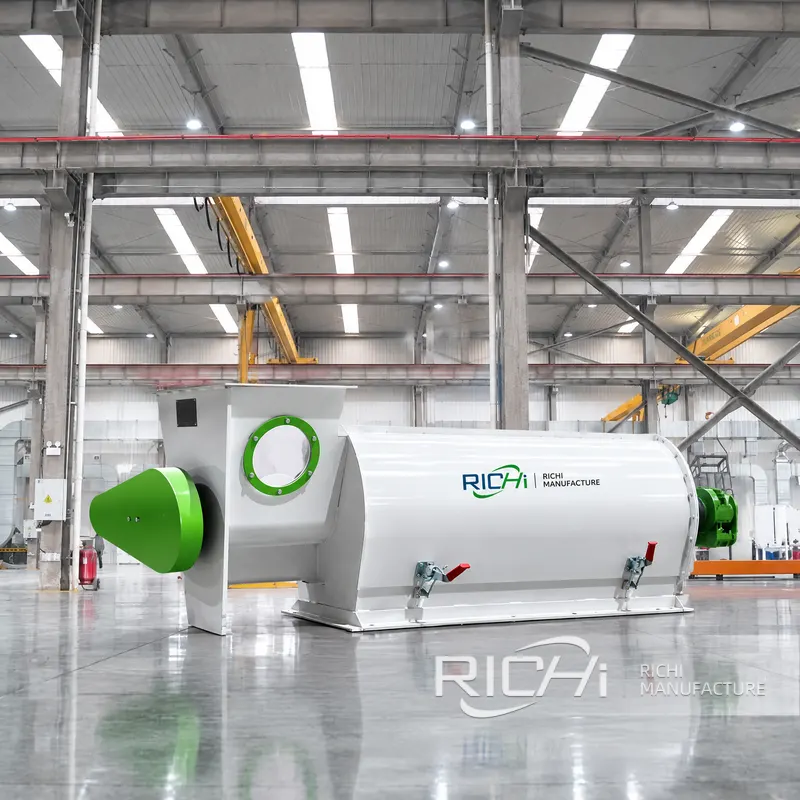
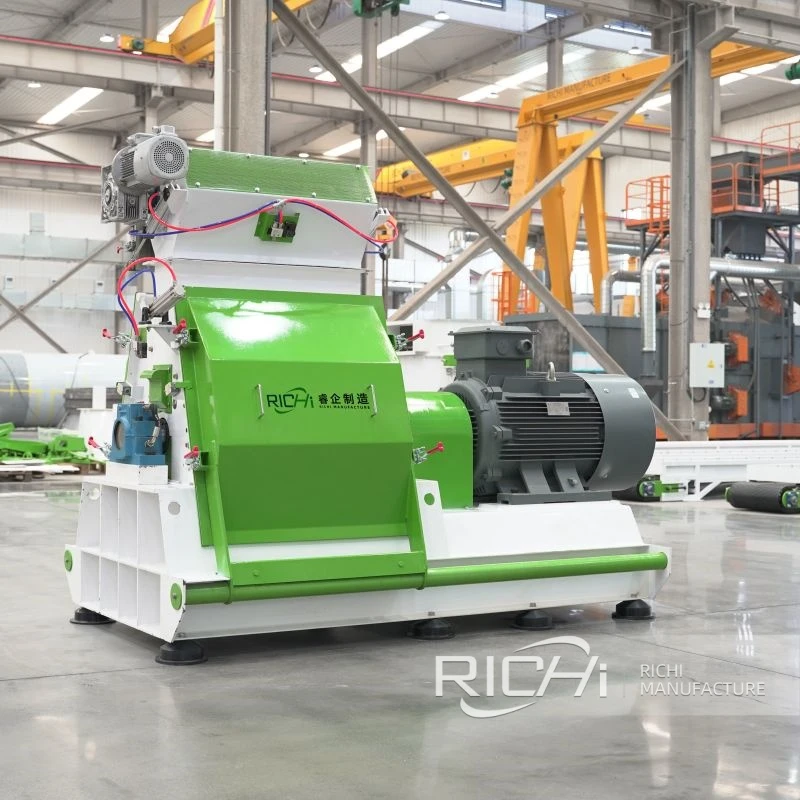
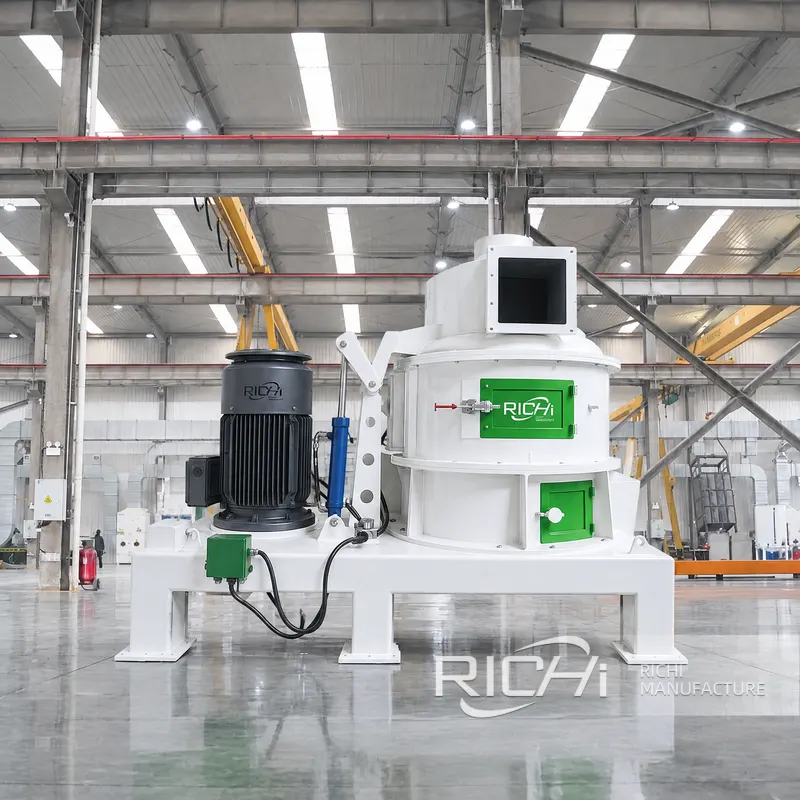
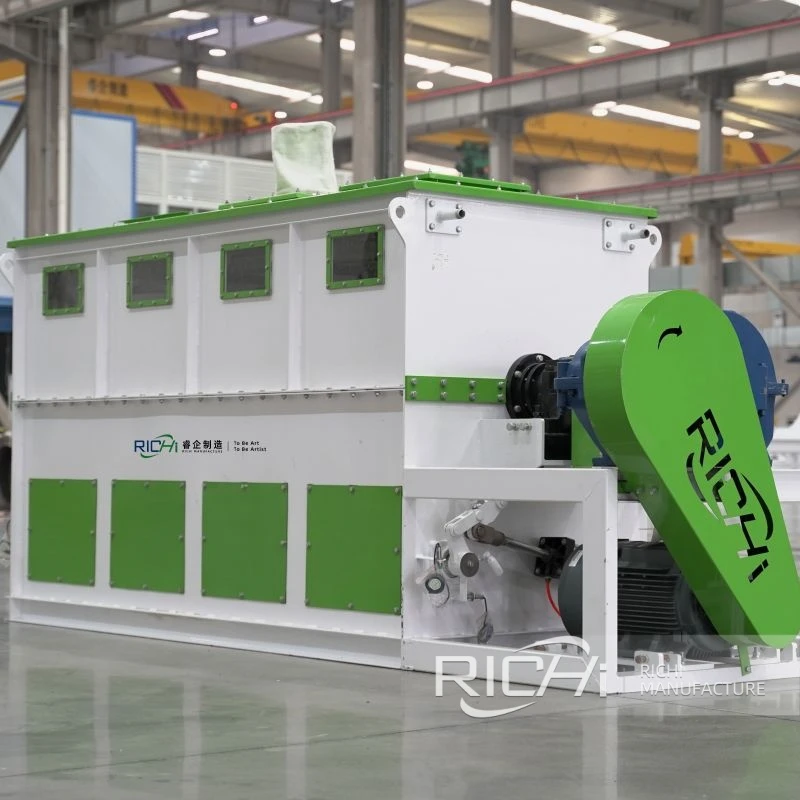
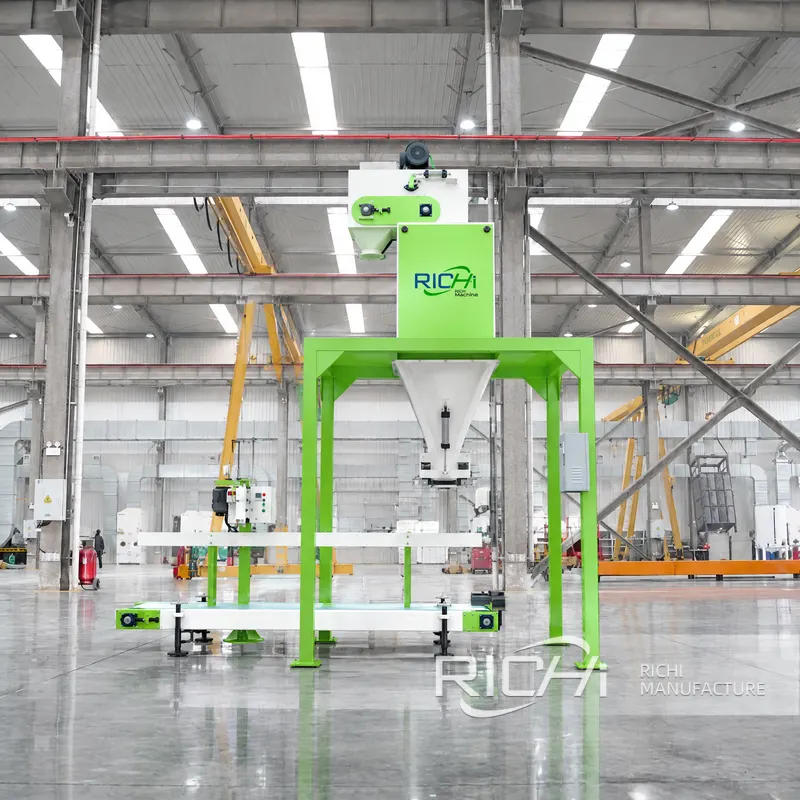
Compare mash feed processing equipment by grind fineness, usable batch load, dosing accuracy and ingredient flowability. RICHI’s range covers intake hoppers, cleaners, magnets, hammer or roller mills, batching scales, micro-dosers, ribbon or paddle mixers, liquid systems, bins, silos, conveyors, optional sifters, dust extraction, bagging or bulk loadout and electrical controls for your mash feed mill.
Cleaning Equipment




Liquid Dosing Equipment
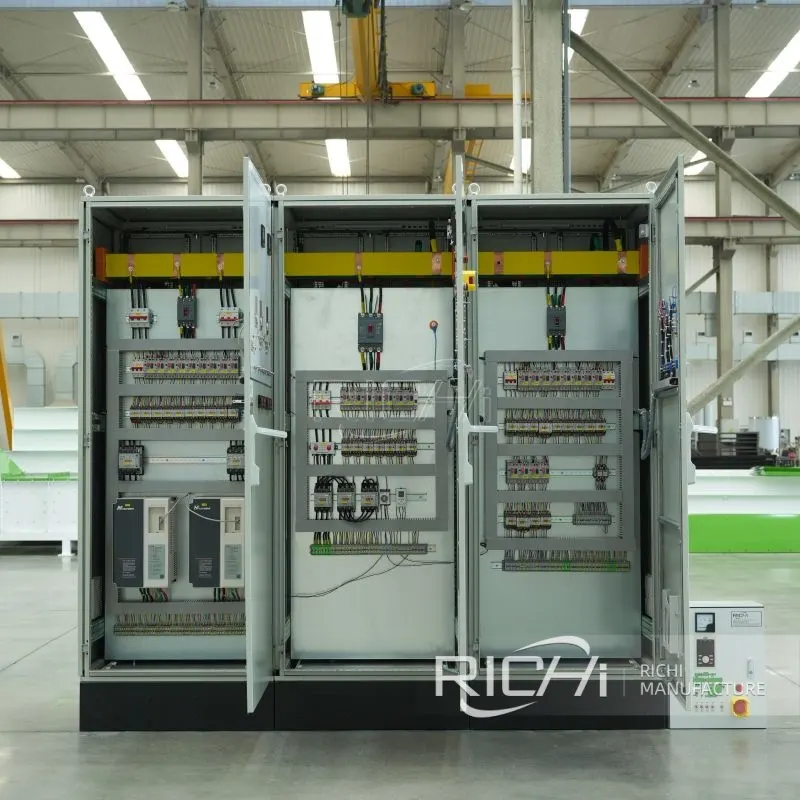
Electrical control cabinet
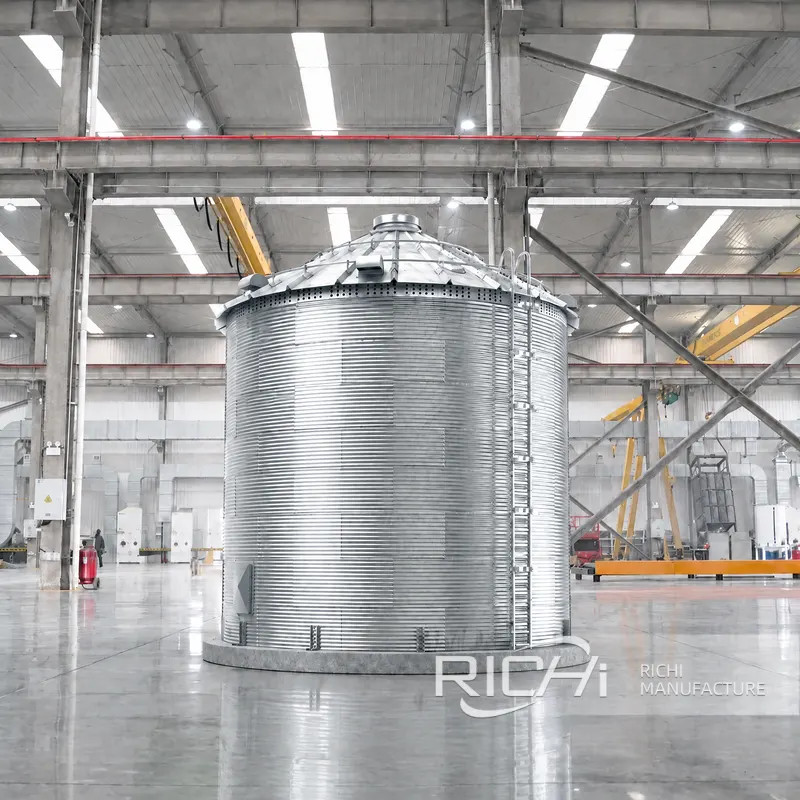
Explore model specifications and all-stainless-steel options for relevant premix and protein-feed duties. Fine aquafeed powders receive separate grinding and grading selections; optional pellet or crumble modules add conditioners, pellet mills, coolers and crumblers as required.
Build a Mash Feed Business Around Local Demand
In grain-growing regions, a mash feed mill can connect local cereals and suitable milling by-products with demand for layer mash, pig meal and dairy concentrates. Farms can make their own feed; grain businesses can develop another sales outlet. Commercial viability depends on seasonal ingredient prices, nutrient consistency and the cost of storage and delivery.
An existing feed mill may add mash sales by modifying its discharge route. Several compatible recipes can broaden its market, provided changeovers control carryover. Choose bagged or bulk supply around customers’ feeding systems and delivery distances. RICHI can assess a new plant or retrofit against your ingredients, buyers and production target.
Discuss My Feed Production Project

Mash Feed Applications and Ingredient Choices
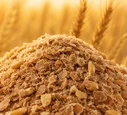
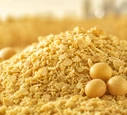
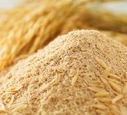
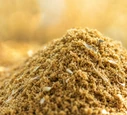
Maize, wheat, barley, sorghum, oilseed meals and milling by-products behave differently in a mash feed mill. RICHI configures each animal mash feed production line around tested ingredients and the feeding specification. Sizes below identify cereal fractions, finished-mash grading, pellet diameter or crumble grading; labelled trial targets require validation.

Maize
Wheat

Barley
Soybean Meal
Rice Bran

Premix
Fish Meal

Layer Hen Mash Feed
Layer diets combine cereals, soybean meal and calcium sources. A reference mash contains 55–85% particles measuring 1–3 mm; coarse limestone at 2–4 mm enters after grain milling. Separate handling preserves this calcium fraction. Product choices also include 1–3 mm pullet starter crumbles and, where the feeding program calls for them, 4 mm layer pellets.

Broiler Chicken Mash Feed
Broiler mash can use a trial 1–3 mm cereal-grading target while limiting fines below 1 mm. Maize, wheat, soybean meal and oil need coordinated grinding and liquid distribution to reduce selective feeding. Related products include starter crumbles predominantly within 1–3 mm and 3–5 mm grower or finisher pellets. Select the feed form around flock requirements and feeding-system performance.

Pig Mash Feed
For maize, wheat or barley diets with soybean meal, the mash feed grinder must balance fineness with feeder flow. A 500–600 µm mean particle size is a finishing-mash reference. Dry meal can be mixed with water at feeding. Optional 2–4 mm pellets and a trial 1–2 mm nursery-crumble range require separate finishing and product checks.

Dairy Cattle Mash Feed
Maize, barley, rapeseed meal and bran can produce concentrate meal to complement forage. A 750–850 µm average is one reference for ground maize; ration structure is assessed separately. RICHI coordinates cereal preparation with mineral and molasses addition. Meal concentrates and optional 6–8 mm pellets serve specified feeding arrangements, with inclusion set from forage analysis and animal needs.

Beef Cattle Mash Feed
Beef-feed supplements can combine maize or barley, bran and approved protein meals. For a coarse cereal route, a provisional 2–4 mm cracked-grain fraction provides a starting point for trials. Rolling and fines control take priority over producing a fine powder. Product options include concentrate meal and 6–8 mm pellets, formulated around animal stage and adequate roughage provision.
Customize My Beef Feed Mix Line

Sheep Mash Feed
Barley, wheat bran, sunflower meal and sheep-specific minerals can form a concentrate meal for use with forage. An initial 1–3 mm cereal-grading range can be tested where coarse grinding is specified; whole-grain inclusion may also be suitable. RICHI plans dosing and cleaning to limit copper carryover. Optional 4–6 mm pellets can support specified lamb or ewe feeding programs.

Goat Mash Feed
Maize, bran, soybean meal and molasses can supply concentrate meal for goats receiving browse or forage. A trial 1–3 mm cereal-grading range and optional 4–6 mm pellets are assessed by animal stage and feeding method. Molasses spraying and discharge tests help address sticky buildup. Goat-specific mineral recipes need separate control when the plant also manufactures sheep feed.

Duck Mash Feed
Duck mash can use cereals, stabilized rice bran, soybean meal and a waterfowl premix. A trial 1–3 mm cereal profile guides coarse-milling tests, with dust and oil distribution checked together. Other products include starter crumbles with a trial 1–3 mm grading range and approximately 3–5 mm pellets selected by age. Meat-duck producers often prefer pellets to limit wastage.

Goose Mash Feed
Where goose mash is used, wheat, maize, bran and suitable lucerne meal can accompany protein and mineral ingredients. An initial 1–3 mm cereal-grading target requires feeding validation; fibrous meals need a suitable preparation route. Pellets and crumbles are generally preferred for growing geese. Options include trial 1–3 mm starter crumbles and 3–4 mm grower pellets.

Turkey Mash Feed
Turkey mash combines cereals, protein meals and stage-specific micronutrients. A cereal mean of 600–1,000 µm is a proposed trial starting range, checked against feed acceptance and flow. Commercial poult programs commonly use crumbles, progressing from roughly 2–3 mm to 3–4 mm, followed by 4 mm pellets. RICHI assesses these products against the customer’s breeding-company guidance.

Quail Mash Feed
Adult Japanese quail require their own feed specification. Corn particle means around 600–750 µm provide a research-based starting range for trials, alongside soybean meal and correctly prepared calcium sources. Fine grinding and accurate small-dose mixing matter. Product choices include mash, trial 0.5–1.5 mm graded crumbles and 2 mm pellets for suitable adult feeding programs.
Reference Formulas for Your Mash Feed Mill
Layer Hen Mash — Maize-Based Example
Maize
56%
Soybean meal
23%
Wheat bran
6%
Limestone
10%
Vegetable oil
2%
Feed-grade phosphate, salt, premix and amino acids
3%
Broiler Grower Mash — Cereal and Protein Example
Maize
58%
Soybean meal
32%
Wheat Bran
4%
Vegetable oil
3%
Limestone
1%
Feed-grade phosphate, salt, premix and amino acids
2%
Grain-Based Dairy Concentrate Formula
Maize
55%
Wheat
20%
Soybean meal
20%
Wheat bran
2%
Vegetable oil
1%
Limestone, feed-grade phosphate, salt, premix and amino acids
2%
Dairy Cow Concentrate Meal — For Use with Forage
Barley
35%
Maize
25%
Rapeseed meal
20%
Wheat bran
14%
Molasses
3%
Minerals, salt and dairy premix
3%
Lactating Goat Concentrate Meal — For Use with Forage
Maize
30%
Barley
25%
Wheat bran
20%
Soybean meal
20%
Molasses
2%
Minerals, salt and goat premix
3%
Tilapia Fry Powder — High-Protein Ingredient Example
Fish meal
50%
Soybean meal
30%
Wheat flour
12%
Fish oil
3%
Suitable starch binder
2%
Aquatic minerals and vitamin premix
3%
These six 1,000 kg blends are process-design references for a mash feed manufacturing line. The examples illustrate equipment duties. A qualified animal nutritionist must confirm feeding suitability, ingredient analyses and exact additive doses for the animal, production stage and local requirements.
Mash Feed Mill FAQs for Planning Your Project
What is the cost of mash feed plant equipment for a 1–2 t/h startup?
+
US$5,000–40,000 is a preliminary equipment allowance for a basic, bag-fed 1–2 t/h mash system with manual ingredient weighing and short conveying routes. This mash feed mill cost allowance assumes conventional grain grinding and mixing, simple bagging and basic controls.
It excludes land, buildings, large silos, freight, import charges and site installation. Automatic batching, stainless-steel duties or fine fish powders need a revised budget. Treat the range as an engineering estimate until the equipment list and delivery terms are agreed.
I’m looking for a mash feed mill for sale. Do I need a complete plant or just a grinder and mixer?
+
A grinder and mixer may cover a farm’s basic preparation work; a saleable-feed operation also needs controlled weighing, ingredient routing and a workable dispatch arrangement. Listings described as a mash feed plant for sale can therefore represent very different packages.
Start with the ingredients you receive, the recipes you must make and how finished feed leaves the site. Ask for a marked scope drawing so every transfer, weighing point and owner-supplied item is visible before you compare offers.
We need 8 tonnes a day. Is a 1 ton per hour mash feed plant enough?
+
Only if you can achieve eight productive hours at that output. An eight-hour shift containing two hours of receiving, recipe changes, cleaning and interruptions leaves six productive hours, giving approximately 6 tonnes.
For this demand, a small mash feed plant rated at 2 t/h would need four net production hours. Confirm whether the grinder, mixer and packing station can all sustain that schedule; the largest motor’s rating does not establish daily finished-feed output.
With a 5 ton per hour mash feed plant, how many tonnes can I realistically sell each month?
+
At six net production hours a day and 22 working days, 5 t/h gives 660 tonnes a month before rejects. That is production potential, not a sales forecast. A complete mash feed plant still needs sufficient ingredient supply, confirmed orders and dispatch capacity. Base the initial operating hours on your order book and customer payment terms.
Does a 10 ton per hour mash feed plant still produce 10 t/h when we run several recipes?
+
That output needs to be tied to a defined recipe and production schedule. Short orders, finer grinding, hand-added ingredients and changeover cleaning reduce the shift average. To achieve 60 tonnes in six productive hours, the average must remain 10 t/h throughout those hours.
Ask for a mash feed plant capacity calculation that includes every batch’s filling, mixing and discharge time, together with the time lost between products. Record the recipe conditions alongside the quoted rating.
We expect orders of 120–180 tonnes daily. Are we looking at a 20–30 t/h factory?
+
At six net production hours a day, that demand corresponds to 20–30 t/h. One mixing train may handle it if the complete batch cycle permits. For example, 2-tonne batches discharged ten or fifteen times an hour give 20 or 30 t/h, respectively.
An industrial mash feed production line needs matching weighing and feed-removal capacity. For a commercial mash feed plant, adequately sized buffer hoppers can reduce waiting between stages; the calculation still needs to be verified against the actual equipment and recipes.
For our operation in Brazil, can you supply 60 t/h if most output will be bulk layer mash?
+
Yes, 60 t/h bulk-mash systems can be assessed within RICHI’s project scope, using a suitable single or multiple-train arrangement. A large scale mash feed plant needs its storage, dosing, grinding and loading duties checked at the same output.
At 60 t/h, 50 kg bags would require 1,200 bags an hour, which changes the packing investment substantially. Define the bulk-to-bagged split before selecting the mash feed production plant. Premixes and finely ground fish powders require their own capacity assessment.
Our layer farm in Nigeria uses about 3 tonnes daily. Is a poultry mash feed plant too much for us?
+
That daily requirement can suit a compact farm system if ingredient purchasing and operator availability justify producing your own feed. A 1 t/h line would need three net hours; 2 t/h would need roughly one and a half.
For a layer mash feed plant, preserving the required feed structure and adding coarse calcium correctly matter more than installing excess capacity. Include premix purchasing, ingredient testing and bag handling in the comparison with bought-in feed before sizing the mash feed mill.
We raise broilers. Can we stay with mash, or will we end up needing pellets?
+
Mash is possible, but the choice should follow flock targets, feed availability and measured farm results. A broiler mash feed plant needs a controlled particle distribution and consistent nutrient delivery; simply grinding everything finer can create dust and selective feeding.
If you are planning a chicken mash feed plant now and pellets later, compare the cost of that staged approach with installing the finishing branch initially. Trial your intended mash with the farm’s feeders before fixing the commercial production specification.
Our pigs are wet-fed. Can a dry pig mash feed plant supply that system?
+
Yes, provided the dry meal is formulated and prepared for the farm’s wet-feeding arrangement. The pig mash feed production line can discharge dry feed for transport or later mixing with water; liquid-feed preparation, tank hygiene and fermentation management belong to the farm’s separate system.
For finishing meal, a mean particle size around 500–600 µm is one reference, subject to the feeding program. Assess the mash feed grinder against that requirement and check whether the resulting meal flows through your bins and dosing screws.
I want dairy concentrate for farms in Egypt. Does a cattle mash feed plant make the whole ration?
+
The plant makes the specified concentrate; the farm combines it with forage and other ingredients according to the ration. A cattle mash feed production line therefore follows the concentrate recipe and inclusion rate. Obtain the forage analysis and clarify whether customers want meal, pellets or a mineral-protein blend. A fine-ground maize requirement applies to that ingredient; it does not define the complete ration’s forage structure.
We sell goat meal in South Africa and want to add sheep feed. Can both use the same mixer?
+
Shared production is possible only with suitable formulations and demonstrated control of carryover. A goat mash feed plant may handle mineral additions that require stricter separation from sheep recipes, particularly where copper is concerned.
Plan the batch order, cleanout access, retained-material checks and any dedicated small-ingredient equipment before ordering. In a livestock mash feed plant, changing a recipe name in the controller does not establish that the following batch is suitable for another species.
Beef concentrate and calf starter look quite different. Can one livestock feed mill plant make both?
+
The same plant can be configured for both, provided each product retains its required structure. An animal feed mash mill may use a coarse-grain route or bypass for selected calf-starter ingredients, while another concentrate calls for more extensive cereal preparation.
In the livestock feed mill plant, adding pellets or textured components after mixing requires its own controlled route. Check sorting during transfer and the suitability of the farm’s feeders before approving the shared configuration.
For ducks and geese in Vietnam, can a mash animal feed production line use rice bran?
+
Rice bran can be considered where its composition, freshness and inclusion level suit the approved diet. A duck mash feed plant needs a supply specification that distinguishes full-fat, defatted and stabilized bran, because storage behaviour and fat contribution differ.
Confirm the waterfowl premix and feeding method as well. Mash is a usable feed form, although formed feeds are often preferred for growing ducks and geese. Any planned crumb or pellet production needs the appropriate additional finishing equipment.
We already sell chicken feed. What changes if we add turkey and quail mash?
+
The formulas, acceptable particles and small-ingredient controls need review before you add those products. A chicken mash feed production line should not use its existing sieve settings automatically for quail, whose smaller feed particles and calcium preparation require separate checks.
Turkey feed also needs a stage-specific specification. A poultry mash feed production line may share selected equipment, but dedicated bins, different screens, smaller validated batches or a separate finishing route can be necessary. Confirm the intended species and age for each order.
Could the same mash feed processing machine make tilapia fry powder?
+
A conventional grain-processing unit may need a different grinding and grading arrangement for that duty. Commercial tilapia fry powders can be below 0.5 mm, so an existing livestock-feed output rating cannot be carried over to the finer product.
Evaluate ingredient preparation, oil addition, particle-size verification and hygienic handling together. A mash feed mill specified for dry powder does not automatically make floating fish pellets; those require an independently designed extrusion and finishing route.
We also want vitamin premixes and some high-protein products. Must the entire plant be stainless steel?
+
The product specification determines the stainless-steel scope. A mash feed manufacturing plant can use a dedicated all-stainless-steel dosing, mixing and transfer system for premixes or protein products with that requirement. Define product-contact surfaces, corrosion exposure, cleanability and acceptable residues. A stainless mixer alone leaves the rest of that product route unresolved.
In Australia we can buy wheat and barley more easily than maize. Will one mash feed milling machine handle all three?
+
Suitable milling equipment can process those cereals, but one setting will not necessarily deliver the same particle distribution. Grain hardness, husk content, moisture and the feed specification affect screen or roller selection and output.
Compare representative samples using the same sieve method, and record power demand at the required throughput. Decide whether frequent adjustments are practical or whether separate preparation routes would simplify the recipe schedule. Nutritional substitution between cereals must also be confirmed in the formula.
Fresh rice bran is cheaper. Is it worth stocking up?
+
Only if its storage stability supports the buying plan. Full-fat bran is susceptible to rancidity, so a discount can disappear through rejected or degraded stock. A mash feed processing plant should specify freshness, processing history, moisture and relevant quality tests. Consider stabilized supply or shorter purchasing cycles, keep lots identifiable and rotate stocks. Whole-grain storage arrangements cannot automatically be applied to rice bran.
Soybean meal is expensive here. Can we build around sunflower meal, rapeseed meal or DDGS instead?
+
Those ingredients can be evaluated against the animal’s nutritional limits and the available laboratory analyses. For a feed mash manufacturing plant, the engineering questions include fibre content, bulk density, fat, particle distribution and flowability.
A different protein source can change bin capacity and mixer filling even when the recipe weight stays the same. Specify the expected ingredient range for the animal mash feed production line, then test the difficult materials rather than sizing everything around free-flowing maize.
Our maize sometimes arrives at 18% moisture. Is a dryer necessary?
+
That maize needs a moisture-management plan before extended storage; a standard dry mash feed processing line does not provide drying merely by grinding and mixing. Around 13% moisture is one reference for long-term maize storage in hot conditions, with duration and local climate still relevant.
Drying 1,000 kg from 18% to 13% leaves approximately 943 kg, assuming no dry-matter loss, so roughly 57 kg of water must be removed. Confirm harvest conditions, stock duration and drying capacity before quoting. Drying does not remove mycotoxins already present; ingredient acceptance needs separate checks.
Can I put chopped straw or hay through the grain grinder for cattle feed?
+
Only if the machine and incoming fibre specification are suitable. A mash feed grinding machine selected for cereals should not automatically receive long, stringy forage. Check cut length, moisture, density and the planned forage inclusion; bale opening or chopping may be needed upstream.
Your mash feed processing equipment can then combine the prepared forage and grain routes at the appropriate point. Confirm whether the product is a concentrate or a complete forage-containing ration, because the handling duty differs substantially.
Can we skip grinding?
+
Yes, for ingredients already meeting the agreed specification. A feed mash production line using purchased meals can bypass milling. Check lumps and oversized particles, and reserve a future grinder connection if whole cereals are likely to enter later recipes.
We grow soybeans. Can we grind the raw beans straight into poultry mash?
+
Raw beans require appropriate heat treatment before use in poultry diets. Grinding alone leaves heat-sensitive antinutritional factors active, while whole soybeans also contribute more fat than extracted meal. The mash feed production process must use adequately processed beans or add a separate treatment stage. Check processing quality as well as formulation; excessive heating can damage protein quality.
Would a mash feed grinding and mixing machine be enough for our first year?
+
For a farm making a few straightforward recipes, it may cover the first year’s needs. A mini mash feed plant adds value when controlled transfers, repeatable weighing and regular packing become necessary. Time the complete job, including sacks, small additions and emptying; a combined unit’s grinding rate is only part of that workload. Select the mash feed mill against the daily production and staffing plan.
We have a 100 kVA supply. Is that enough?
+
A load schedule is needed to answer that. At an assumed power factor of 0.8, 100 kVA corresponds to 80 kW, before assessing starting conditions and the usable supply capacity. List every mash feed production machine and auxiliary, identify simultaneous loads and include other site equipment. Your voltage, frequency and motor-starting method belong in the assessment before electrical equipment is selected.
Ribbon or paddle mixer?
+
Compare both against your recipe range and validated working volume. A mash feed mixer machine rated for 1,000 kg at 500 kg/m³ holds 2 m³ of material; the same weight at 300 kg/m³ occupies approximately 3.3 m³. That change can make the chamber unsuitable even though the batch weight is unchanged.
The choice also depends on liquid distribution, minimum fill, discharge residue and cleaning access. Ask for a recipe-based test and a complete cycle time, including loading and emptying. A short stated mixing time alone gives too little information for the purchase decision.
Can you prove the mix is uniform before we place the order?
+
An agreed material trial can provide useful evidence, subject to the testing scope. The mash feed mixing machine should be assessed using a defined tracer, representative sampling and an agreed analytical method. One common approach uses ten samples from a batch and reports their coefficient of variation, or CV.
A 10% CV target may be specified for an agreed complete-feed test; premixes or other products can require different criteria. Record the recipe, batch fill, mixing time and sampling location so results can be compared meaningfully.
One additive goes in at only 200 grams per tonne. Can the automatic system really weigh that, or would we still have to add it by hand?
+
That addition needs a suitably scaled weighing method. In a 1,000 kg batch, 200 g is 0.02%; an error of 20 g changes that ingredient’s dose by 10%. Automatic mash feed production equipment should separate this duty from bulk weighing. Verify accuracy at the actual dose, feeder shutoff and material flow. An approved preblend or separately weighed addition may be the more practical arrangement.
Can the big mixer also make 100 kg orders?
+
Only within a demonstrated minimum batch range. At low fill, ingredients can sit outside the effective mixing zone and weighing errors become proportionately larger. A mash feed mixing plant handling regular 100 kg orders may need a small-batch mixer. Request a low-fill trial with your intended recipe.
How much oil can it take?
+
The recipe and material trial determine the limit. At 3% oil, a 1-tonne batch needs 30 kg; a 5 t/h line needs 150 kg an hour. The spray system must add it within the available cycle. Test lumping, discharge and storage flow, counting molasses or other liquids in the total liquid load.
The mixer test looks good, but our first and last bags differ. Would a new mixer solve it?
+
It may leave the actual cause untouched. Feed can separate after mixing as particles fall into bins, move through conveyors or discharge into bags. Ask the mash feed equipment manufacturer to examine the whole route and compare samples at mixer discharge and final packing.
Drop height, particle-density differences, bin flow and dust removal can all matter. A successful purchase should address where the composition changes, with any proposed mixer replacement justified by that investigation.
We also handle medicated recipes. How do we stop residues reaching the next customer’s feed?
+
Specify acceptable carryover and a validated control method before selecting the shared route. Mash feed manufacturing equipment can retain material in feeders, mixer seals, conveyors and bins, so a fixed flushing percentage cannot establish suitability for every product.
The active ingredient, following species and applicable product requirements determine the assessment. Batch sequencing, measured flushing, cleanout access or dedicated equipment may be necessary. Put the agreed residue-testing approach into the project scope instead of relying on a general cleanability claim.
We sell 25 kg and 50 kg bags in Mexico. Can one packing station keep up with 8 t/h?
+
It must average 320 bags an hour at 25 kg or 160 bags an hour at 50 kg, before allowing for stoppages. Bag placement, weighing, closure and pallet removal all have to meet that duty. Select the mash feed factory equipment around the slower bag format and the handling labour available. A buffer bin can absorb short interruptions, but it cannot compensate indefinitely for a packing station whose sustained output is below the mill’s production rate.
Can we load bulk trucks without covering the yard in dust?
+
Enclosed, properly vented loadout can reduce dust escape, with the result checked for the actual feed and truck arrangement. Specify the loading chute, displaced-air handling and local extraction together with the mash feed making machine and its discharge system.
Match the arrangement to truck hatch positions, weighing and safe operator access. Dust capture is also needed at relevant intake and transfer points. Site-specific combustible-dust protection requires its own assessment; a collection filter alone does not establish that protection.
We buy seasonal grain in Zambia and want fourteen days of stock. How much storage should we plan?
+
Start with daily ingredient consumption. At an assumed 20 tonnes a day, fourteen days requires 280 tonnes, allocated between separate ingredient stocks. If a particular material averages 500 kg/m³, 280 tonnes would occupy 560 m³ of usable material volume; actual bins need the appropriate working allowance and ingredient separation.
A mash feed factory also needs finished-feed storage, unloading access and stock rotation. Compare this stockholding cost with the supplier’s delivery reliability before fixing the building and silo package.
We have a warehouse in Canada with 5 metres of clear height, but the landlord will not allow pits. Could a 1–2 t/h line fit without rebuilding the place?
+
A horizontal arrangement with ground-level receiving is worth assessing. A low-profile mash feed mill plant can use alternative transfers where a tall gravity layout will not fit. Send the internal dimensions, columns, door positions, roof obstructions and foundation information.
The mash feed plant layout also needs maintenance access, ingredient handling and storage space. Assess the mash feed mill against that usable envelope; machine height alone cannot establish whether the installation will fit and remain serviceable.
Can we keep our old grinder?
+
Often, once its condition and actual performance are checked. Supply its model, motor, screens, measured output and particle analysis. Each retained mash feed machine must fit the new feed rate, controls and extraction connections. Apply the same review to existing mixers, bins and packers. Itemize repairs and integration costs so the saving from reuse is visible.
Do we need steam?
+
Ordinary dry mash production normally requires no steam-conditioning stage. A thermal treatment or future conventional pellet branch changes that requirement. The extra mash feed plant machinery and utility package must follow the selected treatment, pellet output and recipe. Reserve space and service connections if expansion is planned.
We can fund 4 t/h now, but expect to need 8 t/h. What should we buy bigger from the start?
+
Reserve the costly-to-change infrastructure first. The mash feed plant design should examine building space, electrical provision, main transfer routes, bins and future equipment access against the 8 t/h plan. Individual processing machines can then be compared for enlargement or later duplication.
Avoid oversizing the present mixer if your initial orders would fall below its validated batch range. A staged equipment schedule should show what operates now, what is reserved and which expenditure would otherwise have to be repeated.
Our site in Ethiopia has power interruptions. What happens if power stops halfway through a batch?
+
Specify controlled recovery of the recorded batch state. An automatic mash feed production line should preserve confirmed ingredient weights, recipe identity and the interrupted operation, with operator checks before an authorized restart. Appropriate backup power can protect controls without necessarily powering all production motors.
The mash feed production equipment also needs a defined stop-and-restart sequence so retained material is handled correctly. Include an interrupted-batch demonstration in the controls assessment, and size any production generator against the actual motor-starting duty.
How many people would we need for an automatic mash feed plant?
+
For an illustrative, bag-fed 1–5 t/h operation, 2–4 production operators per working shift can be an initial staffing allowance, subject to the task schedule. It excludes separate purchasing, laboratory, administration and delivery roles.
Automation can reduce weighing and recording work, while sack unloading, hand additions, packing and pallet handling still require attention. Check whether those tasks overlap at peak output. Bulk ingredient receipt and automated bag handling can change the labour plan substantially.
We’ll sell mash in coastal Tanzania. Can you guarantee a ninety-day shelf life?
+
A ninety-day claim needs evidence for the finished product and its storage conditions. Include the required storage trials in your mash feed plant project specification. Temperature, humidity, packaging, ingredient quality, fat stability and additive retention all affect the result.
Check the relevant quality and microbiological risks, use suitable moisture barriers and rotate stocks. Feed condition at packing also matters for condensation. A storage-moisture reference for whole maize cannot establish the shelf life of a fortified mash blend.
If we import the line, which spare parts should we order with it?
+
Start with the selected equipment’s wear-parts list and the cost of stoppage at your site. The mash feed mill machinery manufacturer should identify compatible hammers, screens, seals and specified mixer parts. Obtain quantities, part references and replenishment arrangements. For a remote mash feed mill, the opening stock should reflect ingredient abrasiveness, operating hours, delivery lead time and local maintenance capability.
Who installs it, trains our people and takes responsibility for the first production batches?
+
Assign those roles in the agreed scope. For mash feed plant installation, identify mechanical and electrical contractors, lifting, supervision and commissioning support. A mash feed manufacturing line needs checks of scales, interlocks, recipes and agreed material trials before handover. Training should cover production, changeovers, cleaning and fault recovery. Confirm on-site or remote support and responsibility for travel, labour and utility costs.
What should a mash feed plant quotation include so we can compare two offers properly?
+
Require a matching equipment list and an explicit boundary between supplier and owner work. Compare recipe-based capacities, material specifications, automation, transfers, dust handling, controls and supporting drawings. Include commissioning support and the agreed acceptance procedure.
The mash feed production line price should state delivery terms, packing, validity and how freight, duties and taxes are treated. Check whether supports, cabling, platforms and site work are included or require separate local quotations. Otherwise, two apparently similar equipment totals can leave very different costs to complete the installation.
When you say turnkey, what work is still left to us?
+
The signed scope must identify it. A turnkey mash feed plant can combine engineering, supply and agreed implementation support while leaving land, permits, civil works, utilities or ingredient procurement with the owner. Ask the mash feed plant supplier for an item-by-item responsibility matrix. The quoted mash feed plant price should follow it, with a defined handover condition and acceptance procedure.
Who actually builds the machines, and who is responsible if supplied components do not work together?
+
RICHI manufactures core feed-processing equipment and integrates the selected ancillary package within the agreed scope. Its responsibilities as the mash feed plant manufacturer and system integrator should be recorded in the contract, including interfaces with owner-supplied equipment.
Request an equipment-origin list, inspection arrangements and coordinated process and control drawings. Identify who will resolve capacity shortfalls, electrical interfaces and commissioning adjustments.
What should we put in the acceptance test?
+
Define the product, test conditions and measured results before manufacture. Ask the mash feed production line manufacturer to agree the recipe, ingredient condition, particle specification, usable batch size, sustained output, weighing checks and mixing test.
The mash feed mill equipment should also demonstrate discharge, packing and control functions within scope. Distinguish a workshop run from the installed-site test, and state who supplies ingredients, sampling and laboratory analysis. Record how a failed item will be corrected and retested before final acceptance.
Will making our own feed actually save money?
+
It can, if the full delivered-feed comparison supports it. Include formulation, ingredient quality, losses, labour, energy, packaging, maintenance and financing in the assessment. Keep the mash feed plant cost separate from monthly operating expenditure.
For illustration, US$10,000 in monthly fixed costs divided by US$20 per tonne of contribution after variable costs gives an operating break-even volume of 500 tonnes a month. Both figures are assumed inputs. Check whether your own demand or confirmed sales can support that volume, then assess capital recovery using actual investment, local costs and the customer payment cycle.