0086-138 3838 9622
2.5 T/H Biomass Pellet Plant in India
This Indian agricultural company planned a fuel-pellet business around bamboo-processing offcuts, sawdust and clean wood scraps. The biomass pellet plant in India uses an existing industrial site and a single ring-die press. Its reference engineering duty is 2.5 T/H of saleable pellets, allowing 5,000 tonnes a year within a one-shift calendar while making room for drying, cooling and routine maintenance.
The site covers 4,000 m², including 2,500 m² of existing single-storey buildings. The project brief provides five employees and 300 eight-hour working days per year. Wet raw-material handling and dryer heat supply are the main planning issues: the reference feed arrives at 35% moisture, whereas packed pellets are calculated at 8%. The duty figures below are an engineering basis for equipment selection and buyer trials.

RICHI ÇEKGEH
A wet-residue business built around one shift
A bamboo workshop produces several feed forms, and they need different treatment. Fine sawdust can bypass coarse reduction; thin bamboo chips need consistent length and thickness; larger clean timber offcuts require a chipper before drying. Painted wood, preservative-treated timber, laminated board and plastics are excluded from this fuel recipe. Sorting at purchase protects both the machinery and the customer’s boiler.
The intended outlet is a boiler operator buying to an agreed fuel specification. Pellet diameter alone does not establish suitability: ash behaviour, moisture, calorific value and the documented origin of each delivery matter. RICHI can also configure clean wood and bamboo residues for separate animal-bedding or litter products after material and product assessment; those uses need their own specification and are outside this fuel output.
The project’s total budget appears in the investment card below. The plan reuses the building rather than constructing a new factory, with machinery installation, a segregated drying area and the necessary utility connections forming the main works. Its 2,400 scheduled hours allow 2,000 effective production hours at the reference net duty. That leaves 400 hours for starts, cleaning, die changes and planned maintenance.
2.5 T / H
kanîn
180,000 USD
dorber
Hindistan
cîh
Ofewatgeh
projeya cureyê
RICHI ÇEKGEH
Allocate the reused site before ordering machinery
Ew santrala peletê ya biyomasê layout separates wet receiving from dry product handling. The 2,500 m² building allocation includes 800 m² of raw storage, 1,000 m² for processing, 500 m² of finished stock, 150 m² of utilities and 50 m² of office space. The granulatorê biyomasê sits between the dry-meal buffer and cooler, keeping the press supplied without sending wet incoming material through the finished-goods area.
The remaining 1,500 m² of land is assigned to vehicle circulation, receiving hardstanding and segregated service space. The drying section occupies a separated part of the process area, with its heat source and maintenance access coordinated with local site requirements. Existing walls, slab loading, headroom and the route for removing a ring die are checked before the installation arrangement is fixed.
| Site allocation | Dewer | Fonksiyona referansê |
|---|---|---|
| Covered raw storage | m² 800 | Separate wet lots; density and stack-height limits determine usable stock |
| processing | m² 1,000 | 200 m² coarse preparation; 350 m² drying; 250 m² press and buffer; 200 m² cooling and packing |
| Stokê qedandî | m² 500 | Dry covered dispatch area with identified batches and loading access |
| Utilities and office | 150 m² + 50 m² | Services, maintenance and residue handling within utilities; office separate from dust sources |
| Building total | m² 2,500 | Existing single-storey footprint and gross floor area |
| External areas | m² 1,500 | 900 m² circulation; 300 m² receiving; 200 m² segregated fuel/fire-service area; 100 m² services |
| Tevahiya malperê | m² 4,000 | Detailed fire separation and vehicle turning remain part of the site design |
RICHI ÇEKGEH
Sell a defined fuel grade rather than a press rating

A saleable annual target with separate furnace fuel
For bamboo and wood residue pellets in India, procurement should describe the material as carefully as the finished fuel. This design accepts traceable bamboo-processing residues and untreated sawmill or wood-processing residues. It does not assume an unlimited supply of forest waste around an unidentified town. Supplier moisture records, transport distance and covered storage determine how dependable the annual feedstock plan will be.
The reference production plan sells 5,000 tonnes per year. It purchases drying fuel separately, so furnace consumption is not deducted silently from that saleable total. A planning blend of 40% bamboo residues, 40% sawdust and 20% clean wood offcuts is used by accepted incoming mass, with a weighted moisture of 35%. Buyers can change the mix only after checking drying demand, die behaviour and the receiving boiler’s fuel specification.
Moisture size and buyer-approved fuel properties
The reference product is non-torrefied fuel pellets, with a 6–8 mm diameter and a 10–30 mm cut length selected for the buyer’s handling system. Packed moisture is targeted at 8%, with an agreed working acceptance band of 8–10%. Screening targets no more than 1% loose fines at packing under a defined test method. These are proposed acceptance conditions to demonstrate during commissioning, rather than assumed laboratory results.
For bamboo wood pellet quality testing, report calorific value on a stated gross or net and as-received or dry basis. Ask the boiler buyer to set limits for ash, nitrogen, sulphur and chlorine, and test the actual blend for ash-fusion behaviour. A preliminary net heating-value planning band is 15–17 MJ/kg as received; laboratory results determine the sale specification. Carbonisation is outside this plant, and no charcoal heating value is assigned to its pellets.
RICHI ÇEKGEH
Purchase residues by form moisture and origin
Fresh inputs and clean returns have different accounts
The fresh-feed calculation starts with 4,600 tonnes of dry solids in the annual packed output. At 35% incoming moisture, approximately 7,077 tonnes of accepted wet residues supply those solids. Allowing a reference 1% receiving rejection gives about 7,148 tonnes of gross deliveries and 71 tonnes of separated material. Clean screening returns stay within the process and are excluded from these purchase quantities.
Monsoon moisture control for pellet production begins with covered supplier loads and a moisture reading for each lot. The normal drying basis is 35% incoming moisture and 12% dryer discharge, both wet basis. Material that is already at the agreed press-feed moisture bypasses the dryer. A 40% incoming lot exceeds the reference dryer’s evaporation duty at full net output and must be blended with drier stock, run more slowly or processed with additional operating hours.
| Herikîna salane | Hejmara referansê | Basis / meaning |
|---|---|---|
| Gross incoming residues | Tonên 7,148 | 35% weighted moisture; includes a 1% receiving rejection allowance |
| Xwarina teze ya pejirandî | Tonên 7,077 | 40% bamboo residues, 40% sawdust, 20% clean wood offcuts by incoming mass |
| Bamboo / sawdust / wood offcuts | 2,831 / 2,831 / 1,415 tonnes | Rounded individual quantities; the controller uses the complete recipe |
| Receiving rejection | Tonên 71 | Separated material; not a clean internal return stream |
| Fresh dryer discharge | Tonên 5,227 | 12% moisture; excludes material circulating around screening |
| Dryer evaporation | Tonên 1,850 | Water removed from accepted fresh material |
| Clean screening return | Tonên 100 | 2% of net sales at 8% moisture; internal return, with no extra water addition |
| Total press feed | Tonên 5,327 | Fresh dried meal plus conditioned clean return |
| Forming and cooling evaporation | Tonên 227 | Material water only; dry solids retained in the balance |
| Packed fuel | Tonên 5,000 | 8% moisture; furnace fuel is purchased separately |
Heat electricity and water for the reference duty
The energy schedule sizes the biomass pellet plant in India around water removal as well as the press motor. The reference dryer removes approximately 1,850 tonnes of material water annually. Fuel, electricity and purchased water are separate accounts: the furnace burns purchased pellets, process moisture leaves as vapour, and this dry preparation route has no routine process-water addition.
| Utility / resource | Annual reference | Rewşa mezinahiyê |
|---|---|---|
| Purchased furnace pellets | Approximately 617 tonnes | 16 MJ/kg lower heating value; 4 MJ useful heat/kg dryer water; 75% fuel-to-process efficiency |
| Elatrîk | Nêzîkî 0.56–0.66 milyon kWh | 270–320 kW average process load for 2,000 hours, plus 8 kW shared services for 2,400 hours |
| Incoming water | 57.5 m³ | 37.5 m³ domestic plus 20 m³ occasional wash water; no normal production-water addition |
| Ava qirêj a berhevkirî | 46 m³ | 30 m³ domestic and 16 m³ washing on the stated allowances; discharge or removal route agreed locally |
| Supply and connected load | 416.5 kW connected; 630 kVA proposed supply | At 0.85 power factor, 630 kVA provides about 536 kW; confirm starting and electrical design |
| Dryer heat source | 2 MW installed fuel input | About 1.37 MW at the reference evaporation duty; design allowance depends on actual fuel quality |
RICHI ÇEKGEH
One press supported by a complete wet-feed route
For this single-press biomass pellet project in India, RICHI ÇEKGEH proposes one MZLH678 with a 200 kW main motor. Its published 2.5–3 T/H machine range is checked against about 2,664 kg/h of press feed, including clean returns, to deliver 2.5 T/H of packed product. The xeta hilberîna peletê biyomasê also includes matched preparation, drying, cooling, screening and bagging duties. A trial on the actual bamboo blend establishes the final output condition.
| Amûr / hejmar | Taybetmendiya referansê | Erka hevgirtî |
|---|---|---|
| Ring-die press / 1 | MZLH678; 200 kW main motor; 3 kW anti-bridge feeder; 1.5 kW force feeder | Published 2.5–3 T/H machine range; about 2,664 kg/h combined press feed for 2.5 T/H net sales |
| Coarse chipper / 1 | 37 kW reference drive; screening and magnetic separation before processing | 4 T/H wet-feed design duty; bypass compliant sawdust and fine purchased chips |
| Fine hammer mill / 1 | 55 kW reference drive after drying; controlled meal screen | 3 T/H dry-meal design duty; include bamboo fibre tests and a bypass for compliant fine material |
| Rotary dryer / 1 | Reference 4 T/H wet feed and 1,200 kg/h water evaporation; drum drive 7.5 kW | About 3,538 kg/h accepted incoming feed and 925 kg/h evaporation at the 35% design condition |
| Biomass furnace / 1 | 2 MW fuel input; fuel metering 3 kW; ash drive 2 kW; combustion fan 7.5 kW | Purchased fuel stored and metered independently of saleable pellets |
| Dryer gas and dust handling / 1 route | 37 kW induced-draft fan; cyclone separation and temperature-compatible fine filtration | Reference hot-gas flow around 20,000–25,000 m³/h; final duct losses, temperature and fan curve determine selection |
| Material transfer and buffers | Six belt conveyors with 18 kW combined allowance; buffer drives 4 kW | 4 T/H wet side and 3 T/H dry side; enclosed transfers where practical |
| Sarinc û ekran / her yek 1 | Cooler drive 1.5 kW; cooling fan 11 kW; screen 3 kW | 3 T/H dry handling; cool to within 5°C of ambient before storage |
| Çentekirin / 1 | 40 kg bags; 3 kW allowance; demonstrated working rate 2 bags/min | Required net rate is 63 bags/h rounded; manual bag placement with assisted lifting and sealing |
| xizmetên hevpar | 11 kW process aspiration; 7.5 kW compressor; 4 kW controls and lighting | 416.5 kW total connected load including both preparation machines and dryer auxiliaries |
RICHI ÇEKGEH
Trace the mass from receiving to packed pellets
Ew tesîsa peletkirina biyomasê bi kar tîne makîneya peletê ya zengilî to compress prepared particles through cylindrical die channels. It is a mechanical densification process, with frictional heating during operation. The reference design selects one press because it covers the calculated duty. A second smaller press is unnecessary on this basis; dryer evaporation, meal preparation and finished-product handling still have to meet the same production target.
For this blend, start press trials around 12% feed moisture and an agreed 10–14% adjustment window. That range is a commissioning guide, not permission to feed material at 40% moisture. Fibre type, die compression and particle size affect the workable condition. Natural lignin can assist binding under pressure and heat, but binder-free production must be demonstrated with the actual residues and recorded product tests.
Bamboo chip fuel pellet processing begins with size control before drying. Prepare coarse offcuts to roughly 10–30 mm chips, then dry and fine-grind where needed. The final meal target is predominantly below 3 mm for the selected 6–8 mm pellets, verified by a sieve test rather than an unexplained mesh number. Feed the makîneya peletê sotemeniya biyomasê from an anti-bridging buffer so changes in raw-material delivery do not immediately disturb the die load.
Dryer discharge, press feed and saleable output are different mass flows. The annual account has about 5,227 tonnes of fresh meal leaving the dryer, plus 100 tonnes of clean returns entering the press. Cooling removes about 227 tonnes of moisture across the forming-and-cooling section, leaving 5,100 tonnes of screened dry product. Of that, 100 tonnes recirculate and 5,000 tonnes are packed for sale.
The six operating steps below show the receiving, preparation, heat treatment and finishing boundaries. Conveying is enclosed where practical, with dust collection at transfer points. Operators record raw moisture, dryer discharge moisture, press load and packed-product checks against the same batch identity, allowing an off-spec delivery to be traced without mixing it into the next supplier’s material.
- Receive and segregate: weigh deliveries, measure moisture and retain supplier identity. Remove metal, stones, plastic and unsuitable treated timber before size reduction. The reference 1% rejection is a purchasing allowance, not a guarantee about incoming contamination. Fine untreated sawdust stays separate from coarse bamboo and wood scraps until their preparation routes converge.
- Prepare to a controlled size: chip bulky offcuts to about 10–30 mm before drying. Compliant small chips bypass the coarse machine, and fine sawdust follows the dryer route without unnecessary chipping. Fine-grind dried coarse material to the agreed meal distribution, predominantly below 3 mm. The 55 kW grinder selection requires a bamboo trial at the intended screen and feed moisture.
- Dry only the wet fraction: the wet bamboo and sawdust drying line is rated by both wet-feed load and water evaporation. At the reference 35% inlet and 12% outlet moisture, approximately 3,538 kg/h enters and 925 kg/h of water leaves. The 1,200 kg/h evaporation design provides operating allowance. Control furnace firing, feed rate and outlet condition together; no single air-temperature setting establishes safe product moisture.
- Form through one press: meter the dry meal and clean return into the aşê peletê biyomasê. The total annual feed is about 5,327 tonnes, or 2,664 kg/h over 2,000 hours. Screening return at 8% moisture lowers the combined press-feed moisture slightly below the fresh meal’s 12%; no process-water top-up is assumed. Prove the 2.5 T/H saleable rate with the agreed recipe and die.
- Cool and separate: draw ambient air through the pellets and target discharge within 5°C of ambient. Screen out loose fines using the agreed method before packing. The balance allocates about 227 tonnes of material-water evaporation to the forming-and-cooling section. Clean fines can return to the press-feed buffer; contaminated material, metal-bearing rejects and furnace ash cannot.
- Pack and release: weigh into 40 kg bags, seal and mark the batch. At 2.5 T/H net output, the packing duty is 63 bags/h rounded; specify a demonstrated two-bag-per-minute working rate to include routine handling. Keep dry finished bags off damp floors. Release by moisture, size and the buyer’s sampling plan, with laboratory testing at the agreed frequency.
RICHI ÇEKGEH
Storage and maintenance access within the existing site
For a biomass pellet factory retrofit in India, floor area alone is insufficient. The dry section needs a reference 6–8 m clear height around its buffer, press platform and cooler, while dryer access must accommodate shell maintenance and duct removal. The makîneya çêkirina peletên biyomasê is placed close to the dry buffer, with packing downstream and the furnace fuel route separated from routine product dispatch.
The reference raw store holds about 288 tonnes using an average loose density of 200 kg/m³, a 3 m stack height and 60% effective floor utilisation. That is about twelve operating days of incoming material at the annual average. The finished store holds about 360 tonnes at 600 kg/m³, 2 m stacking and the same utilisation. Fire compartments, aisles and actual packing geometry can reduce either allowance.
RICHI ÇEKGEH
Operating responsibilities from fuel receipt to ash removal
Industrial boiler pellet supply in India should be organised around a receiving trial, not a claim that every boiler can burn the same blend. Send a representative batch for checking feedability, combustion, ash deposits and the site’s required emissions performance. The buyer’s accepted raw-material list and delivery terms then become part of the plant’s purchasing and quality-control instructions.
The furnace also has its own fuel and ash account. At an assumed 16 MJ/kg lower heating value and the stated drying efficiency, annual purchased fuel is approximately 617 tonnes. If that fuel contains 3% ash, furnace ash would be around 19 tonnes annually, before considering entrained raw-material dust. Keep that residue separate from clean pellet fines and arrange a suitable local collection or approved reuse route.
Five employees can cover the reference shift with automated feeding and bagging: one on receiving and preparation, one on drying, one on the press and cooler, one on packing, and one on materials movement and shift coordination. Cross-training supports breaks, while specialist maintenance, laboratory testing and leave cover need an explicit service or staffing arrangement. This roster is not a basis for unattended furnace operation.
RICHI ÇEKGEH
Secure the customer specification before expanding output
The commercial brief should distinguish industrial-boiler sales from power-station tender supply. Current Indian co-firing documents contain raw-material, composition and sourcing conditions, and the individual buyer can impose further restrictions. A bamboo-and-wood blend should therefore be matched to a named purchaser’s specification before the investor bases revenue on a particular procurement programme.
Three commercial checks before supply commitments
- Confirm the buyer’s raw-material rules. SAMARTH’s February 2026 recommended co-firing specification identifies bamboo and its by-products among base materials, while woodworking by-products may be used in limited proportions with the required declarations. Individual power stations can restrict materials further. This mixed bamboo-and-wood fuel therefore needs buyer approval; a general national co-firing policy is not a purchase commitment.
- Check sourcing and composition before tendering. The same guidance requires a minimum 50% rice-paddy stubble, straw or crop residue for relevant NCR thermal-power supplies, alongside sourcing conditions. The reference bamboo, sawdust and wood-offcut blend does not meet that composition as presented. A tender-specific recipe would need separate procurement, fuel testing and equipment-duty checks.
- Agree delivery terms before building stock. For an industrial boiler, specify monthly offtake, moisture sampling, accepted raw materials, calorific-value basis, rejection rules and payment terms. A short combustion trial can reveal feeding or ash problems before a large contract. Do not assume a power-station price, subsidy or premium applies automatically to this industrial-boiler supply plan.
Seasonal limits to include in the operating plan
- Wet-season receipts change the bottleneck. At 40% incoming moisture, maintaining the same output would require about 1,220 kg/h of dryer evaporation, above the 1,200 kg/h reference rating. Blend that lot with drier accepted stock or reduce the net rate into a 2–2.5 T/H operating range. If slower operation is frequent, recalculate the annual schedule instead of retaining the five-thousand-tonne target unchanged.
- Bamboo fibre and mineral contamination affect different machines. Long splinters challenge the chipper and mill screen; soil and sand raise ash and wear. Track grinder load, die condition and fuel ash by supplier lot. Changes in bamboo-to-wood ratio require a fresh process check, and boiler ash behaviour should be established by testing rather than predicted from a generic low-ash claim.
- Protect the dry section from sparks and moisture. Use source extraction, housekeeping and material-specific combustible-dust assessment around grinding, conveying and pelleting. Monitor bearings, dryer airflow and temperature, and arrange suitable detection, isolation and fire response with local specialists. Covered storage and prompt removal of damp or heating stock are part of normal operation, not optional end-of-line equipment.
The plant’s working plan is strongest when three conditions agree: a documented residue supply, a demonstrated drying duty and a buyer-approved fuel sample. The equipment budget must also define local building adaptation, electrical work, furnace installation, emission controls, freight, import costs and opening stock. Reusing an existing factory reduces new construction, but it does not establish that every local cost is included in the machinery proposal.
Planning a biomass pellet plant in India around wet bamboo and wood residues? Send RICHI your monthly feedstock volumes, moisture readings, chip sizes, buyer’s fuel specification and building drawings. We can check the dryer and single-press duty together and prepare a scoped lêçûna projeya peleta biyomasê proposal. Qingdao-to-Chennai shipment is a planning option; the actual receiving port follows the factory location.
● RICHI ÇEKGEH
RICHI Xizmetkar

● Şêwirmendî
Şêwirmendiya Mişterî
Em dixwazin têgihîştineke kûr a pêvajoya we ya pîşesaziyê hebe, da ku em hewcedariyên we yên rastîn ên hilberandina heywanan, dar, biyomas, gubre an peletên din bizanibin.

Sêwirandin
Sêwirana Santrala Pelletê ya Biyomasê
Li gorî rewşa we ya bêhempa û pêvajoya pîşesaziyê, em ê santrala peletê ya ku hûn hewce ne bi tevahî çêkin, û em ê we ji her hûrguliya zêde ya ku dikare xebitandinê hêsantir bike û lêçûna giştî kêm bike agahdar bikin.
● Çêkirin
Çêkirina Amûran
Pêkhateyên girîng ên alavên xeta hilberîna peletê ya tevahî li atolyeyên me yên li Asyayê têne çêkirin. Alavên din ji hêla tora me ya hevkarên pêbawer a cîhanî ve têne çêkirin.

● Testkirin
Kontrolkirin û Ceribandina Kalîteyê
Berî ku ji kargehê derkevin, hemû alav dê ji aliyê beşa kontrolkirina kalîteyê ve werin kontrolkirin. Em dikarin ji bo xerîdaran ji makîneyek yekane bigire heya pergala tesîsa peletê ya tevahî xizmetên ceribandinê jî peyda bikin, û daneyên rastîn ji bo "bikaranîna bê xem" bidin we.

● Radestkirin
Radestkirina Amûran
Di qutkirin û pakkirina alavan de, em çareseriyên pakkirina profesyonel û modular bikar tînin da ku radestkirina ewle û bêwêranker a alavên santrala peletê misoger bikin.
● Sazkirin
Sazkirin & Komîserkirin
Çi hûn ji bo qonaxa sazkirinê binpeymankarê xwe hilbijêrin an jî hûn dixwazin her tiştî bi me re saz bikin, çavdêrek Richi dê li vir be da ku piştrast bike ku her tişt bi awayekî ewle û bi tevahî hatiye sazkirin.

● Perwerde
Perwerdehiya Karmendan
Em ji bo teknîsyenên her projeyê perwerdehiyek berfireh peyda dikin. Her wiha em dikarin di dema xebata projeyê ya paşîn de jî piştgiriyê bidin teknîsyenan.
● Piştî firotanê
Şopandina Projeyê
Dema ku her tişt baş be, Richierên me dê her dem ku hewce bike alîkariya we bikin. Em amade ne ku 24/7 bersiva banga we bidin. Her wiha em ê bi rêkûpêk serdana we bikin da ku li ser hewcedariyên we fêr bibin.
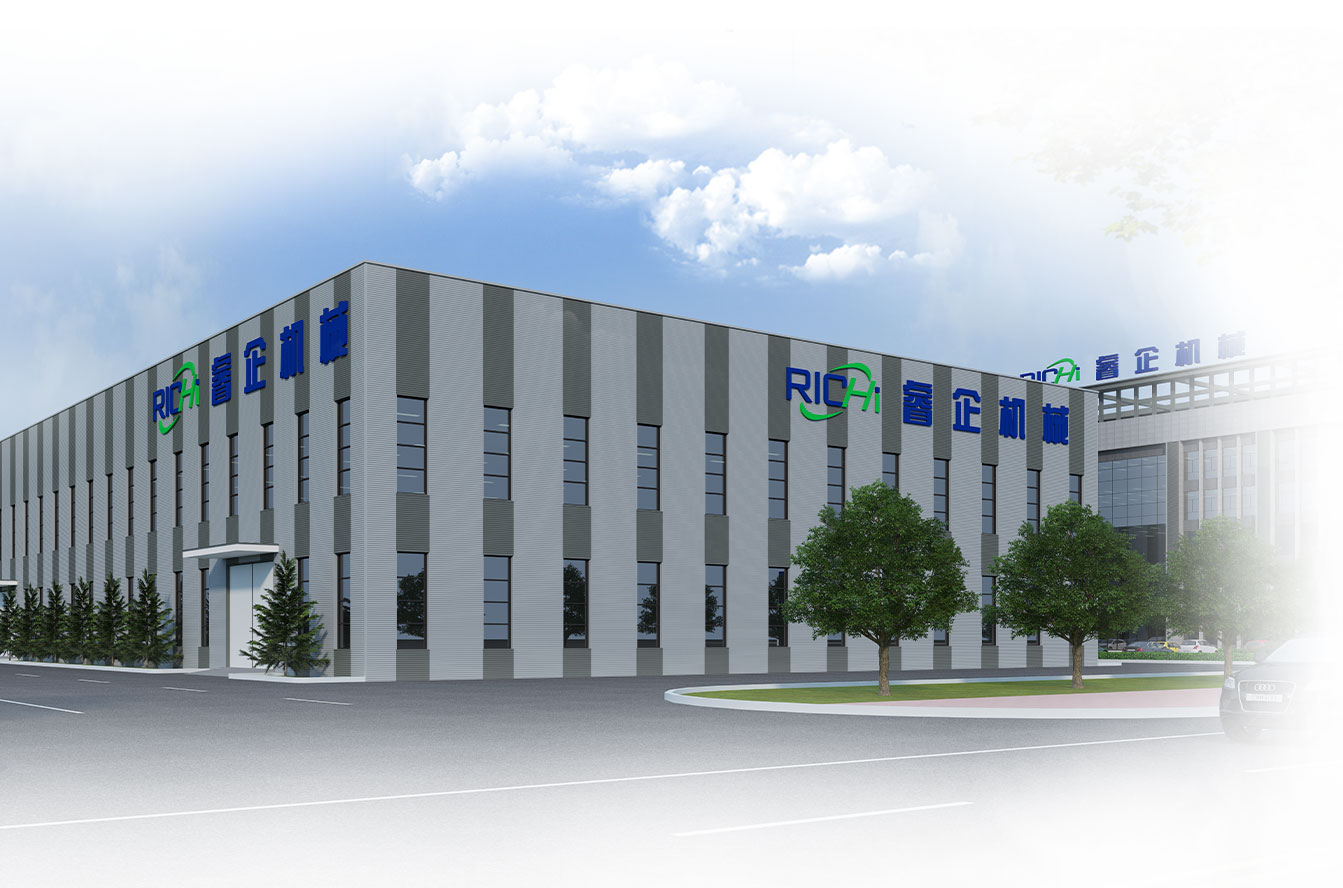
Em kî ne
RICHI Machinery yek ji dabînkerên pêşeng ên cîhanê yên teknolojî û karûbaran e ji bo pîşesaziyên xwarina heywanan, xwarina avî û xwarina heywanan, û di heman demê de mezintirîn hilberînerê xeta hilberîna peletan li Çînê ye.
Ji ber 1995 RICHIVîzyona 'Avakirina karsaziyek pola yekem, pêşxistina karmendên pola yekem, û dayîna beşdariyên pola yekem di civakê de qet neguheriye.'
Di sê dehsalên borî de, me karsaziya xwe berfireh kiriye ji bo gelek waran, di nav de alavên aşê xwarina heywanan , alavên xwarina avî, alavên xwarina heywanan, alavên peletên biyomasê, alavên gubreyan, alavên çopê pisîkan, alavên peletên bermayiyên hişk ên şaredariyê, û hwd.

1995
RICHI damezrandin

2000 +
Xizmeta Zêdetirî 2000 Xerîdaran Dike

120 +
RICHI karmendên

140 +
Ji bo 140 welatan hatiye hinardekirin