0086-138 3838 9622
Hay Feed Mill


A hay feed mill is not only for one type of bale or one type of finished feed. Hay growers, forage processors, commercial feed mills, large dairy and beef farms, ranches, cooperatives and hay trading businesses may receive round bales, small or large square bales, large rectangular bales, compressed bales, loose dry hay, pre-chopped hay, chopped hay or ground hay/hay meal.
The incoming form, hay species, fiber length, moisture and storage method all influence how the material should be received, opened, chopped, ground and fed into the next processing stage.
RICHI develops each hay feed production line around the customer’s actual raw materials, hay ratio, grain or concentrate ingredients, required output and available workshop conditions. The system can be configured for 100% hay pellets, mixed-hay pellets, hay-grain compound feed, hay meal or multi-product production, and can also be integrated with existing grinding, mixing or packing equipment. This allows customers to build a new hay feed plant or expand an existing feed mill without paying for unnecessary processing sections.
Discuss My Hay Feed Mill Design
Hay Feed Products by Formula Structure
A hay feed mill can produce very different feeds as the hay ratio changes. High-hay formulas need stronger fiber handling and stable feeding, while formulas with more grain require more accurate grinding, batching and mixing. RICHI configures the line around the actual ingredient structure rather than using one fixed process for every product.
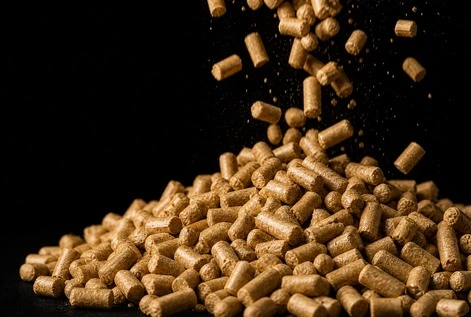
100% Single-Hay Pellets
Made mainly from one hay such as timothy, oat, clover, grass or alfalfa hay. The line focuses on suitable opening, chopping, grinding and stable fiber feeding before pelletizing.
4–12mm Pellet Size
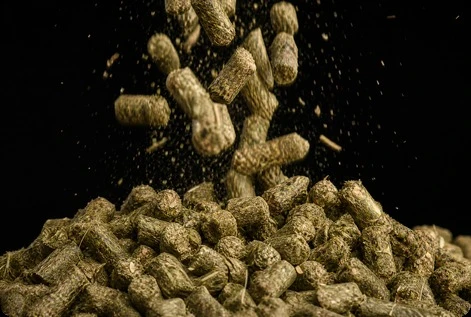
100% Mixed-Hay Pellets
Two or more dry hays are blended into one pellet product. A mixed hay pellet production line must handle differences in bale density, fiber length and material flow before proportioning and mixing.
4–12mm Pellet Size
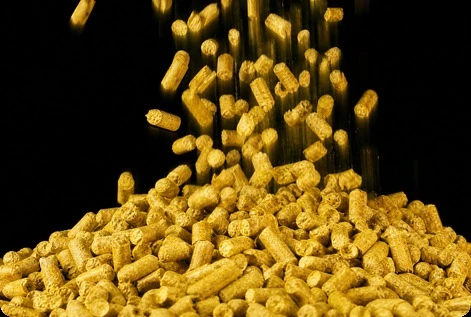
60–90% High-Hay Compound Pellets
Hay remains the main ingredient, with grain, bran, protein materials and minerals added according to the formula. The hay based feed production line normally prepares hay and concentrate ingredients separately before batching and mixing.
4–10mm Pellet Size
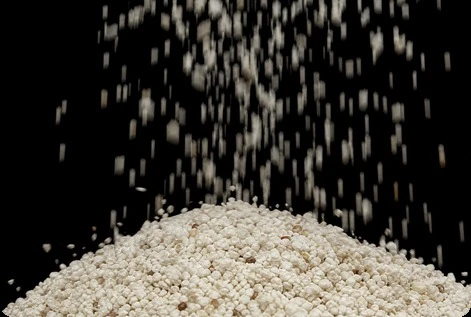
30–60% Balanced Hay-Grain Pellets
Hay and grain both make up a substantial part of the formula. The hay and grain feed production line therefore needs both reliable fiber preprocessing and suitable grain grinding, with output changing as the ingredient ratio changes.
4–10mm Pellet Size
10–30% Hay-Inclusion Compound Pellets
Hay is used as one roughage or fiber component within a grain-dominant compound feed. The plant still needs correctly sized hay receiving, chopping and grinding equipment so fibrous material does not restrict the downstream feed system.
3–8mm Pellet Size
These percentages and pellet sizes are process-design references, not fixed nutritional standards. A hay feed mill can also include a bypass for hay meal or ground hay, allowing one plant to produce both pellets and non-pelleted feed.
Configure My Hay Feed Product Line
Hay Feed Mill videos
A hay feed mill has to perform with real fibrous materials, not only look complete on a process drawing. These project and testing videos show different sides of our work—from complete hay-processing projects using different forage materials to equipment testing before shipment. They also give buyers a clearer view of how capacity, hay characteristics and project stage influence equipment configuration.
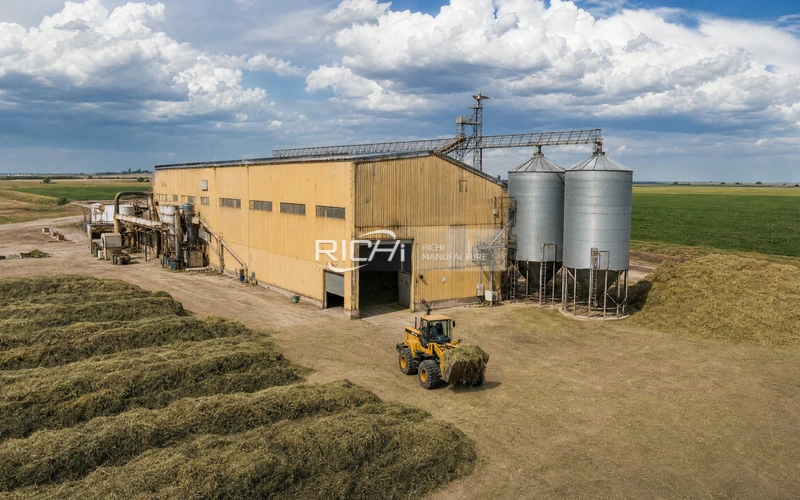

【5 T/H Alfalfa Hay Feed Mill in Argentina】This 5 T/H hay feed mill in Argentina is built around alfalfa hay processing. At this output level, stable fiber feeding, suitable size reduction and matching the upstream hay-preparation capacity with pelletizing capacity are critical to keeping the line running consistently. The project offers a practical reference for forage processors and livestock-feed businesses planning medium-scale alfalfa hay pellet production.

【5–6 T/H Grass Hay Feed Mill in Zimbabwe】This 5–6 T/H hay feed plant in Zimbabwe processes grass hay rather than relying on a grain-dominant feed route. Grass hay can vary in fiber length, density and feeding behavior, so the line must maintain stable material flow through preparation and pelletizing. The project gives buyers working with locally available dry forage a useful reference for commercial-scale hay feed production.

【2 T/H Hay Feed Equipment for France — Pre-Shipment Testing】Before shipment to France, the 2 T/H hay feed crushing and pelletizing equipment was assembled for pre-shipment testing. This stage allows key operating sections and equipment interfaces to be checked before delivery and gives the customer a clearer view of the machines prepared for the project. For overseas buyers, factory testing is an important part of reducing avoidable installation and commissioning issues after equipment reaches the site.
Custom Hay Feed Mill Process for Different Raw Material Forms
No two hay feed mill projects need exactly the same process. Round bales, small or large square bales, large rectangular bales and compressed bales normally require suitable receiving, binding removal, bale opening and primary size reduction, while loose dry hay, pre-chopped hay, chopped hay and ground hay can enter the hay feed processing line at later stages.
Standard dry hay usually does not require drying; a dryer is considered only when the actual incoming material still carries excessive moisture for stable storage or downstream processing.
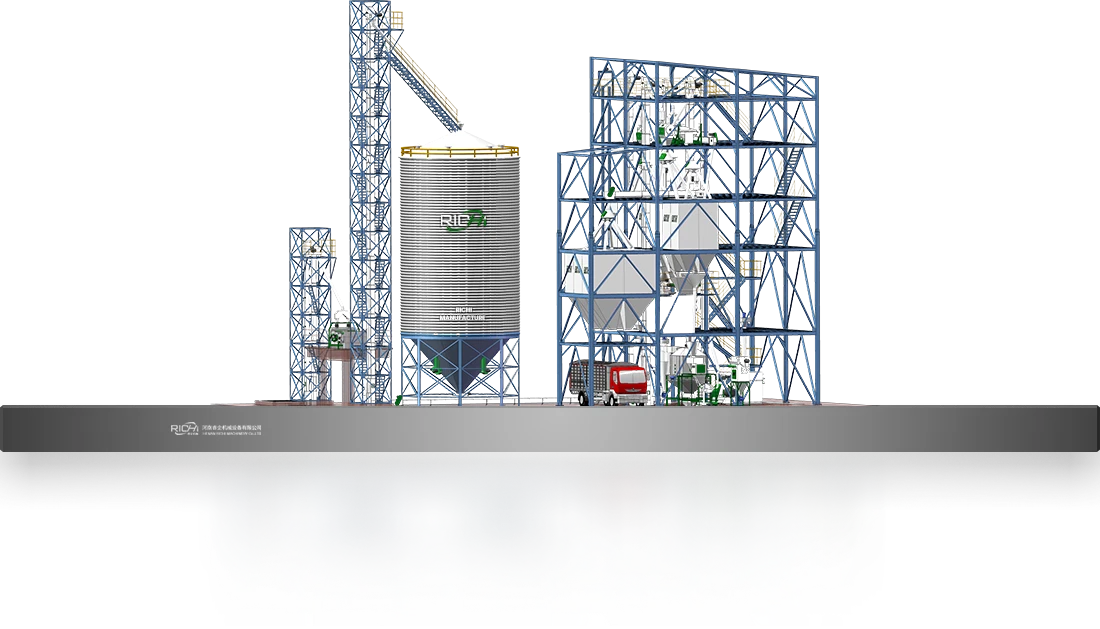
A complete hay feed manufacturing system can combine bale handling, chopping, cleaning, magnetic separation, grinding, batching, mixing, liquid addition, conditioning, pelletizing, cooling, screening, storage and bagging or bulk loading. The exact combination changes with hay ratio, grain ingredients, finished product and existing equipment.
Hay meal can bypass the pelletizing section, hay-grain formulas may use separate preparation routes, and restricted workshop height can be handled with lower-profile conveying arrangements. RICHI sizes the hay bale processing equipment and downstream machines together so one section does not become the bottleneck of the whole plant.
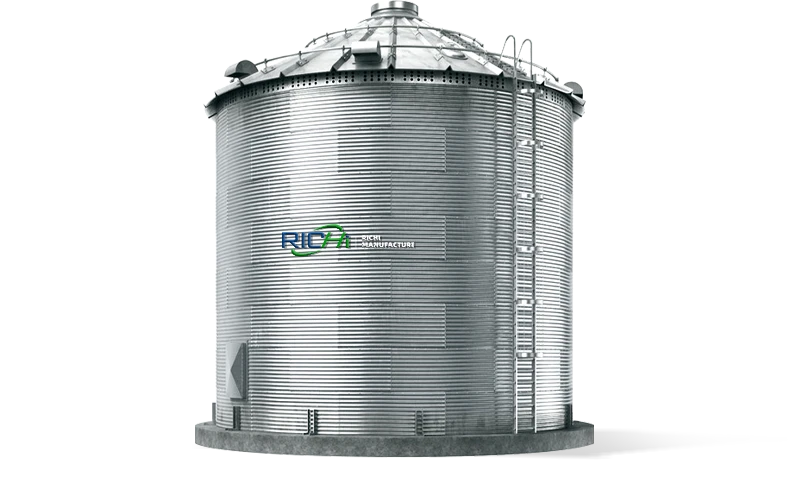
Silo system
01
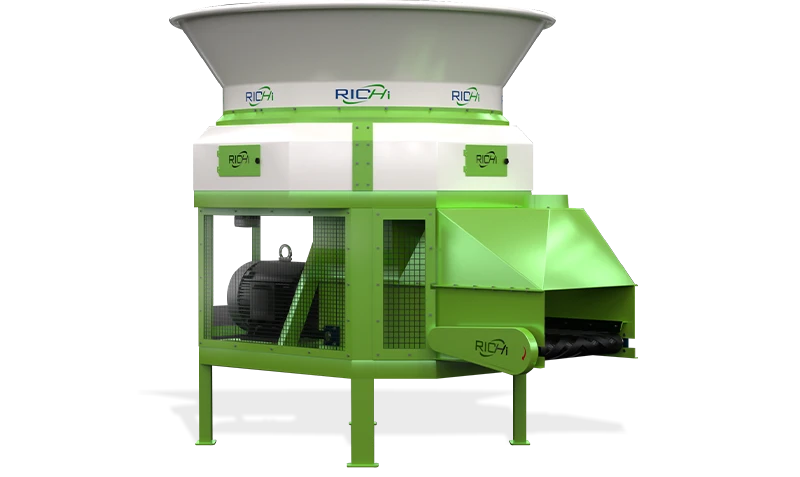
bale chopping
02
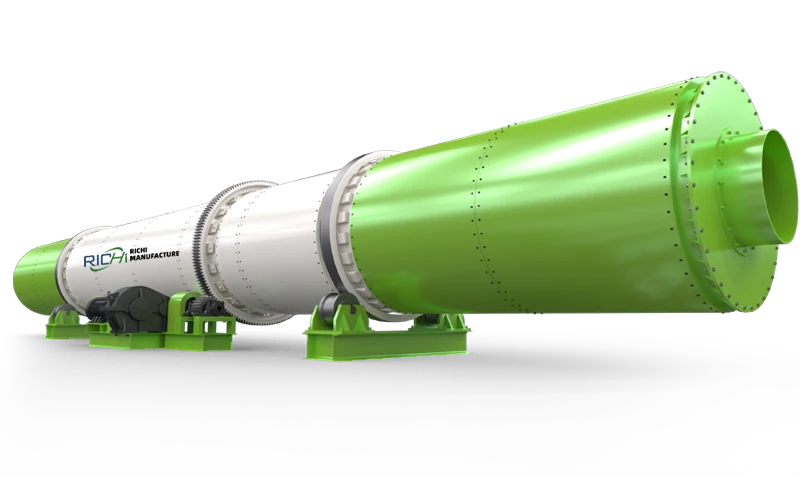
Drying system
03

Grinding system
04
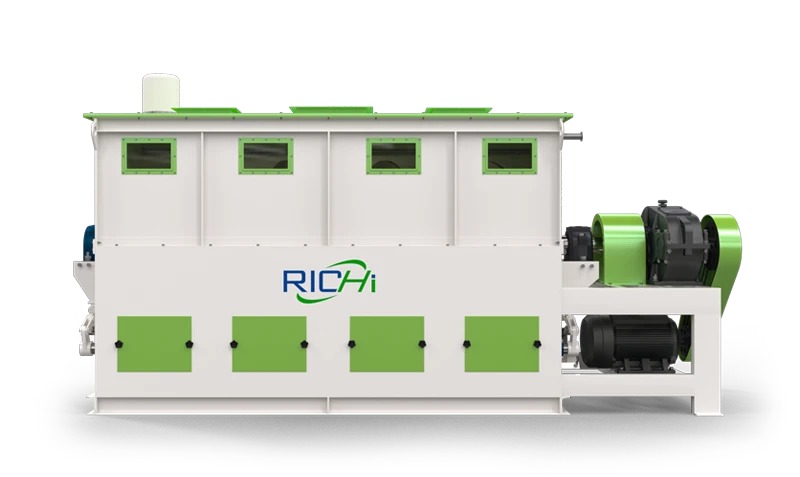
Mixing system
05
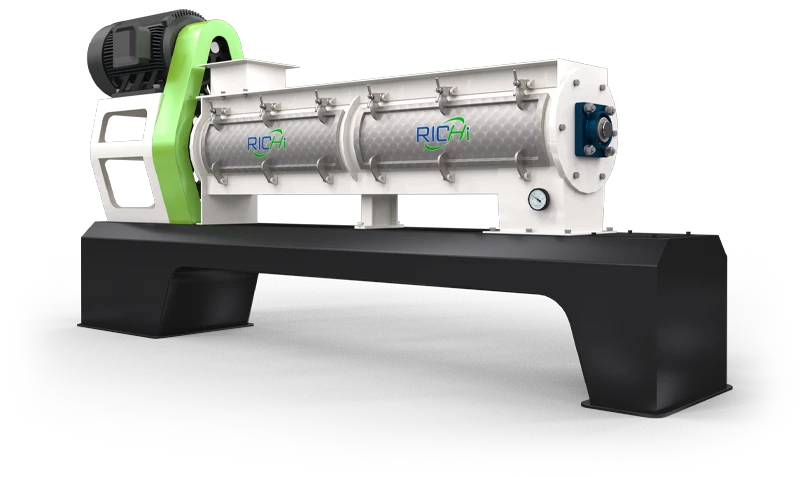
Molasses mixer
06

Pelleting system
07
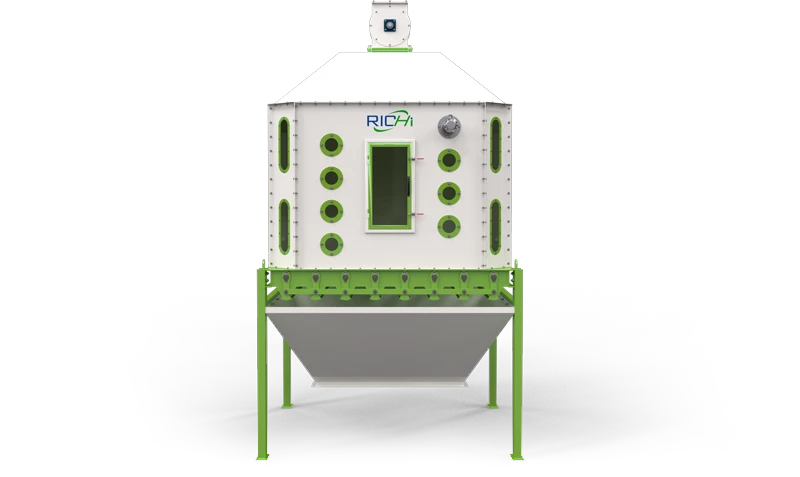
Cooling system
08
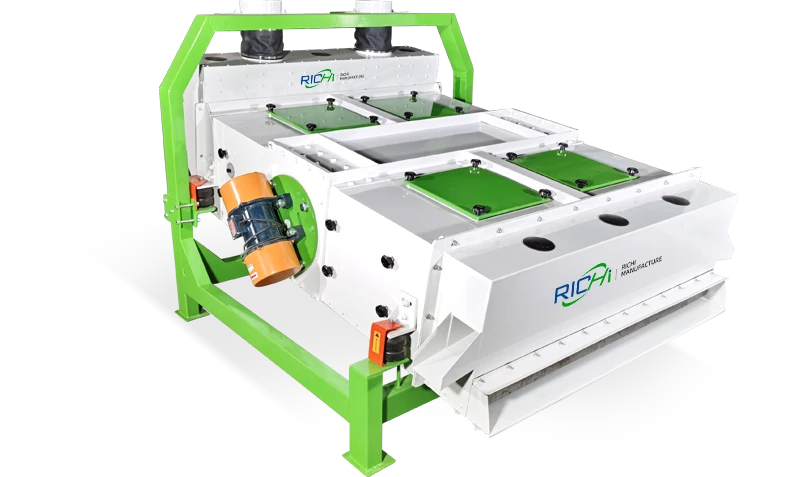
Screening system
09
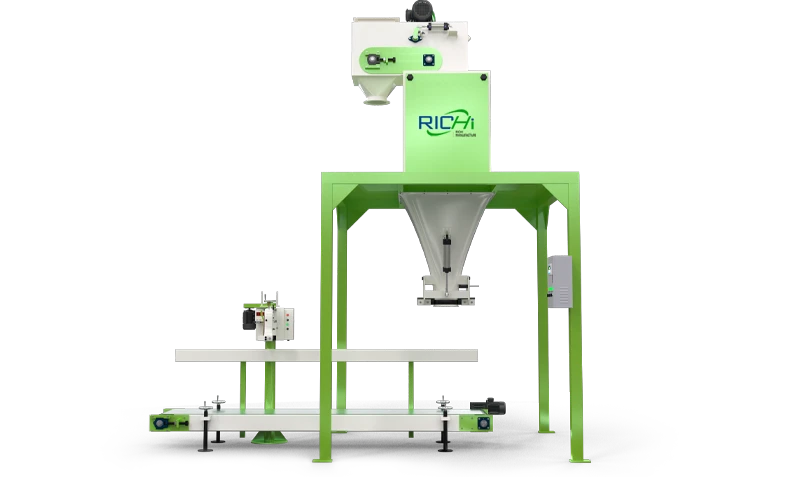
Packaging system
10
Customized Hay Feed Mill Designs
A hay feed mill should change with the raw material, formula and building conditions rather than follow one fixed layout. The 4 designs below show how bale form, hay ratio, existing equipment, product type and investment level can change the process. Each scheme is a representative engineering configuration and can be resized or rearranged according to the customer’s actual material and target output.
(The selected solutions outlined below do not require drying; if your raw materials include grasses that need to be dried, please contact us directly for a customized process plan.)

0.8–4 T/H Low-Height Hay & Grain Line
Process: Hay receiving → hay & grain grinding → mixing → pelletizing → cooling → screening → packing
This automatic hay feed plant is suited to projects with limited workshop height and variable hay-grain formulas. Hay and grain are prepared through suitable routes before batching, while screw and drag conveying can reduce the need for tall vertical transfer. Actual output changes as the hay ratio changes, so the line is sized around formula range rather than one nominal capacity.

1–6 T/H Hay & Straw & Grain Pellet Line
Process: Hay/straw chopping → weighing → grinding → grain feeding → mixing → pelletizing → cooling → screening → automatic packing
This hay and grain feed production line can process dry hay together with feed-grade straw or suitable crop residues and grain. Straw is treated as a separate feed ingredient, not as hay, and longer fibrous materials receive primary size reduction before fine grinding. Capacity can vary widely because a high-fiber formula places a different load on the system than a grain-dominant formula.

2–10 T/H Existing Grain Mill Retrofit
Process: Hay/straw receiving → bale opening/chopping → fiber grinding → existing grain system → mixing → pelletizing → cooling → screening → packing
This complete hay feed mill design is aimed at customers who already own a grain grinding system and want to add hay processing without replacing usable equipment. The new section handles dry hay or suitable fibrous ingredients, then connects them with the existing grain route before mixing. Equipment reuse is evaluated by capacity, particle size, control interface and future formula range rather than simply connecting old and new machines together.

0.3–0.5 T/H Simplified Farm Hay Pellet Line
Process: Hay/straw chopping → secondary grinding → mixing → pelletizing → extended cooling conveyor → bulk loading
This compact hay feed pellet plant is intended for low-output projects where simple operation and controlled investment matter more than full automation. A long conveyor may provide sufficient cooling only when pellet output, residence time and ambient conditions are suitable; it is not a general replacement for a pellet cooler. The finished feed can discharge directly to bulk transport for farm or ranch use.
Hay Feed Mill Projects for Different Processing Needs
A hay feed mill can serve very different businesses, from hay growers adding value to baled forage to commercial feed mills adding a dedicated fiber-processing section. For buyers comparing a hay feed mill for sale, capacity alone says little about the final design: bale form, hay ratio, product route, existing machinery, packing method and available building all affect the equipment required. The configurations below represent different engineering scenarios across 16 markets rather than unverified claims about specific completed projects.
3–4 T/H Baled Hay Upgrade Project
Mexico
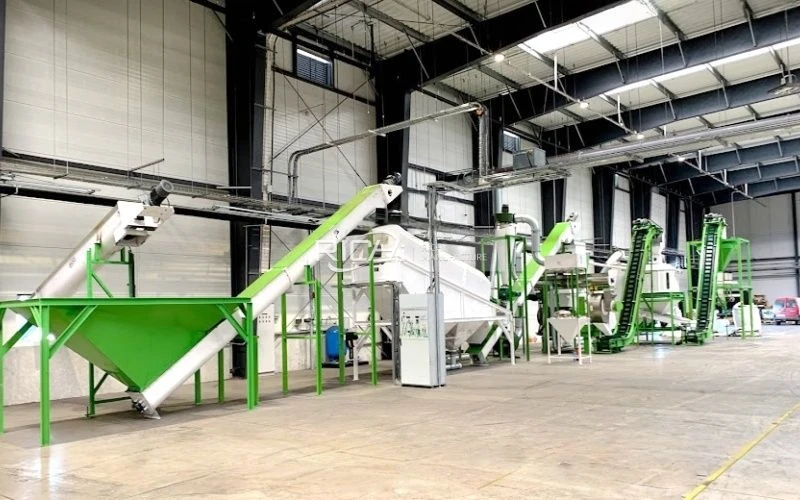
A forage processor handling mainly baled alfalfa and mixed hay can use bale opening, chopping and controlled grinding before producing high-hay pellets. Grain can enter through a separate route when compound feed is required, allowing one plant to serve both pure-hay and hay-grain product schedules.
4–6 T/H Export Hay Pellets Factory
Italy
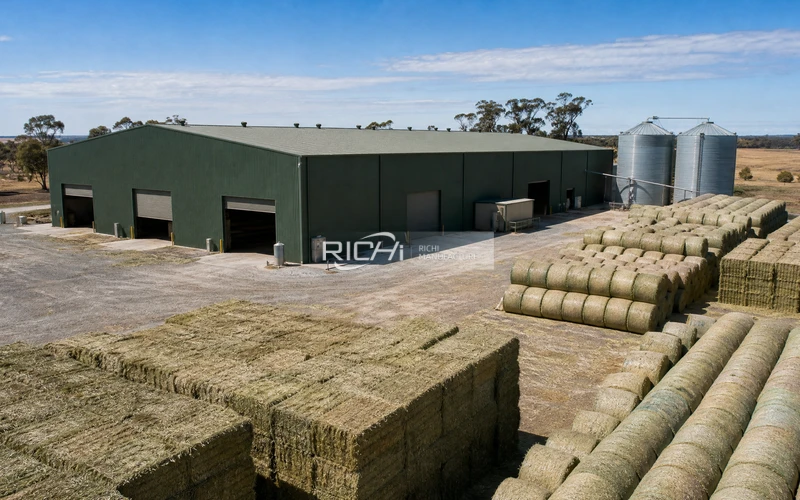
A commercial forage business producing denser pellet products from dry hay can emphasize stable bale feeding, fine grinding and automatic packing. The design can also retain a bypass for ground hay, giving the processor more than one finished-product form without duplicating the complete upstream system.
8–10 T/H Hay Grain Integration Project
Türkiye
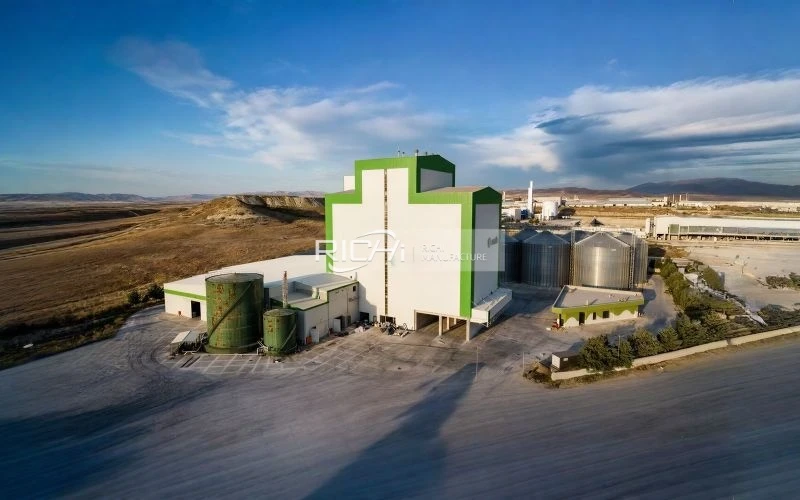
A larger hay based livestock feed production line can combine dry hay with barley, corn, bran and other approved ingredients. Dedicated fiber preparation keeps hay from overloading the grain section, while batching and centralized control allow production to shift between high-hay and lower-hay formulas.

1–2 T/H Imported Hay Processing Project
Jordan
Where dry hay is purchased in compressed or conventional bales, receiving and storage become as important as pelletizing. The line can open bales, remove binding material, reduce fiber size and combine hay with concentrate ingredients while avoiding drying equipment that the raw material does not require.

2–3 T/H Dairy Forage Pellets Plant
Chile
This configuration suits a dairy-oriented processor using dry grass hay and alfalfa hay in changing proportions. Separate hay feeding followed by proportioning and mixing helps manage differences in fiber density, while finished pellets can be bagged for commercial distribution or transferred in bulk.

5–7 T/H Dairy Roughage Line Project
Poland
This commercial hay feed plant combines dry hay preparation with grain and concentrate handling for compound cattle feed. Hay and grain are reduced through appropriate routes before batching, helping prevent long fiber from limiting the performance of equipment originally selected for denser grain materials.
1–2 T/H Regional Feed Expansion Project
Serbia
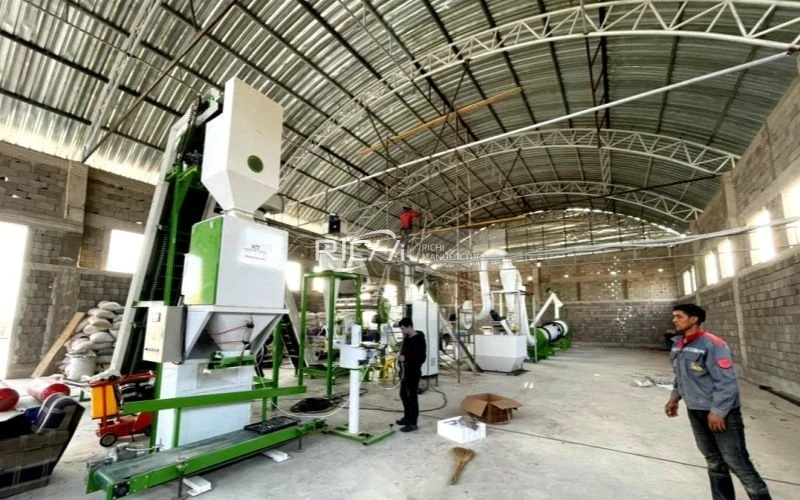
An existing feed business can add bale opening, chopping and hay grinding ahead of its current mixer or pelletizing system. Reusing suitable machinery reduces duplicate investment, but each existing motor, feeder and conveyor still needs to be checked against the lower bulk density of fibrous material.
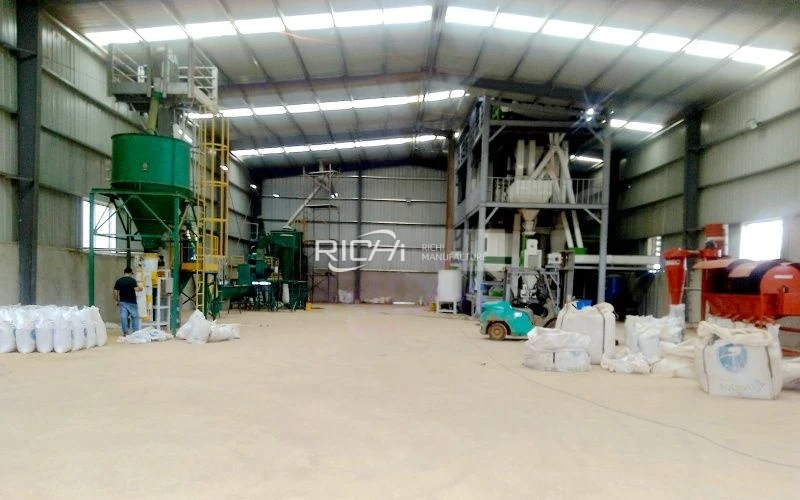
5–7 T/H High-Fiber Feed Line Project
Pakistan
A hay feed processing plant using clover-type hay, other dry forage and grain can separate long-fiber preparation from grain grinding before batching. This prevents one hammer-mill route from being forced to handle materials with very different density and particle-reduction behavior.
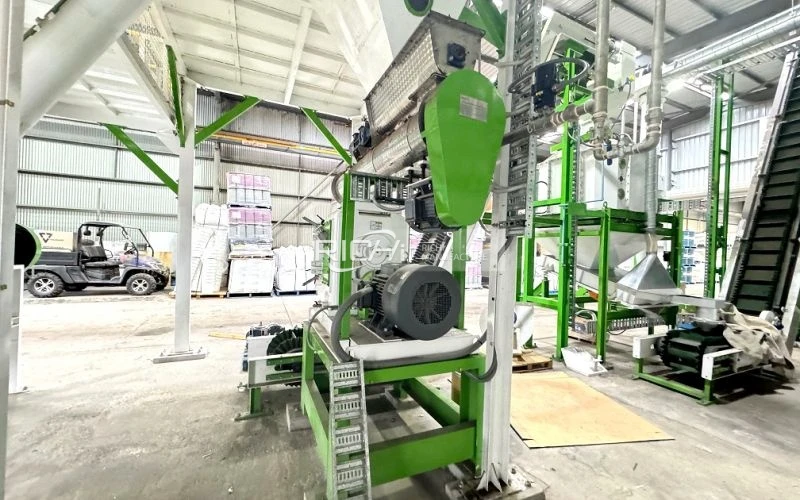
3–4 T/H Flexible Bale System Project
Romania
Round bales, rectangular bales and loose hay can enter through different receiving points before joining the same downstream grinding and mixing system. This layout is useful where hay supply changes between farms and seasons, making one fixed bale-feeding method unnecessarily restrictive.

1–2 T/H Compact Hay Processing Plant
Peru
A smaller hay feed plant can process locally sourced dry hay into pellets while keeping automation moderate. Baled material passes through opening and fiber reduction, while pre-chopped hay can bypass part of the front end, reducing unnecessary equipment when raw-material preparation changes seasonally.

2–3 T/H Dryland Hay Processing Project
Morocco
This arrangement suits a business processing purchased or locally available dry hay with barley or bran rather than relying on fresh forage. Because the incoming hay is already dry enough for storage, the line avoids an unnecessary dryer and directs investment toward receiving, grinding and reliable feeding instead.
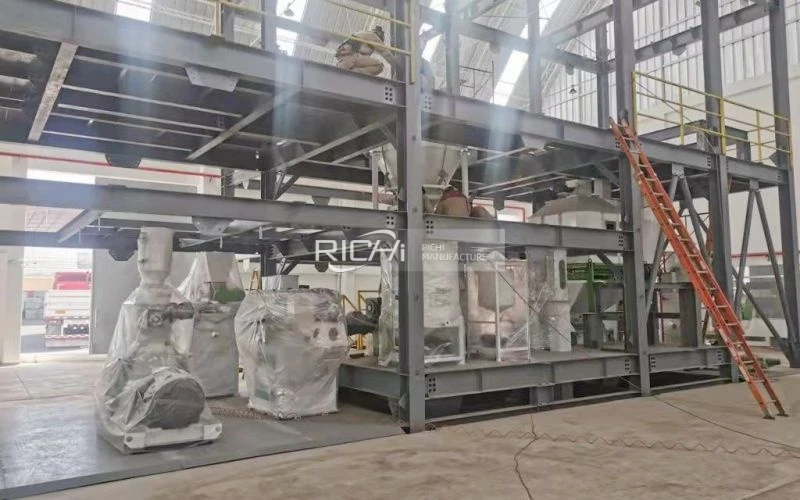
3–4 T/H Seasonal Hay Stabilization Project
Mongolia
A seasonal hay-processing operation can convert stored dry hay into more standardized feed products for livestock use. The design gives particular attention to bale receiving, dust control and bulk handling, while optional grain addition allows the same system to produce more than one hay-based formula.
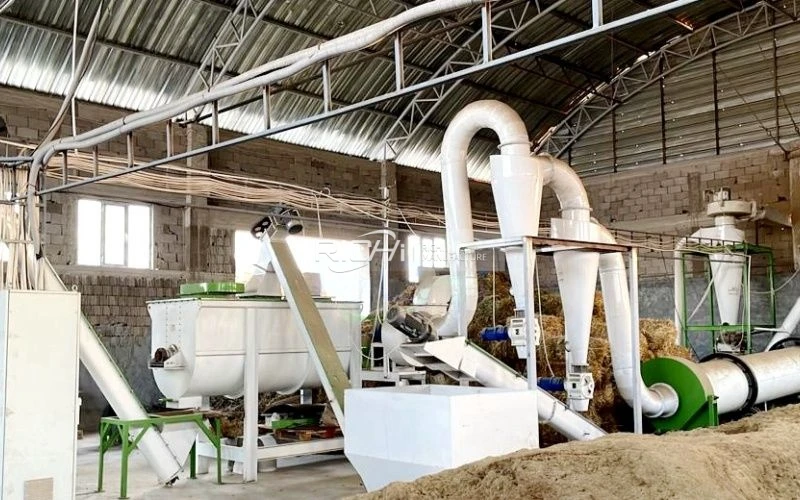
2–3 T/H Andean Hay Conversion Project
Colombia
For a processor receiving both baled and loose dry forage, the front end can include two feeding paths that merge after primary size reduction. The arrangement allows hay-grain pellets to be produced without forcing loose material through equipment intended only for bales.
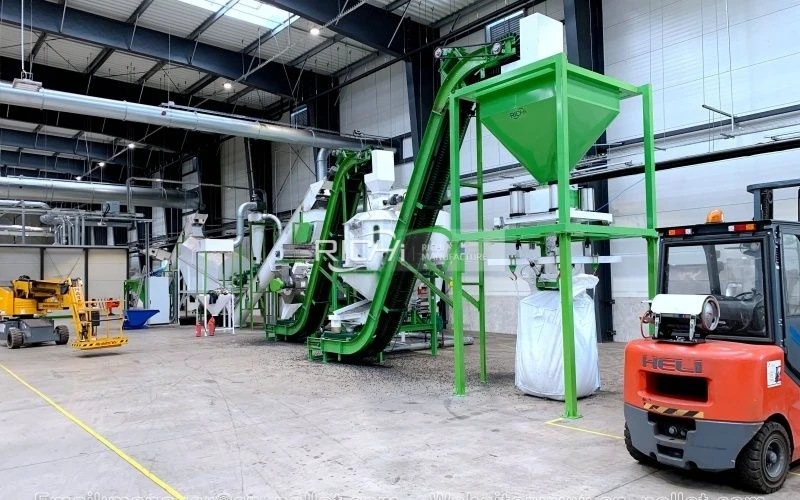
2–3 T/H Mixed Forage Pellets Project
Hungary
Two or more dry hays can be processed separately, weighed to recipe and mixed before pelletizing. The emphasis is not simply on grinding capacity but on maintaining even feeding when stem structure, bale density and bulk density differ between hay sources.
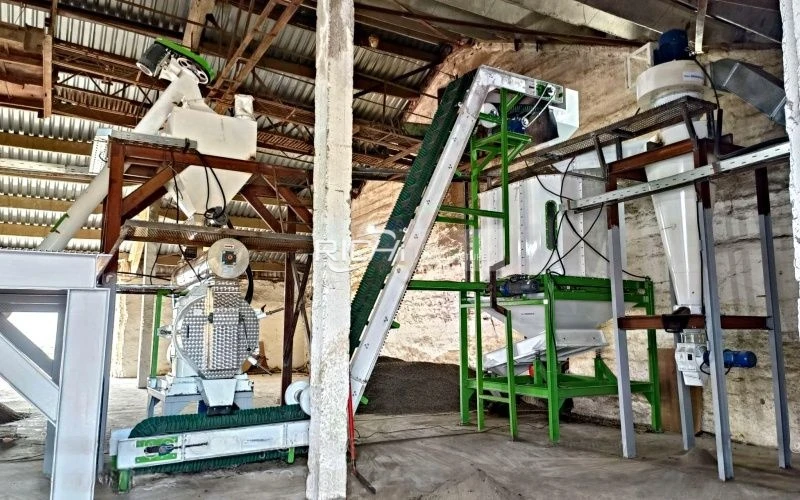
3–4 T/H Multi-Formula Hay Line Project
Algeria
A processor switching between high-hay pellets and hay-grain feed needs flexible batching rather than a single fixed formula route. Independent ingredient feeding, suitable buffer storage and adjustable proportioning help the plant maintain production when the hay percentage changes substantially between products.

4–5 T/H Automated Bale Feeding Project
Czechia
Where labor reduction is a priority, automatic or semi-automatic bale feeding can be combined with controlled bale opening, chopping and downstream buffer storage. The automatic hay feed processing line can then feed the grinding and pelletizing sections more consistently while reducing manual bale handling.
A hay feed mill is ultimately judged after it starts handling real hay every day. Clients pay attention to whether fibrous material feeds steadily, whether the process matches their formulas, whether existing equipment has been used sensibly, and whether technical support continues after delivery. Here are the project experiences our customers value most.


Baled Hay Pellet Line in Russia
- Client Type: Forage Processor
“We were concerned about feeding long hay because our material comes in bales and the fiber is not always uniform. The process RICHI proposed separates bale opening, chopping and fine grinding instead of pushing everything directly into one hammer mill. After seeing how the sections work together, the whole material flow makes much more sense to us.”

Hay Feed Mill Retrofit in Iraq
- Client Type: Commercial Feed Mill
“We already had grain grinding and part of the conveying system, so I did not want to replace usable machines just to build a new line. RICHI checked our existing equipment first and designed the new hay receiving and fiber-processing section around it. That helped us control the investment while still getting the hay-grain production route we needed.”

Multi-Formula Hay Feed Line in France
- Client Type: Livestock Feed Producer
“Our hay percentage is not fixed. Some products use a high proportion of hay, while others contain much more grain and concentrate ingredients. What I like about this hay feed mill is that the batching and feeding system was considered around those changes. We can adjust production according to the formula instead of treating every product as if the raw materials were the same.”

Hay Meal Processing Line in USA
- Client Type: Hay Processor
“Our main product is ground hay and mixed mash, not pellets, so a conventional pellet line would have added equipment that had no value for us. RICHI removed the pelletizing, cooling and screening sections and kept the process focused on hay preparation, grinding, mixing and packing. I appreciated that the solution followed our product instead of following a standard equipment list.”

Mixed Hay Pellet Line in Indonesia
- Client Type: Hay Trading & Processing Business
“We purchase more than one type of hay, and the bale density and fiber characteristics can change from one supply batch to another. The separate preparation and controlled proportioning arrangement gives us much better control before mixing. For our business, this is important because we cannot assume that every incoming bale will behave exactly the same in the production line.”

Expandable Hay Feed Plant in N Z
- Client Type: Growing Feed Business
“We did not want to invest in the final capacity from the first day, but we also did not want the first-stage plant to block future expansion. RICHI reserved the necessary space, conveying interfaces and control points when planning the hay feed plant. That gives us a clear route to add capacity later without rebuilding the whole front-end hay-processing system.”

Hay Feed Mill Capacity Options from 0.5 to 120 T/H
The right hay feed mill capacity depends on more than finished-feed demand. Hay ratio, bale density, fiber length, incoming form, grinding fineness, pellet diameter and grain percentage all affect actual throughput. Smaller plants can often run with one main processing train, while large industrial hay feed mill projects usually require parallel bale handling, grinding and pelletizing sections to maintain stable output.
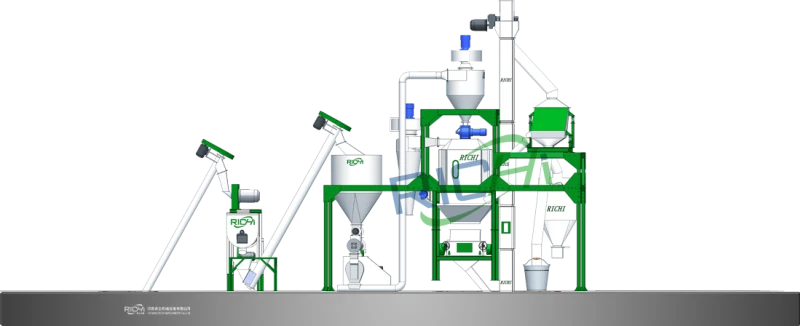
0.5–2 T/H small scale feed mill
A practical scale for small forage processors, farms, ranches or new investors with limited daily hay supply. The line can focus on one or two products and use moderate automation, while still retaining the option to process baled or loose dry hay.
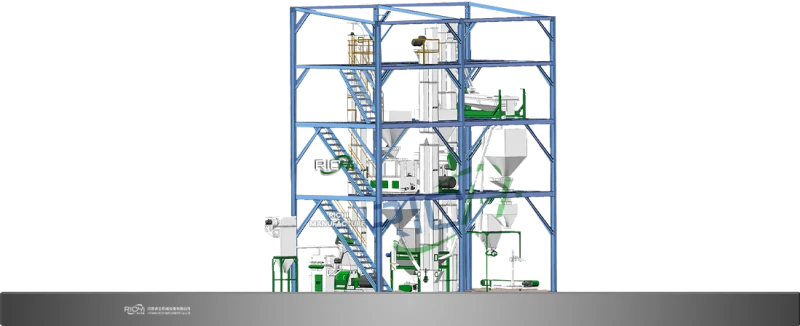
3-4 t/h animal feed production plant
Suitable for established hay processors, cooperatives and medium-sized livestock businesses moving from raw hay sales into pellets or hay-grain feed. Bale feeding, grinding and finished-product handling normally become more continuous at this scale.
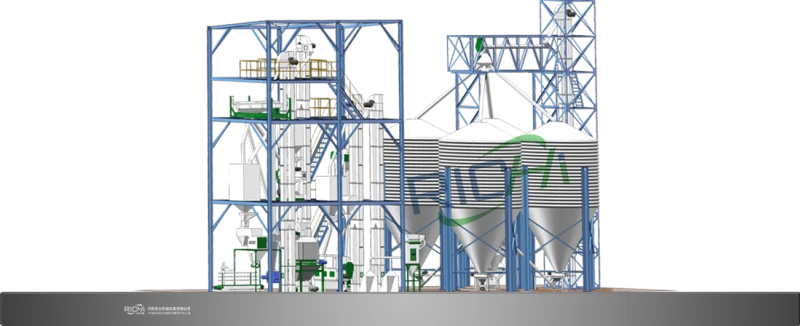
5-7 t/h animal feed pellet plant
This capacity fits regional feed producers and larger forage-processing businesses with stable daily raw-material supply. A complete hay feed production line may include more buffer storage, automatic batching and stronger dust collection to support longer production shifts.
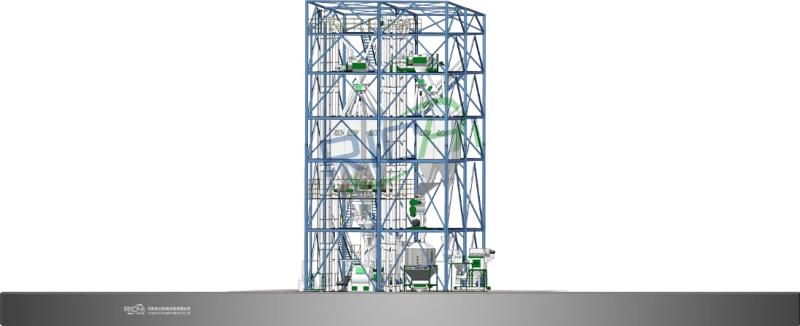
8-10 t/h animal feed processing plant
A common commercial scale for processors serving multiple farms or regional feed markets. Hay and grain routes are often separated before batching, particularly when the plant produces both high-hay and lower-hay compound formulas.
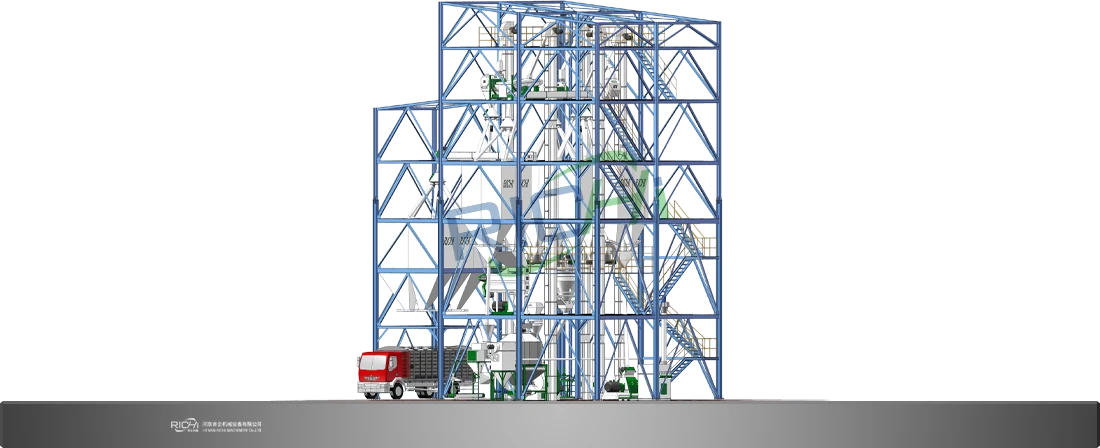
12-20 t/h feed preparation plant
This range is better suited to large feed companies, integrated livestock businesses and commercial forage processors with dependable hay procurement. Multiple bale feeders, grinding units or pellet mills may be required depending on the percentage of hay in the formula.
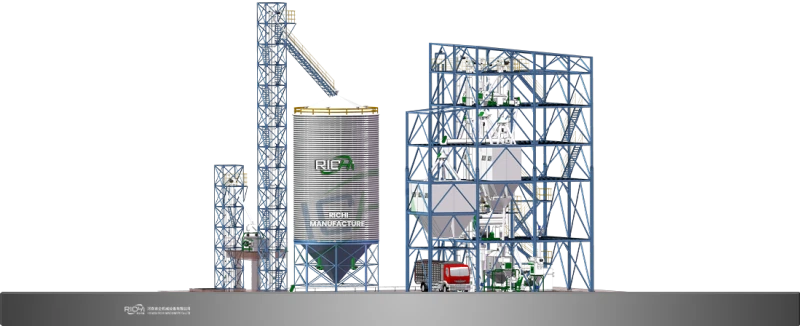
25-40 t/h feed pellet production line
At this level, a single processing train is rarely sufficient for a hay-rich system. The plant is normally divided into coordinated receiving, bale processing, grinding and pelletizing sections so one bottleneck does not limit the entire automatic hay feed mill.
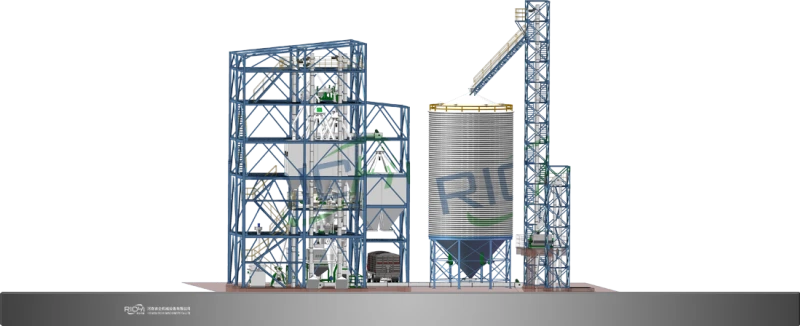
50-60 t/h commercial feed mill
A project of this size requires industrial raw-material logistics rather than only larger machines. Hay storage, bale delivery rate, parallel fiber-processing trains, intermediate bins and centralized control become central parts of the plant design.
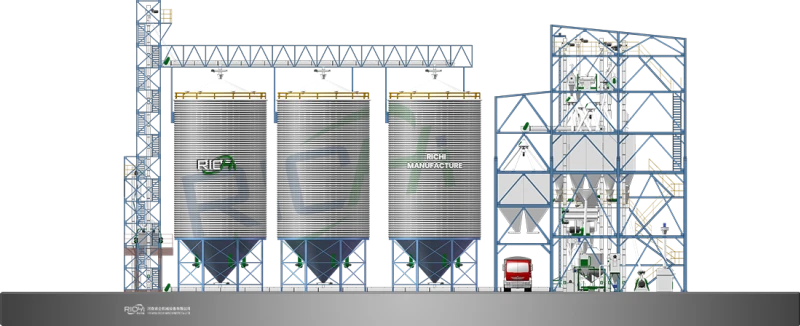
60-80t/h complete feed mill plant
This capacity is aimed at large commercial feed groups or integrated agricultural businesses supplying wide regional markets. Multiple hay preparation and pelletizing lines are usually evaluated through mass balance, with shared or independent downstream packing and bulk loading systems.
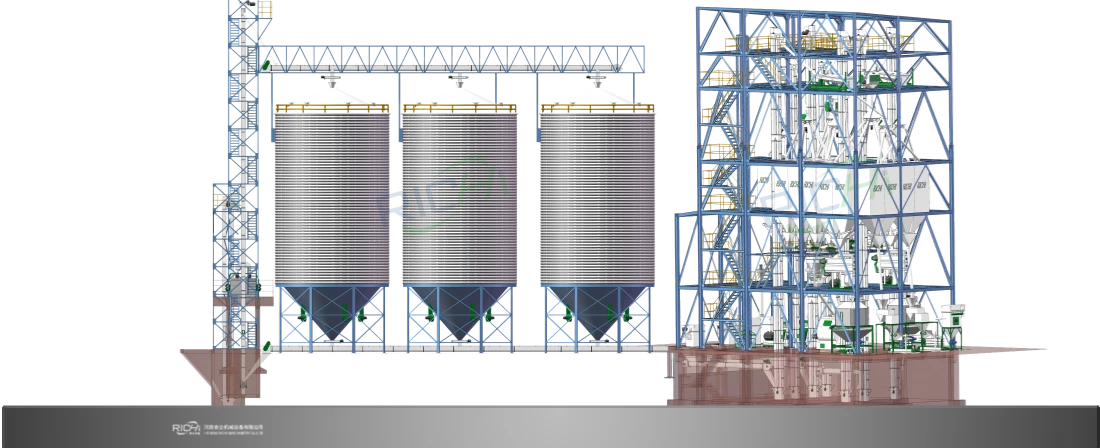
An industrial hay feed mill in this range needs coordinated raw-material receiving, storage turnover and multiple production trains. The number of bale breakers, grinders, mixers and pellet mills is selected from the actual hay ratio and product mix rather than from the total plant capacity alone.
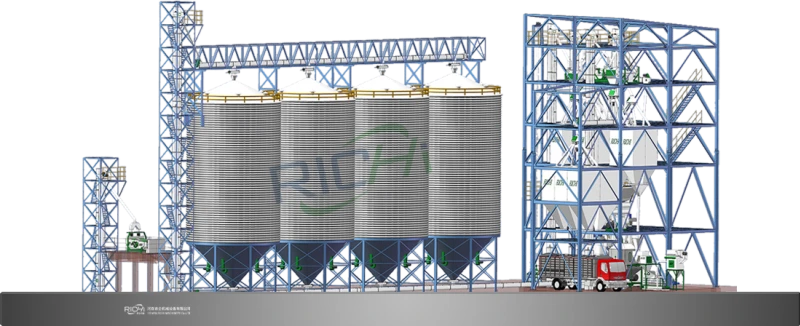
100-120 t/h feed mill engineering
This is a large-scale feed manufacturing system that normally uses parallel processing lines and substantial buffer capacity. The design must balance incoming hay logistics, grain handling, grinding load, pelletizing capacity and finished-feed dispatch so the stated system output remains practical across different formulas.
How Much Does a Hay Feed Mill Cost?
A complete hay feed mill can start at approximately US$37,000, while large industrial projects can exceed US$2.5 million. The final investment is driven by capacity, hay ratio, incoming material form, bale-handling requirements, grinding stages, number of pellet mills, automation and packing method. A plant receiving compressed bales and producing 100% hay pellets usually requires more fiber-processing equipment than a grain-dominant line using pre-ground hay.
Whole Manual/Automatic hay feed plant set up investment : $37,000 – $40,000,000
Equipment Costs :
Bale receiving & breaking machine price :
$4,000–80,000
Chopping / primary size reduction Equipment Price :
$3,000–60,000
Hay grinding equipment Price :
$4,000–120,000
Cleaning & magnetic separation machine Price :
$1,500–25,000
Weighing & batching System Price :
$3,000–60,000
Feed mixer System Price :
$4,000–80,000
Liquid addition Machine Price :
$2,000–40,000
Pellet machine Price :
$7,900–87,500+
Cooling & screening equipment Price :
$5,000–80,000
Conveying system price :
$5,000–150,000+
Dust collection System Price :
$3,000–80,000+
Bins & silos Price :
$5,000–200,000+
Packing system Price :
$4,000–120,000+
Electrical & control system Price :
$5,000–100,000+
Drying system, if required :
$25,000–250,000+
The most reliable way to determine your hay feed mill price is to size the process from your actual hay supply. Send us the hay type and form, bale dimensions and weight, moisture, formula or hay ratio, target T/H, pellet size, working hours, existing equipment and workshop dimensions. RICHI can then prepare the process route, equipment list, layout and a project-specific hay feed plant cost instead of forcing your project into a standard package.
Engineering Support for Your Hay Feed Mill Project
A hay feed mill is only reliable when the process design, equipment selection, installation interfaces and operating requirements are considered together. RICHI supports customers from early process planning through equipment delivery, commissioning and later expansion, with each service tied to the actual hay form, formula, plant conditions and production target.
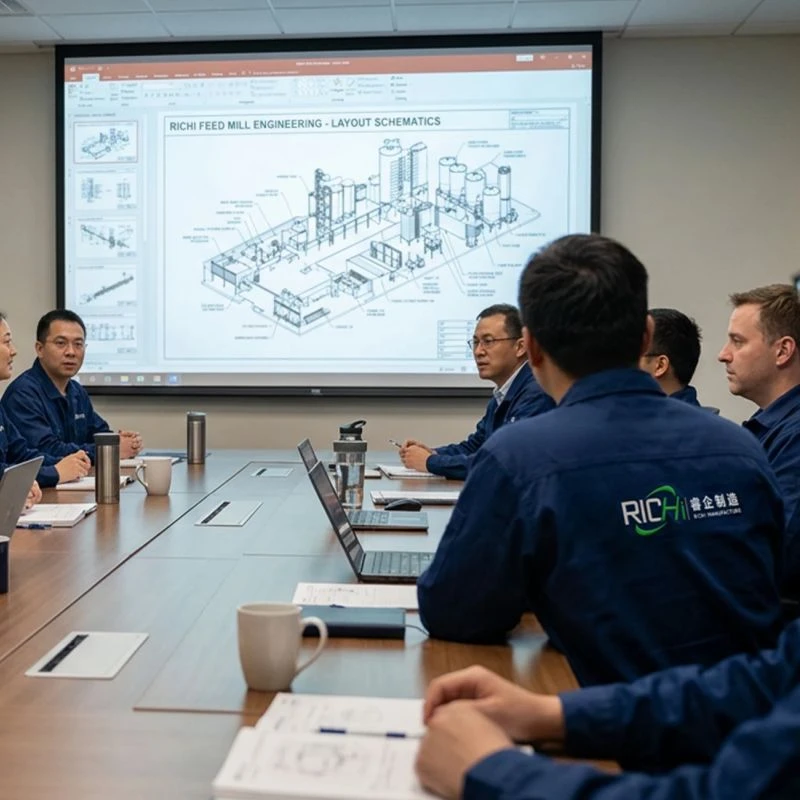
Process & Layout Engineering
We develop the process around hay type, bale form, bales per hour, hay ratio, target products, building height and existing equipment. This includes process flow, equipment sizing, workshop arrangement, conveying routes, civil interfaces and reserved space for future expansion.
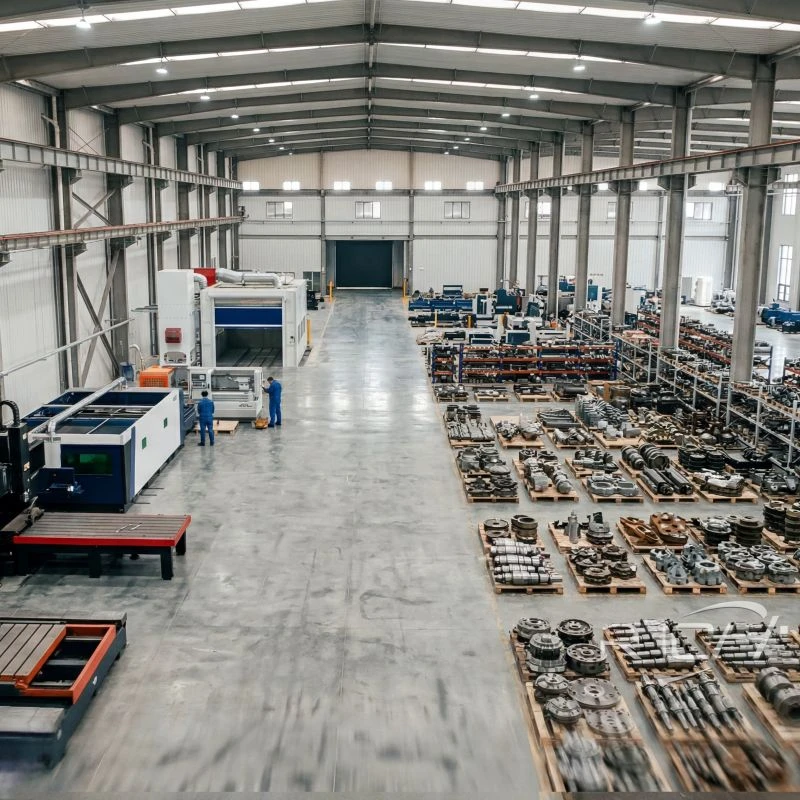
Equipment Manufacturing & Line Integration
Core machines and supporting equipment are matched as one system rather than selected independently. We check feeding capacity, grinder load, mixer size, pelletizing demand, conveying interfaces, dust collection points and control logic so upstream hay handling does not restrict downstream production.
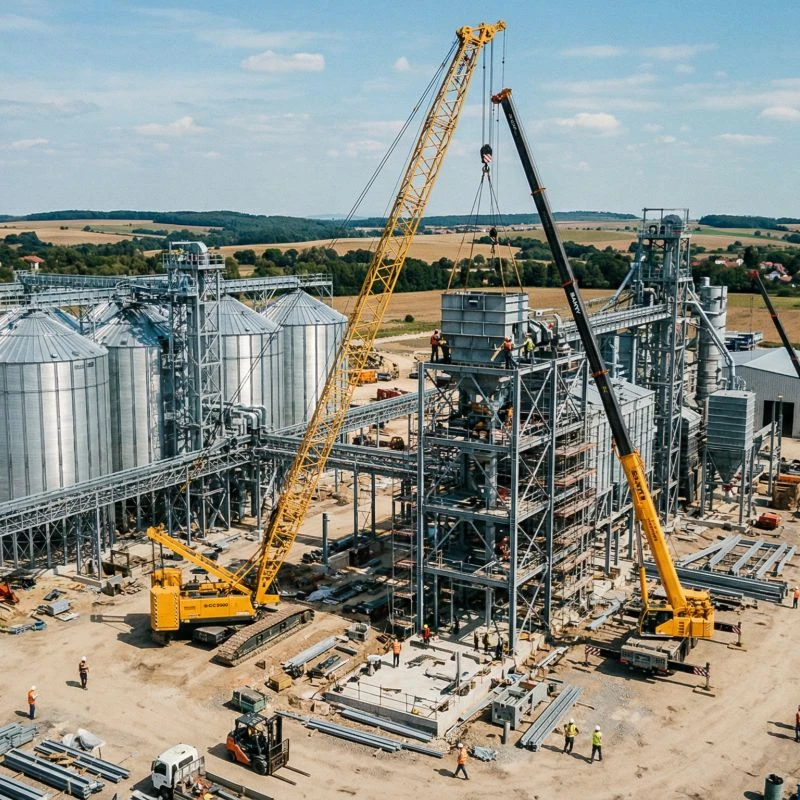
Installation, Commissioning & Training
According to project scope, RICHI provides foundation and interface information, installation guidance, commissioning support, parameter adjustment and operator training. For hay-rich lines, special attention is given to feeding stability, fiber size, pellet formation and the transition between different formulas.
Lifecycle Technical Support
After startup, customers can continue to obtain spare-parts support, wear-part recommendations, troubleshooting assistance, process adjustment and expansion planning. If the plant later adds new hay sources, higher output or another pelletizing line, the original hay feed production system can be reviewed and upgraded around the new operating conditions.
Free Support Services
Before equipment manufacturing begins, many decisions about process flow, workshop use, civil interfaces and project budget already affect the final result. For qualified hay feed mill projects, RICHI can provide the following planning and technical support according to the confirmed project scope, helping customers evaluate the line more clearly before moving into detailed engineering and equipment supply.

Free Project Cost Estimate
Free Process Flow Design
Free Civil & Steel Structure Drawings
Free Project Reference & Technical Documentation
Free Layout & 3D Planning
Free Electrical Diagram Design
Free Training & Production Testing Support
Free Remote Installation & Operation Guidance
Complete Equipment for Hay Feed Processing
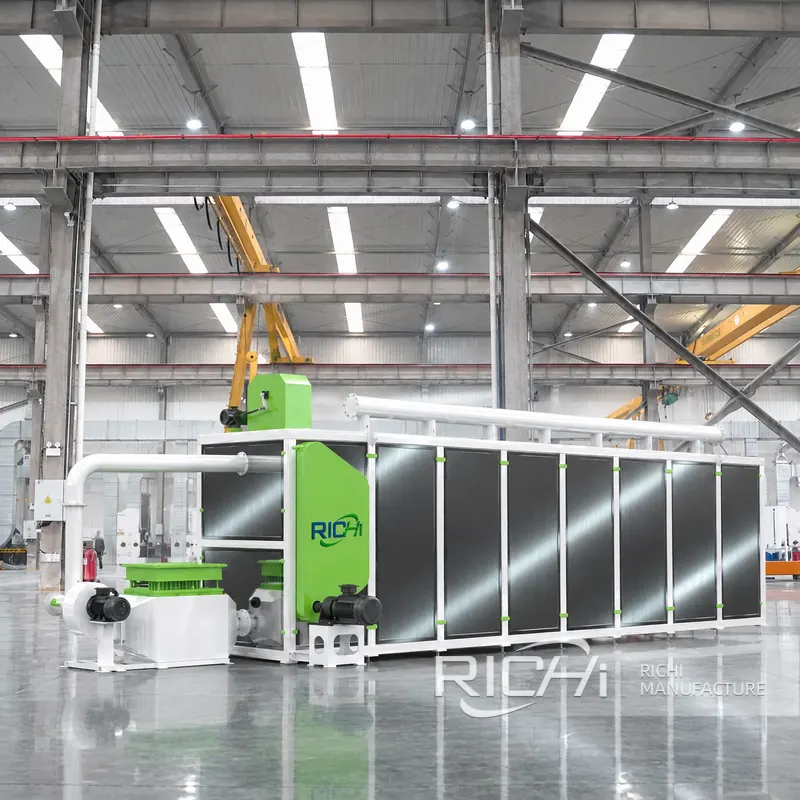
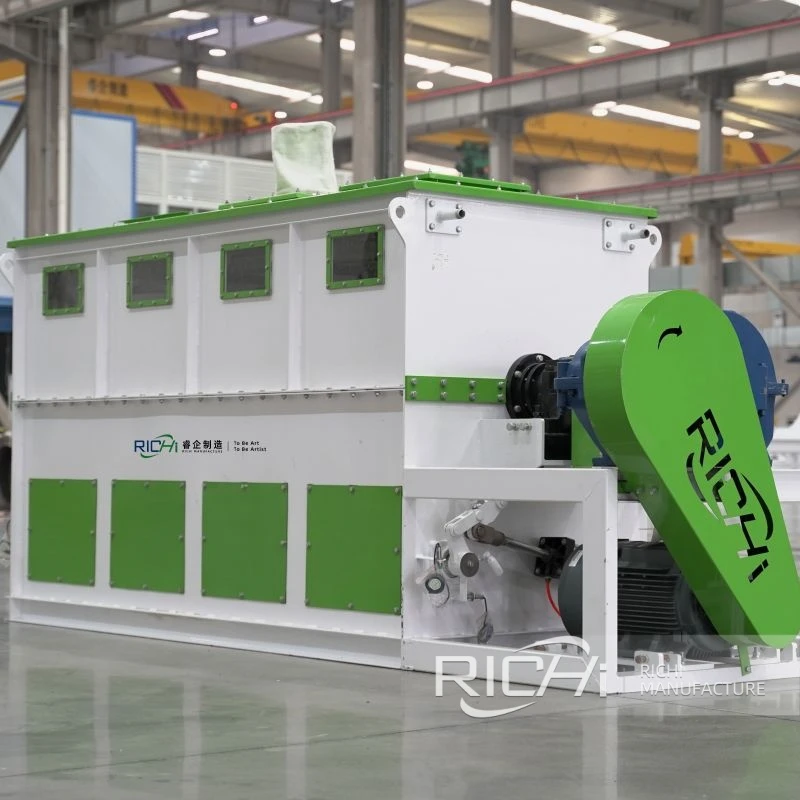
A hay feed mill can require very different equipment depending on whether the incoming material is baled, loose, pre-chopped or already ground. RICHI can configure a complete system with bale feeders, hay bale breakers or shredders, chopping machines, magnetic separation and cleaning equipment, hay grinding equipment, batching systems, mixers, liquid-addition units, conditioners, hay feed pellet machines, coolers, screeners, conveyors, buffer bins, silos, dust collectors, bagging machines, bulk-loading systems and electrical controls. A dryer is added only when the actual incoming forage moisture makes drying necessary.
Not every project needs every machine. A plant receiving ground hay can skip most bale-processing equipment, while a line handling round or large rectangular bales may require a more complete hay bale processing line before grinding. Existing hammer mills, mixers, packing systems or grain-processing sections can also be evaluated for reuse so the final hay feed processing equipment package matches the real project instead of a fixed equipment list.

hay Bale Breaker

hay Hammer Mill



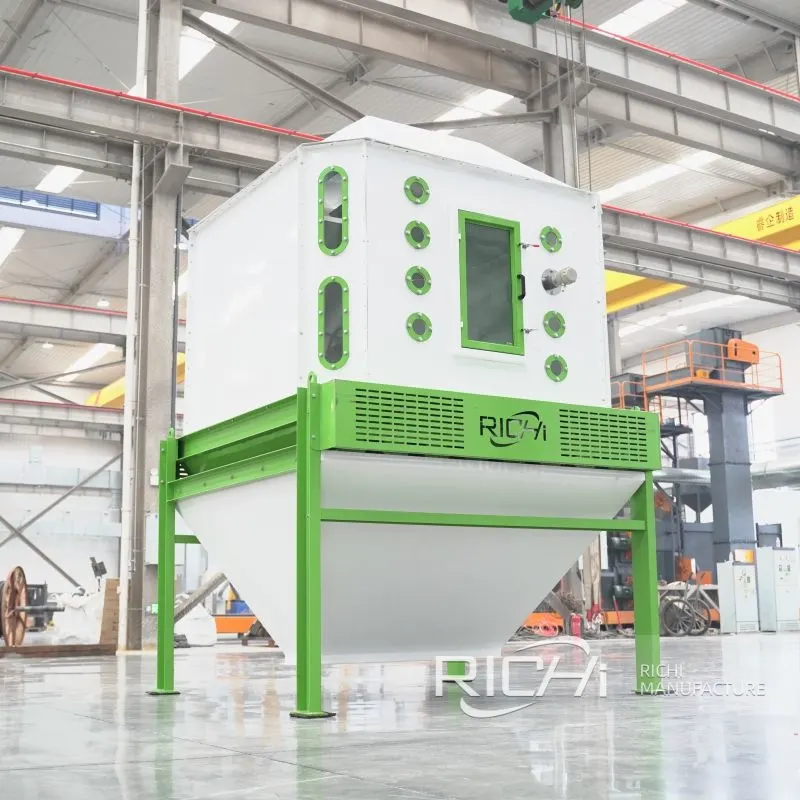
hay Feed Cooler Machine
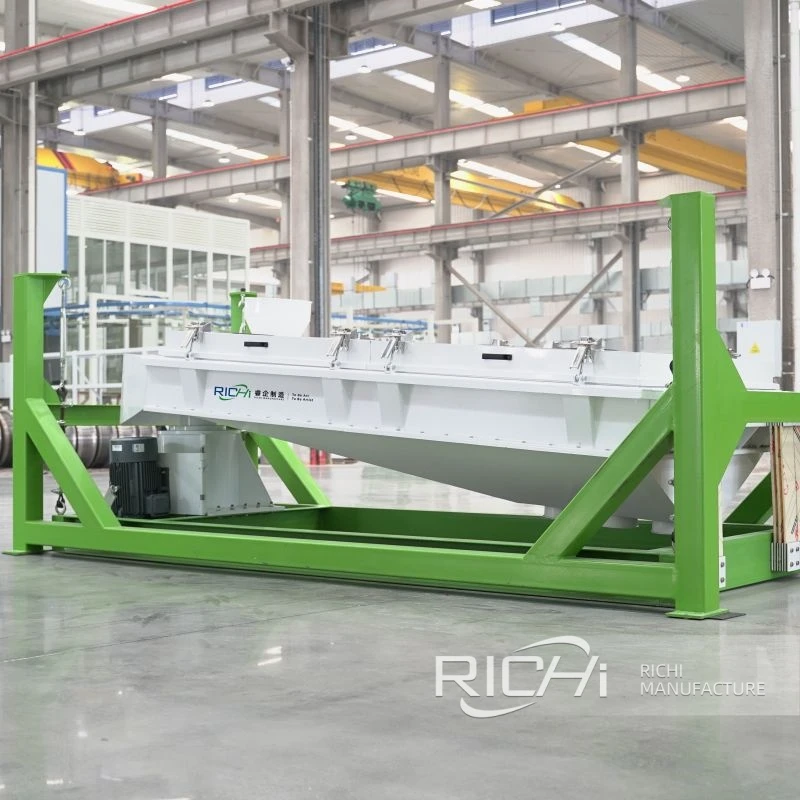
hay Feed Screener Machine
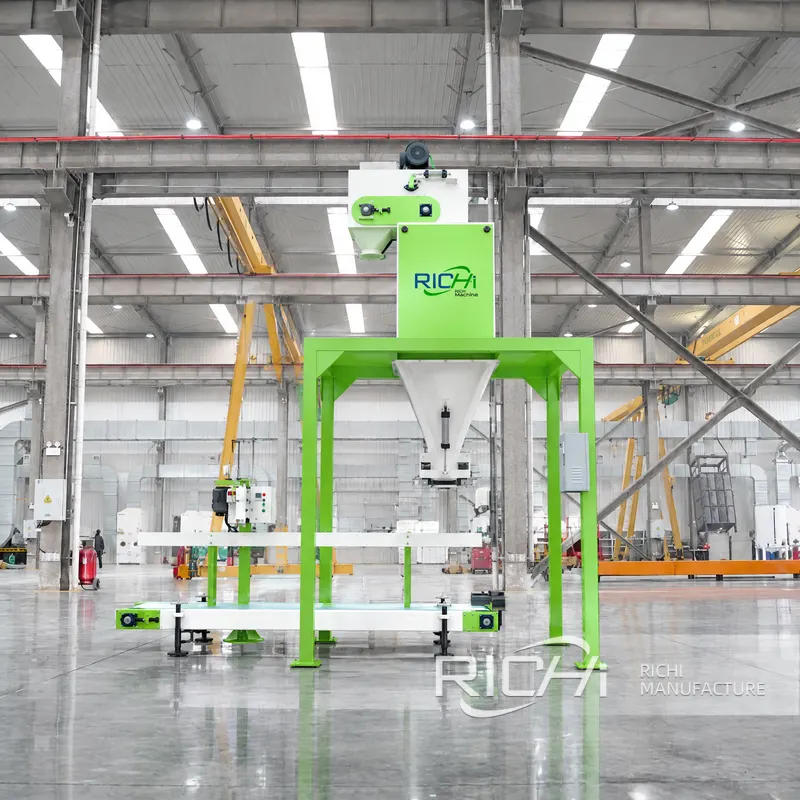
hay Feed Bagging Machine
Browse the complete range of hay feed production equipment to compare machines for receiving, size reduction, mixing, pelletizing, cooling, conveying and packing.
Turn Hay Supply into More Flexible Feed Products
The commercial value of a hay feed mill is not simply that it makes pellets. Dry hay is bulky, seasonal and often expensive to store or transport over long distances, especially when it is traded as conventional bales.
Processing can convert the same hay supply into denser pellets, ground hay, hay-grain feed or other standardized products that are easier to handle, package and sell to different livestock markets. For hay growers, forage traders and cooperatives, this creates a route from selling raw bales to offering processed feed products with more consistent specifications.
A flexible commercial hay feed plant can also improve equipment utilization by producing more than one product. Through bypasses, formula changes and different packing routes, one system may handle hay meal, 100% hay pellets, high-hay compound feed and hay-grain products without duplicating every processing section.
Feed manufacturers can add hay processing to an existing plant, while hay processors can expand from bulk forage into bagged or compound feed. Actual profitability still depends on hay cost, energy, labor, plant utilization, logistics and sales channels, so the most valuable design is the one matched to a real raw-material supply and a defined market—not simply the largest possible hay feed manufacturing plant.
Evaluate My Hay Feed Business Plan
Hay Raw Materials and Feed Applications
A hay feed mill may process alfalfa hay, timothy hay, oat hay, clover hay, ryegrass hay, Bermuda hay, meadow hay, grass hay or mixed hay, together with grain, bran, protein ingredients, minerals and other approved feed materials. Incoming hay may be baled, loose, chopped or already ground, so RICHI adjusts receiving, size reduction, batching, mixing and pelletizing around both the raw material and the animal application. The examples below describe processing routes rather than fixed nutritional formulas.
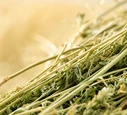
Alfalfa Hay

Grain

timothy hay

oat hay

bran

protein ingredients
Mineral Premix

Hay-Based Cattle Feed
Cattle formulas may combine alfalfa, grass, oat or mixed hay with corn, barley, bran and protein ingredients. A hay based livestock feed production line normally prepares fibrous hay and grain through suitable routes before batching, with finished feed produced as pellets or mash for farm use or commercial sale.

Hay-Based Sheep & Goat Feed
Hay may be combined with barley, corn, bran, protein ingredients and minerals according to the customer’s formula. Smaller pellet specifications and changing hay ratios can alter actual throughput, so grinding, dosing and pelletizing capacity need to be checked together rather than selected only by nominal T/H.durability.

Hay-Based Horse Feed
Timothy, grass, oat or alfalfa hay can be processed alone or with suitable grain and bran ingredients. For horse-feed applications, the hay based feed plant should pay particular attention to clean raw material, binding-material removal, consistent fiber preparation and flexible pellet or meal production.

Hay-Based Rabbit Feed
Rabbit feed commonly uses fibrous hay materials together with grain, bran, protein and mineral ingredients. Compared with larger livestock pellets, finer material preparation and smaller pellet sizes can place more load on grinding and pelletizing, so actual capacity should be calculated from the target formula and specification.

Hay-Based Camel Feed
In markets where dry forage is purchased or imported, camel-feed producers may use alfalfa or grass hay with barley, bran and other concentrate ingredients. Bale receiving, covered storage, dust control and reliable bulk handling can be as important as the pellet mill itself, particularly where hay travels long distances before processing.
Plan My Camel Feed Project

Other Herbivore Hay Feed
Deer, alpaca, llama and other hay-consuming animals may also use hay-based pellets or mixed feeds where there is a clear local market. RICHI can adapt a livestock hay feed production line to the actual hay source, formula, product size and packing method instead of treating every herbivore feed as the same product.
Discuss My Hay Feed Application
Hay Feed Formula Examples
100% Single-Hay Pellet Process Reference
A near-100% hay formula places the greatest demand on bale handling, fiber reduction and stable feeding before pelletizing.
Timothy / grass / oat / alfalfa hay
98–100%
Mineral or process additive, if required
0–2%
Other ingredients
As specified
…
…
…
…
100% Mixed-Hay Pellet Process Reference
Different hays may require separate feeding or preprocessing before proportioning and mixing because bale density, stem structure and flow behavior can differ.
Alfalfa hay
40%
Timothy or grass hay
35%
Oat / meadow / clover hay
25%
Other approved hay
As adjusted
…
…
High-Hay Cattle Pellet Process Reference
At this hay level, the line remains strongly fiber-oriented, but grain and concentrate ingredients normally need separate preparation before batching.
Dry hay
70%
Corn / barley
15%
Wheat bran
8%
Protein ingredient
5%
Minerals / premix
2%
Hay & Grain Sheep/Goat Pellet Process Reference
This type of hay grain feed production line needs balanced fiber and grain processing rather than sizing the entire system from only the pellet mill capacity.
Dry hay
50%
Barley / corn
25%
Bran
15%
Protein ingredient
8%
Minerals / premix
2%
Hay-Based Horse Feed Process Reference
The engineering emphasis is clean hay receiving, consistent fiber preparation and flexible pellet or meal production rather than one fixed formula.
Timothy / grass / oat hay
60%
Oats / barley
20%
Bran
12%
Other approved feed ingredients
6%
Minerals / premix
2%
Hay-Based Rabbit Feed Process Reference
Because finer grinding and smaller pellets are often requested for this product, actual throughput may be lower than for a coarser livestock-feed formula using the same main equipment.
Alfalfa / grass / timothy hay
50%
Grain ingredients
20%
Bran
15%
Protein ingredients
12%
Minerals / premix
3%
The formulas above are process-design references, not nutritional prescriptions. Actual ingredient ratios should be confirmed by the customer or a qualified animal nutritionist according to animal type, production stage, local ingredient analysis and regulations. RICHI uses the formula structure mainly to determine hay receiving capacity, grinding routes, batching accuracy, mixer size, liquid addition and pelletizing load within the hay feed processing system.
These examples show why a hay feed manufacturing line cannot be selected from capacity alone. Moving from 100% hay to a hay-grain compound formula changes material density, grinding load, batching requirements and pelletizing behavior, so RICHI sizes the process around the customer’s real formula rather than a generic feed recipe.
Hay Feed Mill FAQs
How Should I Plan a Hay Feed Mill If My Hay Forms and Formulas Keep Changing?
+
A hay feed mill should be planned from the most difficult material and formula the plant expects to process—not only from the easiest product or the pellet mill nameplate capacity. If your supply changes between round bales, square bales, compressed bales, loose dry hay, pre-chopped hay and ground hay, the front end should allow suitable materials to bypass equipment they no longer need while still providing full bale opening and fiber reduction when required.
| Project Question | What It Changes |
|---|---|
| Bale or loose hay? | Receiving, bale breaker, feeder and chopping route |
| Hay ratio in formula? | Fiber-processing load and actual system throughput |
| Hay meal or pellets? | Whether pelletizing, cooling and screening are required |
| Hay + grain? | Separate grinding, batching and mixing arrangement |
| Existing equipment? | Which machines can be reused or must be upgraded |
| Future capacity? | Space, conveyors, controls and parallel-line interfaces |
For raw-material planning, start with the formula. As a practical reference, required hay flow ≈ finished-feed output × hay inclusion ratio. A 5 T/H product containing 80% hay therefore needs about 4 T/H of hay entering the formula before allowing for actual handling losses and moisture differences. If the average bale weighs 500 kg, that hay flow requires roughly 8 bales per hour; at 250 kg per bale, it rises to about 16 bales per hour. This calculation directly affects bale feeding, buffer capacity and operator workload.
A flexible hay feed processing system can then be arranged in stages:
- Inspect hay form, bale dimensions, moisture, fiber length and foreign matter.
- Calculate hay mass flow and bales per hour from the target formulas.
- Decide which materials need bale opening, chopping or fine grinding, and which can bypass these stages.
- Separate hay and grain preparation where their physical properties require different grinding routes.
- Add diversion points if the plant will produce both hay meal and pellets.
- Reserve motor capacity, conveying interfaces, control points and floor space if a second grinding or pelletizing line may be added later.
This approach prevents two common mistakes: overspending on equipment that some raw materials never use, and undersizing the front-end hay system because the project was calculated only from finished-feed T/H. RICHI Machinery therefore sizes the hay feed processing system from raw-material flow through finished-product dispatch, so capacity, equipment quantity and future expansion are considered as one project rather than separate machine purchases.
How Much Does a Hay Feed Mill Cost?
+
| Production Capacity | Reference Equipment Investment |
|---|---|
| 0.3–2 T/H | US$37,000–62,000 |
| 0.5–4 T/H | US$80,000–200,000 |
| 1–6 T/H | US$99,000–220,000 |
| 2–10 T/H | US$190,000–400,000 |
| 3–12 T/H | US$220,000–450,000 |
| 4–20 T/H | US$300,000–620,000 |
| 25–40 T/H | Approx. US$450,000–850,000 |
| 50–60 T/H | Approx. US$900,000–1,400,000 |
| 60–80 T/H | Approx. US$1,450,000–1,800,000 |
| 80–100 T/H | Approx. US$2,000,000–3,000,000 |
| 100–120 T/H | Usually above US$2,500,000 |
These are equipment-planning ranges rather than fixed quotations. A high-hay formula may require larger or multiple bale breakers, grinders and pelletizing trains even when the finished-feed capacity is the same.
My Hay Comes in 4×5 Round Bales. Do I Need a Bale Breaker?
+
Usually yes. A hay bale breaker or suitable bale-opening system is normally installed before fine grinding because a complete round bale cannot feed a conventional hammer mill steadily. For sizing, calculate bales/hour = required hay flow ÷ average bale weight, then check bale dimensions, density and feeding continuity.
Can One Line Handle Square and Large Rectangular Bales?
+
Yes, provided the receiving and feeding section is designed for both formats. Square bale processing equipment must accommodate the largest bale dimensions and weight expected, while the feeder, bale shredder and buffer section must maintain continuous downstream flow rather than simply accept the bale physically.
Are Compressed Hay Bales Harder to Process?
+
They can be. Highly compressed bales have greater density and may require stronger opening and controlled feeding than ordinary field bales. A hay bale processing machine should therefore be selected from bale density, dimensions, binding method and required bales/hour—not only from the finished-feed T/H.
How Do You Stop Twine or Net Wrap from Entering the Crusher?
+
Twine, net wrap and wire should be removed during receiving before the bale enters the hay bale crusher or shredder. Magnets can capture ferrous metal, but they do not replace manual or mechanical removal of plastic netting, synthetic twine or non-magnetic contamination.
Can Baled Hay and Loose Hay Use the Same Production Line?
+
Yes. A properly designed baled hay processing line can provide separate feeding routes: bales pass through opening and primary size reduction, while loose dry hay may enter at a later point. Both streams can then share grinding, batching, mixing or pelletizing equipment where their condition allows.
My Hay Is Already Pre-Chopped. What Equipment Can I Remove?
+
You can often eliminate the bale breaker and sometimes the primary chopping stage. The remaining hay chopping and grinding line should be selected from actual fiber length, bulk density and target particle size; pre-chopped material may still require fine grinding before stable mixing or pelletizing.
If I Buy Ground Hay, Do I Still Need a Bale Processing Section?
+
Normally no. Ground hay or hay meal can usually enter weighing, batching and mixing directly if its particle size and cleanliness meet the process requirements. This can make a ground hay feed production line considerably simpler than a plant starting with whole bales.
Do Alfalfa, Timothy, Oat and Clover Hay Use the Same Settings?
+
Not necessarily. Stem-to-leaf ratio, fiber toughness, bale density, dust level and pelletability differ between hay species and harvest conditions. The same hay feed processing machine may therefore require different feeder speeds, screens, conditioning and die settings when the raw-material source changes.
Does Dry Hay Need a Dryer Before Pelletizing?
+
Usually not. As a practical reference, properly stored hay around 10–18% moisture commonly enters a dry-processing route without a dryer. Near 20% or above, storage condition and downstream requirements should be checked carefully; drying should only be added when the actual moisture makes it necessary.
My Hay Is Still 25–35% Moisture. Can I Pellet It Directly?
+
Usually not through a standard dry-hay route. At roughly 25–35% moisture or higher, the material should be treated as partially dried or high-moisture forage rather than normal storage hay, and the project should evaluate drying before fine grinding and pelletizing.
Will 100% Hay and 70% Hay + 30% Grain Have the Same Capacity?
+
No. With the same hay feed pellet mill, higher hay content generally lowers practical throughput because low-density fiber places more load on feeding, grinding and pelletizing. A machine rated across a broad capacity range for 6 mm pellets should therefore not be assumed to achieve its upper rating on 100% hay.
What Changes If Hay Is Only 20–30% of the Formula?
+
The line becomes closer to a conventional compound-feed plant, but a dedicated hay receiving and grinding module is still required. A hay based animal feed production line with 20–30% hay usually has higher material density and potentially higher throughput than a 100% hay pellet line using the same pelletizing equipment.
Should Hay and Corn or Barley Be Ground Together?
+
Usually they are better prepared through suitable separate routes. Long-fiber hay first needs opening/chopping and then fine grinding, while corn, barley or other grain can use grain-specific grinding. The streams meet later in the hay and grain feed plant for batching and mixing.
I Only Want Hay Meal. Do I Need a Pellet Mill?
+
No. A hay feed making machine system for meal or mash can omit the pellet mill, cooler and pellet screener. Depending on the incoming hay, the main equipment may only include receiving, bale breaking, chopping, grinding, weighing, mixing and packing.
Can One Line Produce Both Hay Meal and Hay Pellets?
+
Yes. A diversion or bypass can send mixed ground feed directly to storage/packing for meal production or onward to conditioning, pelletizing, cooling and screening. This is a useful configuration for a hay pellet feed production line serving more than one product market.
Can I Produce Several Pellet Diameters on the Same Line?
+
Usually yes by changing the ring die and adjusting process parameters. Hay-based livestock pellets commonly fall roughly within 3–12 mm, depending on animal application and customer specification. Smaller diameters may reduce practical capacity, so the hay feed pelletizing machine should be sized for the most demanding product.
Can I Reuse My Existing Hammer Mill, Mixer and Packing Machine?
+
Often yes, but each machine has to be checked separately. Reuse depends on screen area, motor power, feeder design, mixer batch size, conveying capacity and packing rate. A hay feed manufacturing system should not be built around old equipment that becomes the new bottleneck.
I Already Have a Grain Feed Mill. Can I Add Only the Hay Section?
+
Yes. Many retrofit projects add bale receiving, a hay bale shredder, chopping, hay grinding and buffer conveying ahead of the existing batching system. Before integration, a hay feed equipment manufacturer should check whether the existing mixer, pellet mill, conveyors and dust-control system can handle the new fiber load.
My Workshop Is Low. Can You Design a Line Without a Tall Tower?
+
Yes. A low-height hay feed processing factory can use more horizontal transfer, screw conveyors and drag conveyors instead of relying heavily on vertical gravity flow. This normally increases floor usage, so workshop length, width and height should all be supplied before layout design.
Do I Have to Build a Receiving Pit?
+
No. Above-ground feeding is possible and is often useful where groundwater is high or civil work must be minimized. A complete hay feed plant can use above-ground bale feeding, hoppers and horizontal conveying, although forklift movement and receiving-floor space must be planned carefully.
Can a Hay Line Fit Into an Existing Factory Building?
+
Often yes. For retrofit work, we check column spacing, door dimensions, floor loading, ceiling height, existing pits and equipment positions before arranging the hay feed processing line equipment. Where space is tight, process direction and conveying method may be changed instead of forcing a standard layout into the building.
How Do You Prevent Hay from Bridging and Blocking Bins?
+
Low-density long fiber needs bins and feeders designed for its flow behavior. Anti-bridging devices, suitable hopper geometry, controlled fiber length and forced or metered feeding can stabilize flow. Simply enlarging a bin does not necessarily solve bridging in a hay feed manufacturing plant.
I Need 1–2 T/H Now but 4–5 T/H Later. How Should Phase One Be Built?
+
Reserve capacity at the beginning. The first-stage hay feed plant project should consider future motor load, transformer capacity, conveying size, buffer bins, control I/O, workshop space and interfaces for an additional grinder or pellet mill. Expansion is far cheaper when these points are planned before construction.
Can I Add a Second Pelletizing Line Later?
+
Yes, if the upstream system has sufficient spare capacity or is designed for modular expansion. A hay feed pellet plant project can reserve a second conditioner, pellet mill, cooler and conveying connection while sharing suitable receiving or batching sections during the first stage.
Why Does a 20+ T/H Hay-Rich Plant Need Multiple Processing Trains?
+
Because one machine is rarely able to handle the entire fiber load reliably. Large industrial hay feed production lines normally split bale receiving, grinding and pelletizing across several parallel trains. The number of machines is calculated from mass balance, hay percentage and realistic machine throughput rather than total finished-feed capacity alone.
Can Automation Reduce Labor in a High-Labor-Cost Market?
+
Yes. In markets such as Japan, automatic bale feeding, centralized control, automatic bagging and bulk loading can reduce repetitive manual handling. An automatic hay feed production line still needs operators for receiving inspection, binding removal, maintenance, quality control and abnormal-condition handling.
We Use Imported Dry Hay. Should We Still Install a Dryer?
+
Usually not if the imported hay arrives within a suitable storage and processing moisture range. In a market such as South Korea, investment may be better directed toward covered bale storage, receiving, binding removal and controlled bulk handling rather than installing an unnecessary dryer in the turnkey hay feed plant.
How Do You Control Hay Dust and Fire Risk?
+
Use enclosed transfer where practical, local dust collection at bale opening, grinding and screening points, regular housekeeping and proper electrical/fire-safety design. Dust collectors control airborne dust; they do not replace removal of twine, metal or other contamination from the hay feed factory.
What Information Do You Need Before Designing My Hay Feed Mill?
+
Send the hay species and form, bale dimensions and weight, moisture, formula/hay ratio, target T/H, pellet diameter or meal requirement, daily working hours, existing equipment, workshop dimensions and packing method. A hay feed mill manufacturer can then prepare the process flow, equipment sizing, layout and quotation before moving into manufacturing, installation and commissioning.
Can Timothy Hay and Alfalfa Hay Run on the Same Line?
+
Yes. Timothy and alfalfa hay can share the same hay feed processing line, but their feeding and grinding settings may need adjustment because stem structure, leaf content, bulk density and pelletability differ. If both are used in one formula, separate feeding or weighing before mixing gives better control than blending the bales randomly at receiving.
Does Stemmy Alfalfa Need More Grinding Than Leafy Hay?
+
Usually yes. Coarse, stem-heavy alfalfa generally creates a higher chopping and grinding load than leafy material from an earlier or different harvest. The hay grinding equipment should therefore be selected for the toughest expected lot, otherwise seasonal changes in the same hay species can reduce plant throughput.
Can Oat Hay and Grass Hay Be Pelletized Together?
+
Yes. Oat hay and grass hay can be processed into mixed-hay pellets when the formula and end use are suitable. Because their fiber length and bulk density may differ, the mixed hay pellet production line should meter the materials before mixing rather than depend on uncontrolled feeding from one common pile.
Is Clover Hay Processed Differently from Timothy Hay?
+
The main process is similar, but machine settings may differ. Clover hay can contain a different leaf-to-stem structure and may create more fines during handling, while coarse timothy can require stronger fiber reduction. Feeder speed, screen selection and dust collection should therefore be adjusted from actual samples rather than one universal setting.
How Do You Process Mixed Meadow Hay?
+
Mixed meadow hay should first be evaluated for species variation, stem length, moisture, foreign matter and bale density. In an Austrian-style meadow-hay processing scenario, the main challenge is often raw-material variability rather than one specific grass species, so buffer feeding and homogenization before pelletizing become especially useful.
Can Different Bale Densities Cause Capacity Problems?
+
Yes. Two bales of the same weight can behave very differently if one is loosely packed and the other is highly compressed. Bale density affects opening time, feeder loading and bales per hour, so round bale processing equipment or square-bale systems should be sized from both bale weight and physical density.
I Process Spanish Alfalfa Hay. Can I Make 80% Hay Pellets?
+
Yes. An 80% hay formula is a typical high-hay engineering scenario. The remaining 20% may contain grain, bran, protein or mineral ingredients according to the customer’s formulation. Because hay still dominates the mass flow, the hay feed pellet production line should be sized primarily around fiber handling rather than grain capacity.
Can a Greek Sheep Feed Line Use Alfalfa Hay and Barley?
+
Yes. A sheep/goat feed processor can combine alfalfa or grass hay with barley, bran and other approved ingredients. If hay represents around 40–60% of the formula, both the fiber-processing route and the grain route become important, so neither should be sized as a minor auxiliary system.
What If a Dairy Formula Contains Only 30–40% Hay?
+
At 30–40% hay, the plant normally behaves differently from a 100% hay pellet line. For a dairy-feed customer in a market such as Denmark, hay still needs dedicated receiving and size reduction, but grain and concentrate handling may carry more of the total mass flow and influence overall throughput more strongly.
Can a Finnish Horse-Feed Plant Use Mostly Timothy Hay?
+
Yes. A formula with approximately 60–80% timothy or other dry hay can be processed with grain or bran ingredients according to the customer’s nutrition plan. For this type of product, clean receiving, controlled fiber preparation and stable small-batch formula changes can be more important than maximizing nominal T/H.
Can Lucerne and Berseem Hay Be Processed in the Same Plant?
+
Yes, when both materials are properly dried and suitable for the intended feed. An Indian dairy-feed customer may receive lucerne, berseem or other dry forage at different times of year, so the hay based feed processing plant should tolerate changes in fiber structure without requiring a completely different production line.
Can Grass Hay and Cereal Straw Be Used Together in Ethiopia?
+
Yes, but they must be treated as two different raw materials. Grass hay is hay; wheat, barley or teff straw is crop residue. A feed producer combining both should control their proportions separately and check whether the straw is suitable for the intended feed before including it in the formula.
We Use Imported Alfalfa Hay in Oman. Do We Need Different Equipment?
+
Usually the key difference is receiving and storage rather than a special alfalfa pellet machine. Imported hay may arrive as compressed or large bales, so the hay bale processing equipment must match bale dimensions and density. If the hay already arrives dry enough for storage and processing, installing a dryer adds unnecessary cost.
Can a High-Labor-Cost Hay Plant Automate Bale Feeding?
+
Yes. In markets such as Norway or Sweden, automatic bale feeding, controlled bale opening, centralized control and automatic packing can reduce repetitive handling. Automation should still leave practical access for binding removal, inspection and maintenance rather than trying to eliminate every operator from the receiving section.
Can One Portuguese Hay Plant Produce Both Meal and Pellets?
+
Yes. A hay pellet plant can include a diversion after grinding or mixing so part of the product goes directly to meal storage and packing while the rest continues to conditioning and pelletizing. This is useful for processors serving both bulk roughage customers and pellet buyers.
Can Meadow Hay and Alfalfa Hay Be Stored in the Same Bin?
+
They can be stored together only if the customer intentionally wants them blended. For controlled formulas, separate bins or feeding positions are usually better because bulk density and flow characteristics may differ. Separate storage also makes it easier to change the hay ratio without emptying a mixed bin.
What Happens If My Formula Changes from 90% Hay to 30% Hay?
+
The practical capacity can change substantially. At 90% hay, bale processing, fiber grinding and pelletizing normally carry a heavier load; at 30% hay, the grain and concentrate system handles more of the throughput. An automatic hay feed mill should therefore be sized for the most demanding formula, not only the average recipe.
Can I Switch Between 100% Hay Pellets and 50/50 Hay-Grain Feed?
+
Yes. The line can share pelletizing, cooling and packing equipment, while hay and grain use suitable preparation routes upstream. Recipe control and diversion points allow product changes, but cleaning between formulas may be required when ingredient carryover or cross-contamination matters to the customer.
How Much Hay Does a 3 T/H Line Need at 65% Hay?
+
Approximately 1.95 T/H of hay enters the formula because 3 × 65% = 1.95 T/H. Over an 8-hour shift, that equals about 15.6 tonnes of hay before adjusting for actual moisture, cleaning losses and usable yield. This calculation should be used to size bale receiving and storage, not just the pellet mill.
How Much Hay Is Needed for 6 T/H Feed at 40% Hay?
+
Approximately 2.4 T/H of hay is required in the formula because 6 × 40% = 2.4 T/H. If average bales weigh 400 kg, the receiving section must handle about 6 bales per hour as a practical starting point. Final hay feed production equipment sizing should also consider bale density, fiber length and operating buffer.