
 0086-138 3838 9622
Grass Feed Mill


A grass feed mill can turn an existing forage resource into a more consistent, transportable and marketable feed product, which is why these projects are not limited to conventional feed manufacturers. They are also developed by forage growers and processors, commercial feed mills, medium and large livestock operations, crop-livestock enterprises, agricultural cooperatives, forage traders, and investors who already control reliable raw-material supply and downstream sales.
Depending on the business model, the same project may be built for internal farm consumption, commercial feed sales, seasonal forage utilization, or the addition of a new grass-based product range to an existing feed business. Our role goes beyond supplying individual machines: we develop the process, select and integrate the required systems, manufacture the equipment, support installation and commissioning, and help customers build new plants or extend existing feed operations.
RICHI grass feed plant projects have been supplied to customers in multiple international markets, giving our engineering teams practical experience with very different forage resources, production scales and operating models.
Discuss Your Grass Feed Project
What Types of Feed Can a Grass Feed Mill Produce?
A grass feed mill can produce forage-only pellets, mixed forage products, grass-and-grain feed and other grass-based formulas. The required process changes with forage ratio, moisture, fiber characteristics, added ingredients and final feed form, so each product should be matched with the right preprocessing, mixing and pelletizing configuration.

100% Grass / Forage Pellets
Made mainly from suitable forage such as ryegrass, Napier grass, elephant grass, Bermuda grass, clover or pasture grass. Depending on whether the material is loose, baled, dry or wet, the line may include chopping, drying, grinding and pelletizing.
4–12mm Pellet Size

Mixed Grass / Forage Pellets
Two or more forage materials are blended to handle seasonal supply or different fiber characteristics. The process focuses on consistent particle size, mixing and stable pellet formation when grass properties vary.
4–10mm Pellet Size

Grass & Grain Compound Feed
Grass is combined with corn, barley, wheat bran, soybean meal or other feed ingredients. A grass and grain feed production line usually prepares forage and grain separately before accurate batching and mixing.
4–8mm Pellet Size

Grass & Crop-Residue Feed
Grass can be combined with feed-suitable wheat straw, rice straw, corn stalk or sorghum stalk where feeding value and local regulations allow. These fibrous materials normally require suitable chopping and grinding before mixing and pelletizing.
4–10mm Pellet Size

Fortified Grass-Based Feed
Grass or forage forms the base, while grain, protein ingredients, minerals, vitamins or molasses are added according to the formula. This type of grass feed pellet plant may require more precise dosing, liquid addition and mixing control.
4–8mm Pellet Size
A grass feed mill can also be designed for more than one finished form. One system may produce pellets and grass meal or mash, or combine grass-based livestock feed with other feed products where hygiene, grinding, formulation and cross-contamination requirements allow.
Customize My Feed Product Line
See Grass Feed Mill Projects in Real Production Settings
A grass feed mill is easier to evaluate when you can see how the equipment, conveying route, workshop layout and processing stages work together in an actual project. RICHI has supplied grass feed plant and forage-processing solutions for customers in different markets, and these project videos give buyers a practical view of line configuration, equipment integration, installation quality and operating layout rather than only showing individual machines.
The projects below cover different production conditions and customer requirements. Depending on the confirmed project information, each video will highlight the actual feed product, main raw materials, capacity, process arrangement, workshop constraints and customized engineering decisions used in that plant.
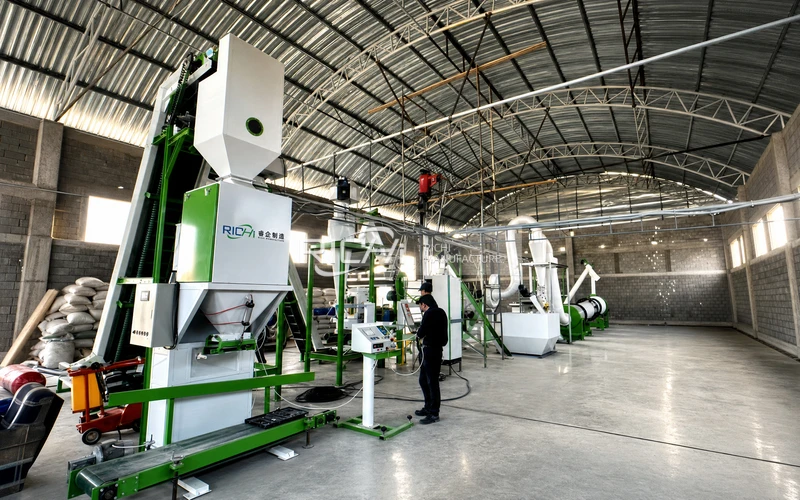

【1–2 T/H Small Grass Feed Mill in Uzbekistan】Designed for a relatively small grass-processing operation, this 1–2 T/H line includes a drying stage for forage that cannot enter the downstream grinding and pelletizing process at its incoming moisture level. The project shows how drying, size reduction and grass feed production can be integrated into a compact line rather than treating all grass as ready-to-process dry material.
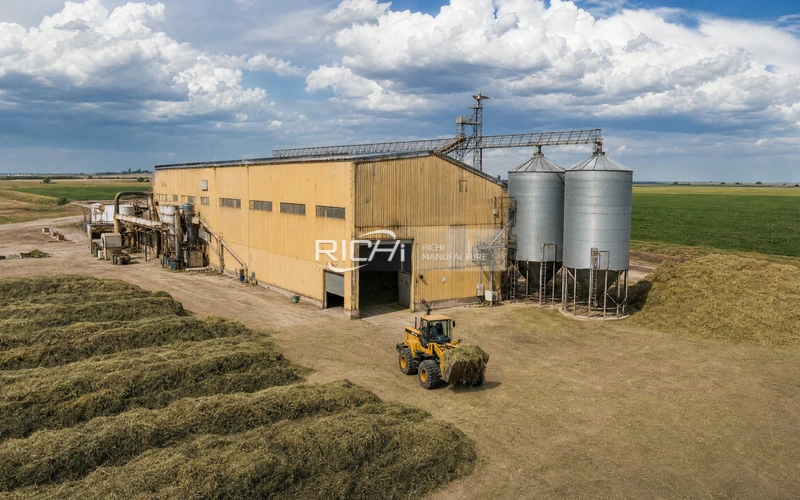
【5 T/H Grass Feed Mill in Argentina】This 5 T/H grass feed mill represents a higher-throughput forage processing configuration where continuous material handling and balanced capacities between preprocessing and the main feed-production stages become more important. It provides a practical reference for customers planning commercial grass feed production from locally available forage materials.
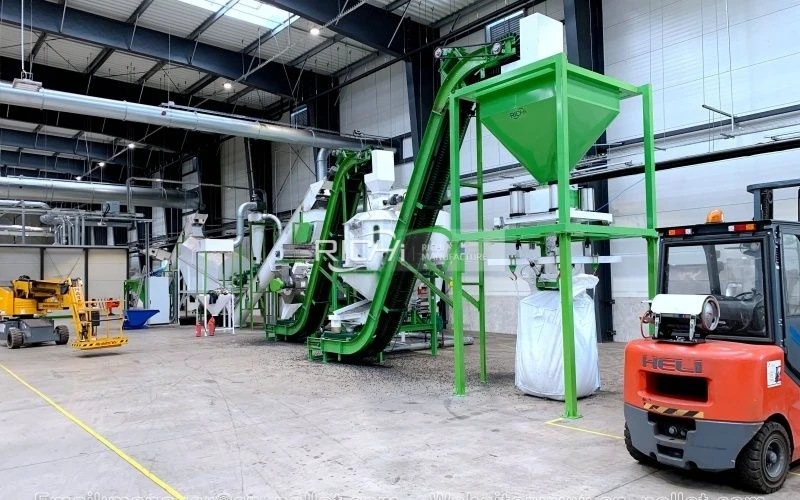
【3–4 T/H Grass Feed Mill in Russia】For grass materials requiring moisture reduction before further processing, this 3–4 T/H project incorporates drying as part of the production route. The video provides a useful reference for projects dealing with seasonal forage conditions, where drying capacity must be coordinated with subsequent crushing, conveying and grass feed production rather than selected as an isolated machine.
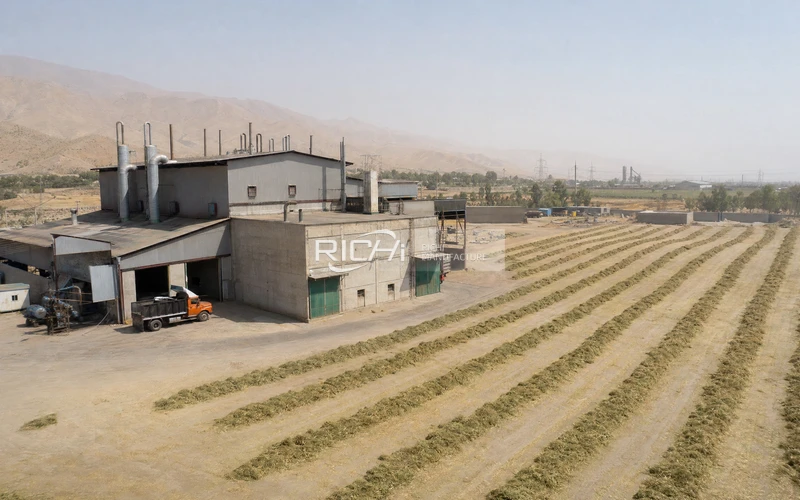
【1–2 T/H Grass Feed Mill in Türkiye】This 1–2 T/H grass feed mill also uses a drying process, making it relevant to customers whose available grass is not consistently dry enough for direct downstream processing. Its smaller capacity illustrates how drying and feed production can be configured for a modest commercial project without simply copying the equipment arrangement of a large grass feed plant.

【5–6 T/H Grass Hay Feed Mill in Zimbabwe】This 5–6 T/H project processes grass and hay materials at a larger commercial scale. Compared with projects centered on wetter forage and drying, the line provides another reference for handling dry fibrous feed materials, where receiving form, fiber size reduction, stable conveying and continuous downstream processing become key considerations when configuring the grass feed production line.
Custom Grass Feed Mill Process & Modular System Design
Every grass feed mill needs a process route built around the actual material and finished-feed requirement. A line for fresh loose grass is not designed the same way as one handling dry grass bales, chopped forage or grass meal; likewise, 100% forage pellets, grass-and-grain feed and mash feed place different demands on preprocessing, grinding, batching and downstream equipment. Moisture determines whether drying is required, while fiber length, bulk density, formula ratio and plant dimensions affect feeding, conveying and size-reduction design.
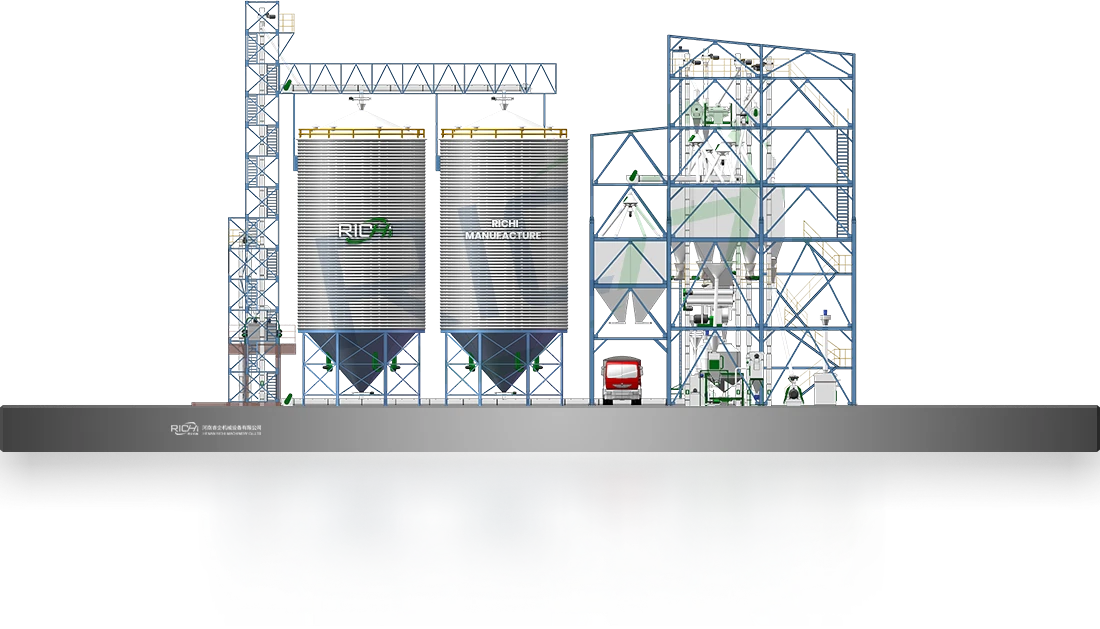
A complete grass feed processing line can combine receiving and storage, bale breaking or chopping, cleaning, drying when necessary, primary and secondary grinding, batching, mixing, conditioning, pelletizing, cooling, screening, liquid addition, conveying, finished-product storage, bagging, bulk loading, dust control and centralized control.
Not every project needs every module: mash lines can bypass pelletizing and cooling, existing customer equipment may be integrated where suitable, and extrusion or premix production is evaluated separately rather than treated as a standard grass-processing stage. RICHI supports the project from process planning and equipment selection through manufacturing, installation, commissioning, operator training and spare-parts support.
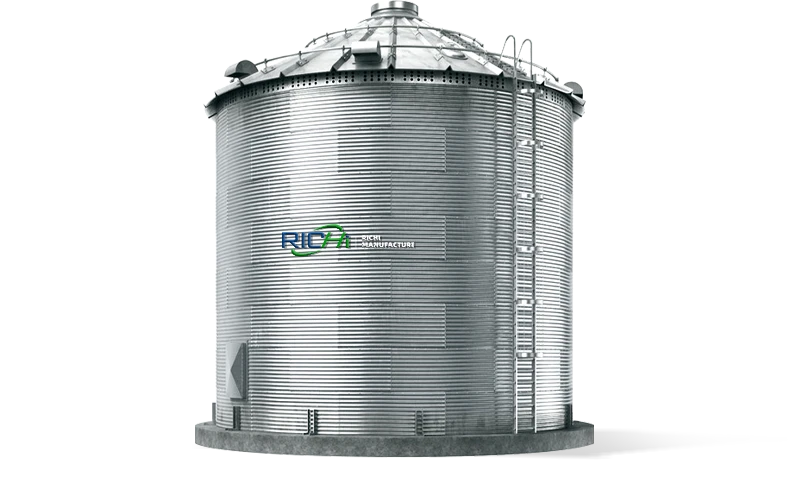
Silo system
01
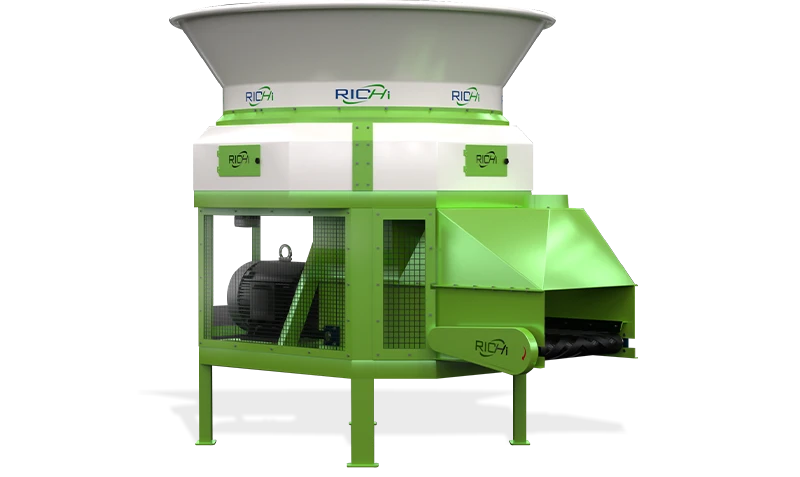
bale chopping
02
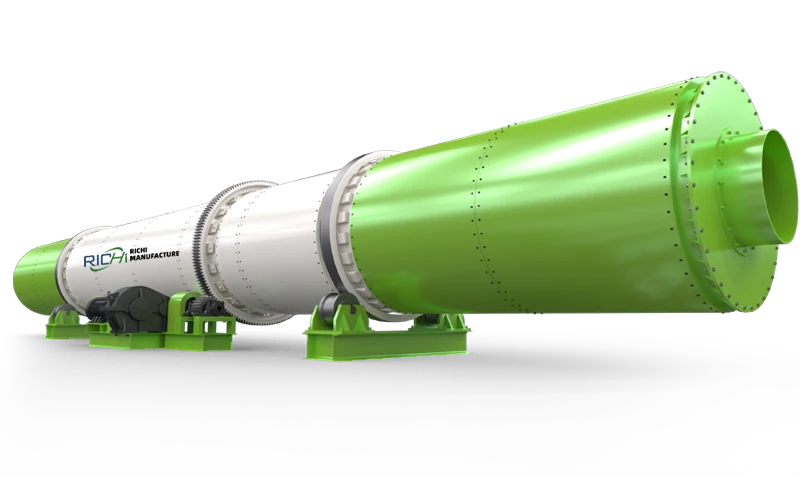
Drying system
03

Grinding system
04
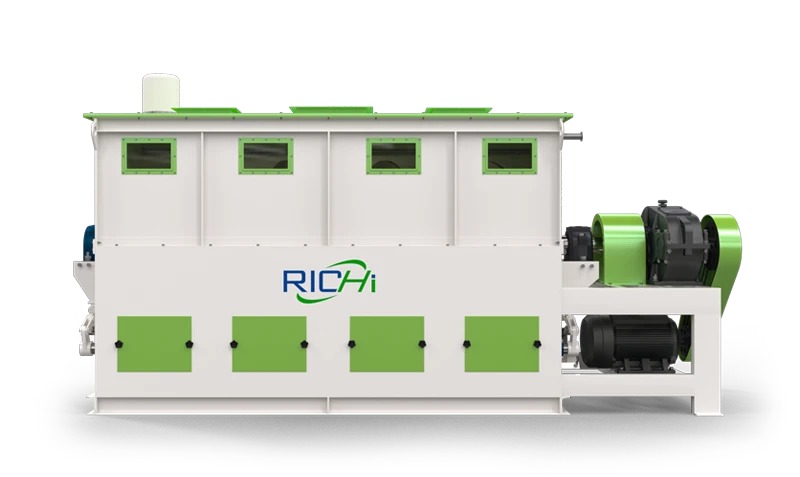
Mixing system
05
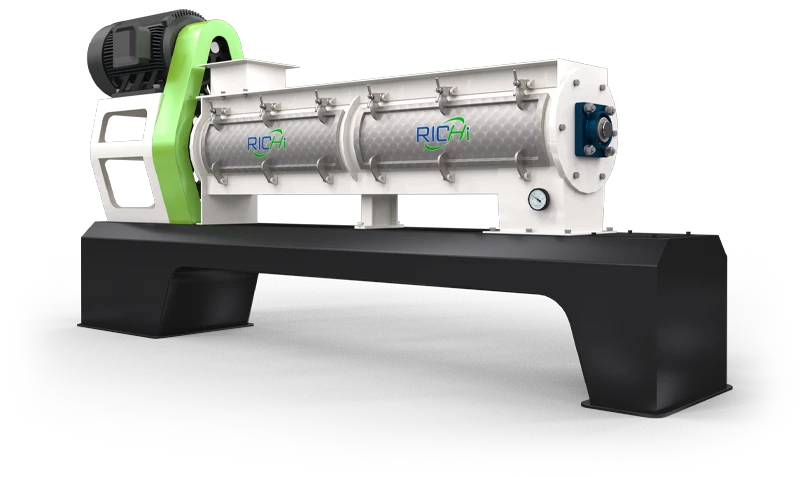
Molasses mixer
06
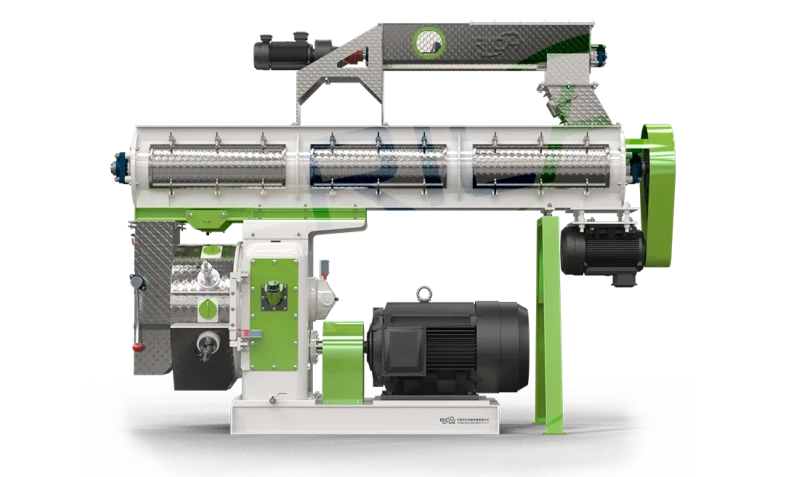
Pelleting system
07
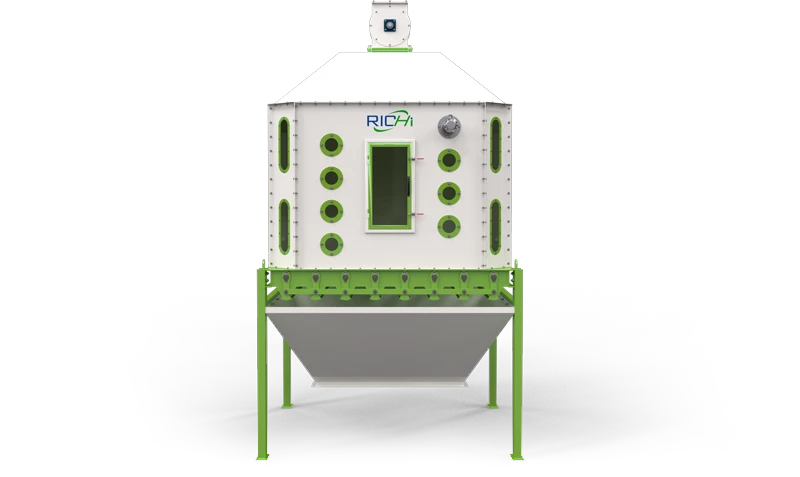
Cooling system
08
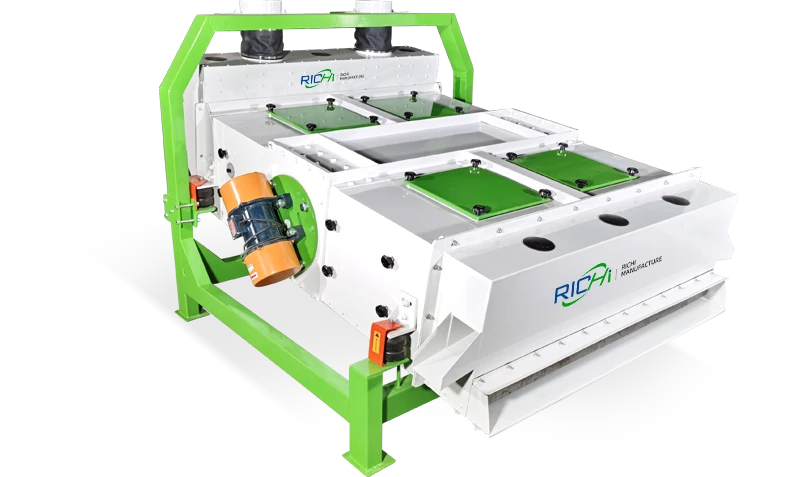
Screening system
09
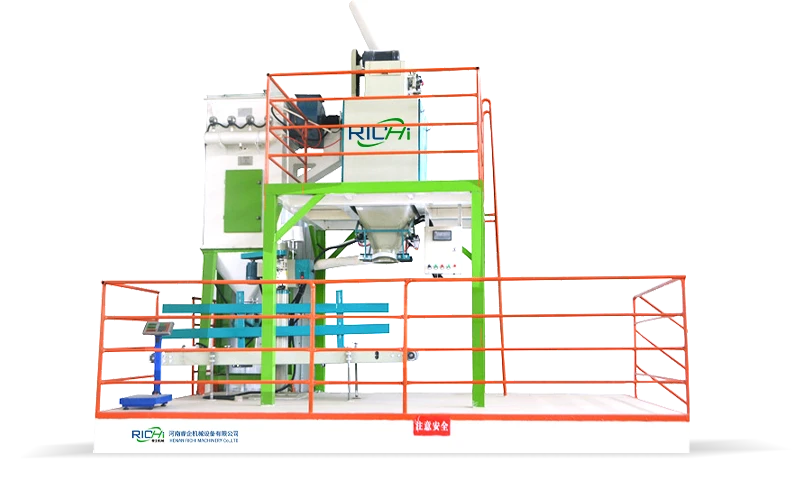
Packaging system
10
8 Grass Feed Mill Designs for Different Raw Materials and Formulas
These eight grass feed mill designs show how capacity, forage ratio, incoming moisture, existing equipment and building conditions can change the actual production route. Each flow can be expanded, simplified or connected with additional modules after the raw materials and required finished feed are confirmed.

3-4 t/h grass feed mill Design (100% grass / forage Formula)
Process: Bale breaking / grass chopping → drying → secondary grinding → mixing → pelletizing → cooling → screening → finished bin → bagging or bulk loading
This design handles both baled and loose forage, including wetter batches that require drying before fine grinding and pelletizing. Two discharge routes are retained after the finished-product bin: automatic bagging for commercial sales and direct bulk loading where pellets are transported without small bags.

0.8-4T/H automatic grass feed plant Design (crop+grain Formula)
Process: Forage and grain preparation → grinding → mixing → pelletizing → cooling → screening → weighing and bagging
The key feature is its low-height arrangement. Screw and drag conveying can replace some vertical lifting where workshop height is restricted, while the same automatic grass feed plant handles formulas ranging from high-forage feed to grain-dominant products. Actual output therefore changes with fiber content and formula.

5-6 t/h grass mash feed plant Design (grass+grain Formula)
Process: Bale breaking / chopping → weighing → batch grinding → mixing → manual bagging
This is a grass-and-grain mash line without pelletizing, cooling or screening. Chopped forage and grain are weighed by batch, ground to the required size and mixed as the final product, making the layout suitable where the buyer needs grass mash rather than pellets and wants to keep unnecessary equipment out of the project.

1-6T/H grass feed unit Design (crop straw+grain Formula)
Process: Straw chopping → batching and weighing → grinding → mixing with prepared grain → pelletizing → cooling → screening → automatic bagging
Long feed-suitable straw is reduced before batching so it can be handled together with grain ingredients. This grass and grain feed production line covers a wide output range because forage percentage and formula change the load on chopping, grinding, conveying and pelletizing equipment.

1-2T/H grass feed plant Design (50-80% grass Formula)
Process: Grass chopping → drying → temporary storage → mixing with pre-weighed grain → pelletizing → cooling → screening → bagging
Loose grass entering at about 40–50% moisture is first reduced in size and dried to a condition suitable for downstream processing. Pre-weighed grain, generally forming about 20–50% of the formula, is then added at the mixing stage, creating a compact grass pellet feed production line for high-grass formulas.

2-10 t/h automatic grass & grain feed plant design (Hay+grain Formula)
Process: Forage grinding → mixing with existing ground grain → pelletizing → cooling → screening → bagging
Here, the customer already has a grain-grinding system, so the new line does not duplicate that investment. Dry grass and suitable crop forage below about 20% incoming moisture are prepared separately and then combined with ground grain, allowing existing equipment to become part of the new grass feed manufacturing system.

0.3-0.5T/H small grass feed plant design (100% grass + straw Formula)
Process: Chopping → secondary grinding → mixing → pelletizing → long-distance cooling conveyor → bulk loading
This compact line is intended for a low-output grass-and-straw application with direct bulk use. A long conveyor may serve as a simplified cooling stage only when output, residence time, ambient conditions and final pellet temperature make that arrangement technically acceptable; otherwise a dedicated cooler is still required.

2–3 t/H grass feed pellet plant design (80% grass Formula)
Process: Grass chopping → optional drying → secondary grinding → batching → mixing → pelletizing → cooling → screening → bagging
With roughly 80% forage in the formula, fiber handling becomes more important than in a grain-dominant feed line. Fresh Napier grass, elephant grass or similar wet forage may require drying, while suitably dried material can bypass that stage. Feeding capacity, grinding load and pellet-mill output are selected around the high forage ratio.
Grass Feed Mill Projects for Different Forage Businesses
RICHI has delivered grass feed mill projects for forage processors, commercial feed manufacturers, livestock operations and integrated agricultural businesses working with very different raw-material conditions and production scales. For buyers comparing a grass feed mill for sale, these projects show why capacity alone is not enough to define a line: forage moisture, bale or loose form, grass percentage, grain inclusion, finished-feed form, existing equipment and labor strategy can all change the final configuration. Some plants focus on one pellet product, while others combine pellet and mash production or reserve interfaces for additional feed-processing modules.

500 KG/H Farm-Scale Napier Feed Line
Kenya
The customer needed a compact system for turning locally available Napier grass into more manageable feed for a dairy operation. The line focuses on controlled forage preparation before mixing with suitable feed ingredients, matching a farm-scale production volume without introducing the equipment complexity of a larger commercial grass feed mill.

5 T/H High-Grass Pellet Project
France
This commercial feed operation required a high-forage pellet line using dry grass with bran and protein ingredients. The process was arranged around controlled grass grinding and accurate batching so formulas could change without turning the project into a single-product grass feed pellet plant.

7 T/H Bale Handling Retrofit
Canada
The customer already had grain storage, mixing and pelletizing equipment but lacked a reliable way to process bulky forage bales. The upgrade therefore concentrated investment on bale opening, controlled feeding, grass grinding and conveying, turning an existing feed mill into a more flexible grass-and-grain production system.

5 T/H Mixed Roughage System
Spain
The customer required more than one fibrous feed material to enter the same production system. Grass and suitable crop forage are prepared according to particle size before controlled mixing with grain ingredients, giving the plant greater raw-material flexibility without treating all roughage as mechanically identical.
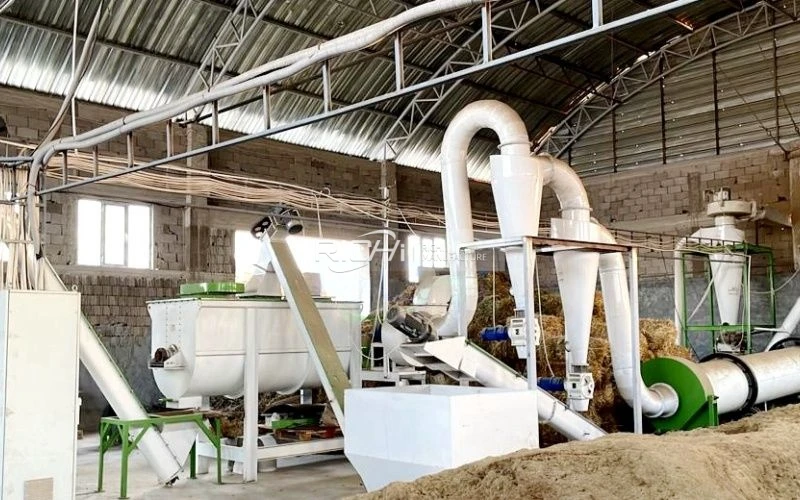
1 T/H Dairy Forage Feed Line
India
The project is designed for a dairy farming business using grass together with grain, bran and other locally sourced feed ingredients. Separate preparation of fibrous and concentrate materials allows them to reach suitable particle conditions before mixing, giving the customer better control over daily feed production and formula adjustment.
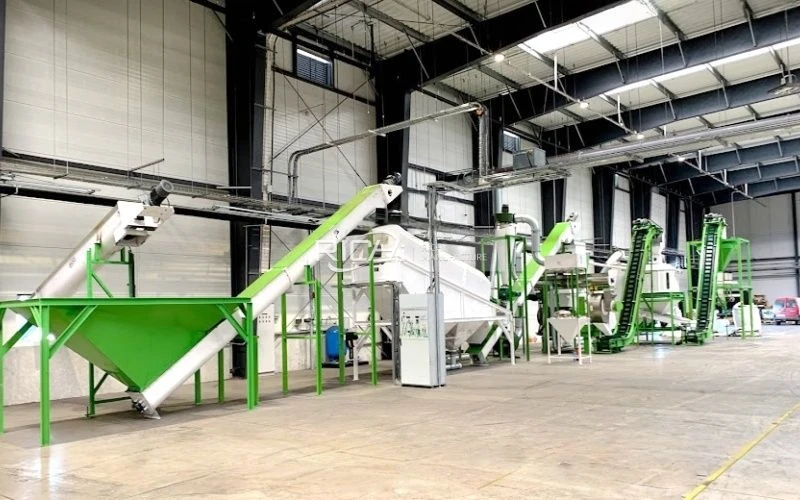
6 T/H Pasture Feed Integration
New Zealand
A livestock-oriented processor needed to convert dried pasture material into pellets while retaining the option to add grain ingredients. The line was configured for flexible forage ratios, automated conveying and bulk handling, matching a market where labor efficiency and reliable farm-scale distribution matter.

10 T/H Automated Pasture Line
Australia
A commercial processor required a higher level of automation for dry pasture grass and grain-based formulas. Centralized material handling, automatic batching and bulk finished-feed movement reduced manual transfer points, while the line remained capable of producing both high-grass and lower-grass pellet formulas.

8 T/H Precision Grass Processing
Netherlands
A highly automated feed operation needed tighter control over ingredient dosing, recipe changes and material transfer. The commercial grass feed plant was designed around dry forage processing, precise batching and centralized control, reducing manual intervention while supporting multiple grass-based formulas from one production system.

800 KG/H Flexible Farm Feed System
Mexico
This project serves a livestock producer that wants to use locally available grass as a controlled part of its own feed production. The system prepares fibrous material separately from grain-based ingredients before combining them according to the required formula, giving the customer flexibility to adjust feed production as forage availability changes.

4 T/H Dry Forage Upgrade
South Africa
A feed business working with dry forage and grain wanted to expand beyond conventional compound feed. RICHI added the grass preparation and dosing sections required for higher-fiber formulas while keeping the existing downstream equipment where capacity and mechanical condition allowed reuse.

4 T/H Compact Forage Factory
Germany
This project had limited space for new equipment, so the layout emphasized compact conveying and integration rather than a tall conventional tower. The resulting grass feed factory project supports dry forage pellets and mixed grass-based feed while keeping operator access and maintenance clearance within the available building envelope.

3 T/H Tropical Feed Integration
Indonesia
A feed processor needed to integrate suitable local forage with grain and protein ingredients for livestock pellets. The layout separates fibrous-material preparation from conventional ingredient handling, helping the plant cope with differences in bulk density and feeding behavior before the materials meet at the mixing stage.

8 T/H Flexible Forage Retrofit
United States
An existing feed producer added a forage-processing section to handle dry baled grass alongside its grain system. The retrofit focused on bale feeding, fiber grinding and integration with the customer’s existing batching and mixing equipment, allowing grass-and-grain pellets to be added without rebuilding the full plant.
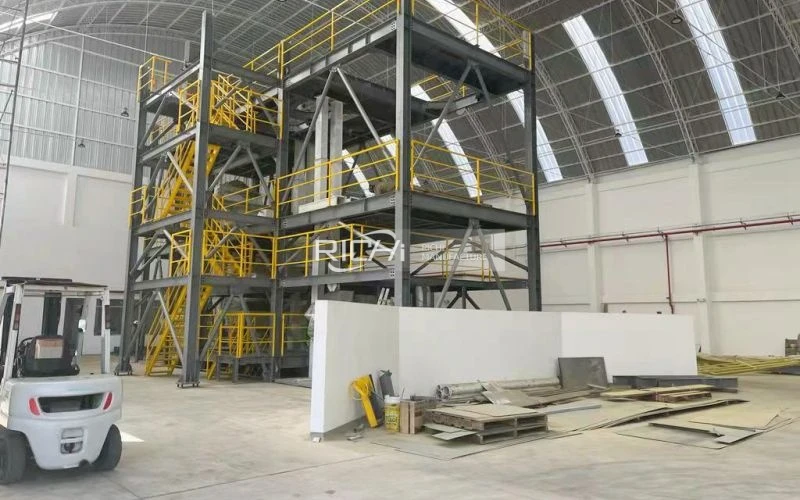
3 T/H Tropical Grass Processing
Brazil
This grass feed plant project handles tropical forage with seasonal changes in moisture and density. The production route allows grass to be chopped and conditioned before further size reduction, then combined with other feed ingredients for pellets rather than assuming every incoming batch follows the same preprocessing route.

3 T/H Seasonal Forage Line
Uruguay
A forage-linked livestock business needed a line that could accommodate changes in grass supply through the year. The configuration handles dried pasture forage with adjustable grain inclusion, allowing the same equipment to produce denser forage pellets or more formulated grass-based livestock feed as the feeding program changes.

10 T/H Large Livestock Project
Kazakhstan
A larger livestock-feed project combines dry forage, feed-suitable straw and grain within one processing complex. Separate roughage preparation prevents long fiber from overloading the grain route, while shared batching, mixing and downstream pellet sections allow the plant to switch among several forage-to-grain ratios.
From process design and workshop layout to installation, commissioning and operator training, different grass feed mill projects bring different priorities. These client comments reflect the practical issues buyers pay attention to when turning a proposed feed processing line into daily production.


Clear Engineering Planning-Russia
- Client Profile: Feed Processing Business
- Project Focus: Layout & Engineering Coordination
“We discussed the material flow and workshop layout several times before the equipment was finalized. RICHI explained why some positions and connections needed to be adjusted, and we could check access space at the same time. That made the installation stage much easier for our team.”

Responsive Technical Support-Iraq
- Client Profile: Livestock Feed Investor
- Project Focus: Installation & Commissioning
“What impressed us was that the technical support continued after the equipment arrived. When we had questions about positioning, connections and trial operation, the engineers responded quickly and gave us clear instructions. Our operators also received practical guidance before we moved into regular production.”

Flexible Feed Production-France
- Client Profile: Commercial Feed Producer
- Project Focus: Multi-Formula Production
“We did not want a grass feed mill that could only handle one fixed formula. RICHI considered the different forage materials and ingredients we planned to use, so we have more flexibility when adjusting production. This is important because our raw-material supply and customer requirements can change.”

Practical Retrofit Solution-USA
- Client Profile: Existing Feed Mill Operator
- Project Focus: Retrofit & Equipment Integration
“We already had equipment that was still in good condition, so replacing everything would not have made sense. RICHI reviewed what could remain in use and designed the new sections around it. This helped us upgrade the forage processing system without rebuilding the entire existing feed mill.”

Simpler Daily Operation-Indonesia
- Client Profile: Feed Manufacturing Company
- Project Focus: Operation & Training
“We wanted the line to be practical for the people who operate it every day, not just look good on a drawing. The material transfer arrangement is straightforward, equipment access is convenient, and the operating guidance was clear. Our team became familiar with the production process quite quickly.”

Efficient Production Control-New Zealand
- Client Profile: Livestock Feed Processor
- Project Focus: Automation & Production Control
“Automation was important for us because we wanted to reduce unnecessary manual handling while keeping production flexible. RICHI considered conveying, equipment coordination and centralized control as one system. The finished arrangement makes daily production easier to manage while still allowing us to process different forage-based feed products.”

Grass Feed Mill Solutions from 0.5 to 120 T/H
RICHI can configure a grass feed mill from compact farm and forage-processing systems to large industrial plants. Capacity should be selected according to raw-material supply, grass ratio, finished-feed demand, operating hours and future expansion rather than nominal output alone.
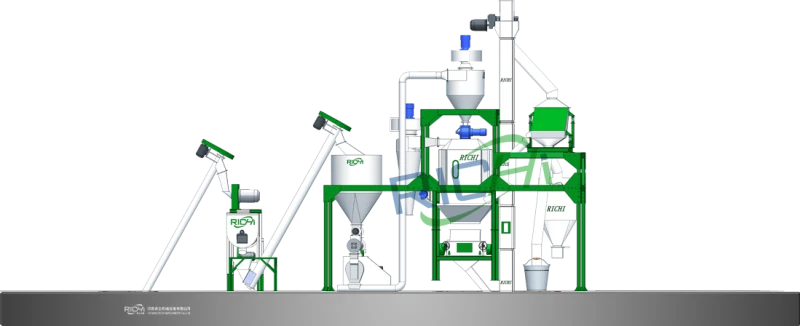
0.5–2 T/H small scale feed mill
A compact option for forage processors, livestock farms, cooperatives and first-stage investors. The line can be kept simple for prepared dry materials or expanded with grass preprocessing when required.
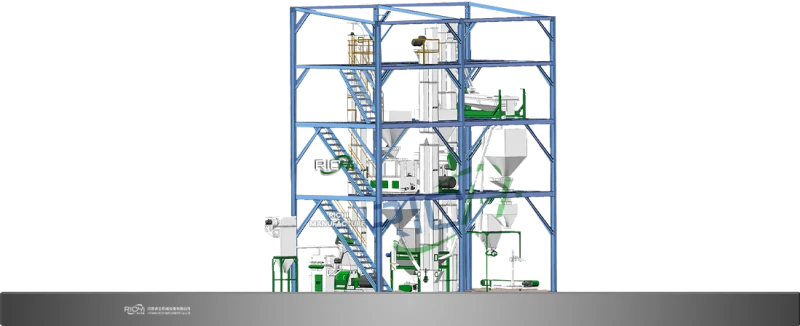
3-4 t/h animal feed production plant
Suitable for regional forage businesses and smaller commercial feed producers. This scale offers more continuous production while keeping the grass feed plant relatively compact and manageable.
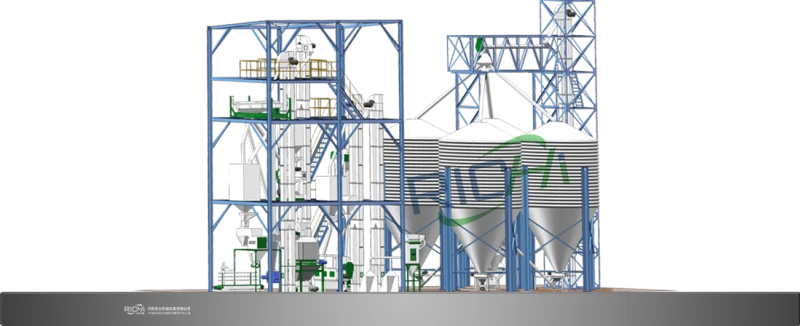
5-7 t/h animal feed pellet plant
A practical range for established feed mills, larger farms and integrated agricultural businesses supplying several livestock operations. Storage, batching and material handling become more important at this level.
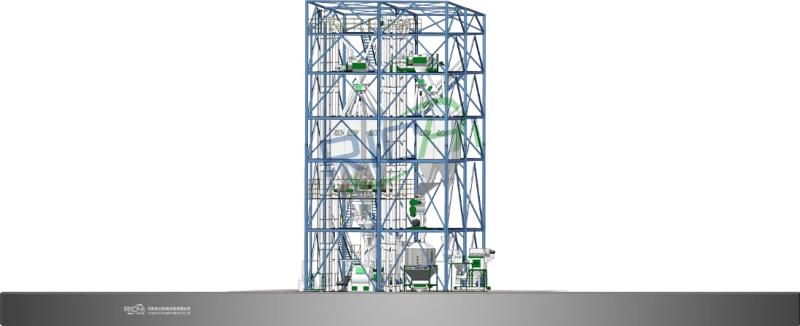
8-10 t/h animal feed processing plant
This scale suits commercial producers looking for higher automation and steadier daily output. An automatic grass feed mill can support multiple grass-to-grain ratios and different finished-feed products.
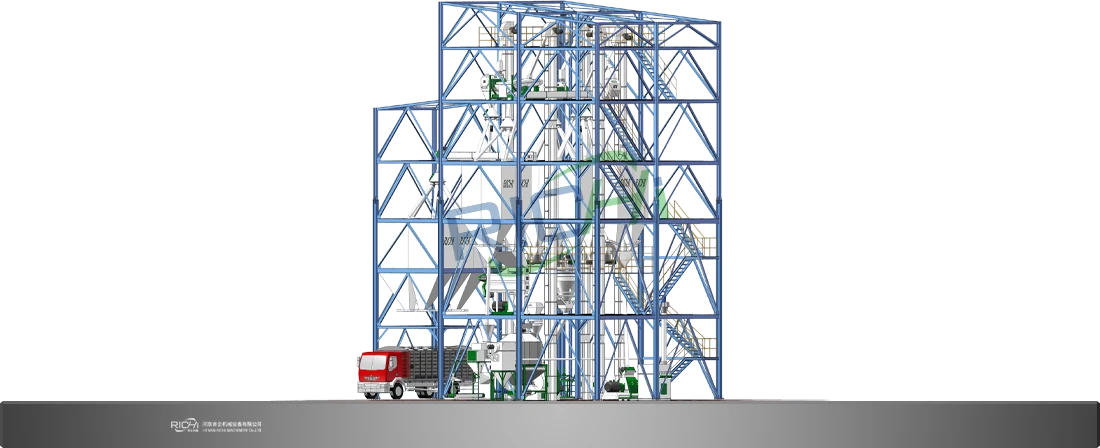
12-20 t/h feed preparation plant
Designed for larger commercial operations with stable forage supply and broader market coverage. A complete grass feed production line at this scale normally requires more coordinated receiving, storage and production sections.
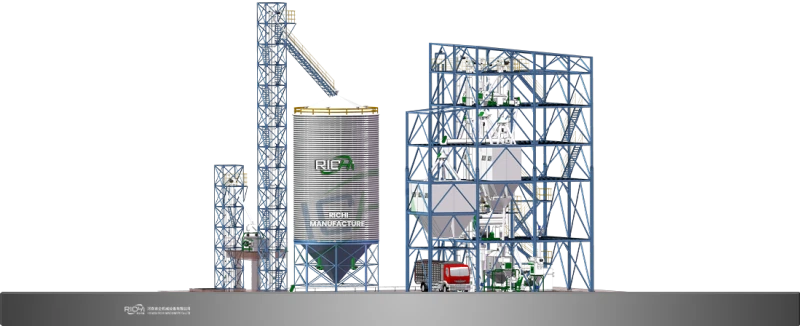
25-40 t/h feed pellet production line
A typical range for an industrial grass feed mill serving regional feed markets or integrated livestock groups. Production is increasingly organized around balanced processing sections rather than isolated machines.
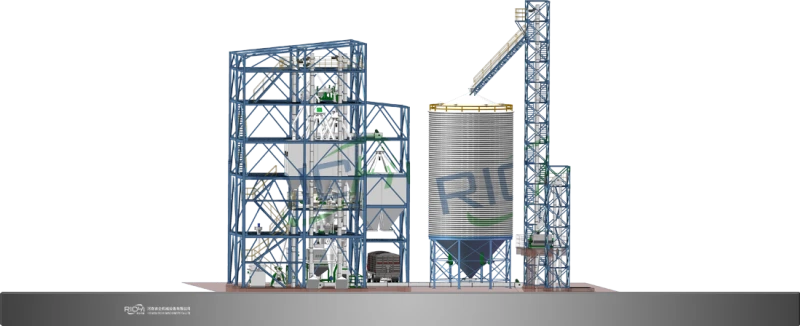
50-60 t/h commercial feed mill
Suitable for large feed producers with strong raw-material procurement and continuous sales demand. Higher-fiber projects often require parallel preprocessing or pelletizing capacity to maintain stable plant output.
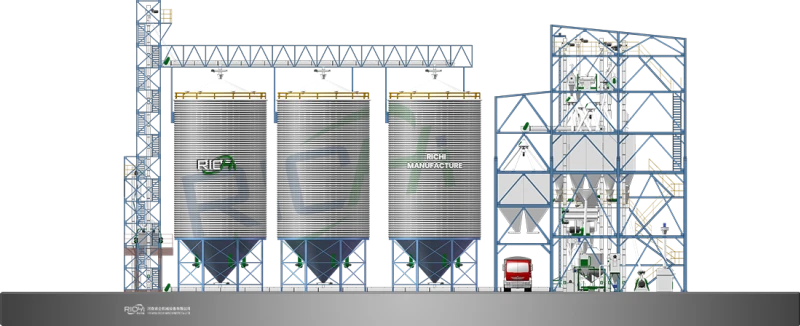
60-80t/h complete feed mill plant
This scale is normally built as a large grass feed factory with multiple processing sections, centralized material handling and stronger automation. It is intended for continuous industrial production rather than farm-level use.
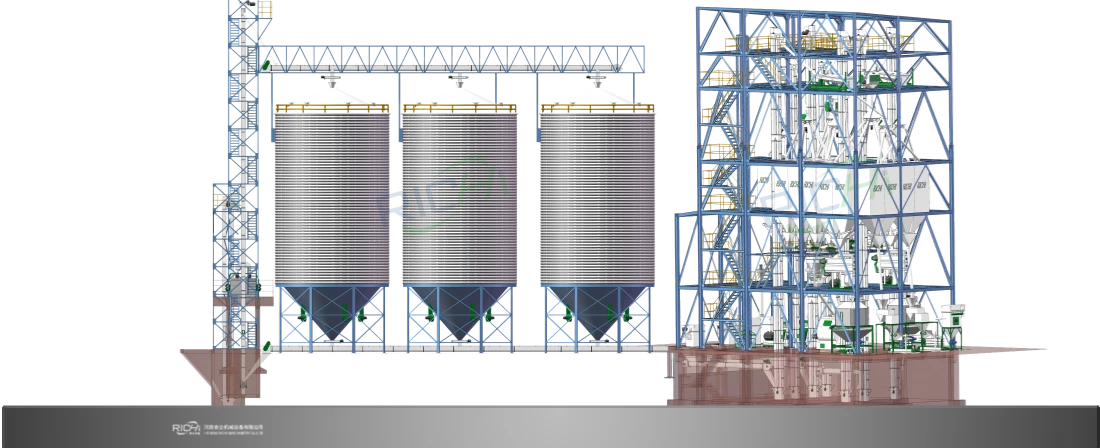
A grass feed manufacturing plant in this range is generally arranged with parallel production trains, shared storage and centralized control. It fits large commercial manufacturers serving multiple markets or production bases.
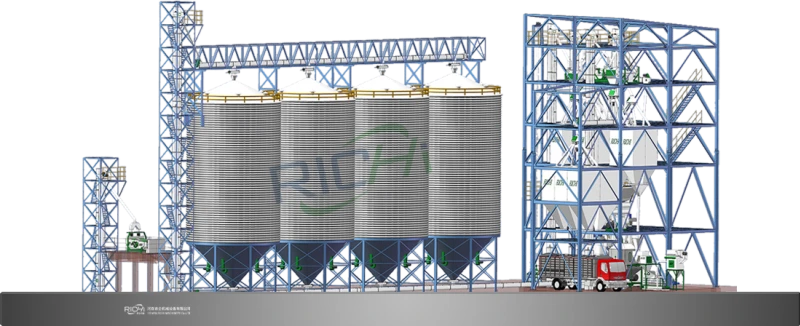
100-120 t/h feed mill engineering
This is a multi-line industrial system for customers with substantial forage supply, utilities and downstream demand. Capacity is distributed across several processing trains rather than relying on one oversized production line.
Grass Feed Mill Investment
The grass feed mill price changes far more with material condition than with capacity alone. A plant receiving dry grass meal may need little forage preprocessing, while the same output based on round bales, long loose grass or fresh forage at 40–60% moisture can require bale breaking, chopping, drying, larger fiber-handling equipment and more conveying capacity. Grass ratio matters as well: a 70–100% forage formula places a different load on grinding, feeding and pelletizing than a grain-dominant feed.
Whole Manual/Automatic Grass feed plant set up investment : $37,000 – $40,000,000
Equipment Costs :
Grass Receiving, Bale Breaking & Chopping machine price :
USD 3,000–80,000+
Cleaning & Separation Equipment Price :
USD 20,000–500,000+
Grinding System Price :
USD 5,000–150,000+
Batching & Mixing machine Price :
USD 5,000–120,000+
Batching & Weighing System Price :
$2,000-$50,000
Pelletizing System Price :
USD 10,000–350,000+
Cooling & Screening Machine Price :
USD 5,000–100,000+
Conveying, Bins & Storage System Price :
USD 10,000–500,000+
Bagging & Bulk Dispatch equipment Price :
USD 5,000–180,000+
Dust Collection & Automation equipment price :
USD 10,000–300,000+
These ranges are planning references, not a substitute for a project quotation. The same nominal capacity can produce a very different grass feed mill project cost depending on whether the plant handles dry bales, loose field grass, high-moisture forage or prepared grass meal; whether grass represents 20% or 90% of the formula; and whether the customer needs manual handling, full automation, bagging, bulk dispatch or future expansion interfaces. For a reliable budget, RICHI first checks your grass species, incoming form, moisture range, formula, target capacity, finished-feed form and existing equipment. We can then define the machinery scope separately from local CAPEX and provide a configuration, equipment quotation and investment-planning reference that matches the actual project.

Engineering Services
A successful grass feed mill needs more than a machine list. Long-fiber forage, bale feeding, seasonal moisture changes, low bulk density and changing grass-to-grain ratios all affect how the plant should be designed, manufactured and commissioned. RICHI supports the project from early process planning through production startup and later technical service.
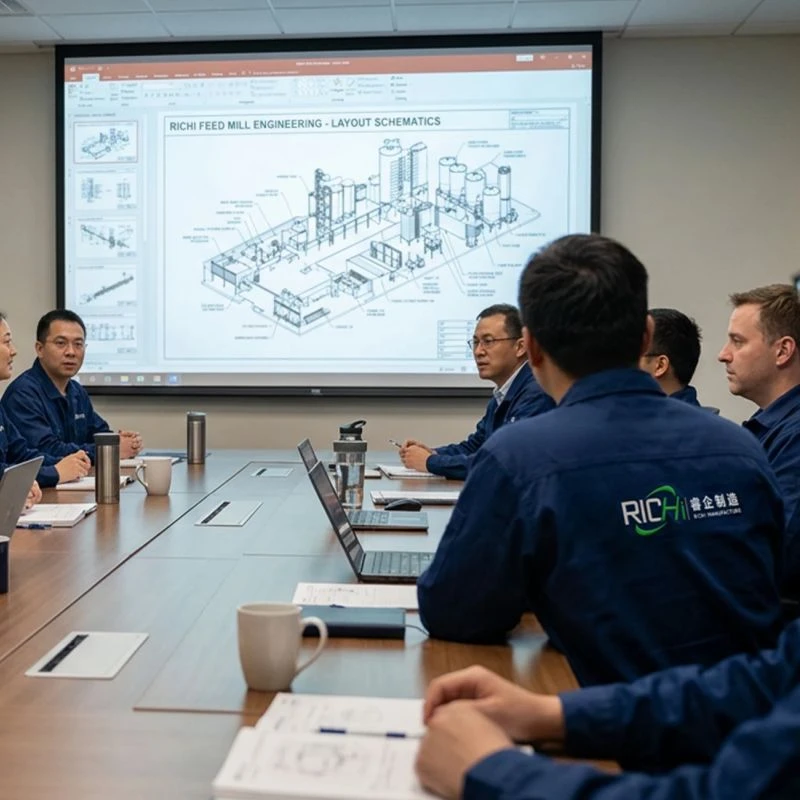
Custom Process & Plant Design
We develop the process around your actual grass form, moisture, formula, building dimensions and production target. For a grass feed plant project, this may include bale receiving, chopping, drying, multi-stage grinding, separate forage and grain routes, low-height conveying, bulk loading or future expansion interfaces. Equipment is selected after the flow is defined, not the other way around.
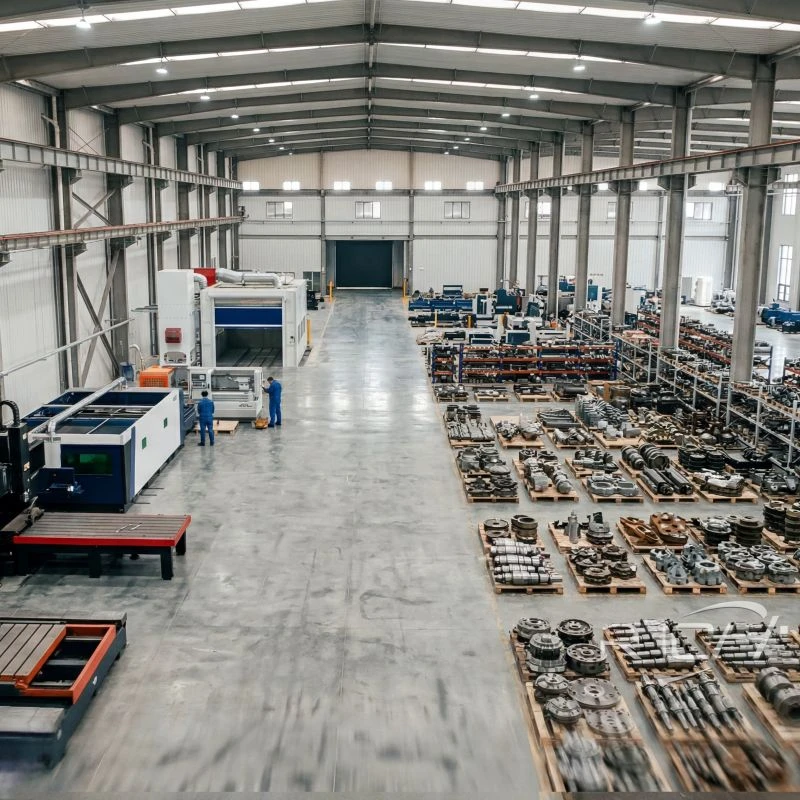
Equipment Manufacturing & Line Integration
RICHI manufactures and integrates the core equipment required for grass feed processing, including fiber preparation, grinding, mixing, pelletizing, cooling, conveying, dust control and packing systems. During production, equipment interfaces, capacity matching and material-flow compatibility are checked so that a long-fiber grass section does not become the bottleneck of the complete line.
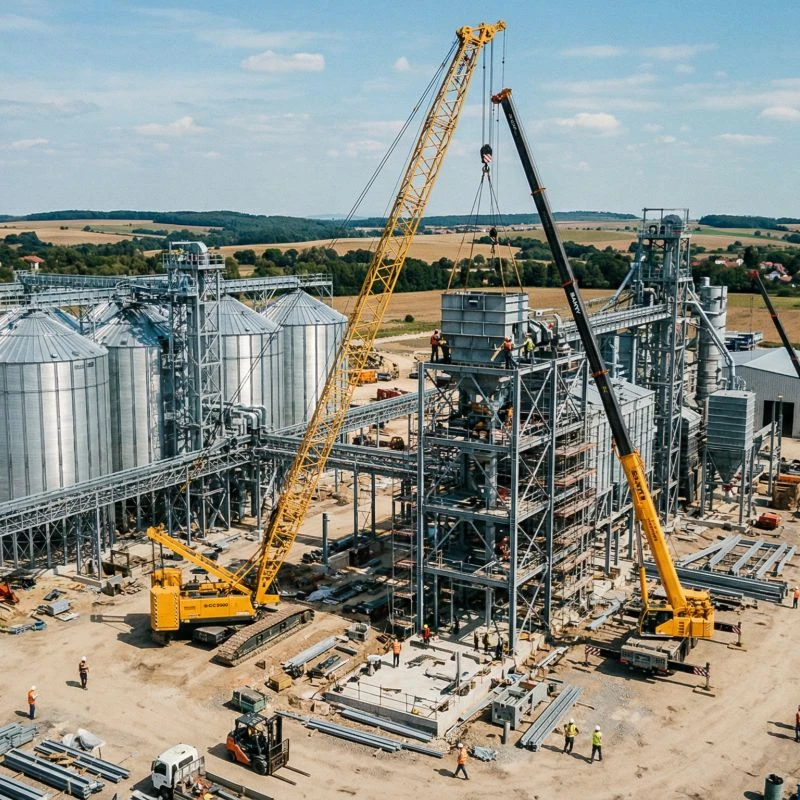
Installation, Commissioning & Training
Installation support covers equipment positioning, mechanical connection, electrical coordination and startup preparation. During commissioning, operating parameters are adjusted to the real forage condition, especially where grass moisture, particle size or fiber content differs from the original test basis. Operators are also trained on startup, shutdown, formula change and routine maintenance.
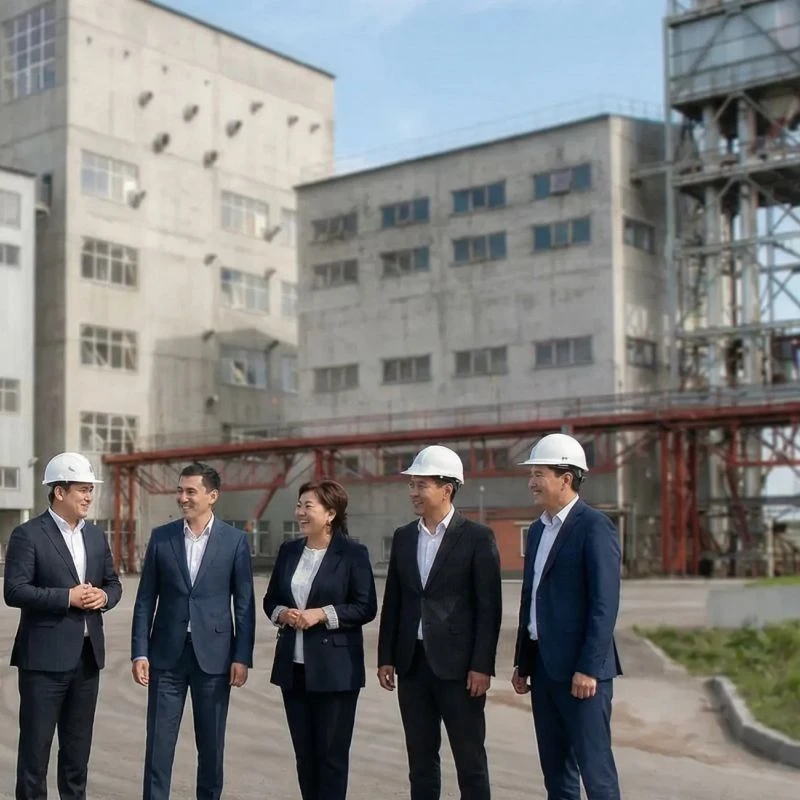
Lifecycle Technical & Spare-Parts Support
After production begins, support continues with troubleshooting, wear-part replacement, operating adjustment and future upgrade planning. If the customer later changes grass species, adds more grain ingredients, increases automation or expands the pelletizing section, the existing grass feed production system can be reviewed for modification rather than treated as a completely new project.
Free Services for Your Grass Feed Mill Planning
Before a grass feed mill moves into equipment manufacturing, many decisions need to be checked first: grass form and moisture, bale or loose feeding, drying demand, grass-to-grain ratio, workshop constraints, power supply and future expansion. RICHI provides the following planning and technical support to help customers define the project more clearly before major investment decisions are made.

Free Preliminary Project Cost Estimate
Free Process Flow & Equipment Configuration Proposal
Free Plant Layout / 3D Planning Support
Free Civil & Steel-Structure Interface Drawings
Free Electrical / Control System Planning
Free Equipment Manuals & Technical Documentation
Free Remote Installation & Operation Guidance
Free Production Testing & Operator Training Support
Complete Equipment for Grass Feed Mill Production
RICHI supplies the grass feed production equipment required from forage receiving to finished-feed handling.
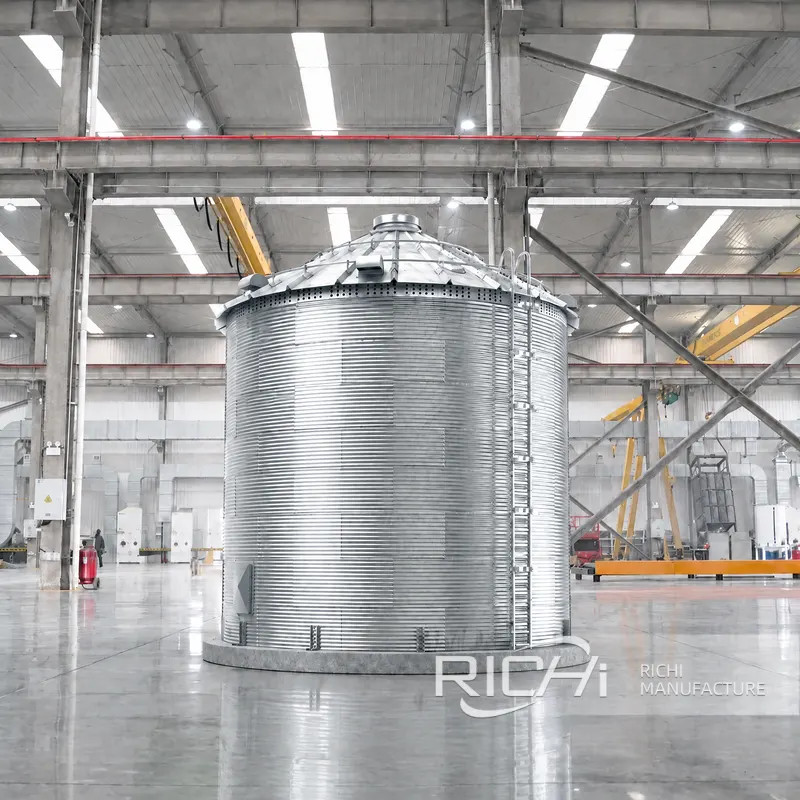
According to whether the plant processes fresh grass, dry loose forage, round or square bales, chopped grass, grass meal, or grass-and-grain formulas, the equipment scope can include bale breakers, grass choppers, dryers, forage crushers, hammer mills, cleaners, bins, batching systems, mixers, liquid-addition systems, grass feed pellet machines, coolers, screens, conveyors, elevators, silos, bagging systems, bulk-loading equipment, dust collectors and automatic control systems.
The equipment in a grass feed mill is selected as one connected production system rather than as isolated machines. Long fiber, low bulk density, moisture variation and grass percentage all affect feeding, conveying, grinding and pelletizing capacity, so RICHI matches the grass feed processing equipment to the actual material load and required finished-feed form.

Forage Bale Breaker

Forage Hammer Mill

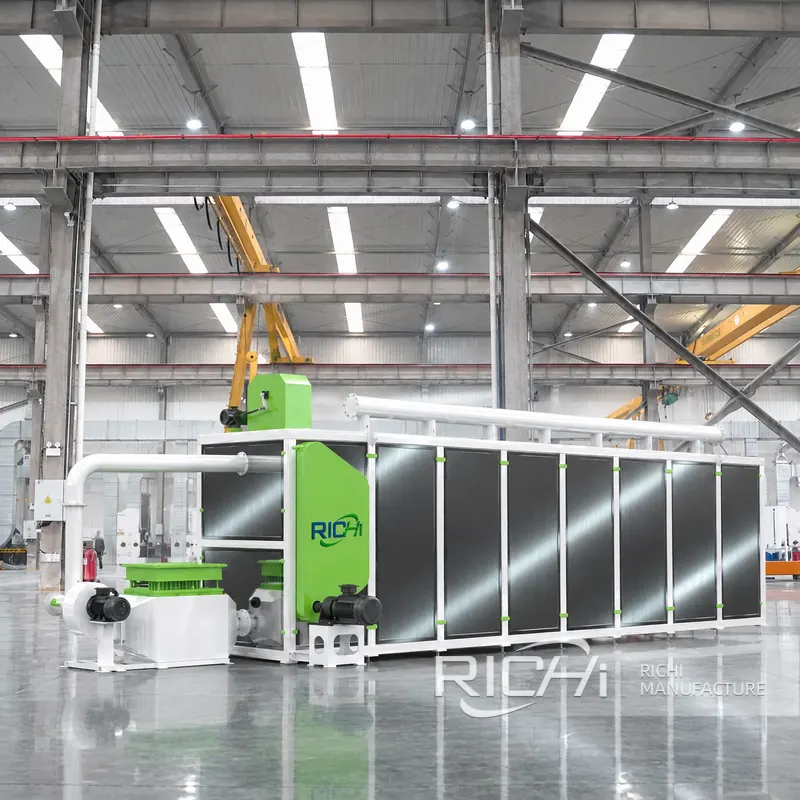
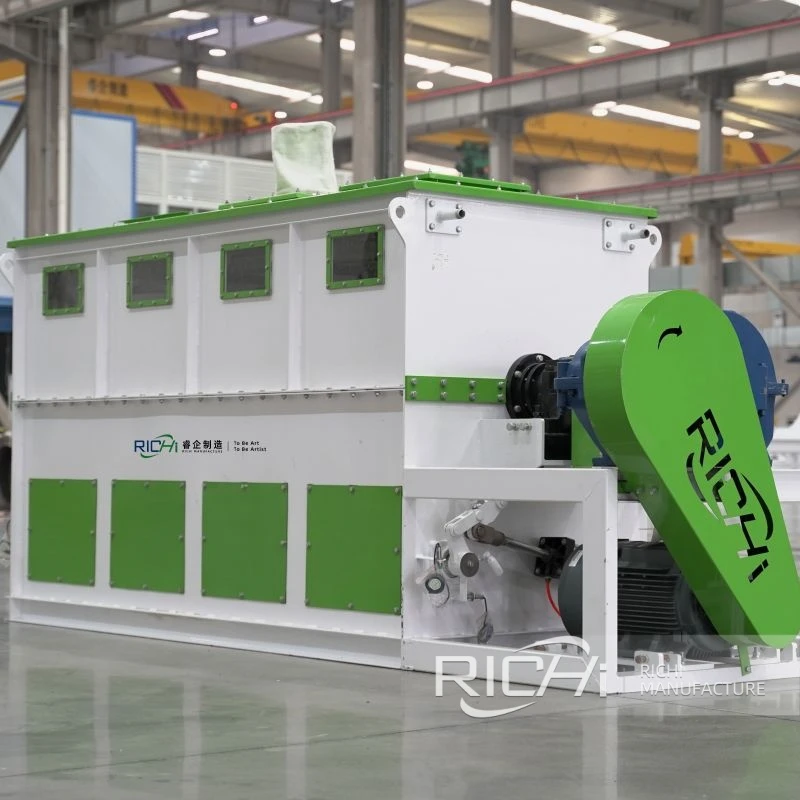


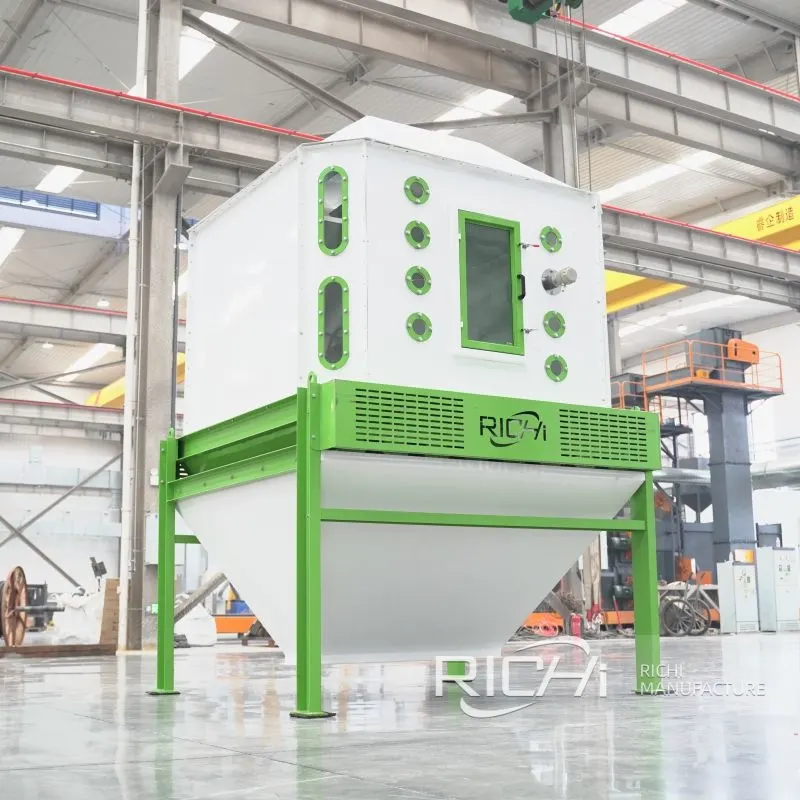
Grass Feed Cooler Machine
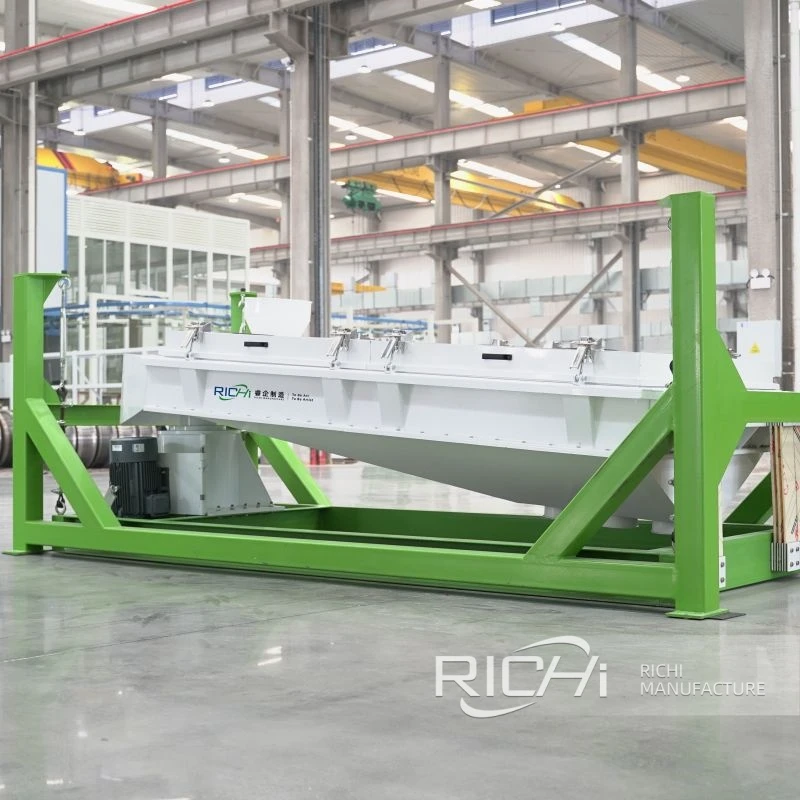
Grass Feed Screener Machine
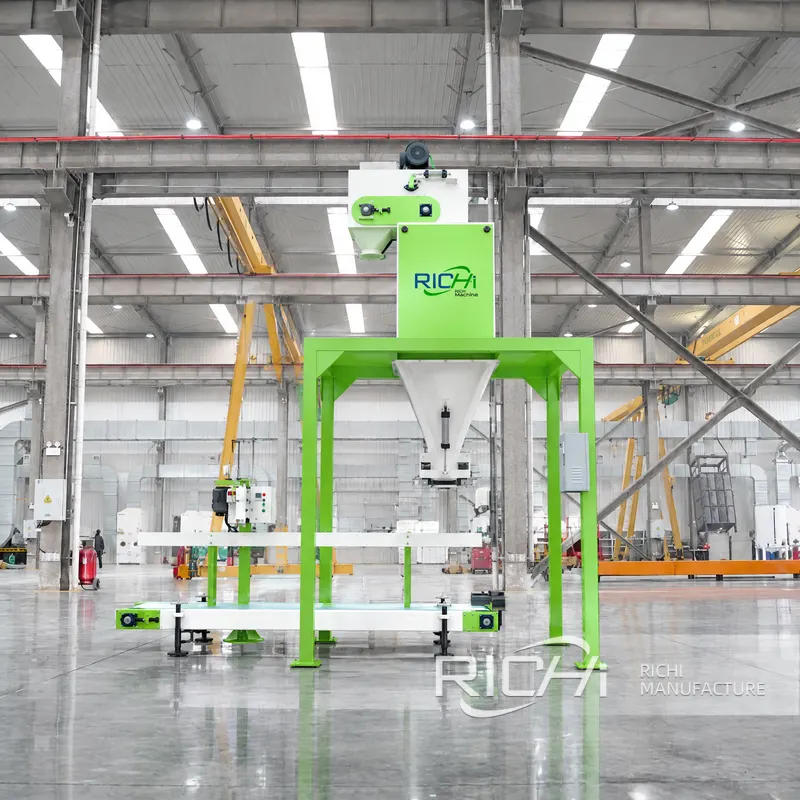
Grass Feed Bagging Machine
From grass preparation machines to pelletizing, cooling, packing and control systems, we can configure the complete set of grass feed machinery for a new plant or supply the missing sections for an existing line.
Build More Value from Grass and Forage Resources
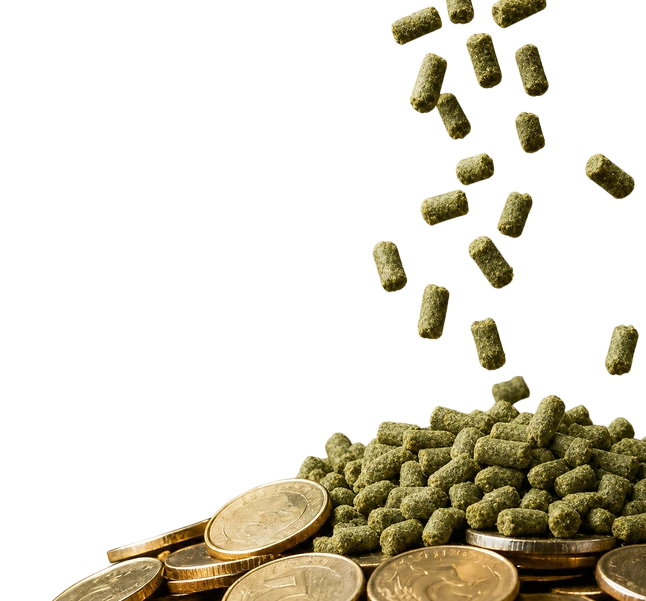
A grass feed mill can turn seasonal, bulky forage into standardized feed products that are easier to store, transport and sell throughout the year. The opportunity is strongest where processors already control grass resources, livestock customers or regional feed distribution. A well-positioned grass feed manufacturing plant can serve farm use, commercial pellet sales, contract processing or several livestock-feed markets instead of relying on one buyer or one product.
Profitability can also improve when the plant is designed for more than a single formula. A commercial grass feed plant may produce high-grass pellets, grass-and-grain feed, mash or different pellet sizes according to seasonal raw-material supply and customer demand. For investors with stable forage procurement and sales channels, this flexibility can make a grass feed production plant more resilient than a business built around one grass species or one finished product.
Explore My Grass Feed Business Plan
Raw Materials for Grass-Based Feed Production
A grass feed mill can work with ryegrass, Napier grass, elephant grass, Bermuda grass, clover, meadow grass, pasture grass and other feed-suitable forage, together with corn, barley, wheat bran, soybean meal, oilseed meals and approved crop forage where the formula requires them. What matters is not the ingredient name alone: bale density, fiber length, moisture, seasonal variation and grass percentage determine whether the line needs breaking, chopping, drying, secondary grinding, separate dosing or liquid addition.
RICHI develops the grass based feed processing plant around the customer’s actual ingredient supply and feeding program. Conventional forage can be handled through standard modules, while unfamiliar fibrous materials are evaluated for feeding value, contamination risk, processing behavior and local feed regulations before they are introduced into the production system.

alfalfa

ryegrass

napier grass

clover

meadow grass

corn

barley

Cattle Grass Feed
Cattle formulas can use a high proportion of grass, pasture forage, suitable straw and grain ingredients. Higher-fiber rations need stable forage feeding and particle-size control so bulky grass does not restrict the downstream livestock grass feed production line.products.quality.

Sheep Grass Feed
Sheep feed often combines chopped forage with grain, bran and protein ingredients, with pellet size selected for the target feeding stage. The line should allow grass percentage to change without losing batching accuracy or pellet stability.

Goat Grass Feed
Goat formulas can include grass, clover, pasture forage, bran and suitable crop forage. A flexible grass based animal feed production line is useful where customers switch between higher-forage and more concentrated formulas during the year.

Rabbit Grass Feed
Rabbit feed normally needs finer and more uniform fiber preparation than large-ruminant feed. Grass, clover and other suitable forage can be combined with grain, bran and protein ingredients before mixing and small-diameter pelletizing.

Horse Grass Feed
Horse feed can use quality pasture grass, meadow grass and other suitable forage together with bran, beet pulp, grain or protein ingredients where the formula requires them. Because horses are sensitive to feed quality and excessive fines, the line should maintain controlled fiber reduction, uniform mixing and consistent pellet quality without over-grinding the forage.
Typical Grass Feed Formula Examples
100% Mixed Grass Pellet Formula
Suitable for a grass pellet production line focused on forage densification where no grain or concentrate ingredients are required.
Ryegrass / pasture grass
40%
Meadow grass
30%
Clover
20%
Other suitable forage
10%
…
…
High-Grass Cattle Feed Formula
This type of formula requires the grass side and grain side to be prepared at suitable particle sizes before batching and mixing.
Grass / forage
65%
Corn
15%
Wheat bran
10%
Soybean meal
7%
Minerals / premix
3%
Grass + Grain Sheep Feed Formula
A grass and grain pellet production line for this formula needs reliable dosing because the forage-to-grain ratio directly affects throughput and pellet behavior.
Grass / forage
50%
Barley
20%
Corn
12%
Wheat bran
10%
Protein meal + premix
8%
Grass + Bran Goat Feed Formula
This is suitable for processors that work with relatively high grass inclusion but still need accurate addition of concentrate ingredients.
Grass / clover
55%
Wheat bran
20%
Corn
10%
Oilseed meal
10%
Minerals / premix
5%
Grass-Based Rabbit Feed Formula
Rabbit-feed production places more emphasis on controlled grinding and smaller pellet diameter than cattle or sheep forage pellets.
Grass / forage
45%
Bran
20%
Grain
15%
Protein meal
15%
Minerals / premix
5%
Grass + Crop-Forage Compound Formula
Only crop materials with genuine feed value and acceptable safety should be used. Their fiber length and density may require a dedicated roughage feed plant configuration before mixing.
Grass / forage
40%
Feed-suitable crop forage
25%
Corn / barley
15%
Bran
10%
Protein ingredients + premix
10%
The above formulas illustrate how ingredient structure can change between forage-only pellets and formulated grass-based feed. They are examples for equipment and process planning rather than nutritional prescriptions; actual formulations should be determined by qualified feed specialists according to animal needs, ingredient quality and local regulations.
Grass Feed Mill FAQs
What Information Do You Need to Design My Grass Feed Mill?
+
To design the right grass feed mill, we first need to understand the material you actually receive and the feed you plan to sell or use. Capacity alone is not enough; two 5 T/H projects can require very different equipment when one handles dry grass meal and the other receives fresh forage or compressed bales.
Before configuring a grass feed processing system, we normally confirm:
- Grass type: Napier, elephant grass, ryegrass, pasture grass, clover or other forage.
- Incoming form: round bale, square bale, loose grass, chopped grass or grass meal.
- Moisture range: including seasonal minimum and maximum rather than one average figure.
- Formula structure: 100% grass or the percentage of grain, bran, protein meal and other ingredients.
- Finished products: pellets, mash, meal, different pellet diameters, bagged feed or bulk feed.
- Required output: hourly capacity, operating hours and expected annual production.
- Existing conditions: available machines, workshop dimensions, power supply and equipment that should be reused.
- Future plans: additional formulas, higher capacity, a second pellet line or greater automation.
With these details, RICHI can decide whether the project needs bale breaking, chopping, drying, one- or two-stage grinding, separate grass and grain preparation, liquid addition, bulk loading or other modules. For a turnkey grass feed mill, the same information is also used to develop the equipment configuration, layout, control logic and expansion interfaces before manufacturing begins.
How much does a complete grass feed mill cost?
+
A complete grass feed mill price commonly starts around USD 37,000 for a small grass/crop line and can reach USD 620,000 or more for a 20 T/H-class system; larger automatic plants cost more. The main price drivers are grass moisture, bale handling, drying, grass percentage, capacity, automation and whether the quotation includes only pellet production or the complete preprocessing system.
My raw material is round and square bales. How do you feed them continuously?
+
We normally open the bales before controlled feeding rather than sending compressed blocks directly to a hammer mill. A grass bale processing line may use bale breaking, metered conveying and primary chopping so long fiber enters the next crusher at a stable load instead of arriving in large surges.
Can the same line receive both grass bales and loose grass?
+
Yes. Separate bale and loose-grass feeding points can merge after the materials reach a compatible size and moisture condition. This is often more reliable than forcing two very different material forms through one receiving machine.
My Napier grass is about 50–60% moisture. Do I need a dryer?
+
Yes, for a conventional dry-pellet process, Napier grass at 50–60% moisture normally requires substantial moisture reduction before fine grinding and pelletizing. A Napier grass feed production line should size chopping and drying from actual water-removal load, not only from tonnes of wet grass entering the plant.
If my grass is already below 20% moisture, can I remove the dryer?
+
Usually yes. Stable dried forage at about 20% moisture or below often allows the dryer to be omitted, although the final moisture required before pelletizing still needs to be confirmed from the grass type and formula. Removing an unnecessary dryer can materially reduce both investment and energy use in a dry grass feed processing line.
We already buy grass meal. Do we still need the first crusher?
+
Not necessarily. If particle size is already suitable and consistent, a grass meal production line can feed the material directly toward batching, mixing or final fine grinding. We would first check particle distribution, moisture and foreign-material content before deleting the first reduction stage.
Will a 100% grass formula give the same output as 30% grass plus grain?
+
No. On the same pelletizing system, output generally falls as the proportion of fibrous grass rises. High-grass formulas have lower bulk density and place more load on feeding, grinding and pelletizing, so a capacity quoted for 6 mm grain-rich pellets should not automatically be used as the capacity for 100% forage pellets.
Why does long grass keep bridging in bins and blocking feeders?
+
Long, light fiber does not flow like corn or meal, so standard grain bins and gravity feeders can bridge or form channels. For a grass grinding and pelletizing line, we can use anti-arching devices, suitable bin geometry, forced feeding and controlled fiber length before storage to stabilize flow.
We use grass, corn, barley and bran. Should they share one hammer mill?
+
Not always. Grass and grain have very different bulk density, fiber structure and grinding behavior, so larger grass and grain feed production line projects often prepare the forage and grain separately before batching. A shared mill is practical only when material size, formula range and required throughput make it efficient.
Our grass changes a lot between wet and dry seasons. Can output stay stable?
+
It can be kept within a controlled operating range, but you should not expect identical output without adjusting the process. Seasonal moisture, fiber toughness and bulk density affect drying load, grinding amperage and pellet-mill feeding, so buffer capacity and operating parameters should be designed for the real seasonal range.
I already have a grain feed mill. Can I add a grass section instead of building another plant?
+
Yes, this is a common retrofit approach. We can add bale breaking, grass chopping, drying when required, fiber grinding and dedicated conveying, then connect the prepared grass to suitable existing batching, mixing or pelletizing equipment after checking spare capacity.
Can I keep my existing pellet mill, mixer and packing machine?
+
Yes, if their capacity, condition and interfaces are suitable for the new formula. A reliable grass feed equipment manufacturer should check motor load, inlet size, mixer volume, pellet-mill feeding and downstream capacity before deciding what can genuinely be reused.
We need 1–2 T/H now but may expand to 4–5 T/H. How should we build phase one?
+
Size the shared infrastructure for expansion from the beginning where the budget allows. Main conveyors, control cabinets, bin positions, workshop openings and electrical interfaces can be reserved so phase two adds machines without dismantling most of the original grass feed production system.
Can we reserve space now for a second pelletizing line later?
+
Yes. For a planned expansion, we can reserve floor space, elevator outlets, bin connections, cable routes and finished-product handling capacity for a future second line. This is usually cheaper than redesigning a crowded plant after production has already started.
My workshop is only 6–7 meters high. Do I need a tall tower layout?
+
No. A low building can use more horizontal conveying, screw conveyors, drag conveyors and split-level equipment arrangements. A grass feed processing line should follow the real workshop envelope rather than forcing the customer to rebuild a high tower simply to match a standard layout.
Our groundwater level is high. Is a receiving pit compulsory?
+
No. Grass and grain can be received through above-ground feeding stations when excavation is undesirable. The trade-off is normally more horizontal conveying and careful vehicle/unloading planning, but a deep pit is not a compulsory feature of a complete grass feed plant.
Can you retrofit an old building with narrow doors and irregular column spacing?
+
Yes, provided the structure and available access can support the required equipment. For retrofit projects, we check door openings, column grid, clear height, maintenance routes and lifting access first, then split or reposition equipment where necessary rather than assuming a new building.
We only want grass mash feed. Which machines can we remove?
+
You can normally remove the pellet mill, cooler and pellet screening section when mash is the final product. The remaining grass feed manufacturing system can focus on grass preparation, grinding, batching, mixing and the required bulk or bagged dispatch.
Can one line make both pellets and grass mash?
+
Yes. The system can create a branch after mixing so part of the product goes to mash storage or packing while the rest continues to pelletizing. The diversion point, contamination control and storage arrangement should be designed into the complete grass feed mill rather than added casually later.
Can one pellet mill make 4 mm, 6 mm and 8 mm grass pellets?
+
Yes, by changing the ring die and confirming the formula can run stably at the required diameter. Smaller holes usually increase resistance and can reduce output, so a grass feed pellet mill for sale should be selected from the most demanding product rather than the easiest diameter.
We sell mostly in bulk. Do we need a bagging system?
+
No. Finished pellets can move from the cooler and screen to a finished-product bin and then directly to bulk trucks. If both bulk and bagged sales are planned, we can split the discharge so one grass feed pellet plant supports both routes.
We are in Jordan and use imported dry forage. Do we need a drying system?
+
Usually not if the purchased forage arrives consistently dry enough for processing. In this type of forage feed plant, the investment is better focused on bale handling, fiber reduction, formula dosing and finished-feed handling instead of installing a dryer with little useful load.
We process fresh elephant grass in Tanzania. Can it go directly into the pellet mill?
+
No. Fresh elephant grass normally needs chopping and significant moisture reduction before conventional dry pelletizing. A high moisture grass processing line should be sized around wet-feed input, water removal and dried-material output so the quoted pellet capacity is not confused with tonnes of fresh grass entering the dryer.
In Ethiopia we have grass, straw and grain. Can all three run through one line?
+
Yes, but they should not necessarily follow the same preparation route. Long straw and grass need suitable chopping and fiber grinding, while grain can use its own cleaner and mill before the ingredients meet at batching and mixing in a roughage feed production line.
Labor is expensive in Denmark. How far can the plant be automated?
+
Receiving, conveying, batching, recipe control, pelletizing, finished-bin management and bagging can all be automated to different levels. For an automatic grass feed production line, we first identify where manual handling currently causes the most labor, inconsistency or safety exposure instead of automating every operation without economic benefit.
Our power supply in Pakistan is limited. Can the line run with a lower electrical load?
+
Yes, the process can be arranged to reduce simultaneous starting loads and run some sections in sequence. We also check whether drying heat is thermal rather than electrical, select appropriate motor starting methods and separate essential from non-essential loads before finalizing an industrial grass feed production line.
Grass dust and fiber collect everywhere in our current plant. How would you improve that?
+
Control starts by reducing uncontrolled drop points and enclosing the major transfer, grinding and screening locations. Proper aspiration, dust collection, housekeeping access and fire-risk control are especially important because dry grass produces light fiber and dust that behave differently from dense grain particles.
We change formulas frequently. How do you control residue and cross-contamination?
+
We reduce unnecessary dead zones, arrange a logical production sequence and provide access for cleaning at bins, conveyors and mixers. Where products have stricter separation requirements, separate storage or processing routes may be more appropriate than relying only on flushing material.
For a 30 T/H plant, should I buy one large line or several parallel lines?
+
Several balanced processing trains are usually safer for a 20 T/H+ high-forage project than relying on one oversized route. Parallel grass preparation and pelletizing can improve maintenance flexibility and prevent one machine from stopping the full commercial grass feed production line.
What is included when you quote a grass feed mill for sale?
+
The quotation should clearly state which machines, motors, control panels, conveyors and supplied accessories are included and which project costs are outside the machinery scope. For a grass feed mill for sale, freight, import tax, civil works, local electrical installation, boiler or heat source, local erection labor and working capital are normally identified separately so the buyer can calculate total project CAPEX correctly.
Can Napier grass and elephant grass use the same line?
+
Usually yes, but the operating parameters may differ. Both are long-fiber tropical grasses, yet actual moisture, stem thickness and maturity can change chopping load, drying demand and grinding capacity. An elephant grass feed production line should therefore be sized from the real incoming material, not only from the grass name.
Is ryegrass easier to pellet than Napier grass?
+
Generally yes when the ryegrass is already dry and properly chopped. Ryegrass usually enters a ryegrass feed production line with lower moisture and less heavy stem material than fresh tropical grass, so drying and first-stage size reduction can be simpler.
Our Bermuda grass is 60% of the formula and corn is 40%. What limits capacity?
+
The forage side will usually determine the practical output. At 60% Bermuda grass, feeding density, fiber grinding and pellet-mill load matter more than in a grain-dominant formula, so we size the grass based feed pellet plant around the higher-fiber recipe rather than the easiest formula.
Can clover and grass be processed together?
+
Yes, if both materials are suitable for the feed formula and their moisture is under control. A clover feed production line can share downstream batching and pelletizing with grass, while particle size and feeding settings may need adjustment because clover and fibrous grasses do not always flow the same way.
We use different pasture grasses through the year. Do we need separate lines?
+
No. One pasture grass feed production line can handle several forage species if receiving, grinding and control settings are designed for the expected seasonal range. The important point is to define the wettest, driest, lightest and most fibrous materials before equipment selection.
We use kikuyu grass in Colombia. Can we mix it with corn and bran?
+
Yes. Kikuyu can be used as the forage portion of a grass-and-grain formula after suitable chopping, drying where necessary and size reduction. For this kind of grass based feed plant, we normally keep forage preparation separate from grain preparation until batching and mixing.
Our imported Rhodes grass is already very dry. Should we still install a dryer?
+
Usually no. If the forage arrives consistently within the moisture range required for downstream processing, a dryer would add cost without useful work. A dry grass feed processing line can focus instead on bale opening, grinding, mixing and pellet production.
Can timothy grass be made into pellets in Finland without changing the whole plant?
+
Yes. Timothy can be processed in a forage pellet production line using conventional forage preparation, but winter storage condition, bale density and actual moisture should be checked because frozen or unevenly stored forage can behave differently at feeding and grinding.
We use Italian ryegrass in Japan. Can the line fit into a small factory?
+
Yes. A compact grass pellet processing line can use low-height conveying and more horizontal equipment arrangement where building height is restricted. The material route should still allow enough space for grass receiving, fiber reduction and maintenance access.
Can Guinea grass be pelletized for commercial livestock feed in Ghana?
+
Yes, provided the grass is harvested, dried and stored to a suitable feed condition. A grass pellet making plant for Guinea grass should account for its stem-to-leaf ratio and seasonal moisture because these directly affect chopping, grinding and pelletizing load.
We have Brachiaria grass plus soybean meal. Do we need two grinding systems?
+
Often yes for medium or larger plants. Brachiaria requires fiber-oriented size reduction, while soybean meal may need little or no grinding, so a grass based pellet feed production line should avoid sending every ingredient through the same machine without a process reason.
Can 70% grass and 30% barley run on the same pellet mill as 30% grass and 70% barley?
+
Yes, but the output will usually be different. The 70% grass formula has lower bulk density and higher fiber load, so the pellet mill and feeder normally run at a lower stable throughput than with the 30% grass formula.
We use ryegrass, clover and meadow grass together. Should each material have its own bin?
+
Separate bins are useful when the recipe changes by grass type or when materials have noticeably different density and moisture. If the three grasses always enter in a fixed blend, a shared preparation route may be simpler; the grass feed processing system should reflect how you actually purchase and formulate them.
Can fresh grass and dried grass of the same species enter one production line?
+
Yes, but they should not enter the same preprocessing route immediately. Fresh material may need chopping and drying, while dried material can bypass the dryer, after which both streams can join the grass pellet production line once moisture and particle size are compatible.
Does mature grass reduce pellet output compared with young grass?
+
It often can. Mature grass generally contains more structural fiber and tougher stems, which can increase chopping and grinding load and make feeding less dense. The grass feed pellet production line should therefore be tested against the more difficult harvest condition rather than only young, soft forage.
Our grass content is only 20–30%. Do we still need dedicated grass equipment?
+
Usually yes if the forage arrives as bales, long grass or coarse chopped material. Even a low grass percentage can require dedicated receiving and fiber reduction before the prepared forage joins the grain side of a grass grain feed production line.
We want to change from 80% grass feed to 50% grass feed during the year. Can one line handle both?
+
Yes. The line can handle both formulas if feeders, batching, grinding and pelletizing are selected for the higher-fiber 80% recipe. The lower-grass formula will normally run at a different throughput and may require different conditioning settings.
We use Napier grass plus wheat bran and oilseed cake. Where should these materials meet?
+
They should normally meet after the grass has completed its required preprocessing. In a Napier grass feed production line, the Napier may need chopping, drying and grinding first, while bran and oilseed cake can enter through separate dosing points before mixing.
Can grass be mixed with rice straw for feed production in Bangladesh?
+
Yes, where both materials are suitable for the intended livestock and local feed requirements. A roughage pellet production line should process the longer straw and grass to compatible particle sizes before mixing, while avoiding the assumption that every crop residue is automatically feed-safe.
I do not know the exact grass species. Can you still design the line?
+
Yes, but we need material information before final equipment selection. Photos, bale or loose form, average fiber length, bulk density, moisture range, harvest condition and a sample where practical can help us determine whether the project needs a loose grass processing line, bale-processing section, drying system or simpler dry-forage route.