
 0086-138 3838 9622
Grain Feed Mill


A grain feed mill can serve growers using their own harvest, grain processors entering feed production, cooperatives and commercial feed manufacturers. RICHI configures each grain feed plant for whole cereals, broken rice, pre-ground meals and milling by-products such as wheat bran and rice bran. Moisture and particle size determine storage and preparation: wetter grain may need drying before dry storage, while suitably prepared meals can bypass grinding.
We manufacture grain feed production line equipment for poultry, pig and ruminant formulas using cereals, protein ingredients and premixes, with dedicated processing routes for aquafeed and pet food. Our engineers check which existing machines can be reused and fit the layout to your workshop. RICHI equipment has reached more than 140 countries and regions, supported by installation guidance, commissioning and training. Dedicated systems for corn- and wheat-based cat litter are also available.
Discuss My Grain Feed Project
Grain Feed Products Matched to Your Market
Your finished feed specification determines how a grain feed mill is equipped. RICHI supplies systems for the five product groups below, matching grain preparation, recipe dosing and finishing equipment to the intended animal and sales market.

Ground Grain Meal
Maize, wheat, barley and sorghum can be cleaned and milled into ingredients for feed manufacturers or farm ration mixing. RICHI matches hammer mill screens and airflow to the required grind, with around 500–800 µm mean particle size as a reference for selected pig feed applications.
Typically 500–800µm

Complete Mash Feed
A grain mash feed production line batches and mixes ground cereals with protein meals, minerals and premixes for poultry or pigs. Layer mash retains a graded structure with a substantial 1–3 mm fraction, while pig formulas generally require finer grinding.
Typically 1–3mm

Compound Feed Pellets
Recipes based on maize or wheat call for different conditioning and die settings. Our grain feed pellet production line incorporates mixing, steam conditioning, ring-die pelleting, cooling and screening for products such as 3–4 mm poultry or pig pellets and 4–12 mm ruminant pellets.
Typically 2–12mm

Graded Feed Crumbles
Approximately 1–3 mm crumbles suit broiler starter and other diets for young poultry made from balanced cereal formulas. A grain crumble production line breaks cooled pellets with adjustable roller gaps, then screens the product to separate oversize pieces and fines.
Typically 1–3mm

Extruded Feed Products
Finely ground maize, wheat or rice is blended with protein ingredients before extrusion, drying, coating and cooling. RICHI configures dies and process settings for products such as 2–4 mm fish feed pellets or 4–18 mm dog kibble, with size and density specified for each recipe.
Typically 2–18mm
One grain feed mill can be arranged with separate meal, mash, pellet and crumble outlets, allowing different products to share suitable upstream equipment. For combined poultry and livestock production, we plan ingredient routing, finished feed bins and changeover procedures; an extrusion branch is sized for the grinding, drying and coating requirements of the selected fish or pet food recipes.
Plan My Feed Product Range
Grain Feed Mill videos
Grain feed production requirements vary with livestock type, production scale and the intended market. These projects range from small farm-based systems to industrial and commercial grain feed mills, covering poultry, beef cattle, dairy cattle, swine and broader livestock applications. Use the stated capacity and customer application as starting points when evaluating a suitable grain feed mill configuration.
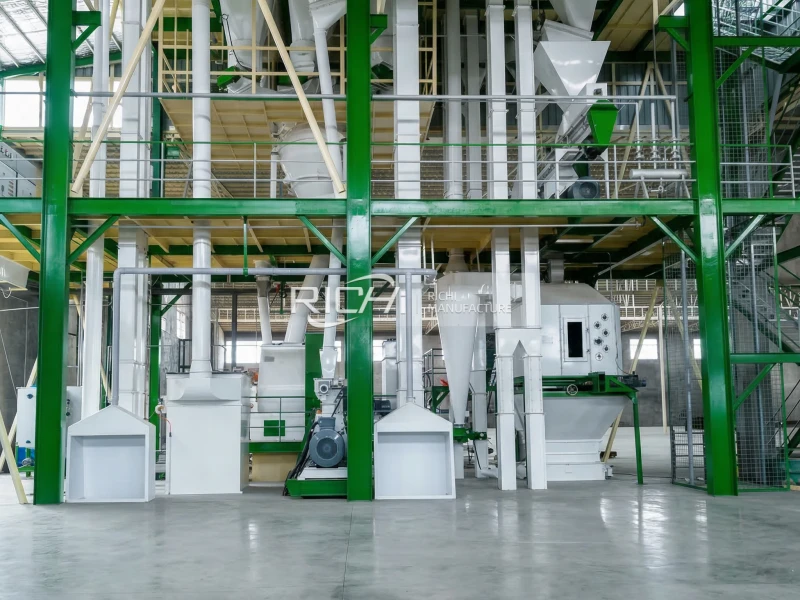

【10 T/H Industrial Grain Feed Plant in Afghanistan】This 10 T/H industrial grain feed plant provides a reference for businesses planning higher-volume grain feed production. At this scale, capacity planning should consider grain receiving and storage, processing throughput and finished-feed handling, with the final equipment scope determined by the actual product range.
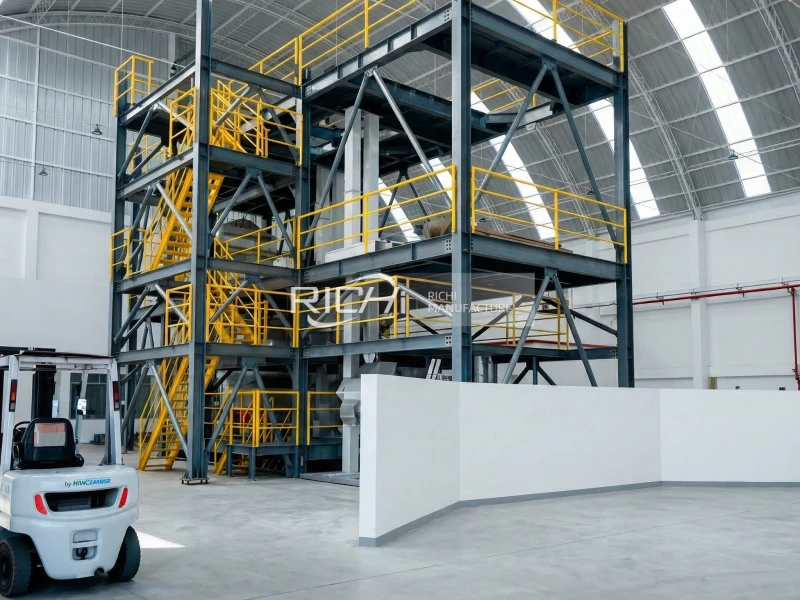
【5 T/H Livestock Grain Feed Mill in Brazil】A 5 T/H livestock grain feed mill provides a mid-capacity reference for businesses serving livestock feed demand. For a comparable project, locally available grain resources, expected production volume and the required feed forms should guide equipment selection and the balance between processing capacity and investment.
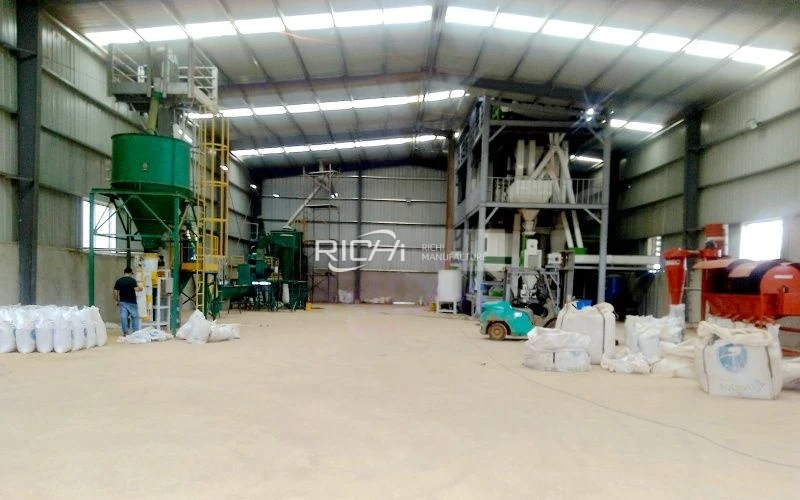
【3–4 T/H Beef Cattle Grain Feed Plant in Mexico】This 3–4 T/H grain feed plant is specifically designated for beef cattle feed. Buyers planning a similar system should establish the ration requirements, target particle size and finished-feed form first, as these factors determine the necessary grain grinding and subsequent processing arrangements.

【1–2 T/H Farm Grain Feed Plant in France】This 1–2 T/H farm grain feed plant represents a compact, on-farm production scale. It is a useful reference for farmers assessing whether processing grain locally fits their feed demand, raw-material storage, available labor and daily operating schedule.
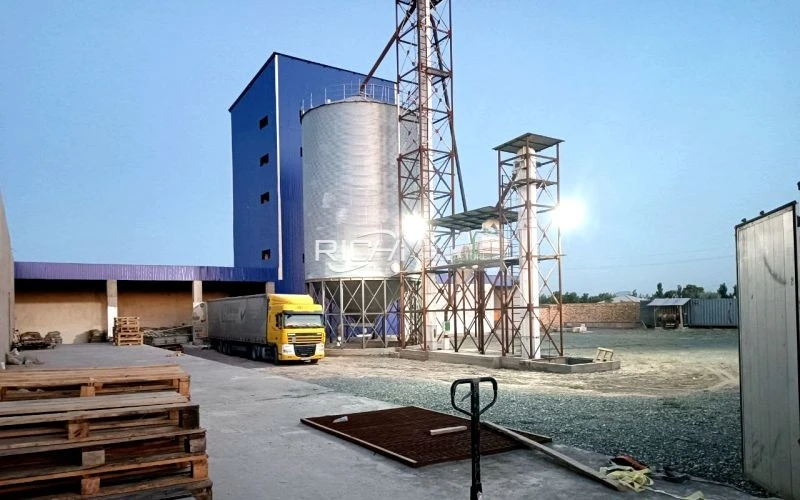
【10 T/H Commercial Grain Feed Factory in Uzbekistan】This 10 T/H commercial grain feed factory is a reference for businesses supplying feed beyond their own farm operations. Production planning should account for market demand, grain procurement, product scheduling and the level of batching, conveying and packing automation actually required.
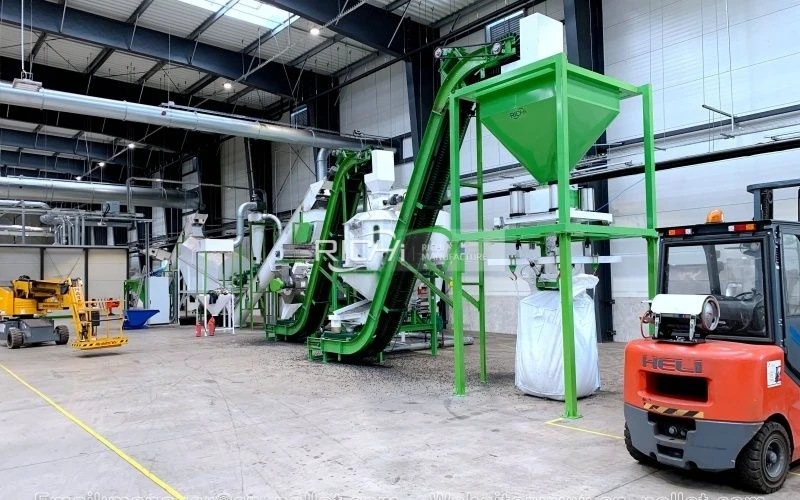
【15 T/H Commercial Grain Feed Mill in Uganda】With a stated capacity of 15 T/H, this commercial grain feed mill provides a higher-output reference for regional feed supply. Buyers considering a similar grain feed production line should assess raw-material continuity and ensure that the planned processing and dispatch capacity can support the target output.

【5 T/H Chicken Grain Feed Production Line in Oman】This 5 T/H chicken grain feed production line is specifically associated with chicken feed production. For poultry-focused projects, the production route should be selected according to the formula, bird growth stage, required particle size and target finished-feed form.

【10–12 T/H Poultry Grain Feed Mill in Zimbabwe】This 10–12 T/H poultry grain feed mill uses two SZLH350 grain-feed pellet mills, each with a stated capacity of 5–6 T/H. The configuration provides a practical reference for buyers evaluating multiple pellet mills as a way to meet a larger poultry-feed production target rather than relying on one pellet mill alone.

【5–6 T/H Dairy Cattle Grain Feed Mill in Kazakhstan】This 5–6 T/H dairy cattle grain feed mill is the dairy-focused example in this project group. A comparable system should be sized around herd feed demand and the required rations, with ingredient handling and formula flexibility considered before final equipment selection.
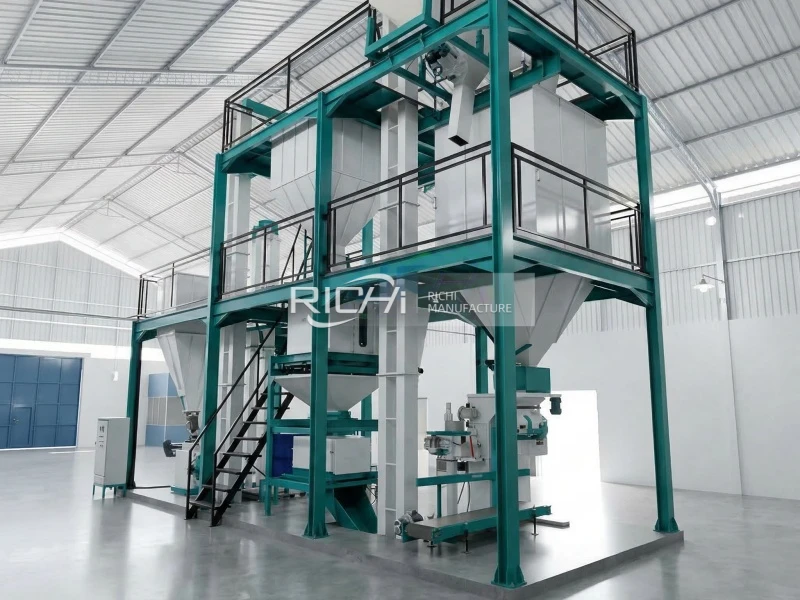
【 1–2 T/H Swine Grain Feed Plant in Indonesia】This 1–2 T/H swine grain feed plant provides a small-scale reference for pig-feed production. The project also includes a customer-specific finish: the complete equipment set was painted blue on request. The processing configuration should still be matched to the intended feed formula and production target.
Modular Process Design for Grain Feed Production
RICHI engineers each grain feed mill around the target animals, feed forms, recipes, hourly output, automation, workshop height and budget. A complete grain feed production line can combine receiving conveyors, silos, cleaners, magnets, hammer mills, batching scales, micro-ingredient and liquid dosing, and mixers with the required conditioning, pelleting, cooling, crumbling and screening sections, followed by finished-feed bins and bagging or bulk loading.
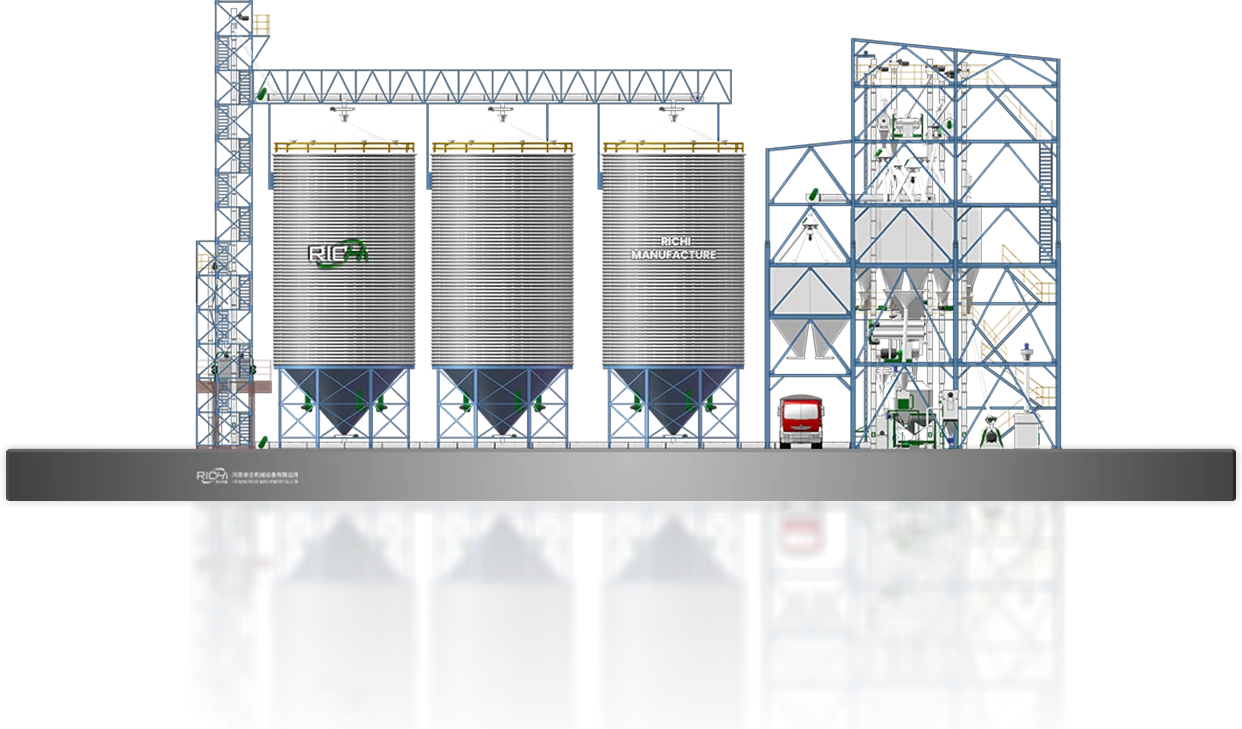
Kernel hardness, moisture and bran content guide preparation and handling; added forage may require cutting or fiber grinding. Grain drying is included where needed for dry storage, while mash and premix routes omit pelleting and extrusion adds product drying and optional coating. Conveying, dust extraction, controls and the necessary power, steam and compressed air are integrated with the layout; RICHI supports consultation, manufacturing, installation, commissioning, training, ongoing technical assistance and spare parts supply.
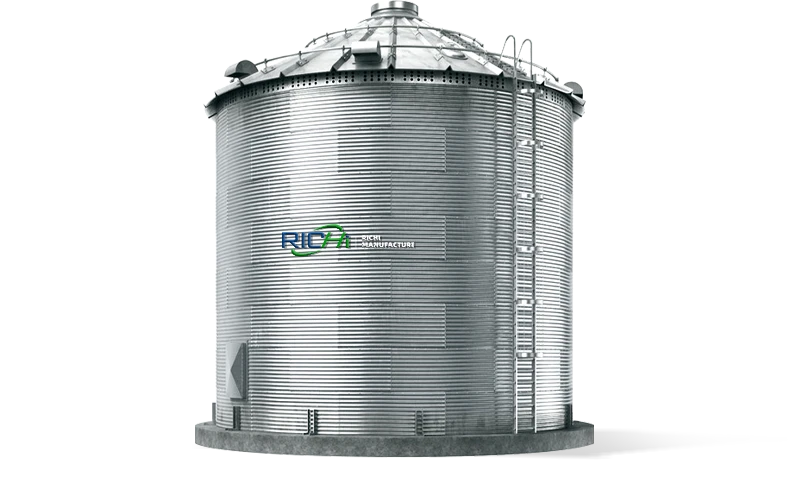
Silo system
01
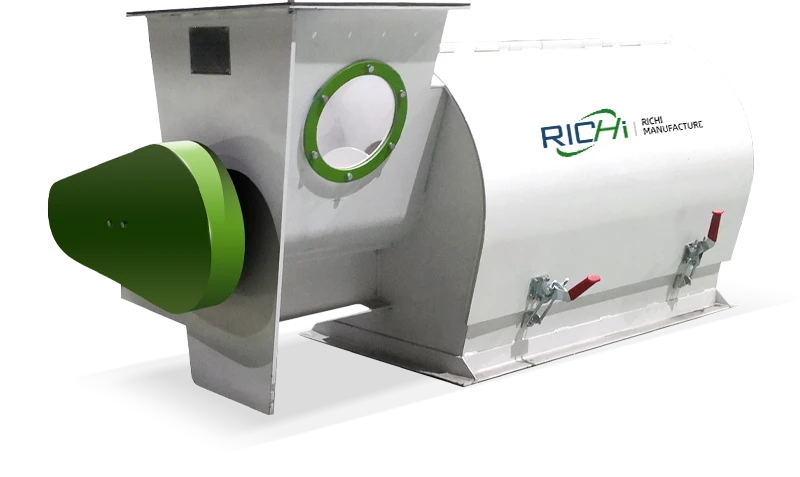
Cleaning system
02
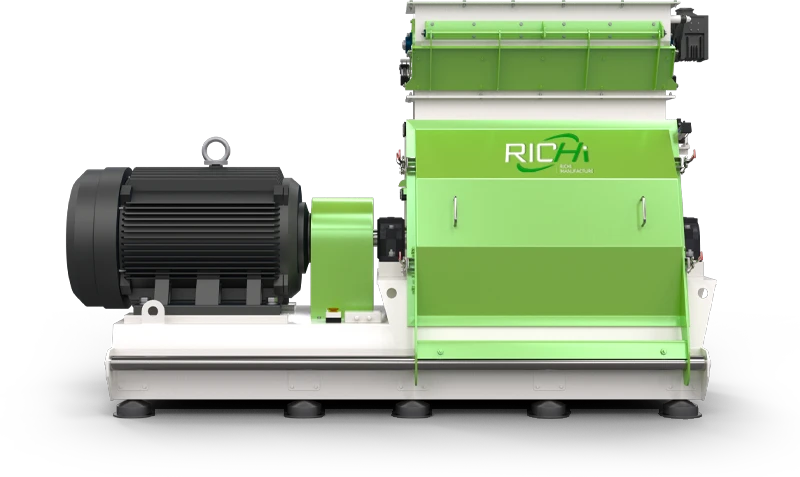
Grinding system
03
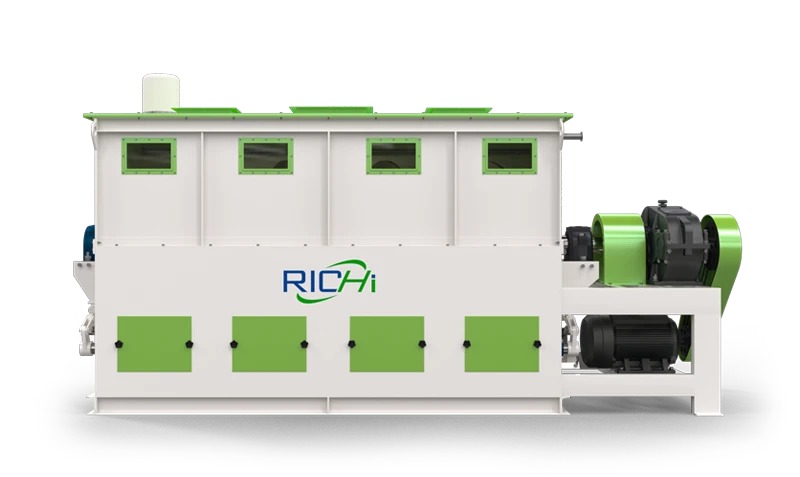
Mixing system
04
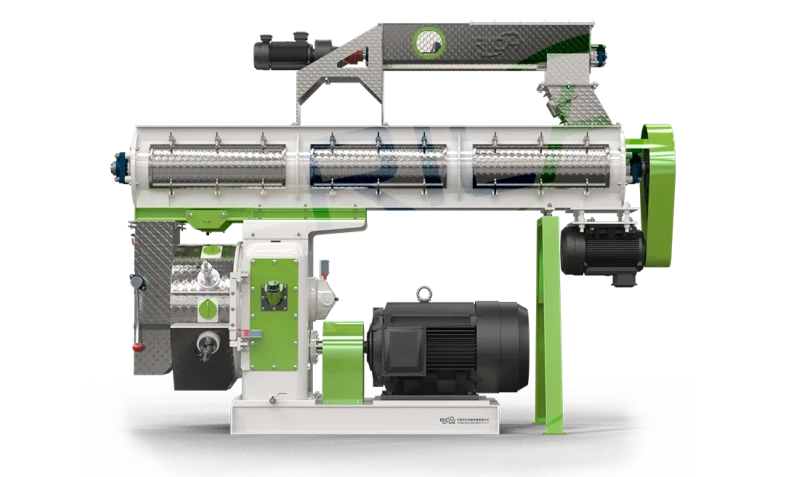
Pelleting system
05
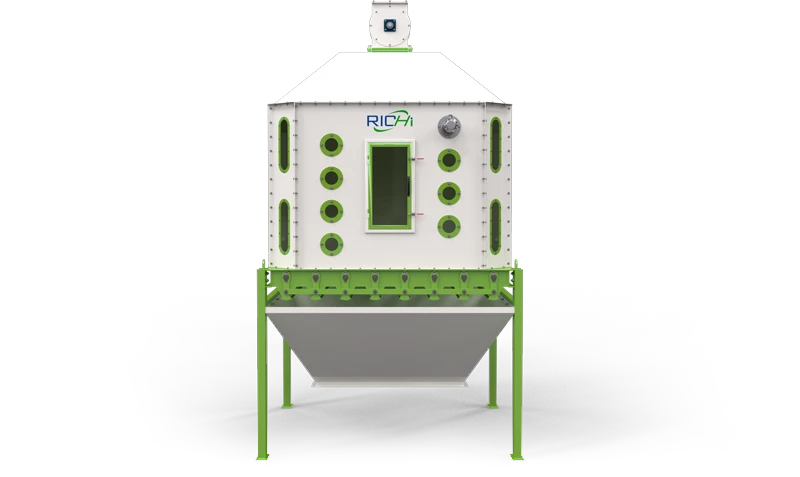
Cooling system
06

Crumbling system
07
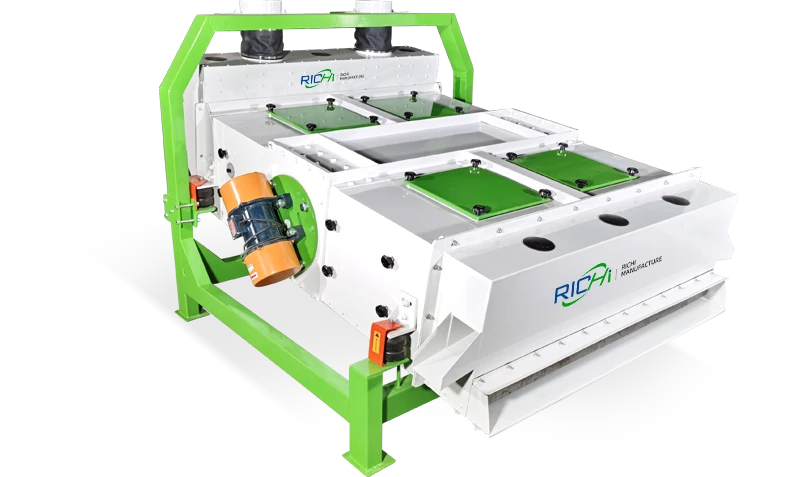
Screening system
08
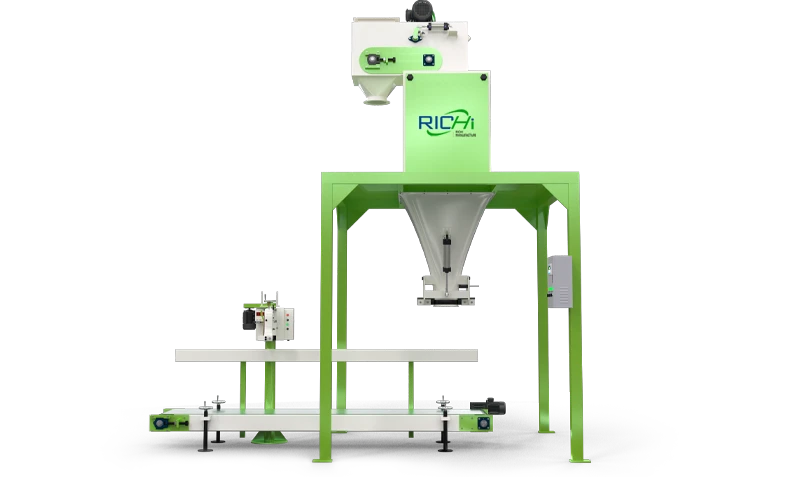
Packaging system
09

Automated Systems
10
Grain Feed Mill Designs for Eight Production Scenarios
Compare these grain feed mill designs by feed form, ingredient preparation, storage and expansion requirements. The country profiles illustrate suitable applications; RICHI adjusts individual modules around the confirmed recipe, site and project scope.

5–7 T/H Pig Grain Feed Mill Design for Pellets and Crumbles
For a contract feed producer in Denmark, clean purchased meals receive final grinding and computerized batching before mixing with manually added micro-ingredients. Bucket elevators provide the main transfers through pelleting, cooling, crumbling, screening and automatic bagging. The layout serves grower pellets and starter crumbles, with a crumbler bypass preserving intact pellets.

5 T/H Grain-Based Pet Food Extrusion plant Design
In Hungary, a cat-and-dog food producer can pair 12 × 30 t silos with primary grinding, computerized batching and mixing with liquid addition. Ultrafine milling and secondary dosing/mixing with further liquid addition precede extrusion. Drying, screening, cooling and coating feed bulk bins linked to existing packing. Equipment-and-silo budget reference: approximately US$1.1 million.

10 T/H Poultry Grain Feed Plant Design for Mash and Pellets
A layer-feed supplier in Romania adding broiler pellets can retain a direct mash outlet. Prepared meals bypass unnecessary milling, while the small whole-grain fraction is ground. Batching and mixing feed separate mash and pellet routes; pelleting is followed by cooling and screening, and both products reach automatic bagging.

0.8–4 T/H Cattle Feed Line Design for Grain and Forage
For a cattle cooperative in Uruguay, screw and drag conveyors reduce headroom requirements. Cereals and pre-cut dry hay pass through grinding, mixing, pelleting, cooling, screening and weighed bagging. Output varies from 0.8–4 t/h across grain-only concentrates, all-forage pellets and blended cattle recipes, so each formulation receives its own capacity check.

500–600 KG/H Floating Fish and Poultry Feed plant Design
Serving tilapia farms and poultry keepers in Mozambique, this aquaculture grain feed plant shares manual intake, a small grinder and ribbon mixing. Wet single-screw extrusion uses drying, coating and cooling for floating feed; conventional pellets bypass drying. Automatic bagging serves both routes. The 500–600 kg/h reference applies to extrusion, with pellet output specified separately.

3–5 T/H Commercial Layer Mash Feed plant Design
A distributor supplying Nepal’s egg farms can use this grain mash feed plant for bagged layer diets. Purchased ingredients enter small holding silos, pass through batch-fed grain cleaning, then move to grinding and mixing. Packing in 20–50 kg bags supports dealer sales. The mash-only configuration directs investment toward ingredient preparation, mixing and consistent dispatch.

35–40 T/H Industrial Grain Feed Mill Design for Multiple Products
A compound-feed manufacturer in Chile can supply poultry, pig and cattle customers. Two 2,500 t silos, two manual intakes, two grinders, 28-bin computerized batching and micro-dosing support mixing and five pellet mills. Two coolers, two crumblers and two screens serve the pellet routes; three automatic weighing/sewing stations and bulk loading handle dispatch. A separate mash outlet completes the product range.

20 T/H Poultry Grain Feed Pellet Line Upgrade
Retaining an existing Sri Lankan integrator’s grinding and packing sections, this grain feed pellet production line focuses new investment on mixing, pelleting, crumbling and screening. Cooling is connected through a verified existing unit or an added module. Compact routing addresses the restricted space, with the 20 t/h target checked against retained equipment and the chosen broiler recipes.
Grain Feed Mill Projects Across Global Markets
These grain feed mill projects connect cereal supply with poultry and livestock feed production at farm and commercial scales. RICHI’s scope includes grain preparation, pelleting, combined mash and pellet production and multiple animal feed programs. Dedicated premix modules can also be specified where required. Capacities refer to each installation; actual throughput depends on the recipe and product being processed.
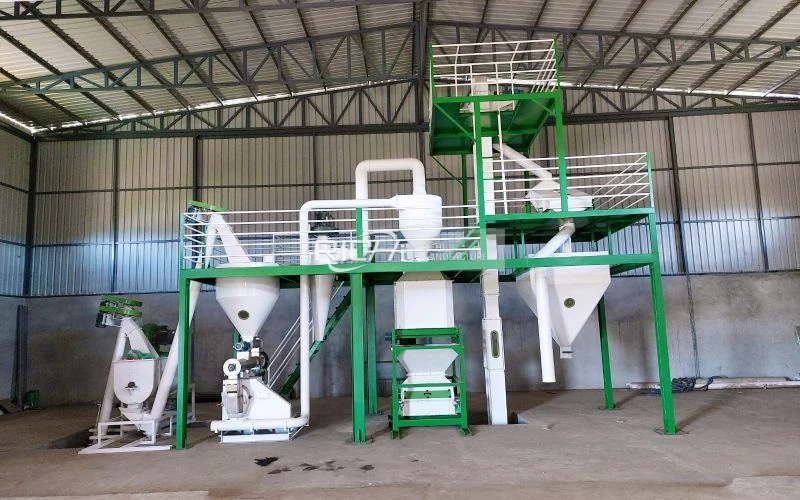
1–2 T/H integrated farm feed mill
Angola
For a layer farm preparing its own complete mash, this grain feed mill would combine maize and wheat with soybean meal, limestone and premix. RICHI’s proposed configuration uses controlled grinding and batch mixing, targeting a textured feed with 55–85% of particles between 1 and 3 mm rather than uniformly fine meal.
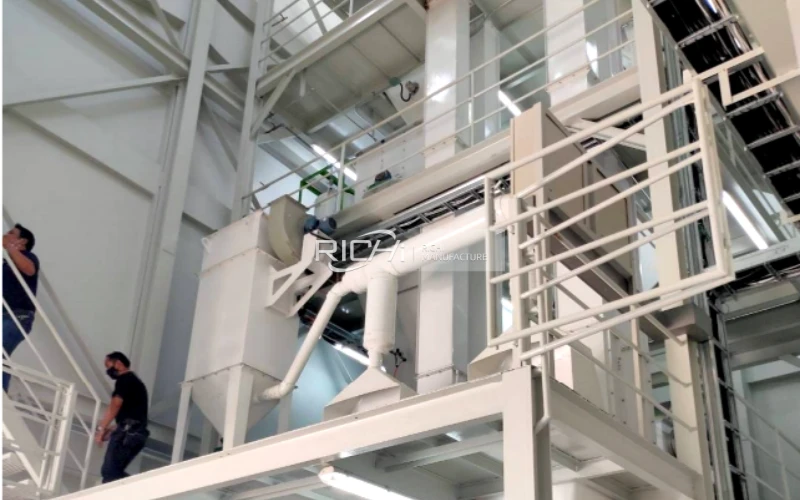
10 T/H grain feed processing factory
Vietnam
Rice bran and cassava meal supplement the maize and soybean meal base at this chicken grain feed production line. RICHI adjusted conditioning for the mixed ingredient behavior and configured the route around the integrator’s broiler feed programs. Finished products include 2 mm starter pellets and 3.5 mm finisher pellets.

1–2 T/H grain feed processing line
Ethiopia
A poultry operation established a farm grain feed plant in Ethiopia to supply its own birds. Sorghum and local protein meals form the ingredient base, with preparation, pelleting and manual bagging arranged for straightforward daily operation. Poultry pellets of 3–4 mm are a usual selection reference for this system, with die choice following the feeding program.
3-4 T/H grain feed pellet production line
New Zealand
This grain feed mill in New Zealand uses wheat, barley and canola meal in separate layer and broiler formulas. RICHI coordinated grinding and conditioning with computerized batching and batch records. Products in these categories commonly use 3–4 mm pellets; the grinding profile is selected for the actual cereal blend.

1–2 T/H livestock farm grain feed mill
Algeria
An on-farm system for finishing pigs would process maize or sorghum with protein meals, minerals and premix into complete meal feed. RICHI’s proposed scope covers grain cleaning, grinding, weighing and mixing. A 500–600 μm mean particle size provides a starting specification, subject to formulation review and checks on feed flow.
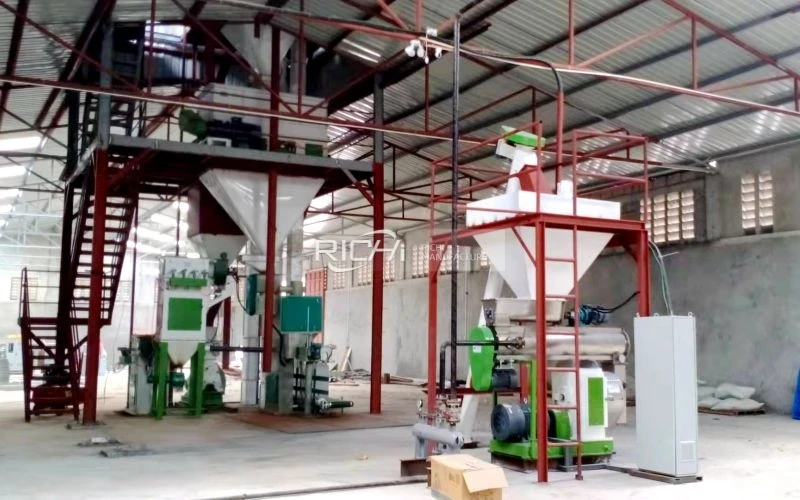
5-6 T/H commercial grain feed mill
Oman
Summer operating conditions shaped the cooling section of this grain feed processing plant. The poultry producer makes 3.5 mm layer pellets and 2.5–3 mm broiler pellets, with conditioning and cooling matched to each formula. Automatic bagging completes the line, keeping production and dispatch coordinated across the customer’s two poultry feed programs.
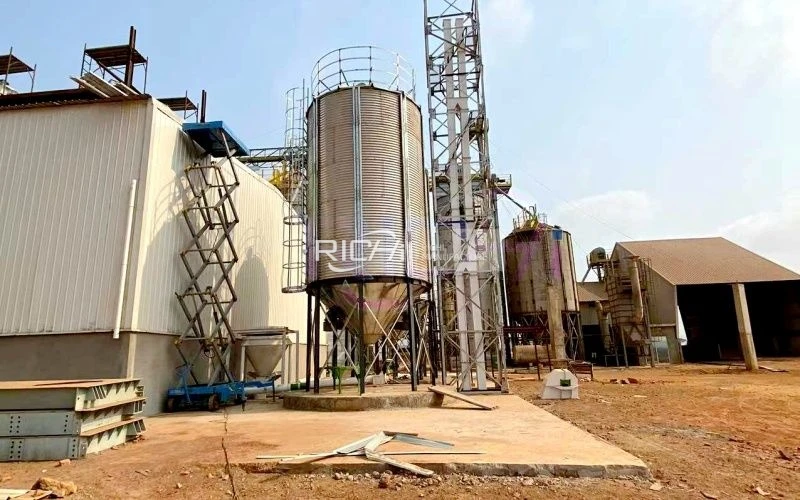
15 T/H fully automatic grain feed plant
Argentina
An agribusiness combining poultry and beef production uses this maize feed mill to prepare separate cereal rations. Corn and soybean meal pass through a preparation and mixing section sized for the production target. RICHI matched the finishing route to 3.5 mm broiler pellets and 6–8 mm cattle pellets, with recipes handled in separate batches.

30–40 T/H industrial grain feed mill
Russia
An industrial grain feed mill in Russia supplies broiler, pig and cattle feed through centrally controlled production. Bulk storage, computerized batching and coordinated pelleting support scheduled recipe changes across the installation. For these products, 3–4 mm poultry or pig pellets and 6–8 mm cattle pellets are common specification references.
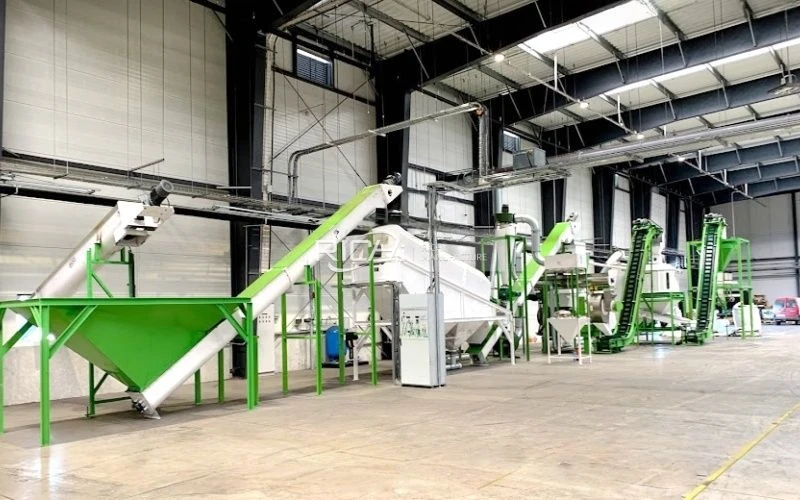
1–2 T/H poultry grain feed plant
Poland
For a poultry producer requiring starter feed, the proposed line would process maize, soybean meal and minor ingredients through grinding, mixing, conditioning and pelleting. RICHI would configure cooling, crumbling and screening around a proposed 1–3 mm finished fraction, with oversize material returned for further crumbling and fines separated from the saleable feed.
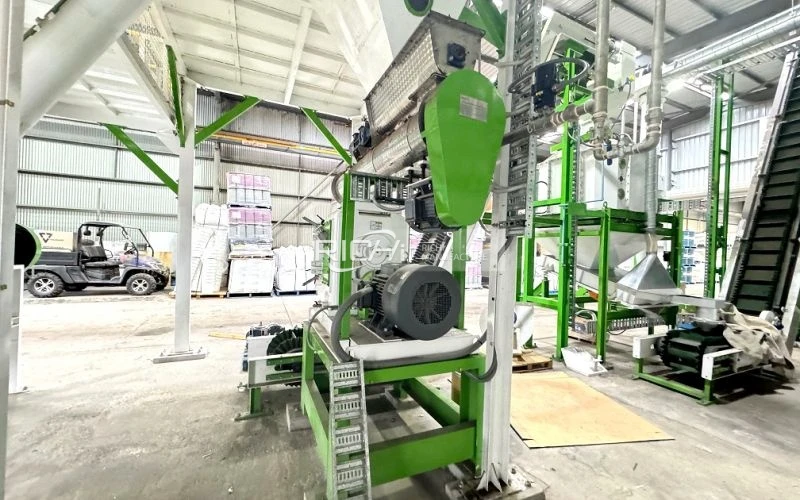
5 T/H grain feed manufacturing line
Mexico
Layer mash and 3 mm broiler pellets share the grinding and mixing sections at this installation. RICHI adapted conveying to the building’s limited headroom and provided a mash bypass around pelleting. The mash particle profile is specified separately from pellet diameter to suit the layer formula and avoid unnecessary processing.

10 T/H automated grain feed production line
Thailand
This layer grain feed mill supplies commercial egg farms using a formulation combining maize, soybean meal, rice bran, cassava meal and fishmeal. Its 3.5 mm layer pellets place the engineering emphasis on conditioning, die selection and controlled fines after cooling. RICHI configured the process around that dedicated feed program.

10 T/H grain feed production plant
South Africa
A commercial producer combines broiler and cattle feed production in this mixed grain feed mill. Maize and sunflower cake enter a shared preparation system, while finishing specifications differ: 3.5 mm broiler pellets and 6 mm cattle pellets. Switching between those diameters requires the corresponding ring die and recipe settings.
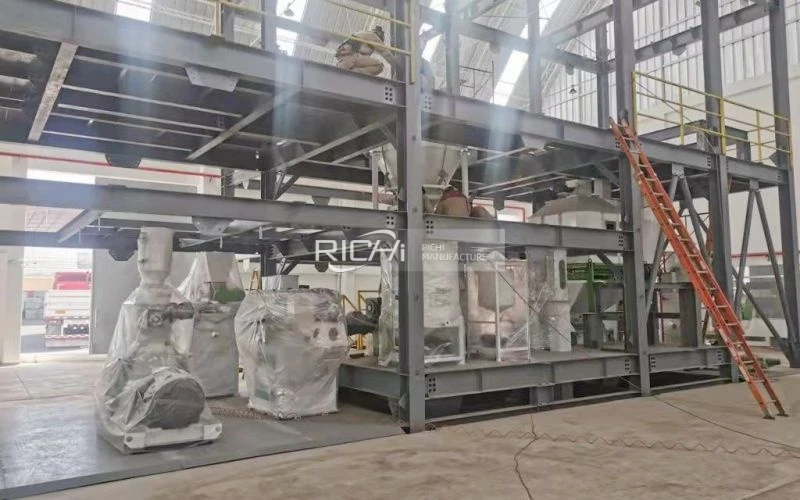
5 T/H grain feed manufacturing plant
Brazil
A poultry integrator uses this grain feed production plant for separate broiler and layer formulas. Grain and protein meal preparation feeds a conditioning and pelleting section producing 2.5 mm broiler pellets and 3.5 mm layer pellets. Automatic bagging accommodates 25 kg and 40 kg packs for the customer’s different distribution requirements.
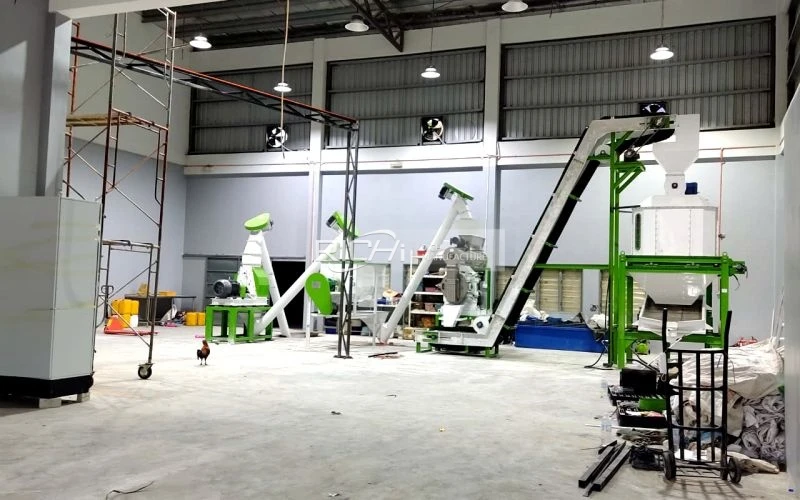
3–4 T/H grain feed production line
Malaysia
Palm kernel cake is included in the grain formulas at this small grain feed mill in Malaysia. RICHI configured a compact preparation and pelleting route for 2.5 mm broiler pellets and 3.5 mm layer pellets. Screen selection accounts for the fibrous ingredient alongside the cereal portion of the formula.
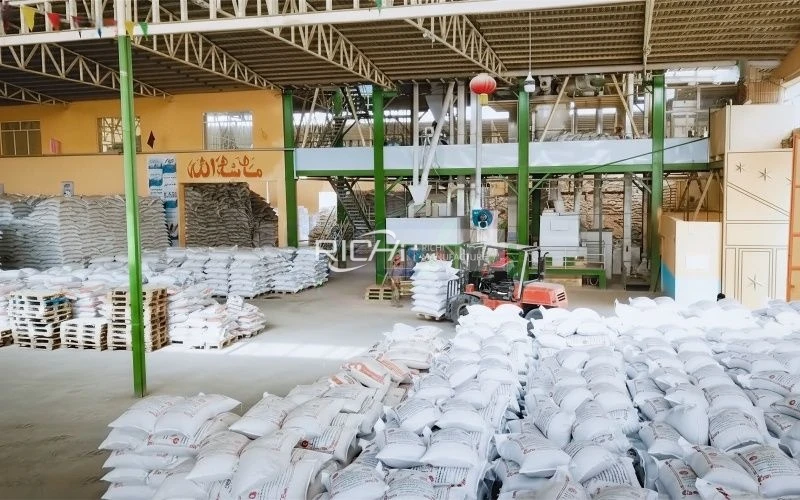
8–10 T/H commercial grain feed mill
Iraq
Changing cereal availability required a mixed grain feed plant capable of adjusting maize, wheat and barley inputs. RICHI configured the line for ingredient substitutions across separate broiler and layer feed programs. Finished pellets are 2.5 mm for broilers and 3.5 mm for layers, with grinding and conditioning matched to the revised formula.

20 T/H grain feed factory
United States
Most ingredients arrive already ground at this automatic grain feed mill for a commercial poultry operation. RICHI concentrated the configuration on computerized batching, mixing, pelleting and automatic 50 lb bagging. Broiler feeds commonly use 3–4 mm pellets; prepared ingredients are checked against the grinding specification required for the selected recipe.
Selecting a grain feed mill involves more than choosing equipment. The following review drafts focus on six practical buying concerns: ingredient preparation, product flexibility, daily operation, existing equipment, maintenance and future expansion.


3–4 T/H Grain Feed Mill in France
- Wheat and Barley Recipes
- On-Farm Feed Preparation
- Reviewer: Farm Operations Manager
“We wanted to prepare cereal-based feed for our pigs using wheat and barley alongside purchased protein ingredients. The useful part of the proposal was the attention to grinding and batch preparation. RICHI explained which equipment our recipes required and how the operator would move between batches.”

5 T/H Grain Feed Mill in Algeria
- Mash and Pellet Routes
- Poultry Feed Production
- Reviewer: Feed Business Owner
“Our plan covered layer mash and broiler pellets, so we needed more than a pellet machine quotation. RICHI showed us how the mixed feed could follow separate finishing routes. That made it easier to understand the equipment scope and discuss where we should invest first.”

1–2 T/H Grain Feed Mill in the Philippines
- Complete Pig Feed
- Practical Batch Operation
- Reviewer: Pig Farm Manager
“We needed a system our farm team could operate without making every batch unnecessarily complicated. The proposed arrangement covered maize grinding, ingredient weighing and complete pig feed mixing. We appreciated having the manual tasks explained clearly before deciding how much automation to include.”

8–10 T/H Grain Feed Mill in Egypt
- Existing Equipment Integration
- Poultry Feed Expansion
- Reviewer: Feed Mill Technical Manager
“We already had equipment that we wanted to keep. RICHI asked for its specifications before proposing the new grain preparation and pelleting sections. Discussing the connections, transfer points and control responsibilities helped us see what the upgrade would involve beyond buying additional machines.”

3–4 T/H Grain Feed Mill in Bangladesh
- Ingredient-Specific Handling
- Cleaning and Maintenance
- Reviewer: Production Supervisor
“Our poultry feed recipes included maize, rice bran and protein meals. We wanted the equipment proposal to account for those ingredients individually. RICHI discussed grinding requirements, the route for suitable pre-ground materials and access for cleaning. Those details gave our production team something concrete to review.”

5–6 T/H Grain Feed Mill in Kazakhstan
- Cattle Concentrate Pellets
- Phased Investment Planning
- Reviewer: Agricultural Enterprise Director
“We wanted to start with cattle concentrate pellets while keeping future expansion in mind. RICHI separated the equipment needed for the initial scope from possible additions. That helped us review the grain intake, batching and finished-feed handling together, rather than making isolated equipment decisions.”

Choose Capacity Around the Feed You Can Sell
The right grain feed mill capacity starts with your own feed consumption or a realistic sales plan. RICHI develops systems from 1–120 T/H, with different equipment combinations, investment requirements and building layouts at each scale. Mash, pellets, crumbles and extruded feeds require different processing resources, so the same hourly target does not necessarily mean the same budget or workshop footprint.
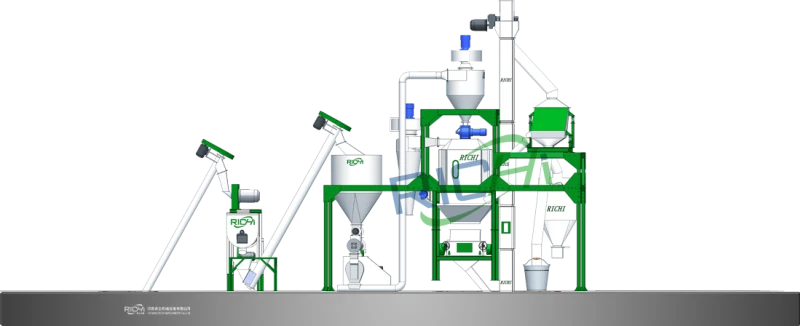
A farm grain feed mill at this scale suits livestock producers, agricultural cooperatives and grain processors entering local feed supply. The reference budget is USD 10,000–50,000, with simpler meal or mash configurations generally requiring fewer processing stages. Adding conditioning, pelleting, cooling or crumbling changes the equipment scope, utility requirements and space needed around the line.
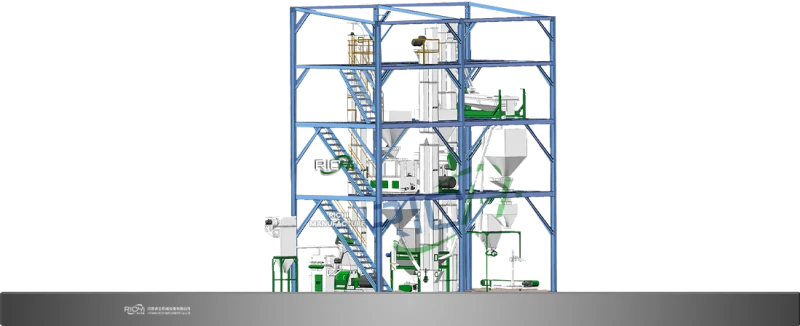
3-4 t/h animal feed production plant
For expanding farms, independent feed businesses and cooperatives serving several members, 3–4 T/H offers scope to combine internal consumption with local sales. A reference budget of USD 50,000–120,000 supports initial planning. Maize, wheat and suitable milling by-products require different preparation arrangements; ingredient storage, manual handling and bagging should be reviewed alongside the main processing equipment.
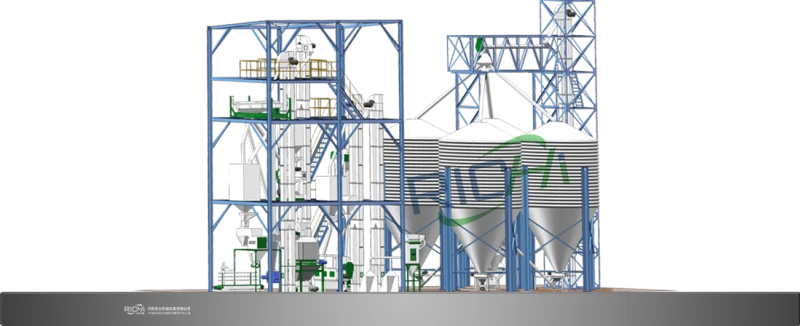
5-7 t/h animal feed pellet plant
A commercial grain feed mill in this range can serve regional feed retailers, integrated farms or cereal processors developing a separate feed business. The reference budget is USD 70,000–250,000. Investment depends on whether the operation supplies mash alone or adds pellets and crumbles. Multiple recipes also require suitable ingredient bins, minor-ingredient dosing and practical arrangements for product changeovers.
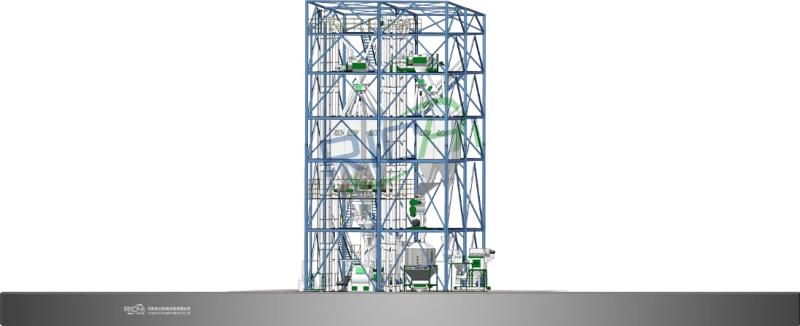
8-10 t/h animal feed processing plant
This scale suits established feed manufacturers, larger livestock enterprises and grain businesses with dependable customers beyond their immediate area. Use USD 150,000–300,000 as a reference budget. Receiving capacity, finished-feed storage and dispatch become important design decisions: the production line needs room to operate while incoming cereals and outgoing bags or bulk feed move through the site.
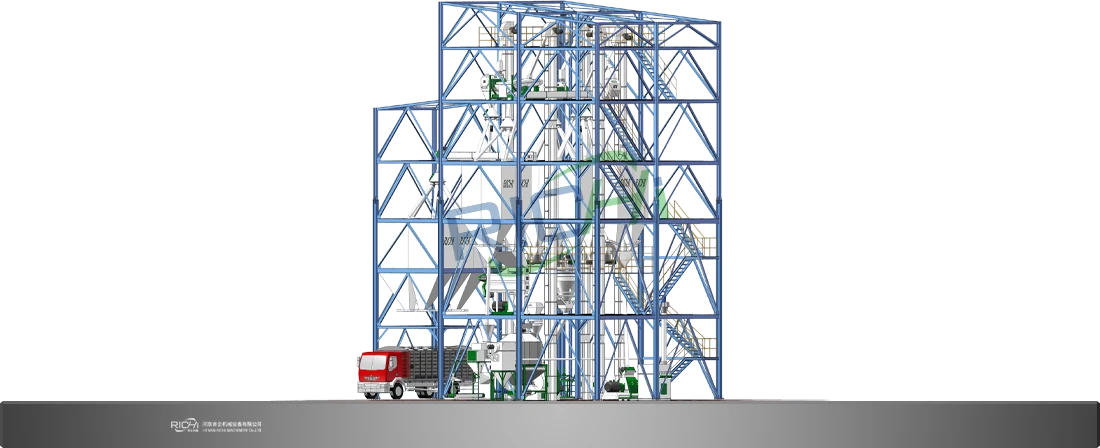
12-20 t/h feed preparation plant
Regional manufacturers and integrated poultry or livestock businesses may consider 12–20 T/H when several feed programs share a production facility. The reference budget is USD 250,000–580,000. Equipment selection should account for recipe frequency, grain grind requirements and the proportion of mash versus pelleted output. Additional storage and routing flexibility can matter as much as a larger pellet mill.
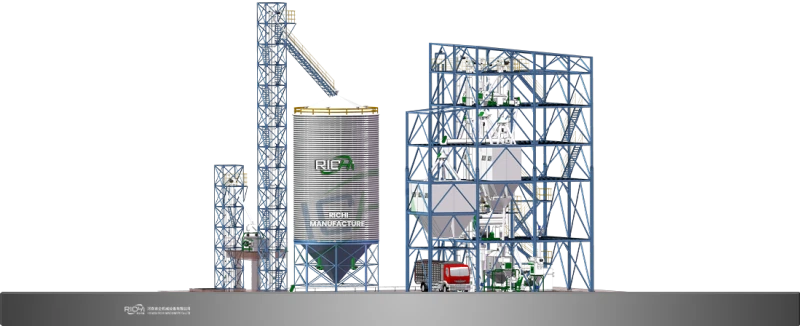
25-40 t/h feed pellet production line
An industrial grain feed mill at this scale requires a dependable cereal supply and sufficient demand from owned farms, distributors or contracted buyers. The reference budget is USD 450,000–850,000. RICHI can assess parallel processing sections where appropriate, together with automated batching, bulk ingredient handling and separate finished-feed destinations. Storage capacity should follow delivery schedules and purchasing strategy.
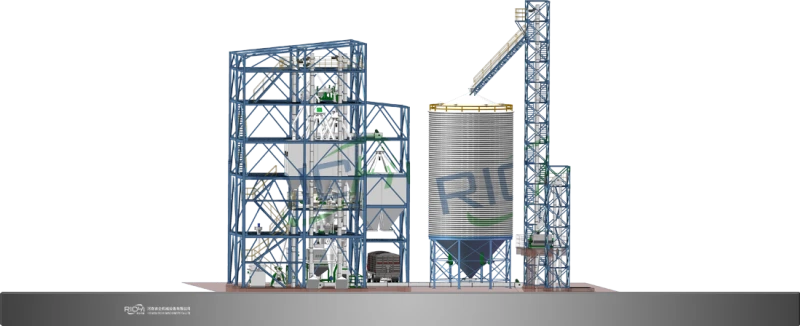
50-60 t/h commercial feed mill
Large commercial feed companies, integrated livestock groups and established grain enterprises may require this output range. The reference budget is USD 900,000–1,400,000. Design work must balance receiving, grinding, mixing, conditioning, pelleting and dispatch rather than selecting equipment by individual nameplate capacities. Maintenance access, utility distribution and space for ingredient inventory become substantial parts of site planning.
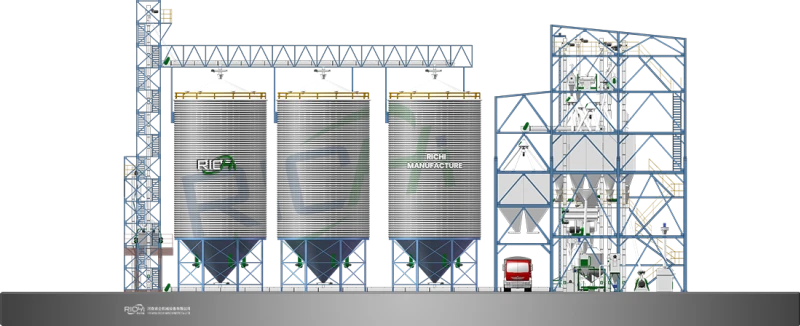
60-80t/h complete feed mill plant
For businesses supplying several farms or sales territories, 60–80 T/H may involve multiple production routes rather than one continuous line. The reference budget is USD 1,450,000–1,800,000. Different cereal recipes, pellet specifications and mash requirements influence how equipment is shared. Building layout should accommodate transfer routes, maintenance access and product separation without creating unnecessary material movements.
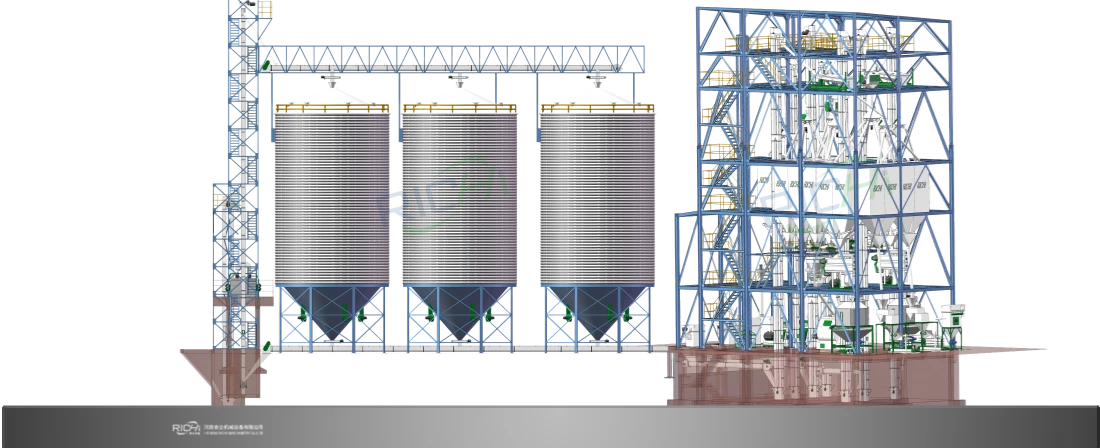
This range is intended for major feed producers and integrated agricultural businesses with established raw-material procurement and distribution networks. The reference budget is USD 2,000,000–3,000,000. A grain feed manufacturing plant of this size needs coordinated silo intake, recipe control, production scheduling and dispatch. The balance between bulk deliveries and bagged sales directly affects storage, loading facilities and building allocation.
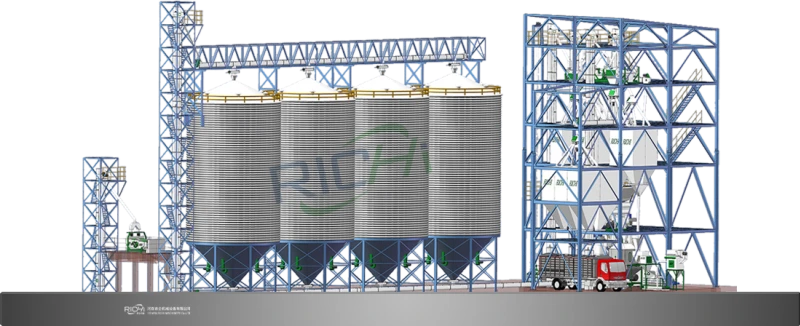
100-120 t/h feed mill engineering
At 100–120 T/H, the project becomes a site-wide engineering exercise for large feed groups or integrated livestock operations. The supplied reference places investment above USD 2,500,000, without a defined upper limit. Parallel equipment arrangements, storage strategy, electrical infrastructure, steam supply and expansion allowances require coordinated design. Final capacity must be assessed against specified recipes and finished-feed requirements.
Budget for Equipment and a Working Feed Business
Your grain feed mill cost includes processing equipment, site development and the cash needed to begin production. The following USD ranges are preliminary planning allowances across different scales and configurations. Equipment figures refer to individual machines or specified modules, exclude freight and installation, and should not be added together as a standard plant quotation.
Whole grain feed mill set up investment : $10,000 – $40,000,000
Main grain feed equipment cost :
Grain Cleaning and Magnetic Separation :
$1,000–$25,000
Grain Grinding Equipment :
$1,000–$90,000
Feed Mixing Equipment :
$1,500–$35,000
Basic Weighing and Ingredient Dosing Module :
$3,000–$30,000
Automated Multi-Bin Batching System :
$10,000–$200,000
Micro-Ingredient Dosing System :
$5,000–$80,000
Feed Pellet Mill and Conditioner :
$8,000–$150,000
Pellet Cooling Equipment :
$2,000–$40,000
Feed Crumbling Equipment :
$1,000–$20,000
Finished-Feed Screening Equipment :
$1,000–$25,000
Semi-Automatic Bagging Station :
$2,000–$15,000
Automatic Bagging and Palletizing System :
$50,000–$300,000
Conveyors and Bucket Elevators :
$500–$15,000
Local Dust Collection Module :
$2,000–$20,000
Central Aspiration and Dust Collection System :
$20,000–$250,000
Grain Silo :
$8,000–$120,000
Process Bins and Supporting Steelwork :
$5,000–$200,000
Electrical Controls and Automation :
$5,000–$200,000
Extrusion, drying and coating require a separate equipment budget for aquafeed or pet food. High-capacity plants may require several grinding, mixing or pelleting units. Land purchase, import duties and taxes must be calculated separately for the actual location. Hold a provisional contingency of 5–15% of the defined capital budget, adjusted as project risks become clearer. An existing workshop, available grain storage or reusable machinery can change the investment considerably. Send RICHI your feed products, recipes, target capacity and site information for an itemized grain feed mill quotation and a clear list of the costs requiring local procurement.

Engineering Support From Layout to Daily Operation
RICHI connects grain feed mill design, equipment manufacturing, commissioning and ongoing technical support. Each stage addresses practical decisions: how cereals enter the plant, how recipes move through production, how operators run the equipment and how the system is maintained.
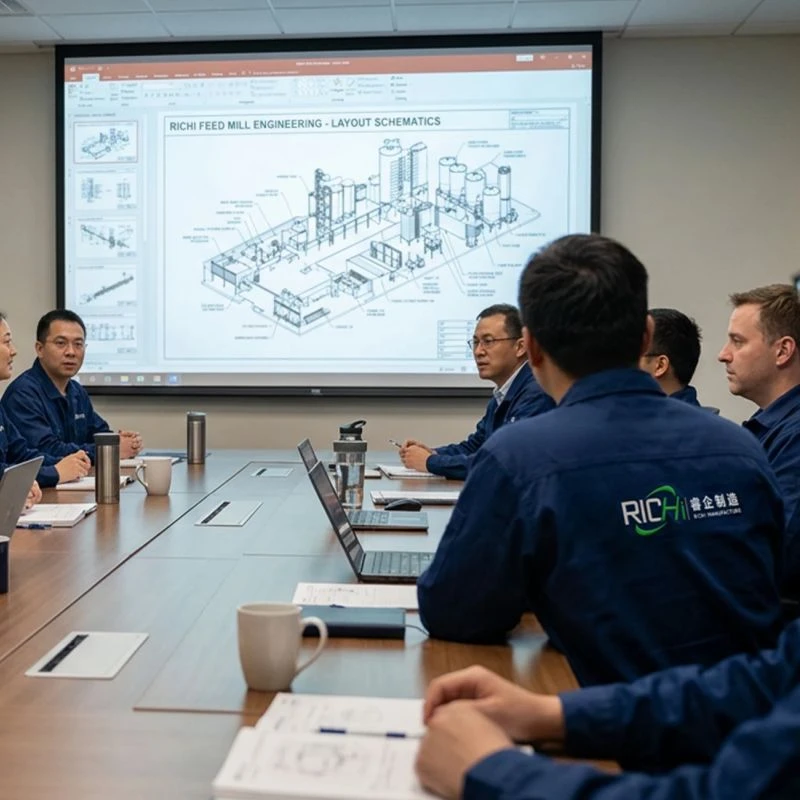
Process and Layout Design
We develop process flows, equipment layouts and civil engineering interface drawings around your cereals, feed recipes and finished products. Grain intake, storage, grinding requirements and mash or pellet routes guide the arrangement. Equipment dimensions and transfer connections can be adapted to the building, with foundation loads provided for local structural review.
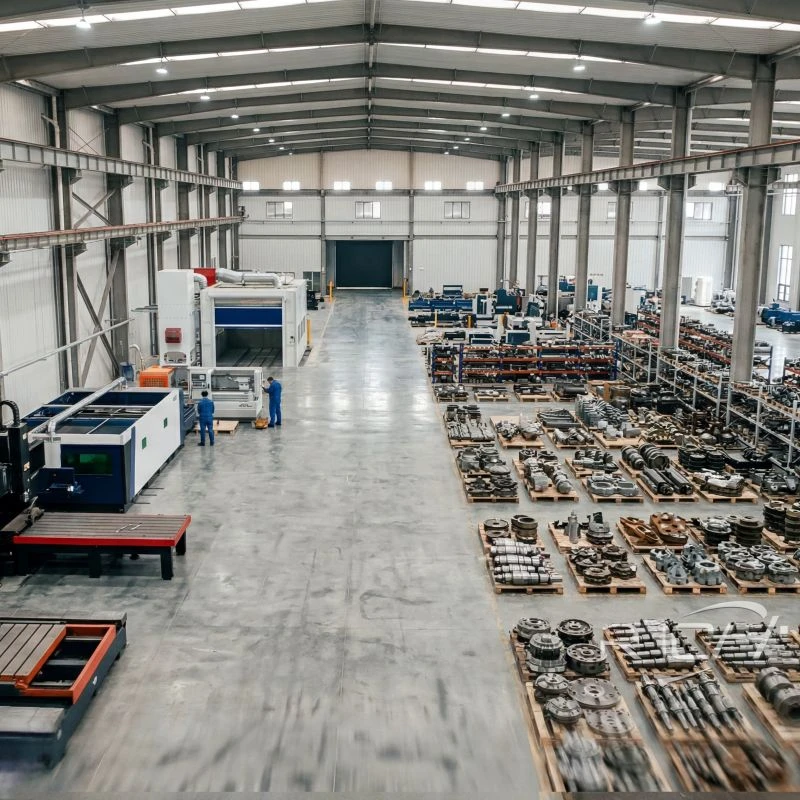
Equipment Manufacturing
RICHI manufactures feed processing equipment to the agreed project specifications. Machine selection, contact materials, drive arrangements and electrical requirements are defined before production. Inspection records, applicable certification documents and operating manuals support delivery, while equipment interfaces are coordinated so the grinding, batching, mixing and finishing sections fit the approved layout.
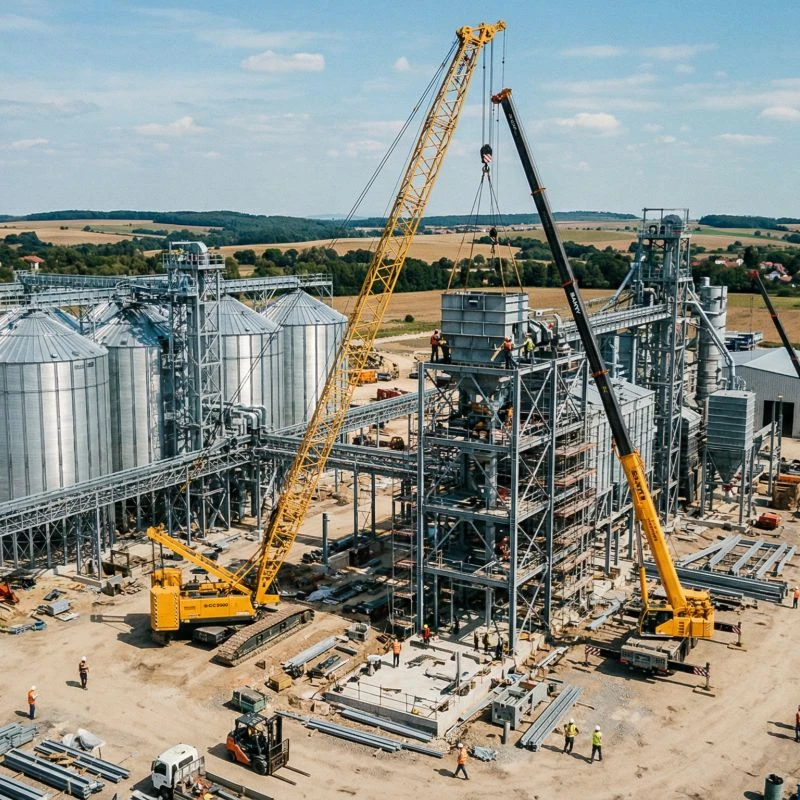
Installation and Operator Training
Installation support covers equipment positioning, assembly checks and preparation for startup. Commissioning progresses from individual machine checks to connected operation with the agreed ingredients. Operators receive instruction in batching, screen and die changes, cleaning and routine maintenance, with production settings reviewed against the required feed form and particle size.
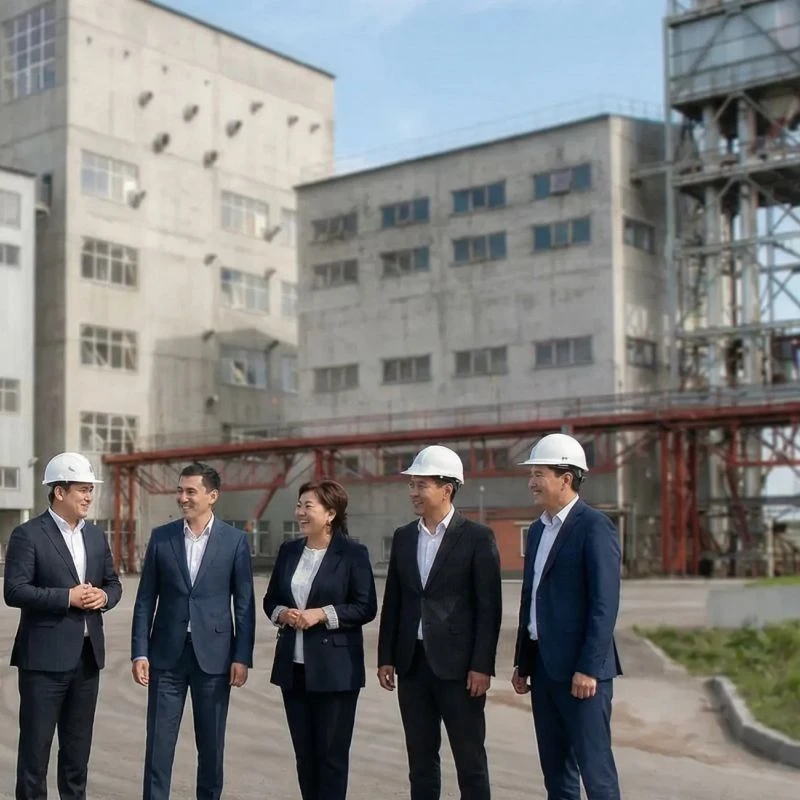
Technical Support Throughout Operation
After startup, RICHI provides troubleshooting, replacement-parts support and guidance on equipment adjustments. Service follow-ups can review wear, recurring stoppages and changes in cereal supply or recipes. Equipment records help identify compatible parts, while later upgrades are assessed against the existing process, available utilities and the customer’s revised production requirements.
Start With a Free Design for Your Feed Business
Planning a grain feed mill starts with your cereals, target feed products and available site. RICHI provides free project planning and design support to help you review the equipment scope, layout and budget before purchasing.

Project Cost Estimate and Equipment List
Customized Process Flow Design
3D Plant Views and Equipment Drawings
Site Planning and Civil Engineering Drawings
Steel Structure and Electrical Drawings
Feed Production Testing
Ongoing Operator Training and Production Guidance
Operating Manuals and Remote Installation Guidance
grain feed equipment Configuration
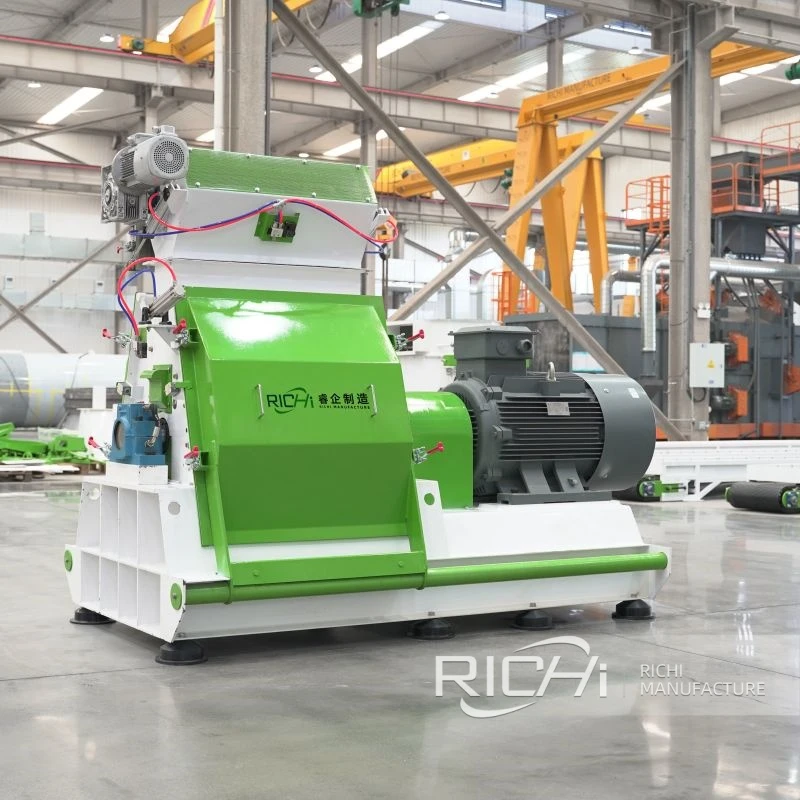
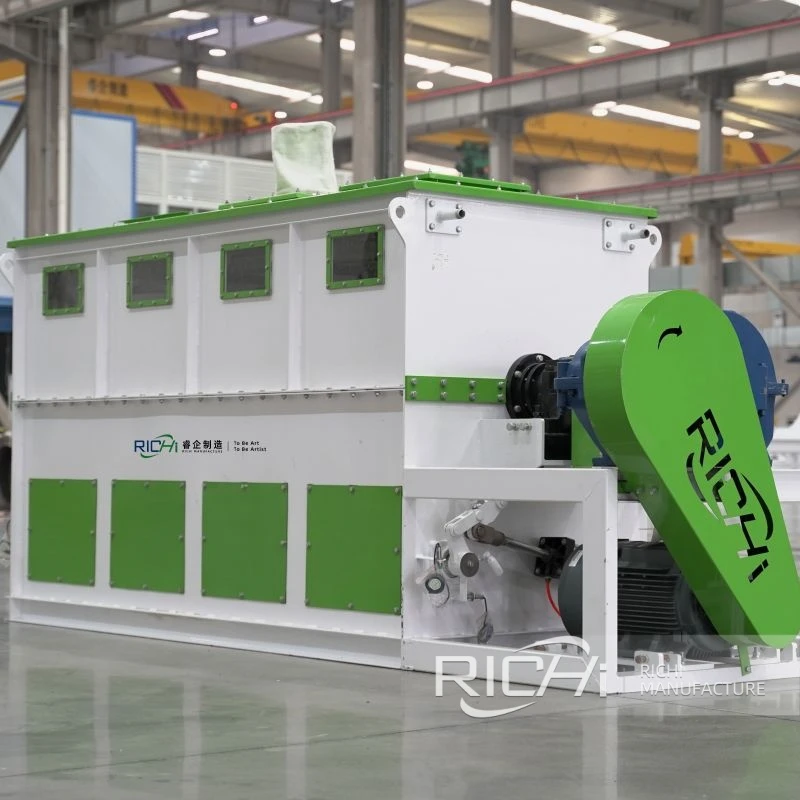
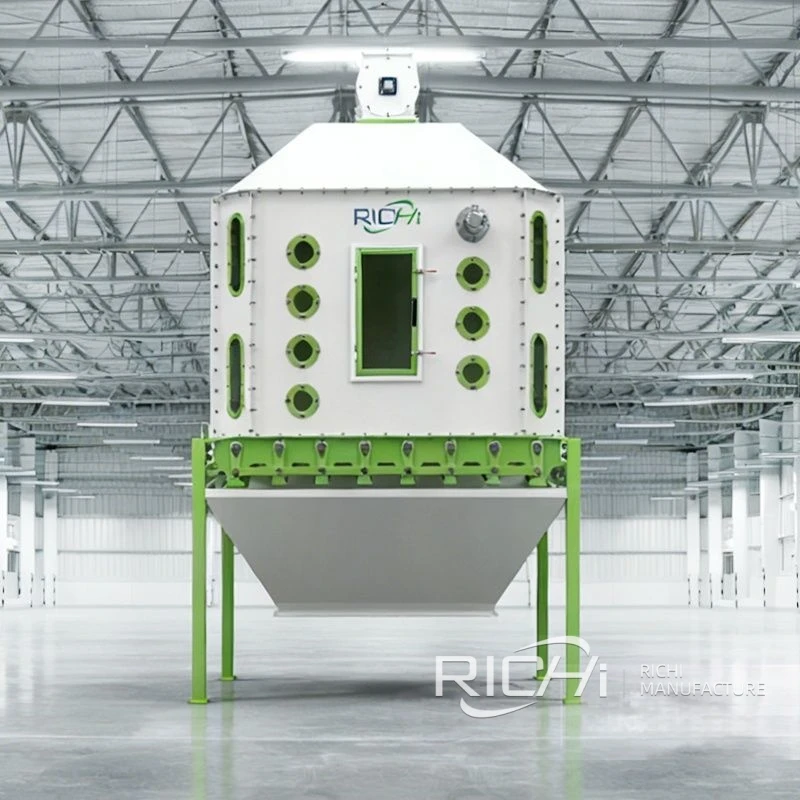
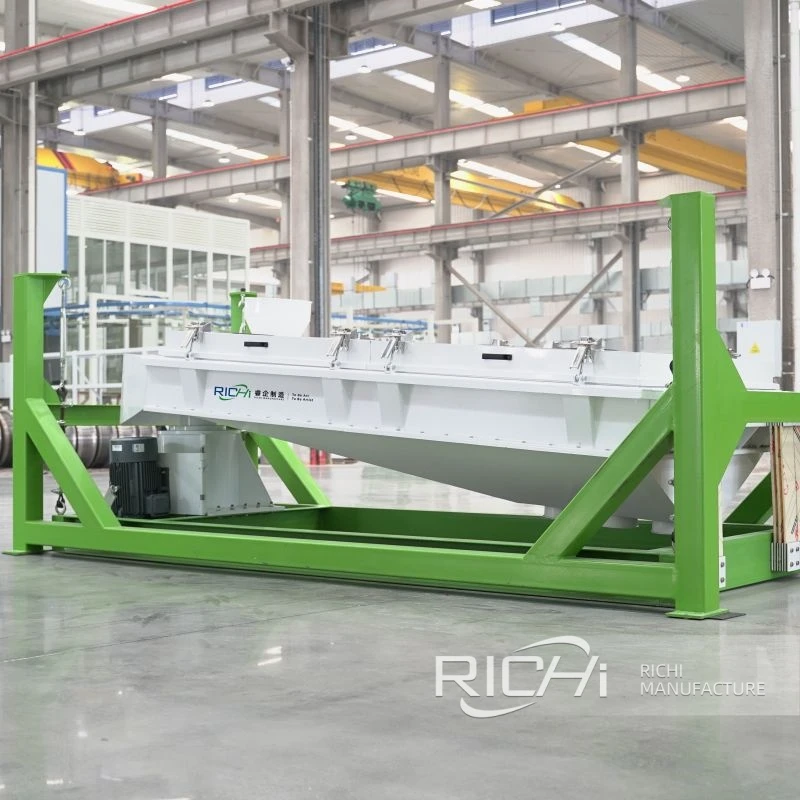
RICHI’s grain feed processing equipment covers intake hoppers, pre-cleaners, magnets, hammer mills, batching scales, micro-ingredient feeders, mixers and liquid dosing units. For a pelleted grain feed mill, the equipment package extends to conditioners, pellet mills, coolers, crumblers and screens. Silos, process bins, conveyors, elevators, dust collectors, bagging machines and control systems connect these operations. Dedicated aquafeed or pet food projects can add extrusion, drying and coating equipment; grain drying is considered separately when incoming moisture requires it.
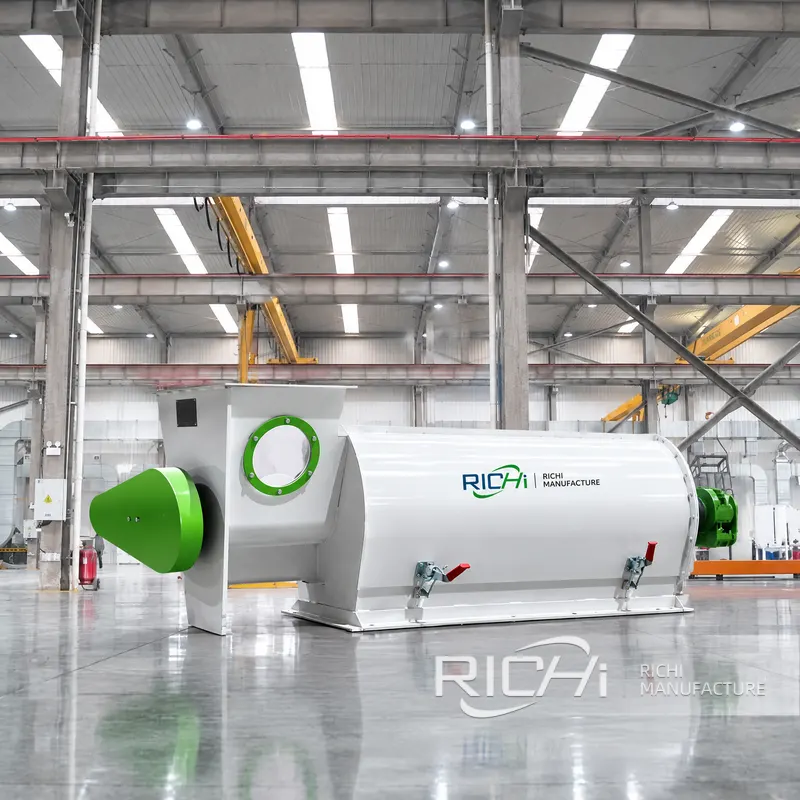
Cleaning Equipment

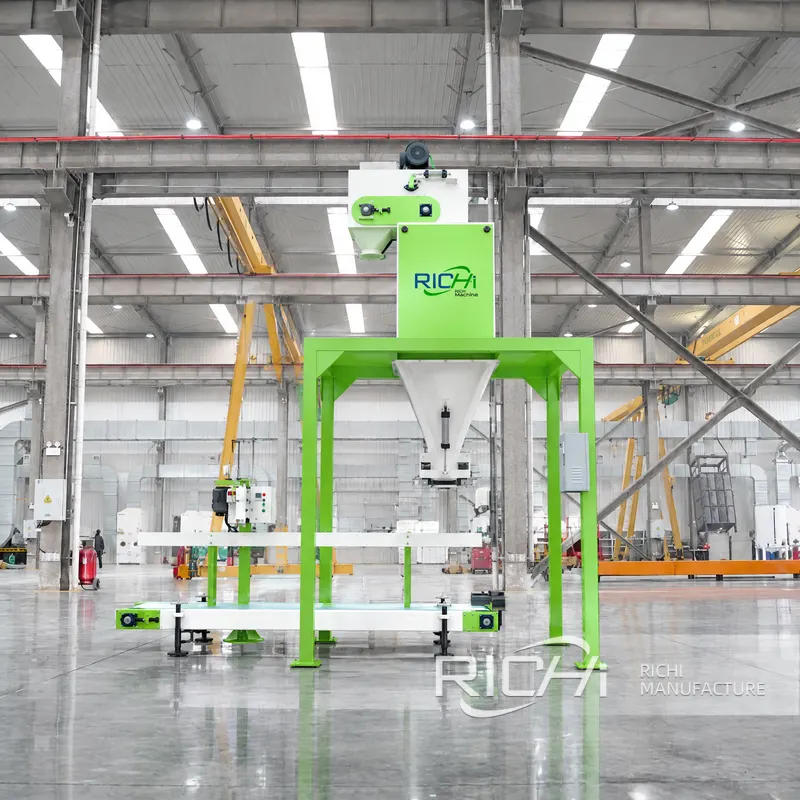
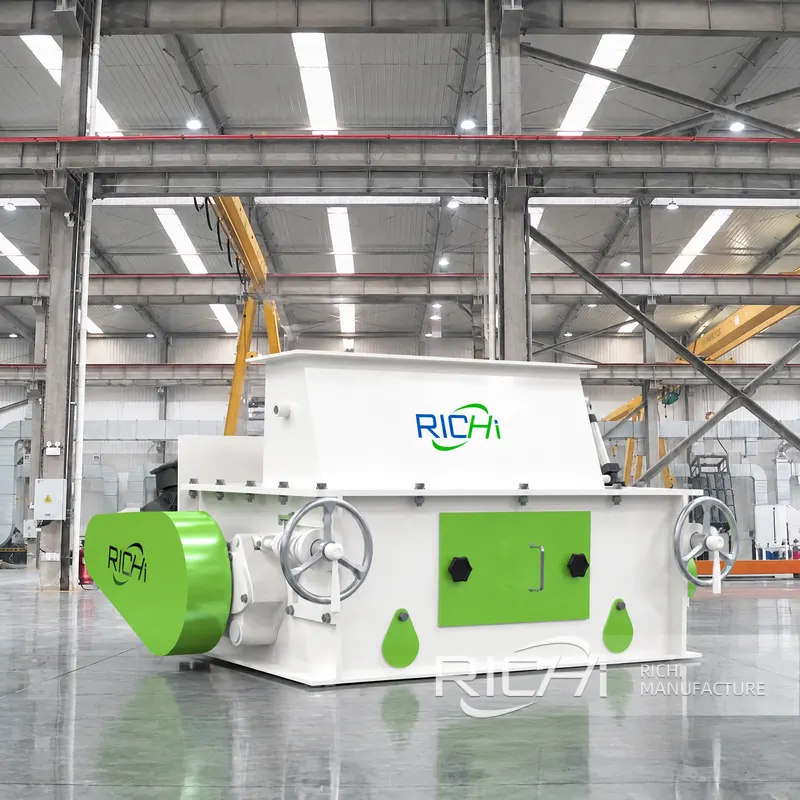
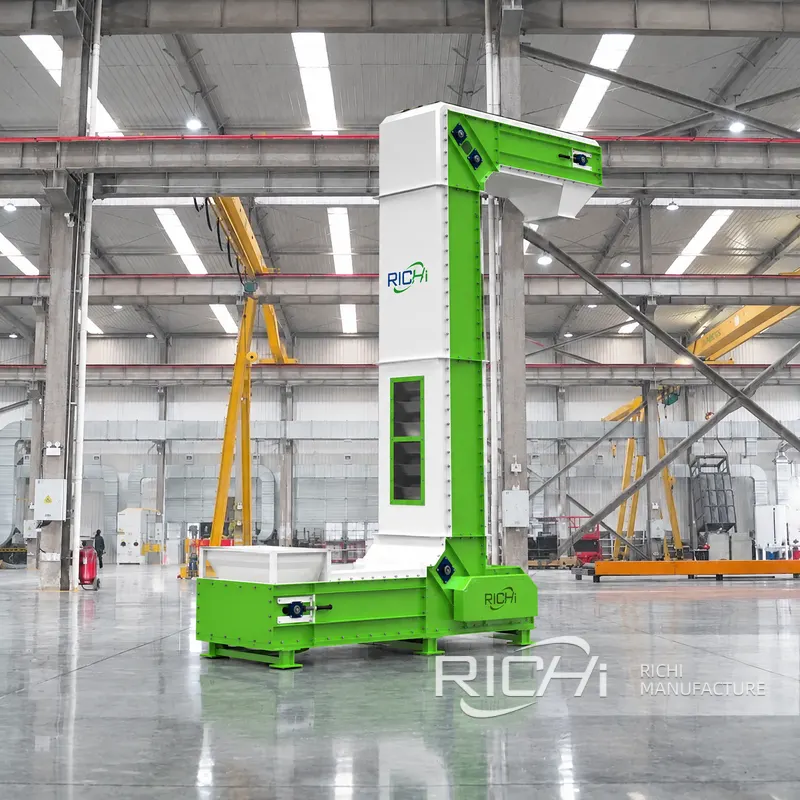
Conveyoring System
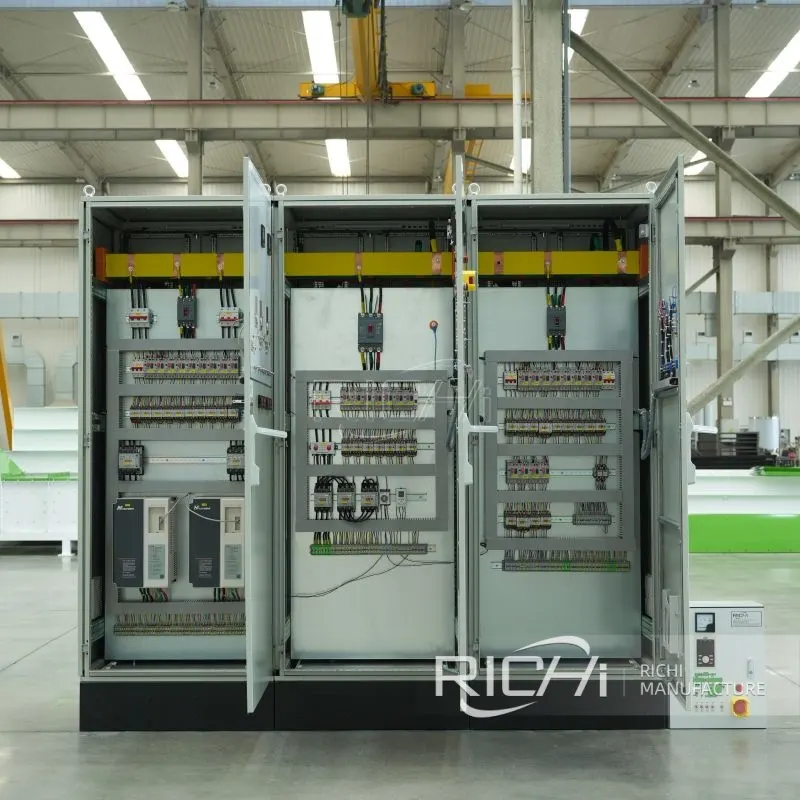
Electrical control cabinet
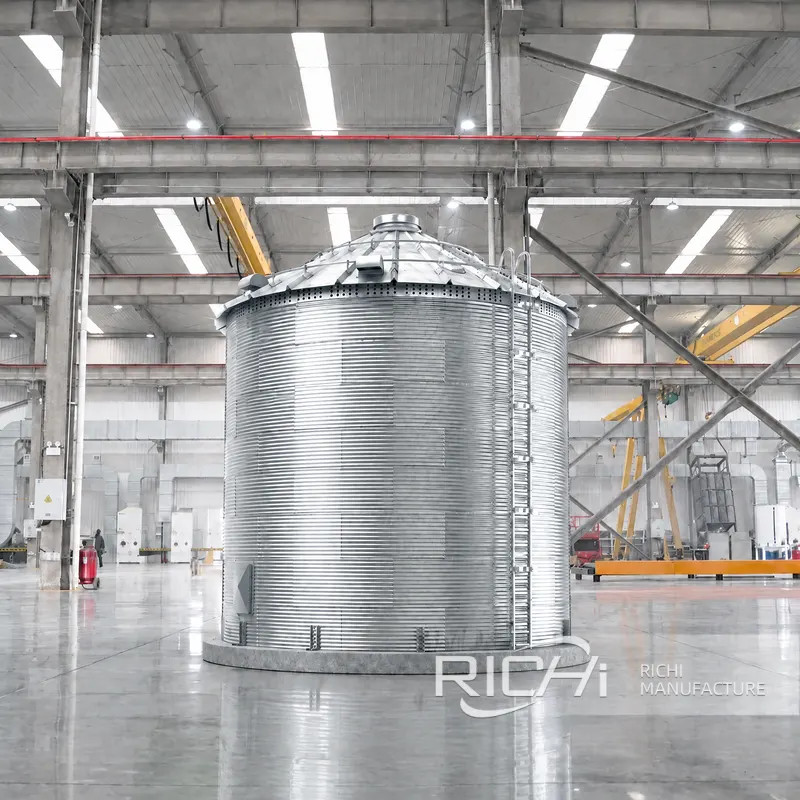
Grain Silos
Review the individual machines below to compare their functions and specifications. Share your ingredient list and required feed forms so we can identify the grain feed mill equipment needed for your project.
Find the Feed Market Within Your Grain Business
For grain growers, millers and traders, a grain feed mill offers another route to market: supplying formulated feed rather than selling cereals alone. The opportunity depends on nearby buyers. Farms may need dependable feed for their own animals, while commercial customers may value consistent specifications, suitable pack sizes or delivery quantities that larger suppliers do not readily accommodate.
Choose the first product around a defined customer group, then assess expansion. Layer mash, broiler crumbles and livestock pellets serve different purchasing needs; offering more products only makes commercial sense when demand supports the added production complexity. Compare delivered ingredient costs, processing expenses and achievable selling prices before deciding which market to enter.
Discuss Your Feed Market

Turn Your Cereals Into Feed for Different Animals
Maize or corn, wheat, barley, sorghum, oats and broken rice can enter different animal feed recipes alongside suitable bran, protein ingredients, oils, minerals and premixes. RICHI configures each grain feed mill around those recipes and their physical specifications—from coarse grain blends to screened crumbles and water-stable aquatic feeds. Dimensions below describe different measurements: meal uses mean particle size or sieve distribution, crumbles use screened fractions, and pellets use diameter. Whole kernels, rolled grains and flakes require cereal-specific specifications rather than one universal millimetre setting.

Corn
Wheat

Barley
Oats

Sorghum
Broken Rice
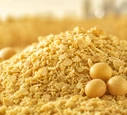
Soybean Meal

Broilers and Native Chickens
Maize–soybean meal recipes and suitable wheat-based alternatives can be supplied as mash, starter crumbles, mini-pellets or grower pellets. Forms and sizes: textured mash with controlled fines; starter crumbles approximately 1–3 mm; mini-pellets 1.6–2.4 mm diameter; grower pellets approximately 3–4 mm diameter.

Layers and Breeding Chickens
Layer mash needs a deliberate particle distribution so cereals, fine nutrients and coarse calcium remain appropriately represented. Starter crumbles and pelleted products require different finishing arrangements. Breeder recipes and feed presentation are reviewed separately, particularly where uniform intake and controlled feeding are priorities.

Ducks Feed
Durable pellets help limit the wastage associated with dusty duck feed. Cereal-based recipes need suitable protein, minerals and vitamins, while conditioning and cooling must support pellet integrity. Mash or starter crumbles can be accommodated. Forms and sizes: pellets no more than approximately 3 mm diameter for young ducks and around 4 mm for older birds; proposed starter crumbles 1–3 mm; mash requires an agreed sieve profile.

Turkeys Feed
Turkey starter feed requires careful grading before birds move to larger crumbles and pellets. RICHI can configure crumb separation, fines return and pellet cutting around that progression. Maize or wheat recipes are assessed with their protein ingredients, rather than treating turkey feed as a larger chicken pellet. Forms and sizes: medium crumbles 2.3–3 mm; larger crumbles 3–4 mm; short pellets approximately 4 mm diameter × 6.4 mm length, followed by longer pellets where specified.

Pigs and Swine Feed
A pig grain feed mill can supply complete meal, pellets or suitable starter crumbles. Dry feed may also be prepared for a separate wet-feeding system. Grain hardness and recipe composition influence grinding, while liquid feeding requires additional mixing, hygiene and distribution equipment outside the dry mill. Forms and sizes: nursery meal around 600 μm mean particle size; finishing meal approximately 500–600 μm; proposed pellets 3–4 mm diameter and starter crumbles 1–3 mm.

Dairy Cattle and Calves
Dairy concentrates may combine ground cereals, rolled grains, protein meals and suitable by-products. Calf starters can be textured blends or pellets. Grain concentrates must be distinguished from the forage-containing ration fed on the farm.Forms and sizes: ground corn may target approximately 750–850 μm for selected dairy diets; textured calf starter requires a defined coarse fraction; proposed concentrate pellets 4–8 mm diameter. Rolled grain dimensions depend on the cereal.

Beef Cattle Feed
Beef operations may purchase coarse grain blends, pelleted supplements or concentrates for mixing with forage. Dry rolling and steam flaking are distinct processing routes requiring appropriate equipment. Forms and sizes: whole or cracked kernels, rolled grain and flakes are specified by cereal and processing quality; proposed concentrate pellets 4–8 mm diameter. Flake density and starch availability accompany dimensional checks.

Sheep Feed
Whole cereals, coarse mixtures and pelleted compound feeds serve different sheep production systems. Forms and sizes: whole kernels retain their natural dimensions; coarse blends require an agreed sieve distribution; approximately 4 mm diameter pellets are a commercial reference. Starter crumbles can be specified separately where required.

Goats Feed
Goat feed can be supplied as whole-grain or rolled-grain mixtures, textured concentrates and pellets. Forms and sizes: whole and rolled grains follow cereal-specific dimensions; coarse mixtures use a specified sieve profile; approximately 4 mm diameter pellets provide a commercial reference.

Rabbits Feed
Rabbit compound feed combines cereals with adequate fibre sources, protein ingredients and micronutrients. Pelleting helps present those ingredients together, while the fibre fraction requires careful preparation. Forms and sizes: pellets approximately 3–4 mm diameter and 8–10 mm long. Ground ingredient blends can be supplied as intermediate products; their particle distribution must preserve the recipe’s fibre requirements.

Horses Feed
Equine feeds may include textured cereal mixtures, pellets and extruded nuggets. Oats, barley or maize are combined with the required fibre, protein and micronutrients. Rolling, pelleting and extrusion are different options. Forms and sizes: textured blends retain specified whole or processed grain fractions; pelleted feeds have published examples spanning approximately 5–19 mm diameter. Extruded nugget dimensions are agreed by product and horse category.

Fish Feed
Cereals contribute starch and energy to fish recipes alongside appropriate protein ingredients and oils. Sinking pellets and floating or slow-sinking extruded feeds require different density control. Forms and sizes: granules around 0.5–1.5 mm for selected small-fish applications; approximately 2–4 mm pellets for intermediate stages and 5–7 mm for larger fish. Mash, paste and moist feeds require separate specifications.

Shrimp Feed
Wheat flour and other suitable cereal ingredients can support binding in shrimp feed recipes. The line needs fine ingredient preparation, controlled conditioning and attention to water stability. Forms and sizes: starter crumbles around 1 mm; approximately 2 mm diameter × 4 mm long pellets for selected juvenile stages; larger examples around 2.5 mm × 5 mm. Hatchery microfeeds require a dedicated specification.

Dogs and Cats Food
Grain-inclusive pet food combines suitable cereals with animal or plant proteins, fats and micronutrients.Forms and sizes: dry extruded kibble is sized to the intended animal, mouth size and product design; published dog-food examples reach approximately 18 mm. Final width, thickness and length are agreed individually. Wet and canned foods require separate processing systems.
Your Recipe Shapes the Production Line
Maize-Based Broiler Starter Example
The fat fraction requires controlled liquid dosing, while the smaller additions need weighing equipment suited to their individual batch quantities.
Maize
50.51%
Soybean meal
33.79%
Distillers dried grains with solubles
6.0%
Poultry by-product meal
2.0%
Poultry fat
3.23%
Minerals, amino acids and other specified additions
4.47%
Barley and Maize Swine Feed Example
Separate cereal storage allows barley and maize to be weighed independently. Grinding settings should be reviewed when their proportions or physical characteristics change.
Barley
39.6%
Maize
39.65%
Soybean meal
17.70%
Dicalcium phosphate
0.42%
Limestone
0.82%
Specified vitamin–mineral and salt package
1.76%
Textured Calf Starter Example
A textured product needs a route that preserves the selected cereal structure. Molasses distribution and gentle downstream handling also influence the equipment arrangement.
Dry shelled maize
35.025%
Oats or barley
25.000%
Soybean meal
2.000%
Molasses
5.000%
Trace mineral salt
1.000%
Remaining minerals and specified premixes
1.975%
Maize-Based Layer Feed Example
The limestone fraction requires suitable dosing and mixing. Its particle specification should be coordinated with the cereal fraction to limit separation during handling.
Maize
61.39%
Soybean meal
16.39%
Corn gluten meal
4.94%
Limestone
9.75%
Wheat bran
3.60%
Fat, phosphate, salt and specified micro-ingredients
3.93%
Barley-Based Growing Rabbit Feed Example
Barley and alfalfa require different preparation settings. The fibre-rich fraction influences grinding capacity, material flow and pellet formation, so equipment selection must consider the complete mixture.
Barley
40.00%
Alfalfa hay
37.50%
Wheat bran
10.00%
Soybean meal
10.20%
Molasses
1.30%
Limestone and specified vitamin premix
1.00%
Wheat-Based Extruded Tilapia Feed Example
Fine ingredient preparation and controlled oil addition support extrusion. The proportion added before extrusion versus during coating must be established through process development.
Ground wheat
32.32%
Soybean meal
44.00%
Corn protein concentrate
9.00%
Fishmeal
6.00%
Soybean oil and fish oil
5.52%
Lecithin, phosphate and specified micro-ingredients
3.16%
Ingredient proportions affect bin capacity, weighing accuracy, liquid addition and material flow. These published formulation examples illustrate different requirements for a grain feed mill. Percentages are on an as-fed basis. They are references for process planning, not ready-to-use nutritional prescriptions.
Before You Commit to a Grain Feed Mill
Is USD 40,000 enough to start?
+
USD 10,000–50,000 is a preliminary equipment range for 1–2 T/H, so your budget is worth assessing, but it does not automatically cover an installed pellet plant.
The grain feed mill price must identify whether cleaning, mixing, conditioning, cooling, controls and conveying are included. Your total grain feed mill cost also includes the items purchased locally. We would first establish whether you need mash or pellets and whether a suitable building and utilities already exist.
Both offers say 10 T/H, but one costs almost twice as much. What are we actually comparing?
+
USD 150,000–300,000 is a preliminary equipment allowance for 8–10 T/H; offers outside it need a scope comparison rather than automatic rejection. A grain feed plant price may cover only processing machinery, while another includes silos, automated batching and structural steel.
Compare the grain feed production line price against identical recipes and acceptance conditions. Freight, site work and startup inventory should be identified separately, not hidden in an unexplained quotation total.
A seller advertises a complete line, but the conveyor list is missing. What should I request?
+
Request a numbered equipment list tied to a process drawing. A grain feed mill for sale may exclude transfer equipment that is essential in your building. Ask the supplier to mark all bins, elevators, ducts, platforms, cables and utility connections as included, locally purchased or excluded. Every material transfer needs an identified destination; a flow arrow without the corresponding equipment is not a defined supply scope.
We are comparing suppliers. What would let our engineer check your proposal properly?
+
Give each grain feed mill manufacturer the same input data and request a comparable submission:
- Process drawing and numbered equipment schedule.
- Capacity basis for your nominated recipes.
- Layout, maintenance clearances and structural loads.
- Electrical and utility requirements.
- Supply exclusions and performance-test conditions.
Different layouts can be valid. Your engineer needs to see why each was selected and where its limitations lie, rather than compare motor sizes or machine counts in isolation.
Our farms consume 12 tonnes a day. Should we buy 2 T/H or allow for more?
+
Start with the hours genuinely available for production. Twelve tonnes over six productive hours requires 2 T/H before extra allowance for downtime or growth. A farm grain feed mill sized on eight uninterrupted hours may leave little recovery time. For on farm grain feed production, also allow for ingredient deliveries, recipe changes and cleaning. A farm grain feed plant should be selected around the production calendar, not daily consumption divided by the longest possible shift.
Can we expand later?
+
A 1–2 T/H small grain feed mill can be planned with later expansion in mind, provided the first-stage scope is realistic. For a mini grain feed plant, retain usable equipment interfaces, space for additional bins and a route for future finished-feed handling. A grinder or mixer can sometimes remain in service, but keeping an undersized elevator or electrical supply may restrict the whole expansion. Ask for both the initial layout and the proposed next stage.
Our business plan assumes 35 tonnes per shift. Is a nominal 5 T/H enough?
+
Under an assumed 80% productive utilization, no: 5 T/H over eight hours gives 32 tonnes, although the uninterrupted theoretical total is 40 tonnes. The 80% figure is an illustration, not a guaranteed utilization rate. For a commercial grain feed mill, work backwards from the required saleable tonnes and realistic productive hours. Include recipe changes, cleaning, scheduled maintenance and stoppages before accepting the selected capacity.
At 30–40 T/H, would you propose one large line or two smaller ones?
+
We would compare the production schedule, maintenance needs and product mix before selecting either arrangement. An industrial grain feed mill can share upstream equipment and use parallel finishing sections, but each common section must support the combined demand. In an industrial grain feed plant, two pellet mills do not create two independent lines if both depend on one restricted mixer or cooler. Request a bottleneck assessment and the output available when one major machine is stopped.
We operate several livestock sites. Can one mill supply them all without excessive stockholding?
+
Yes, if production batches and delivery routes are planned together. An integrated farm feed mill should be assessed against each site’s weekly demand, feed phase and delivery frequency. For a livestock farm grain feed mill, numerous small batches may be more demanding than one large daily order. RICHI can review batch size, finished-feed bins and loading arrangements; the decision also needs your delivery distances, vehicle capacities and allowable stock periods.
We already sell maize and wheat to farms. Now we want to mix and bag feed under our own label. Is a grain grinder enough?
+
You need more than grain size reduction: approved formulations, reliable minor-ingredient weighing, mixing, traceability and a finished-product specification. A grain feed factory also needs defined arrangements for receiving non-cereal ingredients and storing separate products.
Before specifying a grain feed manufacturing plant, establish whether you will sell an ingredient meal, concentrate or complete feed. Those are different businesses, with different formulations and quality-control requirements even when the main cereal is the same.
Your grinder is listed at 5 T/H. Our maize is quite hard, and we need a finer product than the sample you showed. Should we still expect 5 T/H?
+
It must be checked against the maize sample and required grind. A corn grain feed mill producing coarse cattle ingredients faces a different duty from one preparing fine meal for pig feed. In a corn feed mill, kernel hardness, moisture, screen selection, hammer condition and aspiration affect throughput. Ask for the grinding basis in the offer, including the particle-size measurement, rather than accepting a capacity established with an unspecified cereal or a larger screen.
Are maize and corn different equipment specifications? Our suppliers use both names.
+
No. Maize and corn name the same cereal. A maize feed mill is selected by material properties, not regional terminology. In your corn feed production line enquiry, distinguish shelled kernels, meal, germ products and bran, then give moisture and the intended grind. Those differences change equipment requirements; the name alone does not.
Can we switch from maize to wheat?
+
Usually not a completely different line, but the grinding, handling and formulation must be reviewed. A wheat feed mill needs equipment settings suited to the wheat and intended feed structure. In a wheat feed plant making poultry feed, the nutritionist should also review enzyme requirements and nutrient changes. A wheat feed production line quotation should state the wheat-based recipe used for capacity selection; maize performance should not be assumed to carry over unchanged.
Does the barley need dehulling?
+
Potentially, but hulled and hull-less barley should remain separate ingredient specifications. Their fibre content, bulk density and grinding behaviour differ, which can affect dosing and throughput in a barley feed mill. A barley feed plant should not include a dehuller automatically: whether dehulling is needed depends on the purchased material and approved formula. Send both analyses and inclusion ranges so we can assess preparation requirements and the most demanding production case.
Oats are light and sometimes bridge in our current hopper. What would you change?
+
We would review the hopper outlet, wall geometry, feeder and actual bulk density before increasing motor size. An oat feed mill must handle the volume occupied by light material, not just its tonnage. In an oat feed plant, storage and weighing capacity can become restrictive even when the grinder has sufficient power. Whole oats, dehulled oats and oat by-products should be identified separately; a larger motor alone does not solve poor hopper discharge.
How much sorghum can the line handle, and will pelleting deal with tannins?
+
The mechanical inclusion range and the nutritional inclusion limit are separate questions. A sorghum feed mill can be assessed for recipes with a substantial sorghum fraction, but the grain variety and tannin analysis must be supplied. Ordinary pelleting should not be specified as a guaranteed tannin-removal treatment. For a sorghum feed plant, RICHI would assess grinding and conditioning requirements while your nutritionist confirms the permitted inclusion and any additional treatment.
Our rice supplier offers broken rice and paddy at different prices. Can we use either?
+
Do not treat them as equivalent inputs. A rice grain feed mill using cleaned broken rice may need only suitable preparation before batching; paddy still contains the husk. Paddy may require a separate dehusking and separation stage if the approved recipe requires dehusked grain. Identify husk content, contaminants and material condition before selecting a rice feed processing plant. Equipment availability alone does not establish nutritional suitability.
We can get fresh rice bran daily. Is a dryer enough to stop it becoming rancid?
+
Not necessarily. A rice bran feed mill must distinguish excess moisture from the enzyme activity that contributes to rancidity after milling. Specify whether the bran is full-fat, stabilized or defatted, and provide its expected storage period and quality data. Drying alone should not be sold as a guaranteed stabilization process. If your existing corn feed plant will use bran as an additional ingredient, review its receiving frequency and bin residence time separately; the maize storage specification is not a sufficient basis.
Can we alternate maize, wheat, millet and triticale without emptying the whole plant?
+
You need not empty dedicated ingredient bins, but shared routes and intermediate bins need a defined changeover procedure. A mixed grain feed mill needs independently dosed storage for the intended purchasing strategy. For a multi grain feed production line, list each cereal and its minimum-to-maximum inclusion. Rye, millet and triticale can be assessed, but switching the machinery settings does not replace nutritional reformulation. The cleanout requirement also depends on the products made before and after the change.
Some ingredients arrive as meal. Why does your proposal send everything through the grinder?
+
It should not, unless the required particle size justifies another grinding pass. A grain feed processing plant can provide a protected bypass for suitable meals. Confirm their particle distribution and foreign-material controls first: an ingredient that looks powdery may still contain oversize particles. The bypass must also enter the correct weighing and mixing sequence.
We only want mash for now. Which sections can be omitted without compromising the product?
+
A grain mash feed plant normally does not require conditioning, pelleting, cooling or crumbling equipment. It still needs the appropriate cleaning, preparation, dosing, mixing and discharge arrangements. Grain mash feed must have a specified particle distribution and verified mixing performance, particularly where coarse cereals and fine premixes differ in size. We can lay out a grain mash feed production line with future pelleting access, but later additions may still require utility and structural work.
Is cereal meal a complete feed?
+
No. A grain powder feed production line may produce an ingredient meal; complete feed requires a nutritionally specified combination of ingredients. If you sell both, define separate recipes, labels and weighing requirements. Sharing a grinder does not make the products equivalent.
Our customers reject bags with too much powder. How would you specify the crumble section?
+
Specify the saleable sieve fraction and permitted fines at the agreed sampling point. A grain crumble production line needs coordinated crumbling, screening and return routes, not simply a crumbler after the cooler. For a broiler grain feed mill, approximately 1–3 mm is a useful starter-crumble reference, subject to the flock programme. We would also review pellet quality before crumbling and the transfers after screening, because handling can generate additional fines before bagging.
Can the pellet section make several diameters, or does each product need its own machine?
+
Several diameters can often be made with one pellet mill by changing the die and operating settings, but capacity and changeover time must be assessed separately. A grain feed pellet production line selected around one poultry recipe may perform differently on a fibrous livestock formula. For a grain feed pellet production plant, list every required diameter and recipe. The offer should identify the supplied dies and the output basis for each agreed product.
What exactly should a pellet trial prove before we approve the order?
+
It should demonstrate agreed requirements using a representative recipe and documented test conditions. For a grain feed pellet processing line, record ingredient moisture, preparation, conditioning, die specification, throughput and the finished pellet results.
A grain feed pellet plant should be assessed on saleable product after cooling and screening, not hot material leaving the die. Ask how trial results translate into the proposed equipment selection and which performance conditions will be recorded in the technical agreement.
Another offer says “grain pellets” but does not mention animal feed. Is the equipment comparable?
+
Do not assume it is. A grain pellet production line may refer to feed, fuel or another compacted product, with different process and quality requirements. Define the intended animal feed before comparing a grain pellet plant with an alternative offer. When reviewing a grain feed production line for sale, check the actual recipe basis, conditioner, materials, cleaning access and finished-product handling. A similar-looking press is not evidence that the complete process is suitable.
We supply broiler farms and egg producers. Can their feeds share one system?
+
Yes, where formulation, hygiene and scheduling requirements allow. A poultry grain feed mill can share suitable intake, batching and mixing equipment, with different finishing routes for mash and pelleted products. In a poultry grain feed plant, the ingredient bins and product destinations must support both businesses. A chicken grain feed production line should therefore be reviewed against the actual weekly mix of feeds, including small batches, changeovers and the different particle structures required.
The layer customers want coarse mash. Our broiler formulas need finer grinding, and we cannot keep stopping to change screens. What arrangement would you propose?
+
Use separately controlled preparation or suitable bypass arrangements rather than forcing both products through one fixed setting. A layer grain feed mill needs to preserve the agreed cereal and calcium particle distribution.
The proposal should show which materials are ground, which bypass grinding and where they are combined. If only one grinder is included, its screen-change procedure, scheduling and intermediate storage must be assessed before promising rapid switching between coarse mash and pellet preparation.
We need pig feed at around 600 microns. What information do you need to size the grinder?
+
We need representative cereals, moisture, inclusion rates, the particle-size method and the required hourly output. In a pig grain feed mill, roughly 600 microns is a useful reference for selected diets, not a specification covering every age and feed form. A swine grain feed plant also needs to handle the resulting meal reliably. When specifying the pig feed production line, assess hopper discharge, dust collection and mixing alongside grinding capacity.
We want dairy concentrate pellets, not a complete cattle ration. Does that change the proposal?
+
Yes. A dairy cattle grain feed mill should be designed around the concentrate recipe and its role in the feeding programme. A cattle grain feed mill producing concentrate does not automatically need forage chopping or a complete-ration mixing system.
Likewise, a beef cattle grain feed plant may supply a supplement for mixing with forage elsewhere. State whether the product is a concentrate, supplement or complete feed before comparing the equipment scope and claimed output.
Can cattle, sheep and goat feeds be made in the same building?
+
They can, but shared production requires more than separate recipe names. A livestock grain feed mill must address carryover, especially where mineral specifications differ. For a sheep grain feed mill, review the ingredients previously handled and the required flushing or separation measures.
A goat grain feed plant may use different mineral additions, so sequencing alone should not be assumed sufficient. Ask for a documented material-flow and cleaning approach, with validation appropriate to the proposed products.
We may add fish feed later. Can we reserve space and use the same pellet equipment?
+
Reserve space now, but do not assume a livestock pellet section will meet the future fish-feed specification. A fish grain feed mill may require finer grinding, different conditioning and stronger control of water stability. An aquaculture grain feed plant producing floating feed normally needs a dedicated extrusion route with drying and, where required, coating. Specify species, feed size and buoyancy before deciding which upstream equipment can be shared and which equipment needs separate capacity.
Our customer orders are only 250 kg each. Will a larger mixer still give an even batch?
+
Only if that quantity falls within the mixer’s validated working range. A grain feed production plant should be sized around both the smallest routine order and the main production batches. A nominal 1-tonne mixer is not automatically suitable for a 250 kg batch. For the grain feed manufacturing line, agree the minimum batch size, weighing resolution and mixing test procedure. Uniformity should be checked with the actual addition sequence and representative ingredients.
We need 15 tonnes an hour, but only for two recipes. Where should we spend on automation?
+
Prioritize the tasks that constrain your operating schedule: ingredient dosing, batch tracking, interlocks and material routing. An automatic grain feed mill does not need every possible automation feature to serve two stable recipes. An automatic grain feed production line should define which actions remain manual and what happens when an ingredient is unavailable. RICHI can assess the proposed sequence against your staffing plan instead of equating a larger control cabinet with better automation.
How many operators?
+
Staffing must be calculated from the remaining tasks, not the sales label. A fully automatic grain feed plant may still need people for receiving, bag handling, premix addition, sampling, warehouse work and maintenance. An automated grain feed production line should include a task-by-task operating plan. If a smart grain feed factory is proposed, ask which measurements are recorded, which decisions are automatic and which alarms require attendance; the term alone does not establish labour savings.
How much power should we ask the electricity company to provide?
+
Use a project load schedule, not the pellet motor rating. A grain feed mill plant also draws power for grinding, conveying, aspiration and other auxiliaries. Request connected load, expected simultaneous demand and starting requirements separately. Your local electrical designer can then check the transformer and connection against the actual supply conditions.
Our existing shed is low. Can the line fit without raising the roof?
+
Possibly. Send the clear internal height and plans showing beams, columns and doors. A grain feed production line can use a lower-rise arrangement, often with more horizontal transfers and floor space. The grain feed plant manufacturer must also allow maintenance clearances: a machine that fits under the roof may still leave no room to remove its screen, shaft or motor. Approve the maintenance-access drawing alongside the production layout.
Do we need a pit?
+
Not necessarily. For a new grain feed processing factory, above-ground receiving may be practical if it suits the delivery vehicles and unloading method. Compare the complete grain feed processing line intake arrangement, including ramps, loading height, conveyor routes, weather protection and dust capture. Avoiding excavation can create costs elsewhere; the receiving method needs to work for the actual bags, trucks or bulk loads you will handle.
Can you reuse our mixer and cooler instead of quoting new ones?
+
We can assess them after reviewing specifications, drawings, condition and operating records. A grain feed equipment manufacturer needs enough information to check the working duty and interfaces, not just a photograph of the nameplate. Calculate the grain feed equipment cost saving after modifications, integration and repairs. Retaining a cooler that limits output, or a mixer unsuitable for the batch size, can undermine the apparent saving.
We plan to start at 50–60 T/H and eventually reach 100–120 T/H. Which parts should be sized for the final capacity now?
+
Reserve space and interfaces first; oversizing every machine is rarely necessary. The complete grain feed production line should have an expansion drawing identifying future routes, electrical allowances and structural requirements.
Some common equipment may justify extra capacity now, while other sections can be duplicated later. Compare the grain feed production line cost for both stages and identify stranded investment, especially if the first-stage layout would block the later intake, storage or dispatch arrangement.
Some maize arrives at 17% moisture. Can it go straight into storage and production?
+
Do not treat it as ordinary dry grain for extended storage. Dry ingredients need a storage target matched to cereal, temperature, humidity and holding period; FAO guidance gives below approximately 13% as a general reference in humid or tropical conditions.
Seventeen-percent maize requires a separate receiving and drying or controlled short-term handling assessment. Feeding it directly also changes grinding and moisture balance. Specify the wettest expected deliveries before removing drying from the project scope.
Will pelleting remove mycotoxins?
+
Ordinary pelleting is not a guaranteed detoxification process. Accept or reject grain through representative sampling, analysis and the applicable feed specification. Mycotoxins are unevenly distributed, and visible mould is not a reliable indicator. Include a receiving hold-and-release procedure and provision for isolating rejected lots rather than relying on the pellet section to correct unsafe ingredients.
We have no boiler. Can we pellet without one, or use electricity instead?
+
The proposed pellet process must be selected before the utility system. Some small machines can compact suitable feed without steam, but that does not establish equivalent output, pellet quality or heat treatment. An electric boiler can generate steam where the power supply and operating cost make it practical. Ask for the conditioning demand, pressure at the equipment and water-quality requirements; do not select a boiler merely from the pellet mill’s rated tonnes per hour.
Some customers collect 50 kg bags, while larger farms want bulk deliveries. We do not want either loading operation to stop production. How much separation is needed?
+
Provide independently usable discharge routes and enough finished-feed buffer for the agreed dispatch schedule. At 10 T/H, bagging all output in 50 kg bags means 200 bags per hour, before allowing for interruptions.
Size the arrangement around three figures:
- The bulk load collected in each vehicle visit.
- The hours available for packing and loading.
- The longest dispatch interruption production must tolerate.
A fast packing scale will not solve limited warehouse access or a single bin needed by two products.
For our Pakistan project, the proposed site has frequent power interruptions. What must the offer address?
+
It should define controlled shutdown and restart, with backup selected for the loads you intend to operate. For the proposed maize feed plant, identify material left in conveyors, feed in the conditioner and the status of an interrupted batch. Control-system backup does not power the production motors. Provide the actual voltage, frequency, interruption pattern and generator details so the offer can distinguish essential control backup from production backup.
Our project in Indonesia would use broken rice and full-fat rice bran. Can we buy the same intake system for both?
+
Some receiving equipment can be shared, but the rice feed plant needs separate storage and feeding specifications for the two materials. Submit bran oil content, stabilization status and intended residence time, plus the delivery method for each ingredient. Broken rice and bran differ in flow, density and storage behaviour. Independent dosing and suitable cleaning access should appear on the drawing, rather than treating both as one interchangeable rice ingredient.
We are planning 3–4 T/H in Tanzania and will change recipes several times a day. What output should we budget for?
+
Request a daily schedule calculation. A mixed grain feed plant rated at 3–4 T/H cannot be assumed to maintain that output throughout every changeover. List each recipe, batch quantity, feed form and dispatch deadline. The supplier should account for shared-bin availability, cleaning, die changes and packing, then show the proposed daily total. That makes it possible to assess whether more storage or a separate finishing route is worth purchasing.
For a new feed business in Ghana, should we build silos immediately or start with bagged ingredients?
+
Start with the purchasing plan. Bagged receiving may suit the initial business, while silos need enough bulk purchasing and storage demand to justify their foundations, intake and handling systems. Quantify the inventory: a hypothetical 3 T/H operation running six productive hours daily, with maize at 60% of the recipe, needs 129.6 tonnes of maize for twelve production days.
That is an example calculation, not a recommended stock period. Add other ingredients separately, then compare the grain feed plant cost under each storage arrangement on the same inventory basis.
Our Türkiye project needs proof that capacity and mixing quality are acceptable. What should be agreed before ordering?
+
Require the grain feed production line manufacturer to agree the test basis before ordering:
- Capacity: nominated recipes, moisture, dimensions and saleable-product sampling point.
- Mixing: batch size, addition sequence, tracer, sampling and analytical method.
- Site conditions: available utilities, ingredients and test duration.
- Responsibilities: who supplies test materials, measures results and records acceptance.
A short demonstration with an unspecified material does not validate all future recipes. Record which products the acceptance test covers and how any untested formulations will be assessed.
We are still selecting a site in Peru. What can you quote now, and what has to wait?
+
We can prepare a preliminary grain feed plant proposal before the site is finalized. If you are comparing a grain feed plant for sale at this stage, separate the equipment assumptions from the unresolved building and infrastructure costs.
Send the recipes, output targets, product dimensions, operating schedule and automation preference. For the grain feed production line layout, also provide any candidate building plans, site elevation, utility information and delivery restrictions. RICHI Machinery can identify what can be specified now and which selections depend on the site. The preliminary offer should list those outstanding decisions so a later location change does not appear as an unexplained price increase.