
 0086-138 3838 9622
Dog Food Processing Plant


A dog food processing plant can serve much more than an established pet food manufacturer. RICHI develops complete dry dog food production systems for pet food factories expanding capacity, conventional feed mills entering the pet food market, contract manufacturers, private-label dog food businesses, ingredient processors moving into finished products, and investors starting a new dog food factory.
Our project experience covers dedicated dog food lines as well as multi-purpose feed factories built for a wider product portfolio. Depending on the project, we can supply single-screw dry extrusion, single-screw wet extrusion or twin-screw extrusion for dry kibble production. Existing feed manufacturers can also combine the extrusion system with pelleting or mash-feed sections, allowing the same factory to manufacture dog food alongside poultry, cattle, goat or other feeds when the business plan requires it.
From a compact first production line to an industrial manufacturing facility, the plant can be configured around your formulas, raw materials, required kibble characteristics, available building and planned production scale.
Discuss Your Dog Food Plant
Dry Dog Food for Different Formula Systems
A dog food processing plant has to handle more than a change in recipe name. Chicken meal, beef or lamb ingredients, fish meal, grain starches, pulses, root starches, oils and micro-ingredients behave differently during grinding, mixing, conditioning and extrusion. RICHI configures the dog food production line around the actual ingredient matrix, required expansion, kibble density and coating demand. Finished dry kibble can be produced in different shapes and commonly around 4–18 mm, depending on the product and die design.

Poultry-Based Dry Dog Food
Formulas built mainly around chicken, poultry, turkey or other poultry-derived protein ingredients are widely used in commercial dog food production. The plant can process these proteins with rice, corn, wheat or alternative starch sources, while extrusion, drying and fat coating are adjusted to the formula rather than using one fixed setting.
Typical Kibble Size: 4–14mm

Red-Meat-Based Dry Dog Food
Beef, lamb and other red-meat protein ingredients can be used as the main protein system in dry extruded kibble. Different protein meals, fat levels and starch combinations change material flow and cooking behavior, so the dry dog food manufacturing process is matched to the specific recipe and target kibble structure.
Typical Kibble Size: 6–18mm

Fish & Marine-Protein Dog Food
Fish meal, salmon meal and other marine-derived ingredients are used in many dry dog food formulas, often together with fish oil and selected plant ingredients. These recipes require suitable control of mixing, extrusion, drying and post-extrusion oil addition to produce stable kibble without treating a fish-based formula the same as a conventional poultry recipe.
Typical Kibble Size: 4–14mm

Multi-Protein & Custom Formula Dog Food
Some manufacturers deliberately combine poultry, meat, fish and plant proteins with several carbohydrate and fiber sources instead of building the product around one protein family. This type of dog food manufacturing requires greater formula flexibility, particularly when a factory plans frequent recipe changes, different kibble specifications or a wider commercial product range.
Typical Kibble Size: 4–18mm

Dog Food Premix
Premix is a separate powder-processing route used to prepare vitamins, minerals, amino acids and other micro-ingredients for dog food manufacturing. It does not pass through the extrusion system; when required, RICHI can configure accurate micro-dosing, batching, mixing and packing equipment as an additional section of the dog food factory.
Finished Product Form: Fine Powder, Not Kibble
RICHI does not restrict a dog food processing plant to one fixed recipe: the equipment and process modules are selected around the raw materials you actually plan to purchase and the dry kibble products you intend to sell.
Configure My Dog Food Line
See Our Dog Food Processing Plants in Operation
These project videos show how RICHI configures dog food processing plant solutions for different capacities and product combinations. Some lines focus on dry dog and cat food, while others combine pet food with aquatic feed or conventional animal feed to give the customer a broader production range from one factory.


【Video 1 —5 T/H Dog & Cat Food Production Line in Russia】This 5 T/H project is dedicated to commercial dry dog and cat food production. The line was designed for stable continuous output, multiple kibble specifications and the higher automation expected from an established pet food manufacturer.

【Video 2 — 1 T/H Dog Cat Pet & Aquatic Feed Line in Iran】This 1 T/H combined extrusion line produces dry dog food, cat food and aquatic feed. The project shows how one flexible dog food production line can serve several extruded-feed markets without turning the factory into several separate production systems.
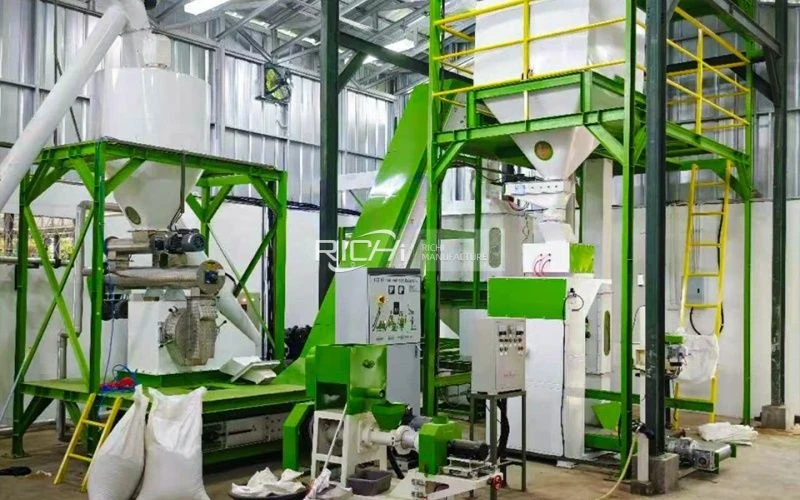
【Video 3 — 500 KG/H Pet Food + 1 T/H Livestock Feed Line in Indonesia】This Indonesia project combines a small pet food section with a larger livestock-feed section. It suits a feed manufacturer that wants to enter dog and cat food production while continuing to serve its existing livestock-feed customers from the same factory.

【Video 4 — 2 T/H Dog & Cat Food Production Line in Belarus】This 2 T/H plant is focused on dry dog and cat food rather than a broad multi-feed portfolio. The project demonstrates a practical medium-scale configuration for manufacturers that need commercial output without moving immediately into a large industrial pet food factory.

【Video 5 — 400 KG/H Dog Cat Fish & Poultry Feed Line in Bangladesh】This compact project was configured for dry dog food, cat food, extruded fish feed and poultry feed. Its value lies in product flexibility: a relatively small factory can cover both extrusion products and conventional animal feed markets while keeping the overall investment scale under control.
Custom Dog Food Processing Systems Built Around Your Formula
No two dog food processing plant projects need exactly the same process configuration. Formula composition, ingredient form, required grinding fineness, fat addition, extrusion method, kibble size, target bulk density, final moisture, available building height and automation level all affect the final design. RICHI therefore develops the dog food manufacturing process from the product backward, rather than fitting every customer into one standard line. Single-screw dry extrusion, single-screw wet extrusion and twin-screw extrusion can each be matched with the upstream and downstream systems required by the actual product.
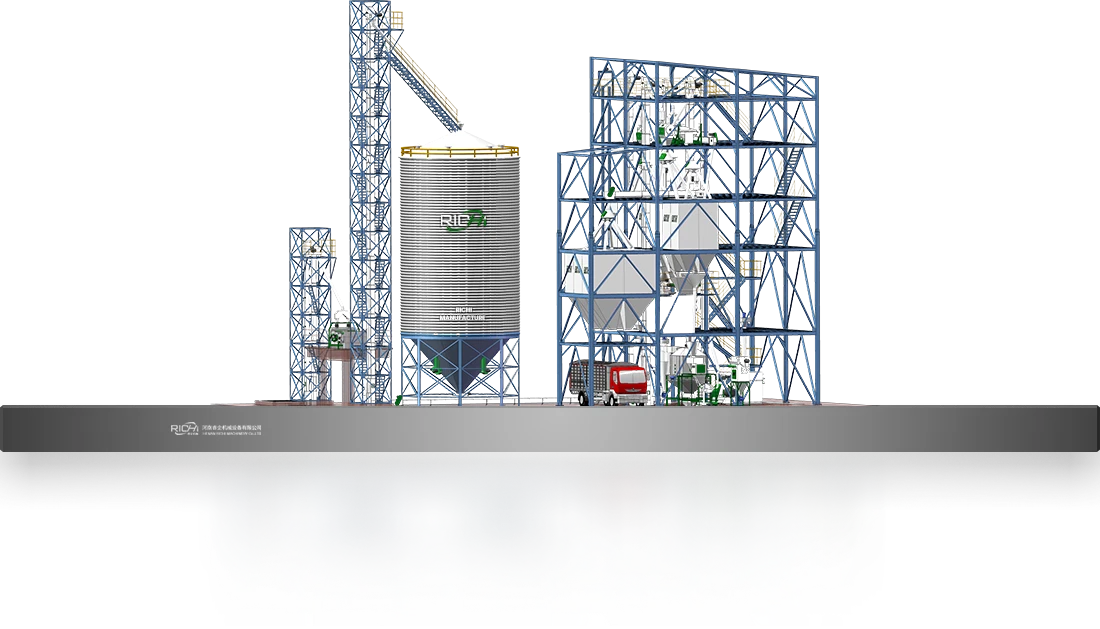
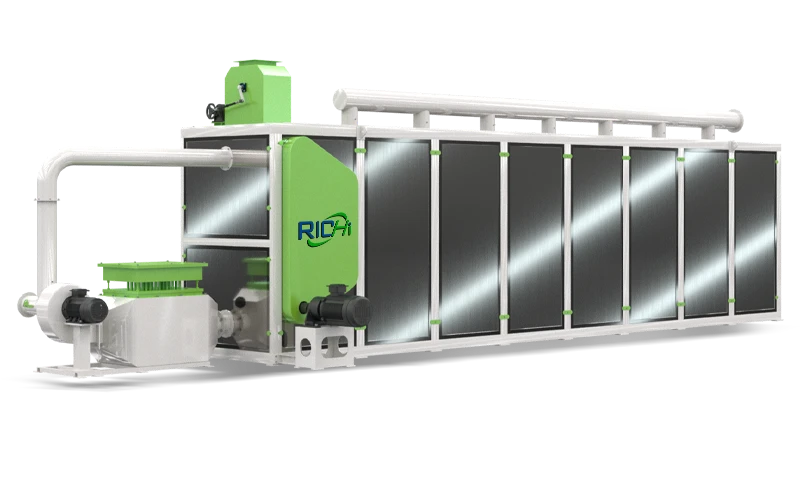
A complete dry dog food line can include raw-material receiving and storage, cleaning, grinding or fine grinding, batching and micro-dosing, mixing and liquid addition, conditioning, extrusion and shaping, drying, oil and palatant coating, cooling, screening, finished-product handling and packaging. Silos, automatic batching, vacuum coating, bulk storage, dust collection and centralized controls can be added according to production scale, while compact layouts are available where floor area or building height is limited. For combined feed projects, pelleting or mash-feed modules can also be integrated without changing the core dry-kibble route.
RICHI supports the project from process selection and layout engineering through equipment manufacturing, installation, commissioning, operator training and spare-parts support. Each module is selected because the project needs it—not simply because it appears in a standard equipment list.
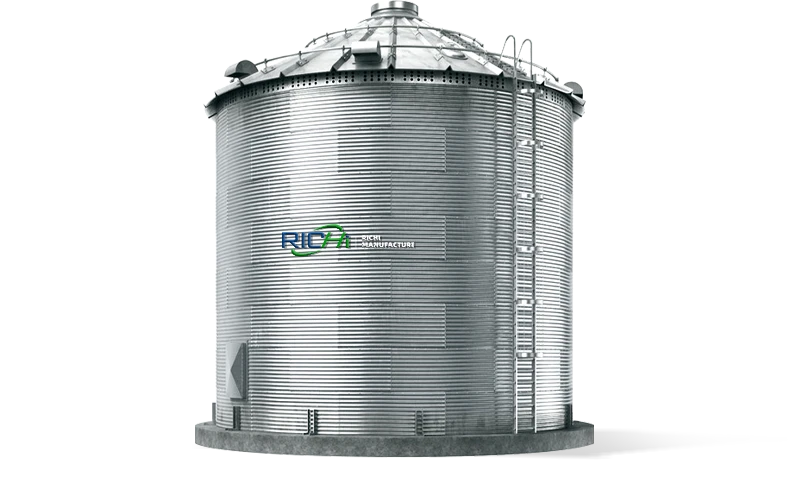
Silo system
01
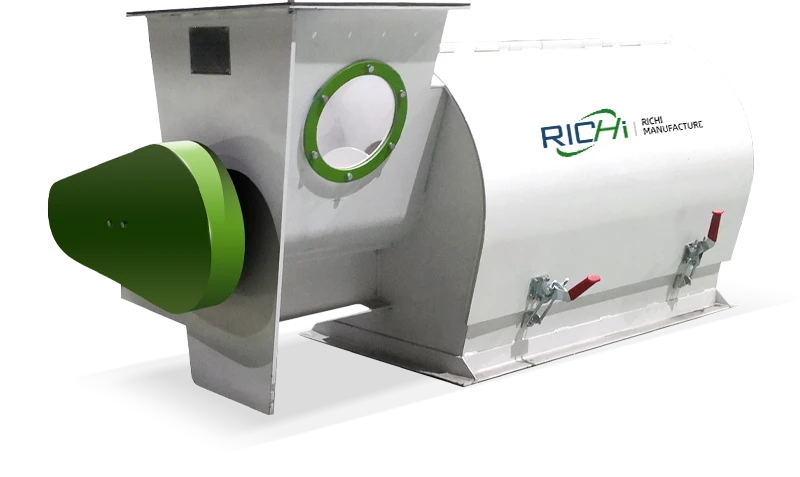
Cleaning system
02
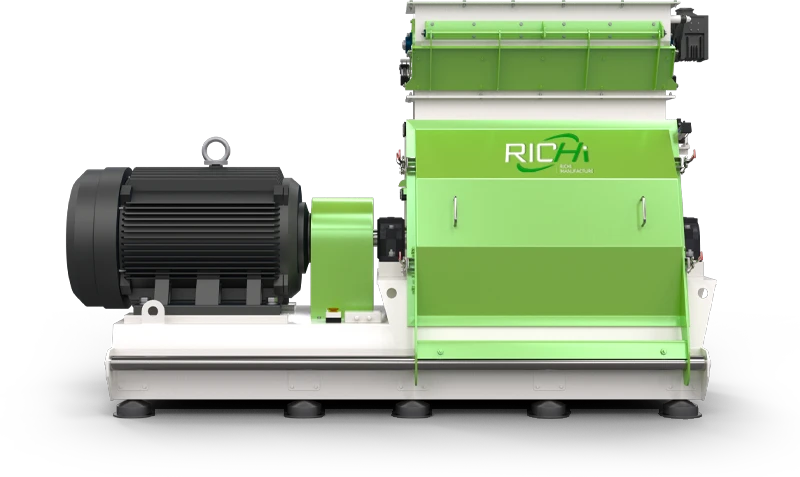
Grinding system
03
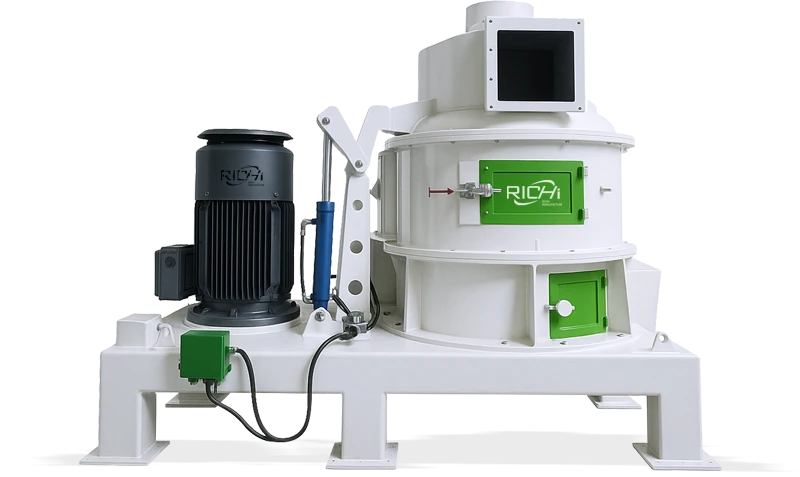
Mixing system
04
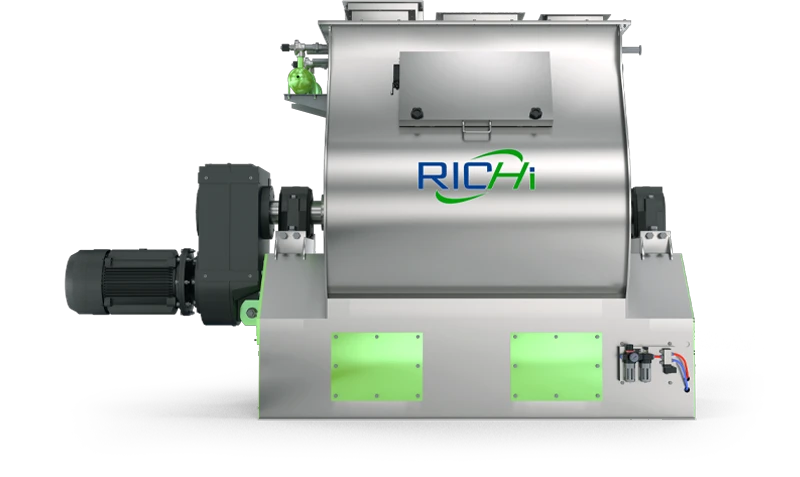
Pelleting system
05
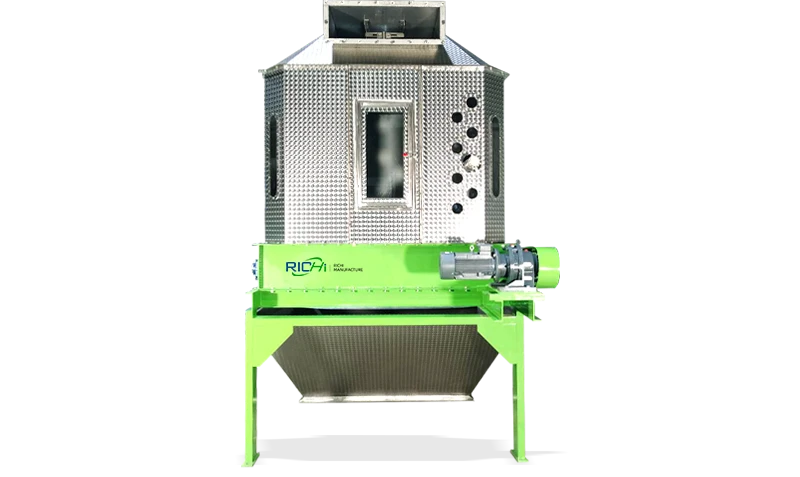
Cooling system
06
Screening system
07
Conveying system
10
Dust removal system
09
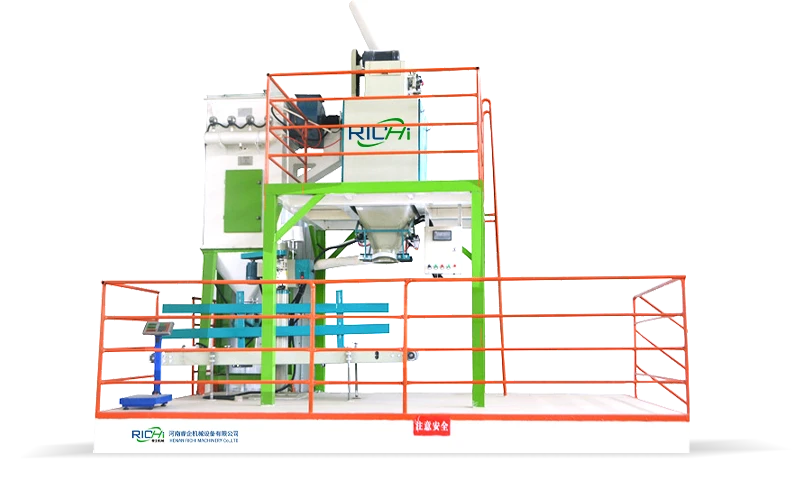
Packaging system
08
8 Custom Dog Food Processing Line Designs
A dog food processing plant can be designed as a dedicated dry kibble line or combined with aquatic feed, pellet feed and mash feed systems. These eight layouts come from different project requirements and show how capacity, extrusion method, workshop conditions, automation and product range can change the final dog food production line design.
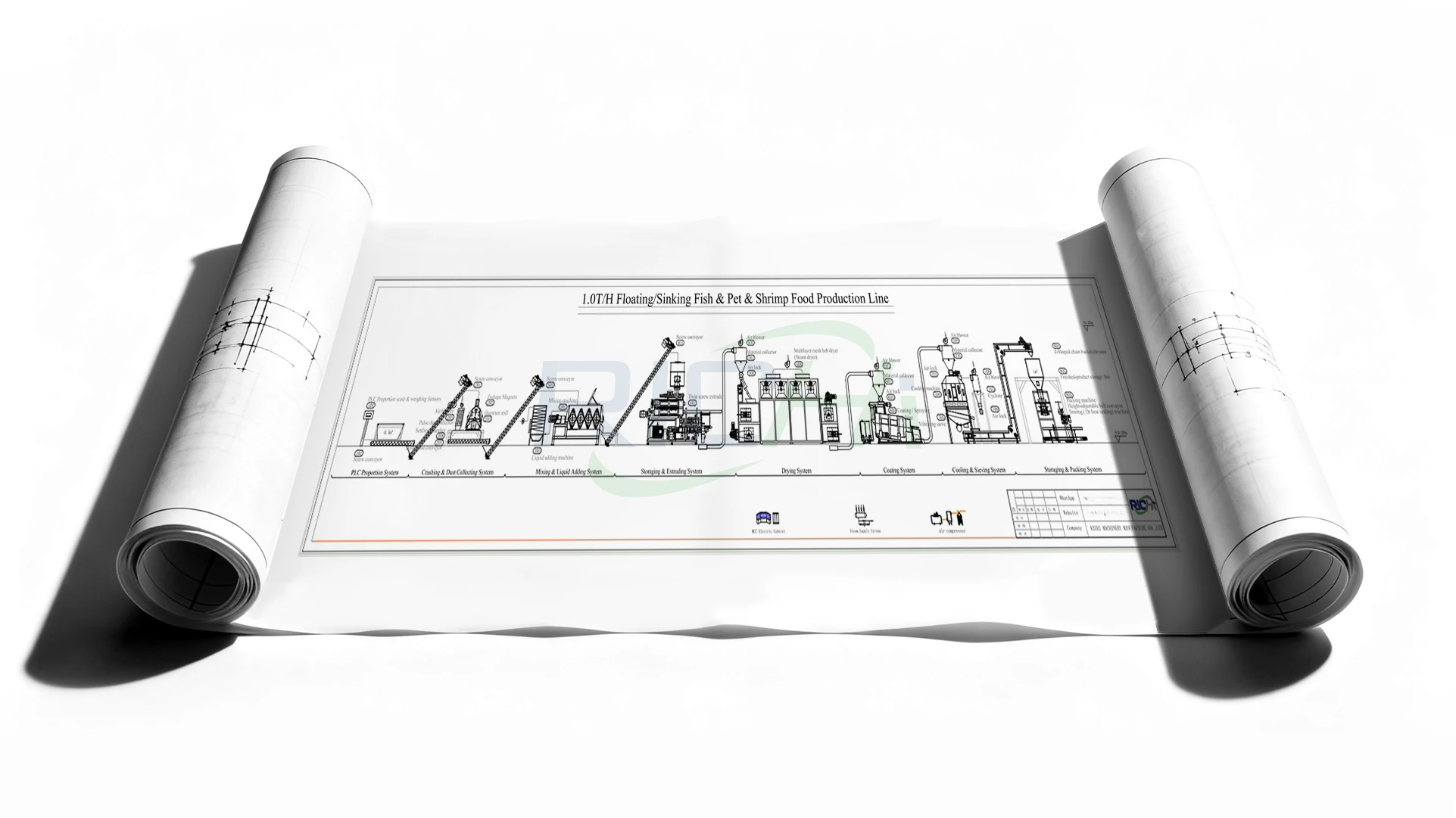
1 T/H Compact Twin-Screw Line Design
Designed for an Indonesia project, this 1 T/H line uses twin-screw wet extrusion to produce dry dog food, floating fish feed, sinking fish feed and shrimp feed. A horizontal layout and PLC batching system keep the total equipment height at about 6 m, making it suitable for workshops with limited height.
Process: PLC batching and weighing → grinding → mixing & liquid addition → twin-screw extrusion → belt drying → drum coating → cooling → screening → automatic packing
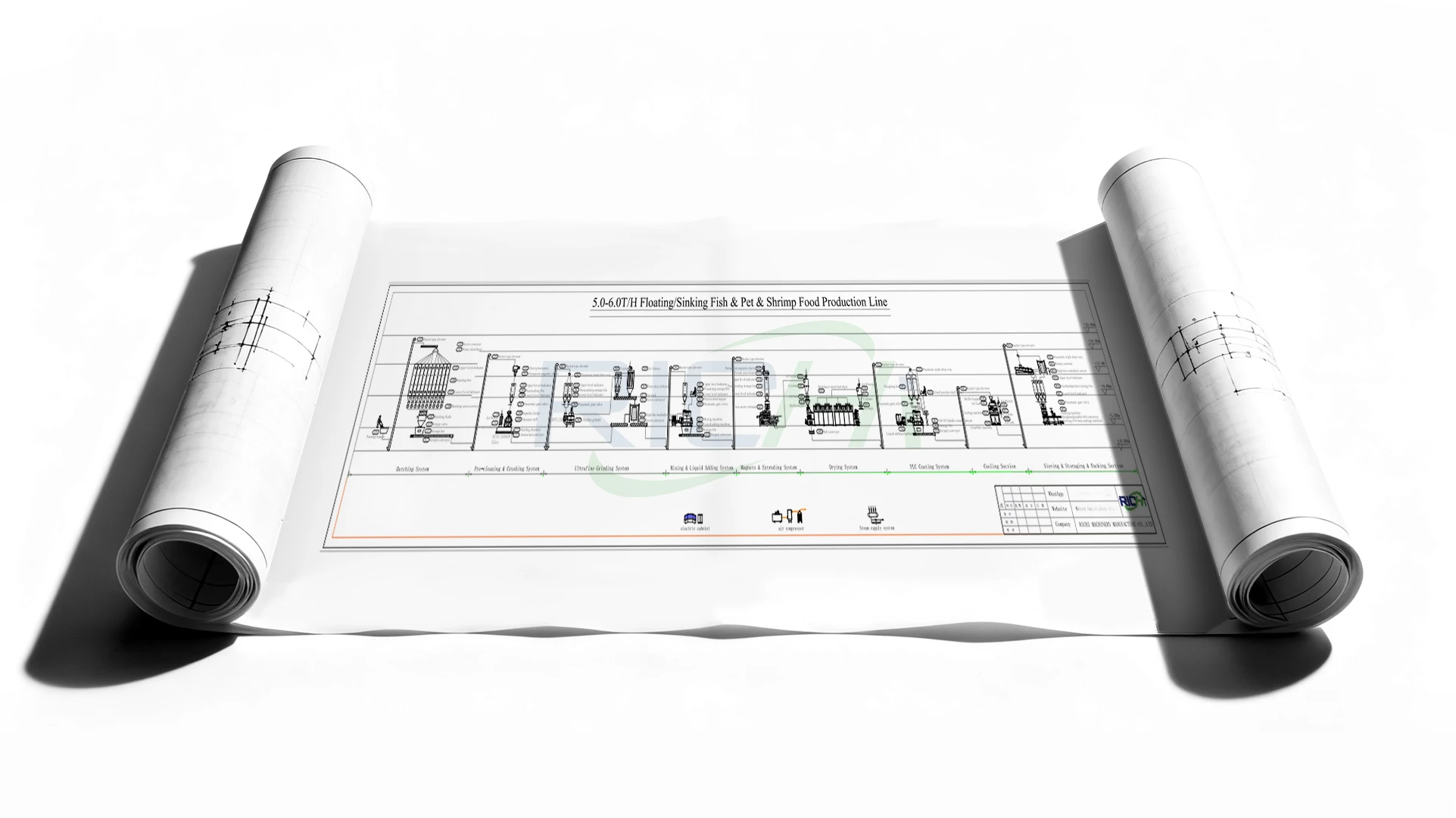
5–6 T/H Advanced Twin-Screw Line Design
This Iraq project was designed for dry dog food together with floating, sinking and shrimp feeds. Compared with the smaller line, it adds two-stage grinding and higher automation to support finer material preparation and a broader extruded-feed range.
Process: manual feeding → automatic batching & weighing → coarse grinding → fine grinding → mixing & liquid addition → twin-screw extrusion → belt drying → coating → cooling → optional crumbling → screening → automatic packing
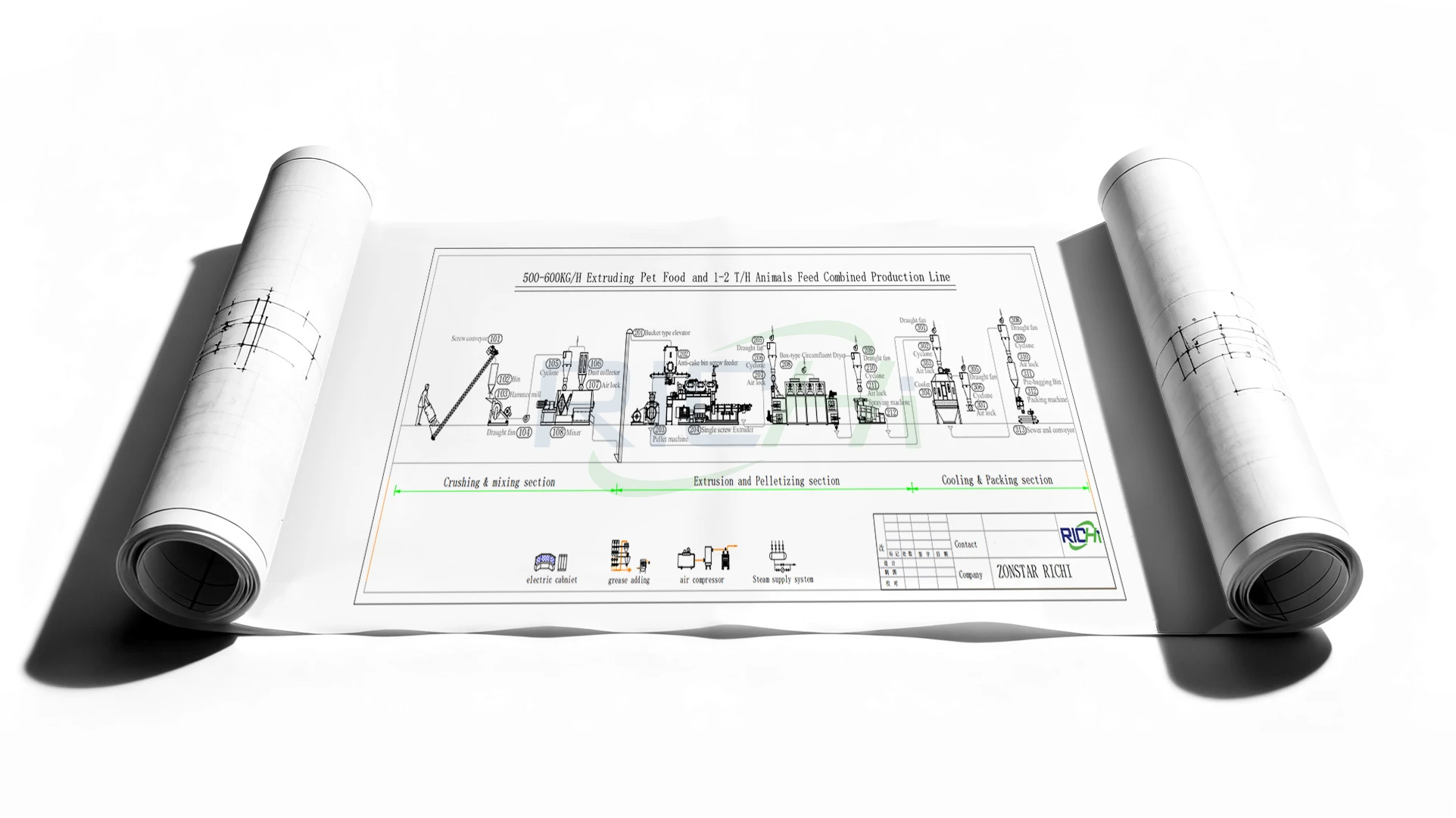
500–600 KG/H Extrusion + Pelleting Line Design
This Kenya project combines single-screw wet extrusion with pelleting. The customer can produce dry extruded dog food while also using the same plant for conventional livestock pellet feed, giving a small factory more product flexibility without building two independent lines.
Process: manual feeding → small-scale grinding → ribbon mixing → extrusion / pelleting → drying → coating → cooling → automatic packing
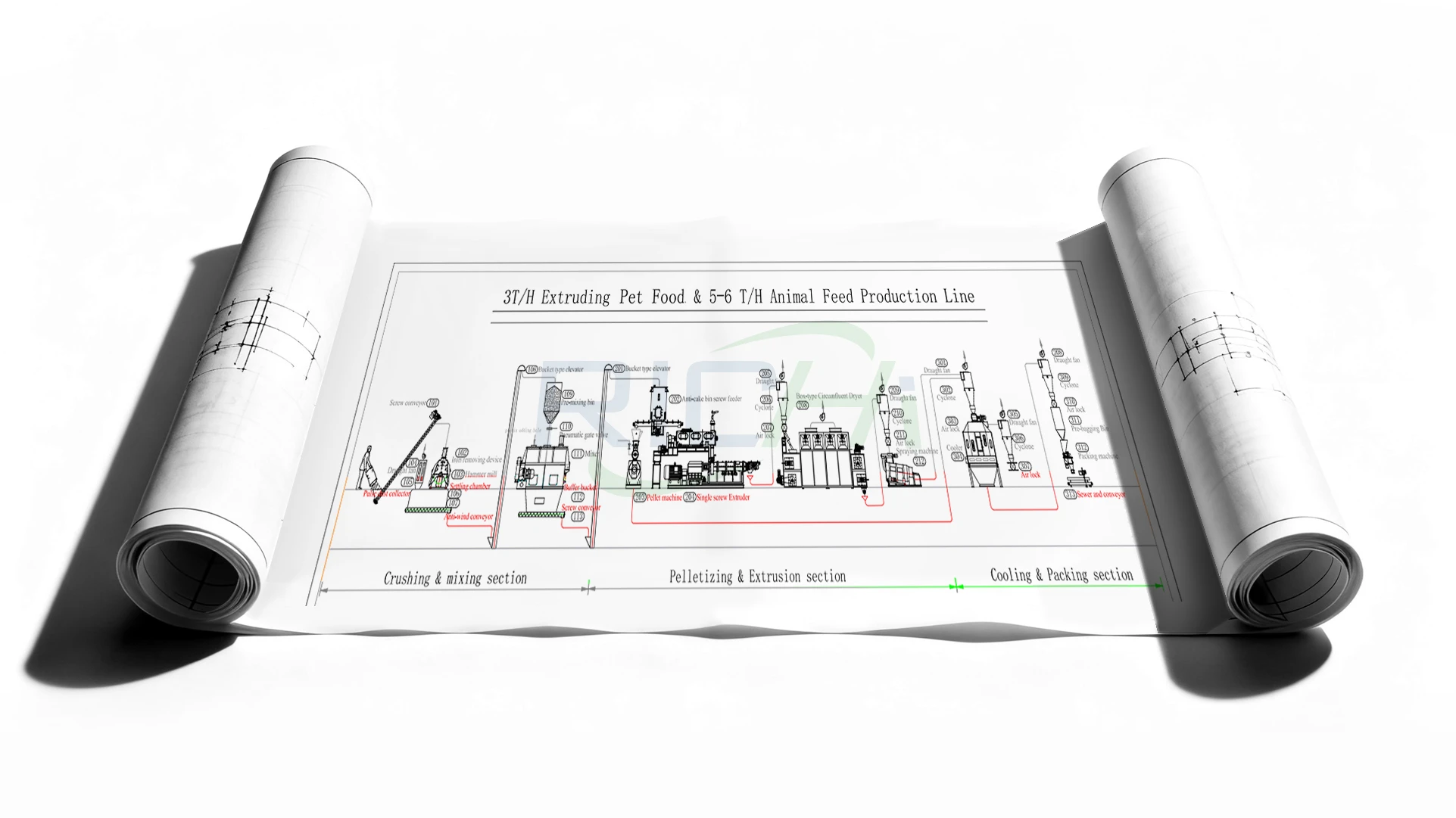
3 T/H Commercial Combined Feed Line Design
Developed for a Brazil project, this 3 T/H system also combines dog food extrusion with feed pelleting, but uses larger and more commercial-grade equipment. It suits feed manufacturers that want to add dry dog food while retaining livestock feed production.
Process: manual feeding → hammer milling → paddle mixing → extrusion / pelleting → drying → coating → cooling → automatic packing
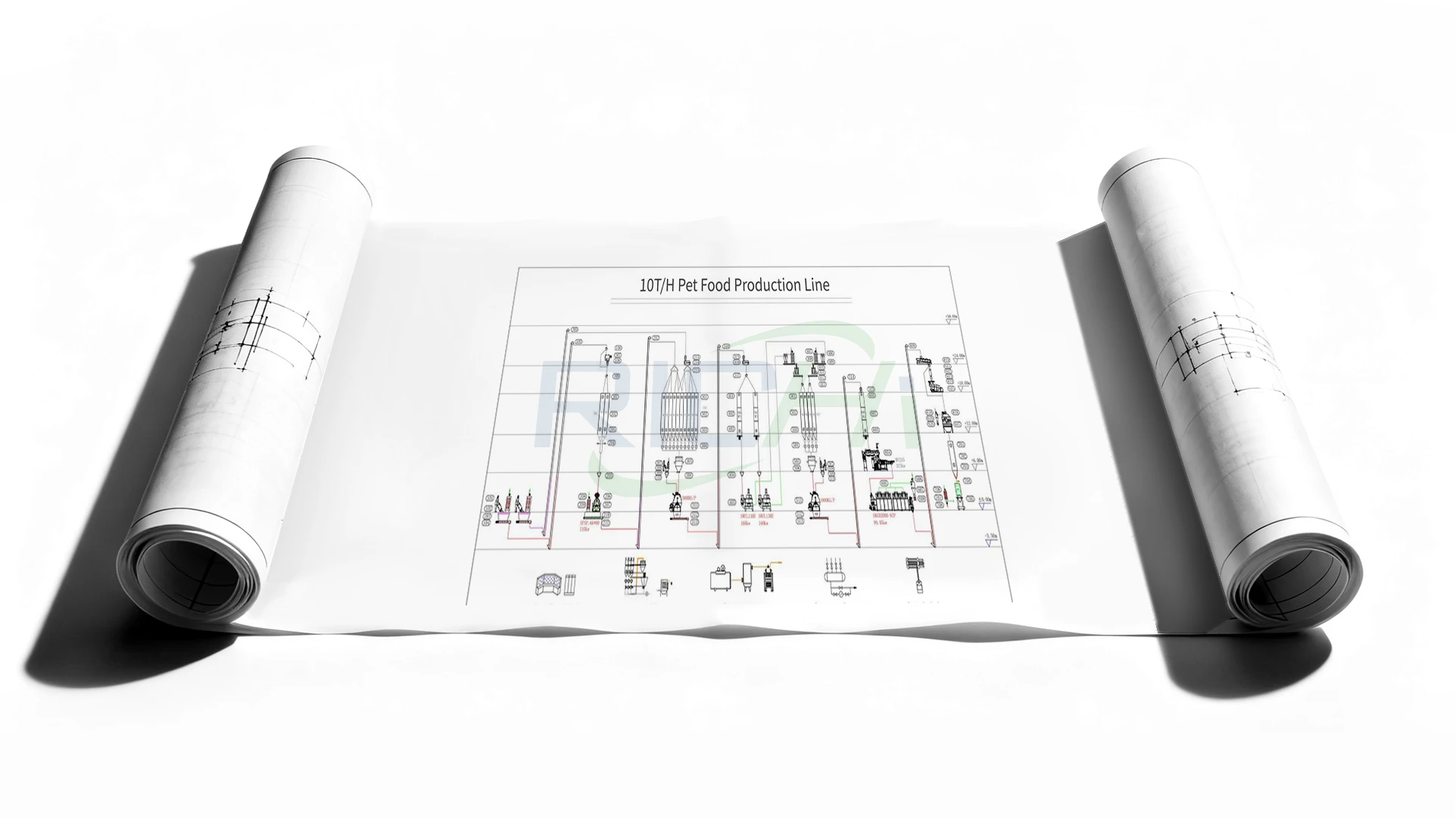
10 T/H Industrial Dog Food Line Design
This 10 T/H process was customized for a U.S. customer in 2024 and integrated into an existing livestock feed mill. The design adds a dedicated dry dog food processing route rather than rebuilding the whole factory, making use of the customer’s existing industrial infrastructure.
Process: manual feeding → first grinding → first batching & mixing → fine grinding → second batching & mixing → extrusion → drying → screening → coating → cooling → packing
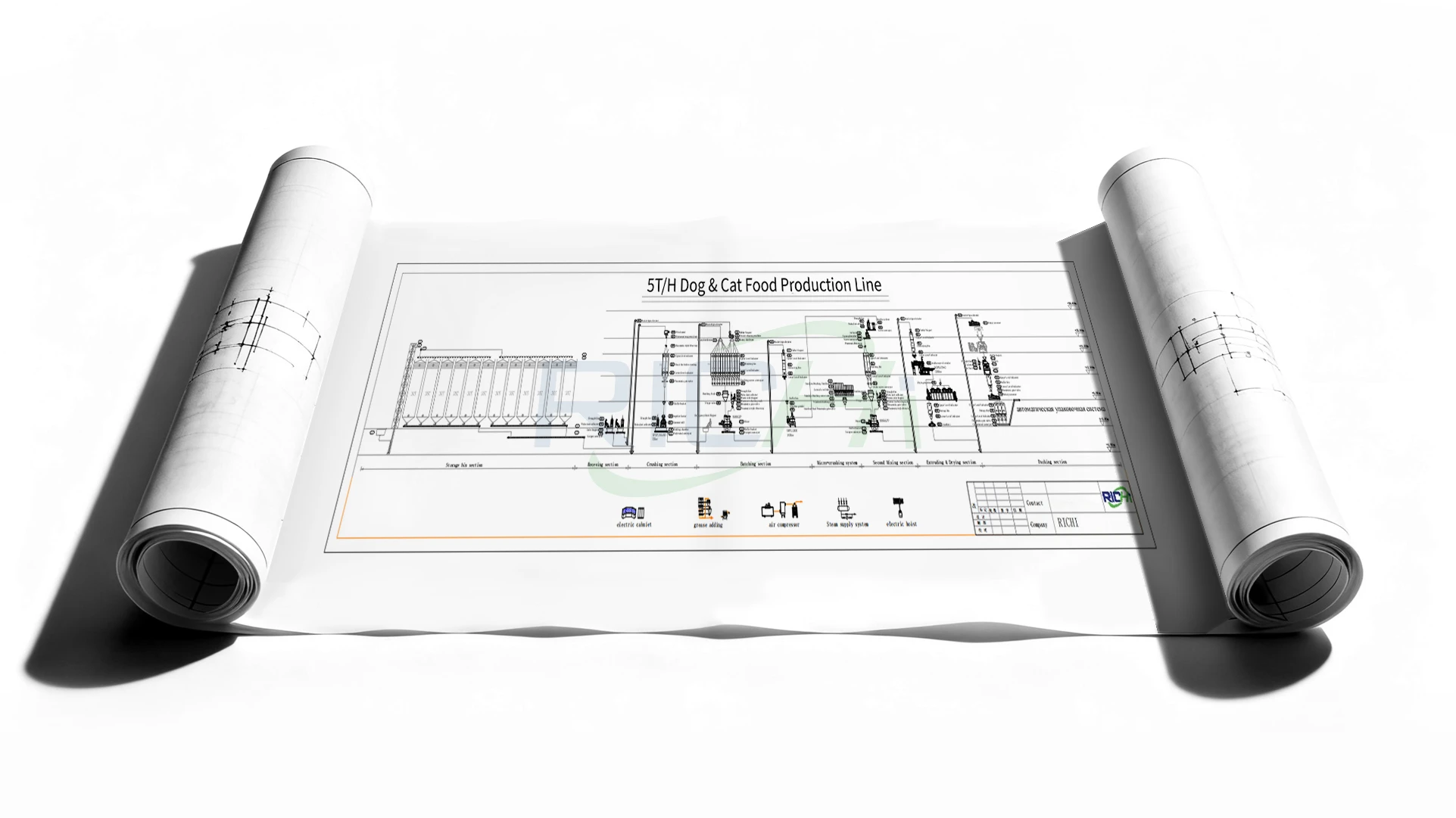
5 T/H Dog & Cat Food Line Design
This Russia project was designed specifically for dry dog and cat food and includes twelve 30-ton raw-material silos. The configuration emphasizes bulk ingredient storage, automatic batching and two-stage material preparation, with equipment and silo investment totaling nearly US$1.4 million.
Process: raw-material storage → feeding → first grinding → automatic batching → first mixing & liquid addition → fine grinding → second batching & mixing → extrusion → drying → screening → cooling → coating → bulk storage → existing packing section
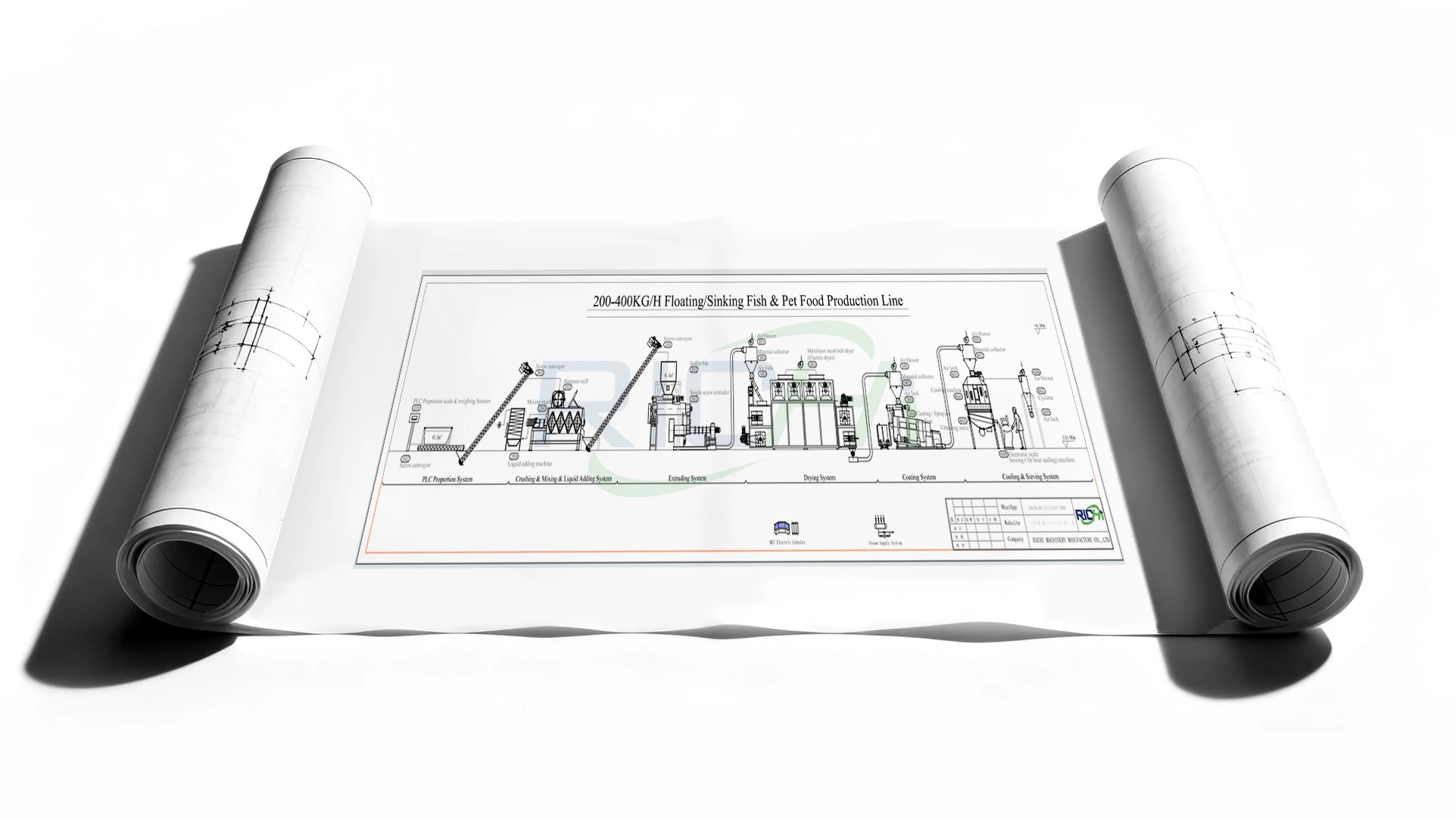
0.2–0.4 T/H Dry Extrusion Line Design
This Bangladesh project uses single-screw dry extrusion for dry dog food, floating fish feed and sinking fish feed. The compact horizontal arrangement and PLC batching system make it suitable for customers entering extrusion feed production with a lower initial investment.
Process: PLC batching & weighing → grinding → mixing & liquid addition → single-screw extrusion → belt drying → drum coating → cooling → screening → manual packing
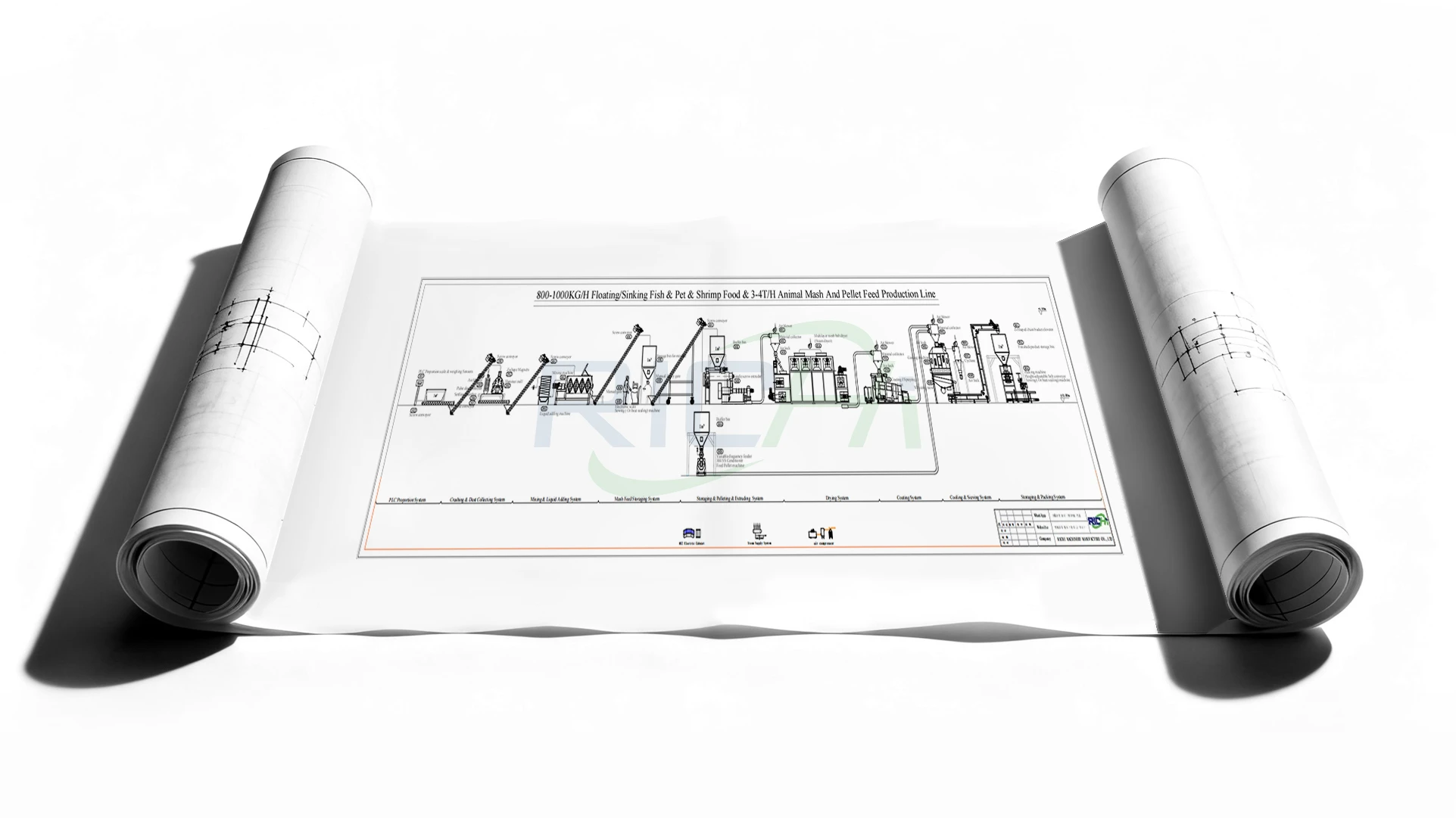
0.8–1 T/H Multi-Feed Production Line Design
Designed for a Côte d’Ivoire project, this system combines dry dog food extrusion with livestock pellet feed and mash feed production. Mash products can be packed after mixing, while other formulations continue into the extrusion or pelleting sections, allowing one factory to serve several feed markets.
Process: PLC batching & weighing → grinding → mixing & liquid addition → mash packing / extrusion / pelleting → drying → coating → cooling → screening → automatic packing
Dog Food Processing Plant Projects Worldwide
RICHI has developed dog food processing plant solutions for different production scales, factory conditions and product strategies. Some projects focus only on dry dog kibble, while others combine dog food with cat food, floating fish feed, pellet feed or mash feed. This flexibility allows an existing feed mill, pet food manufacturer or new investor to build a dog food production line around the market it actually plans to serve.
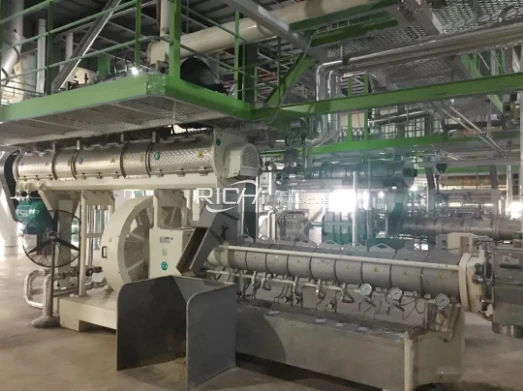
8 T/H Premium Kibble Plant Project
Russia
Built around dry dog and cat food production, this line uses fine grinding, automatic batching and twin-screw extrusion to support several kibble sizes and formula changes. Bulk ingredient storage was also integrated for continuous commercial production.

1–2 T/H Conditioned Kibble Line Project
Peru
This line uses steam and moisture conditioning before single-screw extrusion to produce dry dog food with more controlled cooking than a basic dry-extrusion setup. The plant remains compact while adding conditioning, drying and coating for commercial kibble production.
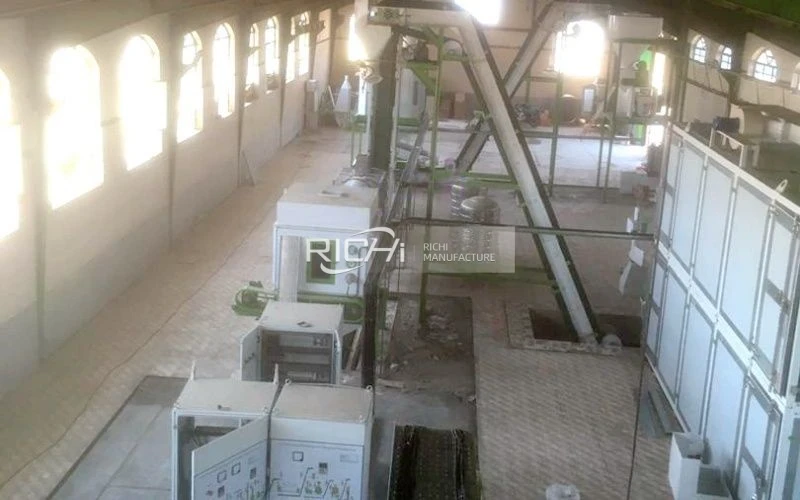
1 T/H Recipe-Flexible Kibble Line Project
Spain
This medium-scale line focuses on dry dog food with several protein and starch combinations. Twin-screw extrusion was selected to give the producer more room for recipe changes, different kibble shapes and higher-value product development.
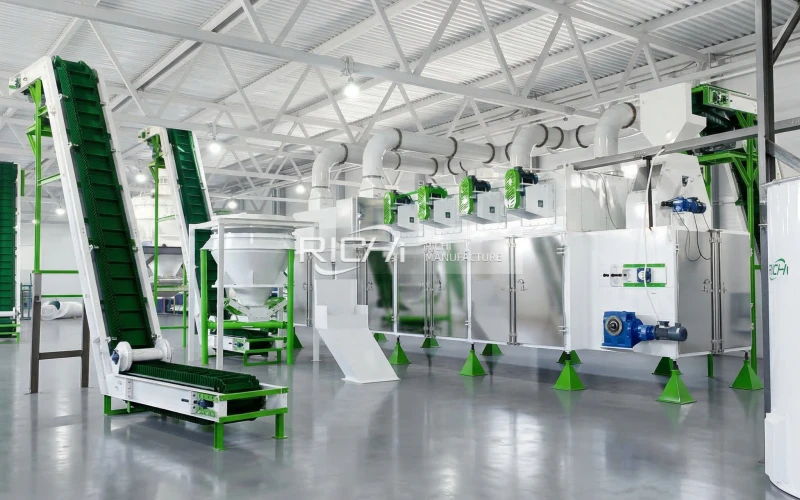
3 T/H Automated Kibble System Project
South Korea
Designed for dry dog and cat food, this line places greater emphasis on automatic weighing, fine material preparation and controlled coating. The compact equipment arrangement also suits a customer working with limited industrial floor space.
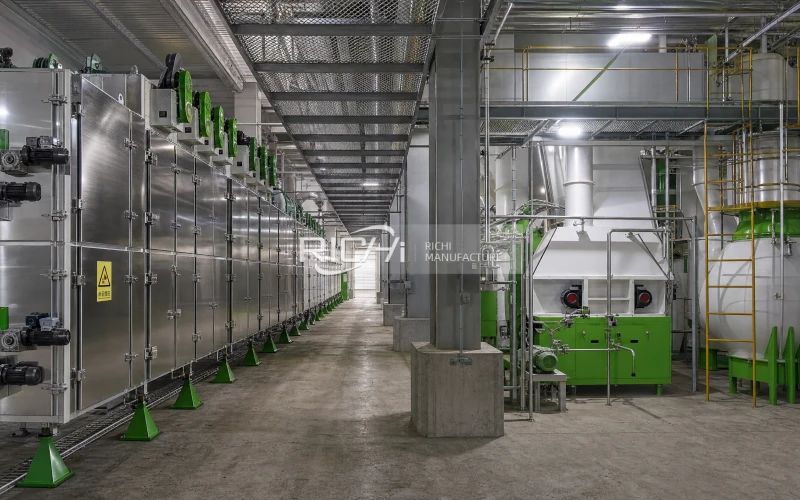
6 T/H Flexible Formula Factory Project
Turkey
This dog food manufacturing plant was configured for a manufacturer producing several dry kibble recipes for its own and private-label brands. Twin-screw extrusion gives the line greater flexibility when protein sources, starch systems and product specifications change.

10 T/H Integrated Feed Complex Project
Saudi Arabia
The project combines dry dog food and extruded fish feed with other conventional animal-feed sections in the same factory. Shared raw-material handling and batching improve plant utilization while separate extrusion and pelleting routes protect product-specific processing requirements.
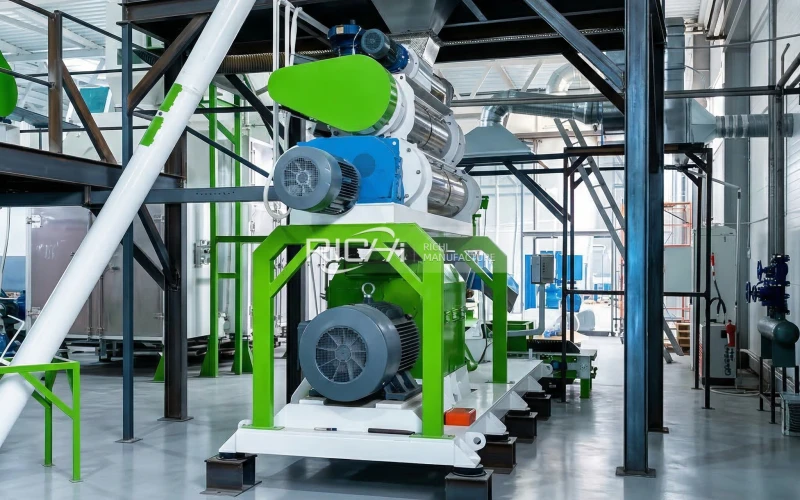
4 T/H Multi-Product Feed Hub Project
Poland
The customer required dry dog food, cat food and selected extruded aquatic feeds from one factory. Shared grinding and batching sections reduce duplicated equipment, while separate downstream settings allow each product to keep its required size and density.
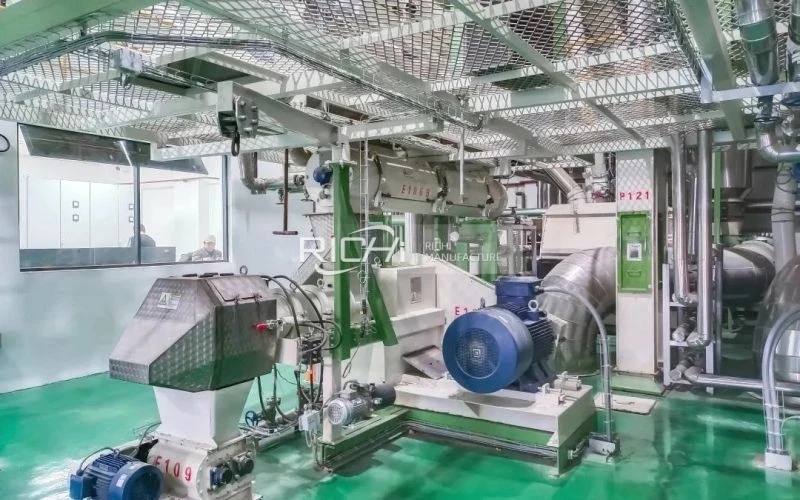
4 T/H Marine Protein Line Project
Chile
This project was designed around dry dog food formulas containing fish-derived ingredients, while also retaining the ability to make floating aquatic feed. Fine grinding, controlled extrusion and post-extrusion oil coating were key parts of the configuration.

1 T/H Regional Multi-Feed Line Project
Kazakhstan
This compact line produces dry dog food and floating fish feed for regional distribution. Single-screw dry extrusion keeps the process relatively simple, while shared grinding and mixing sections help control the investment for a smaller manufacturing business.

0.3 T/H Entry-Level Extrusion Plant Project
Thailand
Designed for a smaller investor, this dog food factory uses compact batching, grinding and dry extrusion equipment. It can manufacture dry dog kibble and selected floating feed products while keeping building, labor and initial equipment requirements comparatively simple.
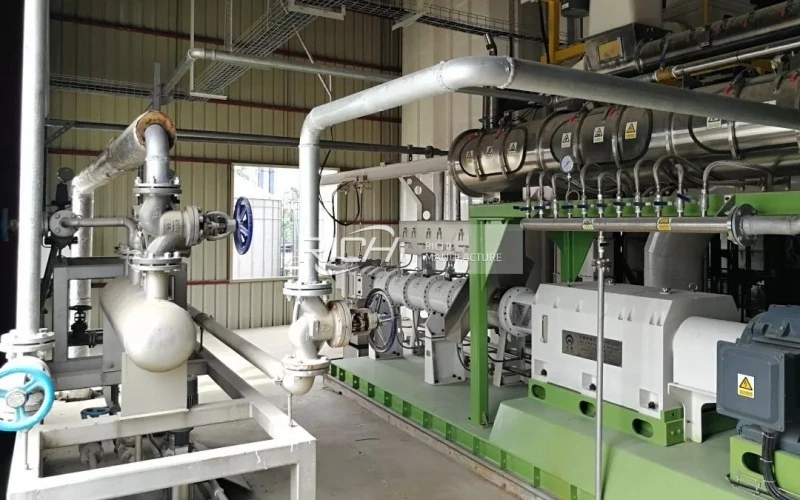
8 T/H Industrial Expansion Line Project
Mexico
An established feed producer added industrial dry dog food production to an existing manufacturing site. The new extrusion, drying and coating sections were connected with selected existing upstream systems to avoid unnecessary duplication during the expansion.
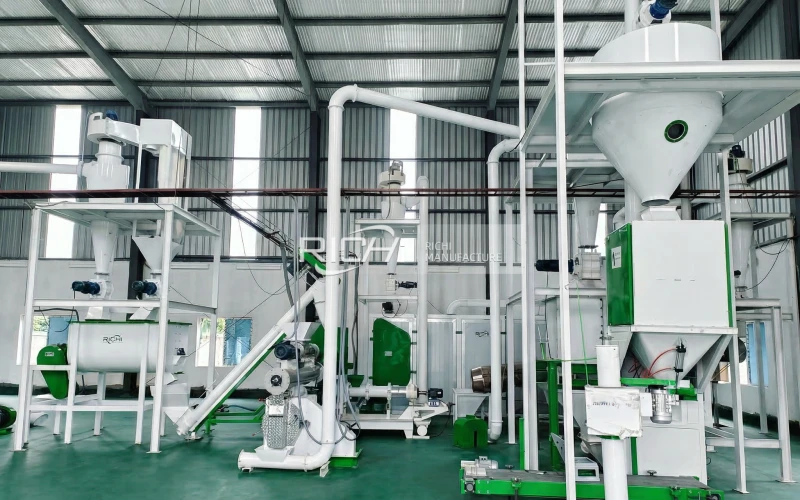
0.5 T/H Small Feed Business Line Project
Kenya
The customer wanted to enter dog food production without abandoning its livestock-feed market. The plant therefore combines dry dog food extrusion with a small pelleting section for poultry and other conventional feeds.
A dog food processing plant is ultimately judged by how well it performs after commissioning: whether operators can change formulas smoothly, kibble quality stays stable, and technical support remains available when production conditions change. Feedback from different projects also helps show why plant layout, extrusion selection and downstream drying or coating should be matched to the customer rather than copied from a standard design.


4 T/H Dog Food Project in Argentina
- Customer Type: Regional Dog Food Manufacturer
- Role: Production Manager
“We needed one line for several dry dog food recipes, so formula changeover mattered as much as output. RICHI adjusted the batching, fine grinding and twin-screw extrusion sections around our ingredient plan, and the commissioning team helped our operators establish practical settings for different kibble sizes.”

1 T/H Dog Food Project in Uzbekistan
- Customer Type: Feed Business Expanding into Pet Food
- Role: Factory Owner
“This was our first dog food production line, and we did not want an unnecessarily complicated factory. The equipment layout was compact, the operating sequence was easy for our team to understand, and the technical support during startup helped us move from trial production into regular commercial batches.”

3 T/H Dog & Cat Food Project in Italy
- Customer Type: Private-Label Pet Food Producer
- Role: Technical Director
“Our priority was flexibility because the factory handles several dog and cat food formulas with different protein and fat levels. The line was designed with fine grinding, controlled extrusion, drying and coating in mind, and RICHI worked with us on equipment arrangement rather than simply supplying individual machines.”

1–2 T/H Dog Food Project in Morocco
- Customer Type: New Dry Dog Food Producer
- Role: Managing Partner
“We had limited workshop space and wanted to keep room for future product expansion. RICHI reorganized the dog food manufacturing plant around the available building instead of asking us to redesign the whole site. Installation guidance and later technical support were also responsive when we adjusted our formulas.”

What Does a Dog Food Processing Plant Cost?
The cost of a dog food processing plant depends first on extrusion technology and capacity, but the final budget is also shaped by grinding requirements, automation, drying capacity, coating method, storage, packaging and the condition of the customer’s existing factory. A compact single-screw line may start from tens of thousands of dollars, while an automated twin-screw dog food manufacturing plant can require several hundred thousand dollars or more in processing equipment alone.
Whole dog feed mill plant set up investment : $80,000 – $40,000,000
Main Equipment Cost Breakdown:
Raw Material Receiving & Conveying :
$2,000–120,000+
Cleaning & Magnetic Separation :
$2,000–30,000
Grinding & Fine Grinding :
$2,000–150,000+
Batching & Micro-Dosing :
$2,000–150,000+
Mixing & Liquid Addition :
$2,000–80,000
Single-Screw Extrusion :
$4,000–60,000+
Twin-Screw Extrusion :
$20,000–200,000+
Belt Drying System :
$5,000–180,000+
Oil / Palatant Coating :
$1,000–120,000+
Cooling & Screening :
$5,000–60,000
Automatic Packing System :
$2,000–150,000+
Silos & Bulk Storage :
$3,000–300,000+
Dust Collection & Central Control :
$2,000–200,000+
These figures explain why two projects using the same pet food extruder can have very different total investment requirements. An existing feed mill adding an industrial dog food production line may reuse buildings, power systems, silos and upstream equipment, while a greenfield dog food factory has to fund these items from the beginning.
The most reliable way to calculate dog food plant cost is to start with your target output, formulas, extrusion route, available workshop and automation requirement. RICHI Machinery can then prepare the process configuration, equipment list, plant layout and quotation together, allowing you to see both the machinery budget and the additional investment required to bring the factory into production.

Engineering Support
A dog food processing plant requires more than individual machines. RICHI supports the project from process planning and equipment selection to manufacturing, installation, startup and long-term operation. For new factories, existing feed mills adding dog food production, or plants expanding capacity, our engineering team works around the real building, formula, extrusion route and production target.
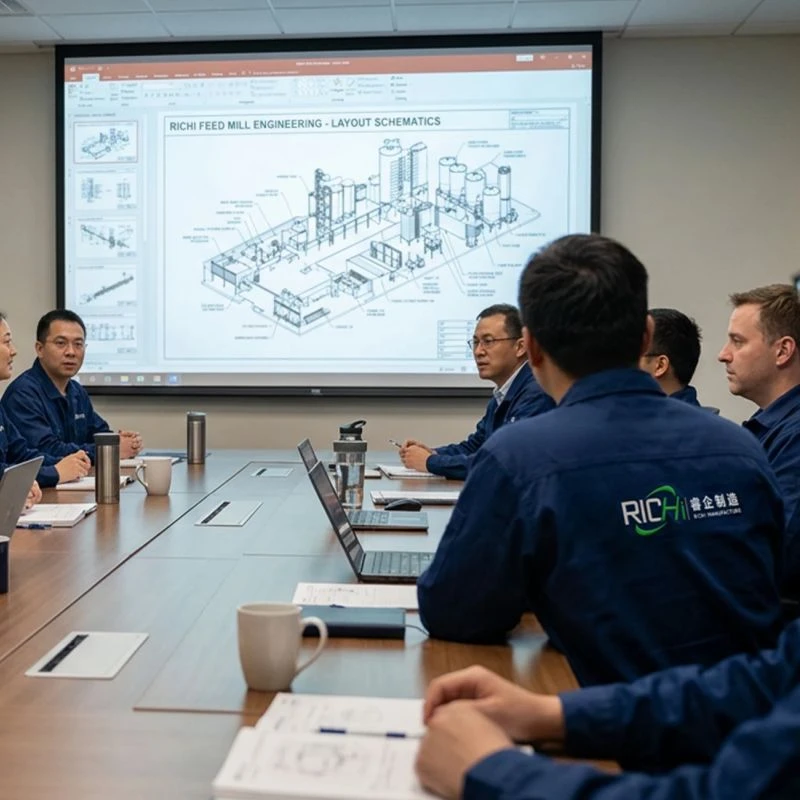
Process & Plant Design
We develop the process flow, equipment layout, workshop zoning and utility interfaces according to the required dry dog food products, extrusion system, building dimensions and future expansion plan. Equipment arrangement can also be adjusted for limited height, restricted floor space or integration with existing feed production systems.
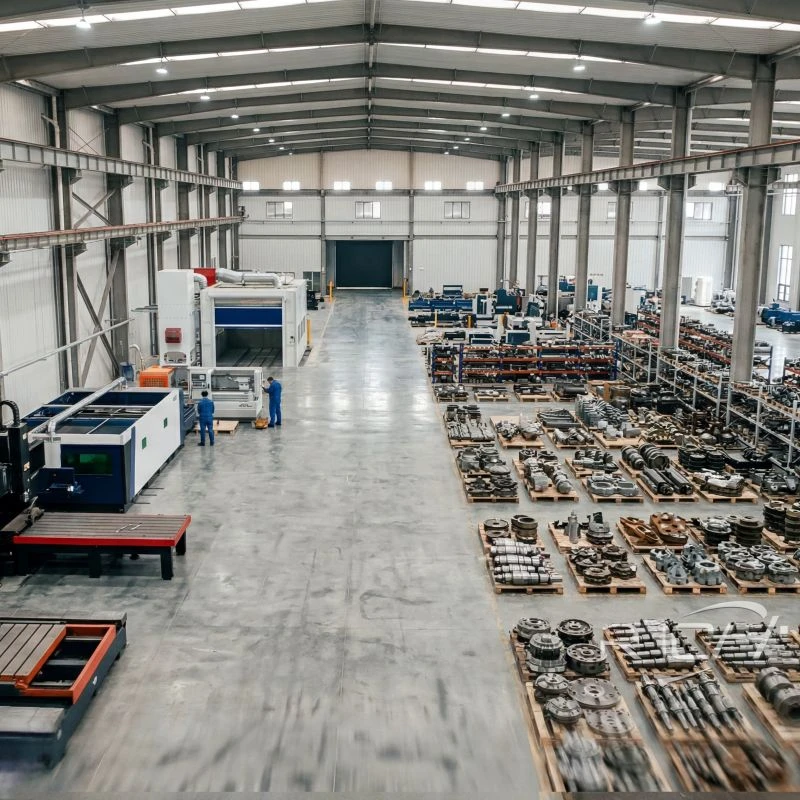
Equipment Manufacturing
RICHI manufactures the core equipment used in the dog food production line, including grinding, batching, mixing, extrusion, drying, coating, cooling, conveying and packing systems. Manufacturing, assembly and testing are coordinated as one production-line project rather than sourcing unrelated machines from multiple suppliers.
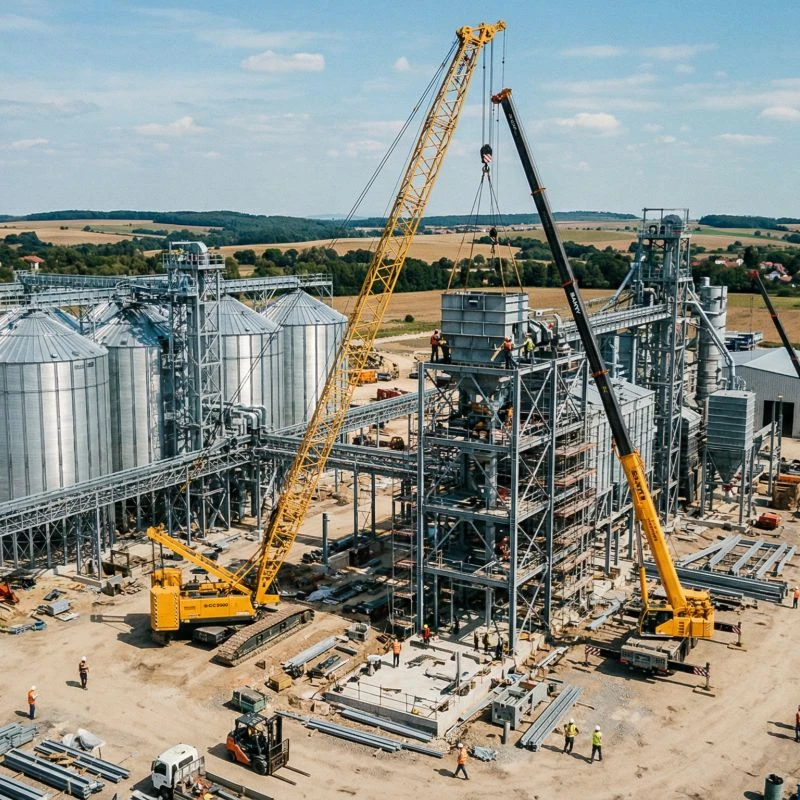
Installation Commissioning & Training
We provide installation guidance, commissioning support and operator training for the complete dog food processing system. Engineers help check equipment connection, production sequence, operating parameters and trial production so the customer team can move into regular manufacturing with a clear operating procedure.
Lifetime Technical & Spare Parts Support
After startup, technical support continues through equipment adjustment, maintenance guidance, spare-parts supply and production troubleshooting. When a customer later changes formulas, adds new kibble products or expands the factory, RICHI can also support the next stage of the dog food manufacturing plant.
Free Custom Support
Before equipment manufacturing begins, RICHI can provide a series of free engineering and planning services to help customers evaluate the dog food processing plant more clearly. These services cover preliminary investment planning, process design, factory layout and technical documentation, while long-term remote guidance and training continue after the dog food production line is delivered.

Free Project Cost Estimate
Free 3D Plant Layout Design
Free Civil & Steel Structure Design
Free Production Testing & Project Reference Support
Free Process Flow Design
Free Factory Area Planning
Free Electrical System Design
Free Lifetime Remote Technical & Training Support
Dog food production equipment
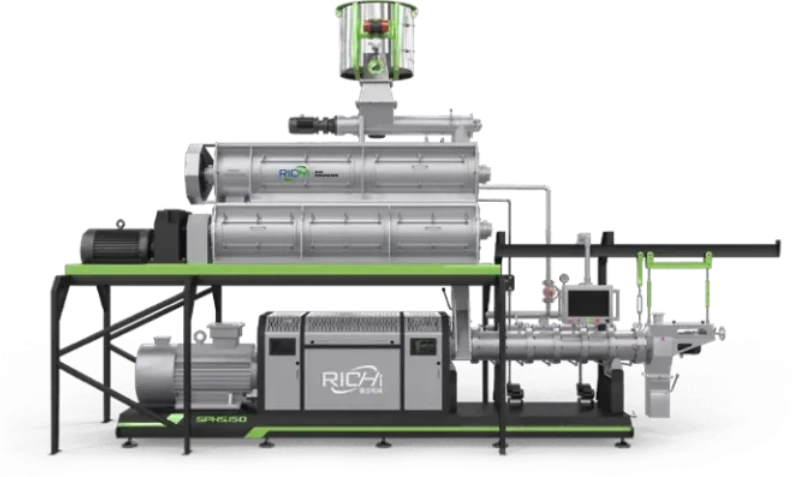
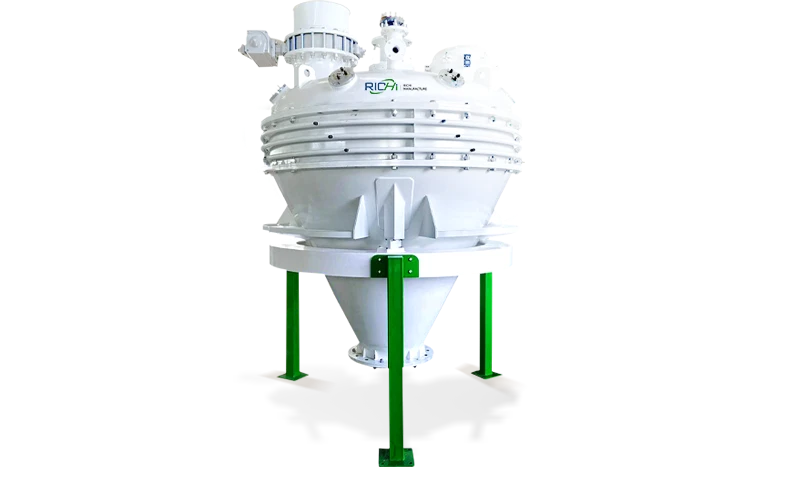
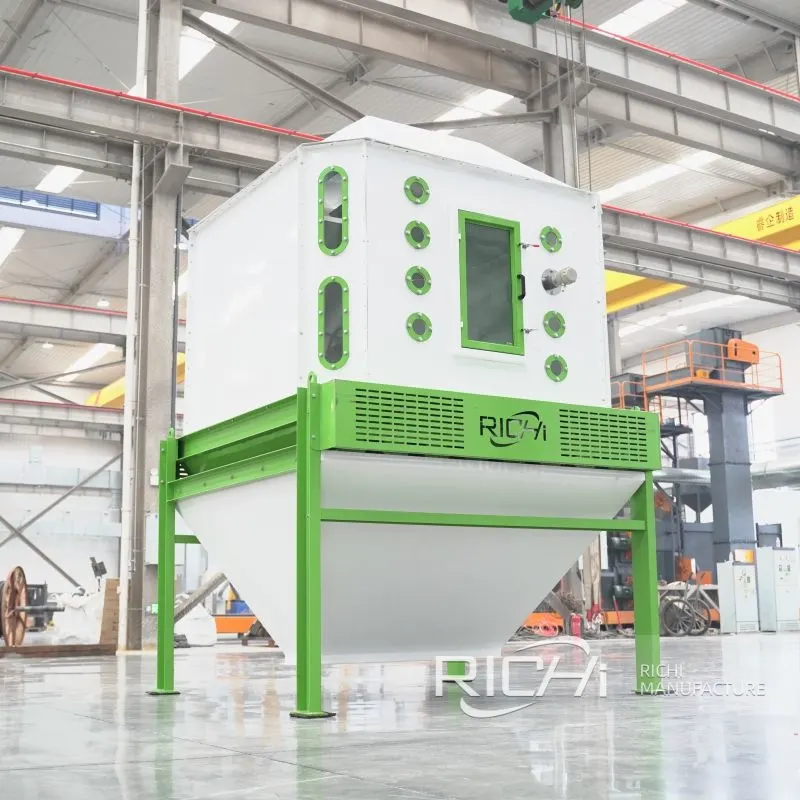
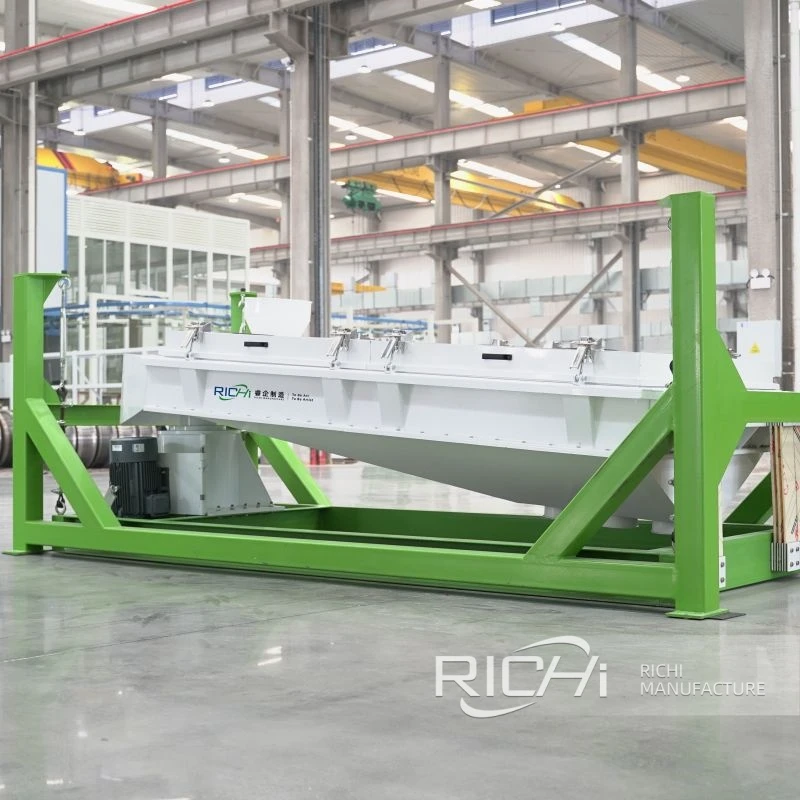
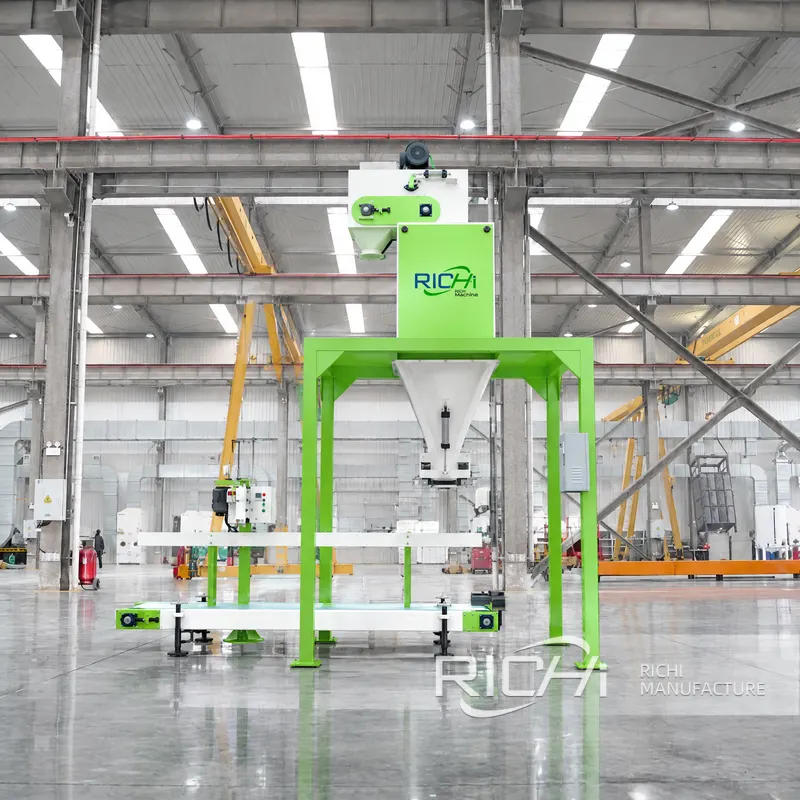
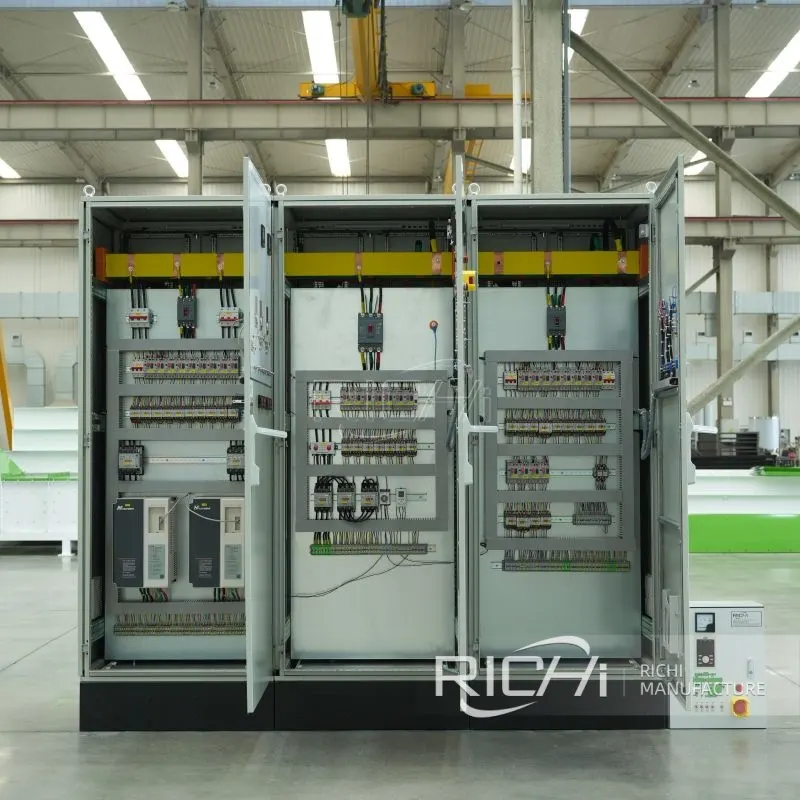
RICHI supplies the complete dog food processing equipment required for dry kibble production, from raw-material receiving to finished-product packing. Depending on the formula and plant scale, the system can include cleaning equipment, hammer mills, ultrafine grinders, batching and micro-dosing systems, mixers, liquid addition units, conditioners, single-screw or twin-screw extruders, belt dryers, drum or vacuum coating systems, coolers, screens, conveyors, silos, dust collection and automatic packaging equipment.
The equipment package is not fixed. A small dog food production line may use a compact grinding and packing system, while an industrial dog food factory may require two-stage grinding, automatic ingredient storage, vacuum coating, multiple dryers and centralized controls. RICHI matches each dog food machine to the actual formula, output and automation target so customers invest in the equipment they need rather than unnecessary modules.
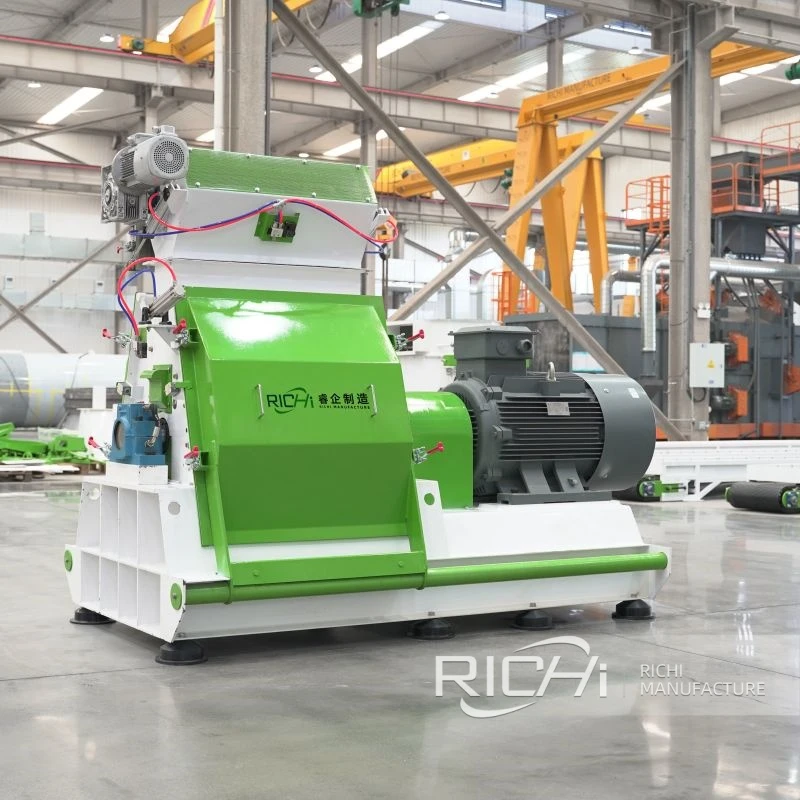
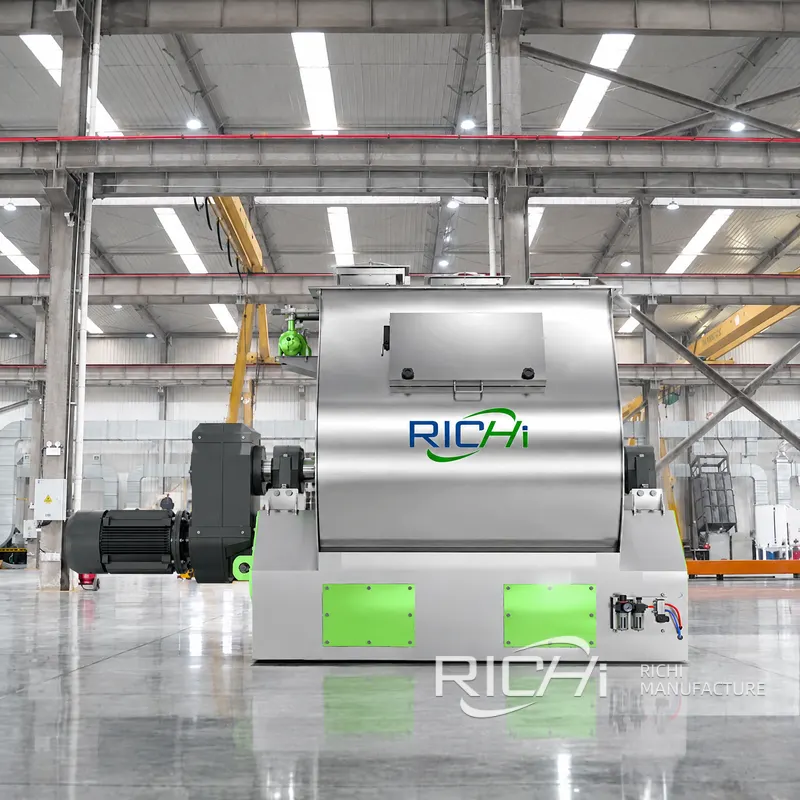
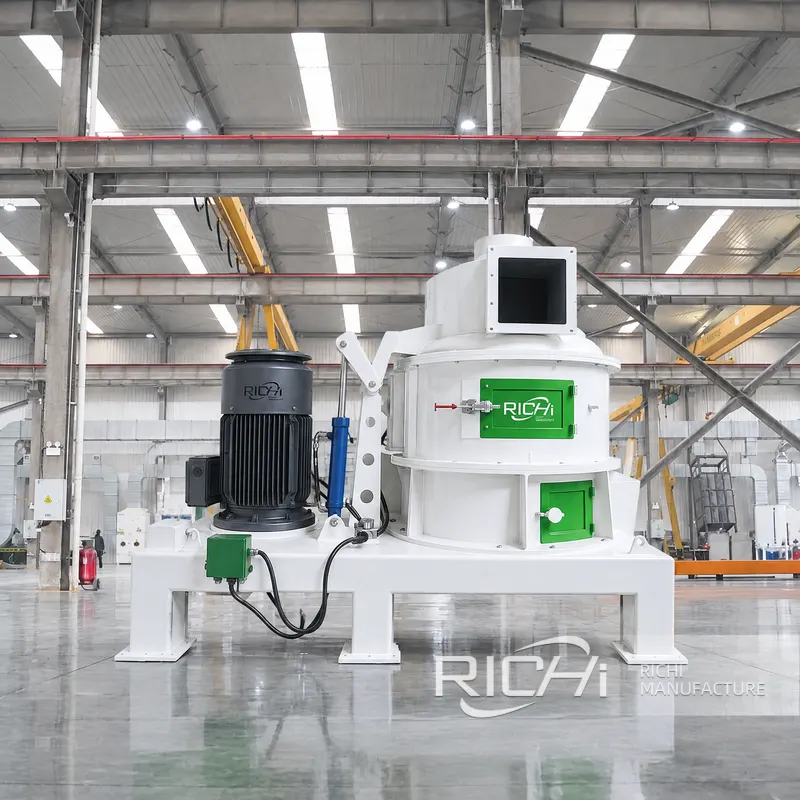
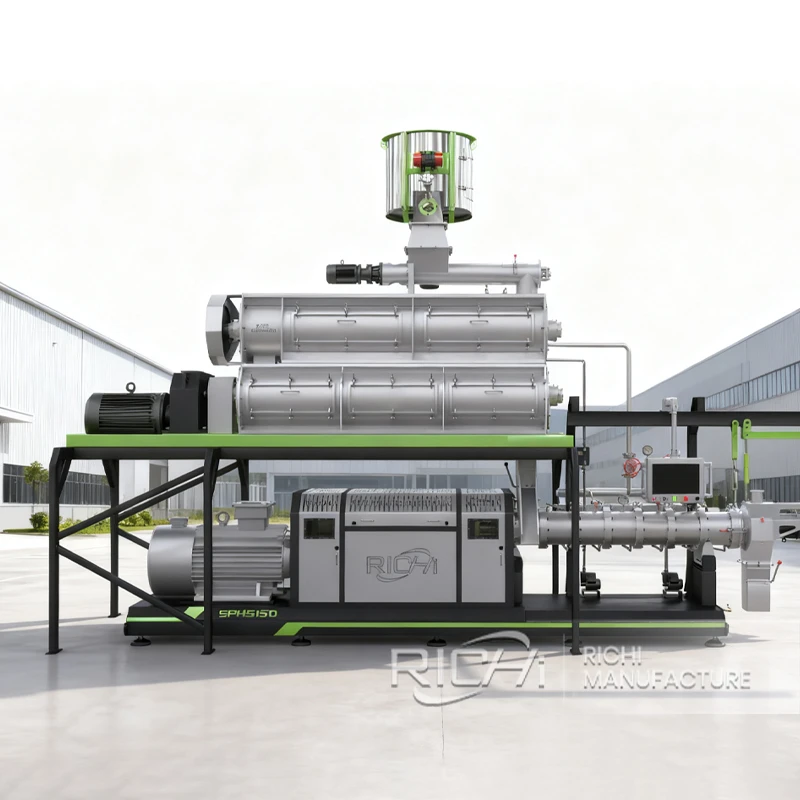
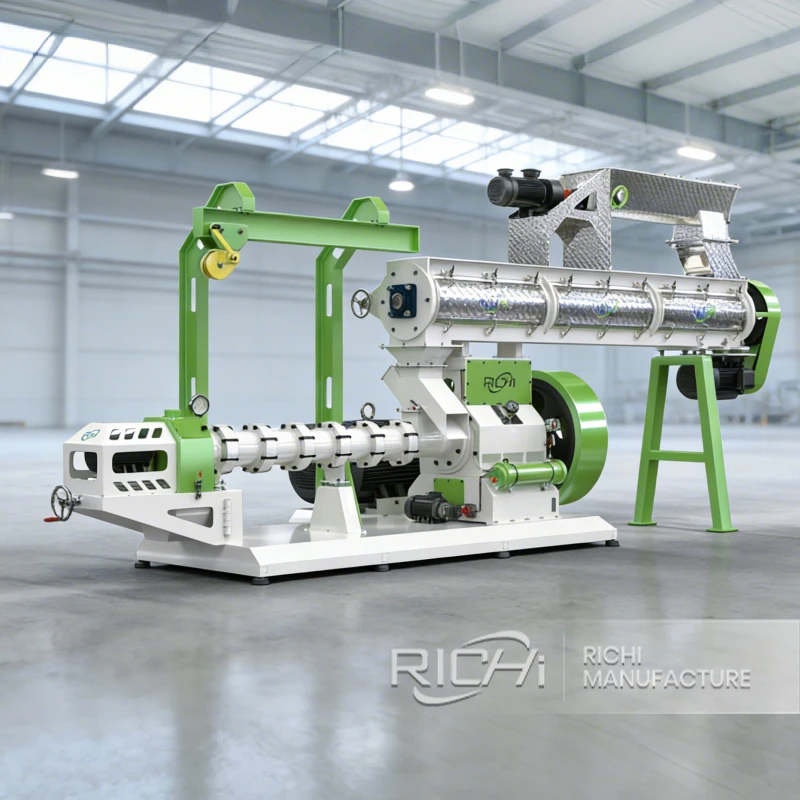
single screw extruder
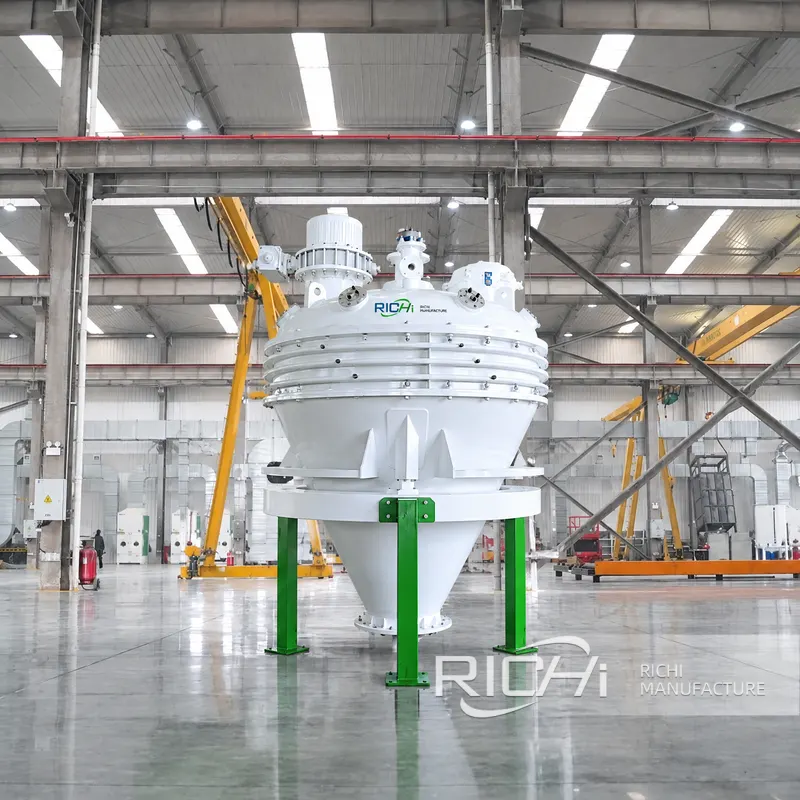
Vacuum spraying machine
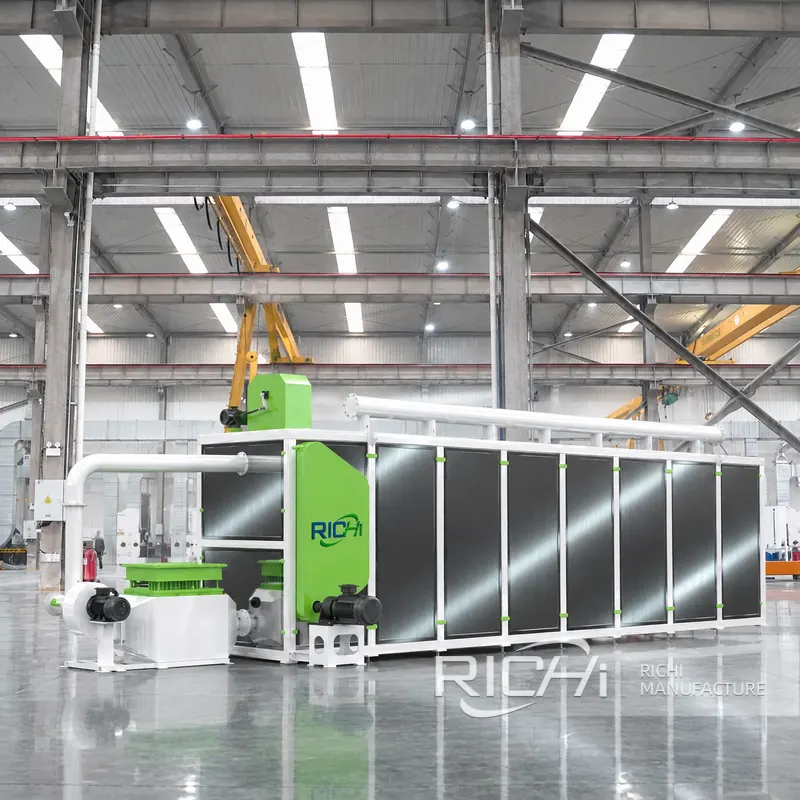
Electrical control cabinet
Explore the full range of dog food factory equipment for grinding, extrusion, drying, coating, conveying, storage and packing, or send us your capacity and product requirements for a matched equipment list.
Why Invest in Dry Dog Food Production?
Dry dog food remains one of the strongest commercial routes in the pet food industry because it combines everyday demand with efficient storage, transport and retail distribution. In the U.S. alone, dry dog food ranked first among dog and cat food products by both sales volume and value in 2024, while pet food continues to move through increasingly diverse domestic and export markets. For feed manufacturers, ingredient processors, pet brands and distributors, building a dog food processing plant creates an opportunity to move from raw materials or conventional feed into a higher-value finished product.
The stronger business model is often not a factory built around one recipe. A flexible dog food manufacturing plant can produce different kibble sizes, protein systems and market grades, while twin-screw extrusion gives manufacturers additional room for frequent formula changes and new product development. Existing feed mills can go further by combining dog food extrusion with pelleting or mash-feed sections, allowing one site to serve dog food and conventional animal-feed markets without duplicating every upstream system. This is particularly useful for businesses planning private-label production, regional distribution, export sales or gradual capacity expansion.
Explore My Dog Food Business Plan
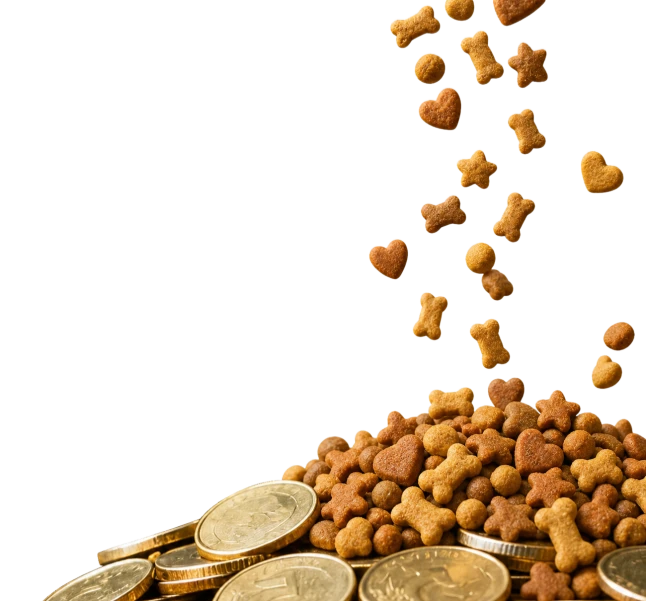
Dog Food Ingredients and Formula Flexibility
The raw-material system has a direct impact on grinding, mixing, extrusion, drying and coating. A dog food processing plant may handle animal protein meals, grains and starches, plant proteins, fiber sources, fats and oils, vitamin-mineral premixes, palatants and other approved ingredients. RICHI configures the equipment around the customer’s actual formula rather than requiring every dog food manufacturer to use the same ingredient structure.
Chicken meal
Fish Meal

Corn

Rice

Plant Protein

Oils Fats

Premixes

Puppy & Growth Dog Food
Puppy products commonly use smaller kibble for easier intake, with about 6–10 mm being practical for many commercial products. However, large-breed puppy foods may use larger pieces, so kibble size should be matched to breed size as well as growth stage. Fine grinding, controlled extrusion and consistent cutting are important when producing smaller puppy kibble.
Design My Dog Food Production Line

Gestation & Lactation Dog Food
Pregnant and nursing dogs require a different nutritional profile from standard adult-maintenance dogs, but reproductive stage alone does not determine kibble size. A practical 8–14 mm range covers many commercial products, with the final dimension selected according to the breed size, formula density and intended feeding characteristics.
Configure Gestation & Lactation Dog Food Line

Adult Maintenance Dog Food
Adult dry dog food has the widest size range because body size varies greatly between breeds. Small-dog products may use approximately 8–10 mm kibble, medium-dog products around 10–14 mm, while products intended for larger breeds can reach approximately 14–18 mm. One dog kibble production line can cover these sizes through die and cutter changes.
Get Dog Food Line Configuration Advice

Senior Dog Food
Senior products are often designed with moderate or smaller kibble dimensions, particularly where easier intake is part of the product concept. A 6–12 mm range is practical for many commercial designs, although large-breed senior products may still use larger kibble. Formula, hardness, thickness and density should therefore be considered together rather than judging the product by diameter alone.
Explore Senior Dog Food Line Options
Example Ingredient Structures for Dry Dog Food
Poultry & Grain Formula Example
This is a common process-friendly structure for commercial dry kibble and can be adapted across different product grades, kibble sizes and coating levels.
Poultry / chicken meal
20–30%
Corn, rice or wheat
35–50%
Plant protein & fiber
8–15%
Animal / vegetable fat
5–10%
Premix, minerals & palatants
2–6%
…
…
Lamb & Rice Formula Example
A lamb-and-rice product may use a relatively simple ingredient list, but grinding fineness, starch cooking and coating still need to be matched to the target kibble density.
Lamb meal
18–28%
Rice and other starch sources
40–55%
Plant protein & fiber
8–15%
Oils and fats
5–10%
Premix & palatants
2–6%
…
…
Fish & Potato Formula Example
Fish-based formulas often place greater emphasis on oil handling and coating, while the starch system must still provide suitable structure during extrusion and drying.
Fish meal
18–30%
Potato / other starch sources
30–45%
Plant protein & fiber
10–20%
Fish oil / other fats
5–10%
Premix & palatants
2–6%
…
…
Grain-Free Formula Example
Removing conventional grains does not remove the need for an appropriate starch system. The formula must still be compatible with extrusion, expansion, drying and the required finished kibble texture.
Poultry or meat protein meal
22–35%
Peas / legumes
15–30%
Potato / sweet potato starch
20–35%
Fiber ingredients
3–8%
Oils, premix & palatants
6–12%
…
…
These examples show how different ingredient systems may affect equipment selection and process settings. They are not complete nutritional formulas; commercial dog food recipes should be developed and validated by qualified formulators according to the regulations and nutritional standards of the target market. Different formulas may require changes in screen size, grinding stage, liquid addition, conditioning, extruder settings, dryer load and coating configuration. This is why RICHI evaluates the ingredient list before defining the final dog food production equipment and process layout.
Frequently Asked Questions
I have a budget of about US$150,000. What size dog food line can I realistically build?
+
With that budget, you are normally looking at a smaller complete dog food production line rather than a 2–3 T/H commercial twin-screw plant. Our current reference ranges are US$70,000–100,000 for a 0.5–0.6 T/H single-screw line, US$130,000–170,000 for 0.8–1 T/H single-screw, and US$150,000–200,000 for a 0.5–1 T/H twin-screw line. Freight, civil works and local utilities should be budgeted separately.
We are new to dog food. Should we start at 500 kg/h or go directly to 1 T/H?
+
If you are still building distribution, 500–600 kg/h is usually the safer commercial starting point. If you already have dealers, private-label orders or an existing feed business, 0.8–1 T/H gives more room without making the factory unnecessarily large. We would rather match your realistic sales plan than sell you unused capacity.
So, what production capacity options are available?
+
We provide 0.2-60t/h Dog Food Processing Plant Solutions. Capacity alone does not determine the right dog food processing plant. Two factories with similar output may use very different extrusion systems because their formulas, kibble range, automation level and investment plans are different. RICHI therefore offers both single-screw and twin-screw dog food production line configurations, from compact starter plants to industrial multi-line systems. Below are the most common capacity specifications we can offer.
(1) 0.2–0.4 T/H Single-Screw Dry Line
A practical entry level for new dog food brands, small feed businesses and regional processors testing commercial kibble production. The compact single-screw dry extrusion route keeps the initial equipment configuration relatively simple.
Equipment Investment: US$60,000–80,000
(2) 0.5–0.6 T/H Single-Screw Line
Suitable for small commercial factories that need more continuous production without moving immediately into a larger twin-screw system. Dry or wet single-screw extrusion can be selected according to the intended formula and process requirements.
Equipment Investment: US$70,000–100,000
(3) 0.8–1.0 T/H Single-Screw Line
Often selected by established small feed manufacturers or new pet food businesses moving beyond trial-scale production. This capacity can support several dry dog food products while remaining manageable in workshop size and staffing.
Equipment Investment: US$130,000–170,000
(4) 0.5–1.0 T/H Twin-Screw Line
For customers whose priority is not simply output but greater formula flexibility and process control. A small twin-screw dog food processing line is particularly useful when several kibble recipes, shapes or ingredient systems are planned from the beginning.
Equipment Investment: US$150,000–200,000
(5) 1.5–2.0 T/H Twin-Screw Line
A common commercial scale for regional dog food manufacturers, private-label producers and feed companies adding a dedicated pet food business. Automation, fine grinding and coating systems can be upgraded as the product portfolio expands.
Equipment Investment: US$440,000–560,000
(6) 3–4 T/H Twin-Screw Line
This capacity suits established commercial manufacturers supplying several regional markets or multiple brands. The plant can accommodate more automated ingredient handling, recipe management and continuous drying for stable daily output.
Equipment Investment: US$530,000–650,000
(7) 5–6 T/H Twin-Screw Line
Designed for larger dog food factories requiring sustained production and a broader formula portfolio. Two-stage grinding, automatic batching, advanced coating and bulk ingredient storage are more commonly considered at this scale.
Equipment Investment: US$670,000–840,000
(8) 8–10 T/H Twin-Screw Line
An industrial dog food production line for manufacturers serving large domestic markets, export channels or contract manufacturing customers. Higher automation and stronger upstream storage and downstream handling become increasingly important at this output.
Equipment Investment: US$880,000–1,200,000
(9) 10–12 T/H Industrial Twin-Screw Line
This scale is suited to large dog food manufacturing plants with continuous production schedules and substantial raw-material turnover. The pet feed mill plant design normally places more emphasis on silo storage, automatic batching, process redundancy and efficient changeover between commercial formulas.
Equipment Investment: Quoted according to the final extrusion, drying, coating and automation configuration.
(10) 15–20 T/H Multi-Line Dog Food Plant
At 15–20 T/H, the project should be treated as an industrial manufacturing system rather than simply a larger single machine. Multiple extrusion trains or parallel production modules can be configured to support high total output while allowing maintenance, recipe changes and production scheduling without stopping the entire factory.
Equipment Investment: Project-specific quotation based on the number of extrusion trains and the degree of automation.
The same nominal capacity can lead to very different dog food plant costs. A 1 T/H single-screw line and a 1 T/H twin-screw line, for example, serve different production strategies and should not be compared only by hourly output. Formula range, grinding requirements, extrusion technology, dryer capacity, coating method, packaging automation and future expansion should all be evaluated before selecting the final system.
My formula is fairly simple. Do I really need a twin-screw extruder?
+
Not necessarily. A conventional dry kibble portfolio can often be handled well with single-screw extrusion at lower investment. Twin-screw becomes more valuable when you expect frequent recipe changes, more difficult protein/starch combinations, tighter density control or a wider product portfolio. Industrial suppliers also distinguish single- and twin-screw systems this way, with twin-screw offering greater formulation flexibility.
We want three or four premium recipes. Would you still recommend single-screw?
+
If those formulas differ substantially in animal protein, fat, starch or finished density, I would lean toward twin-screw rather than choosing only by price. The extra flexibility becomes useful when the dog food manufacturing process has to accommodate repeated recipe changes instead of one stable formula.
What does “wet single-screw extrusion” mean? We do not want wet dog food.
+
It does not mean canned or pouch dog food. Wet single-screw extrusion means the meal receives additional water and usually steam conditioning before entering the extruder; the product is still dried afterward into dry kibble. Your finished product remains dry dog food.
We already have a feed mill. Which existing machines could we potentially reuse?
+
Receiving systems, silos, hammer mills, batching equipment, mixers, conveyors and utilities may be reusable if their capacity, hygiene condition and accuracy are suitable. We would audit these first and then add the dog-food-specific extrusion, drying, coating and finishing sections instead of making you buy every machine again.
Our hammer mill and mixer are only three years old. Why replace them?
+
You should not replace them automatically. We first check grinding fineness, throughput, mixing uniformity and how they connect to the new dog food production line. If they meet the process requirement, integrating them is usually the better investment.
My workshop is only about 6 meters high. Can a complete line fit?
+
Yes, a low-height dog food factory can be designed with a more horizontal layout, additional conveyors and lower-level bins. We already use this approach for projects where a tall gravity-flow tower is not practical. The trade-off is normally more floor area and conveying rather than an impossible building-height requirement.
Do I have to dig a receiving pit?
+
No. A pit is useful for some bulk receiving arrangements, but it is not mandatory. For an existing workshop or a project where civil work is expensive, above-ground feeding and conveying can be designed instead.
How much space should I reserve for a 1 T/H dog food factory?
+
Do not size the project from the processing machines alone. You also need raw-material storage, packaging materials, finished-product warehouse, utilities, access aisles and maintenance space. Send us the actual site dimensions and we can develop a dog food factory layout around the building rather than giving you a misleading universal square-meter number.
Our formula uses chicken meal, corn and rice. Is that difficult to extrude?
+
That is a relatively conventional dry kibble ingredient structure. The key is achieving suitable grinding, mixing, starch availability, moisture and extrusion control rather than using exotic equipment. It is generally less demanding than formulas with very high animal protein or unusually high pre-extrusion fat.
We want to use a lot of fish meal and fish oil. What should change in the line?
+
The formula should be reviewed before the extruder is finalized because protein, ash, fat and starch balance affect expansion and density. Fish oil addition also needs to be divided sensibly between the upstream formula and post-extrusion coating rather than simply adding everything before extrusion.
Can we manufacture grain-free dog food on the same equipment?
+
Yes. Grain-free formulas can be extruded as long as they still have an appropriate structure-forming system using suitable ingredients such as potato, peas or other approved starch sources. “Grain-free” should not be confused with “no starch required.”
Our planned formula is high in meat protein. Does that automatically mean twin-screw?
+
Not automatically, but the case for twin-screw becomes stronger as formulation complexity increases. High-protein and lower-starch systems give less processing margin, so we need the approximate protein ingredients, fat level and starch sources before selecting the dog food extrusion line.
We want to include fresh meat rather than only meat meal. Can your dry kibble line do that?
+
It has to be evaluated from the actual inclusion rate and material form. Twin-screw systems are generally better suited to higher fresh-meat or meat-slurry inclusion, but the project may also require separate meat preparation, pumping, hygienic handling and additional drying capacity.
Do I need to disclose my exact formula before you quote the plant?
+
Not for a preliminary quotation. Main protein sources, major starch ingredients, approximate fat level, target kibble size and capacity are enough to start. The detailed formula becomes more important when we finalize the extruder, dryer and coating configuration.
If I send you our formula, will it be used only for equipment selection?
+
The formula information is used to evaluate the dog food processing requirements—grinding, batching, extrusion, drying and coating. Commercial formula ownership and confidentiality should also be documented in the project communication or contract where required.
We do not have a finished formula yet. Can we still start discussing the factory?
+
Yes. We can first design around the intended product category, available raw materials, capacity and target market. Before production, however, the nutritional formula should be developed or validated by a qualified formulator against the requirements of the market where the food will be sold. AAFCO, for example, distinguishes growth/reproduction and adult-maintenance nutrient profiles rather than treating all dog foods as one formula.
Does RICHI provide the dog food formula together with the machinery?
+
Our primary responsibility is dog food production equipment and production-line engineering. We can evaluate whether your ingredient structure is suitable for the proposed process and recommend equipment changes, but a complete commercial nutrition formula should be developed and validated by a qualified formulation professional.
We want puppy, adult and large-breed products. Can one line handle all of them?
+
Yes. One dog kibble production line can use different formulas, dies, cutter settings, extrusion parameters and coating programs. You do not need one extrusion line for every life-stage or breed-size product.
What kibble sizes should we tell you when requesting a quotation?
+
For dry dog food, an overall manufacturing range of roughly 4–18 mm covers many commercial products. If you already know the market, give us the actual sizes—for example smaller puppy/small-dog kibble and larger adult or large-breed kibble—because die and cutter requirements should be confirmed before manufacturing.
Can we make several shapes on the same dog food machine?
+
Yes. Round, triangular, bone-like and other feasible kibble shapes can normally be changed through die design and cutter adjustment. The formula still has to produce enough structural stability for the intended geometry.
Our current kibble is too soft and breaks during packing. Is that an extruder problem?
+
Not always. Breakage can come from formula balance, extrusion density, drying, cooling, coating, conveying or packaging transfer. We would look at the complete dog food making process rather than changing the extruder before identifying the real cause.
How do you control whether the kibble is light and expanded or denser and harder?
+
Density is influenced by formula composition, grinding, conditioning, moisture, extrusion energy, die conditions and downstream drying. It is therefore a process-control issue, not simply a different mold.
What final moisture should dry dog food reach after the dryer?
+
For many extruded dry-kibble products, manufacturers commonly target around 8–10% moisture, although the exact release specification should be set together with water-activity and shelf-life requirements. Industry references generally describe dry extruded pet foods as being dried below about 10% moisture for storage stability.
Can we save money by using a smaller dryer and running it harder?
+
That is not a good place to cut capacity. If the dryer cannot remove the required moisture at the extruder’s real output, it becomes the bottleneck for the entire dog food processing plant. Dryer capacity should be based on moisture-removal load, not just nominal tonnes per hour.
Do we really need a cooler after drying?
+
Yes, the product needs to reach a suitable temperature before final handling and packaging. Cooling also helps prevent hot product from entering bags while residual heat and moisture are still migrating through the kibble.
We want a high-fat premium product. Should we use drum coating or vacuum coating?
+
For standard surface application, drum coating is often sufficient and more economical. If the formulation requires higher or more controlled liquid uptake into the kibble, vacuum coating becomes more attractive. We select the dog food coating system from your fat/palatant requirement, not simply the plant capacity.
Can oil and palatant be applied separately?
+
Yes. The coating system can be designed with separate dosing for oils, liquid palatants and, where required, dry topical additions. Accurate dosing matters because coating affects both product consistency and ingredient cost.
We plan to change recipes several times a day. Will that create too much downtime?
+
It can if the plant is not designed for short runs. Ingredient bins, recipe controls, production sequencing, die changes, flushing and coating changeovers should be considered from the beginning. An automatic dog food production line is particularly useful when the business model involves many SKUs rather than long runs of one product.
One of our products cannot contain a certain ingredient. How do you control carryover?
+
That requirement needs to be identified before the layout is fixed. We can review separate bins, production sequencing, cleanable conveying routes and flushing procedures; where strict segregation is required, some equipment may need to remain dedicated rather than shared.
Is two-stage grinding necessary for all dog food manufacturing plants?
+
No. A smaller line with conventional recipes may work with one suitable grinding stage. Two-stage or finer grinding becomes more useful for demanding extrusion, smaller kibble, greater formula consistency or larger commercial lines where upstream preparation must keep pace with continuous production.
We buy ingredients in bags rather than bulk. Do we still need silos?
+
No. A 0.5–1 T/H factory can be designed around bagged ingredients if that matches local purchasing conditions. Silos become more attractive when high-volume ingredients arrive in bulk and their daily turnover justifies automatic storage and conveying.
We operate a dog feed mill already. Can we add an extrusion section without stopping the existing pellet business?
+
Usually yes, if the existing plant has enough space, electrical capacity and suitable upstream equipment. The dog feed mill can retain its pelleting route while a new dog food extrusion line is added for dry kibble, sharing only the systems that make technical sense.
We want dog food plus poultry and cattle feed. Is one factory realistic?
+
Yes. This is a practical combined-factory model: extrusion handles dry dog food, while pelleting or mash-feed sections handle poultry, cattle, goat and other conventional feeds. The key is to share receiving, grinding or batching only where capacity and product-control requirements allow it.
Is adding pelleting later harder than installing it from the beginning?
+
It is easier and usually cheaper to reserve the space, electrical load, conveying routes and connection points during the first dog food factory design. You do not have to buy the pellet section immediately, but the building should not block the expansion.
Can we add a premix section to the dog food factory?
+
Yes. Premix preparation uses separate micro-dosing, mixing and packing rather than extrusion. It can support internal dog food manufacturing or be configured as an additional powder-product business when required.
How automatic should a 500–600 kg/h line be?
+
If labor is readily available and you only have a few formulas, a semi-automatic small scale dog food production line may make more financial sense. If recipe traceability, batching consistency or future expansion matters more, PLC batching and recipe control can still be justified at this size.
We are comparing two quotations with the same capacity, but one is much cheaper. What should we check?
+
Compare more than the extruder model. Check whether the quotation includes fine grinding, batching accuracy, conditioner, actual dryer capacity, coating method, cooling, dust collection, conveyors, controls, packing and spare parts. A cheap quote can become expensive if critical dog food processing equipment is undersized or missing.
The extruder in one supplier’s quote is larger. Does that mean the line will produce more?
+
Not by itself. Finished output is limited by the weakest stage in the complete dog food production line. If grinding, drying, coating or packing cannot sustain the extruder output, the larger extruder does not create usable plant capacity.
What electrical information do you need from us before manufacturing?
+
We need the site voltage, frequency, available transformer capacity and any local electrical requirements. Motors and control cabinets are then configured for the project location rather than assuming every country uses the same power standard.
Do I need a boiler for a dry dog food manufacturing process?
+
It depends on the extrusion route. Single-screw dry extrusion can use a simpler conditioning system, while wet single-screw and many twin-screw pet food production lines use steam conditioning. We therefore determine the steam requirement after the extruder and conditioner are selected.
Our country is hot and humid. What changes in the plant design?
+
Humidity affects raw-material storage, dryer performance, cooling and finished-product handling. For tropical projects, we pay particular attention to moisture control, warehouse conditions and product cooling instead of copying a layout designed for a dry climate.
Our winters are very cold. Will that affect startup and production?
+
It can affect utilities, steam systems, incoming ingredient temperatures and workshop conditions. In cold regions, the dog food manufacturing plant should be planned with suitable building protection and utility preparation rather than relying only on machine heating after startup.
Can you test our raw materials before we place the full order?
+
Production testing can be arranged when the project and material characteristics justify it. It is particularly useful when the formula contains unusual ingredients or when the customer wants to verify extrusion behavior before finalizing the dry dog food production equipment.
Can you show us a project close to our capacity instead of only sending general factory videos?
+
Yes. We can match available references by capacity, product type and process route—for example a 1 T/H twin-screw project or a small single-screw combined-feed plant. Project information shared with a new customer still has to respect the confidentiality of the original client.
Who installs the equipment after it arrives in our country?
+
The service scope can include installation guidance, commissioning, trial production and operator training, depending on the contract. Before shipment, we also provide the drawings and technical interfaces needed for local civil, electrical and utility preparation.
After commissioning, who helps us when we change a recipe or replace wear parts?
+
RICHI continues to provide technical and spare-parts support for supplied equipment. Extruder screws, dies, cutters and other normal wear parts should be planned as part of routine operation; wear life varies with raw materials, recipes, operating conditions and maintenance.
We are not engineers. How do we know whether a supplier is offering a complete dog food factory?
+
Ask the supplier to show the process from ingredient receiving through batching/milling, extrusion, drying, coating/cooling and packaging—not only the dog food machine at the center. This full sequence is consistent with industrial dry-kibble plant design used by major process-equipment suppliers. A genuine dog food processing plant manufacturer should also explain the capacity relationship between each section.
What should I send you first if I want an accurate layout and quotation?
+
Send six things: target capacity, main raw materials or approximate formula, required kibble sizes, preferred extrusion route if already known, workshop dimensions, and local voltage/frequency. Also tell us whether you want only dry dog food or a combined plant for dog food, fish feed, pellet feed or mash feed. From that information, we can prepare a relevant dog food production line cost, process design and equipment proposal instead of sending a generic price sheet.