

 0086-138 3838 9622
Digestate Pellet Machine
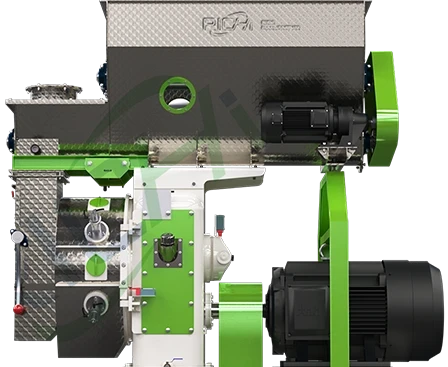
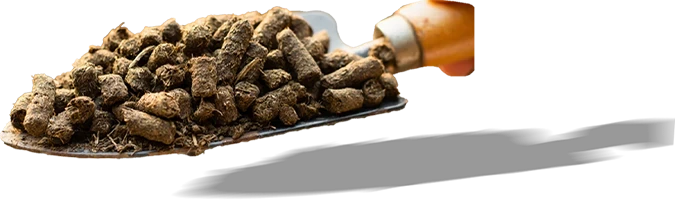
Biogas production ends with more than energy. The separated solid digestate still has to be handled, stored or turned into a usable product. RICHI digestate pellet machine provides a commercial route for biogas plants and organic fertilizer producers to process properly prepared digestate solids into uniform fertilizer pellets, with FZLH configurations available for different feedstock conditions and production scales.
The Biogas Is Already Recovered—What Happens to the Digestate?
For many anaerobic digestion plants, pellet production starts after the main biogas process is already complete. The material entering the fertilizer section may be screw-pressed digestate, centrifuge-separated solids, partially dried digestate or a formulated mix containing other suitable organic ingredients.
This distinction directly affects investment. A biogas plant with relatively dry separated solids may need moisture reduction, crushing, mixing and pelletizing, while wetter digestate can place a much larger load on dewatering and drying. Fertilizer producers purchasing stabilized digestate may require an even shorter route. RICHI checks the existing separator, dryer, storage and fertilizer equipment first, then determines which processing sections are actually missing.
With FZLH capacities starting from 1 T/H, the equipment is intended for commercial digestate fertilizer production with a dependable supply of prepared solids. It can be supplied as a standalone digestate pelletizer for an existing biogas facility or incorporated into a complete biogas digestate processing line where additional fertilizer preparation is required.
Different Digestate Sources Lead to Different Buying Decisions

Biogas Plants
Commercial biogas plants are the most direct buyers because digestate is generated continuously as part of normal operation. Projects digesting livestock manure, energy crops or agricultural organic waste often already have solid-liquid separation; the next investment decision is whether the recovered solid fraction justifies further dewatering, drying and pellet production.

Anaerobic Digestion Plants
For an anaerobic digestion plant, digestate is not an occasional by-product but a regular downstream material flow. A digestate pelletizer becomes relevant when the plant wants to move beyond separated wet solids and develop a more standardized fertilizer product. Existing screw presses, centrifuges, storage and drying equipment should be checked before adding the pellet section.

Organic Fertilizer Manufacturers
These buyers do not need their own digester. They can purchase solid digestate from AD operators and formulate it with suitable livestock manure, mature compost or agricultural organic materials. Their priorities are usually consistent incoming material, accurate formulation and the ability to run more than one fertilizer product through the same plant.

Livestock & Biogas Farms
Dairy, cattle and pig farms with on-site digesters have already recovered energy from manure but still need an outlet for the digestion residue. Here, a biogas digestate pellet machine can form part of a manure-to-energy-to-fertilizer system, provided the farm or associated operations generate enough separated solids to justify commercial pellet production.

Food & Agro-Waste AD Plants
Digestate from food-processing residues and agro-industrial organic waste cannot simply be treated as manure-based digestate with a different name. Feedstock composition, contamination risk and fertilizer eligibility need to be established first. Once suitable solid digestate is confirmed, the downstream system can be designed around its actual moisture, fiber and formulation requirements.

Waste Recycling Companies
Recycling companies may aggregate agricultural waste, livestock residues and other permitted organic streams before anaerobic digestion. Their solid digestate can change as the AD feedstock mix changes, so a digestate fertilizer pellet machine project needs more flexibility in receiving, moisture management and formulation than a plant processing one stable material source.

Digestate Processing Plants
These customers are already one step downstream. They may separate, dewater, dry, compost or sell digestate powder and now want to add pellets to the product range. Because much of the infrastructure already exists, the strongest solution is often a retrofit digestate granulation section rather than another complete processing plant.

Fertilizer & Compost Companies
Fertilizer and compost businesses can source dewatered or stabilized digestate externally and combine it with their existing organic feedstocks. For them, the investment case depends less on owning a biogas system and more on supply contracts, formulation control and whether pellet fertilizer adds a useful product to an established sales network.
A 1 T/H pelletizing section running for eight hours requires about 8 tonnes of prepared fertilizer feed per day at full rated throughput. This cannot be calculated directly from wet digestate or total digester discharge. Solid-liquid separation, subsequent water removal and other formula ingredients all change the tonnage that finally reaches the digestate pellet machine. For capacity selection, the useful starting data are therefore daily digestate output, original AD feedstock, separator type, separated-solid quantity, cake moisture, existing downstream equipment and planned operating hours. These figures give RICHI a much better basis for equipment selection than digester capacity alone.
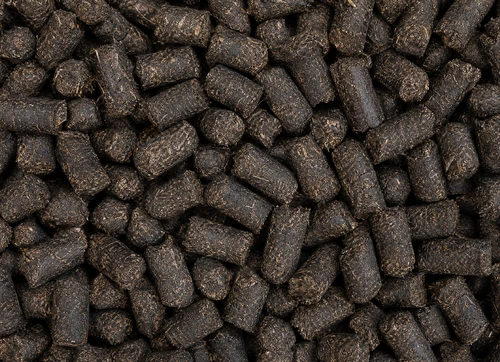
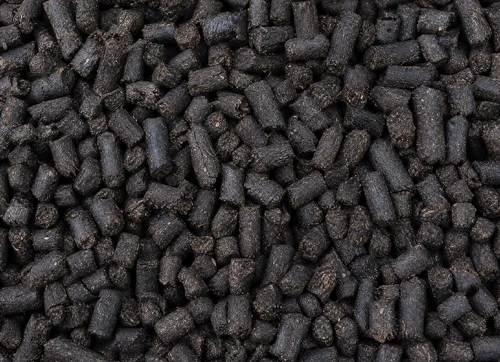
One Digestate Stream Can Support More Than One Fertilizer Formula
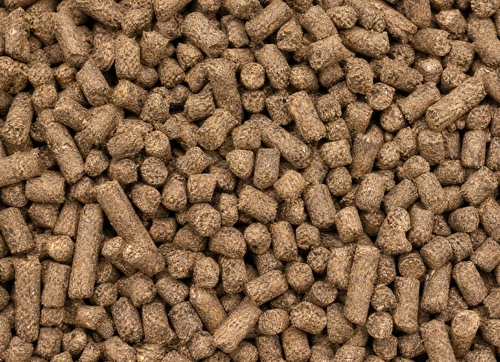
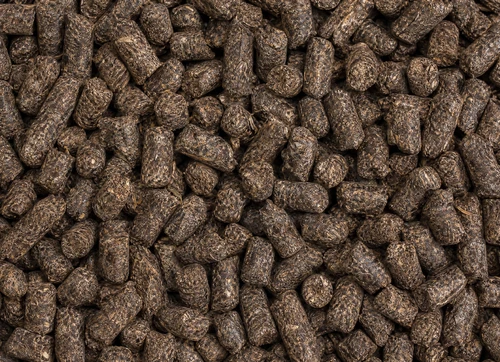
Solid digestate can be the main feedstock without being the only ingredient in the finished fertilizer. Biogas plants often have access to other agricultural organics through the same farms and waste-collection network, while fertilizer manufacturers may deliberately combine stabilized digestate with selected materials to develop different products. What can be added depends on material condition, formulation targets and the fertilizer regulations in the destination market.

Animal Manure

Crop Residues

Green Waste

Straw & Fibrous Materials

Food Processing Waste

Spent Mushroom Substrate

Agricultural Waste

Organic Compost

Other Solid Digestates
Solid digestate
For a commercial digestate fertilizer pellet machine, RICHI does not determine the recipe from pelletability alone. We first need to know the solid digestate condition, each additional material, its approximate share and the required fertilizer product. That information determines whether separate receiving, crushing, drying, dosing or mixing is needed before pelletizing.

Built for the Solid Fraction After Anaerobic Digestion
Dewatering solves only part of the digestate problem. Once liquid has been removed, the remaining solids can still be light, fibrous or inconsistent when the AD feedstock changes. After the required drying, size reduction and formulation, the FZLH digestate pellet machine uses controlled feeding and ring-die compression to turn this prepared material into a more consistent fertilizer product.
For buyers comparing a biogas residue pellet machine or solid digestate pellet machine, the important question is not whether the equipment has a long feature list. It is whether the feeding, die, transmission and maintenance arrangement fits the material
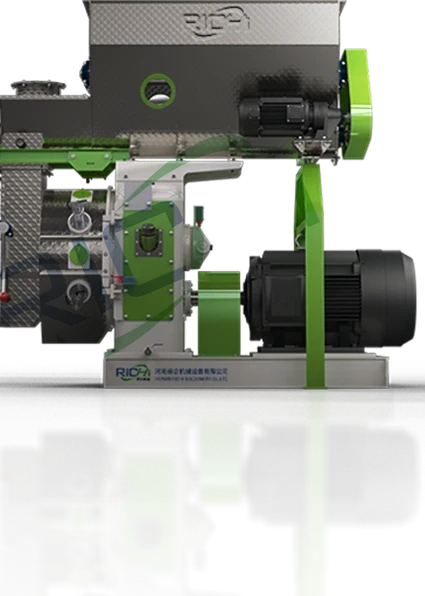
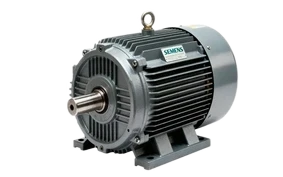
Each FZLH model is equipped with motor power matched to its rated production range. Stable drive performance becomes particularly important when a digestate fertilizer plant changes between formulations with different physical characteristics.
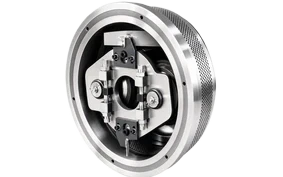
The ring die is selected around the prepared digestate formula and required fertilizer pellet. Different die-hole and compression configurations allow the machine to accommodate solid digestate alone or formulated mixtures containing compost and suitable agricultural organics.
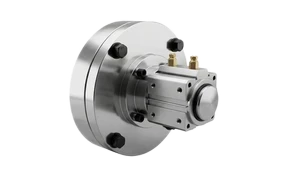
Digestate plants can experience feed variation when separator performance, drying conditions or fertilizer recipes change. The protection arrangement provides a mechanical safeguard against abnormal loading instead of allowing unexpected resistance to pass directly through critical transmission components.
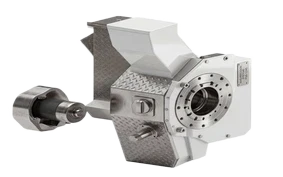
Dried digestate and fiber-containing fertilizer mixes do not always fall into the pelleting chamber at a stable rate. Forced feeding provides active material delivery, helping reduce fluctuations caused by changing bulk density and flowability.
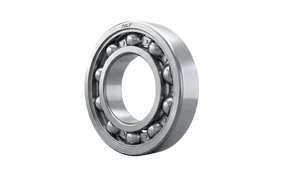
Critical transmission points use SKF bearings with appropriate lubrication and sealing. This supports sustained operation in fertilizer plants where fine dried digestate and organic dust can otherwise make equipment protection and routine maintenance more demanding.
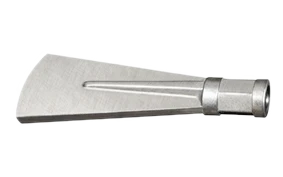
Extruded material is cut after passing through the ring die. Cutter position controls finished pellet length independently of die-hole diameter, giving fertilizer producers another product adjustment without changing the complete forming system.
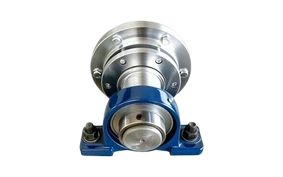
The precision gear drive transfers motor power directly to the pelleting section for continuous fertilizer production. This arrangement is suited to commercial digestate processing where the machine may operate for long shifts rather than occasional farm use.
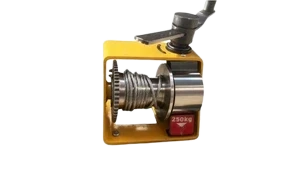
Larger ring dies require controlled handling during maintenance and replacement. The lifting device reduces heavy manual handling and gives maintenance teams better access when changing dies or carrying out scheduled servicing.
Built Around the Economics of Digestate Processing
A good digestate pellet machine should fit more than a capacity number. RICHI considers the condition of separated solids, available co-materials, existing biogas equipment and the fertilizer products you plan to sell. The result is equipment built around the real operating conditions of a digestate business.

Spend Where the Process Needs It
Wet digestate can make unnecessary drying or oversized equipment expensive to operate. We work from recoverable solids and actual moisture removal, helping customers put investment into the capacity and processing stages they can really use.

Handles Real Digestate Variations
Digestate changes with manure, crop residues, food-processing organics and other anaerobic digestion feedstocks. RICHI matches the digestate pellet machine to the prepared material range, rather than designing around one ideal sample.

Machine & Line Built to Fit
The digestate pellet machine, die specification, feeding arrangement and complete fertilizer line can be customized together. Existing separators, dryers or mixers can also be retained when their capacity and interfaces are suitable.

Manufacturing You Can Inspect
RICHI controls key equipment manufacturing, assembly and inspection before delivery. For digestate projects, machine configuration can also be checked against customer material data and production requirements before the equipment reaches the site.

More Than One Product Route
RICHI FZLH equipment offers 4–12 mm pelletizing options and can work with properly prepared digestate-based fertilizer formulas. This gives producers room to develop different pellet products as feedstock supply and fertilizer markets change.

How Digestate Is Formed into Pellets
Prepared solid digestate is fed evenly into the FZLH digestate pellet machine, where rollers press the material through the ring die under continuous mechanical pressure. The compacted material exits the die as cylindrical strands and is cut to the required length, producing uniform fertilizer pellets for subsequent cooling, screening and finishing.
Models & Specifications
| Model | Capacity (t/h) | Main Motor Power (kW) | Anti-Bridging Feeder Power (kW) | Forced Feeder Power (kW) | Ring Die Inner Diameter (mm) | Finished Pellet Diameter (mm) |
|---|---|---|---|---|---|---|
| FZLH250 | 1–1.5 | 22 | 2.2 | 0.75 | 250 | 4–12 |
| FZLH320 | 2–3 | 22 | 2.2 | 0.75 | 320 | 4–12 |
| FZLH350 | 3–5 | 37 | 2.2 | 0.75 | 350 | 4–12 |
| FZLH420 | 6–8 | 90 | 3 | 1.5 | 420 | 4–12 |
| FZLH520 | 9–12 | 132 | 3 | 1.5 | 520 | 4–12 |
| FZLH678 | 18–22 | 200 | 3 | 1.5 | 673 | 4–12 |
| FZLH768 | 22–26 | 250 | 4 | 1.5 | 762 | 4–12 |
A biogas plant may handle a large daily volume of digestate, but much of that weight can still be water. Select the digestate pellet machine from the prepared solid fertilizer mix reaching the pelletizing section, then check operating hours, formulation and expected capacity margin.
Operating Window for Prepared Solid Digestate
Digestate from different biogas plants can behave differently because the original anaerobic digestion feedstock and separation efficiency vary. The following ranges are practical references for the prepared solid digestate mixture entering the FZLH pelletizing section; final settings are adjusted according to the actual material and fertilizer formula.
Feed Particle Size
2–5 mm
Feed Moisture Content
12–25%
Pelletizing Temperature
60–85℃
Compression Ratio
1:4–1:8
Pellet Length
5–30 mm
Pellet Formation Rate
90–95%
Finished Pellet Moisture
≤12–15%
Cooling Temperature
≤40℃
Screening Efficiency
90–98%
Fines Content
≤5–10%
Broken Pellet Rate
≤3–5%
Operating Mode
Continuous Operation
For a digestate fertilizer plant, the most important distinction is between separator cake condition and pelletizer feed condition. Wet solids leaving a screw press or centrifuge should not be judged against these pelletizing values until the required moisture reduction and material preparation have been completed.
Digestate Projects Built Around What Comes After the Digester
A fertilizer section is rarely identical from one biogas project to another. The amount of separated solids, residual moisture, original digestion feedstock and existing downstream equipment all change the investment. These digestate pellet machine projects show several commercially realistic ways to add pellet production to biogas, recycling and fertilizer operations.
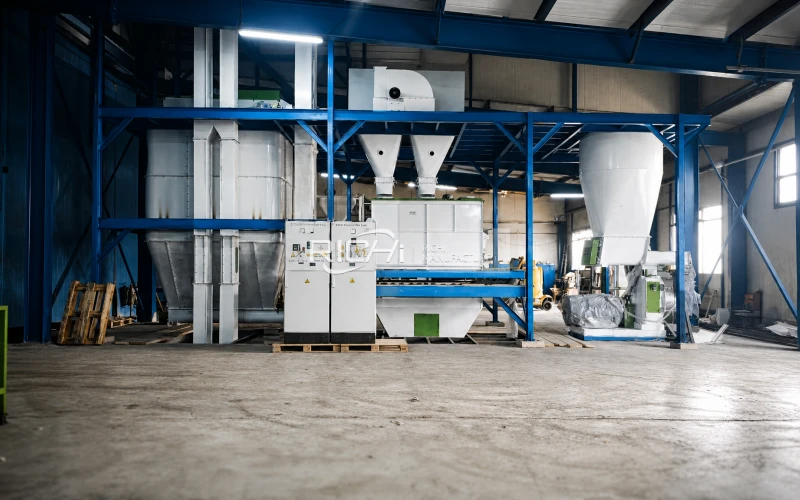

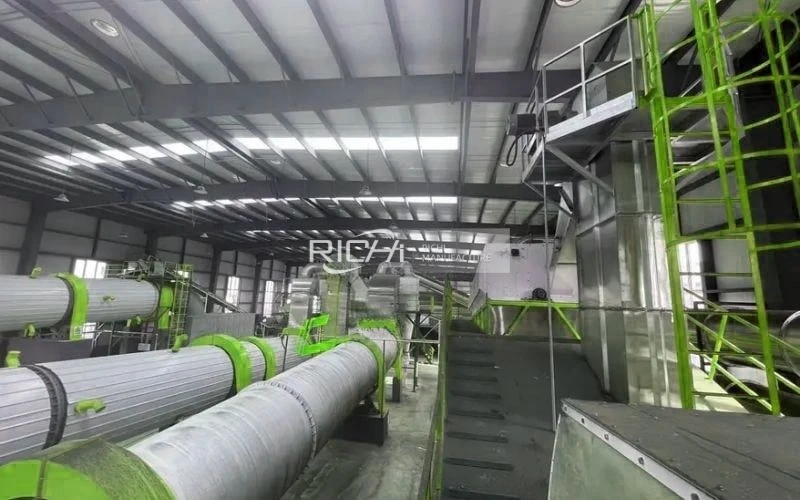
3-5 T/H
Cattle Manure Digestate Fertilizer Project in Germany
The customer operates livestock production and biogas generation at the same site, so digestate supply follows an established manure stream rather than external purchasing. The fertilizer section handles separated solids after moisture management, while locally available crop residues provide another usable material for selected formulations.
Equipment Used :FZLH350
Pellet Size :4 mm
Raw Materials :Cattle Manure Digestate, Crop Residues
Client :Livestock & Biogas Farm

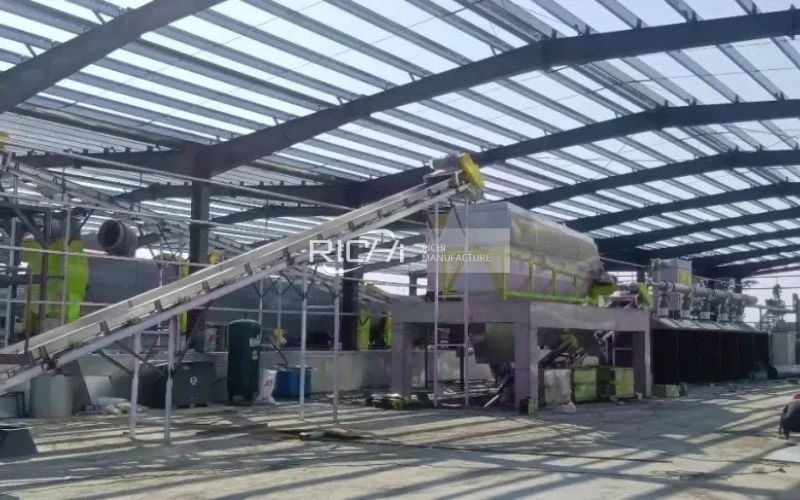
6-8 T/H
Agricultural Biogas Fertilizer Project in Italy
This plant already has the core anaerobic digestion infrastructure and does not need a second waste-treatment system built around the pelletizer. The project concentrates on the solid fraction leaving the existing process, with crop-derived material and mature compost available when the operator produces formulated organic fertilizer.
Equipment Used :FZLH420
Pellet Size : 5 mm
Raw Materials : Solid Digestate, Crop Residues, Organic Compost
Client : Anaerobic Digestion Plant

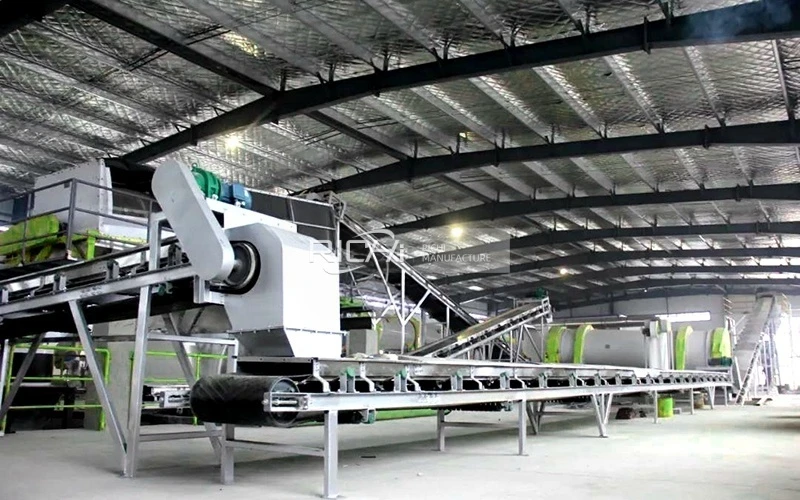
2-3 T/H
Digestate Product Upgrade Project in Poland
The customer was already processing separated digestate before adding pellet production. This changes the investment boundary considerably: usable upstream equipment remains in service, while the new section extends the business from processed bulk material into a more standardized fertilizer product.
Equipment Used :FZLH320
Pellet Size : 4 mm
Raw Materials : Dewatered Solid Digestate, Organic Compost
Client : Digestate Processing Plant

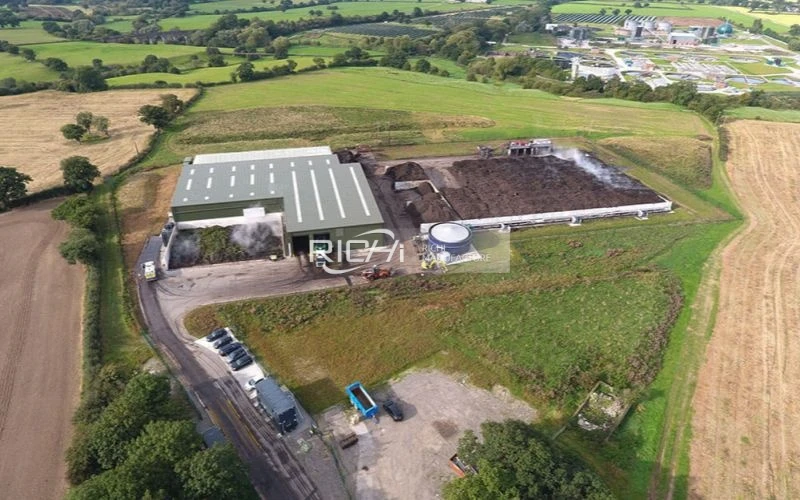
9-12 T/H
Multi-Source Digestate Fertilizer Project in the UK
Several organic-waste streams pass through the customer’s recycling network, and the characteristics of available digestate can change with source and season. Materials are therefore assessed and prepared before formulation rather than sending every incoming solid fraction directly into a common pelletizing process.
Equipment Used :FZLH520
Pellet Size : 6 mm
Raw Materials : Solid Digestates, Green Waste, Agricultural Waste
Client : Waste Recycling Company

6-8 T/H
Food & Agro-Waste Digestate Project in France
The anaerobic digestion facility handles organic by-products originating from food and agricultural processing. Its fertilizer plan is based on suitable recovered solids and controlled organic feedstocks, so material composition and contamination management are important parts of the production decision before pelletizing begins.
Equipment Used :FZLH420
Pellet Size : 4-6 mm
Raw Materials : Solid Digestate, Food Processing Waste, Agricultural Waste
Client : Food & Agro-Waste Anaerobic Digestion Plant

6-8 T/H
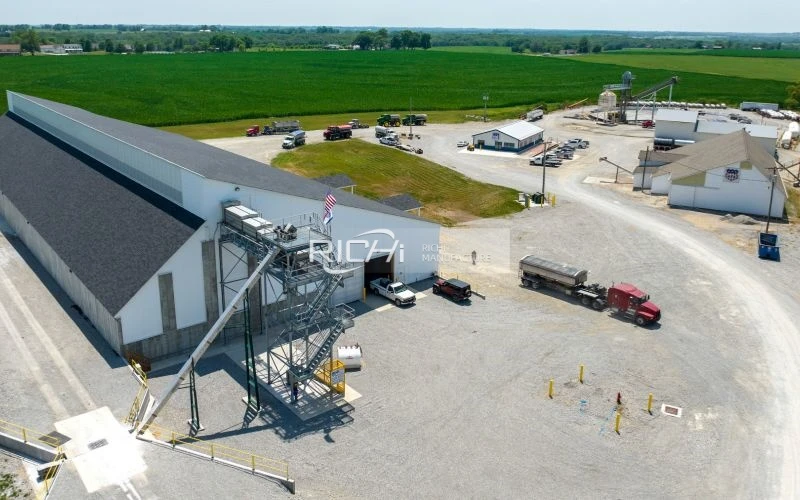
Manure-Based Biogas Fertilizer Project in the USA
The biogas facility produces digestate continuously, but total wet discharge was not used as the basis for pellet capacity. The usable production figure comes from the prepared solid fraction after separation and moisture reduction, giving the fertilizer section a capacity that better reflects the material actually available for processing.
Equipment Used :FZLH420
Pellet Size : 5 mm
Raw Materials : Manure-Based Digestate, Crop Residues, Organic Compost
Client : Biogas Plant

3-5T/H
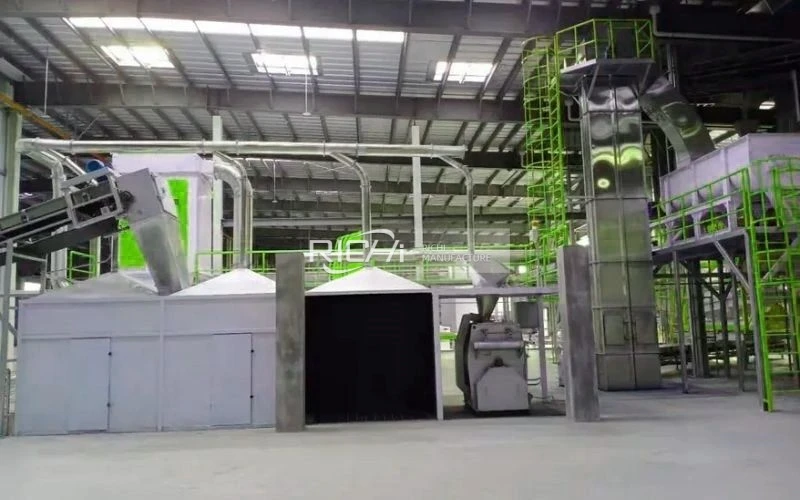
Commercial Digestate Fertilizer Project in the Netherlands
The Netherlands project focused on efficient recycling of poultry bedding waste from intensive poultry operations. The customer processed chicken manure mixed with wood chips into uniform fertilizer pellets. The complete line provided stable production for horticulture and greenhouse fertilizer markets.
Equipment Used :FZLH350
Pellet Size : 4/6 mm
Raw Materials : Purchased Solid Digestate, Animal Manure, Organic Compost
Client : Organic Fertilizer Manufacturer
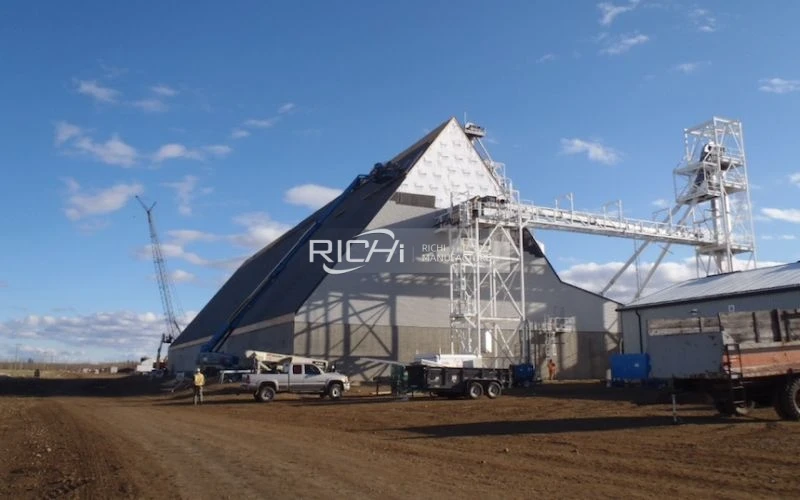

2-3 T/H
Digestate & Compost Fertilizer Project in Canada
The company already has established compost feedstocks and adds stabilized digestate as another controlled organic material. Spent mushroom substrate is available through the agricultural supply chain, allowing the plant to develop multi-material fertilizer formulas instead of depending entirely on digestate availability.
Equipment Used :FZLH320
Pellet Size : 6 mm
Raw Materials : Stabilized Solid Digestate, Spent Mushroom Substrate, Organic Compost
Client : Fertilizer & Compost Company
These projects also show why pellet diameter and machine die range should not be presented as the same thing. RICHI FZLH equipment provides 4–12 mm processing options, while an individual fertilizer producer may manufacture only 4 mm, 5 mm or 6 mm pellets—or retain more than one die specification for different products. Final selection follows the fertilizer product rather than artificially using the full machine range in every project.

Livestock & Biogas Farm · Denmark
“Our separator was already working well, so we did not want another supplier telling us to replace the whole front end. They checked the solid output and kept the equipment that could support the new fertilizer section. That was one of the reasons we chose this solution.”
Organic Fertilizer Manufacturer · Spain
“We purchase solid digestate and also use compost and other organic materials. The difficult part was not making one batch of pellets—it was being able to run our normal formulas when the raw materials changed. That was discussed before the equipment configuration was finalized.”
Agricultural Biogas Plant · Austria
“We knew how many tonnes of digestate the plant produced, but that number was not useful enough for selecting the pellet equipment. We measured what remained after separation and moisture reduction. The final capacity was based on material we could actually send to production.”
Waste Recycling Company · Belgium
“We receive organic material from different suppliers, so there is always some variation. The engineers asked for information from several normal production batches instead of designing everything from one sample. For us, that was a much more realistic way to select the equipment.
Cattle Farm with Biogas System · Ireland
“Drying was the part we were most uncertain about. They calculated it from the moisture of our separated digestate and the amount of water that had to be removed. We could see why the dryer configuration was selected instead of just getting another capacity number on a quotation.”
Digestate Processor · Czech Republic
“We already had storage, crushing and some conveying equipment. The new pellet section had to fit into that workshop, so connection heights and maintenance space mattered. We sent the existing layout and they worked around it rather than asking us to rebuild the plant.”
Food-Waste Anaerobic Digestion Plant · Japan
“Our digestion feedstock is not identical every month. We needed to know what would happen when the solid digestate became more fibrous or changed in moisture. The commissioning work covered those normal variations, which was more useful to our operators than testing only one ideal material.”
Fertilizer & Compost Producer · New Zealand
“We did not want digestate to become a separate production system from everything else we already make. The layout lets us use our existing compost materials and adjust the fertilizer formula when needed. That gives us more options for how we use the line.”
Digestate Pellet Machine Price
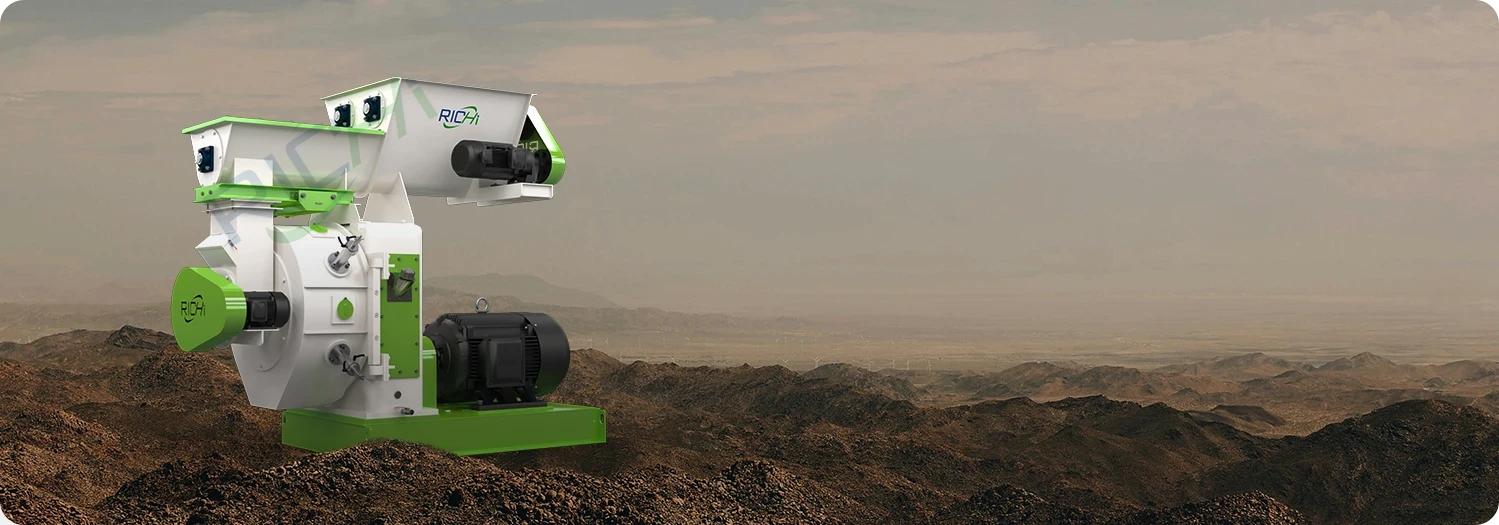
A standalone digestate pellet machine typically costs USD 10,000–100,000. The final quotation depends on model, main motor power, die specification and required machine configuration. This is the pelletizer budget—not the price of a complete digestate fertilizer line with drying, crushing, dosing, conveying and packing equipment.
If your biogas facility already produces properly prepared solid digestate, you may only need a digestate pelletizer for sale plus the necessary connection and downstream equipment. If the separated material is still wet, coarse or requires formulation, the complete project scope will be different.
Price Range for
Digestate Pellet Machine cost:
FZLH250 (22KW)
$10,000–$13,000
FZLH320 (22KW)
$15,000–$18,000
FZLH350 (37KW)
$18,000–$25,000
FZLH420 (90KW)
$26,000–$32,000
FZLH520 (132KW)
$43,000–$50,000
FZLH678 (200KW)
$64,000–$70,000
FZLH768 (315KW)
$75,000–$85,000
Get My Digestate Pellet Machine Price
Send the condition of the material at the point where the new equipment will start, and the quotation can be built around that boundary instead of adding equipment you already own.
A Complete Route from Wet Digestate to Finished Fertilizerution
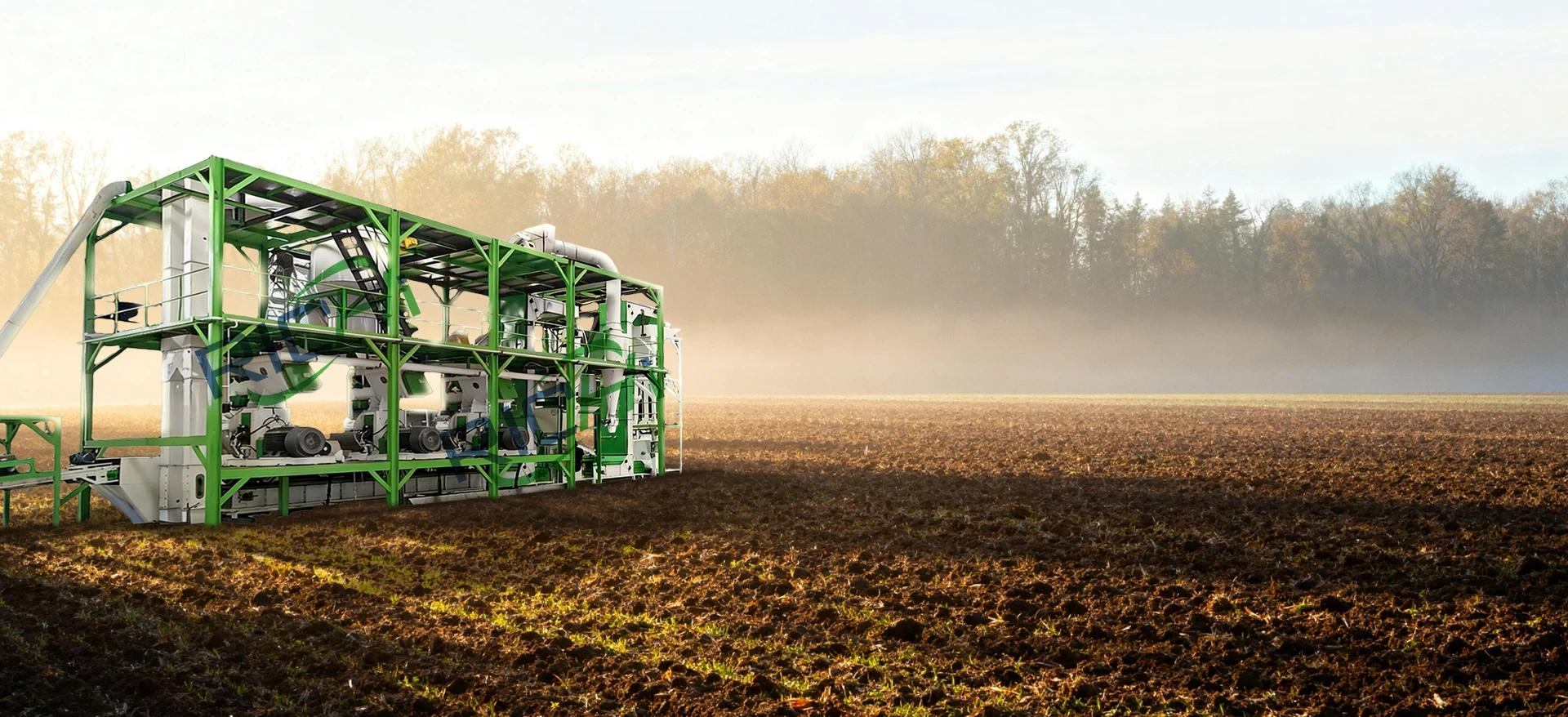
Digestate leaving a biogas plant can still carry a large amount of water, so pellet production normally starts well before the digestate pellet machine itself. The complete route below covers wet digestate through finished fertilizer; existing biogas plants can retain any suitable separation, drying or fertilizer equipment they already operate. A retrofit project may need only the last three or four stages. Before adding a new digestate fertilizer production line, RICHI checks the customer’s existing separator, dryer, crusher, storage and handling equipment so usable sections can remain in service instead of being purchased again.
Equipment for a Complete Digestate Fertilizer Production
A complete digestate fertilizer production line can extend from wet digestate handling to finished-product packing. Depending on what already exists at the biogas plant, the system may include solid-liquid separators, dewatering equipment, digestate storage, composting equipment, dryers, crushers, screens, dosing and mixing systems, the digestate pellet machine, pellet coolers, coating equipment, conveyors, finished-product bins, dust collection and packing systems. The nine machines below are key equipment we commonly configure and are shown in more detail; they are not the full equipment limit of the line.
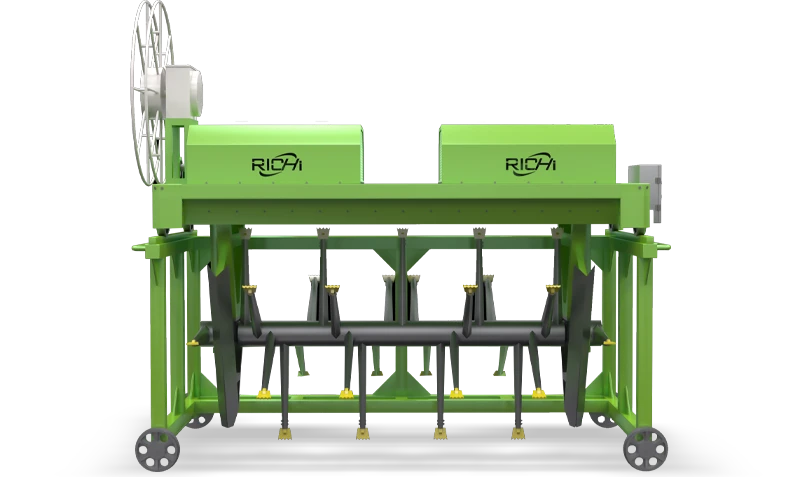
Digestate Compost Turner
Compost turning is used when digestate-based material requires further aerobic stabilization or is composted with other suitable organic ingredients. Regular turning improves aeration and creates more consistent conditions through the composting mass.
Turning Width
2–8 m
Turning Height
0.5–2.5 m
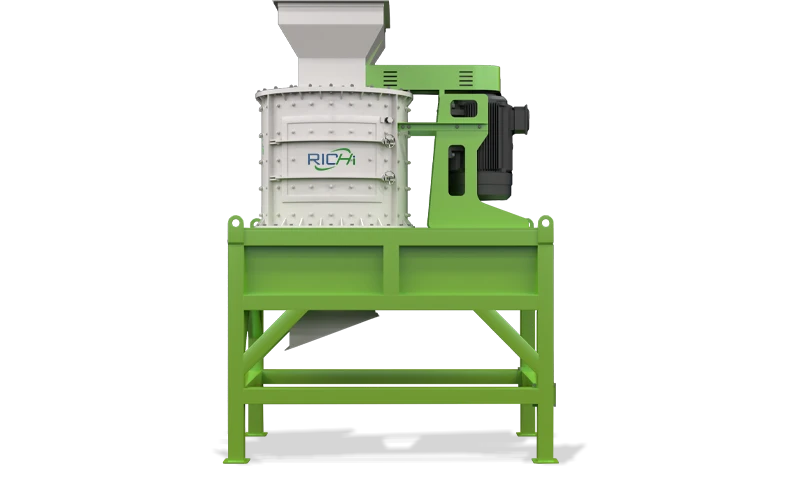
Digestate Crusher Machine
Dried or stabilized solid digestate can contain compacted pieces and fibrous agglomerates, particularly when crop-derived materials were involved in anaerobic digestion. Crushing creates a more uniform feed before dosing, mixing and pelletizing.
Capacity
3–30 T/H
Main Power
22–160 kW
Digestate Fertilizer Mixer
The mixer handles prepared solid digestate together with organic compost, animal-manure materials, crop residues or other ingredients specified by the fertilizer formula. It becomes particularly important for manufacturers producing more than one digestate-based product.
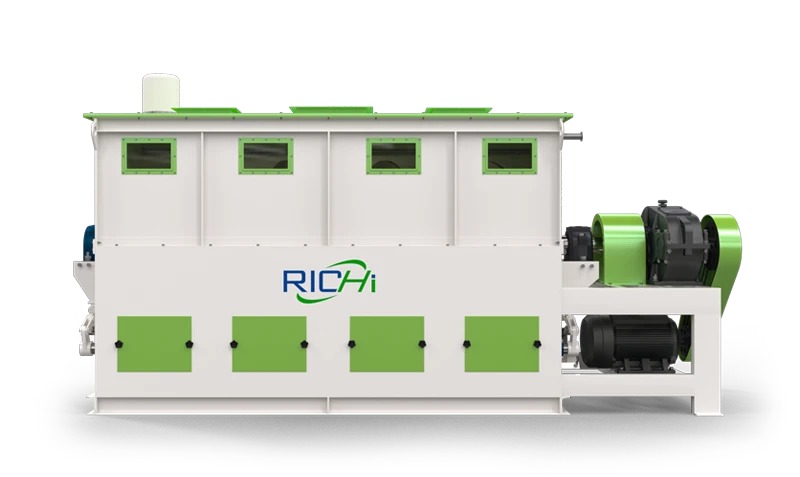
Capacity
250–2,000 kg/batch
Main Power
4-160KW
Digestate Dryer Machine
Separated digestate can retain substantial water even after mechanical dewatering. The dryer removes additional moisture where required, with its duty calculated from inlet moisture, target condition and hourly water evaporation rather than simply matching its nominal T/H figure to pelletizer capacity.
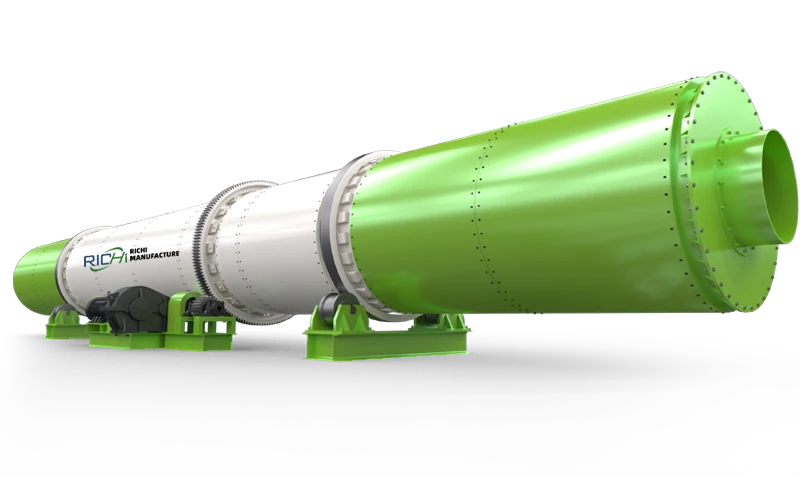
Capacity
1–30 T/H
Drying Temperature
60–250℃
Digestate Fertilizer Screener
Screening equipment can classify prepared material and, later in the process, separate qualified fertilizer pellets from fines or off-size product. Screen position, aperture and number of layers depend on what needs to be separated at that particular point in the line.
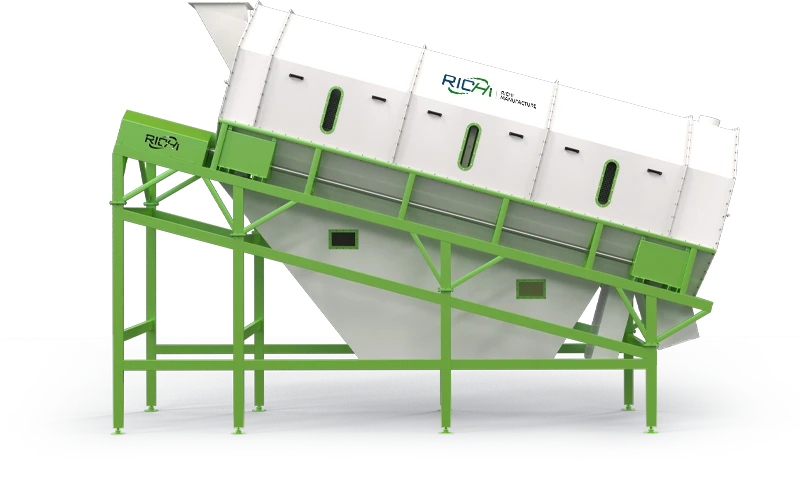
Capacity
3-50T/H
Screen Layers
1–3 Layers
Digestate Fertilizer Bagging Scale
Finished digestate fertilizer can be packed for normal commercial distribution, larger agricultural users or bulk handling. Packing weight, speed and automation level are selected around the customer’s actual sales format rather than being fixed by pellet-line capacity.
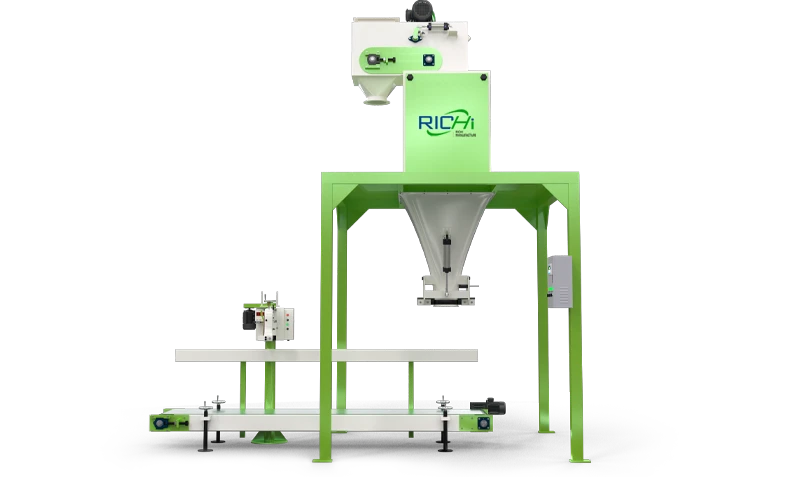
Packing Range
10–1000 kg/bag
Packing Speed
6–20 Bags/min
Feeding & Weighing System
When solid digestate is combined with several bulk ingredients, controlled weighing keeps each material within the intended formula. Multiple feeding points can also accommodate digestate, compost and agricultural organics with different bulk densities and handling characteristics.
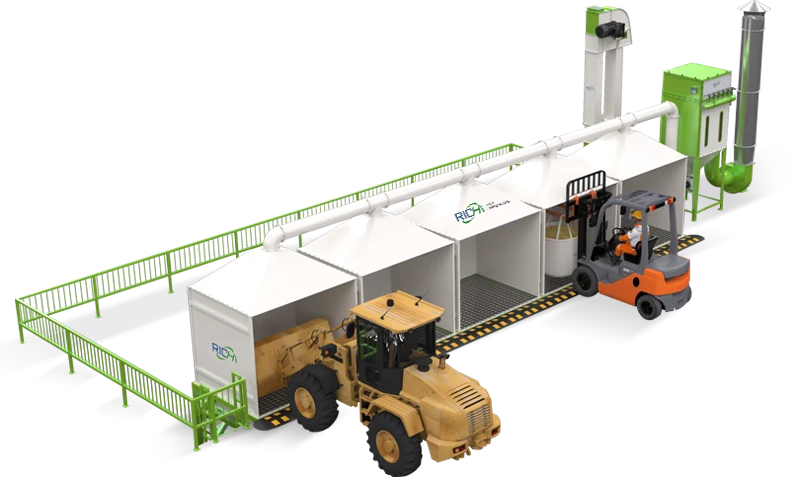
Weighing Capacity
1–50 T/H
Weighing Accuracy
±0.5–1%
Trace Element Dosing System
Low-dose fertilizer ingredients require greater dosing precision than the main digestate and compost streams. A dedicated system can be incorporated when the commercial fertilizer formula requires controlled addition of permitted trace or functional components.
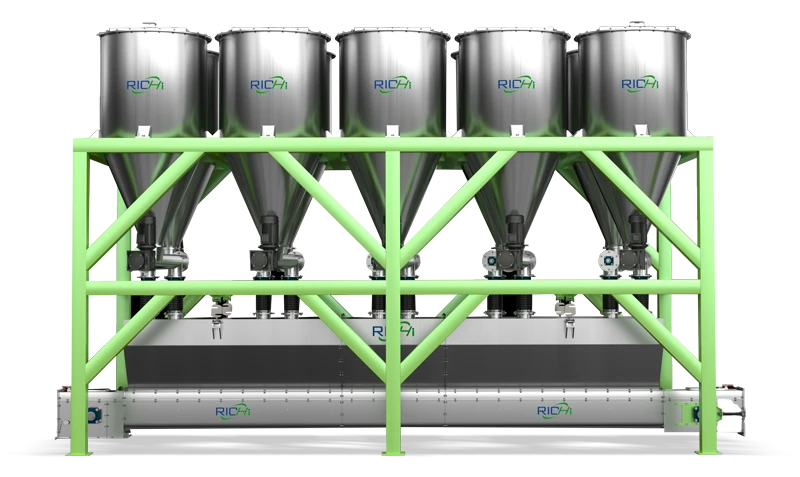
Dosing Accuracy
±0.1–0.5%
Hopper Volume
50–1000 kg
Digestate Conveyor Machine
Material handling changes throughout the plant: wet separated solids, dried digestate, mixed fertilizer feed and finished pellets do not behave alike. Belt conveyors, screw conveyors and bucket elevators can therefore be combined according to material condition, transfer distance and elevation.
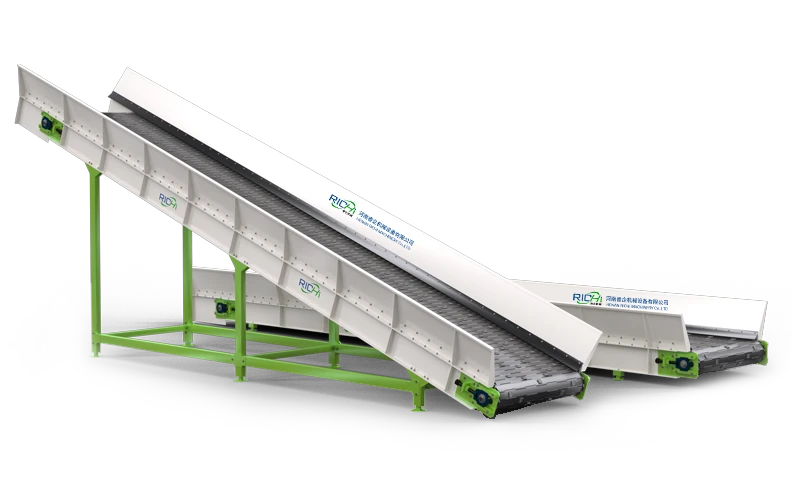
Capacity
3-40T/H
Conveying Length
3–40 m
Beyond these highlighted machines, a project may require solid-liquid separation equipment, screw presses or other dewatering units, receiving hoppers, buffer bins, hot-air systems, pellet coolers, coating machines, fines-return conveyors, magnetic separation, dust collectors, finished-product bins and auxiliary control equipment. Which ones belong in the final configuration depends on where the customer’s existing biogas or digestate-processing system ends and where the new fertilizer section needs to begin.
RICHI can therefore supply anything from a pelletizing addition for a working biogas facility to a complete digestate fertilizer processing line. Existing equipment is checked for capacity and interface compatibility first, so the final equipment list reflects what the project actually lacks rather than the number of machines available to sell.
Add Fertilizer Production Where Your Biogas Process Ends
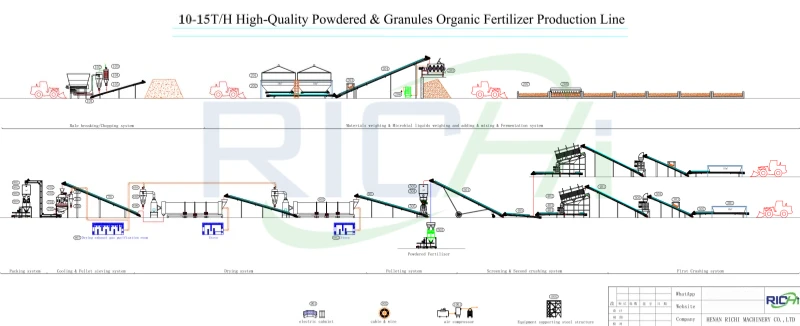
10 -15T/H digestate Pellet Production Line Process Flow 【Example Design】
RICHI designs 1–60 T/H digestate fertilizer production lines around the customer’s existing biogas and digestate-handling system. This 10-15 T/H example is for a livestock-based biogas plant that already has solid-liquid separation but receives separated digestate with too much residual moisture for direct fertilizer pelletizing. The project therefore starts from the recovered solid fraction rather than rebuilding the anaerobic digestion section.
preparation
fermentation
crushing
screening
pelletizing
drying
cooling
packaging
Separated digestate first enters moisture reduction and drying, followed by crushing and screening to control lumps and remaining fibrous material. Prepared solids are then weighed and mixed with organic compost and selected agricultural materials according to the product formula. This arrangement also allows the fertilizer section to handle changes in digestate characteristics when the biogas plant adjusts its digestion feedstock.
The mixed material enters the digestate pellet machine before cooling and screening. A coating section can be included for fertilizer products requiring surface treatment or suitable functional ingredients, while qualified pellets proceed to storage and packing. A powder-fertilizer outlet can also be reserved before pelletizing when the customer wants to sell both product forms.
Another biogas plant may need a much shorter line. If its solid digestate is already dried, stabilized and properly sized, the new project can begin at dosing, mixing and pelletizing; if the existing separator cannot provide enough solids or adequate dewatering, additional front-end equipment becomes necessary. The production line is therefore configured from the actual handover point between the existing biogas system and the new fertilizer section.
Future Prospects of digestate fertilizer Pellet Processing
For an operating biogas plant, digestate is generated whether or not there is a strong fertilizer outlet. Pellet production becomes commercially relevant when enough usable solids are recovered consistently and the business has farms, distributors or fertilizer customers able to absorb the finished product. That makes the recoverable solid fraction, rather than total wet digestate volume, one of the first numbers worth checking.
The strongest digestate recycling projects usually have three things in place: a dependable source of suitable solids, enough prepared material to keep commercial equipment working, and a realistic outlet for the fertilizer. RICHI uses those conditions to determine whether the customer needs a standalone pelletizer, a retrofit fertilizer section or a complete digestate processing plant.
Add Revenue After Biogas Production
Anaerobic digestion has already extracted energy from the original organic feedstock. A downstream digestate fertilizer operation gives suitable separated solids another product route instead of treating residue management only as an operating obligation. This is especially relevant to commercial biogas plants already paying for digestate handling, storage or external processing.
Use Infrastructure That Is Already Paid For
Existing separation, dewatering, drying, composting, storage and material-handling systems can reduce the scope of a new fertilizer project when they have adequate capacity. A retrofit digestate pellet machine section can therefore have a very different investment structure from a greenfield organic fertilizer factory.
Keep the Fertilizer Business Flexible
Digestate availability and composition may change when the anaerobic digestion feedstock changes. Fertilizer manufacturers can also work with suitable compost, animal manure and agricultural organic materials rather than depending on one digestate stream. A well-planned formulation section gives the business more options when raw-material supply or product demand shifts.
Expand from Residue Handling to Product Manufacturing
A company processing dewatered digestate in bulk may first add pellet production, then later introduce additional formulas, coating, alternative packaging or greater capacity as the fertilizer market develops. Expansion interfaces can be reserved in the first layout without purchasing every future machine at the beginning.
Frequently Asked Questions
Our biogas plant produces 40 tonnes of digestate a day. What digestate pelletizer capacity do we actually need?
Do not divide 40 tonnes by your operating hours. That figure usually includes a large amount of water. First determine the daily separated-solid output, cake moisture, additional water removal and fertilizer ingredients added later. Pelletizer capacity should be calculated from the prepared mixture that actually reaches pelletizing.
We get about 10 tonnes/day of prepared solid digestate. Is a 1 T/H digestate pellet mill enough?
For one 8-hour shift, a 1 T/H pelletizing section processes about 8 tonnes/day at full throughput. Ten tonnes/day can therefore support this scale with operating-hour flexibility, provided the figure represents material already prepared for pelletizing rather than wet separator cake.
What moisture should solid digestate reach before it enters the pelletizer?
For the FZLH ring-die process on prepared digestate fertilizer mixtures, approximately 12–18% feed moisture is a practical reference window. The optimum point within that range depends on fiber content, formulation and material behavior. Wet solids directly from separation normally require further moisture reduction first.
Our screw press leaves the digestate cake at around 65% moisture. Can it go directly into the digestate granulating machine?
No. At 65% moisture, the separated cake is far too wet for the pelletizing condition described on this page. Further dewatering where practical and/or thermal drying is required before crushing, formulation and pelletizing.
Would changing the solid-liquid separator reduce our drying cost?
Potentially, and this should be evaluated before increasing dryer size. If improved mechanical separation removes more water before thermal drying, less water has to be evaporated using heat. The decision should be based on separator performance, solids recovery, cake condition, energy use and the required downstream throughput.
How do you calculate the dryer for wet digestate?
We calculate the hourly water evaporation load from wet feed quantity, inlet moisture and required outlet condition. For example, two projects both described as “5 T/H digestate” can require very different dryers if one starts with much wetter separated solids. Dryer selection should therefore never be made from pellet-line capacity alone.
Do all digestate fertilizer projects need a dryer?
No. A fertilizer manufacturer purchasing sufficiently dry, stabilized solid digestate may not need a new dryer, and some operating plants already have suitable drying capacity. The dryer is included only when the actual moisture balance requires thermal water removal.
Does solid digestate need composting again after anaerobic digestion?
Not automatically. Anaerobic digestion and aerobic composting are different biological processes, and whether additional stabilization is appropriate depends on the digestate condition, intended fertilizer product and applicable requirements. We do not add a composting stage simply because the raw material is called digestate.
Our digestate contains visible maize and grass fibers. Will that cause problems during pelletizing?
Long or uneven fibers should be controlled before pelletizing. Digestate from agricultural biogas plants using silage, crop residues or fibrous feedstocks can require more size reduction than a fine manure-dominant material. The prepared raw materials commonly controlled around 2–5 mm for this process.
Can cattle-manure digestate and pig-manure digestate use the same pelletizing line?
Yes, provided both materials are suitable for the intended fertilizer and are brought to appropriate processing conditions. Their moisture, fiber, ash and handling behavior may differ, so upstream preparation and operating settings can change even when the same digestate pellet machine is used.
What happens if we change the feedstock going into our anaerobic digestion system?
The digestate can change as well. Increasing crop material, manure or other permitted organic feedstocks can affect the separated solid fraction’s fiber level, moisture behavior and composition. Tell us the normal feedstock range, not just the recipe used on the day a sample is collected.
Can we mix animal manure with processed solid digestate before pelletizing?
Yes, where the manure has received the required treatment and the formulation complies with the intended fertilizer requirements. Cattle, pig or poultry manure can be part of a digestate-based organic fertilizer formula, but the mixing ratio should follow product design rather than being chosen only to improve pellet formation.
Can crop residues be added to digestate fertilizer?
Yes, suitable corn stalk, wheat straw, bean residues and similar agricultural materials can be incorporated after appropriate preparation. Their moisture, fiber length and proportion need to be controlled because excessive coarse plant material changes both formulation and pelletizing behavior.
Can we use spent mushroom substrate together with solid digestate?
Yes, this can be a practical combination for agricultural waste processors and organic fertilizer manufacturers with access to both materials. The spent mushroom substrate should first be assessed for moisture, decomposition condition and composition before its inclusion rate is determined.
We already produce compost. Can digestate be added to our existing fertilizer formulas?
Potentially yes. Mature organic compost is a practical co-material for many digestate fertilizer manufacturers. Existing mixing, crushing, screening and storage equipment can also be retained if its capacity and interfaces suit the new material and production target.
Do we need a trace-element dosing system if we only want a basic organic fertilizer?
Not necessarily. A dedicated trace-element system is more relevant when small-dose ingredients must be controlled accurately in formulated commercial products. A simpler digestate-based fertilizer may only require the appropriate bulk-material feeding and mixing arrangement.
Can one line produce both digestate powder fertilizer and pellets?
Yes. A qualified material stream can be diverted to powder-fertilizer storage or packing before entering the digestate pellet mill, while the remaining prepared mixture continues into pellet production. This is useful for businesses that already have a powder market and do not want all output committed to pellets.
Do we need coating equipment for digestate fertilizer pellets?
Not for every product. Coating is added when the finished fertilizer requires an anti-caking treatment, surface treatment or controlled application of suitable functional ingredients. If your product specification does not require it, there is no reason to add the process simply to make the line longer.
Can we produce only 4mm digestate fertilizer pellets?
Yes. The FZLH digestate pelleting machine supports 4–12 mm die options, but a customer can choose a single specification such as 4 mm if that is what the target fertilizer product requires. The machine’s available range does not mean every plant has to manufacture several diameters.
Can the same solid digestate pellet machine later make 5mm or 6mm fertilizer pellets?i
Yes, with the appropriate die and machine setup. This gives fertilizer manufacturers flexibility to change product specifications later without purchasing a completely separate pelletizing line solely because the required pellet diameter changes.
We already have a dryer, crusher and mixer. What information do you need to check whether they can stay?
Send the model, rated capacity, motor power, inlet and outlet dimensions, installation height, material currently processed, photos and available drawings. For the dryer, also provide inlet/outlet moisture and actual evaporation performance. Nameplate capacity alone is not enough to confirm compatibility.
Can the digestate pelletizer be installed directly after our existing biogas plant?
Yes, but only if the material reaching that connection point has already been prepared for pelletizing. In many retrofit projects, the practical sequence between the biogas system and solid digestate pelletizer still includes moisture reduction, crushing, screening, dosing or mixing. We first identify exactly where the existing process should hand material over to the new fertilizer section.
Our digestate supply changes between summer and winter. Which capacity should we use?
Use annual supply, average operating-period supply and low-season availability together. Selecting the digestate fertilizer pellet machine from the highest month can leave excessive idle capacity for the rest of the year. Operating hours, storage strategy and other suitable fertilizer feedstocks can also be considered when balancing seasonal supply.
We receive solid digestate from several biogas plants. Can we mix everything in one storage area?
Not automatically. Different sources can originate from different anaerobic digestion feedstocks and may differ in composition, moisture and fertilizer suitability. Incoming material should be controlled by source and specification before different digestates are approved for a common fertilizer formula.
How much workshop space should we reserve for the pelletizing section?
There is no reliable area figure without the equipment boundary. A retrofit containing mainly dosing, mixing, pelletizing, cooling and packing occupies far less space than a project beginning with wet digestate and including drying. Send the building length, width, clear height, column positions and existing equipment layout so the arrangement can be checked against the actual site.
What electrical information should we send before you design the line?
Provide the site’s voltage, frequency, phase and available transformer or power capacity. The electrical check must include the complete equipment scope—especially drying auxiliaries, crushing, pelletizing, conveying, cooling, screening and packing—not only the main motor of the biogas residue pellet machine.
Can we automate the line if labor is expensive in our country?
Yes. Feeding, weighing, mixing, pelletizing, conveying and packing can be integrated with different levels of control, but some work still requires operators for receiving, inspection, maintenance and material management. Automation should remove repetitive handling where it produces a real operating benefit rather than being added only as a sales feature.
Our current fertilizer pellets produce too many fines. Does that mean we need a new digestate pellet machine?
Not necessarily. High fines can result from feed preparation, moisture variation, die selection, formulation, cooling, screening or handling after pelletizing. We would review those conditions first. Replacing the digestate granulator without finding the actual cause can leave the same problem in the new line.
We need 3 T/H now but expect much more digestate after adding another digester. Should we buy the larger machine immediately?
Only when the future material and expansion schedule justify it. Another option is to size the first stage around current prepared solids while reserving floor space, electrical capacity, conveying interfaces, bins and downstream capacity for expansion. This avoids operating a heavily oversized solid digestate granulator while waiting for future digestate that is not yet available.
What should I send you before asking for a complete digestate fertilizer solution?
Send the original anaerobic digestion feedstocks, daily wet digestate output, solid-liquid separator type, daily separated-solid quantity, cake moisture, any existing drying or fertilizer equipment, additional materials you plan to mix, required production capacity, operating hours, finished products, workshop dimensions and electrical supply. Material photos, analysis data and short production videos are also useful. With this information, RICHI can determine whether you need a standalone digestate pellet machine, a retrofit pelletizing section or a complete digestate fertilizer production line.
If you are researching how to make fertilizer pellets from digestate, how to process solid digestate, or how to turn biogas residue into fertilizer, start with the condition after solid-liquid separation. That one set of data—solid output and residual moisture—often determines more of the equipment configuration than the total wet digestate tonnage.


