
 0086-138 3838 9622
Dairy Feed Mill


A dairy feed mill can serve dairy farms, calf and heifer rearing operations, dairy cooperatives, commercial feed manufacturers, concentrate producers and existing livestock feed mills adding dairy products. Farm projects may focus on controlling feed supply for their own herd, while a commercial dairy feed mill often needs several formulas for different farms, production stages and feeding systems.
Dairy feed production is not limited to one “cow feed.” Calf starter, heifer feed, lactating-cow concentrate, transition and dry-cow feeds have different nutrient and physical requirements. RICHI therefore configures each dairy feed plant around the products actually manufactured—whether mash, concentrate, compound feed or pellets—and how those products will later be used on the farm, including as part of a TMR feeding program.
Discuss My Dairy Feed Mill Plan
Dairy Feed Products for Different Formula Systems
A dairy feed mill may produce very different products from the same core ingredient categories. Grain-based compound feeds, concentrate mixes, mineral-rich premixes and higher-fiber formulas require different grinding, dosing, mixing and pelleting arrangements, so RICHI configures the line around the actual formula and finished-feed form.

Dairy Compound Pellet Feed
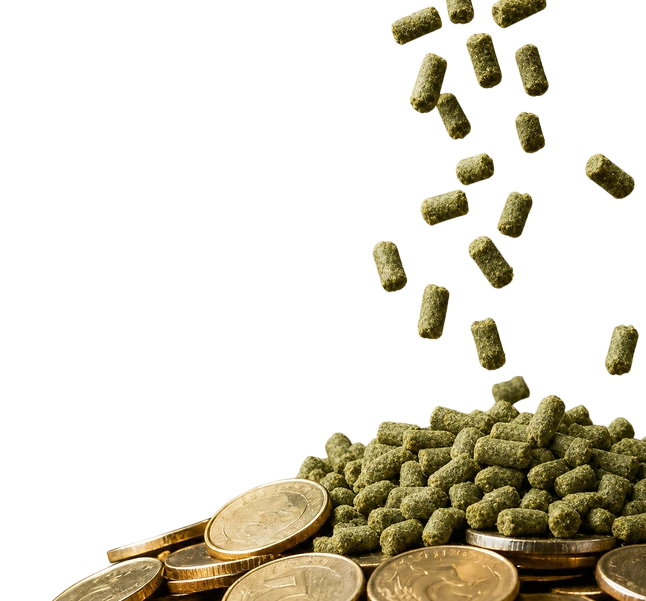
Dairy compound pellets commonly combine maize, barley, wheat, soybean meal, canola meal, bran, minerals, vitamins and other formulated ingredients. A dairy feed pellet production line can be configured for different pellet sizes and formula densities according to how the finished feed will be used with the farm’s forage ration.
Typically 4–8mm Pellets

Dairy Compound Mash Feed
Mash formulas use many of the same grain, protein and mineral ingredients but bypass the pelleting section after mixing. A dairy mash feed production line places more emphasis on controlled grinding, accurate batching and uniform mixing so cows do not receive an uneven concentration of grain, protein or minerals.
Controlled Meal / Mash

Dairy Concentrate Feed
Dairy concentrates are relatively nutrient-dense feeds designed to complement forage by supplying additional energy, protein, minerals or other nutrients. A dairy concentrate feed production line may produce loose meal or pellets from cereal grains, soybean or canola meal, DDGS, wheat middlings, beet pulp and other suitable ingredients.
Mash or Pellet

Dairy Premix & Mineral Feed
Premixes contain vitamins, trace minerals and other micro-ingredients that are later incorporated into a larger feed formula. This type of production requires high-accuracy weighing and uniform mixing rather than high pelleting capacity, making micro-dosing and contamination control particularly important.
Fine Powder / Low-Inclusion Mix

High-Fiber Dairy Compound Feed
Some dairy formulas include higher levels of fibrous ingredients such as alfalfa, hay, beet pulp, soybean hulls, straw, wheat middlings or dried distillers grains. These materials change bulk density, grinding behavior and pelletability, so a dairy compound feed production line may require different preparation, conditioning and die selection from a predominantly grain-based formula.
Mash or 6–10mm Pellets
One dairy feed production line can be designed to manufacture several of these products through shared receiving, grinding, batching and mixing systems, with mash bypasses, dedicated micro-dosing or pelleting modules added according to the product portfolio.
Customize My Dairy Feed Products
Dairy Feed Mill videos
These dairy feed mill videos show how different raw materials and formulas change the actual equipment configuration. From bale opening and forage drying to grain grinding, batching, pelleting and packing, each project gives buyers a direct look at how RICHI designs the line around the customer’s material condition and production plan.
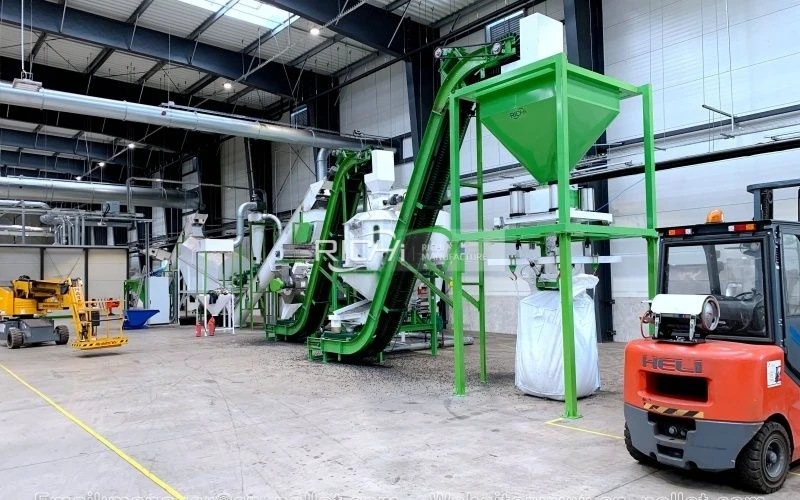

【5 T/H Alfalfa Dairy Feed Mill in Uruguay】This video shows a 5 T/H line processing dry round-bale alfalfa into dairy forage pellets. Because the incoming material does not require drying, the system focuses on bale breaking, forage grinding, pelleting, cooling, screening and packing—showing how unnecessary equipment can be removed when the raw material condition allows it.
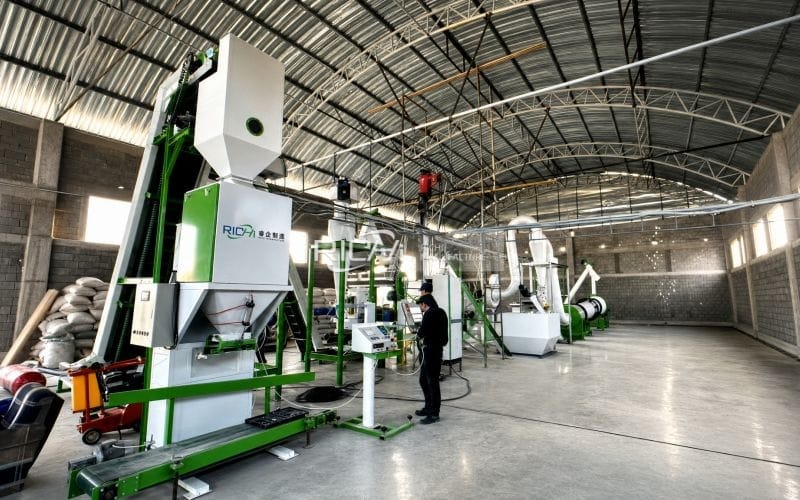
【3 T/H Forage-Grain Dairy Feed Plant in Kazakhstan】The customer uses a formula of about 60% forage and 40% grain. In the video, the key difference is the forage-drying section: the incoming grass has higher moisture, so drying is added before final grinding, mixing and pelleting to prepare the material for stable downstream processing.
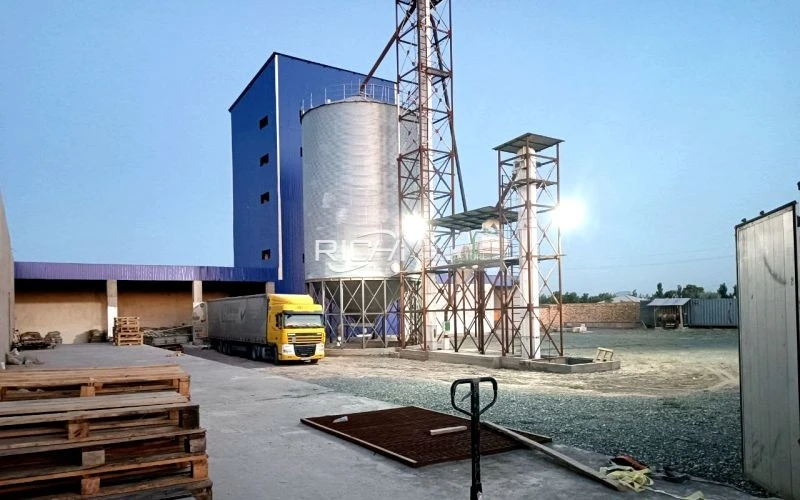
【10–15 T/H Commercial Dairy Feed Mill in Uzbekistan】This video shows a much more grain-dominant formula, with about 10% forage and 90% other feed ingredients. Because the customer purchases ready-made grass meal, bale breaking and primary forage grinding are not required, allowing the line to move more directly into batching, mixing and downstream production.
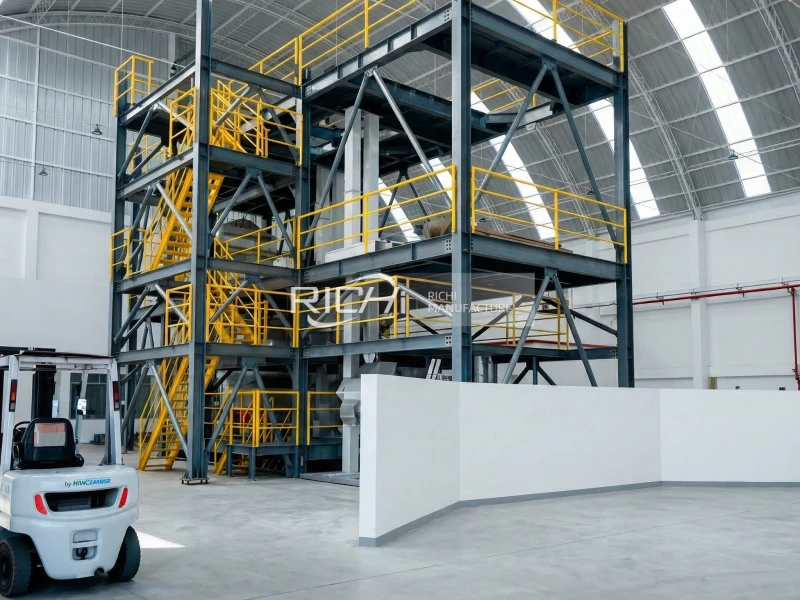
【8–10 T/H Dairy Concentrate Feed Plant in Peru】This project video represents a grain-based dairy concentrate route rather than a forage-heavy pellet line. The process centers on grain grinding, computerized batching and accurate addition of protein, mineral and premix ingredients, giving commercial feed producers a clearer reference for concentrate-feed manufacturing.

【 1-2T/H Dairy Farm Feed Line in Kenya】This farm-scale video features a grass-rich formula containing about 80% forage and 20% grain. The wetter forage is chopped and dried before entering the feed-making process, making this a useful reference for dairy farms that want to use a high proportion of locally available forage in their own feed production.
Custom Dairy Feed Mill Design
A dairy feed mill is not designed from capacity alone. RICHI matches the dairy feed processing line to the finished product—compound pellets, mash, concentrate, premix or higher-fiber feed—as well as ingredient form, formula, moisture, plant height, automation and budget. A complete dairy feed plant can combine raw-material storage, cleaning, grinding, batching, micro-dosing, mixing, liquid addition, conditioning, pelleting, cooling, screening, conveying, finished bins and packing according to the actual production program.
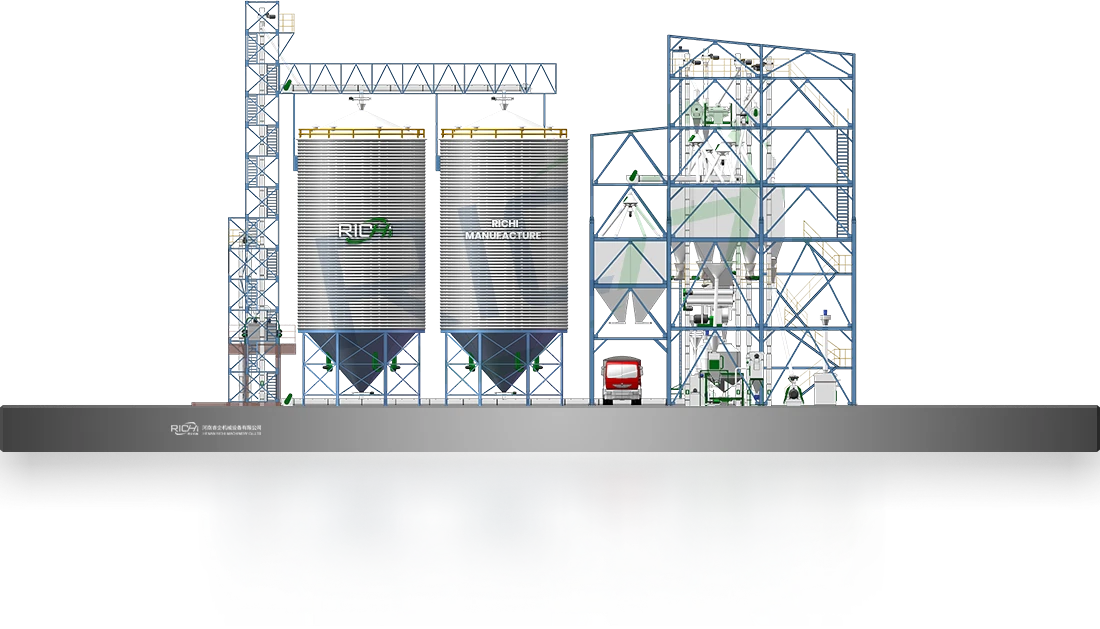
Raw-material handling changes substantially between projects. Whole grains require cleaning and grinding; meals may bypass grinding; hay or alfalfa bales can require bale breaking and forage crushing; beet pulp, soybean hulls, DDGS and other by-products change bulk density and pelleting behavior. A dryer is added only when genuinely wet ingredients are intended for dry feed manufacture and pre-drying is technically justified.
Mash or concentrate can bypass pelleting, while pellet products continue through conditioning, pelleting and cooling. For a new turnkey dairy feed production line or an existing plant upgrade, RICHI can add, remove or integrate modules instead of forcing every customer into the same process.
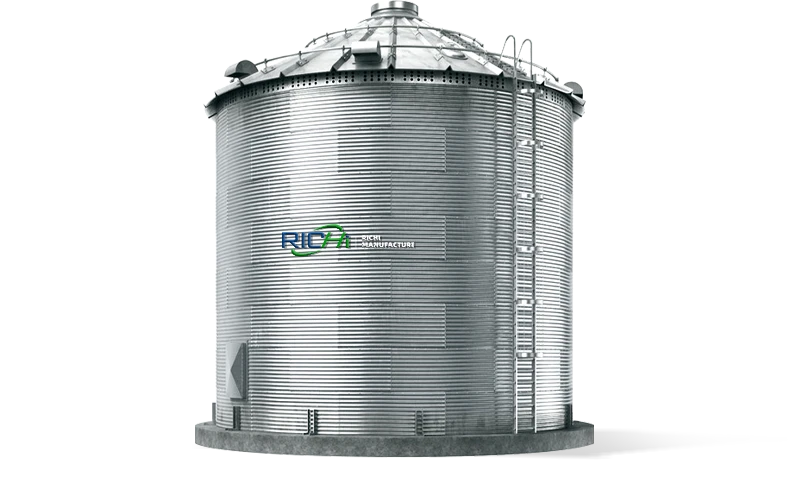
Silo system
01
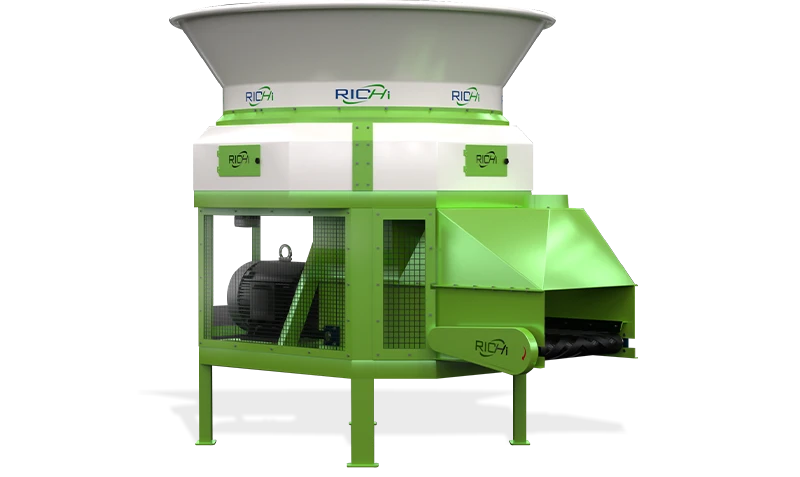
bale chopping
02
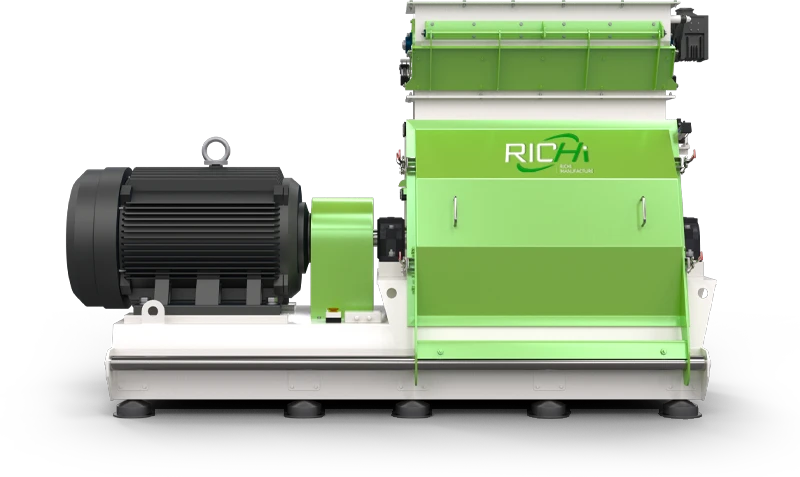
Grinding system
03
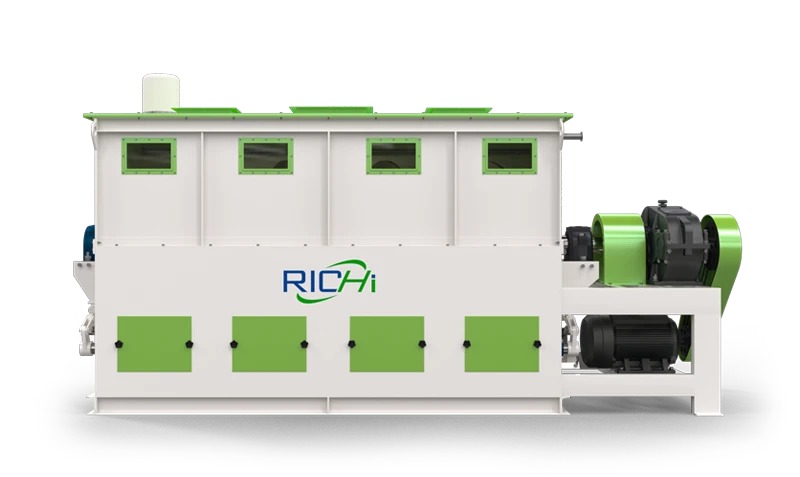
Mixing system
04
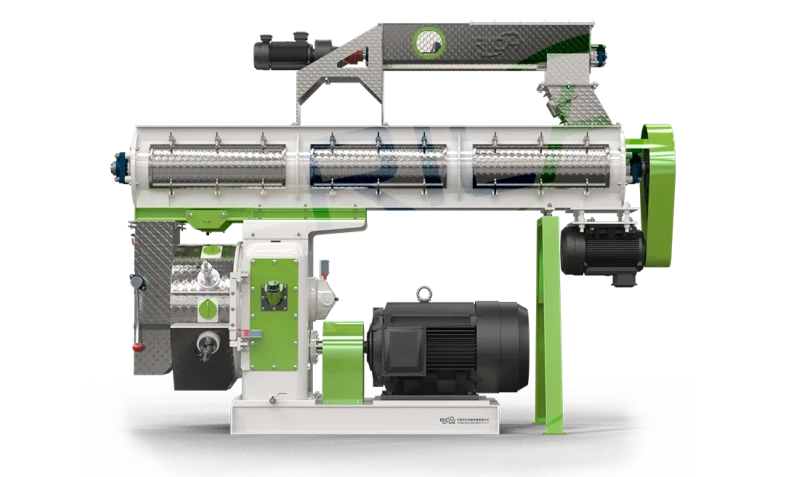
Pelleting system
05
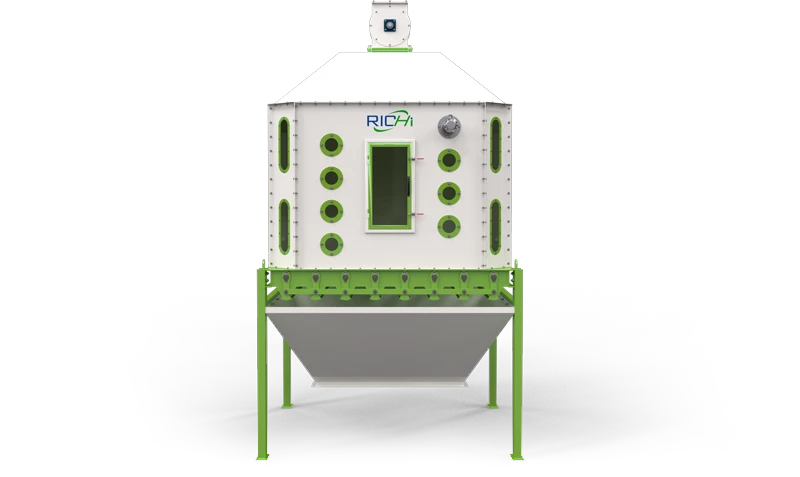
Cooling system
05
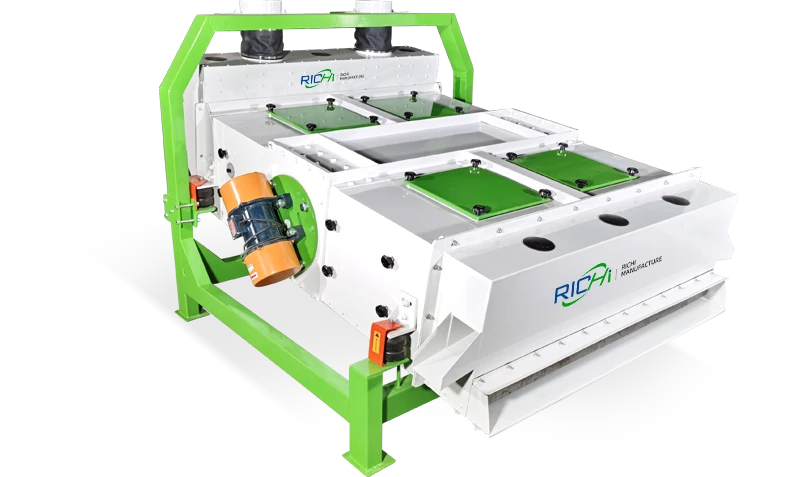
Screening system
07
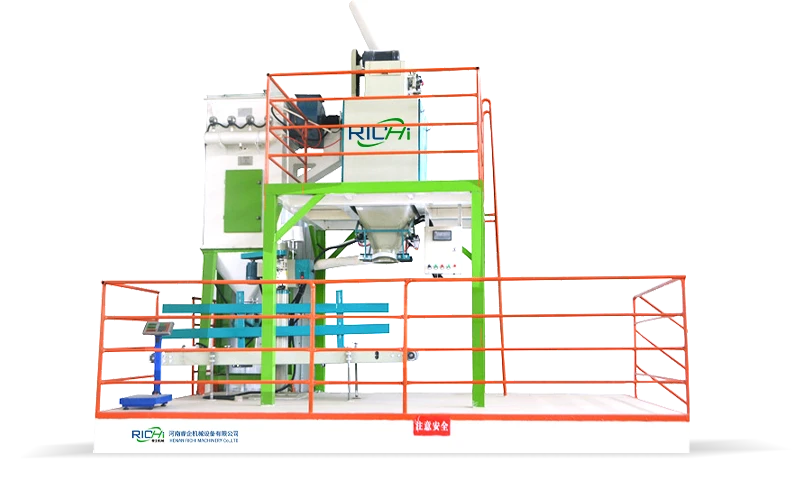
Packaging system
08
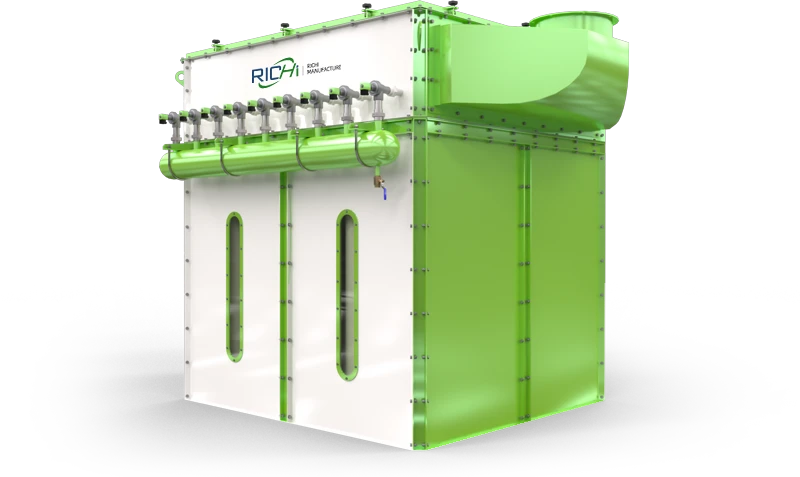
Dust removal system
09
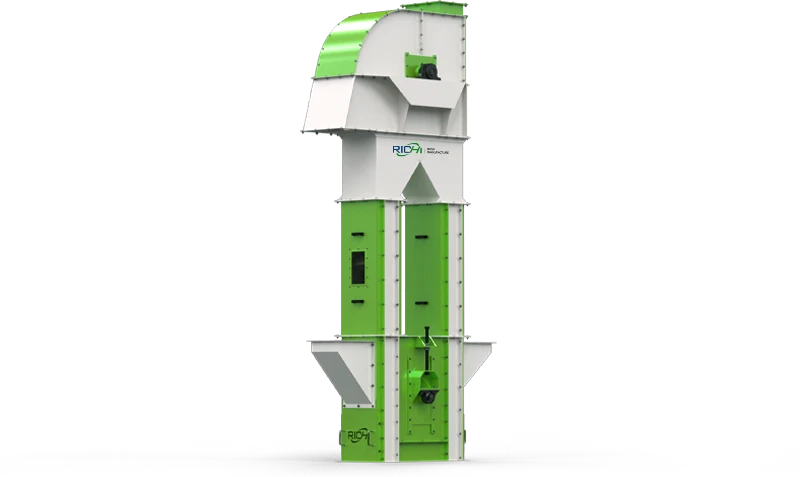
Conveying system
10
8 Customized Dairy Feed Mill Designs for Real Customer Projects
These dairy feed mill designs were developed around different formulas, raw-material conditions, existing facilities and finished-feed requirements. The process changes with forage form, moisture, grain ratio, product type and the equipment already available at the customer’s site.

3–4 T/H Alfalfa Dairy Feed Pellet Plant Design
This design proposal originates from a project in Spain for a client that processes forage for dairy farms. The process flow for this feed line is designed as follows: Bale Breaking / Chopping → Drying → Secondary Grinding → Pelleting → Cooling → Screening → Finished Bin → Automatic Packing / Bulk Loading
The customer receives high-moisture alfalfa in both baled and loose form. Bales enter a bale breaker while loose forage is chopped before both streams enter drying and secondary grinding. Because the finished product is 100% alfalfa, this line produces dairy forage pellets rather than a complete dairy compound feed. Finished pellets can be bagged or loaded in bulk for delivery to dairy farms.

0.8–4 T/H Low-Height Dairy Cattle Feed Production Line
This design proposal originates from one of our projects in Australia; the client is a dairy farm and local feed supplier. The process flow for this feed line is designed as follows: Hay & Grain Feeding → Chopping / Grinding → Batching → Mixing → Pelleting → Cooling → Screening → Packing
The customer uses dry hay together with wheat, barley and other concentrate ingredients, but the existing workshop has limited height. RICHI replaced a tall gravity-flow arrangement with more screw and drag conveying, keeping the dairy cattle feed production line compact while still supporting several hay-to-grain ratios and pellet formulas.

5–6 T/H Dairy Mash Feed Plant Design
This design proposal originates from one of our projects in Türkiye; the client is a regional dairy feed producer. The process flow diagram for this feed line is designed as follows: Hay Bale Breaking → Chopping → Batching → Secondary Grinding → Mixing → Manual Bagging
This customer needed a grass-and-grain dairy mash feed production line without a pelleting section. Hay bales are broken and chopped first, then weighed with grain ingredients before secondary grinding and mixing. Because the product is sold as mash, the design removes the pellet mill, cooler and screen and keeps packing simple.

1–6 T/H Maize-Stover Dairy Feed Plant Design
This design proposal originates from one of our projects in Mexico; the client is a dairy cooperative feed center. The process flow design for this feed line is as follows: Stover Chopping → Batching → Secondary Grinding → Grain Addition → Mixing → Pelleting → Cooling → Screening → Automatic Packing
The cooperative uses long maize stover together with pre-ground grains, protein meals and minerals. The stover therefore needs a separate chopping route before batch weighing and fine grinding. Practical output changes with the stover ratio and formula density, so the dairy cattle pellet feed production line is designed for a relatively wide operating range.

1–2 T/H Grass-Rich Dairy Pellet Feed Plant Design
This design proposal originates from one of our projects in France; the client is a dairy feed processor. The process flow design for this feed line is as follows: Grass Chopping → Drying → Temporary Storage → Grain Dosing → Mixing → Pelleting → Cooling → Screening → Packing
The customer uses loose grass at approximately 40–50% moisture together with a pre-weighed grain and concentrate portion. The wet forage is chopped and dried before entering the mixer, while the grain portion is dosed separately. The finished product is positioned as a grass-rich supplementary dairy pellet rather than a replacement for the farm’s complete forage ration.

2–10 T/H Automatic Dairy Feed Plant Design
This design proposal originates from one of our projects in Brazil; the client is an integrated dairy group. The process flow design for this feed line is as follows: Forage Preparation → Batching → Mixing with Pre-Ground Grain → Pelleting → Cooling → Screening → Packing
This customer already operates a grain-grinding system, so RICHI did not duplicate that investment. Dry grass, crop residues and pre-ground grain enter the new batching and mixing sections before pelleting. The practical capacity changes with forage percentage, formula structure and product specification, allowing the automatic dairy feed plant to serve several dairy feed programs.

0.3–0.5 T/H Small Dairy Roughage Pellet Line Design
This design proposal originates from one of our projects in India; the client is a small dairy cooperative. The process flow design for this feed line is as follows: Grass & Straw Chopping → Secondary Grinding → Mixing → Pelleting → Long-Distance Cooling Conveyor → Bulk Loading
The cooperative wanted a very small system for producing grass-and-straw roughage pellets from locally available crop residues. Long material is chopped first and then ground again before mixing and pelleting. Instead of adding a separate cooler, screen and bagging section, the pellets cool during long-distance conveying and are loaded directly for nearby dairy farms.

5 T/H Bagasse-Based (80%) Dairy Supplement Feed Plant Design
This design proposal originates from one of our projects in Thailand; the client is a processor of dairy feed and agricultural by-products. The process flow diagram for this feed line is designed as follows: Bagasse Size Reduction → Drying → Batching → Grain & Protein Addition → Mixing → Pelleting → Cooling → Screening → Packing
The customer wanted to use locally available sugarcane bagasse as one fiber component in a dairy supplement feed rather than as the entire ration. RICHI designed the line around dried bagasse combined with grain, protein ingredients, minerals and premix. The bagasse inclusion level is determined by the nutritionist and finished formula rather than fixed at an excessively high percentage.
Dairy Feed Mill Projects Across Different Dairy Markets
RICHI dairy feed mill projects cover farm-use feed production, dairy cooperatives, concentrate manufacturers, commercial feed companies and large integrated dairy operations. Product forms range from mash and concentrate to compound pellets and fiber-rich supplements, with each project configured around local ingredients, herd structure, feeding system and required production scale.
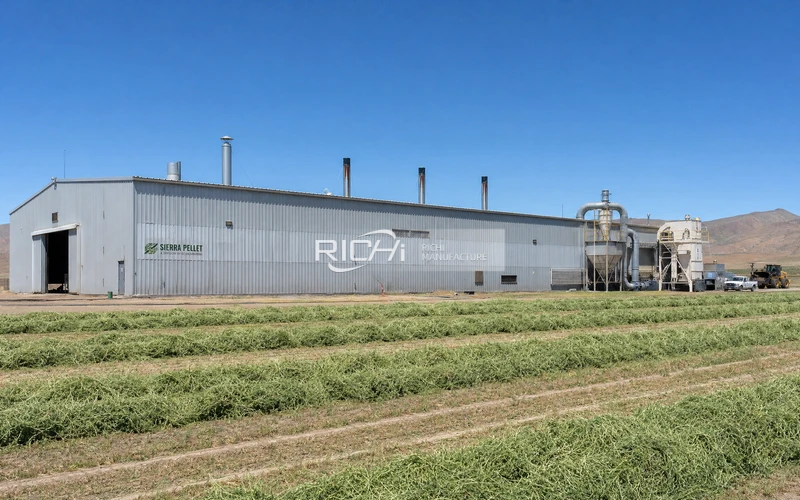
10 T/H High-Yield Dairy Feed Mill Plant Project
United States
A commercial feed manufacturer required several concentrates for high-producing dairy herds, including lactating and dry-cow products. Corn, soybean meal, by-products, minerals and liquid ingredients are handled through automatic batching, mixing and flexible pellet or mash routes.
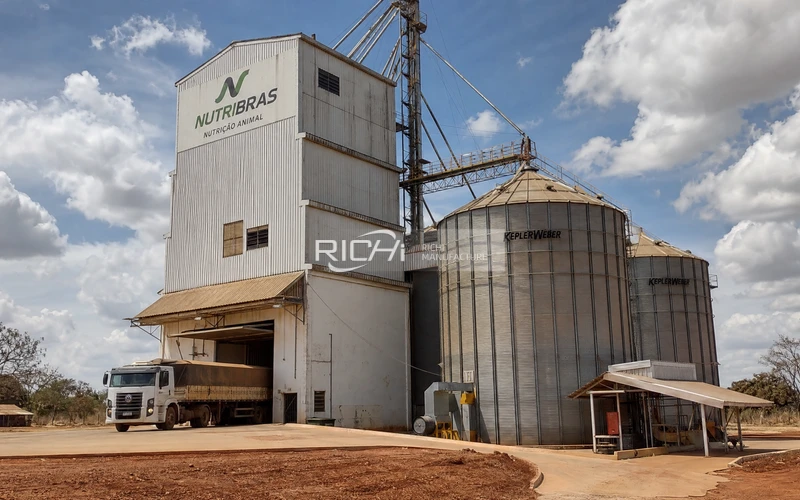
10 T/H Maize Dairy Concentrate Feed Mill Project
Argentina
The dairy cow feed plant project uses locally available maize, soybean products and cereal by-products to manufacture commercial concentrates. Automatic batching and flexible mash/pellet routing allow the customer to supply different dairy farms without building separate production lines.

6 T/H Multi-Stage Dairy Feed Mill Project
Poland
A dairy cattle feed plant project was developed for a manufacturer serving calf, heifer, lactating and dry-cow customers. The system emphasizes recipe control and finished-bin separation so several products can be produced without treating all dairy feeds as one formula.
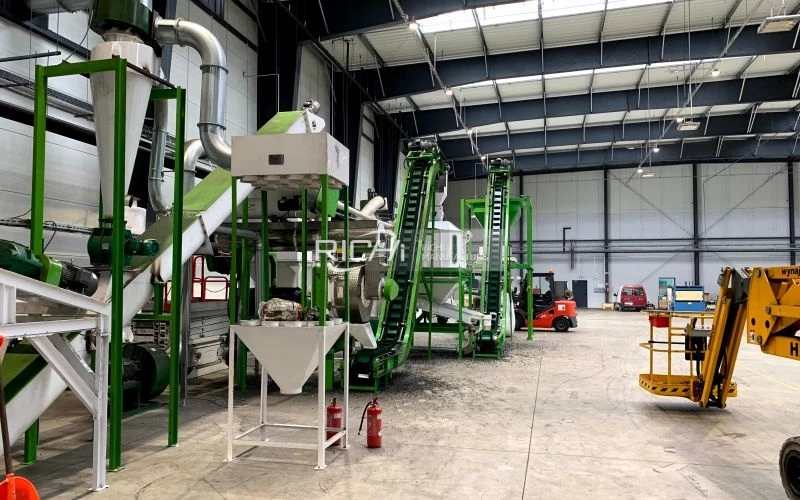
2-3 T/H Lactation Dairy Concentrate Feed Project
Italy
This regional dairy feed producer focuses on concentrates for lactating cows and replacement animals. The process supports maize, soybean meal, wheat bran and other suitable ingredients, with both mash and pellet products supplied to dairy farms using forage-based rations.
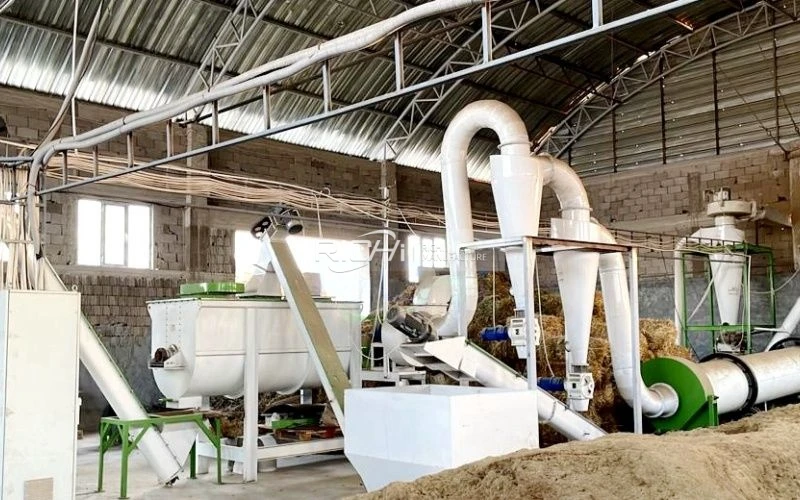
1–2 T/H Farm Dairy Pellets Feed Mill Project
Algeria
A dairy farm required a compact line using dry hay-derived fiber together with grain and concentrate ingredients. The small dairy farm feed plant keeps storage and automation moderate while retaining grinding, mixing and pelleting for farm-use supplementary feed.

4 T/H Pasture Dairy Concentrate Feed Mill Project
New Zealand
This dairy feed mill project serves a pasture-based dairy business producing grain-and-protein concentrate for use alongside grazed forage. The line focuses on accurate batching and mash production rather than unnecessarily processing the farm’s pasture through the feed mill.
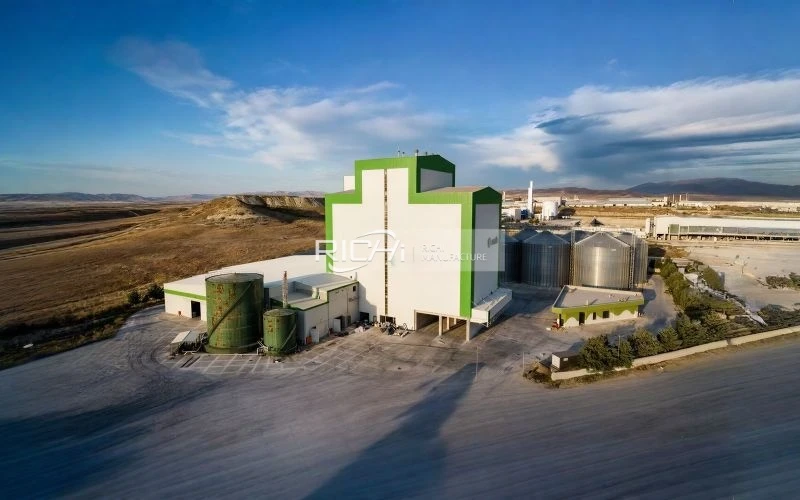
10 T/H Compound Dairy Pellets Feed Project
Germany
The plant produces grain-based dairy compound pellets and mash for commercial distribution. Wheat, barley, maize, protein meals and feed by-products enter controlled grinding and batching routes, while a mash bypass gives the dairy cattle feed mill greater product flexibility.
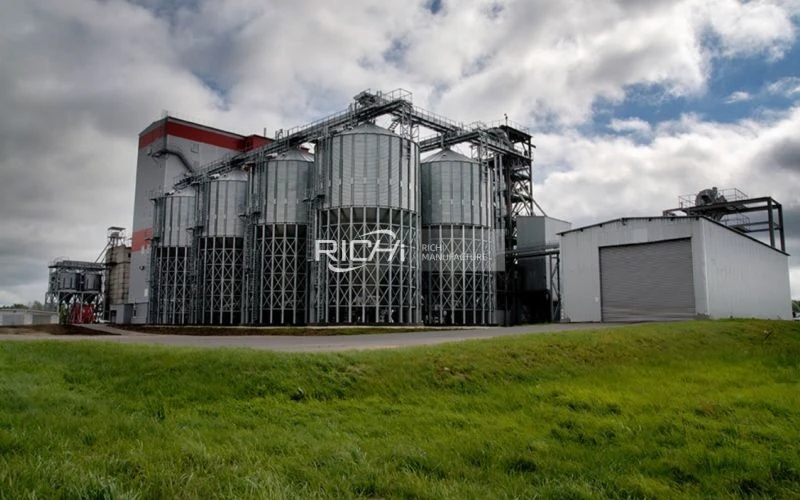
15 T/H Commercial Dairy Compound Feed Project
Denmark
The dairy feed factory project serves a commercial feed company producing several compound and concentrate feeds for high-output dairy farms. Automatic batching, micro-dosing and multiple finished bins help the plant manage a broad product portfolio efficiently.
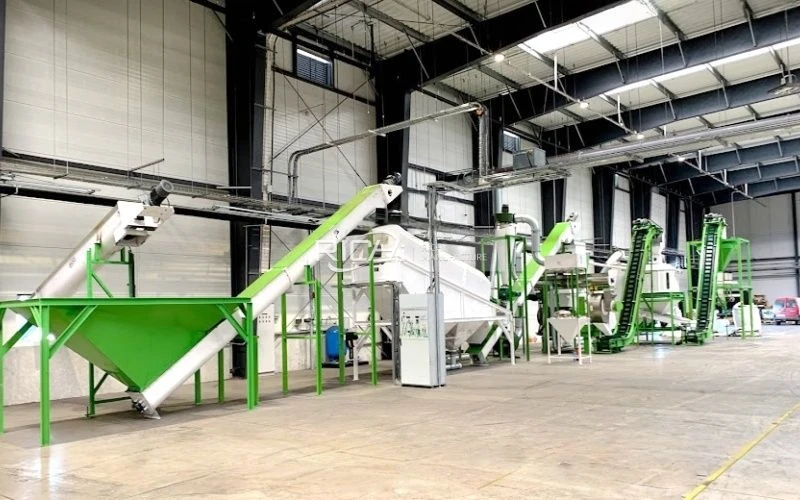
2 T/H Calf Heifer Feed Processing Plant Project
Canada
The customer supplies specialized feeds for calf and replacement-heifer operations. This dairy feed production line project supports calf starter, heifer concentrate and small pellets while keeping mineral and micro-ingredient dosing separate from higher-volume grain ingredients.
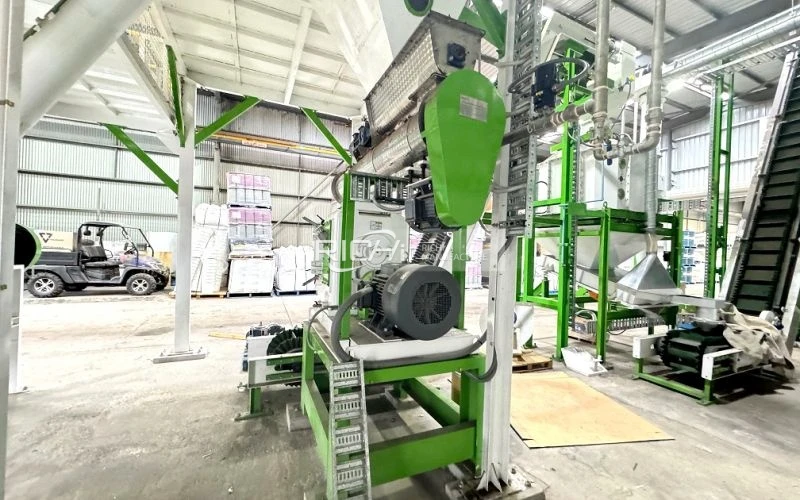
2 T/H Pasture Supplement Feed Mill Project
Ireland
This cooperative-focused dairy farm feed production line manufactures concentrate supplements for pasture-based herds. Barley, maize, protein meals, beet pulp and mineral ingredients can be combined in mash or pellet form according to seasonal feed demand.
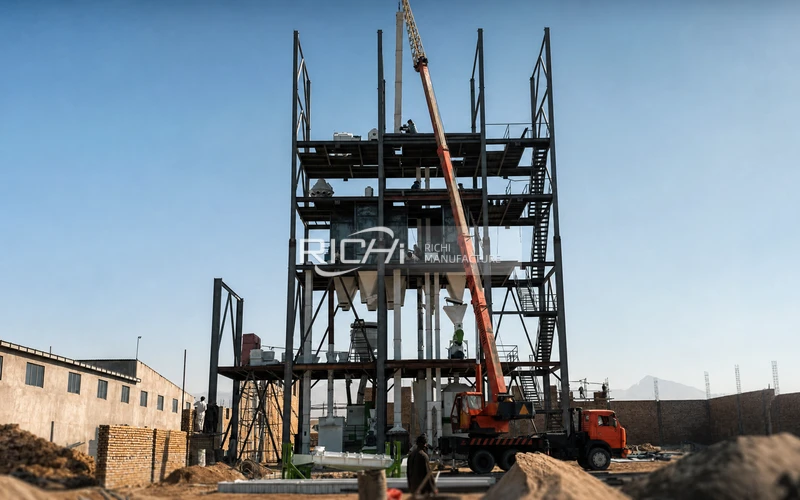
8 T/H Desert Dairy Concentrate Feed Mill Project
United Arab Emirates
The customer operates a dairy feed plant supplying concentrates to intensive farms that depend heavily on purchased forage and feed ingredients. Multiple recipes can be produced from imported grain, protein meals, fiber by-products and mineral components.
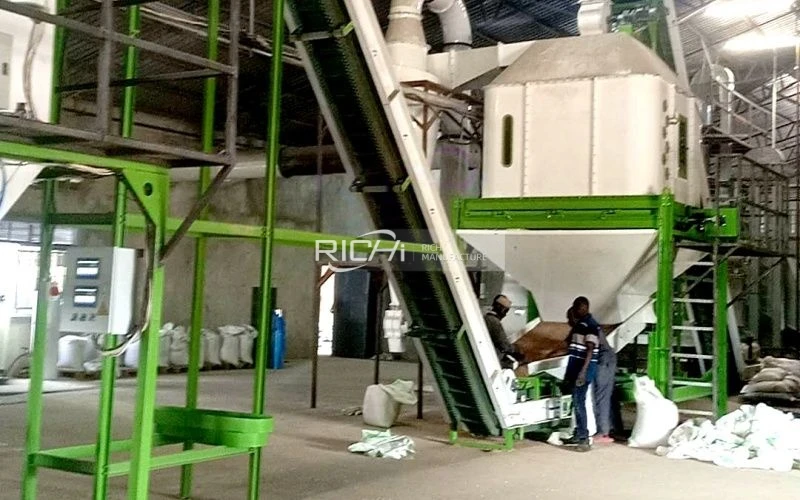
10 T/H Lucerne Dairy Pellets Feed Mill Project
South Africa
A forage and feed processor uses lucerne together with grain and protein ingredients to manufacture supplementary dairy pellets. Separate forage preparation prevents the fibrous material from being handled like ordinary grain before mixing and pelleting.
1 T/H Precision Dairy Concentrate Mill Project
Netherlands
This dairy feed plant project was configured for a regional compound-feed producer serving intensive dairy farms. Multiple ingredient bins and accurate micro-dosing allow the customer to manufacture different lactation, dry-cow and mineral-rich concentrates in scheduled batches.
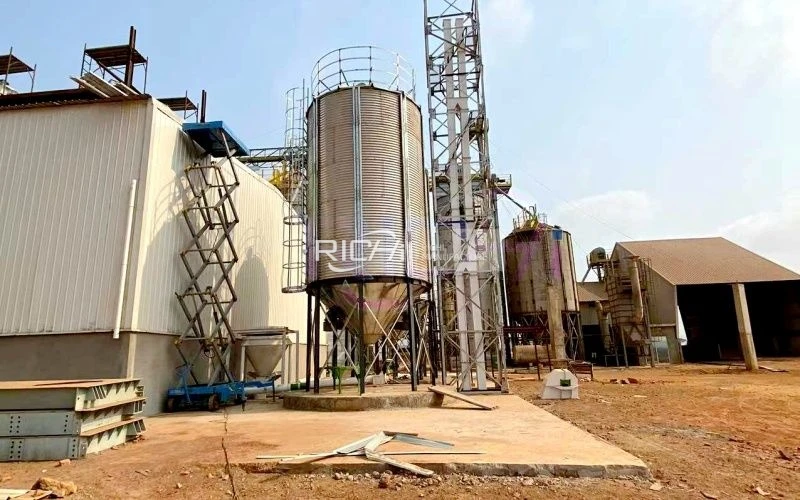
10–15 T/H Integrated Dairy Feed Mill Project
Saudi Arabia
This large integrated dairy operation required consistent concentrate production for several herd groups. Imported forage is managed separately at farm level, while the dairy cattle feed mill project focuses on grains, protein ingredients, minerals and formulated compound feeds for intensive dairy production.
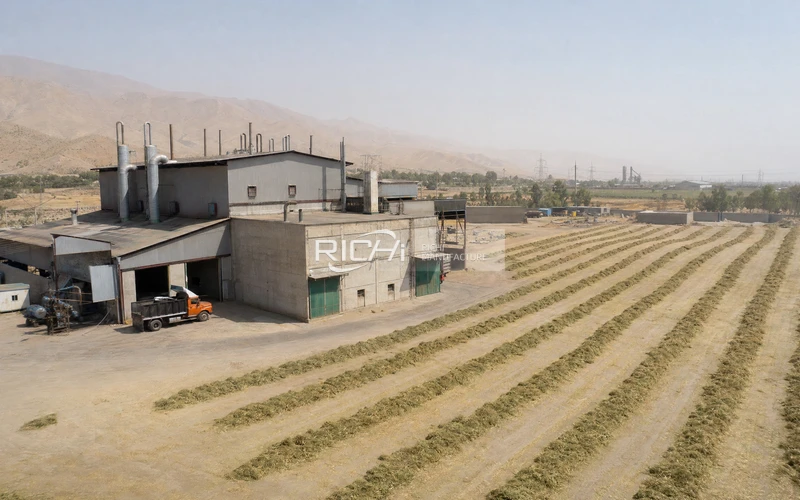
3–4 T/H Alfalfa Dairy Concentrate Feed Project
Iran
This regional processor combines alfalfa meal with grain, protein ingredients and minerals for dairy supplement feeds. The dairy cow feed plant uses separate forage and grain preparation before controlled batching, mixing and optional pelleting.
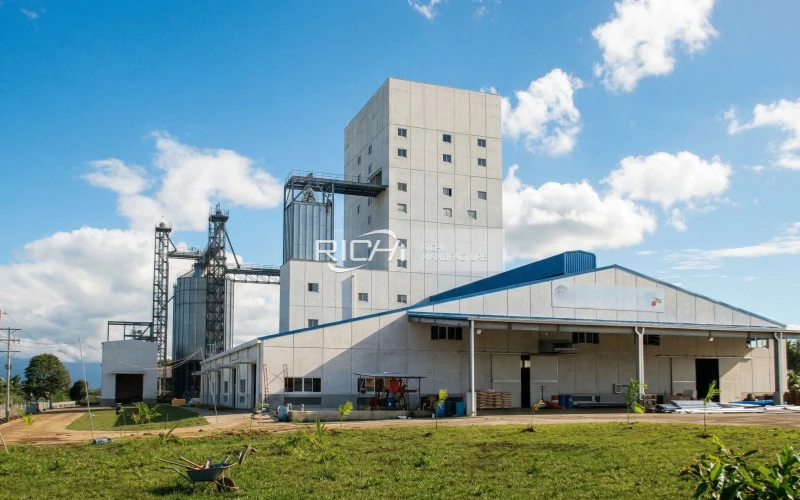
20 T/H Large Dairy Complex Feed Mill Project
China
This large dairy feed production line project supports an integrated dairy group with several herd stages and high daily concentrate demand. Centralized ingredient storage, automatic batching, micro-dosing and multiple finished-feed routes allow several dairy formulas to be produced within one complex.
Dairy feed customers judge a project by more than rated capacity. Formula accuracy, raw-material flexibility, reliable product changeovers, practical plant layout and the ability to serve different herd groups all affect daily operation. The following feedback reflects different dairy production models and feed-processing priorities.

Lactating Cow Feed Project — United Kingdom
- Production Capacity: 5 T/H
- Client: Commercial Feed Mill Manager
“We needed several concentrate formulas for high-yielding dairy cows, not one standard cattle feed. RICHI helped us organize the batching and finished-feed routes so formula changes are easier to manage without making the plant unnecessarily complicated.”

Dairy Farm Feed Project — Austria
- Production Capacity: 3–4 T/H
- Client: Dairy Cooperative Manager
“Our cows rely heavily on forage, so the feed mill was designed to make supplementary concentrate rather than replace the forage ration. The compact layout fits our operating scale, and we can adjust the concentrate program when forage quality changes.”

Calf & Heifer Feed Project — Sweden
- Production Capacity: 5–7 T/H
- Client: Dairy Feed Production Manager
“We wanted calf starter and heifer feed from the same system but needed better control of the smaller batches and mineral ingredients. The dosing and product-routing arrangement gives us the flexibility we were looking for.”

Commercial Dairy Feed Project — Belgium
- Production Capacity: 8–10 T/H
- Client: Feed Factory Operations Manager
“Our customers buy lactating, dry-cow and other dairy compound feeds, so one fixed formula was never going to work. The automatic batching and multiple finished bins make it much easier to schedule a wider commercial product range.”

Dairy Farm Feed Project — Pakistan
- Production Capacity: 3–4 T/H
- Client: Integrated Dairy Farm Manager
“We needed to use locally available grain, bran and protein ingredients while improving consistency between batches. The new dairy feed mill gives us better control over ingredient weighing and mixing than our previous farm-level preparation method.”

Pasture Dairy Feed Project — Switzerland
- Production Capacity: 3–4 T/H
- Client: Dairy Farm Owner
“Our feeding system is still forage-based, so we did not want an oversized compound-feed factory. RICHI designed the line around the concentrate products we actually need, which makes the project much more practical for our dairy operation.”

Dairy Feed Mill Solutions from 0.5 to 120 T/H
Dairy feed mill capacity should be selected from actual concentrate or compound-feed demand, operating hours, product range and sales model—not simply from herd size. Farm-scale projects may only need a few hours of production per day, while commercial plants often manage several dairy formulas and supply multiple farms.
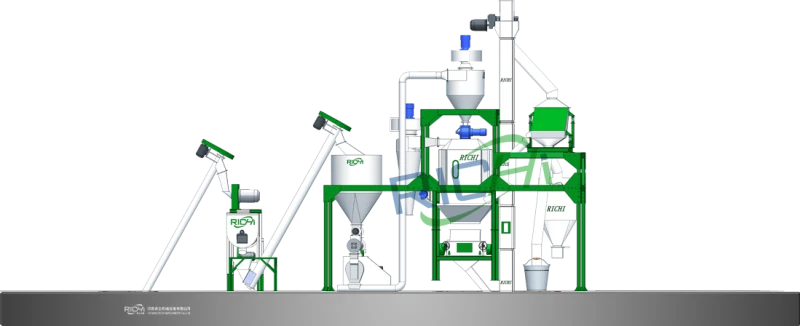
0.5-2 t/h small scale feed mill
Suitable for dairy farms, calf-rearing units, small cooperatives and local feed businesses producing mainly for internal use or nearby customers. The line can handle mash, concentrate and pellet products without excessive storage or automation.
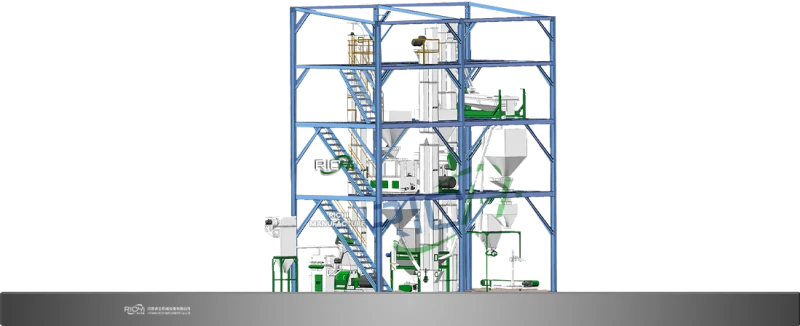
3-4 t/h animal feed production plant
A practical scale for larger dairy farms, replacement-heifer operations and regional suppliers. Several calf, heifer, lactating or dry-cow concentrates can be produced while keeping the plant relatively compact.
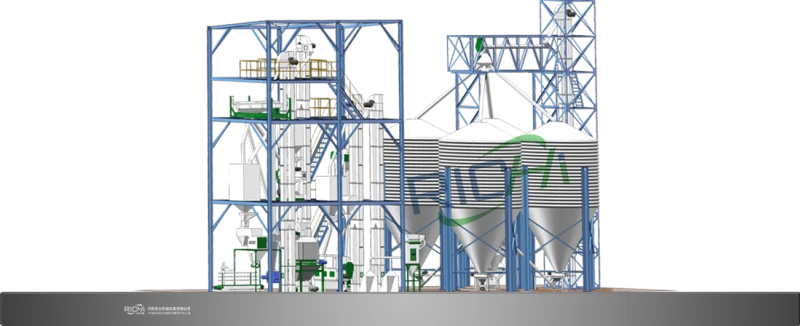
5-7 t/h animal feed pellet plant
Designed for commercial dairy feed producers and integrated dairy operations with regular daily output. Automatic batching, micro-dosing and flexible mash/pellet routing support a broader product portfolio.
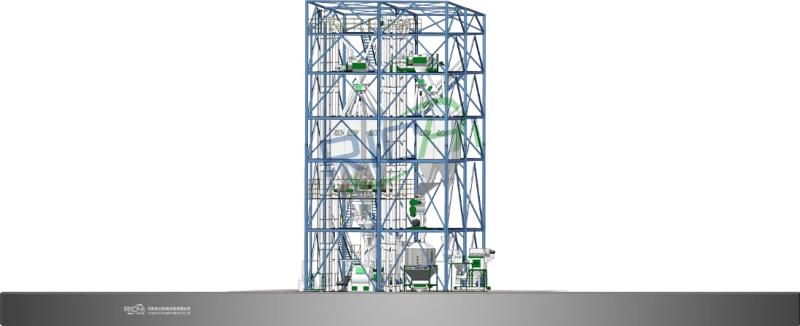
8-10 t/h animal feed processing plant
Suitable for regional feed companies supplying multiple dairy farms. The plant can manufacture dairy compound feed, concentrate, mash and pellets while managing more ingredients and finished-feed SKUs.
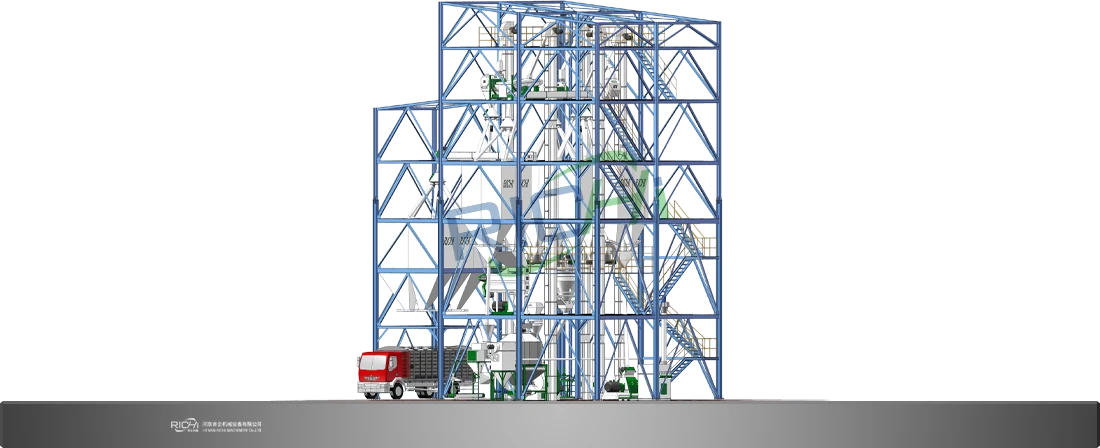
12-20 t/h feed preparation plant
This scale fits large dairy cooperatives, commercial compound-feed manufacturers and integrated dairy groups. Multiple ingredient bins and automatic recipe control support continuous production for several herd stages and customer groups.
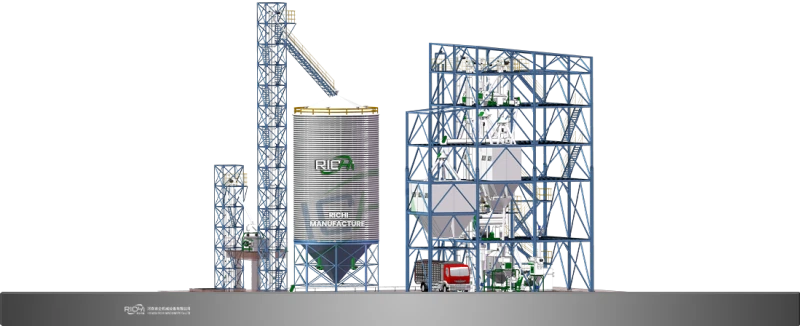
25-40 t/h feed pellet production line
At this capacity, the project normally serves a wider regional market rather than one dairy farm. Parallel pelleting, packing or finished-feed handling may be required where several dairy products are produced at high volume.
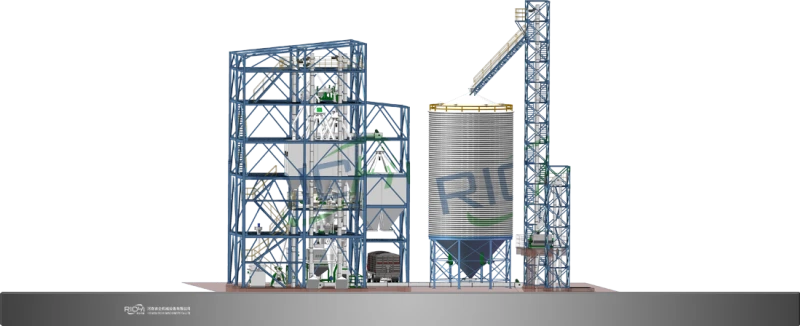
50-60 t/h commercial feed mill
Suitable for major feed manufacturers supplying dairy farms across multiple regions. Dairy products can share centralized receiving, storage and batching while using dedicated recipes, mineral systems and finished-feed routes.
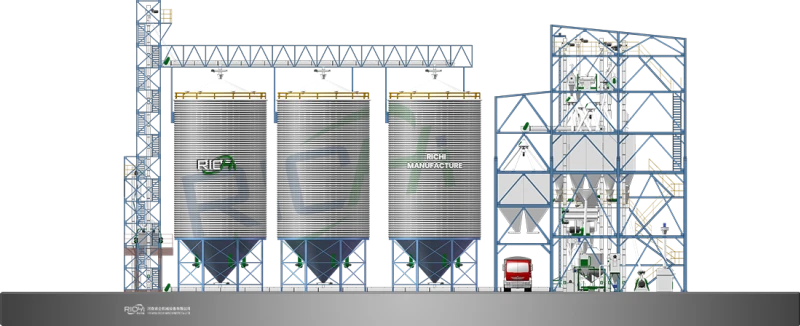
60-80t/h complete feed mill plant
This scale is typically designed as a multi-line commercial feed factory. Dairy concentrates and compound feeds can be produced alongside other livestock feeds through shared infrastructure and separate production scheduling.
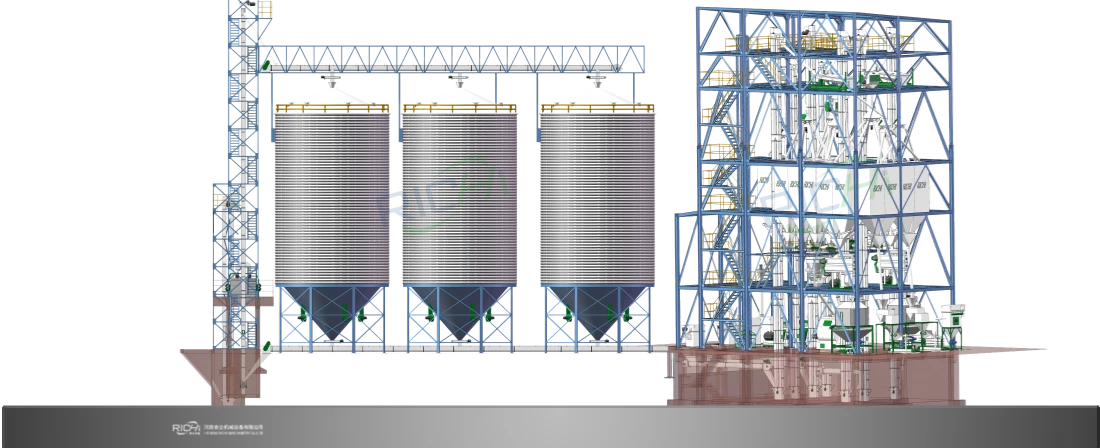
Designed for large feed groups handling many formulas and high annual output. Multiple grinding, mixing, pelleting and packing routes help maintain throughput when dairy products form one important part of a broader livestock-feed portfolio.
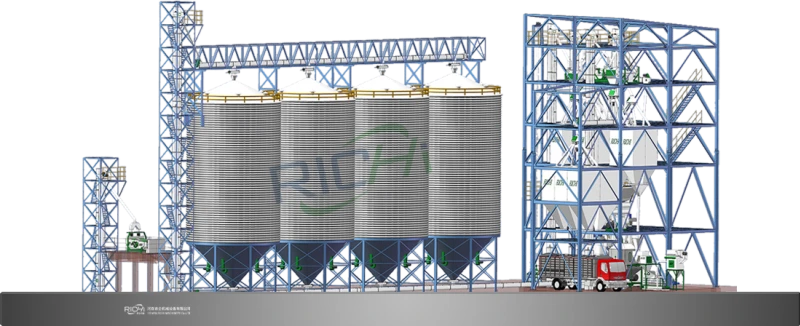
100-120 t/h feed mill engineering
This is a large integrated feed complex rather than a single oversized dairy farm line. Dairy feed can be produced through dedicated formula programs within centralized receiving, storage, production and dispatch systems.
How Much Does a Dairy Feed Mill Cost?
Dairy feed mill cost changes with much more than hourly capacity. A grain-based dairy concentrate plant can remain relatively straightforward, while a high-fiber dairy feed project using hay, alfalfa, straw, crop residues or moist by-products may require bale breaking, chopping, multi-stage grinding, drying and heavier conveying. Automation, silo capacity, micro-dosing, mash/pellet flexibility and the number of dairy formulas also affect the final investment.
Whole dairy feed plant set up investment : $37,000 – $40,000,000
Main Dairy Feed Equipment Cost :
Receiving & Cleaning :
$3,000–80,000
Bale Breaking / Chopping :
$5,000–120,000+
Grinding System :
$4,000–150,000+
Drying System :
$20,000–500,000+
Batching System :
$5,000–180,000
Micro-Dosing :
$3,000–100,000
Mixing System :
$4,000–120,000
Liquid Addition :
$2,000–60,000
Pelleting System :
$10,000–150,000+
Cooling & Screening :
$6,000–150,000+
Packing / Bulk Loading :
$2,000–200,000+
Conveying System :
$5,000–300,000+
Silo & Bin System :
$10,000–800,000+
Automation & Electrical :
$5,000–300,000+
Dairy feed factory setup cost therefore includes much more than machinery. A dairy farm feed mill may already have land, buildings or forage-handling equipment, while a commercial dairy feed plant may need larger ingredient storage, multiple finished bins and more working capital for continuous sales. For an accurate dairy feed mill quotation, the most useful information is target capacity, product types, formulas, forage percentage, incoming material form and moisture, workshop conditions, automation level and packing method. RICHI can then prepare a dairy feed mill project cost estimate around the real production plan rather than a generic machine list.

Complete Engineering Support
RICHI supports a dairy feed mill from early project planning through manufacturing, installation, commissioning and long-term operation. Whether the customer is building a dairy farm feed plant, commercial dairy feed plant or upgrading an existing livestock-feed factory, the service scope is matched to the actual feed products, raw materials, site conditions and future production plan.
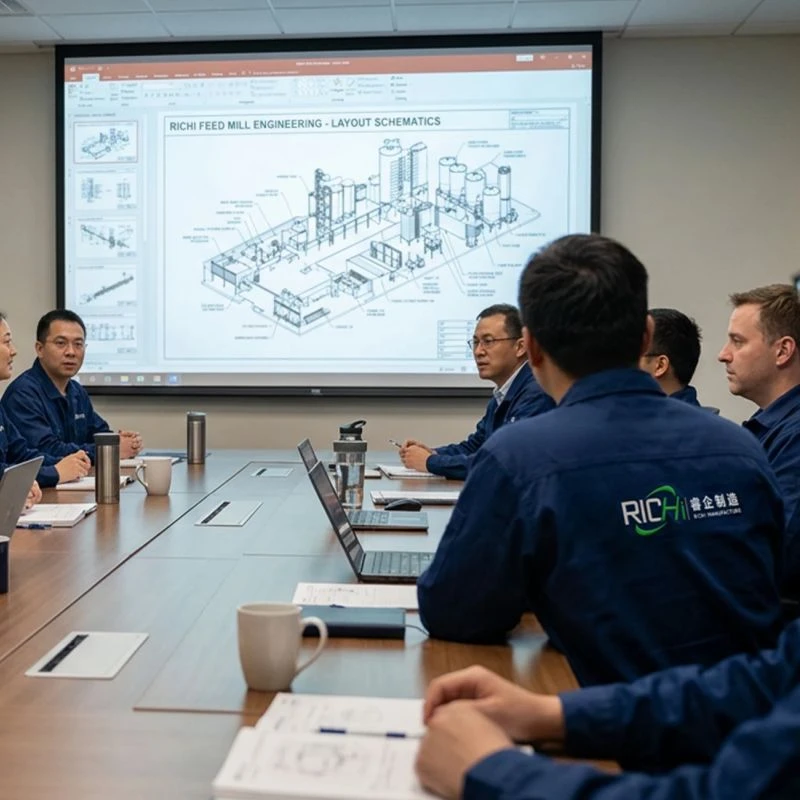
Process & Factory Design
RICHI develops the dairy feed factory design around product type, capacity, forage or grain ratio, ingredient form, workshop dimensions, automation and expansion requirements. The engineering scope can include process flow, equipment layout, civil requirements, steel structure and modular interfaces for future upgrades.
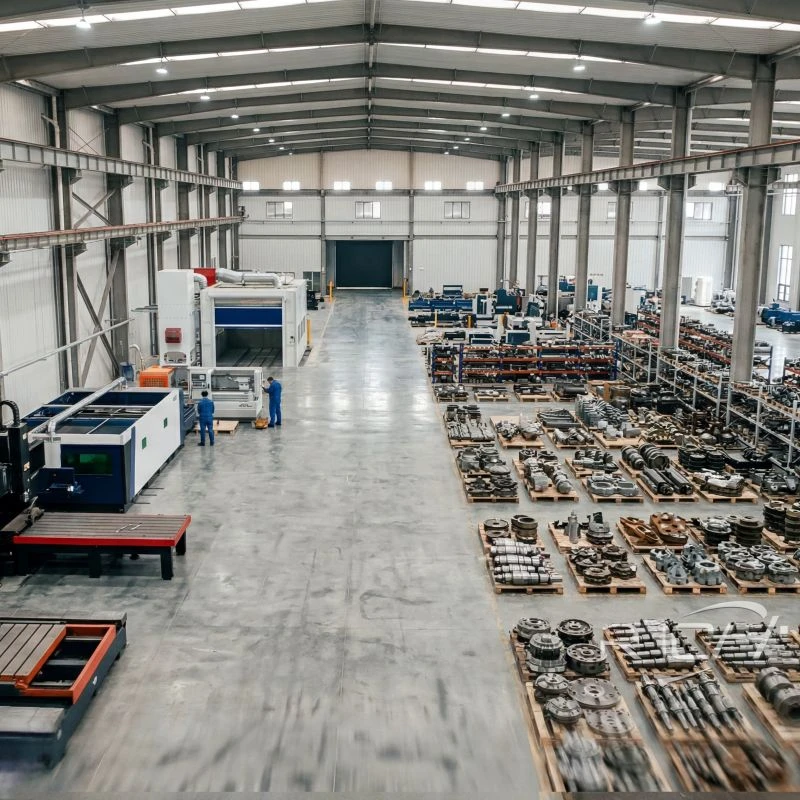
Equipment Manufacturing
As a dairy feed mill manufacturer and dairy feed equipment manufacturer, RICHI supplies the core systems required for receiving, grinding, batching, micro-dosing, mixing, pelleting, cooling, screening, conveying and packing. For forage-rich projects, bale breaking, chopping, drying or additional grinding modules can also be integrated where technically required.
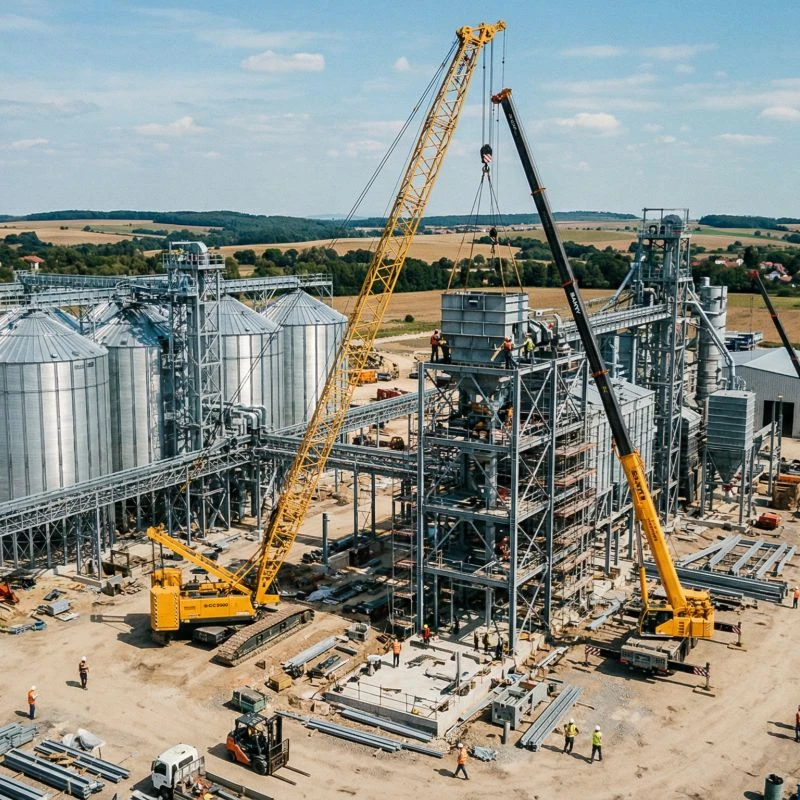
Installation, Commissioning & Training
RICHI provides installation guidance, commissioning and operator training for the complete dairy feed mill. Trial production focuses on system coordination, recipe switching, mash/pellet routing, ingredient dosing and finished-feed quality for different dairy products.
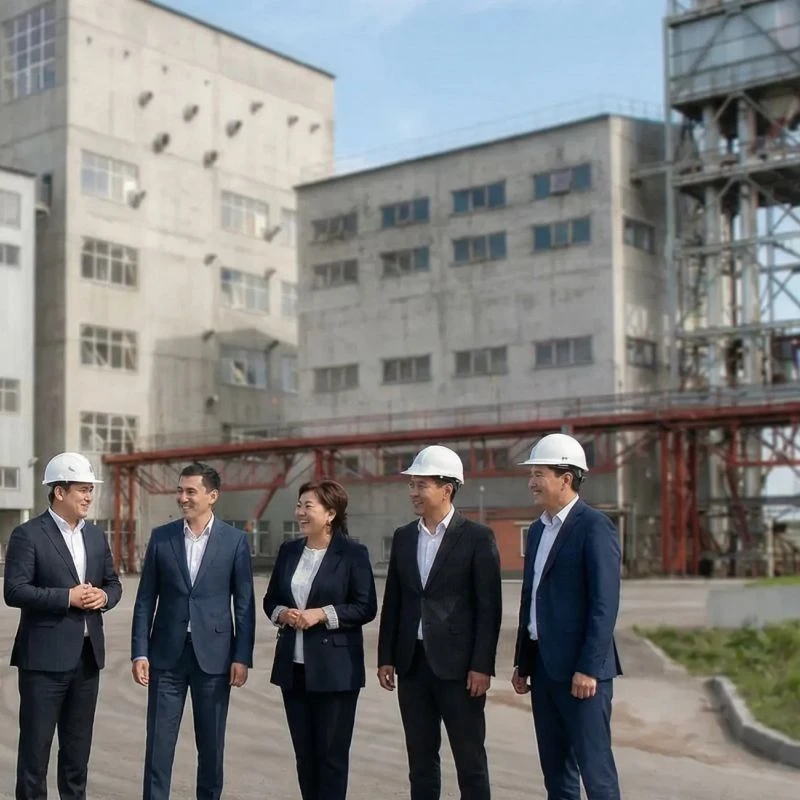
Lifecycle Technical Support
After startup, RICHI continues to provide operating guidance, spare-parts support and technical assistance. If the customer later adds calf, heifer, lactating or dry-cow products, increases output or introduces other livestock feeds, the existing system can be evaluated for modification or expansion.
Free Customization Services
Before equipment manufacturing begins, RICHI can turn the customer’s capacity, formulas, raw materials, site conditions and future plans into a more complete engineering proposal. For a new dairy farm project, commercial feed factory or automatic dairy feed production line, the following services help clarify the process, layout, construction requirements and operating plan before implementation.

Free Project Cost Estimate & Equipment List
Free Process Flow Chart Design
Free Electrical & Circuit Diagram Design
Free Civil Engineering & Steel Structure Drawings
Free 3D Rendering & Three-View Drawing Design
Free Factory Layout & Area Planning
Free Production Testing & Operation Documentation
Free Remote Installation, Operation & Staff Training Guidance
Complete Dairy Feed Equipment for Different Production Systems
RICHI supplies complete dairy feed equipment for mash, concentrate, compound pellet and high-fiber feed production. The configuration can include raw-material receiving and cleaning, silos and bins, bale breakers, forage choppers, hammer mills, optional drying systems, batching scales, micro-dosing units, mixers, liquid addition systems, conditioners, dairy feed pellet mills, dairy feed extruder, coolers, screens, crumblers where required, finished-product bins, bagging machines, bulk loading systems, conveyors, dust collection, electrical control and automatic recipe-management systems.
For a grain-based dairy feed manufacturing plant, the process may focus on grinding, precise batching, mixing and flexible mash/pellet production. When hay, alfalfa, straw or fibrous by-products are included, additional forage preparation and conveying equipment can be added according to material form, moisture and inclusion level. This modular approach allows the dairy feed mill equipment package to match the actual formulas instead of forcing every project to use the same machines.
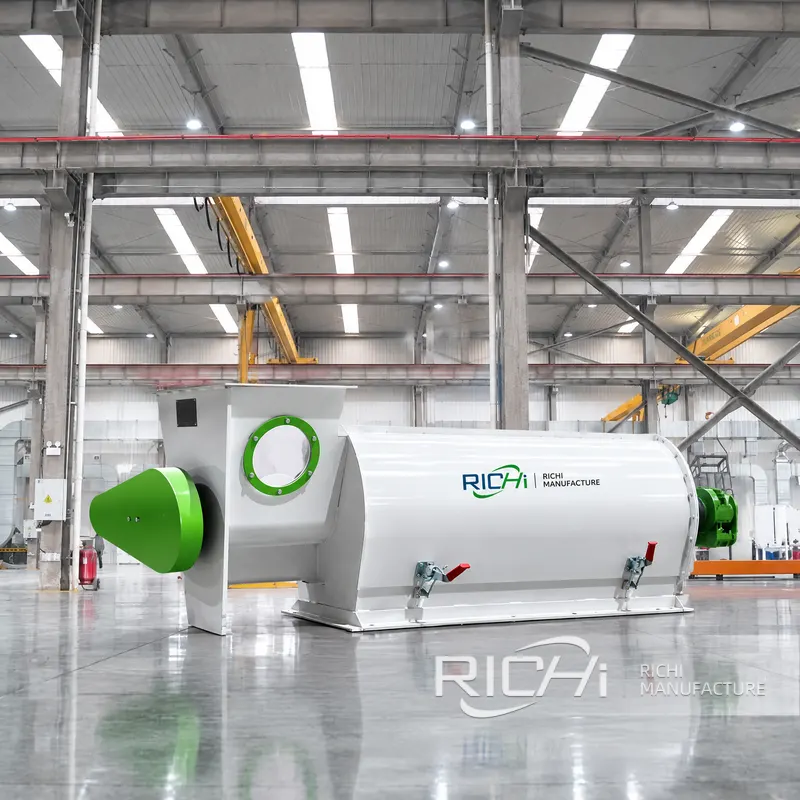
Receiving & Cleaning Equipment
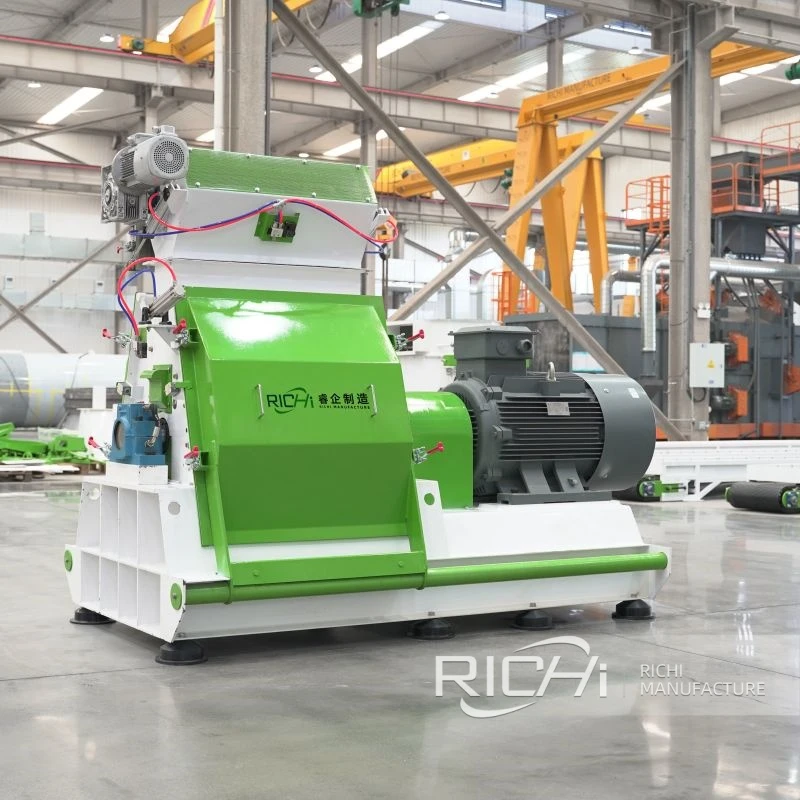

Bale Breaker & Forage Chopping Equipment

Optional Drying System
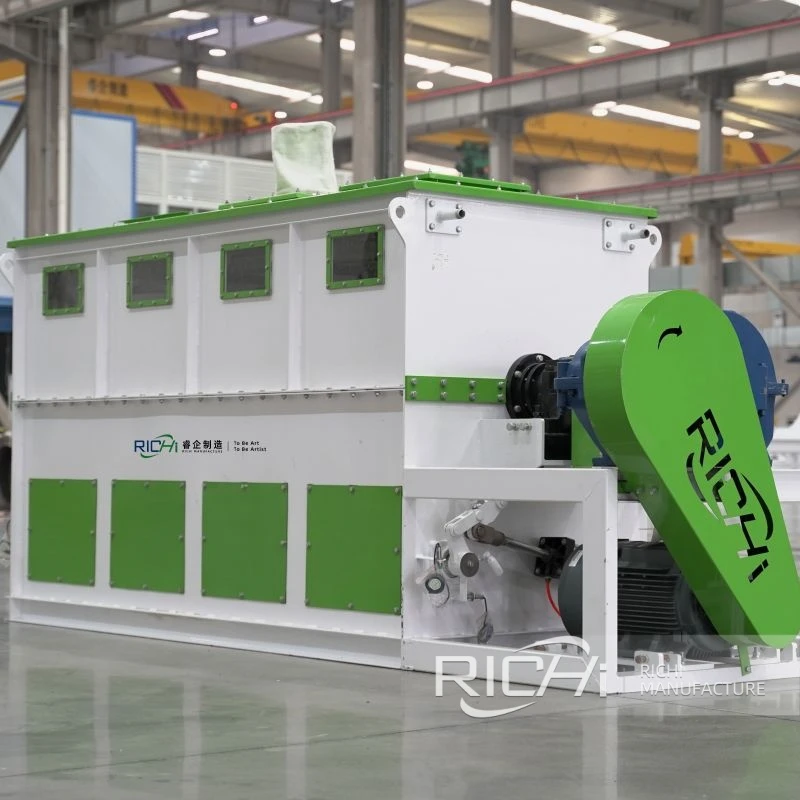

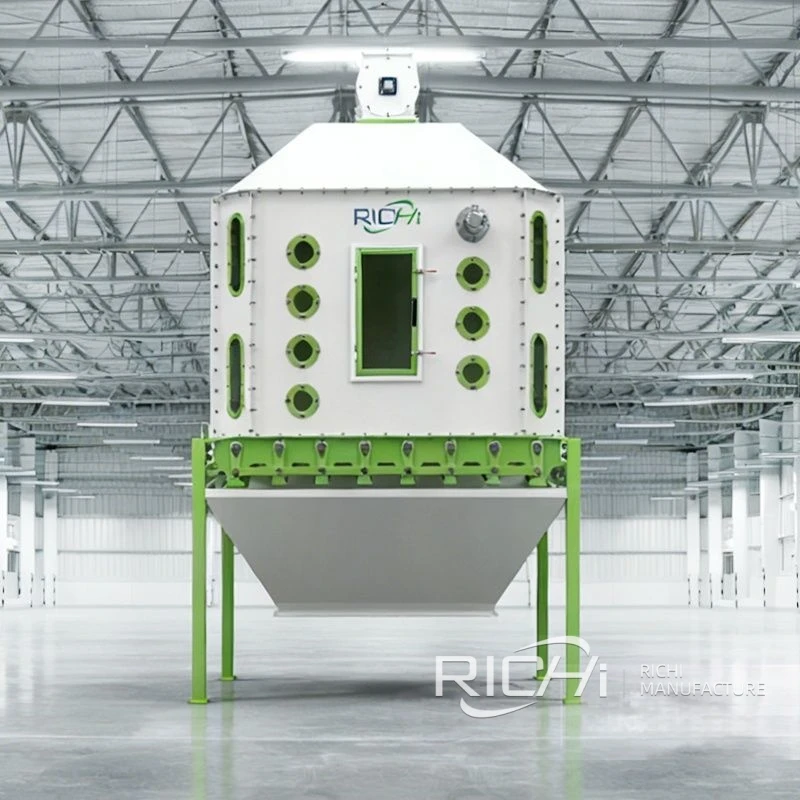
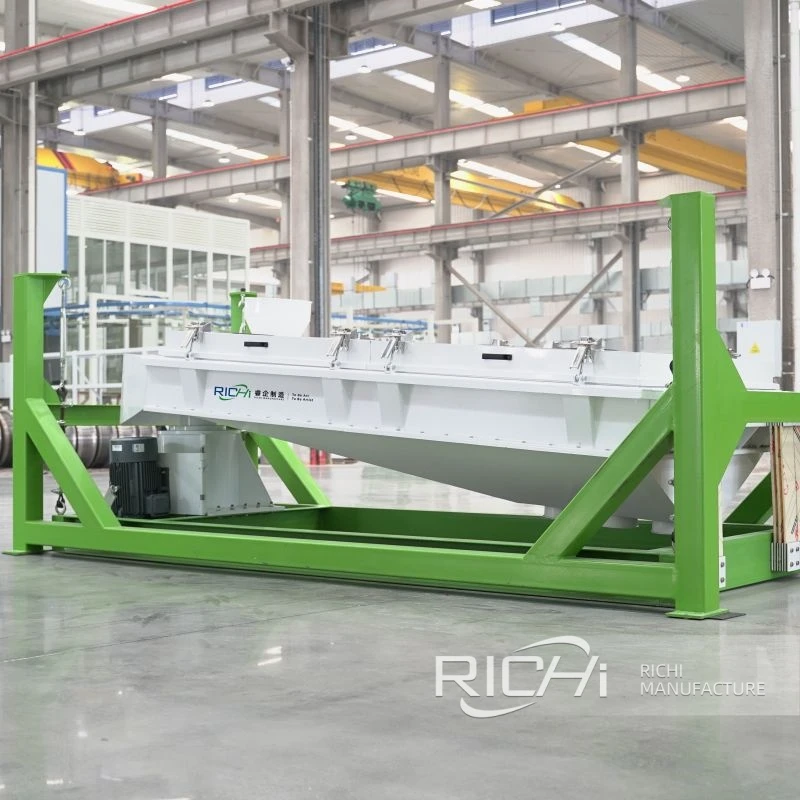
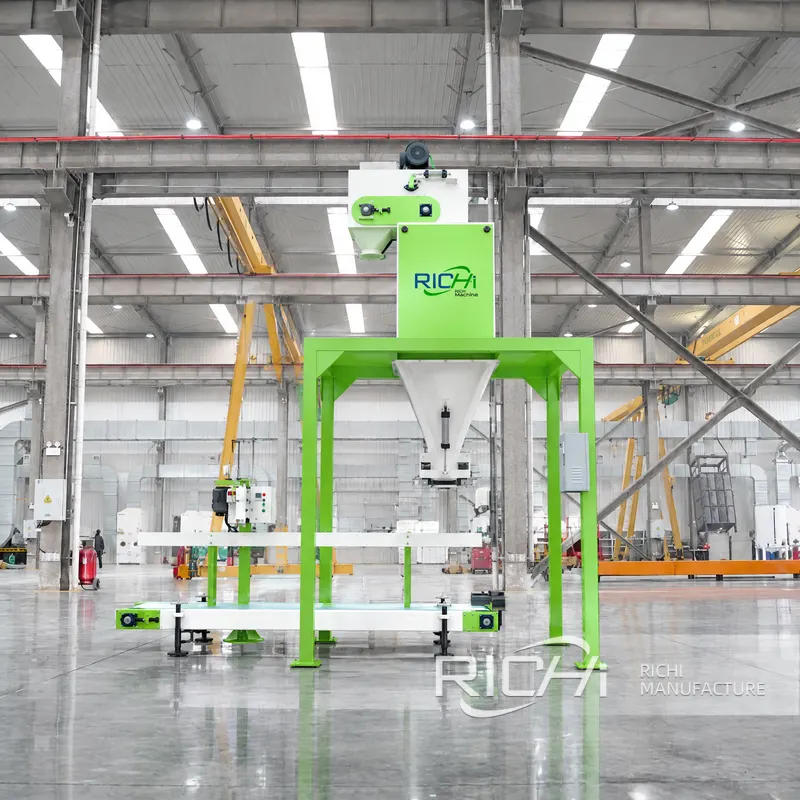
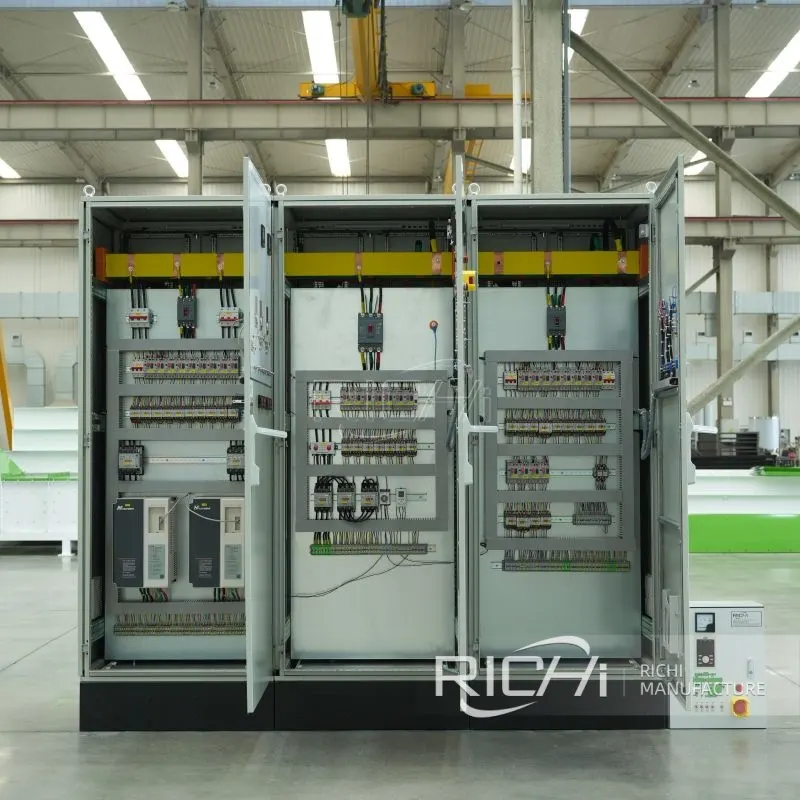
Electrical control cabinet
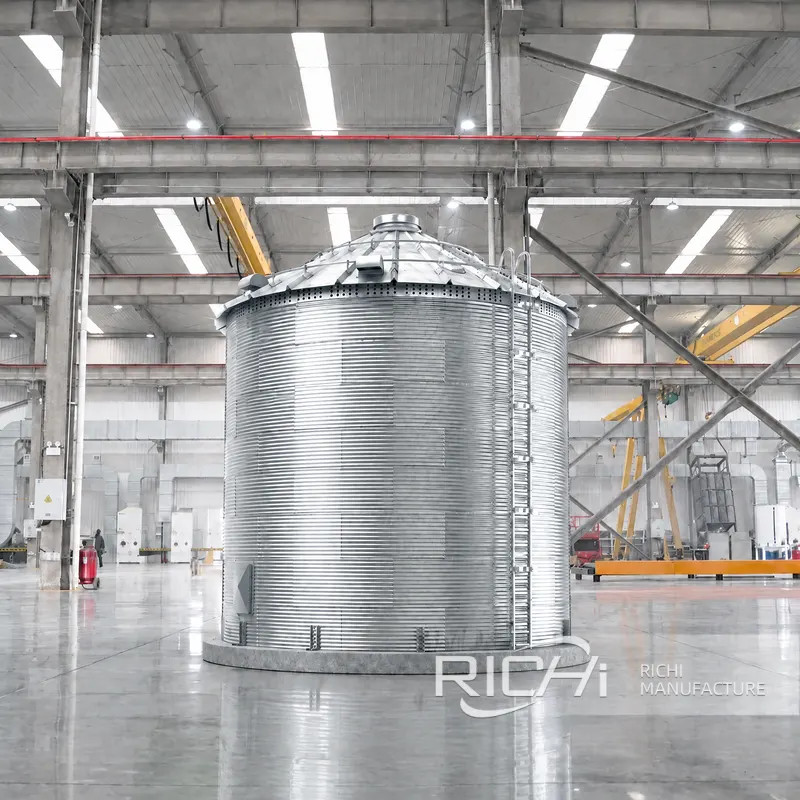
Grain Silo & Ingredient Bin System
The final dairy feed production equipment package depends on the feed forms you plan to manufacture, raw-material characteristics, required automation and existing equipment at the site. RICHI can supply a single machine, a production module or the complete dairy feed mill system.
Dairy Feed Processing Opportunities
Demand for dairy feed is tied not only to herd numbers, but increasingly to milk yield, feed efficiency, formula precision and the way farms organize concentrate supply. For dairy farms and cooperatives, building a dairy feed mill can bring grain, protein meals, minerals and suitable by-products under one controlled production system. For commercial feed companies, the opportunity is broader: the same dairy feed manufacturing line can serve different farms with calf starter, heifer feed, lactating-cow concentrate, dry-cow feed, mash and compound pellets instead of relying on a single product.
A commercial dairy feed plant can also create more room for growth by combining bulk and bagged sales, developing stage-specific formulas, processing locally available feed ingredients and adding dairy products to an existing livestock-feed factory. In many projects, the stronger business model is therefore not “one machine for one pellet,” but a complete dairy feed mill capable of switching between several formulas and finished-feed forms while sharing the same receiving, batching, mixing and other core systems.
Talk to Us About Your Market Opportunity
Dairy Feed Raw Materials and Formula Adaptation
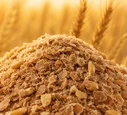
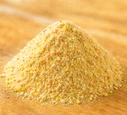
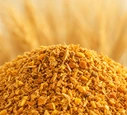
A dairy feed mill may process cereal grains, protein meals, fibrous co-products, forage meals, minerals, premix and liquid ingredients within the same factory. Common materials include maize, barley, wheat, oats, soybean meal, canola or rapeseed meal, DDGS, wheat bran, wheat middlings, beet pulp, soybean hulls, alfalfa meal, molasses, limestone, salt and vitamin-mineral premix. In some regions, cottonseed products, citrus pulp, brewer’s grains or other locally available by-products can also enter the formula where nutritionally appropriate.
RICHI does not design dairy feed production equipment from an ingredient list alone. Bulk density, moisture, fiber level, starch source, oil or molasses addition, required particle size and final feed form all influence cleaning, grinding, weighing, mixing, conditioning and pelleting. This allows both conventional and less common ingredients to be incorporated through a process matched to the customer’s actual formula.
Corn
Hay

Barley
Oats
Wheat
Premix
DDGS

Dairy Calf Starter Feed
Calf starter commonly uses maize or other cereal grains, soybean or alternative protein meals, molasses, minerals and vitamins. It may be sold as textured feed, coarse mash or pelleted starter, with pellets commonly around 3–5 mm. For a dairy calf feed production line, excessive fines should be avoided and ingredient separation must be controlled. A dairy calf feed plant or dairy calf feed mill may also include crumbling when a smaller finished particle is required.
Customize My Calf Feed Production Line

Dairy Heifer Feed
Heifer formulas normally combine cereal grains, protein ingredients, bran or fibrous co-products and minerals to complement the forage program during growth. Depending on the market, the product can be mash, concentrate or pellets of approximately 4–6 mm. A dairy heifer feed production line usually requires greater formula flexibility than a single-purpose farm line because ingredient ratios change as replacement animals grow.
Design My Heifer Feed Line

Dry Cow Feed
Dry-cow products are formulated separately from lactating feed and may contain more fibrous ingredients together with controlled grain, protein, mineral and vitamin sources. They are commonly supplied as concentrate mash or approximately 6–8 mm pellets for use with the farm’s forage ration. A dry cow feed production line or dry cow feed plant should allow precise recipe separation, especially where the same factory also produces lactation products.
Plan My Dry Cow Feed Plant

Lactating Dairy Cow Feed
Lactating-cow feed commonly contains energy-dense grains, soybean or canola meal, DDGS or other protein sources, fibrous ingredients such as beet pulp or soybean hulls, minerals, premix and optional molasses or oil. The product is usually manufactured as concentrate mash or approximately 6–8 mm pellets and then fed alongside forage. A lactating cow feed production line places particular emphasis on accurate batching, micro-ingredient dosing, liquid addition and repeatable mixing because commercial plants often manufacture several lactation formulas.
Configure My Lactating Cow Feed Line

Transition Cow Feed
Transition feed is designed for the period around calving, when the nutrient and mineral program changes substantially. Grain, protein meals, digestible fiber sources and carefully controlled mineral or premix additions may all be used according to the nutritionist’s formula. A transition cow feed production line therefore benefits from accurate micro-dosing, good mixing uniformity and reliable recipe control. Finished products may be mash, specialized concentrate or approximately 6–8 mm pellets depending on the feeding system.
Customize My Transition Feed Line
Dairy Feed Formula Examples
100% Alfalfa / Grass Forage Pellet Formula
This route is used where the customer wants to densify dry forage into transportable dairy forage pellets rather than manufacture a complete compound feed. The process centers on bale opening, chopping or grinding, pelleting, cooling and screening.
Alfalfa Hay
40%
Timothy / Meadow Hay
20%
Oat Hay
15%
Ryegrass Hay
10%
Clover / Mixed Grass Hay
15%
Grain / Protein / Premix
0%
High-Forage Dairy Compound Pellet Formula
This system combines a large forage fraction with grain and protein ingredients. It requires separate forage preparation before batching and mixing, making the front end quite different from a conventional grain-only feed plant.
Alfalfa / Grass Meal
55%
Maize / Barley
15%
Wheat Bran
10%
Soybean / Canola Meal
10%
Molasses
5%
Minerals & Premix
5%
Grain-Based Dairy Concentrate Formula
This is closer to the formula structure used by commercial feed mills supplying concentrate to farms that already have their own forage. Grinding, accurate batching and mixing normally matter more here than forage handling.
Maize / Barley / Wheat
40%
Soybean / Canola Meal
20%
DDGS / Corn Gluten Feed
15%
Beet Pulp / Soybean Hulls
15%
Molasses
5%
Minerals & Premix
5%
Tropical By-Product Dairy Feed Formula
In Southeast Asia and other tropical markets, locally available cassava, rice-processing by-products and palm-industry materials can replace part of the conventional grain-protein system. Their different density, fibre and fat characteristics affect grinding, conveying and pelletizing.
Dried Cassava
30%
Rice Bran
20%
Palm Kernel Cake
20%
Copra / Groundnut Cake
15%
Molasses
10%
Minerals & Premix
5%
Beet & Citrus Pulp Dairy Feed Formula
Sugar and fruit-processing regions can use highly digestible fibrous co-products such as beet pulp and dried citrus pulp in dairy feed. These materials create a very different formulation and handling profile from a cereal-dominant feed.
Dried Beet Pulp
25%
Dried Citrus Pulp
20%
Barley / Maize
20%
Wheat Middlings
15%
Canola / Rapeseed Meal
15%
Molasses, Minerals & Premix
5%
Cottonseed & Oilseed By-Product Formula
Cotton-growing and oilseed-processing regions may rely more heavily on cottonseed meal, cottonseed hulls and sunflower products. A dairy feed production line handling these materials needs to accommodate lower-density fibrous ingredients alongside denser grain and protein meals.
Maize / Sorghum
25%
Cottonseed Meal
20%
Cottonseed Hulls
20%
Sunflower Meal
15%
Wheat Bran
15%
Molasses, Minerals & Premix
5%
Dairy feed formulas vary widely by region because forage supply, grain availability and agro-industrial by-products are different from one market to another. The examples below show several practical raw-material systems that a dairy feed mill may need to handle; they are processing references rather than fixed nutritional recommendations. RICHI can configure the dairy cattle feed production equipment around the customer’s own formulas rather than asking the customer to adapt the formula to a fixed machine layout.
Dairy Feed Mill FAQ
What is the dairy feed mill price for the capacity I need?
+
There is no reliable single dairy feed mill price based only on tons per hour. A 5 T/H mash plant can cost far less than a 5 T/H dairy feed pellet plant with silos, micro-dosing, molasses addition and automatic packing.
The main cost drivers are:
- Feed form: mash, concentrate or pellet
- Number and condition of raw materials
- Forage or fiber percentage
- Automation level
- Storage and finished-product bins
- Packing or bulk dispatch
- Existing equipment that can be reused
RICHI therefore prepares the dairy feed mill cost after confirming the real production plan rather than quoting only a pellet mill. However, you can use the following prices as a reference.
grain-based Dairy Feed Line Cost
| Production Scale | Typical Equipment Investment |
|---|---|
| 1–2 T/H | US$10,000–50,000 |
| 3–4 T/H | US$50,000–120,000 |
| 5–7 T/H | US$70,000–250,000 |
| 8–10 T/H | US$150,000–300,000 |
| 12–20 T/H | US$250,000–580,000 |
| 25–40 T/H | US$450,000–850,000 |
| 50–60 T/H | US$900,000–1,400,000 |
| 60–80 T/H | US$1,450,000–1,800,000 |
| 80–100 T/H | US$2,000,000–3,000,000 |
| 100–120 T/H | US$2,500,000+ |
These ranges are more suitable as a planning reference for grain-based dairy compound feed, concentrate, mash and pellet plants. They do not automatically include all forage-preparation or drying systems.
High-Fiber Dairy Feed Line Cost
| Production Scale | Typical Equipment Investment |
|---|---|
| 0.3–2 T/H | US$37,000–62,000 |
| 0.5–4 T/H | US$80,000–200,000 |
| 1–6 T/H | US$99,000–220,000 |
| 2–10 T/H | US$190,000–400,000 |
| 3–12 T/H | US$220,000–450,000 |
| 4–20 T/H | US$300,000–620,000 |
These ranges apply more closely to dairy feed projects containing hay, grass, straw, crop residues or other fibrous ingredients that require additional preparation. The final dairy feed production line cost depends heavily on forage percentage, moisture, bale or loose form, grinding fineness and whether drying is required.
Can I produce mash and pellets on the same line?
+
Yes. A properly designed dairy feed processing plant can use common receiving, grinding, batching and mixing sections and then divide the product flow.
Mash feed can move directly to finished-feed storage or packing, while pellet formulas continue through conditioning, pelleting, cooling and screening. This is often more practical for a commercial dairy feed mill producing several products than building two completely independent factories.
The same principle can also be used in a dairy compound feed production line or dairy concentrate feed production line.
My workshop is low. Do I need a new building?
+
Not necessarily. A dairy feed plant can be redesigned around an existing low-height workshop by reducing vertical gravity flow and using more horizontal conveyors, screw conveyors or bucket elevators.
The trade-off is that a low-profile layout may require:
- More conveying equipment
- More floor area
- Additional transfer points
- Careful dust-control design
Before recommending a new building, RICHI normally checks the available length, width, clear height, column positions and equipment access route.
Does a dairy feed mill require an underground pit?
+
No. A pit is useful for some truck-unloading and raw-material receiving systems, but it is not mandatory for every dairy feed factory.
Where excavation is difficult because of groundwater, existing concrete floors or construction cost, RICHI can design above-ground feeding and conveying arrangements. The final choice depends on truck type, unloading frequency, raw-material form and required receiving capacity.
For retrofit projects, avoiding unnecessary excavation can significantly simplify installation.
Can one plant handle grain, hay and fibrous by-products?
+
Yes, but they should not all enter the same preparation route. Grain, meals, hay, alfalfa, straw, soybean hulls, beet pulp and similar materials differ greatly in particle size, bulk density and fiber structure.
A high-fiber dairy feed processing line may therefore require:
- Bale breaking or chopping for long forage
- Separate forage grinding
- Grain grinding through a hammer mill
- Larger or specially arranged conveyors
- Formula-specific pelleting settings
RICHI selects the dairy feed processing equipment around the actual material combination rather than treating every ingredient like grain.
Can you upgrade my existing feed mill instead of building a new one?
+
Yes. Many projects do not need a completely new dairy feed manufacturing plant.
Existing hammer mills, mixers, elevators, silos, pellet mills or packing systems may be reused if their capacity and condition are suitable. RICHI can then add missing modules such as a dairy feed batching system, micro-dosing, liquid addition, additional bins, a dairy feed pellet mill or a new automation system.
For an upgrade, we first need the existing flow chart, equipment list, workshop drawing and target products.
How accurate does micro-dosing need to be for dairy feed?
+
It depends on the formula and inclusion rate, but micro-ingredients should not be handled with the same weighing system as major ingredients when very small additions are required.
Mineral sources, vitamins and premix can represent a small proportion of the batch but have a major effect on formula consistency. This is especially important when the dairy feed manufacturing line produces several lactation, dry-cow or transition products.
A dedicated dairy feed batching system with micro-dosing can reduce manual weighing and improve repeatability between batches.
How do you prevent formula carryover between dairy products?
+
The first step is good process design rather than relying only on cleaning after production.
RICHI can reduce carryover through appropriate bin sequencing, mixer discharge design, short conveying routes, production scheduling and controlled flushing where needed. Commercial plants producing multiple formulas may also use separate micro-ingredient bins or finished-feed routes.
This is especially relevant when one dairy feed factory produces calf, lactating, dry-cow and mineral-rich products in the same shift.
Should I buy a dairy feed pellet machine or a complete production line?
+
A standalone dairy feed pellet machine is suitable only when the customer already has the required grinding, batching, mixing, conveying and cooling systems.
For a new project, buying only a dairy feed pellet mill for sale usually does not solve the complete production requirement. A complete dairy feed production line integrates the machines so capacity, material flow and automation are matched.
RICHI can supply either individual dairy feed equipment for sale or a complete dairy feed plant, depending on what is already available at the site.
How much automation is worthwhile for my dairy feed factory?
+
Automation should match production scale, formula complexity and operating model.
A small dairy farm feed mill may use semi-automatic weighing and bagging to control investment. A larger automatic dairy feed mill usually benefits from PLC recipe management, automatic batching, micro-dosing, bin-level monitoring and centralized control because it handles more ingredients and more frequent product changes.
For a turnkey dairy feed mill or turnkey dairy feed plant, RICHI can design the automation level around the customer’s labor conditions, future expansion and required production traceability.
We already mix TMR on the farm. Do we still need a feed mill?
+
Possibly, but the feed mill would normally make the concentrate, compound feed or pellet portion rather than the complete TMR. A dairy feed mill plant can prepare the grain, protein, mineral and premix portion consistently, while silage and long forage remain in the farm feeding system. For this type of project, a dairy feed making plant should be sized from manufactured feed demand, not total ration weight.
We have 3,000 milking cows. What capacity should we start with?
+
First calculate how many tonnes of concentrate or compound feed you actually want to manufacture per day, then divide that by realistic operating hours. A dairy cow feed mill serving one farm may only need one shift, while a dairy cow feed plant supplying neighboring farms may need more storage and longer operating hours. Herd size alone is not enough to select capacity.
Our hay and silage are already handled separately. Can the feed line be grain-based only?
+
Yes. If forage stays in the TMR system, the dairy feed making line can focus on grains, protein meals, by-products, minerals and premix. That usually simplifies the dairy cattle feed plant because bale breaking, forage chopping and drying are unnecessary.
We want to sell both mash and pellets. Do we need two lines?
+
Usually no. A dairy cattle mash feed production line can share receiving, grinding, batching and mixing with the pellet route, then divert mash before conditioning. The same logic applies to a dairy cow mash feed production line, provided finished bins and product routing are planned for both forms.
We use maize, barley, soybean meal, DDGS, beet pulp and soybean hulls. Can one system handle all of them?
+
Yes, but not with identical settings. A dairy cattle feed processing plant should account for different bulk densities, fiber levels and grinding needs, while the dairy cattle feed processing equipment and other dairy cattle feed machinery are selected around the most difficult materials in the formula. Fibrous ingredients may need larger conveyors or different mill screens than dense grains.
Can wet brewers grains or wet beet pulp go through the line?
+
Only if the process is specifically designed for them. A conventional dry dairy cattle feed manufacturing plant is not automatically suitable for high-moisture ingredients; they may need separate storage, direct farm use, or drying before entering dry feed production. Moisture and daily usage must be confirmed before equipment is selected.
How much hay or alfalfa can we put into pellets?
+
There is no safe universal percentage. The workable level depends on forage type, chop length, moisture, formula density, pellet diameter and the capacity you expect from the dairy cattle feed pellet plant. A dairy cattle feed pellet mill handling a high-fiber formula may produce less per hour than it does on a grain-rich formula.
We add molasses. Where should it be added?
+
That depends on the dose and product form. For many formulas, molasses is metered into the mixer or applied through a dedicated liquid system. We offer specialized high-speed molasses mixers. The dairy feed manufacturing equipment and connected dairy feed processing machinery should be designed so viscous liquid is distributed evenly without creating buildup. If pellets are made afterward, the effect on conditioning and pellet quality also needs to be checked.
Our premix inclusion is very low. Can the main batching scale weigh it accurately?
+
Usually not. Small-dose ingredients are better handled by a dedicated micro-dosing system or pre-weighed addition, depending on batch size and required accuracy. A commercial dairy feed plant producing many formulas normally benefits from separate macro and micro weighing rather than relying on one scale for everything.
We make lactating and dry-cow feed in the same shift. How do we reduce carryover?
+
The answer is in routing, sequencing and cleanout design. A dairy cow feed processing plant should minimize dead zones, use sensible production sequences and provide flushing or cleanout where required. This is especially important when mineral inclusion differs sharply between products.
We want to make calf starter too. Does that change the line?
+
It can. A calf feed pellet production line may need a smaller pellet diameter, finer control of fines and, in some cases, a crumbler. If calf starter is only one part of a larger dairy plant, the main line can often be shared while the finishing section is adapted for the smaller product. The same upstream system may also support a heifer feed production line with separate formulas.
Can we make 4 mm and 6–8 mm pellets on the same pellet mill?
+
Yes, by changing the die and process settings, but frequent size changes take time. A dairy cattle feed pellet machine should be selected with practical die-change access. In practical terms, the dairy feed pellet making machine is only one part of the dairy feed pellet making line. A dairy cattle feed pellet production line should also allow operators to cleanly separate one product from the next.
Do we need steam for dairy pellets?
+
For most conventional conditioned pellets, steam is highly useful for conditioning, throughput and pellet quality. If you are evaluating a dairy cow feed pellet mill, dairy cow feed pellet machine or a complete dairy cow pellet feed production line, confirm whether the quotation includes the conditioner, steam requirements and boiler interface rather than looking only at the main drive.
Can we pellet without a boiler?
+
It is possible in some special formulations or with alternative conditioning approaches, but it is not the default recommendation for a normal commercial pellet line. A dairy cow feed pellet plant should be designed after confirming the formula, required pellet quality and available utilities. Avoid choosing the process only to eliminate one utility item.
Our workshop is only 7–8 meters high. Can the line fit?
+
Often yes, but the layout will be more horizontal and may need additional conveying. A dairy cow feed manufacturing plant in a low building should be designed from actual clear height, column positions and maintenance space, not from a standard tower layout. The trade-off is usually more floor area and more transfer equipment.
We cannot dig a receiving pit because of groundwater. Is that a problem?
+
Not necessarily. Above-ground bag feeding, loader-fed hoppers or raised truck receiving can be used depending on ingredient form and unloading rate. The dairy cattle feed factory layout should be developed around the site restriction rather than forcing a pit into the civil design.
We already have a hammer mill and mixer. Can you add only batching and pelleting?
+
Yes, if the existing machines are in good condition and can match the required throughput. You may only need a dairy cattle feed making machine or module for the missing stage rather than a full rebuild. In a retrofit, new dairy feed plant equipment can be integrated after checking motor load, actual capacity, discharge arrangement and control interfaces.
Our old pellet mill still runs. How do we know whether it is worth keeping?
+
Check actual tonnes per hour on your formulas, die and roller condition, bearing history, energy use, spare-parts availability and whether the conditioner meets the new product requirement. A dairy feed pellet mill manufacturer can only recommend reuse after seeing those details. Reusing an undersized mill can make the entire upgrade miss its target capacity.
We get the rated capacity on grain feed but lose output when fiber increases. Why?
+
High-fiber formulas are bulkier and can be harder to convey, grind and pellet. The dairy feed pelletizing equipment and wider dairy feed pellet production equipment should therefore be rated on the real formula, not only the catalogue maximum. The same dairy feed pellet machine may deliver very different output on grain-rich and forage-rich feeds.
How should we calculate capacity if we only run eight hours a day?
+
Start from daily manufactured-feed demand, allow time for formula changes and cleaning, then add a practical reserve. A dairy farm feed processing plant may be better with a slightly larger hourly capacity and one shift than a smaller line that must run continuously. Operating schedule is part of sizing, not an afterthought.
We expect to double the herd in three years. Should we buy the larger line now?
+
Not always. It may be better to oversize selected conveyors, bins, electrical capacity and building space while installing only the production machines needed today. A dairy farm feed production equipment plan can reserve interfaces for a second mixer, pellet mill or packing line later without paying for every machine at the start. The same approach applies when future dairy cow feed production equipment will be added in stages.
We need both 25 kg bags and bulk delivery. Can one plant do both?
+
Yes. The finished-feed section can split to an automatic bagging line and a bulk loading bin. In a dairy cattle feed factory serving farms at different distances, this gives flexibility without duplicating the whole process upstream.
How many raw-material bins do we really need?
+
Count the ingredients used frequently enough to justify automatic dosing, then separate those from low-use materials that can be manually or micro-dosed. A dairy feed mill machine cannot compensate for too few bins if operators must constantly empty and refill ingredients. Bin count should follow the formula portfolio and purchasing strategy.
How much raw-material storage should we build?
+
Base it on delivery frequency, supplier reliability, seasonal purchasing and daily consumption. A commercial dairy feed plant may need more silo capacity than a farm plant even at the same hourly output because it serves a wider customer base and carries more ingredients. Storage days should be calculated separately for bulk grains, meals, minerals and finished feed.
How many people are needed per shift?
+
That depends heavily on automation, bagging and raw-material handling. An automatic system reduces manual weighing and process-control work, but operators are still required for receiving, quality checks, bag handling, maintenance and supervision. Ask the dairy feed machinery manufacturer for a staffing estimate based on the exact layout rather than a generic number.
Do we need full PLC automation, or is semi-automatic enough?
+
For a small farm line with few formulas, semi-automatic control may be adequate. A dairy cattle feed manufacturing plant with many ingredients, frequent recipe changes or traceability requirements benefits more from automatic weighing and recipe control. Automation should solve an operating problem, not be added only because it sounds more advanced.
Can the system record each batch and ingredient lot?
+
Yes, if traceability is included in the control scope from the start. The dairy feed production machinery must be connected to weighing and control hardware capable of storing recipe, batch and ingredient records. This is especially useful for commercial plants producing feed for third-party farms.
What electrical power should we reserve for the factory?
+
It depends on the actual machine list and which motors can run simultaneously. Grinding, pelleting, drying and compressed-air systems are usually major loads. Before finalizing the transformer, the dairy feed production line manufacturer should provide the installed power and expected concurrent operating load for the complete system.
How much dust collection do we need?
+
Dust points should be identified at receiving, grinding, transfer, mixing, pelleting and packing rather than handled with one generic collector. Dairy feed processing machinery handling fine meals and mineral ingredients requires good aspiration for housekeeping, equipment reliability and worker conditions. The collector size depends on airflow and the number of connected points.
What civil drawings do we need before equipment arrives?
+
At minimum, confirm equipment foundations, floor openings, pits if any, steel-platform loads, building clearances and utility interfaces. A dairy feed plant manufacturer should provide equipment loads and layout information early enough for the local civil team to complete construction before installation.
Can the equipment be installed while our old plant keeps running?
+
Often yes, but the cutover points must be planned. For an operating dairy cattle feed mill, the new bins, controls or pellet section can sometimes be installed in phases and tied in during short shutdowns. This should be decided during layout design, not after the new equipment reaches site.
What should we prepare before your engineers come for commissioning?
+
Finish civil works, power, water, steam if required, compressed air, lubrication materials and enough raw materials for testing. The dairy feed factory equipment should also be mechanically installed and checked before wet commissioning starts. Good preparation shortens the time spent solving site-readiness problems.
Which spare parts should we keep on site from day one?
+
For wear-intensive machines, keep critical consumables and failure-sensitive parts that could stop production. On a dairy feed pellet production plant, this normally includes pellet-mill wear parts plus selected bearings, seals, screens and electrical components according to the equipment list. The exact stock should reflect local delivery time.
Will high-fiber feed wear the machines faster?
+
It can, depending on the ingredient, contamination level, grinding fineness and die compression. Dairy cattle feed machinery handling straw, rough forage or abrasive mineral contamination may require more frequent inspection than a clean grain line. Wear should be discussed when selecting screens, hammers, dies and conveying components.
Our pellets contain too many fines. Is the pellet mill always the problem?
+
No. Fines can come from poor grinding, inadequate conditioning, an unsuitable die, worn rollers, incorrect moisture, insufficient cooling or rough conveying. A dairy cow feed pellet production line should be checked as a complete process before replacing the pellet mill.
Can the same line make dairy feed and beef cattle feed?
+
Usually yes if the formulas and physical forms are compatible. A lactating cow feed plant can often share major process equipment with other ruminant feeds when routing and recipe control are properly separated. A dairy cattle compound feed production line can therefore share major equipment with other cattle feeds, and the same principle applies to a dairy cow compound feed production line in a multi-product factory.
We mainly sell concentrate, not complete feed. What should be different in the design?
+
A dairy concentrate feed mill may need more ingredient bins, accurate micro-dosing and flexible mash handling rather than maximum pellet capacity. A dairy cattle concentrate feed production line or dairy cow concentrate feed production line should be built around the concentrate formulas and dispatch method instead of copying a standard pellet factory.
We are a dairy farm, not a feed company. Do we need commercial-grade equipment?
+
You still need equipment that can run reliably at your required schedule, but the system can be simpler. A dairy farm feed making machine or dairy farm feed production equipment package may use fewer bins, less automation and simpler packing than a commercial plant. Likewise, a dairy cow feed making machine should be selected as part of the whole farm process rather than in isolation.
We are comparing three suppliers. What should we compare besides price?
+
Compare whether each supplier has designed around your formulas, raw-material form, actual workshop, utilities, automation and future expansion. A dairy cattle feed mill manufacturer or dairy cattle feed equipment manufacturer should provide a clear scope, while a dairy feed machinery manufacturer should state what is included and excluded. For the pellet section, also compare the conditioner, die and roller specification, cooling and support—not only claims from a dairy feed pellet machine manufacturer.
Why are two quotations for the same capacity so different?
+
Because “5 T/H” or “10 T/H” does not define the same scope. One quotation may be a simple dairy feed making machine package, while another includes silos, batching, micro-dosing, liquid addition, a dairy feed mixing machine, pelletizing, packing and automation. Compare the dairy cattle feed mill cost, dairy cattle feed production line cost and dairy cow feed production line cost only after the equipment boundary and site scope are aligned; the same applies when comparing dairy feed production equipment for sale, a dairy feed pellet machine for sale or a complete dairy feed pellet plant for sale.