0086-138 3838 9622
Cassava Feed Plant


A cassava feed plant solution can serve very different businesses: a starch factory handling wet pulp, a commercial feed mill purchasing dried chips, or an integrated farm with its own roots and harvested foliage. These materials have different processing needs and nutritional roles. Root-derived ingredients primarily supply dietary energy, while properly processed cassava leaf meal can contribute protein to balanced livestock and poultry feed formulations.
RICHI Machinery develops each cassava feed production line around the customer’s actual material supply, intended products and existing facilities. Wet starch residues may require dewatering and drying; suitable dry chips can enter cleaning, grinding and batching without these additional stages. We configure equipment for feed-ingredient meal, compound mash and pellets, including multi-formula production where required. Our engineers also assess feed safety, material yield, factory layout and expansion plans before recommending the processing route and equipment capacity.
Discuss Your Cassava Processing Project
Feed Products from Cassava Feed Plant
A cassava feed plant can produce both concentrated cassava feed ingredients and formulated animal feeds containing cassava. RICHI selects the production route according to whether the customer intends to sell processed cassava ingredients, manufacture complete rations or supply feed concentrates. These five product categories represent different processing and marketing requirements.

Cassava Feed Pellets
Made primarily or entirely from properly processed cassava roots, these pellets are sold as starch-rich feed ingredients rather than nutritionally complete animal feed. Typical pellet diameters are 5–8 mm. The production line includes the necessary drying and size reduction stages before pelleting, cooling and packing.
Typically 5–8mm Pellets

Cassava Feed Meal
Cassava meal is produced by grinding suitably dried and safety-checked cassava material into a fine feed ingredient, commonly around 0.5–2 mm. Feed manufacturers purchase it for inclusion in compound rations, while agricultural processors may use this production route to market their cassava in a form suitable for feed mixing.
Typically 0.5–2mm

Cassava-Based Compound Feed Pellets
Processed cassava meal or chips can replace part of the cereal energy fraction in formulations containing maize, soybean meal, wheat bran, oils, minerals and premixes. A cassava compound feed production line produces balanced pellets, typically 2–8 mm, for suitable poultry, pig or cattle feeding programs, with nutrient specifications adjusted for each animal.
Typically 2–8mm

Cassava-Based Mash Feed
Cassava ingredients are mixed with cereals, protein meals, fats and nutritional additives to manufacture complete, non-pelleted feed for poultry and pigs. The cassava mash feed production line uses controlled grinding, batching and mixing without pellet conditioning or cooling, with finished particle distribution adjusted to the animal and feeding stage.
Typically 4–8mm

Cassava-Based Concentrate Feed
For dairy and beef cattle producers, processed cassava can be combined with soybean meal, rice bran, palm kernel meal, molasses and mineral supplements to manufacture concentrate feed. Depending on the feeding system, the concentrate may be supplied as meal or pellets, commonly 4–8 mm, and is fed alongside the required forage or other ration components.
Typically 0.5–2mm
RICHI can configure shared grinding, storage and batching sections for compatible products, with separate discharge, pelleting or packing routes where needed. The proportion and condition of cassava ingredients determine pretreatment requirements, while feed formulation, residual cyanide testing and cross-contamination control govern which products can be manufactured within the same facility.
Discuss Your Cassava Feed Product Requirements

Cassava Feed Plant videos
Cassava processing projects vary according to production capacity, intended feed applications and the products a business plans to sell. These examples cover compound feed for multiple livestock groups, poultry feed, larger-scale cassava feed production and a commercial project that also produces cassava cat litter pellets.


【5–6 T/H Cassava Compound Feed Production Line in Nigeria】This 5–6 T/H cassava compound feed production line serves multiple poultry and livestock feed applications. It is a relevant reference for businesses looking to incorporate cassava into a broader compound-feed production program rather than focusing on a single animal-feed market.

【1–2 T/H Commercial Cassava Feed Plant in Thailand】This commercial 1–2 T/H cassava feed plant covers two product directions: cassava feed pellets and cassava cat litter pellets. Businesses considering both applications should evaluate the required product specifications and determine whether the processing, finishing and handling arrangements are suitable for their planned product range.
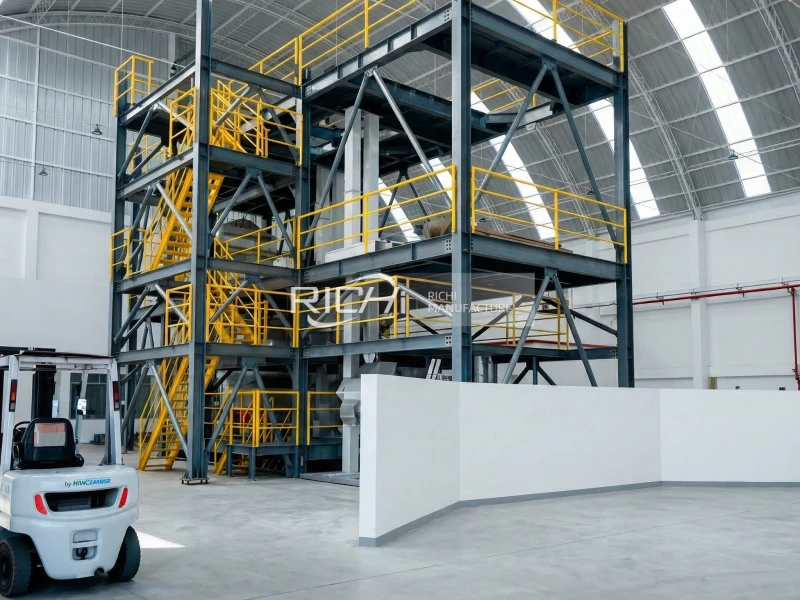
【10 T/H Complete Cassava Feed Plant in Brazil】Designed for livestock and poultry feed applications, this 10 T/H project provides a reference for businesses planning a larger cassava feed plant. The production target, incoming cassava material and required finished-feed characteristics should all be considered when determining the appropriate processing route and equipment capacity.

【3–4 T/H Cassava Feed Processing System in Tanzania】This 3–4 T/H cassava feed processing system is designated for poultry feed production. For poultry-focused businesses, the equipment configuration should be matched to the actual formula, required particle size and final feed form, with the production capacity aligned to expected demand.

【 15–20 T/H Cassava Feed Production System in Uganda】With a stated capacity of 15–20 T/H, this project is intended for multiple poultry and livestock feed applications. It provides a higher-capacity reference for businesses serving different animal-feed markets, where raw-material supply, production scheduling and product requirements all influence the overall system design.
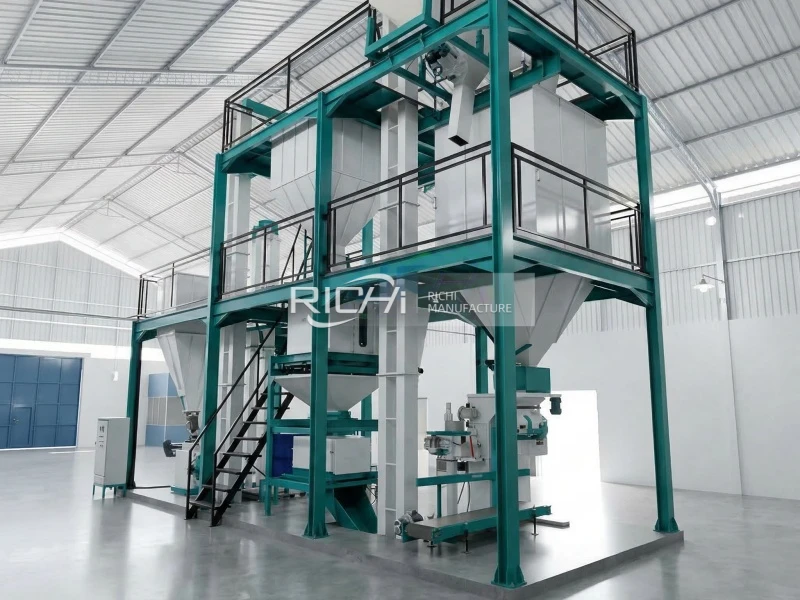
【 1–2 T/H Small Cassava Feed Plant in Indonesia】This small 1–2 T/H cassava feed plant is designated for broiler feed production. The project also includes a specific customer request: the complete equipment set was painted blue. It is a useful reference for buyers seeking a compact cassava feed production line with project-specific equipment-finish requirements.
Custom Cassava Feed plant solution
The size-reduction section of a cassava feed plant must match the condition of the incoming material. Fresh roots typically need cleaning and chipping before drying, rather than direct feeding into a conventional dry hammer mill. Dried cassava chips can be hammer-milled directly if suitably sized, while oversized pieces may require a coarse crusher first. Purchased cassava meal can bypass grinding when it already meets the required particle size.
Wet starch pulp needs controlled feeding and, for dry-feed production, usually dewatering and drying before milling. Cassava foliage follows another route: chopping, suitable wilting and drying, then fiber-compatible grinding where required.These differences determine whether a project needs a chipper–dryer–hammer mill combination, a crusher–hammer mill arrangement, or a simpler milling and batching section.
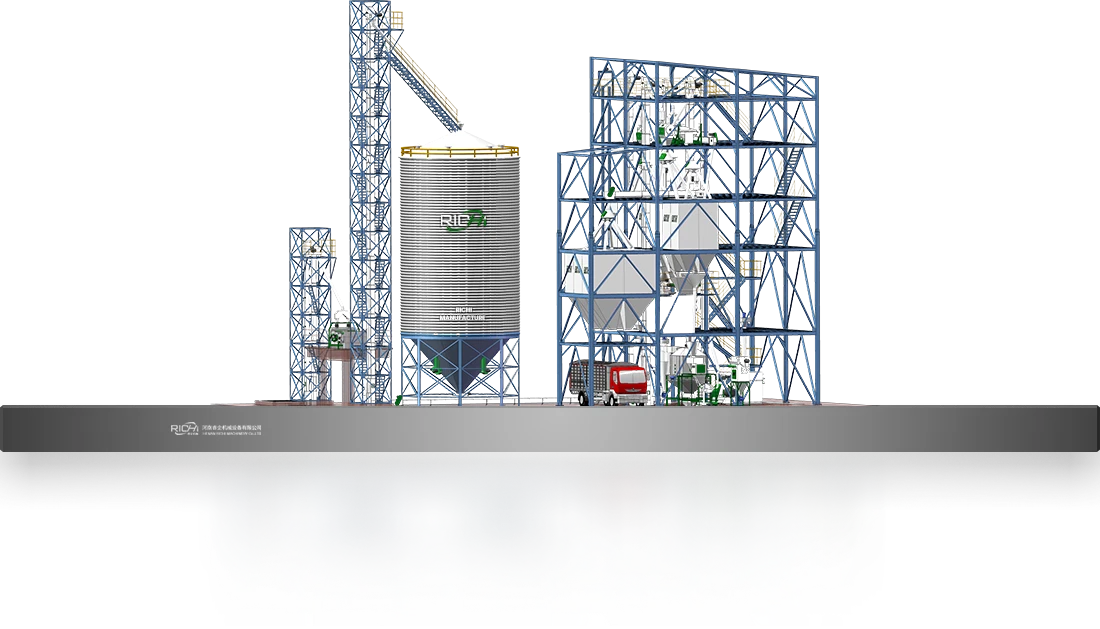
RICHI also evaluates which existing machines can be reused and where separate preparation routes are necessary. Once the cassava ingredients meet the required moisture, particle-size and feed-safety specifications, they enter ingredient-meal production or batching and mixing with maize, soybean meal, bran and premixes. Mash products bypass pelleting, while pellet products require appropriate conditioning, pelleting and cooling. Wet-material intake and finished-feed capacity are calculated separately.
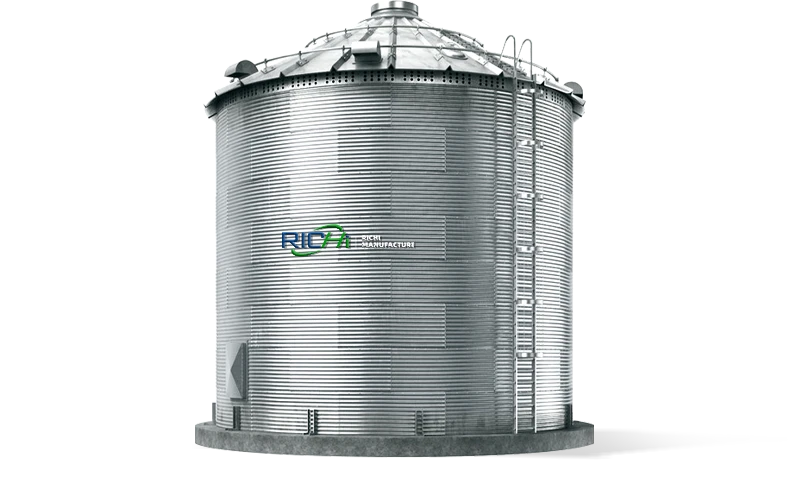
Silo system
01
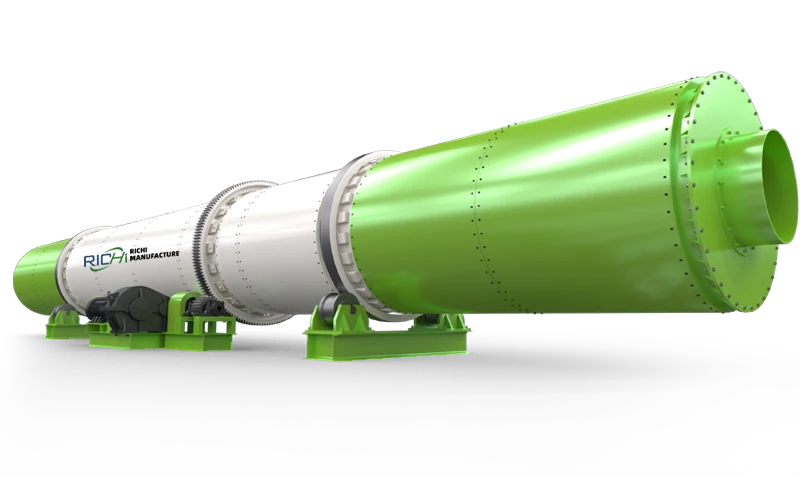
Drying system
02
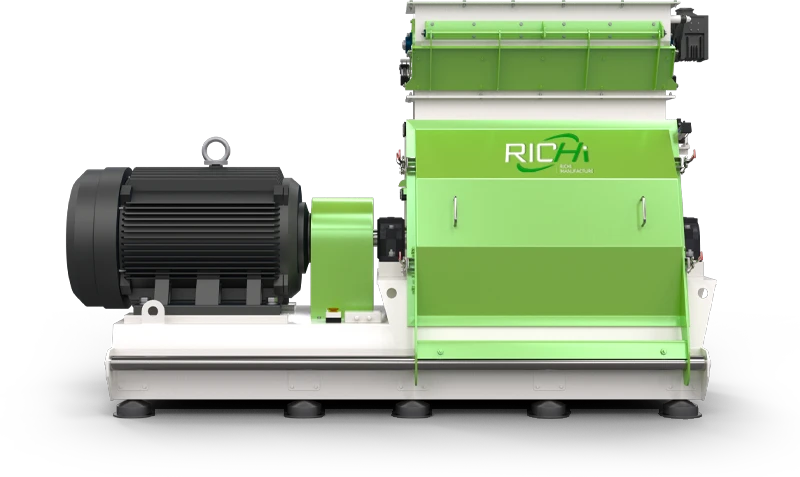
Grinding system
03
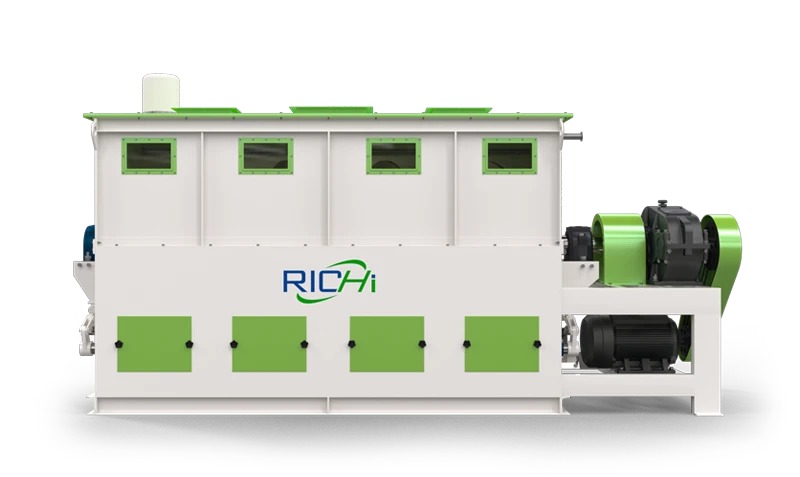
Mixing system
04
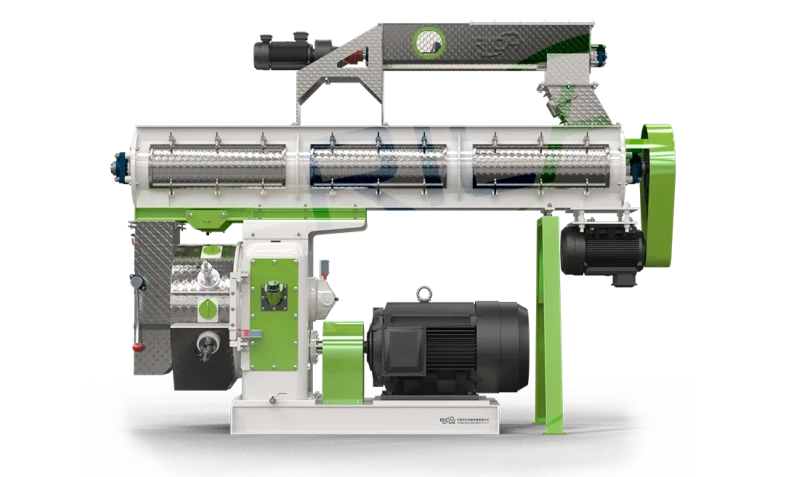
Pelleting system
05
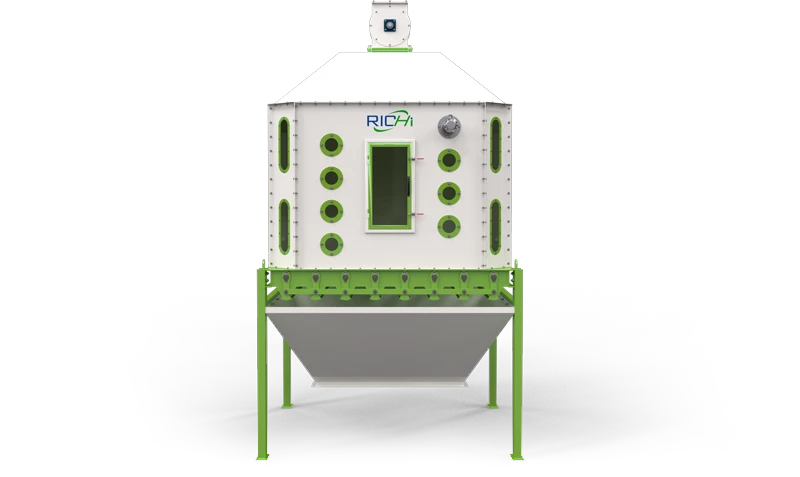
Cooling system
05
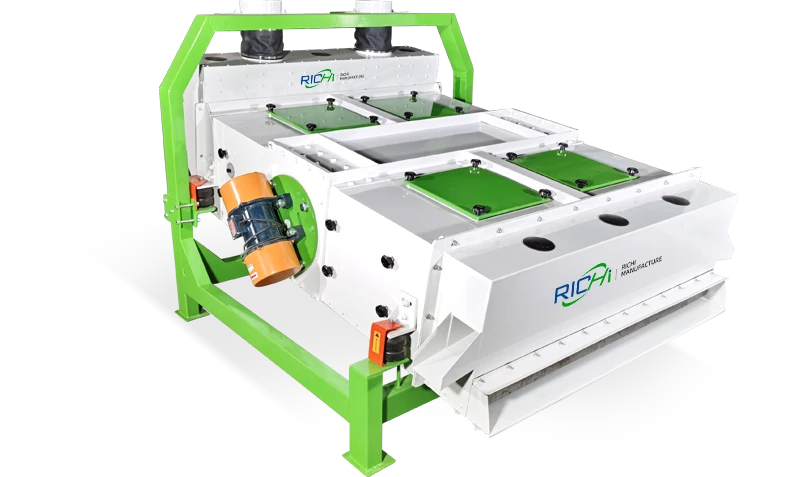
Screening system
07
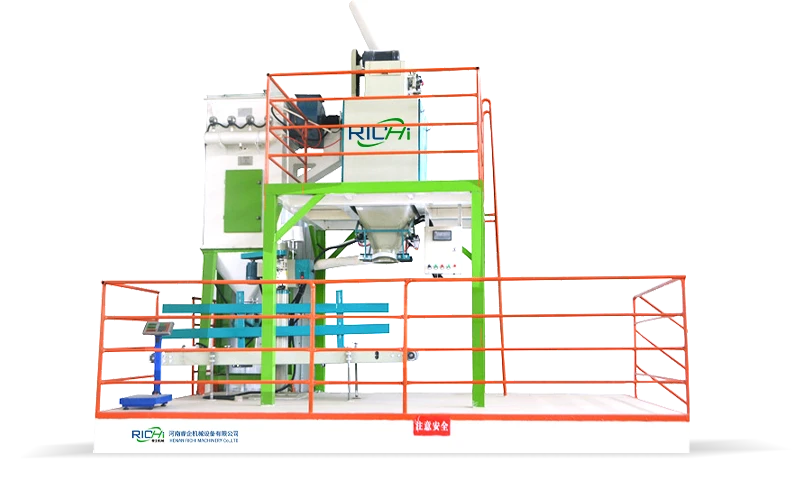
Packaging system
08
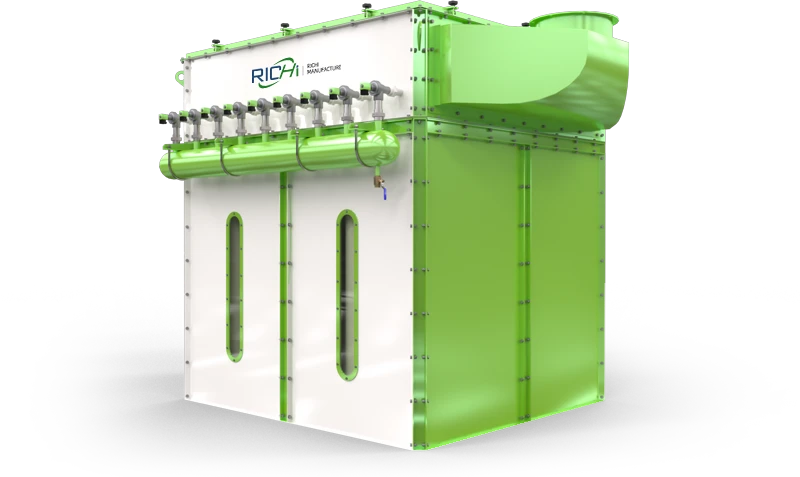
Dust removal system
09
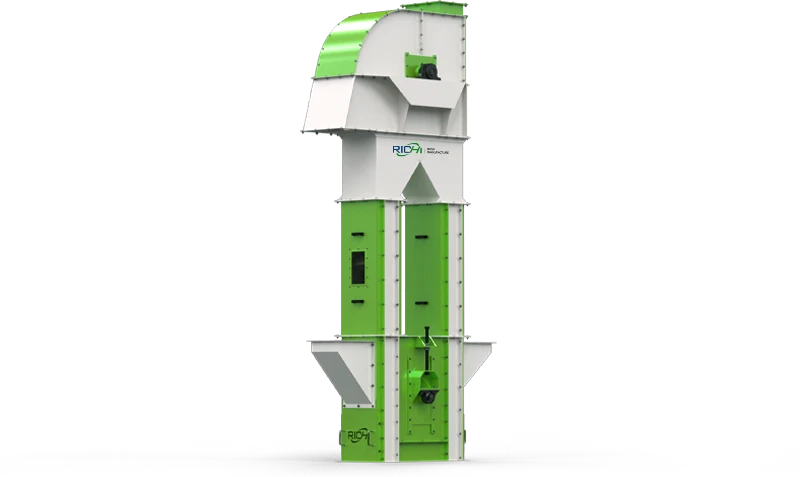
Conveying system
10
Customized Cassava Feed Plant Designs
Cassava can be incorporated into poultry, pig and cattle feed, but the processing route depends on whether the plant receives dried cassava chips, cassava meal or wet cassava pulp. RICHI designs each cassava feed plant around the incoming material, feed formula, target pellet size and production capacity, combining raw-material preparation, grinding, batching, mixing, pelleting and finishing equipment as required.

1 T/H Cassava-Based Chicken Feed Plant design for a Compact Facility
Designed for a small chicken-feed producer in Indonesia operating in a low-rise workshop, this 1 T/H line uses dried cassava chips, cassava meal, maize, protein ingredients and premix. Separate feeding routes allow coarse materials to enter the hammer mill while suitably prepared meal ingredients bypass unnecessary grinding. The mixed formula is pelleted, cooled, crumbled and screened before manual packing. The line can produce approximately 3–4 mm chicken feed pellets and smaller starter crumbles around 1–2 mm, subject to the selected die and product specification. Screw conveyors and Z-type bucket elevators help keep the layout compact without requiring a high-level conveying system.

5 T/H Automatic Cassava-Based Pig Feed Production Line design
For a commercial pig-feed manufacturer in the Philippines, RICHI designed a 5 T/H production line using dried cassava meal, pre-ground maize, soybean meal or other suitable protein ingredients, bran and mineral premix. Automatic batching and mixing accommodate formula changes for different pig growth stages, followed by conditioning, ring-die pelleting, cooling, screening and bagging. Grower and finisher feed can typically be produced in 3–4 mm pellets, while smaller pellets may be selected for younger pigs. Cassava inclusion must be balanced with protein, amino acids and minerals rather than treated as a complete feed ingredient on its own. Actual output depends on the formula, pellet diameter and material characteristics.

3–4 T/H Wet Cassava Pulp Pellet Production Line design
For a cattle-feed business sourcing wet cassava pulp from a nearby starch-processing operation in Thailand, RICHI designed a 3–4 T/H line around the moisture-removal requirements of the incoming material. Wet pulp with approximately 60–70% moisture is fed into a controlled receiving system and prepared for drying; mechanical dewatering can be included if the material condition and project economics justify it. After drying, the pulp is ground and mixed with suitable grain ingredients, protein sources and minerals before conditioning, pelleting, cooling, screening and bagging. The target product is typically 6–8 mm cattle feed pellets, with cassava pulp serving as an ingredient in a balanced ration. The dryer and upstream equipment must be sized for the incoming wet-material load, because 3–4 T/H refers to finished-pellet output rather than wet-pulp intake.

20 T/H Automatic Cassava-Based Poultry Feed Plant in Vietnam
For a commercial poultry-feed manufacturer in Vietnam, this 20 T/H design incorporates dried cassava chips into compound feed production for broilers and other poultry categories. The process includes grinding cassava and other coarse ingredients, computerized batching, mixing, conditioning, ring-die pelleting and cooling. Multiple pellet mills can be arranged in parallel to meet the production target, with final machine selection based on formula and required output. Finished pellets can be screened and packed directly, while selected batches pass through a crumbler to produce smaller starter-feed particles. Typical products include 3–4 mm broiler pellets and approximately 1–2 mm starter crumbles. Protein ingredients, amino acids and minerals must be balanced to meet the nutritional requirements of each poultry formula.
Cassava Feed Plant Projects Across Global Markets
The commercial scope of a cassava feed plant project depends on how cassava is sourced, processed and sold. Some facilities manufacture dry cassava feed ingredients for other mills; others include cassava in formulated livestock or poultry feeds. These country-specific configurations illustrate different project requirements, including material preparation, equipment integration and finished-product handling. Capacities refer to planned finished-product output rather than incoming wet-material weight.
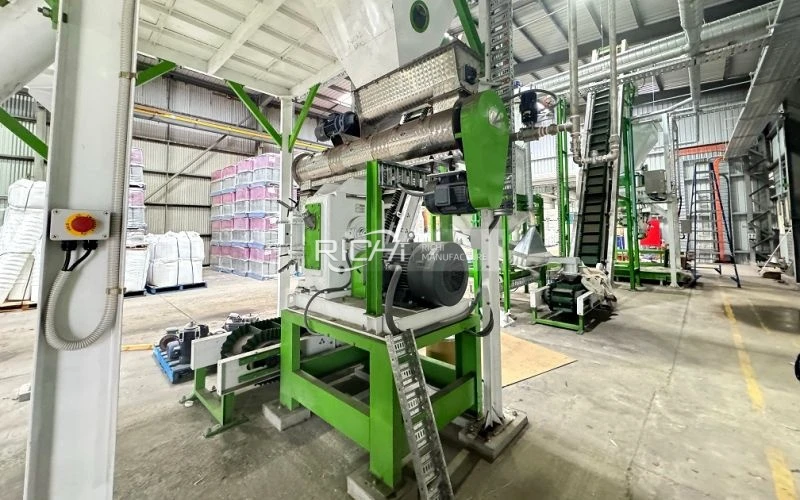
5 T/H Starch Pulp Recovery Project
Vietnam
A starch-processing enterprise can convert wet cassava pulp into a marketable feed ingredient by combining mechanical dewatering, thermal drying and subsequent size reduction. A dedicated wet-material handling section keeps sticky pulp away from conventional dry-feed equipment. The 5 T/H rating applies to finished dried feed material, with dryer input sized separately to the incoming moisture.
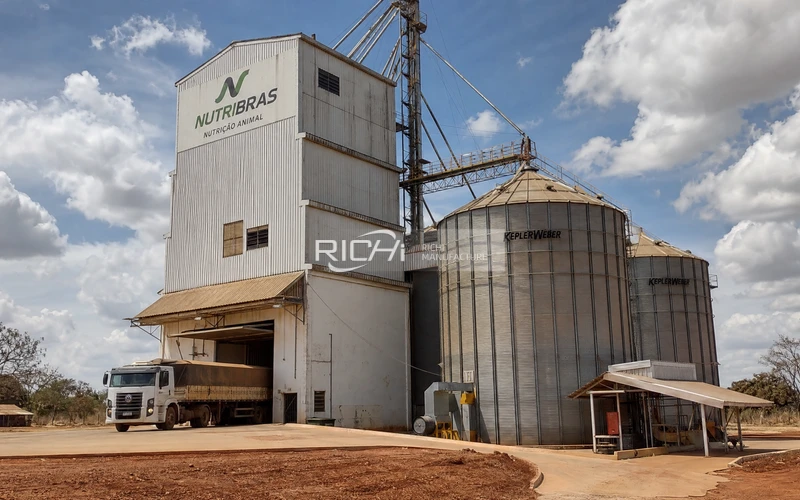
5–7 T/H Dry Residue Integration Project
India
IA feed manufacturer near a cassava starch-processing area can purchase dried, feed-grade cassava residue for incorporation into cattle feed. The preparation section checks residual moisture and screens unsuitable material before grinding and batching. Wheat bran, oilseed meals and minerals complete the formulation, allowing an existing feed mill to use local starch by-products without duplicating wet-pulp drying equipment.

800 KG/H Farm-Scale Mash Production Project
Mozambique
For a small pig-farming cooperative, buying properly dried cassava chips can avoid the investment and operating costs of a mechanical drying system. A compact grinder and mixer prepare cassava-based mash with maize, protein meal and mineral premix. This arrangement suits modest feed requirements, provided the processed cassava passes feed-safety checks before entering the formula.
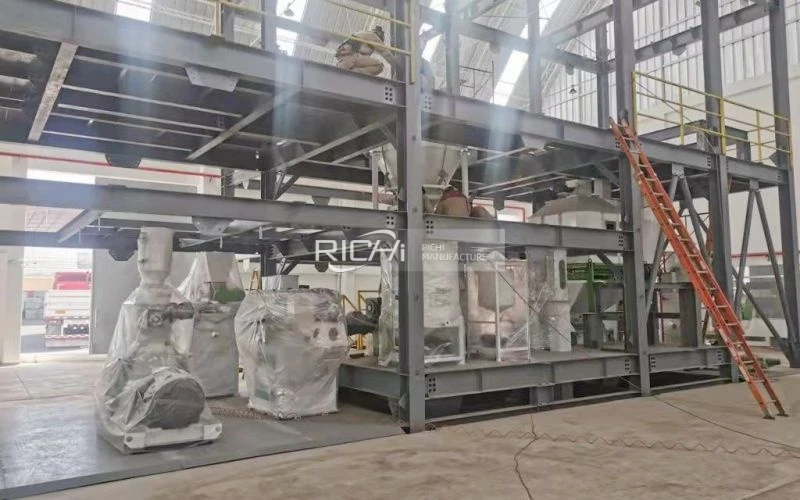
6 T/H Root Pellet Marketing Project
Paraguay
A cassava-processing business supplying animal feed manufacturers can manufacture ingredient pellets primarily from dried mandioca roots. Root cleaning, chipping and drying are required when fresh material is received; an established dry-chip supply can bypass the wet preparation stages. The resulting pellets are traded as feed ingredients, with handling density and consistent specifications important to commercial buyers.
3–4 T/H Dried Chip Pelleting Project
Cambodia
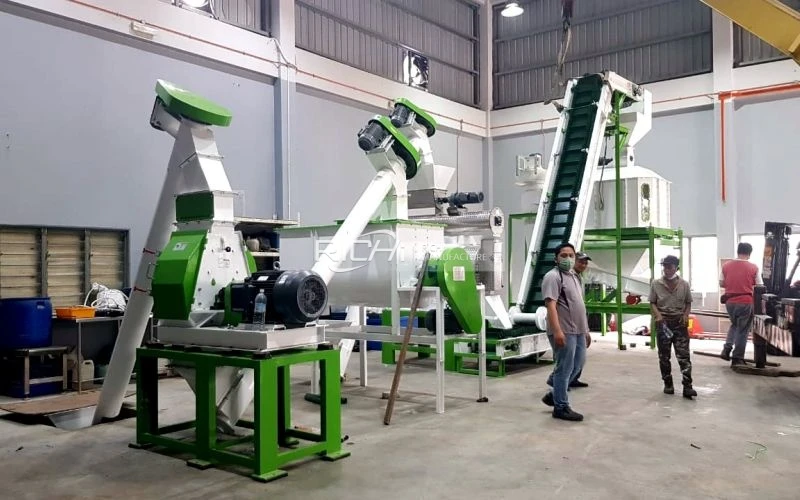
An agricultural processor supplying feed manufacturers can use a cassava chips feed processing line to manufacture dense ingredient pellets. Clean, suitably dried chips enter a hammer mill, while oversized pieces require coarse breaking first. The pelleting and cooling sections improve bulk handling and create a product suitable for delivery to compound-feed factories.

1–2 T/H Cassava Peel Recovery Project
Ghana
Cassava processing generates peels that require careful cleaning and moisture reduction before becoming a dependable feed ingredient. A small processor can combine rasping or size reduction, pressing, drying and milling to prepare peel meal for appropriately formulated ruminant feeds. The key equipment decision is the wet-material preparation system, not simply the size of the pellet mill.

2–3 T/H Cattle Concentrate Pellets Project
Zambia
A feed business serving northern cattle-producing areas can prepare concentrates containing dried cassava, maize bran, soybean meal and minerals. The cassava grinding section is separated from mineral dosing to improve particle-size control and mixing accuracy. Pellets are intended as a formulated supplement alongside the animals’ roughage, rather than as a replacement for the entire forage ration.
2 T/H Regional Pig Feed Project
Peru
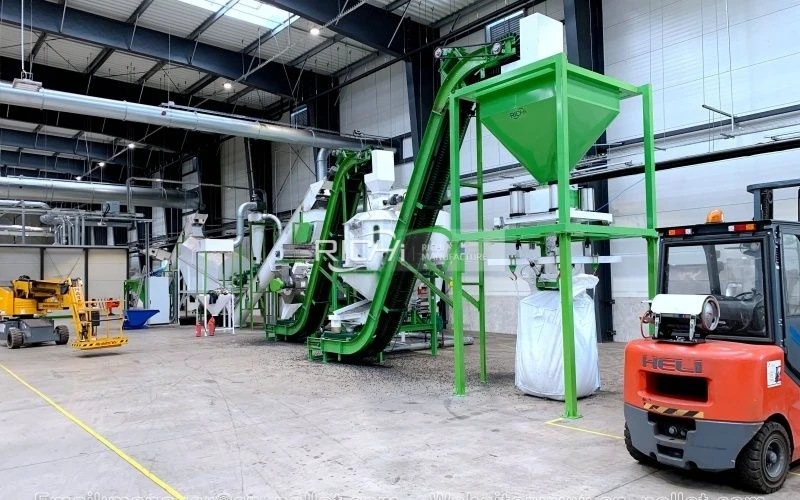
A small feed producer in a cassava-growing area can combine purchased cassava meal with rice bran, soybean meal and mineral premix for pig rations. Since the root ingredient arrives already processed, the project can concentrate investment on ingredient storage, controlled dosing and mixing. Pelleting remains optional where local buyers prefer mash feed.
1 T/H Peel Fiber Utilization Project
Angola
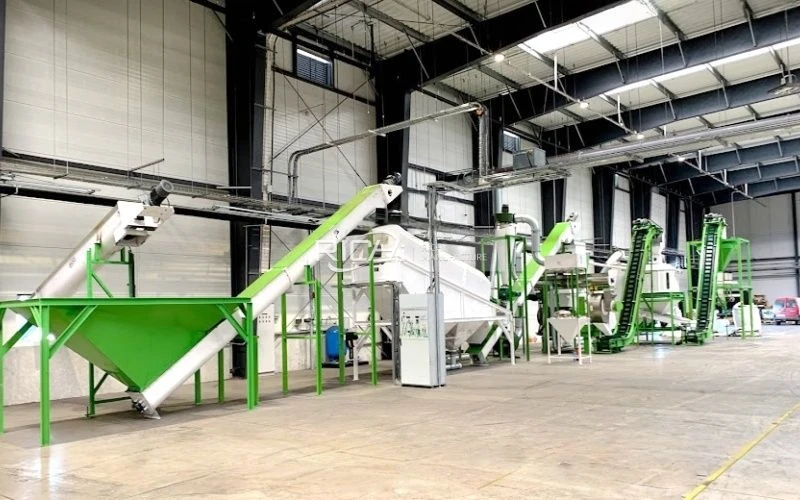
An agricultural processing cooperative with a consistent supply of cassava peels can investigate a small feed-ingredient operation for local ruminant producers. Cleaning, dewatering and drying must be considered before conventional milling. The output is treated cassava peel meal for inclusion in balanced rations, with the modest capacity limiting inventory exposure during seasonal material fluctuations.

2 T/H Swine Formula Flexibility Project
Philippines
For a regional pig-feed producer, dried cassava meal can supplement the energy supplied by maize, alongside rice bran, soybean meal and mineral additives. A small batching and mixing system supports formula changes without requiring a dedicated cassava dryer. Pelletizing can be included where the customer also sells finished pelleted rations.

2 T/H Local Pig Formulations Project
Cameroon
A pig-feed manufacturer purchasing dried cassava chips can combine them with maize, soybean meal and locally available feed ingredients. A crusher is only needed when the chips exceed the hammer mill’s acceptable feed size. Separate bins for the ground ingredients support consistent batching, while the finished product can be supplied as mash or pellets according to farm demand.
3 T/H Separate Root Handling Project
Ecuador
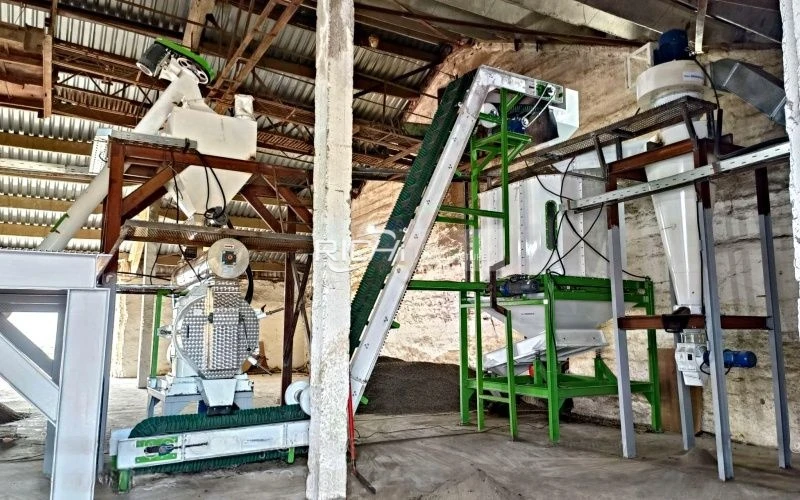
A mixed agricultural enterprise handling cassava roots and purchased protein meals needs to keep root preparation distinct from dry-feed batching. Roots are cleaned, chipped, appropriately treated and dried before final milling, while soybean meal and cereal ingredients enter through the dry intake system. This arrangement supports cassava-based compound pellets without passing wet roots through conventional feed grinders.

1–2 T/H Foliage Concentrate Blending Project
Laos
A cattle-feed cooperative can use properly treated cassava leaf meal together with cassava root meal, rice bran and protein supplements in a formulated concentrate. Leaf chopping and drying need a separate preparation route before grinding, while purchased dry root meal can bypass those stages. The compact system emphasizes ingredient consistency and practical small-batch mixing.
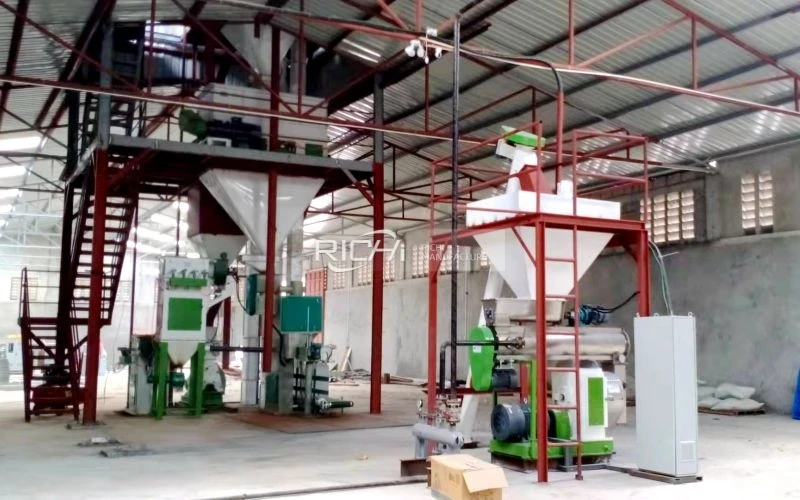
3–4 T/H Sunflower Protein Balance Project
Tanzania
Cassava root meal provides an alternative starch source for selected poultry and pig rations, but its low protein content requires careful formula balancing. A regional feed business can mix treated cassava meal with sunflower seed cake, maize and suitable protein supplements. Computerized dosing and a dedicated micro-ingredient addition point are more valuable here than unnecessary fresh-root preparation machinery.
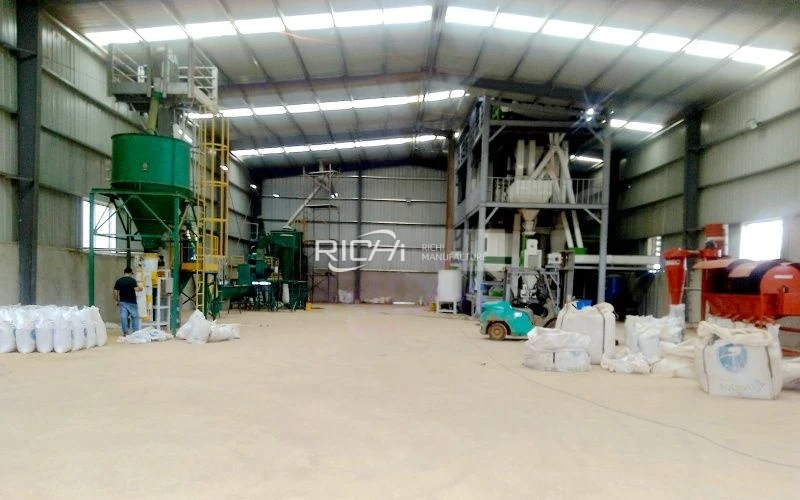
10–12 T/H Dual Feed Markets Project
Colombia
A commercial feed plant supplying both pig and poultry producers can include tested cassava meal in selected compound formulas alongside maize, soybean meal and other ingredients. Separate finished-feed routes allow mash products to bypass pelleting, while pellet and crumble products use the appropriate downstream sections. The design priority is reliable formula changeover rather than a single-purpose cassava mill.

1 T/H Smallholder Mash Supply Project
Dominican Republic
A local pig-feed business can manufacture mash feed using properly processed cassava meal, maize and soybean meal with vitamin-mineral supplementation. Ingredient storage and accurate mixing receive priority over a larger pelleting installation, which can be added if demand develops. The compact layout allows production volumes to remain aligned with nearby farm requirements.
From compound livestock feed and poultry feed to projects involving cassava cat litter, the examples above reflect different ways to use cassava resources. The following customer feedback provides further insight into the project planning, equipment selection and technical coordination involved in developing a cassava feed plant.


Customer from Côte d’Ivoire
- Client Profile: Cassava Processing Enterprise
- Project Focus: Raw Material Preparation & Plant Layout
“Our supply includes freshly harvested cassava roots as well as dried chips purchased from nearby processors. We needed an equipment layout that would not force both materials through the same preparation stages. The important part of the engineering discussion was identifying where the two routes could remain separate and where they could share milling and downstream equipment.”

Customer from Benin
- Client Profile: Agricultural By-Product Processor
- Project Focus: Cassava Peel Recovery & Drying
“Cassava peels are available from our processing activities, but their moisture and handling characteristics make ordinary feed grinding equipment unsuitable at the receiving stage. Before investing, we needed to understand the pressing, drying and size-reduction requirements. The amount of water that has to be removed matters just as much to our operating costs as the pellet mill itself.”

Customer from Malawi
- Client Profile: Poultry Feed Producer
- Project Focus: Formula Flexibility & Batching Accuracy
“We were interested in using processed cassava as part of the energy ingredients in our poultry feed, rather than depending entirely on maize. That meant reviewing the protein balance and keeping each ingredient accurately weighed. We also needed to produce different formulas without making the mixing section unnecessarily complicated or increasing the investment beyond our production scale.”

Customer from Rwanda
- Client Profile: Pig Farm & Feed Processing Business
- Project Focus: Feed Safety & Daily Operation
“We wanted to make better use of cassava peels in pig feed, but grinding them was only one part of the problem. Moisture control, storage and residual cyanide testing had to be considered before the material entered our feed formulas. Our priority was a practical processing arrangement that our operators could manage consistently, not unnecessary automation.”

Customer from Sri Lanka
- Client Profile: Mixed Feed Processing Business
- Project Focus: Cassava Leaf Meal & Equipment Integration
“Cassava leaves cannot be handled like dry grain, and we needed that difference reflected in the equipment selection. The foliage preparation section had to account for chopping, drying and fibrous material handling before suitable leaf meal could enter the feed mixer. Keeping this route separate from our purchased dry ingredients was important for cleaning and production scheduling.”

Customer from Bolivia
- Client Profile: Small Commercial Feed Manufacturer
- Project Focus: Phased Investment & Future Expansion
“Our first requirement was a reliable system for producing feed with properly processed yuca meal and other ingredients for local livestock farms. We did not want to purchase a complete pelleting section before establishing demand for pellets. A layout that could begin with grinding, batching and mixing while allowing later expansion was more appropriate for our investment plans..”

Dairy Feed Mill Solutions from 0.5 to 120 T/H
Dairy feed mill capacity should be selected from actual concentrate or compound-feed demand, operating hours, product range and sales model—not simply from herd size. Farm-scale projects may only need a few hours of production per day, while commercial plants often manage several dairy formulas and supply multiple farms.
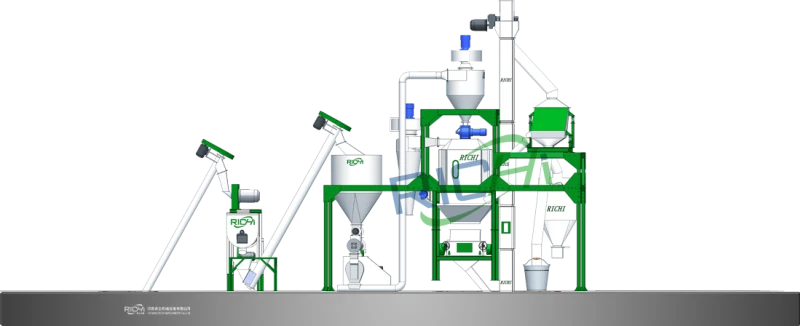
A practical entry point for farms, cooperatives and small cassava processors using suitably prepared dry materials. Compact grinding, mixing or pelleting equipment can be selected according to whether the customer sells ingredient meal or produces feed for local livestock.
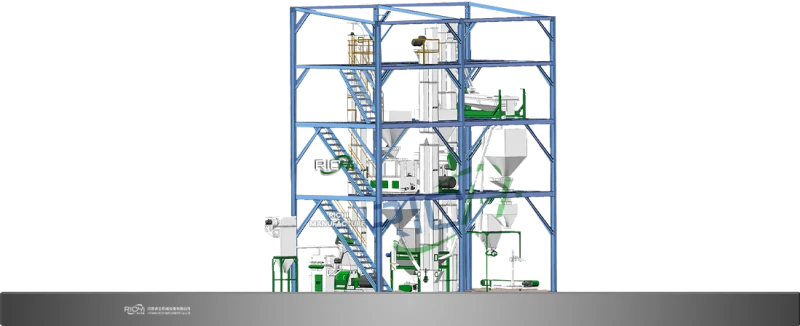
3-4 t/h animal feed production plant
Suitable for regional feed-ingredient suppliers handling dried cassava chips. The system can combine coarse breaking where necessary, hammer milling and optional pelleting, while keeping receiving and preparation costs appropriate for a medium-sized operation.
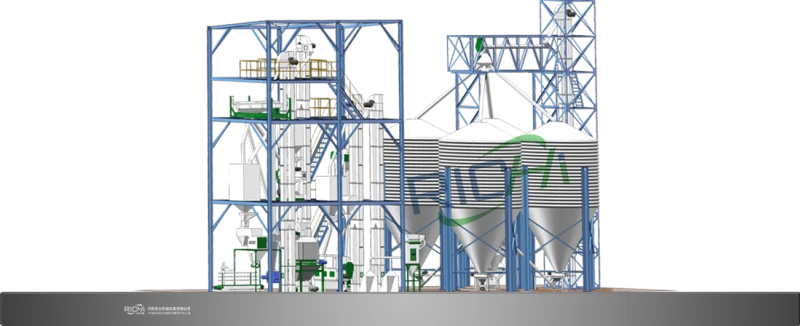
5-7 t/h animal feed pellet plant
An option for established cassava processors moving into feed manufacturing. Projects receiving wet starch pulp need dewatering and drying capacity matched to the required dry output; plants purchasing dry material can use a simpler preparation system.
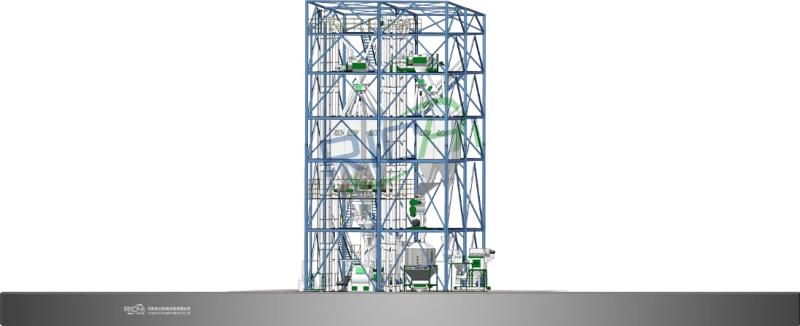
8-10 t/h animal feed processing plant
Suited to commercial feed manufacturers producing cassava-based mash and compound pellets. Computerized batching, ingredient storage and a pelleting bypass allow different formulas to be manufactured without sending every product through the same finishing equipment.
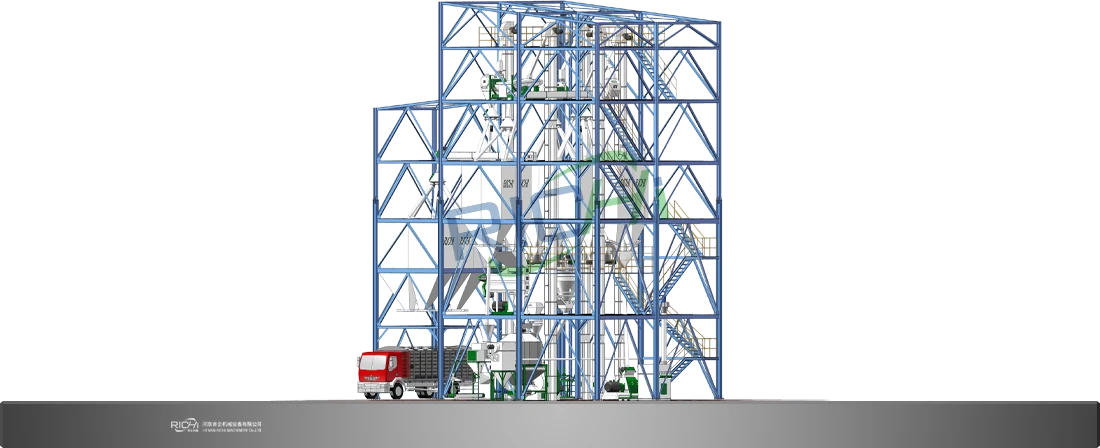
12-20 t/h feed preparation plant
For larger feed businesses using processed cassava alongside maize, soybean meal and other ingredients. Automated dosing, mixing and independent finishing routes help manage formula changes, while cassava inclusion rates are considered during equipment and storage design.
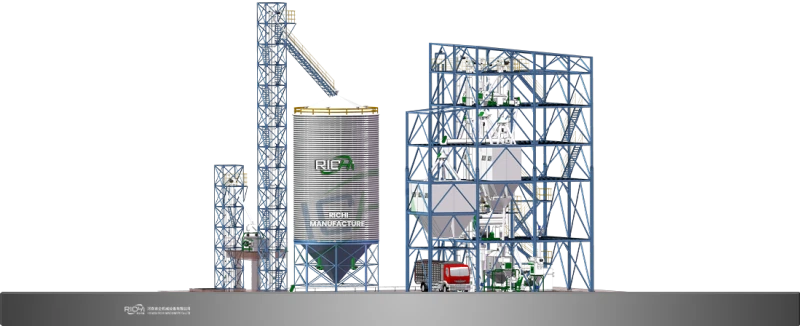
25-40 t/h feed pellet production line
At this scale, cassava is generally one of several feed ingredients. Separate intake and grinding arrangements can accommodate suitable cassava meal or chips alongside conventional cereals, with multiple mixing or pelleting sections supporting commercial feed production.
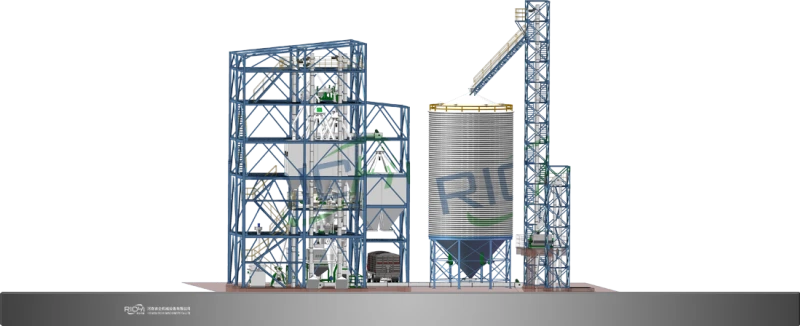
50-60 t/h commercial feed mill
A large compound-feed facility may allocate cassava-based formulations to selected production lines while manufacturing other livestock and poultry feeds. Independent batching, conditioning and packing routes help maintain product separation and reduce unnecessary changeovers.
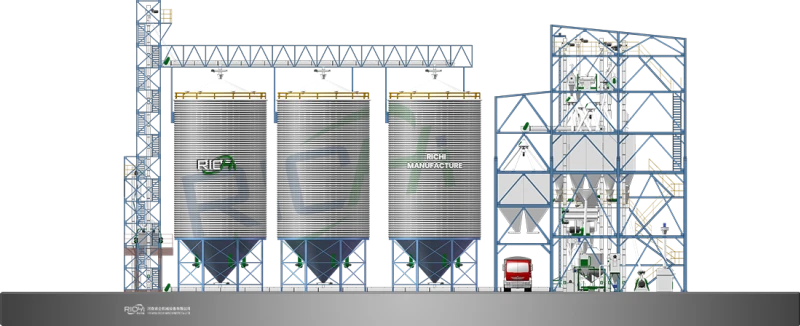
60-80 t/h complete feed mill plant
This capacity is intended for established feed manufacturers with substantial ingredient supply and distribution networks. Parallel production lines, central ingredient storage and coordinated automation enable processed cassava to enter suitable formulas without limiting the entire factory to one material.
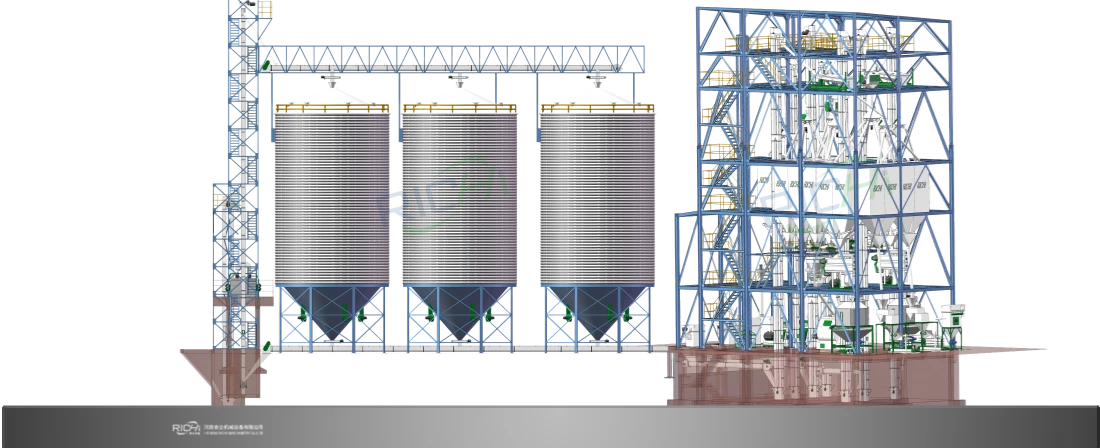
A high-volume plant requires multiple processing trains rather than a single oversized pellet mill. Cassava ingredient intake, storage and dosing are planned around actual formulation demand, with other lines available for poultry, pig or ruminant feed production.
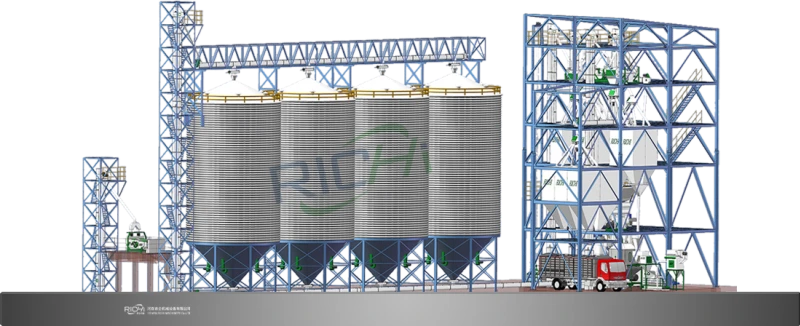
100-120 t/h feed mill engineering
This is a combined factory capacity for large feed manufacturing groups, not a dedicated 120 T/H fresh-cassava processing line. Several batching, mixing and pelleting systems can operate in parallel, with cassava-based feeds representing part of the overall product portfolio.
Cassava Feed Plant Cost
A cassava feed plant can be relatively straightforward when dried cassava chips or meal arrive ready for grinding and mixing. Processing fresh roots or wet starch pulp is a different investment. Washing, chipping, pressing and drying may cost more than the downstream feed mill itself, particularly when large amounts of water must be removed. RICHI therefore separates raw-material preparation costs from feed manufacturing equipment, so buyers can compare the actual cost of different production routes before committing to a project.
Whole Cassava feed plant set up investment : $10,000 – $40,000,000
Cassava Feed Equipment Cost Breakdown :
Raw Material Receiving & Cleaning :
$2,000–50,000
Root Washing & Chipping :
$4,000–90,000
Wet Pulp Dewatering :
$5,000–140,000
Cassava Drying System :
$5,000–600,000+
Coarse Crushing & Chopping :
$4,000–35,000
Hammer Milling & Aspiration :
$2,000–75,000
Batching & Micro-Dosing :
$3,000–110,000
Feed Mixing System :
$3,000–60,000
Conditioning & Pelleting :
$7,000–100,000
Cooling & Screening :
$3,000–90,000
Conveying & Elevators :
$2,000–140,000
Process Bins & Silos :
$2,000–150,000
Weighing & Bagging :
$3,000–90,000
Dust Collection :
$2,000–75,000
Electrical & Automation :
$2,000–180,000
Quality Control Equipment :
$1,000–30,000
Two factories with the same finished-feed capacity may require very different investments. A commercial mill using purchased cassava meal may need only controlled storage, batching, mixing and pellet production. A starch manufacturer converting wet pulp into dried feed ingredients needs dewatering, heat generation and drying capacity before the material can reach the feed-milling section.
The most useful information for preparing a quotation is the incoming cassava form, actual moisture content, available daily quantity, target finished products, hourly output, existing equipment, power supply and intended installation country. These details allow RICHI to calculate material yield, identify which stages are necessary and prepare a machine list without including equipment the project does not need.

Engineering Services
Cassava processing requires more than selecting a pellet mill. The condition of the incoming material affects equipment arrangement, drying requirements, plant layout and operating costs. RICHI supports new feed factories and existing-mill upgrades with engineering and manufacturing services matched to the customer’s raw materials, products and production scale.
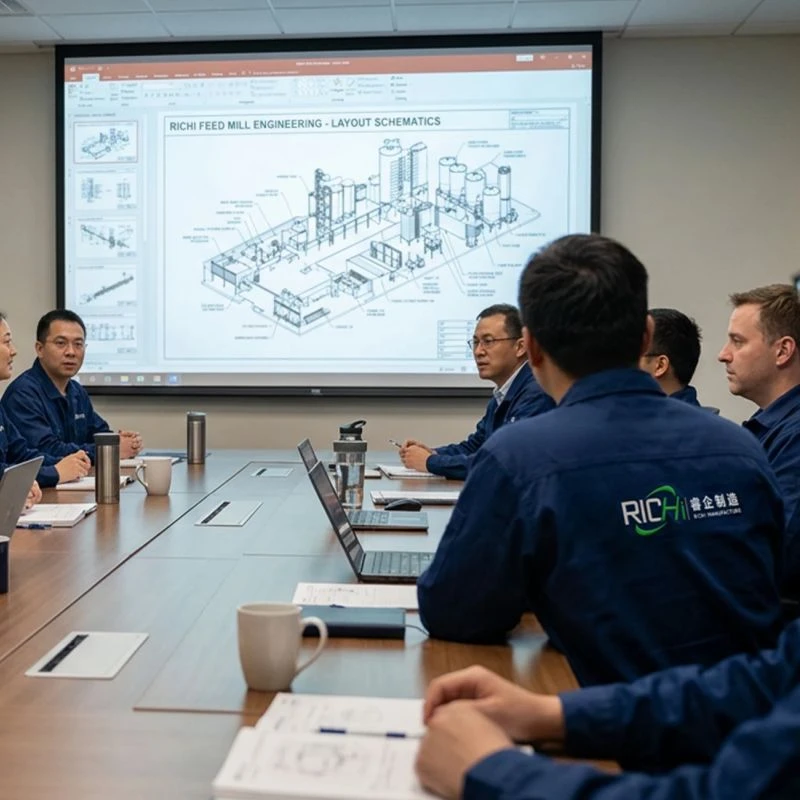
Material-Specific Process Engineering
Our engineers assess incoming moisture, material size, storage conditions and finished-feed requirements before selecting the processing route. A fresh-root project may need chipping and drying, while dry chips may require only coarse breaking and hammer milling. We prepare equipment layouts, material balances and utility requirements, avoiding unnecessary machinery where existing systems can be reused.
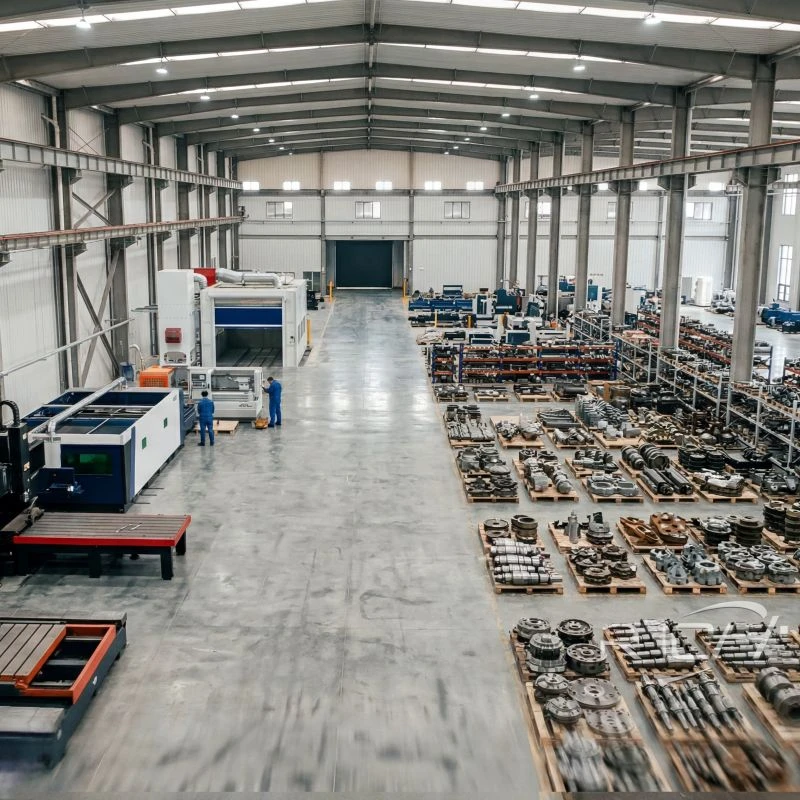
Equipment Manufacturing & Integration
RICHI manufactures core feed-processing equipment, including hammer mills, mixers, pellet mills, coolers and conveying systems. Equipment selection accounts for cassava’s starch content, particle-size requirements and the handling characteristics of dry or fibrous ingredients. Specialized wet-material preparation and drying equipment can be incorporated into the overall design, with manufacturing checks and equipment testing arranged before delivery.
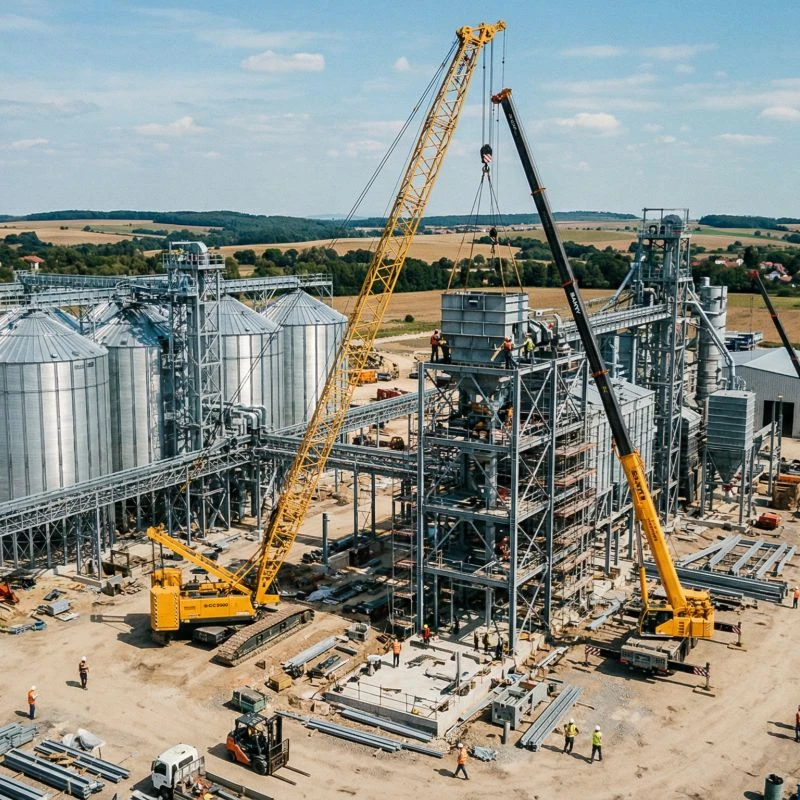
Installation, Commissioning & Training
Site support covers equipment positioning, mechanical connections, control-system checks and production commissioning. During material trials, the team can assess feeding stability, screen selection, mixer performance and pellet quality using the customer’s ingredients. Operators receive guidance on changeovers, cleaning and routine maintenance, while feed-safety acceptance remains subject to appropriate material testing and local requirements.
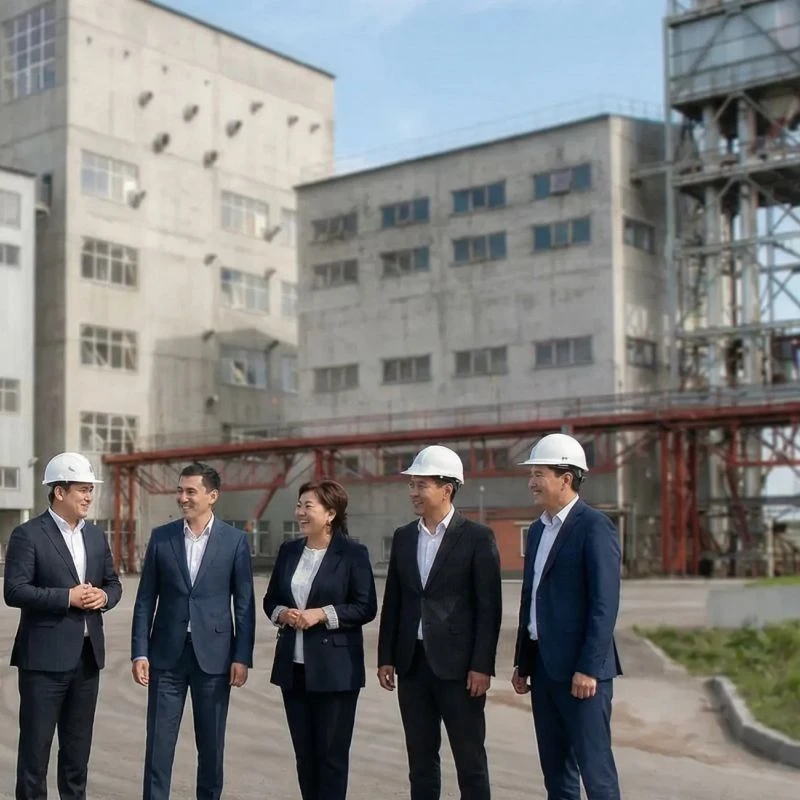
After-Sales & Plant Development
Daily operation brings changing material moisture, screen wear, die replacement and occasional formulation adjustments. RICHI provides technical troubleshooting, spare-parts support and equipment maintenance guidance. If production expands, our engineers can evaluate additional grinding capacity, drying equipment, ingredient storage or a separate finishing route without automatically replacing the entire existing system.
Free Technical Services
Before investing in a cassava feed plant, you need to know which equipment your raw materials actually require, how the machines will fit into your factory, and what the project will cost. RICHI provides free preliminary engineering support, from equipment selection and process planning to layout drawings and technical consultation. Whether you process fresh roots, dried chips, cassava pulp or mixed feed ingredients, these services help you evaluate the right configuration before placing an order.

Project Cost Estimate & Equipment List
Process Flowchart & Factory Area Planning
3D Renderings & Three-View Drawings
Civil Engineering & Steel Structure Drawings
Electrical Circuit & Control Diagrams
Equipment Manuals & Remote Installation Guidance
Operation Guidance & Employee Training
Cassava Feed Production Testing
Cassava Feed Processing Equipment for sale
Choosing cassava feed equipment starts with identifying what enters the factory, not simply selecting a pellet mill. Fresh roots need cleaning and chipping, dried chips may need coarse crushing before fine grinding, and wet starch pulp requires moisture reduction before conventional dry-feed processing.
Cassava leaves introduce another challenge: their fibrous structure calls for chopping and controlled drying before milling. RICHI combines the necessary preparation machinery with feed grinding, batching, mixing and pellet production equipment, while eliminating unnecessary stages when customers already purchase processed cassava ingredients.
Whether you are building a new plant or upgrading an existing mill, our engineers can identify the machinery your materials require, assess equipment already installed and calculate how each preparation stage affects the available finished-feed capacity.

Cassava Chipping Equipment
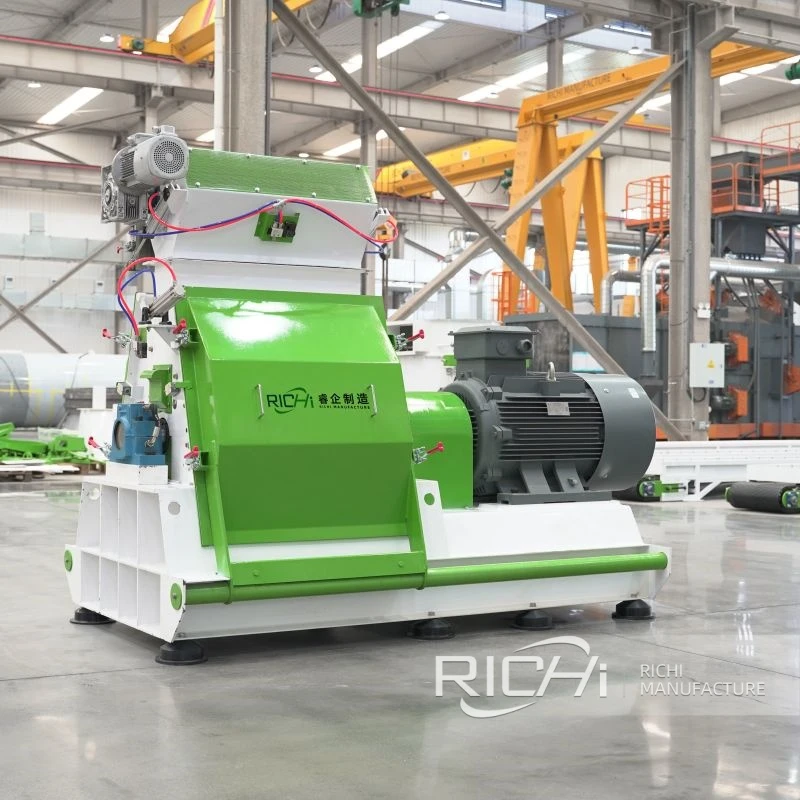
Cassava Feed Hammer Mill

Cassava Drying Equipment
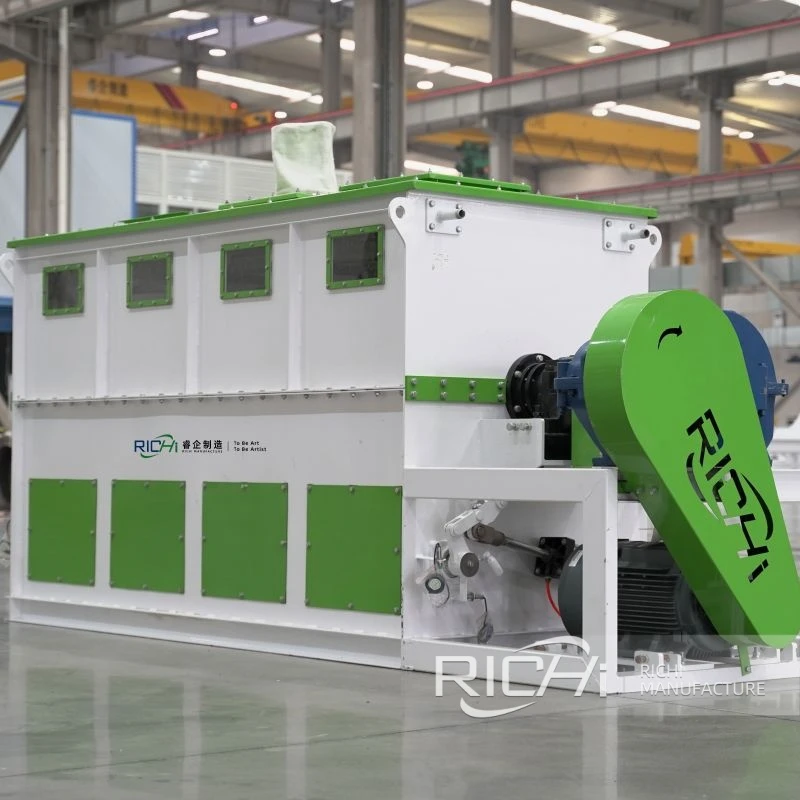

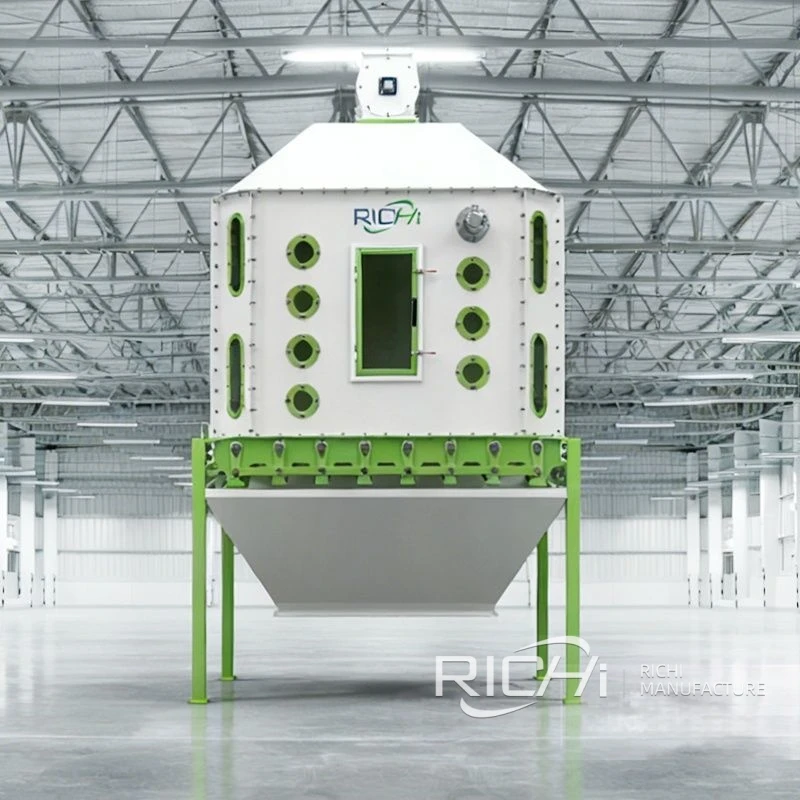
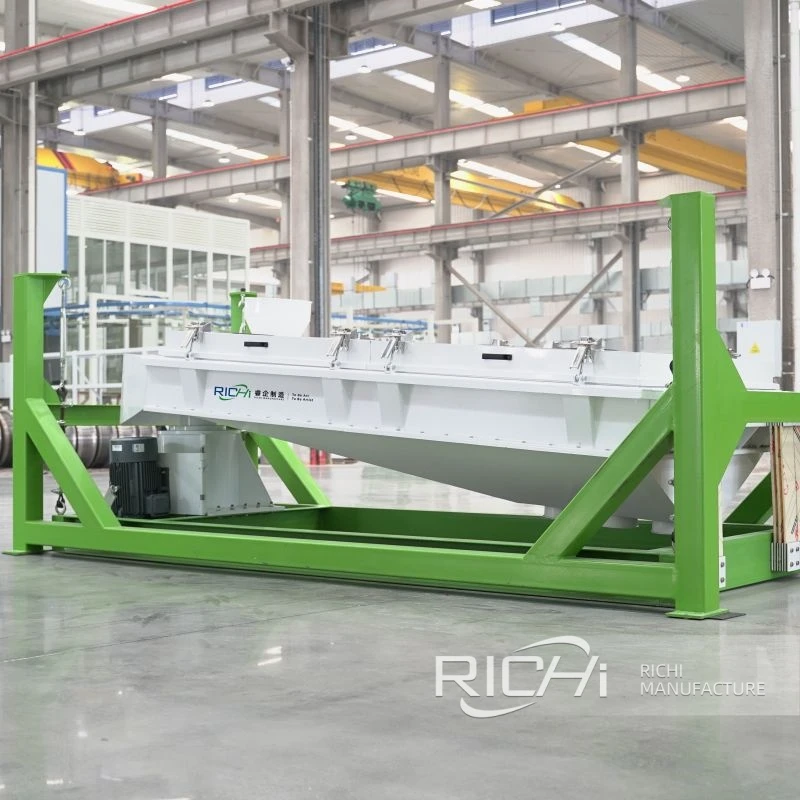
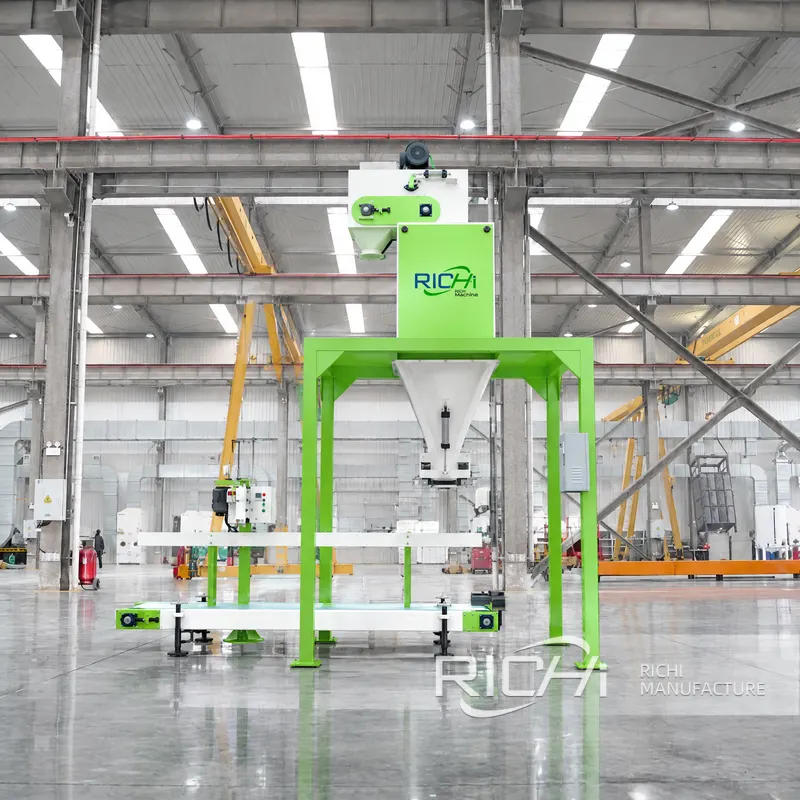
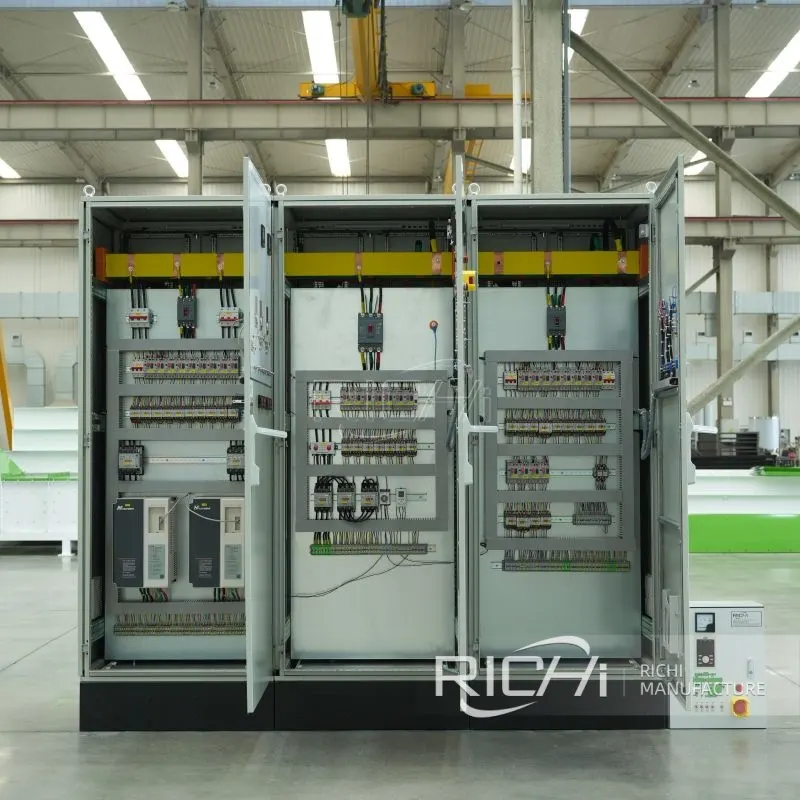
Electrical control cabinet
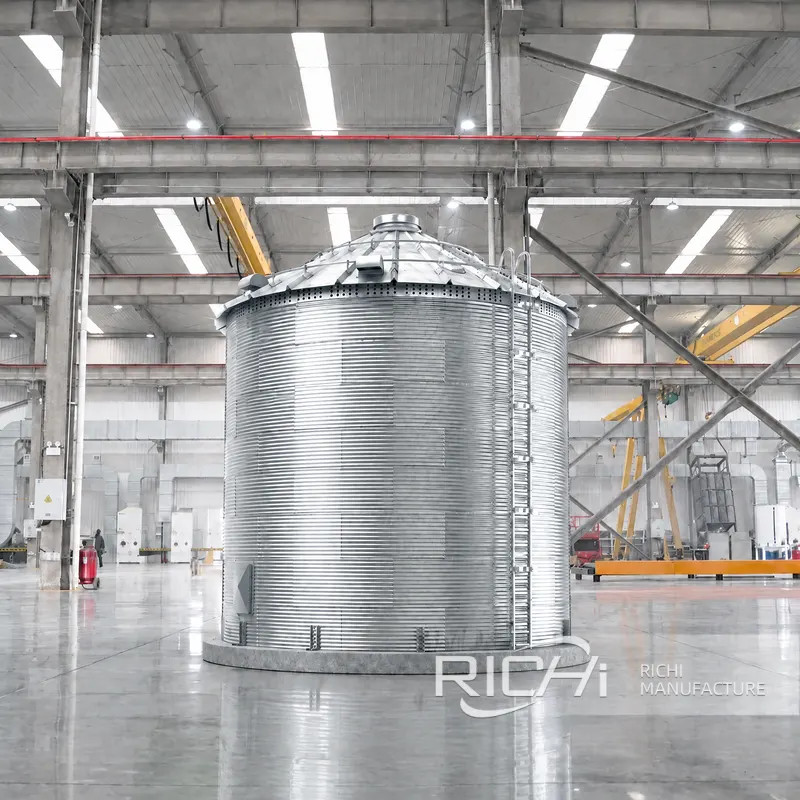
storage silos
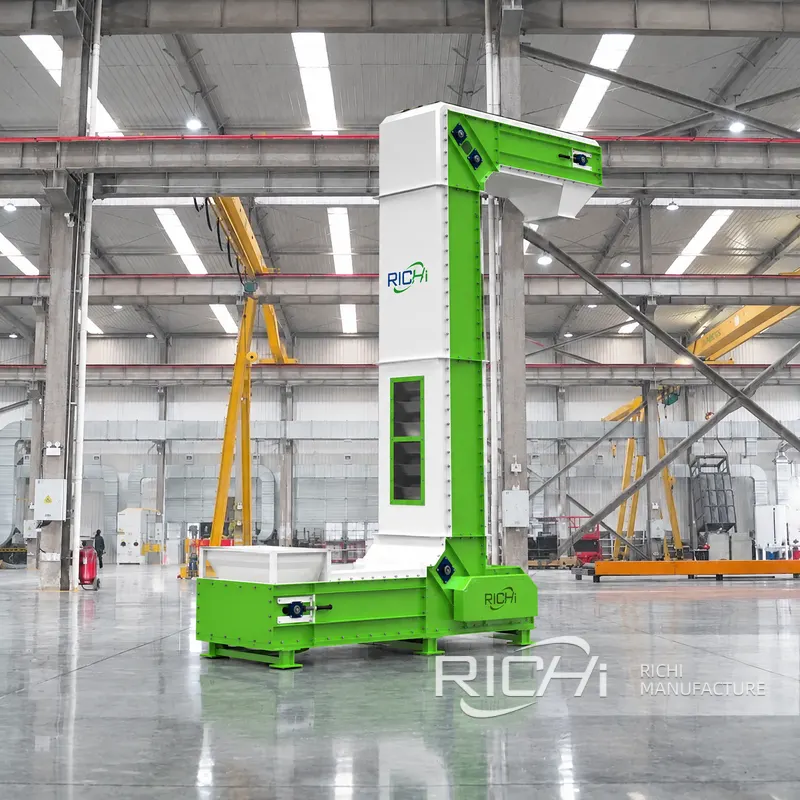
Conveying Equipment
These are equipment selection frameworks, not substitutes for raw-material testing or complete process design. Additional feed-safety treatment may be necessary, and every prepared cassava ingredient must meet the relevant requirements before entering animal feed production.
Market Opportunities for Cassava Feed Processing
Cassava creates opportunities for both feed ingredient suppliers and commercial feed manufacturers, particularly in regions with established root processing, starch production and livestock farming. Dried cassava chips and meal can supply energy to compound feed formulas, while properly processed starch pulp, peels and leaves offer additional outlets for agricultural by-products.
These materials can be used in different feed markets, including pig, poultry and ruminant production, provided their nutritional limitations and feed-safety requirements are addressed. Businesses with reliable cassava supplies can therefore serve local feed mills, livestock farms and regional ingredient buyers rather than relying on a single finished product.
The strongest investment opportunities come from matching raw-material availability with processing economics and actual market demand. A starch factory with wet pulp may benefit from dewatering and drying equipment, while a processor handling dry chips can enter the feed ingredient market with a simpler grinding and pelleting system.
Commercial feed mills can also incorporate suitable cassava ingredients into existing formulas without building an entirely separate factory. RICHI helps investors evaluate these options through material assessment, equipment configuration and capacity planning, with particular attention to drying costs, usable dry-matter yield and the selling requirements of the intended market.
Talk to Us About Your Market Opportunity

Animal Feeds types with Cassava Ingredients
Cassava is used in more animal feed formulations than conventional pig and cattle rations. Depending on the species, processed cassava roots may provide dietary energy, cassava leaves can contribute protein and fiber, and purified tapioca starch may serve as a functional ingredient in extruded feeds. Not every cassava-containing feed requires the same factory.
Pig, poultry and ruminant compound feeds can generally be produced through suitable grinding, batching, mixing and optional ring-die pelleting systems. Rabbit feed needs appropriate fiber preparation and pellet specifications. Floating fish feed and dry pet food require extrusion, while shrimp feed places additional demands on fine grinding and water stability. RICHI evaluates the target feed product before recommending equipment, so customers can manufacture different compatible formulas without purchasing processing systems that their intended products do not require.

Fresh Cassava Roots

Dried Cassava Chips

Cassava Meal

Wet Cassava Pulp

Cassava Peels

Cassava Leaves & Foliage

Dried Cassava Leaf Meal

Pig Cassava Feed
Dried cassava meal can supply part of the energy in starter, grower, finisher and breeding-pig formulas. It is blended with maize, soybean meal, rice bran, oils, amino acids and mineral premixes to compensate for its low protein content. Properly treated cassava peels may also be considered in suitable formulations, but their higher fiber content changes the nutritional value. Finished products: Mash feed or 3–5 mm pellets.
Customize My Pig Feed Mill

Chicken Cassava Feed
Cassava root meal can be incorporated into broiler and layer diets alongside maize, soybean meal, wheat bran, vegetable oil and vitamin-mineral premixes. The formula must address protein, amino acid balance and pigmentation, particularly for laying hens. Pelleting can also reduce the dustiness associated with finely ground cassava.Finished products: Mash, 1.5–3 mm starter crumble, or 3–5 mm grower and finisher pellets.
Design My Chicken Feed Mill Plant

Duck Cassava Feed
Ducks can consume properly processed cassava root meal, while selected formulations may also incorporate treated cassava starch-processing residues. These ingredients are combined with maize, soybean meal, rice bran, oil and mineral supplements. The low protein and variable fiber content of cassava by-products must be accounted for when preparing duckling, grower and laying-duck feeds.Finished products: Starter crumble or 3–5 mm pellets.
Plan My Dry Duck Feed Mill

Goose Cassava Feed
Cassava root meal and appropriately processed cassava foliage can be included in goose diets. Root meal contributes starch, while foliage offers a different nutrient profile and requires fiber and safety evaluation. These materials are combined with maize, soybean meal, wheat bran, forage ingredients and mineral premixes according to the feeding program.Finished products: Mash, crumble or approximately 3–6 mm pellets.
Configure My Goose Feed Mill

Dairy Cow Cassava Feed
Dried cassava chips, root meal and suitable starch-processing residues can be incorporated into dairy concentrate feeds with maize, soybean meal, wheat bran, oilseed cakes and minerals. Cassava supplies fermentable energy, while the complete ration must maintain adequate protein and effective fiber. Dairy concentrates are fed alongside forage rather than replacing the entire ration. Finished products: Concentrate meal or 4–8 mm pellets.
Customize My Dairy Feed Mill

Beef Cattle Cassava Feed
Processed cassava roots, peels, pulp and foliage can serve different roles in beef cattle feeding. Starch-rich root materials provide energy, while treated foliage may contribute protein and fiber. Typical companion ingredients include maize bran, soybean meal, palm kernel meal, molasses and minerals. Equipment selection depends on whether the plant receives dry ingredients or prepares wet cassava by-products.Finished products: Mixed meal, concentrate pellets or selected forage-based feed products.
Customize My Cattle Feed Plant

Buffalo Cassava Feed
Cassava chips and processed root meal can be used in buffalo concentrate diets, particularly where cassava is locally available. Suitable formulas combine these energy ingredients with rice bran, oilseed meals, mineral supplements and roughage supplied separately. Cassava foliage or processing residues may also be evaluated, although their preparation and nutritional contribution differ from those of root meal. Finished products: Concentrate mash or approximately 4–8 mm pellets.
Design My Buffalo Feed Line

Sheep & Goat Cassava Feed
Cassava leaf meal, root meal and properly treated peels can be combined with maize bran, soybean meal, oilseed cakes, molasses and mineral premixes for small-ruminant feeds. Leaf meal may be useful where local protein ingredients are costly, while peel meal has different fiber and energy characteristics. The concentrate must complement suitable forage in the feeding program. Finished products: Concentrate meal or 4–6 mm pellets.
Plan My Sheep Feed Mill

Rabbit Cassava Feed
Properly processed cassava root meal can replace part of the cereal ingredients in balanced rabbit diets, while cassava leaf meal offers an additional source of protein and fiber. These materials are commonly combined with alfalfa meal, wheat bran, soybean meal and mineral supplements. Rabbit feed design must pay particular attention to dietary fiber, amino acids and pellet durability. Finished products: Generally 3–4 mm rabbit feed pellets.
Configure My Rabbit Feed Mill

Tilapia & Catfish Cassava Feed
Cassava flour and treated root meal can supply part of the carbohydrate energy in selected freshwater fish feeds. They may be combined with fish meal, soybean meal, other protein ingredients, oils and vitamin-mineral premixes. Cassava starch can also contribute to the processing characteristics of extruded pellets. Inclusion rates must account for species-specific digestibility and nutritional requirements. Finished products: Approximately 1–6 mm floating or sinking fish feed, depending on the species and growth stage.
Customize My Fish Feed Line

Shrimp Cassava Feed
Cassava meal or tapioca starch can be included in selected shrimp feed formulations as a carbohydrate source or functional starch ingredient. Typical companion materials include fish meal, soybean meal, wheat flour, marine oils and specialized premixes. Shrimp feeds require controlled particle size, pellet integrity and water stability; these requirements differ from conventional livestock pelleting. Finished products: Small sinking, water-stable pellets, with diameter determined by shrimp species and growth stage.
Configure My Shrimp Feed Mill

Dog & Cat Food with Cassava Ingredients
Tapioca starch and selected processed cassava fiber ingredients can be used in dry pet food formulations. They are combined with animal protein meals, fats, suitable plant ingredients and species-specific vitamin-mineral premixes. Cassava starch can contribute to kibble structure during extrusion, while cassava fiber can influence texture and dietary fiber content. Finished products: Extruded dry kibble in different shapes and sizes, commonly around 4–16 mm depending on the product.
Customize My Pet Feed Mill
Cassava Feed Formulas
Broiler Cassava Feed Formula
This broiler finisher formulation uses a fermented, cooked and sun-dried cassava root product as the principal energy ingredient. This is not a formula for untreated cassava roots. A factory purchasing feed-grade dried fufu meal can concentrate on batching and mixing; a processor manufacturing the ingredient needs a substantially different upstream preparation section.
Dried cassava fufu meal
55%
Soybean meal
25%
Fish meal
3%
Blood meal
3%
Wheat offal
5%
…
…
Pig Cassava Feed Formula
This grower-finisher pig diet uses cassava peel meal obtained from cassava-processing by-products. Peels were washed, sun-dried and hammer-milled before being included in a maize-soybean-based ration. The selected treatment replaced half of the original dietary maize quantity with cassava peel meal. Also used a supplemental feed enzyme.
Dried cassava peel meal
26%
Maize
26%
Full-fat soybean
26%
Maize offal
18%
Bone meal
2.5%
…
…
Dairy Cow Cassava Feed Formula
This dairy concentrate formulation comes from a feeding study involving lactating cows. It combines dried cassava chips as an energy source and cassava starch pulp that had undergone a controlled fermentation process using yeast waste. This concentrate also contains urea, so it is a ruminant-specific formulation requiring professional nutrition and safe-mixing assessment.
Cassava chips
40%
Fermented cassava pulp
19%
Rice bran
12%
Palm kernel meal
3%
Corn grain
1%
…
…
Rabbit Cassava Feed Formula
Cassava leaf meal contributes protein and fiber rather than serving the same role as starch-rich roots. In this rabbit-feeding formula, dried cassava leaves replaced part of the coconut oilcake in the experimental diet. Can also supply chopped guinea grass separately.
Cassava leaf meal
20%
Corn
25%
Rice polishings
25%
Coconut oilcake
20%
Fish meal
3%
…
…
Goat Cassava Feed Formula
This formulation represents a different feeding system from dry compound pellets. This is an ensiled feed product, not conventional cassava feed pellets. Its manufacture depends on controlled fermentation and airtight storage.
Dried cassava peels
25%
Dried cowpea haulms
20%
–
–
–
–
–
–
…
…
Freshwater Fish Cassava Feed Formula
Refined cassava starch can be used in specialized freshwater fish feeds, where its role differs from root meal or cassava processing residues. The feed was produced using fine grinding, wet mixing and a small-diameter strand-forming process.
Cod fishmeal
60%
Cassava starch
10%
Chicken powder
8%
Extruded soybean meal
6%
Dehulled soybean meal
4%
…
…
These formulations show why the incoming cassava material must be identified before designing the factory. Dried cassava ingredients can enter conventional feed batching systems once their quality is verified. Leaf meal needs foliage-specific preparation; wet starch pulp requires specialized treatment before incorporation; ensiled materials need fermentation infrastructure; and specialized fish feed may require finer grinding and different pellet-forming equipment.
RICHI can configure ingredient preparation, grinding, mixing and feed-finishing systems around the selected production route. Before a commercial formula is approved, the customer should verify actual ingredient composition, residual cyanide, animal nutritional requirements, additive regulations and the desired final feed form.
Cassava Feed Plant FAQs
How much does a small cassava feed plant cost?
+
US$18,000–75,000 is a preliminary equipment budget for a 1–2 T/H plant using properly prepared dry cassava ingredients. A basic meal or mash line is usually less expensive than a complete pellet line with cooling and automatic packing. Fresh-root washing, chipping and drying are additional costs, as are buildings, shipping and installation.
What budget should I prepare for a 5 T/H cassava feed production line?
+
US$90,000–310,000 is an indicative equipment range for a 5–7 T/H dry-ingredient feed line. It may include grinding, batching, mixing and pellet production, depending on the selected configuration. If your supply is wet cassava pulp or fresh roots, obtain a separate quotation for dewatering, drying and raw-material preparation before finalizing the budget.
How much is a cassava feed pellet machine?
+
Approximately US$7,000–9,500 for an SZLH250, US$14,000–20,000 for an SZLH320, US$25,000–34,000 for an SZLH350, and US$28,000–38,000 for an SZLH420. These are indicative prices for individual SZLH animal feed pellet mills, not complete plants. The conditioner, ring die, controls and scope of supply must be confirmed in the actual quotation.
Can I start producing cassava feed with a US$50,000 budget?
+
Yes, if you purchase suitable dried cassava ingredients and keep the production system compact. A small grinding and mixing operation, or a basic pellet line with limited automation, may fit within that equipment budget. A factory that must process substantial quantities of wet pulp or fresh roots will generally require more capital because of the preparation and drying stages.
Why is a wet cassava pulp plant more expensive than a dry cassava chips plant?
+
The difference is mainly water removal and wet-material handling. Dry chips may move directly through cleaning, grinding and feed manufacturing. Wet starch pulp often needs mechanical dewatering, controlled feeding, thermal drying and additional exhaust handling. These systems increase both capital costs and operating expenses before feed production begins.
How much should I allow for a cassava pulp drying system?
+
US$45,000–600,000 or more is a broad preliminary equipment allowance for industrial drying systems at different scales. It is not a fixed price for a particular moisture-removal duty. The quotation must specify wet input per hour, initial and final moisture, evaporated water per hour, heat source, fuel consumption and exhaust treatment.
Can I buy only a pellet machine instead of a complete cassava feed mill?
+
Yes, if your existing equipment already produces suitable, consistent feed mash. The new pelleting section still needs compatible feeding, conditioning where required, cooling and screening. Before purchasing an SZLH machine, verify that the existing grinder and mixer can supply the required tonnes per hour without excessive moisture, lumps or foreign material.
Can I begin with cassava meal production and add pelleting later?
+
Yes. Start with the required cleaning, dry grinding, dust collection and packing equipment, then reserve space and electrical capacity for a future pellet mill and cooler. If the business will eventually manufacture compound feed, plan ingredient bins and mixer placement from the beginning. This is often more economical than relocating the complete grinding section later.
What is normally excluded from a cassava feed plant equipment quotation?
+
Unless expressly listed, land, civil construction, external power connections, transformers, freight, customs duties, local installation labor and initial raw-material inventory are usually separate. Boilers, thermal dryers, laboratory systems and automatic warehouses may also be optional. Ask for an itemized supply list showing motor powers, auxiliary machines and included electrical controls.
What information do you need to give me an accurate equipment quotation?
+
Provide the cassava material type, its actual moisture, available quantity per day, intended animal feed, required hourly output and installation location. Also identify any equipment you already own, your power supply and whether you need mash, ingredient pellets or compound pellets. A recent material analysis is especially important for cassava pulp, peels and foliage.
Can I put fresh cassava roots straight into a hammer mill?
+
No, not into a conventional dry-feed hammer mill. Fresh roots are bulky, wet and often contaminated with soil. They normally require cleaning, suitable size reduction and an appropriate feed-safety treatment before dry grinding. Direct wet processing is possible with specialized equipment, but it is a different route from ordinary dry feed milling.
How soon should fresh cassava roots be processed after harvesting?
+
Ideally, process them as soon as possible, commonly within 24–48 hours. Cassava roots deteriorate rapidly after harvest, particularly when damaged or stored in tropical conditions. If roots must remain at the collection point longer, the project needs a suitable preservation or rapid-processing plan rather than relying on an ordinary raw-material warehouse.
My dried cassava chips are quite large. Do I need two crushers?
+
Not necessarily. A coarse crusher is needed only when chip dimensions, hardness or feeding behavior exceed the hammer mill’s acceptable inlet specification. Smaller, properly dried chips may enter an appropriately selected hammer mill directly. Request a grinding trial using representative chip sizes before buying a two-stage crushing system.
I buy cassava flour from another processor. Can I skip grinding?
+
Yes, if the purchased material already meets the required particle-size, moisture and quality specifications. It can enter inspection, controlled storage and batching without another hammer mill. However, screening or lump breaking may still be necessary if the flour cakes during transportation or storage.
Can wet tapioca pulp go directly into a feed pellet mill?
+
No, ordinary wet starch pulp containing approximately 75–85% moisture is unsuitable for direct feeding into a standard SZLH dry-feed pellet mill. For dried feed ingredients or conventional compound pellets, the pulp normally needs dewatering and further moisture reduction. A separate fermentation or wet-feed application is possible, but it requires different processing and product controls.
We receive 20 tonnes of wet cassava pulp each day. How much dried material can we produce?
+
At 80% incoming moisture and 12% final moisture, 20 tonnes of wet pulp yields approximately 4.55 tonnes of dried material per day before solids losses. About 15.45 tonnes of water must be removed. This calculation helps size the dewatering and drying equipment; it does not mean that a 20 T/H wet-material intake is a 20 T/H finished-feed mill factory.
Can I use cassava pulp that has been stored wet for several days?
+
Only if its condition is verified and it has been stored under a suitable preservation system. Unpreserved wet pulp can deteriorate rapidly, producing heat, off-odors and microbial growth. Do not simply dry visibly spoiled material and assume it becomes acceptable feed. Check the storage history and relevant quality indicators before processing.
Our cassava peels contain sand and soil. Can they still be used?
+
They may be usable after effective cleaning and appropriate treatment, but heavily contaminated batches should be rejected if the contamination cannot be controlled. Sand increases ash content and causes unnecessary wear in mills and pellet dies. The receiving system should separate soil and stones before the material reaches fine grinding equipment.
How Wet Cassava Changes the Cassava Feed Plant Investment?
+
Wet cassava is often inexpensive at the point of purchase, but its water content has a direct effect on processing cost. Fresh starch pulp may contain approximately 75–85% moisture, so the required dryer capacity cannot be estimated from the desired finished-feed output alone.
For example, 10 T/H of wet pulp at 80% moisture contains only 2 T/H of dry solids. If the material is dried to 12% moisture, the theoretical dried output is approximately 2.27 T/H before processing losses. The feed preparation plant must remove roughly 7.73 T/H of water through mechanical dewatering and thermal drying combined.
This changes the economics of the project in several ways:
- A mechanical press may reduce thermal energy consumption before drying.
- Dryer size depends on hourly water evaporation, not simply wet-material tonnage.
- Drying fuel, air handling, exhaust treatment and heat recovery can become major operating-cost items.
- Separate wet and dry intake systems may be preferable when several forms of cassava are processed.
- Existing dryers or grinding equipment can reduce investment if their capacity and technical condition are suitable.
RICHI examines the moisture balance and usable dry-matter yield before determining the equipment required for a wet cassava processing project.
Do cassava leaves need a different grinder from cassava roots?
+
Often, yes. Long leaves and tender stems should first be chopped with suitable forage-handling equipment, then appropriately treated and dried before meal production. Dried cassava chips are hard, starch-rich pieces and can use a different crushing and hammer-milling arrangement. One grinder should not be assumed suitable for both materials at the same throughput.
Can cassava roots, peels and leaves all enter one feed production line?
+
Yes, after each has undergone the preparation necessary for its condition and intended use. The dry grinding, weighing and mixing equipment may be shared where technically suitable. Wet roots, peels and foliage should not all be tipped into one ordinary feed intake hopper without separate size reduction, moisture control and safety checks.
What’s the Cassava Feed Production Line Cost by Capacity?
+
The following ranges cover indicative processing equipment budgets for plants using prepared dry cassava ingredients, with grinding, mixing, pelleting and packing equipment selected as required. They exclude major fresh-root and wet-pulp drying systems, civil works, installation and local infrastructure.
| Finished Capacity | Equipment Investment (USD) | Typical Project Scope |
|---|---|---|
| 0.5–2 T/H | $18,000–75,000 | Farm-scale meal, mash or simple pellet production |
| 3–4 T/H | $55,000–175,000 | Small commercial mill with controlled grinding and mixing |
| 5–7 T/H | $90,000–310,000 | Commercial production with batching and pellet finishing |
| 8–10 T/H | $170,000–430,000 | Multi-formula mill with automated ingredient handling |
| 12–20 T/H | $280,000–760,000 | Larger feed plant with expanded storage and production sections |
| 25–40 T/H | $550,000–1,200,000 | Industrial compound feed manufacturing system |
| 50–60 T/H | $1,000,000–2,000,000 | Multiple production sections and centralized controls |
| 60–80 T/H | $1,500,000–2,650,000 | High-volume multi-line compound feed facility |
| 80–100 T/H | $2,100,000–3,500,000 | Parallel grinding, mixing and pelleting systems |
| 100–120 T/H | $2,750,000–4,600,000 | Large multi-line feed manufacturing complex |
The larger capacities represent total factory output from multiple processing lines, with cassava forming part of selected compound feed formulas. They should not be interpreted as the capacity of one cassava feed mill pellet machine or as the amount of wet cassava entering the plant.
Is bitter cassava safe after pelleting?
+
Pelleting alone does not establish that bitter cassava is safe for animal feed. Cassava contains cyanogenic compounds, and their reduction depends on the raw material and processing conditions. Use a suitable validated treatment method and test the processed ingredient against the applicable feed-safety requirements before formulation.
What should I test before accepting cassava ingredients for feed production?
+
At minimum, check moisture, residual cyanide or cyanogenic potential, visible spoilage, foreign material and relevant nutrient composition. Depending on the supplier and market, ash, fiber, starch and mycotoxin testing may also be necessary. Moisture alone cannot confirm that cassava peels, roots or leaves are safe.
What moisture content should dried cassava chips have for storage?
+
A practical target is approximately 12–13% moisture for dry chips intended for extended storage, with the exact acceptance limit determined by the relevant standard and storage climate. Chips must be protected from rain, floor moisture and high humidity. Higher moisture increases the risk of deterioration and should trigger additional drying or rejection.
Can I use cassava chips with visible mold if I dry them again?
+
No. Additional drying does not reliably remove potential mycotoxins or make mold-damaged ingredients acceptable. Segregate the batch, investigate the contamination and use appropriate laboratory testing and rejection criteria. Do not blend suspect chips into good material simply to reduce the apparent contamination.
Is sun-drying sufficient for a commercial cassava feed factory?
+
It can work for suitable cassava chips where climate, drying space, hygiene and throughput allow consistent results. It is less dependable during rainy or humid periods and generally requires more land and material handling than a controlled mechanical dryer. Both moisture and residual cyanide must be verified; drying time alone is not an acceptance criterion.
Can a feed mill sell pellets made entirely from cassava?
+
Yes, properly processed cassava root meal can be manufactured into cassava ingredient pellets for other feed producers. However, these pellets are an energy feed ingredient, not a nutritionally complete ration for pigs, poultry or cattle. They must be labeled and marketed according to their actual composition and intended use.
How much maize can I replace with cassava in pig feed?
+
There is no safe universal one-for-one substitution rate. Published pig-feeding studies have used substantial amounts of properly processed dried cassava roots, but the workable inclusion depends on the pig’s stage, cassava quality and the rest of the ration. Recalculate energy, protein, amino acids, fiber and minerals before changing the formulation.
Can the same cassava meal be used for broiler and layer feed?
+
Yes, if it meets the feed-grade specification, but the two finished formulas must be different. Broiler diets require stage-specific energy and amino acid balance, while layers also have different calcium and pigmentation requirements. The same mill can manufacture both with controlled batching, ingredient changes and suitable pellet or mash finishing.
Is cassava suitable for duck and goose feed production?
+
Yes, properly processed cassava root ingredients can be incorporated into balanced waterfowl diets. Ducks and geese differ in their feeding programs, fiber tolerance and growth-stage requirements, so one formula should not be used indiscriminately for both. A poultry feed line may produce both products with suitable batching and die changes.
Can a dairy feed mill use cassava starch pulp instead of maize?
+
Processed cassava pulp may replace part of the carbohydrate ingredients in a formulated dairy concentrate, but it is not nutritionally equivalent to maize. Starch pulp has variable residual starch and fiber content and is generally low in protein. Analyze each supply source and balance the complete ration, including forage, rather than selecting an inclusion rate from the wet weight alone.
Can I pellet cassava leaf meal for cattle, sheep and goats?
+
Yes, properly treated and dried cassava leaf meal can be incorporated into suitable ruminant concentrate pellets. Its protein and fiber contents differ from cassava root meal, and the final formula may also include bran, oilseed meals and minerals. Pellet durability and throughput should be tested because foliage fiber changes compaction behavior.
Is cassava leaf meal suitable for rabbit pellets?
+
Yes, suitably processed cassava leaf meal has been used in rabbit-feeding research. The finished feed must still provide adequate digestible and indigestible fiber, protein, energy and minerals. Do not replace alfalfa or other forage ingredients solely on the basis of crude protein content; the complete rabbit ration needs evaluation.
Can I produce floating fish feed using cassava flour?
+
Yes, cassava flour or tapioca starch can be included in suitable extruded fish-feed formulas. Floating pellets require an extrusion system with appropriate cooking, pressure control, cutting and drying. An SZLH ring-die pellet machine normally produces conventional dense pellets, not a guaranteed floating product.
Can cassava starch be used in shrimp feed pellets?
+
Yes, cassava starch can serve as a carbohydrate or functional binding ingredient in selected shrimp formulations. The process must provide fine grinding, controlled mixing and the necessary water stability. Pellet diameter and processing conditions depend on the shrimp’s growth stage; ordinary livestock pellet specifications are not sufficient.
Can one cassava plant produce animal feed and dog food?
+
Yes, but separate processing modules and appropriate hygiene controls are normally necessary. Conventional livestock feed can use SZLH ring-die pelleting, whereas dry dog food typically requires extrusion, drying and coating. Do not assume that changing the die on a livestock feed pellet mill will produce commercial extruded pet food.
Which SZLH pellet mill should I use for a 3–4 T/H cassava feed line?
+
SZLH320 animal feed granulator is a reference choice, with a 37 kW main motor and a nominal 3–4 T/H capacity for suitable animal-feed formulations. It should be considered only after confirming cassava inclusion, moisture, grinding fineness and pellet size. High-fiber leaf meal or unusual pure-cassava formulations can produce different actual throughputs.
Can one SZLH420 produce 10 T/H of cassava feed pellets?
+
An SZLH420 animal feed pellet mill has a 110 kW main motor and a reference output of 10–12 T/H for suitable conventional animal-feed formulations. This is not a guarantee of 10 T/H when processing pure cassava meal, cassava peel meal or fibrous cassava foliage. Representative pellet trials and ring-die selection are needed to establish the expected production rate.
Which cassava feed pellet machine is suitable for a small farm?
+
An SZLH250 small animal feed pellet machine is a reference option for a farm requiring approximately 1–1.5 T/H of conventional compound pellets; its main motor is 22 kW. For a farm consuming considerably less feed each day, production can be scheduled in batches rather than operating continuously. The grinder, mixer, cooler and electrical installation must still match the chosen machine.
What pellet diameters can SZLH machines produce for cassava-based feed?
+
The SZLH series ring die feed pellet machine offers nominal pellet diameter options of approximately 2–12 mm. Typical applications include 2–3 mm small poultry pellets, 3–5 mm pig or poultry pellets and 4–8 mm ruminant concentrates. Actual selection depends on animal requirements, feed formula and ring-die specification; starter crumbles require additional crumbling and screening.
What moisture should cassava feed have before entering the pellet mill?
+
For conventional prepared dry feed mash, approximately 12–14% moisture before steam conditioning is a useful starting point. Conditioning may temporarily increase the moisture of the material entering the die, and final pellets must then be cooled and brought to a suitable storage moisture. The operating target must be established through trials for each cassava formulation, especially high-starch or high-fiber products.
How finely should cassava chips be ground before pelleting?
+
For many conventional compound-feed applications, approximately 0.8–2.0 mm is a useful preliminary particle-size range, with finer grinding sometimes needed for small poultry pellets. Coarser preparation may work for some ingredient pellets or ruminant products. The required screen size must be chosen from actual product specifications rather than treating every cassava formulation alike.
Why are my cassava pellets breaking during cooling and bagging?
+
Likely causes include inappropriate feed moisture, insufficient binding, incorrect die specification, inadequate conditioning or excessive conveying impact. Check pellet durability immediately after cooling and compare it with the fines produced during transport. Changing the ring die without investigating the formula and cooler operation may not solve the problem.
Will increasing the cassava percentage reduce pellet mill capacity?
+
It can, particularly when the change also alters starch behavior, fiber content, bulk density or moisture demand. Replacing cereal ingredients with cassava root meal is different from adding fibrous cassava peels or leaf meal. Test the revised recipe at the intended pellet diameter and record motor load, production rate and pellet durability before committing to a larger mill.
Can the same feed line produce cassava mash, pellets and crumbles?
+
Yes, if the line includes suitable routing and finishing equipment. Mash can bypass the feed pellet granulator, pellets pass through conditioning and cooling, and crumbles require a crumbler and screening section. The batching system must handle the formulas independently, while conveying and packing routes should limit cross-contamination.
Do I need steam conditioning for cassava feed pellets?
+
Not every cassava ingredient pellet requires the same conditioning arrangement, but steam conditioning is widely used for compound animal-feed pelleting. Its benefits depend on starch content, formula composition and pellet quality requirements. The conditioner should be selected together with the SZLH mill rather than assuming that maximum temperature or moisture always improves cassava pellet quality.
How much electricity does an SZLH cassava pellet production line need?
+
The feed granulator machine‘s main motor ranges from 22 kW on the SZLH250 to 110 kW on the SZLH420, but the complete line needs additional power for grinding, mixing, conveying, cooling and packing. A mechanical dryer adds further electrical demand, and its heat supply must be calculated separately. Size the transformer from the complete connected-load list and the required starting arrangement, not just the pellet mill nameplate.
How much feed can a 3–4 T/H plant produce in one year?
+
At 8 operating hours per day and 300 operating days, its nominal annual output is 7,200–9,600 tonnes. Actual saleable production will be lower when downtime, formula changeovers, cleaning and throughput variation are included. For investment planning, use the expected operating availability and product mix rather than the maximum hourly rating alone.
How many workers and how much workshop space are needed?
+
A compact 1–2 T/H dry-feed line may operate with approximately 2–4 production workers per shift, while a more automated 5–7 T/H line may require about 3–6, depending on intake and packing arrangements. Workshop space must be determined from the actual layout, including access for screen changes, maintenance and material handling. Fresh-root processing and thermal drying require additional personnel and areas; these estimates are not whole-site staffing figures.
What if cassava meal keeps bridging inside the feed bins?
+
Start by checking its moisture, particle-size distribution, compaction and bin geometry. Fine cassava meal can have poor flow characteristics, particularly when it absorbs humidity. Suitable hopper slopes, mass-flow design, controlled discharge equipment and properly selected anti-bridging devices may be necessary. Strong vibration alone can sometimes compact the material further.
How should I store and pack cassava meal or pellets in a humid climate?
+
Cool and dry the finished product to its specified safe storage condition before packing, and keep it away from moisture and warm surfaces. Moisture-resistant 25 kg or 50 kg bags may suit regional sales, while bulk dispatch requires appropriate dry silos and transport equipment. Store bags on pallets, monitor warehouse humidity and use stock rotation; a fixed shelf-life guarantee is inappropriate without packaging and storage validation.